
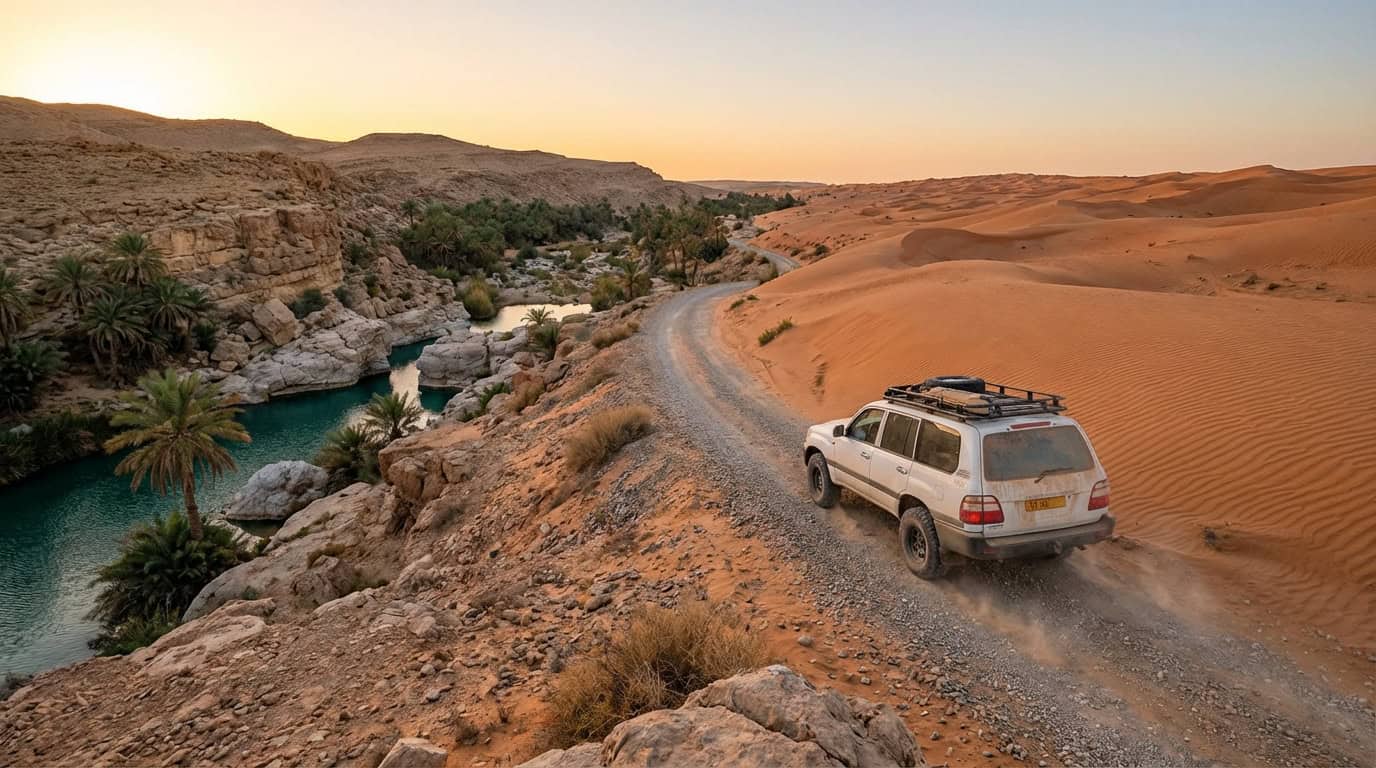
Imagine steering your 4×4 across a horizon where the asphalt dissolves into a sea of towering, honey-hued dunes that stretch toward the edge of the world. An oman desert road trip is one of those rare adventures where rugged wilderness meets incredible safety, allowing you to navigate from turquoise coastal sinkholes to the heart of the 12,500-square-kilometer Wahiba Sands with total confidence. I still remember the thrill of my first night camping under a canopy of stars so bright they seemed to touch the desert floor, realizing that this landscape is as welcoming as it is wild.
Whether you are chasing the hidden emerald pools of Wadi Shab or traversing the 1,000-kilometer loop from Muscat, the sense of freedom here is unparalleled. This journey is about more than just the drive; it is about the quiet moments shared with wandering camels and the cooling mist of a mountain oasis after a day in the heat. To help you plan your own escape into the dunes, I have mapped out a route that balances exploration with the practical tips you need for a seamless self-drive experience.
Key Takeaways
- A 4WD vehicle is essential for navigating Oman’s diverse terrain, as high ground clearance and low-range gears are required for the steep mountain tracks of Jebel Shams and the deep sands of Wahiba Sands.
- Preparation for the desert must include carrying a portable air compressor to manage tire pressure, downloading offline maps for areas without cellular reception, and maintaining a supply of five to seven liters of water per person daily.
- The emerald pools of Wadi Shab and Wadi Bani Khalid offer a lush contrast to the desert but require early arrival to avoid crowds and modest dress to respect local Omani customs.
- Self-drive travelers should follow a 1,000-kilometer loop from Muscat to experience a balance of coastal sinkholes, traditional Bedouin-style desert camps, and high-altitude mountain oases.
Navigating The Emerald Pools Of Wadi Shab And Wadi Bani Khalid
Stepping into the limestone corridors of Wadi Shab feels like entering a hidden sanctuary where the desert heat instantly gives way to cool, emerald pools and waters. To begin this adventure, you will need to pay a small fee of one Rial for a short boat crossing that ferries you across the wide mouth of the river. Once on the other side, a forty-five minute hike takes you through palm groves and over rugged boulders that require sturdy footwear. The real magic happens at the end of the trail, where you can leave your gear behind to swim through a series of three interconnected pools. The final stretch involves navigating a narrow gap in the cliffside, which opens up into a magnificent submerged cave complete with a crashing interior waterfall.
Wadi Bani Khalid offers a more accessible but equally breathtaking experience, serving as the perfect oasis after a dusty day of driving. Unlike the more rugged hike at Shab, the main pools here are just a short walk from the parking area and feature expansive turquoise waters surrounded by smooth white rocks. If you are looking for a bit more solitude, I recommend following the path further upstream past the restaurant to find the upper pools and the Moqal Cave. These higher sections are often much quieter, providing a serene environment to soak in the mineral rich water while tiny fish nibble at your toes. It is a quintessential Omani experience that perfectly balances the raw power of the desert with the refreshing beauty of a natural spring.
When planning your visit to these wadis, timing and local customs are essential for a smooth and respectful road trip experience. Arriving early in the morning, ideally before nine, allows you to beat the crowds and enjoy the canyons in their most peaceful state. It is important to remember that while these are popular swimming spots, modest dress is expected when walking through the surrounding villages and public areas. I always carry a lightweight sarong or quick dry clothing to cover up between swims. These emerald pools are the crown jewels of the Omani coastline, offering a lush, rugged alternative to more traditional destinations that you will remember long after the desert sand has been washed away.
Crossing The Golden Crests Of The Wahiba Sands
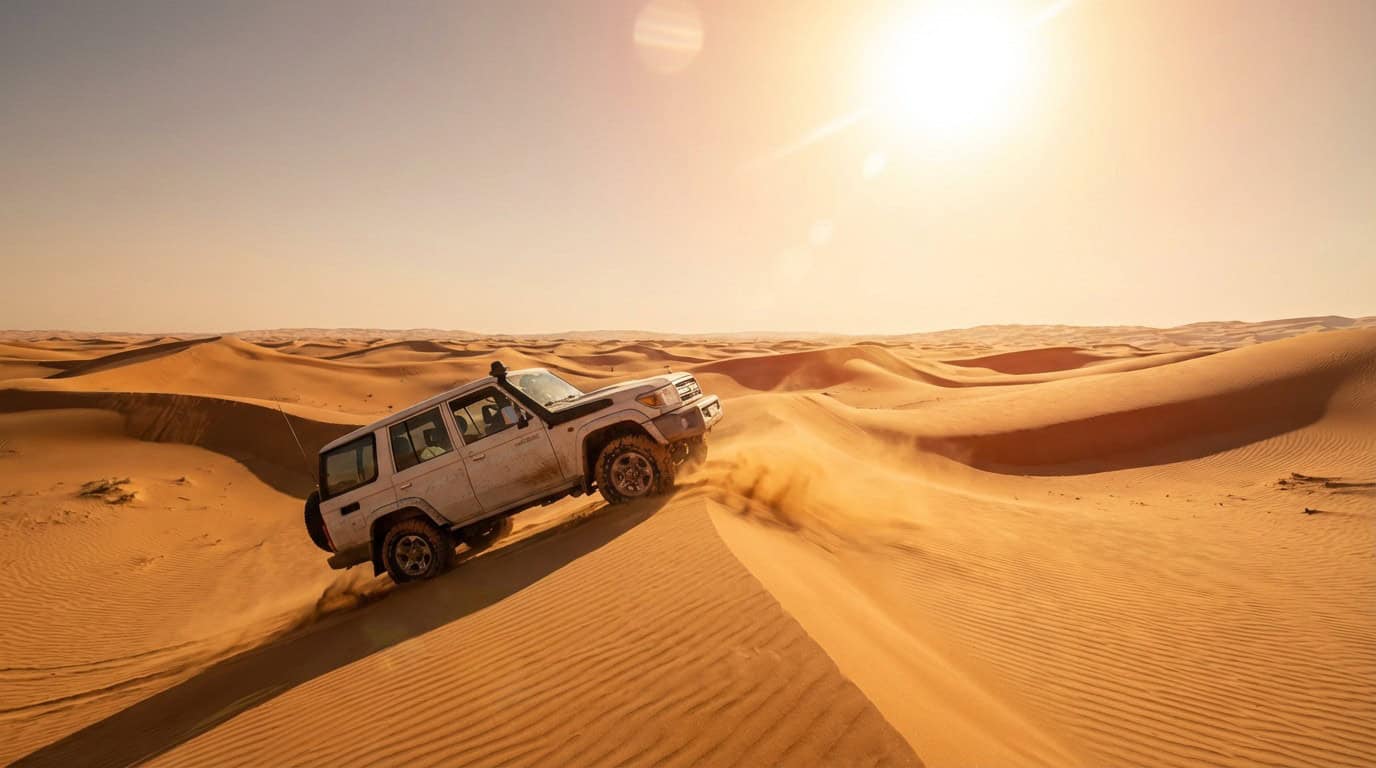
Venturing into the heart of the Wahiba Sands felt like leaving the modern world behind for a shimmering, 12,500 square kilometer sea of bronze. As I deflated my tires to navigate the soft crests, the sheer scale of these 100 meter high dunes became a humbling reality. This is the ultimate playground for any self drive enthusiast, offering a rugged alternative to the more manicured desert safari experiences found elsewhere. Driving here requires a steady hand and a sense of rhythm, as you learn to read the shifting patterns of the sand to find the firmest path forward. The thrill of reaching a high ridge and seeing nothing but endless golden waves is a memory that stays with you long after the dust settles.
To master these dunes, I found that timing and preparation are your best friends on the road. It is essential to carry a portable air compressor and plenty of water, as the midday sun can be unforgiving even for seasoned explorers. I recommend entering the Wahiba Sands in the late afternoon when the light turns a deep honey hue and the shadows make the terrain easier to navigate. If you find yourself losing traction, remember the golden rule of dune bashing to never fight the sand but rather steer into the slope to regain your momentum. Engaging your 4WD low range gear early on will provide the necessary torque to summit the steeper inclines without putting too much strain on your vehicle.
After a day of adrenaline fueled driving, there is nothing quite like pulling into a traditional Bedouin style camp tucked away in a quiet valley. These camps offer a beautiful blend of Omani hospitality and rustic comfort, featuring goat hair tents and communal fire pits under a canopy of countless stars. We spent our evening sharing stories over cardamom coffee and dates, learning about the ancient nomadic lifestyle that still thrives in this harsh environment. Waking up to the silence of the desert as the sun peeks over a golden crest is a spiritual experience that defines the magic of Oman. It is the perfect pause in a road trip, allowing you to reconnect with nature before heading back toward the turquoise wadis of the coast.
Conquering The Heights Of Jebel Shams And Jebel Akhdar
Ascending into the Al Hajar Mountains felt like entering a different world as the humid coastal air gave way to a crisp, refreshing breeze. To reach the summit of Jebel Shams, the highest point in Oman, a sturdy 4WD vehicle is absolutely non-negotiable due to the steep, unpaved gravel tracks that wind along the mountainside. I remember the moment I finally stepped out at the edge of the Grand Canyon of Arabia, looking down into a limestone abyss that drops over a kilometer deep. The scale is truly humbling, offering a rugged alternative to the more crowded tourist trails found elsewhere. It is a place where the silence is only broken by the distant chime of goat bells echoing through the vast, rocky expanse.
For those seeking an active adventure, the Balcony Walk at Jebel Shams provides a dramatic cliffside trek that hugs the rim of the canyon. This ancient donkey path leads you past abandoned stone villages and hidden water pools, all while offering panoramic views of the jagged peaks. After exploring the heights of the sun mountain, a short drive takes you to Jebel Akhdar, famous for its Mediterranean climate and terraced fruit orchards. Walking through the green mountain villages felt like a secret escape, where the temperature remains significantly cooler than the desert plains below. These highlands are the crown jewel of any Omani road trip, blending raw natural power with the serene beauty of traditional mountain life.
Essential Gear And Safety For An Omani Self Drive Adventure
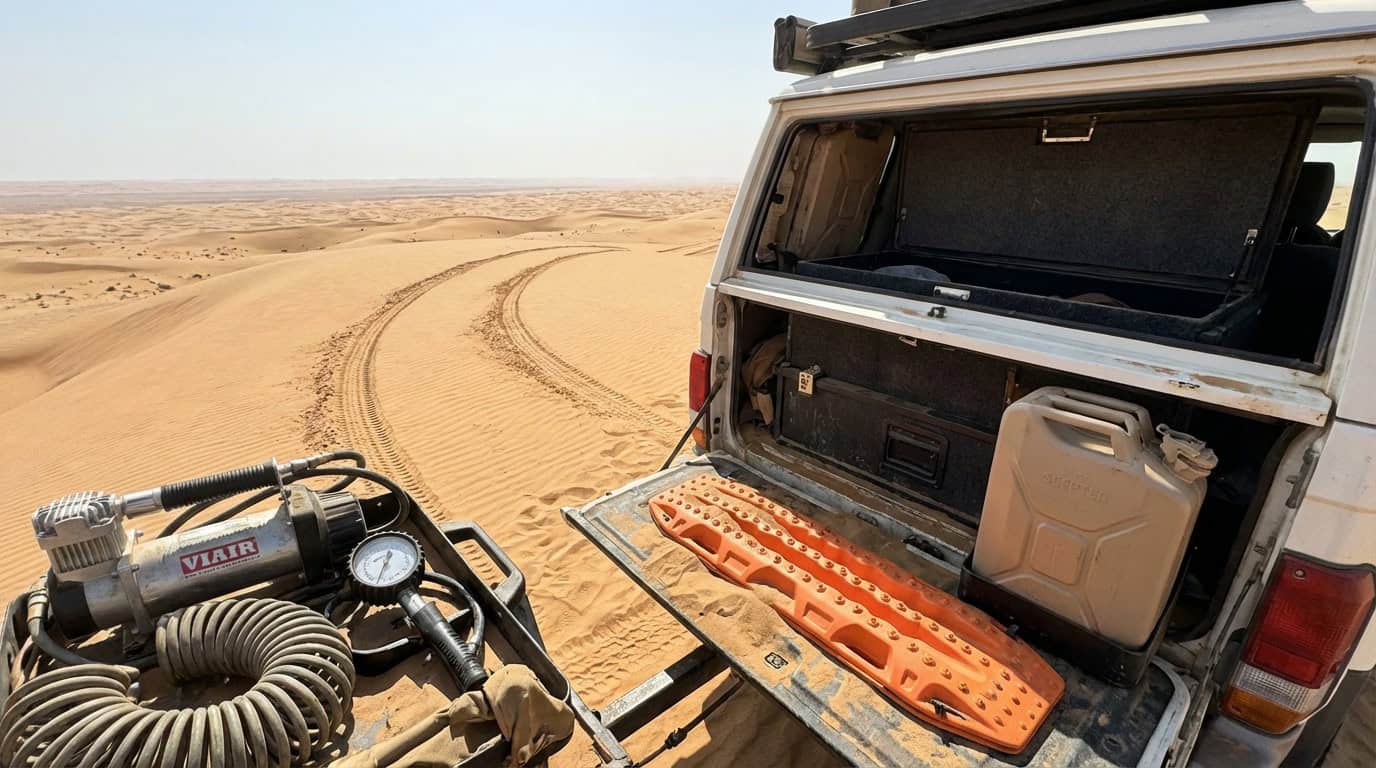
To truly embrace the rugged soul of Oman, renting a 4WD vehicle is a requirement for your journey. While the highways connecting Muscat to the coast are impeccably smooth, the real magic happens when you turn off the pavement toward the towering dunes of Wahiba Sands or the steep tracks of the Al Hajar Mountains. Before you leave the city, ensure your rental includes a full-sized spare tire, a jack, and a pressure gauge, as you will need to deflate your tires to navigate the deep desert sands safely. I always recommend a vehicle with high ground clearance to handle the rocky wadi beds and unpredictable terrain you will encounter along the coastline. Having the right horsepower under the hood gives you the confidence to explore those hidden turquoise pools that smaller cars simply cannot reach.
Navigation in the remote desert requires a blend of modern technology and old-school preparation. Since cellular reception can vanish the moment you enter a deep canyon or a sea of dunes, you must download offline maps of the entire country before your departure. I found that marking my GPS coordinates for specific wadi entrances and desert camps saved me hours of wandering when the tracks became faint. It is also wise to carry a physical map as a backup and to share your planned route with your accommodation hosts before heading into the wilderness. Staying on marked tracks is essential for protecting the fragile desert ecosystem and ensuring you do not get stuck in soft, deceptive sand pockets.
Managing your supplies is the final pillar of a successful self-drive adventure through this Middle Eastern gem. You should always carry at least five to seven liters of water per person per day, along with plenty of non-perishable snacks and a basic first-aid kit. Because petrol stations can be sparse once you leave the main coastal roads, I make it a rule to top off my tank whenever it hits the halfway mark. Pack a portable power bank to keep your devices charged and a sturdy flashlight for those breathtaking nights spent camping under a canopy of stars. Being self-sufficient allows you to relax and fully immerse yourself in the traditional culture and natural wonders that make Oman such a legendary road trip destination.
Finding Freedom on Oman’s Wild Open Roads
Reflecting on this journey, I am still struck by how Oman manages to feel like a well kept secret despite its incredible accessibility. Navigating from the towering dunes of the Sharqiya Sands to the turquoise pools of Wadi Shab offered a raw, rugged beauty that is increasingly rare in our modern world. There is a profound sense of freedom in a self drive adventure here, where the infrastructure is reliable but the landscapes remain wild and untamed. It is the perfect alternative for those who want to trade crowded tourist tracks for salt sprayed coastal roads and quiet desert camps.
Beyond the dramatic scenery, it is the genuine warmth of the Omani people that truly defines this road trip. Whether I was sharing coffee with locals or receiving a friendly wave from a passing vehicle in the mountains, the hospitality felt deeply authentic and welcoming. This blend of traditional culture and natural wonder creates a travel experience that stays with you long after the dust has settled on your rental car. If you are an adventurous soul seeking a destination that balances safety with a true sense of discovery, Oman is waiting to be explored.
Frequently Asked Questions
1. Do I really need a 4×4 vehicle for an Oman desert road trip?
Yes, a 4×4 is absolutely essential if you plan to venture into the heart of the Wahiba Sands or navigate the steep mountain passes. While coastal roads are well paved, the true magic of the desert happens when you have the clearance and power to handle deep sand and rugged terrain safely.
2. How difficult is the hike to the hidden cave at Wadi Shab?
The hike takes about forty five minutes and involves walking over uneven boulders, so you will want sturdy footwear with good grip. Once you reach the pools, you must be a confident swimmer to navigate the narrow gap that leads into the final submerged cave and waterfall.
3. Is it safe to go wild camping in the Omani desert?
Oman is incredibly safe and welcoming for travelers, making it one of the best places in the world for a self drive camping adventure. There is nothing quite like the peace of pitching your tent under a blanket of stars in the middle of the 12,500 square kilometer wilderness.
4. What is the best way to get across the river at Wadi Shab?
When you arrive at the entrance, you will pay a small fee of one Rial for a quick boat crossing to the other side. This short ferry ride is the only way to access the trail that leads you through the palm groves and toward the emerald swimming pools.
5. What should I pack for a day trip to the Wadis?
Pack a pair of high quality water shoes for the slippery rocks and a waterproof dry bag to protect your camera and phone while you swim. Since you will be hiking through the desert heat before reaching the water, bring plenty of hydration and sun protection.
6. How long is the typical driving loop from Muscat?
A comprehensive 1,000-kilometer loop exploring the coast, the desert, and the mountains usually covers about 1,000 kilometers starting and ending in Muscat. This distance allows you to balance high octane driving with slow moments at mountain oases and coastal sinkholes.