
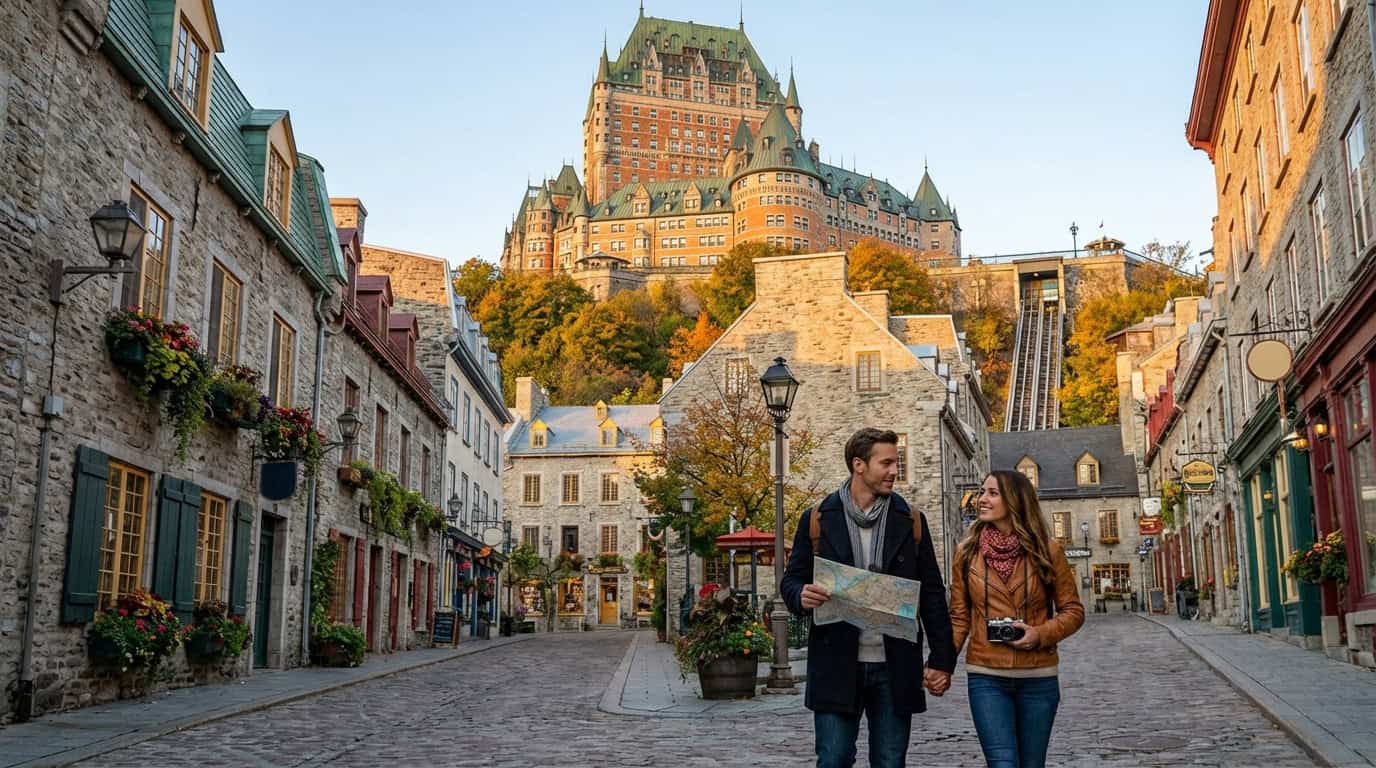
Walking through the cobblestone streets of Old Québec feels like stepping directly into a European fairytale, where the scent of fresh crepes mingles with 400 years of living history. This UNESCO World Heritage treasure is a vertical masterpiece, split between the dramatic heights of the Upper Town and the charming, narrow alleys of the Lower Town. To help you explore this blend of boreal culture and old-world magic, I’ve crafted the ultimate quebec city itinerary that balances iconic landmarks with the hidden gems only locals know.
Your journey begins high above the St. Lawrence River on the expansive Dufferin Terrace, standing in the shadow of the world’s most photographed hotel. I remember the first time I saw those copper roofs piercing the skyline; it’s an image that stays with you long after you’ve returned home. Beyond the grand architecture, you’ll find a city that thrives on modern agritourism and rugged northern flavors, making it the perfect destination for history buffs and foodies alike.
Key Takeaways
- Experience the city’s vertical layout by balancing time between the historic Upper Town landmarks and the narrow, artisan-lined streets of the Lower Town.
- Venture beyond the city gates to witness the power of Montmorency Falls and explore the agritourism and 17th-century farmhouses of Île d’Orléans.
- Immerse yourself in Quebecois culture by pairing traditional comfort foods like poutine and tourtière with the modern craft beer scene in the Saint-Jean-Baptiste neighborhood.
- Plan for a two-to-three-day visit to fully navigate the steep, cobblestone terrain and appreciate the seasonal transformations of this UNESCO World Heritage site.
Day One Exploring Upper Town Landmarks And Historic Fortifications
Your first morning in Québec City should begin on the wide wooden planks of Dufferin Terrace, where the salty breeze from the St. Lawrence River immediately makes you feel like you have stepped across the Atlantic. Standing in the shadow of the Fairmont Le Château Frontenac, it is easy to forget you are still in North America. I highly recommend taking a guided tour of the hotel to see the opulent interiors and learn about the historic conferences held within its copper-topped walls. Afterward, grab a coffee and take a slow stroll toward the statue of Samuel de Champlain to soak in the views of the river below. If you are visiting during the winter, this is also where you will find the famous century-old ice slide that adds a dash of adrenaline to the historic surroundings.
As the afternoon approaches, make your way toward the Citadelle of Québec to explore the largest British-built fortress on the continent. This active military base is shaped like a star and offers a fascinating look into the defensive history of the city through its impressive stone ramparts and hidden bunkers. If you are lucky enough to visit during the summer months, you can catch the colorful Changing of the Guard ceremony which feels like a scene straight out of London. I love walking along the nearby Plains of Abraham afterward, as these rolling green hills offer a peaceful place to reflect on the battles that shaped the region. It is the perfect spot to watch the sunset over the fortifications before heading back into the heart of the city for a cozy French dinner.
Day Two Wandering Petit Champlain And The Lower Town District
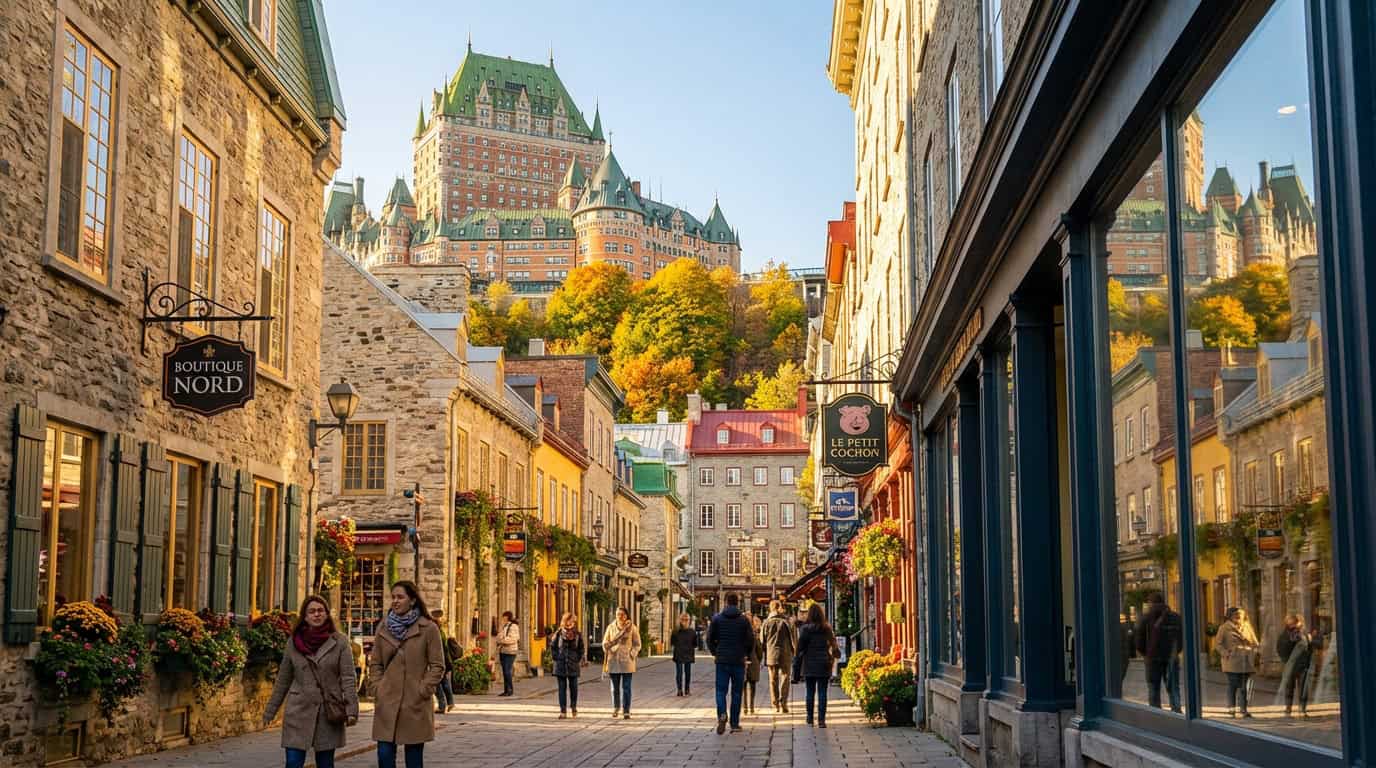
After a restful night in the Upper Town, your second day begins with a breathtaking descent into the heart of North America’s oldest neighborhood. I highly recommend skipping the steep stairs for your first trip down and instead boarding the Funicular from Dufferin Terrace. As the glass cabin glides down the cliffside, you are treated to a panoramic view of the St. Lawrence River before landing directly on Rue du Petit-Champlain. This cobblestone street is widely considered one of the most beautiful in the world, lined with artisan boutiques and cozy bistros that feel like a hidden corner of Paris. During the winter months, this area transforms into a snowy wonderland draped in twinkling lights, making it the perfect spot to grab a hot chocolate and soak in the festive atmosphere.
Just a short walk from the boutiques, you will find yourself standing in the historic Place Royale, the very site where Samuel de Champlain founded the city in 1608. The centerpiece of this square is the Notre-Dame-des-Victoires Church, a stone structure that has stood the test of time and serves as a quiet sanctuary amidst the bustling Lower Town. I love spending time here admiring the Fresque des Québécois, a massive trompe-l’œil mural that depicts four centuries of the city’s history through vivid portraits of its most famous residents. It is a fantastic place for photos, especially when the light hits the stone facades of the surrounding buildings just right.
To round out your morning of exploration, take a stroll toward the water to visit the Musée de la civilisation. This museum is a masterpiece of modern architecture that seamlessly integrates with the historic surroundings, offering a deep dive into the complex roots of Québec’s culture. You can spend a couple of hours wandering through interactive exhibits that bridge the gap between Indigenous history and contemporary life in the province. It provides the perfect context for everything you have seen so far, turning your walk through the streets into a meaningful journey through time. After soaking up all that knowledge, you will be perfectly positioned to find a local creperie for a well-deserved lunch.
Day Three Chasing Waterfalls And Exploring The Island Of Orleans
To kick off your third day, head just fifteen minutes outside the city center to witness the sheer power of Montmorency Falls. This natural wonder is actually thirty meters taller than Niagara Falls, and you can feel the mist on your face as you cross the suspension bridge directly over the crest. I highly recommend taking the cable car to the top for a panoramic view of the St. Lawrence River before walking the wooden staircases that hug the cliffside. If you are visiting during the winter months, look for the impressive sugar loaf ice cone that forms at the base of the falls from the freezing spray. It is a breathtaking sight that perfectly captures the wild, boreal beauty of the region while remaining incredibly accessible for a morning excursion.
After you have had your fill of the thundering water, cross the bridge to the pastoral paradise of Île d’Orléans for a taste of authentic Quebecois country life. This island is the cradle of French civilization in North America, and driving its scenic perimeter feels like stepping into a living postcard of 17th-century stone farmhouses and rolling vineyards. I love stopping at the local cideries to sample sparkling ice ciders made from apples grown in the rich soil. You can spend the afternoon hopping between artisanal cheese shops and blackcurrant farms, picking up gourmet souvenirs to bring back home. It is the perfect slow-paced contrast to the historic bustle of the city, offering a delicious look at the agritourism that defines this fertile river valley.
Savoring Traditional Quebecois Cuisine And Vibrant Local Nightlife
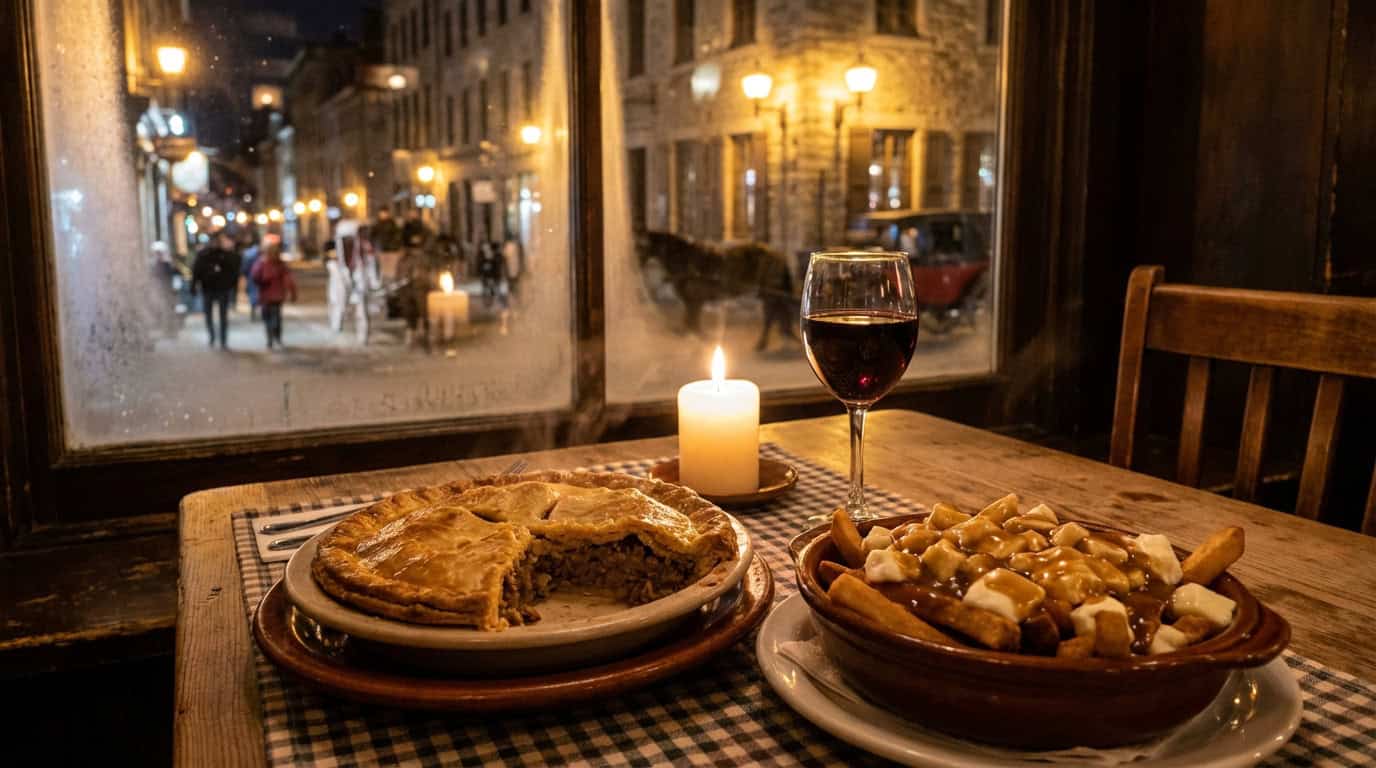
After a day of exploring the winding cobblestone streets of the Upper Town, there is nothing more rewarding than enjoying the heart of Quebecois comfort food. I always make a point to stop at a cozy bistro in Old Quebec for a steaming bowl of traditional comfort foods like authentic poutine, where the cheese curds are famously squeaky and the gravy is rich and savory. For a true taste of history, you must try a traditional Tourtière, a spiced meat pie that feels like a warm hug on a crisp North American afternoon. The atmosphere in these historic eateries often feels more like a magical central European escape than a city in Canada. I love how the aroma of slow-cooked spices fills the air, inviting you to slow down and savor every bite before the sun begins to set.
Once you have had your fill of savory treats, take a short stroll over to the Saint-Jean-Baptiste neighborhood to experience the city’s spirited modern energy. This area is the heartbeat of local nightlife, where the historic architecture meets a bohemian, creative vibe that is perfect for a night out. I highly recommend hopping between the local microbreweries to sample craft beers that highlight regional ingredients like spruce or wild berries. You will often find live folk music spilling out onto the sidewalks, creating a festive soundtrack for your evening adventures. It is the perfect way to transition from the 400-year-old European charm of the morning into the vibrant, contemporary culture that makes this city so unique.
To wrap up your evening like a local, find a spot at a crowded bar along Rue Saint-Jean and strike up a conversation with the friendly residents. The nightlife here is approachable and inclusive, making it easy to feel like part of the community even if it is your first visit. Whether you are tapping your toes to a fiddle player or debating the best local brew, the warmth of the people matches the beauty of the surroundings. This blend of old-world tradition and new-world excitement is exactly why I keep coming back to this fortified gem. It is an essential stop on any ultimate itinerary for those who want to see how history and modern life can dance together so perfectly.
Final Tips for Your Quebec Adventure
Wrapping up your journey through Quebec City feels like closing the cover on a beautifully illustrated storybook where every street corner holds a piece of history. To make the most of your time in this UNESCO World Heritage site, remember to embrace the geographic split between the towering Upper Town and the charming Lower Town. I always suggest starting your mornings early at Dufferin Terrace to catch the soft light hitting the Fairmont Le Château Frontenac before the crowds arrive. By balancing your days between historic landmarks like the Citadelle and the winding, cobblestone alleys of Petit Champlain, you will capture the true essence of this European escape in North America.
Whether you visit during the blooming summer months or the snowy depths of winter, the city’s seasonal magic is what truly brings the stone walls to life. If you find yourself here in February, you must enjoy the Winter Carnival celebrations by trying some maple taffy on snow and meeting the legendary Bonhomme. For those visiting in the warmer months, the regional agritourism just outside the city gates offers a delicious way to experience the local boreal culture. No matter when you choose to wander these 400-year-old streets, the combination of French heritage and warm Canadian hospitality will leave you planning your return trip before you even head home. If you are looking for more nature-focused travel, consider a mountain adventure in the western part of the country to complement your historic city tour.
Frequently Asked Questions
1. Is one day enough time to see the highlights of Quebec City?
While you can certainly see the iconic Fairmont Le Château Frontenac and walk the Dufferin Terrace in a day, I recommend at least two to three days to truly soak in the magic. This quebec city itinerary gives you enough time to explore both the Upper and Lower Towns without rushing your crepe stops or missing the historic fortifications. It is the perfect amount of time to feel the European charm without feeling overwhelmed by the vertical climbs.
2. What is the best way to get between the Upper Town and the Lower Town?
You can take the historic Funicular for a quick and scenic ride that connects the two levels, which is a lifesaver for your legs. If you are feeling active, walking down the Breakneck Steps offers beautiful photo opportunities and a closer look at the architecture. I usually prefer taking the Funicular up to save my energy for more exploring and walking down the stairs to enjoy the views.
3. When is the best time of year to visit for this itinerary?
Summer is spectacular for the street performers and breezy river views, but winter transforms the city into a literal snow globe. I personally love visiting in the winter for the century-old ice slide on Dufferin Terrace and the cozy, festive atmosphere of the cobblestone streets. No matter when you go, the blend of history and culture is always present and ready to inspire you.
4. Is Quebec City walkable?
Yes, Quebec City is incredibly walkable, though you should prepare for some steep inclines and plenty of stairs. Most of the landmarks like the Citadelle and the Samuel de Champlain statue are clustered close together in the historic district. Make sure to wear your most comfortable walking shoes because those 400-year-old cobblestones are as uneven as they are beautiful.
5. Do I need to speak French to enjoy my trip to Quebec City?
While French is the primary language and adds to the wonderful European atmosphere, you will find that most people in the tourism areas speak excellent English. I find that learning a few basic phrases like Bonjour and Merci goes a long way in connecting with the locals. It adds a layer of respect and fun to your interactions as you navigate the shops and cafes.
6. What should I pack for a trip to Quebec City?
Layers are your best friend here because the breeze off the St. Lawrence River can be quite cool even on sunny days. If you are visiting in the winter, high-quality boots with good grip and a heavy parka are non-negotiable for enjoying the outdoor festivities. I always suggest bringing a camera with plenty of storage because every corner of this UNESCO World Heritage site looks like a postcard.