
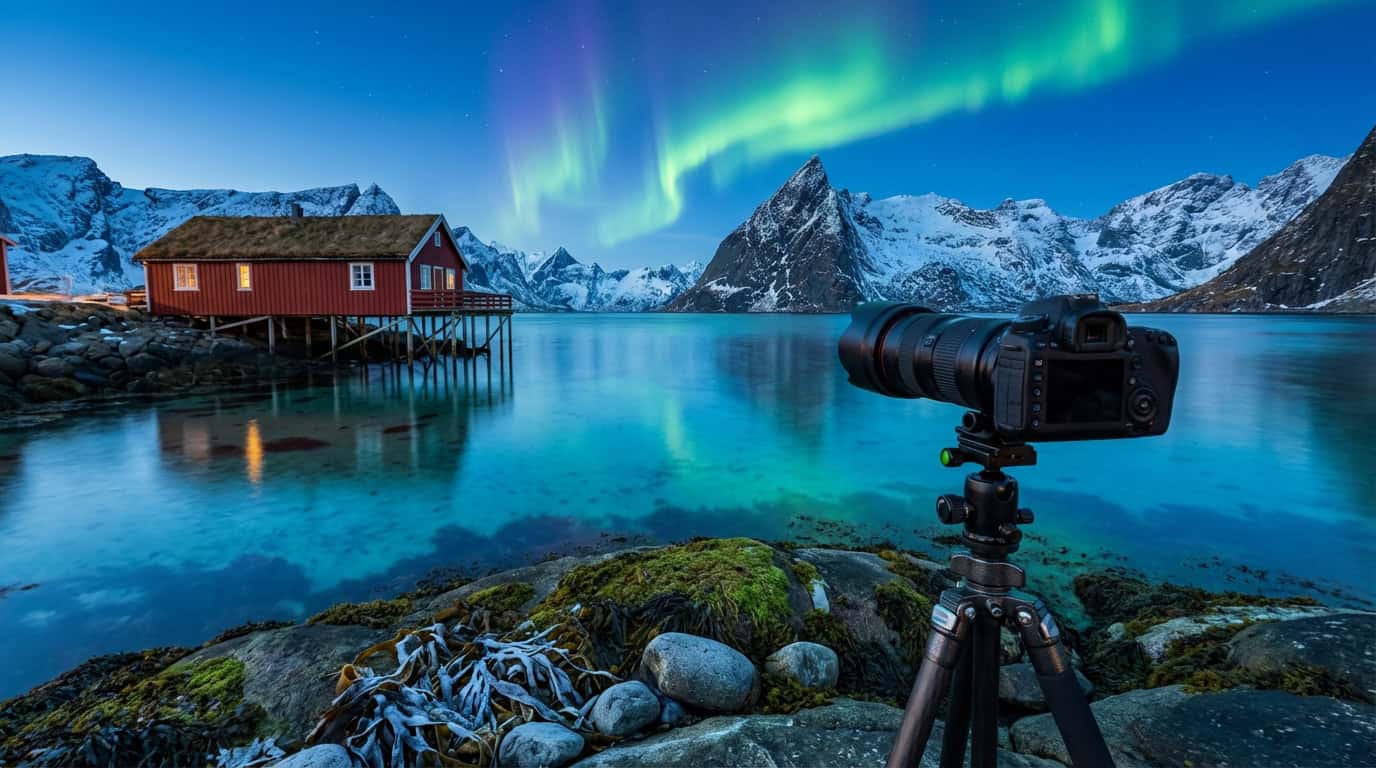
There is a specific kind of magic that happens 300km north of the Arctic Circle, where jagged granite peaks rise straight out of the turquoise sea like the spine of a sleeping dragon. I still remember the first time I stood on a frozen beach in the middle of the night, watching the Aurora Borealis dance over snow-capped mountains; it was the moment I realized lofoten islands photography is less about technical settings and more about capturing raw, elemental wonder. Whether you are chasing the ethereal glow of the winter Blue Hour or the surreal warmth of the Midnight Sun, these islands offer a dramatic topography that feels like it was designed specifically for the lens.
Planning a trip here requires a balance of artistic inspiration and practical preparation, as the Arctic weather is as unpredictable as it is beautiful. From the iconic red rorbu cabins of Reine to the steep, rewarding hike up Reinebringen for that classic bird’s-eye view, every corner of this archipelago tells a story of survival and breathtaking scale. I’ve spent countless hours navigating these winding coastal roads to find the perfect vantage points, and I want to help you time your visit perfectly to catch that legendary golden light.
Key Takeaways
- Mastering Lofoten photography requires prioritizing raw, elemental wonder over technical settings while adapting to the archipelago’s unpredictable Arctic weather and dramatic light shifts.
- Leverage the unique lighting windows of the Arctic Circle, such as the winter’s ‘all-day golden hour’ for soft textures or the summer’s Midnight Sun for extended shooting sessions at 2:00 AM.
- Capture the iconic harmony between manmade structures and nature by framing the red rorbuer cabins of Hamnøy and Reine against the jagged granite peaks and reflective fjords.
- Invest in high-quality protective gear, including carbon fiber tripods for coastal winds, moisture-wicking layers for the biting cold, and weather-sealed bags to safeguard equipment from corrosive salt air.
Chasing The Aurora And Golden Winter Light
Visiting Lofoten between December and March feels like stepping into a living gallery where the sun never truly rises high enough to break the spell of dawn. Because the sun hugs the horizon for just a few hours each day, you are treated to an endless golden hour that bathes the jagged, snow-capped peaks in soft pinks and deep oranges. I often find myself losing track of time while framing the iconic red rorbuer cabins against the icy turquoise waters of the Arctic Ocean. The light at this time of year is incredibly directional and gentle, making it the perfect playground for hobbyists looking to capture dramatic textures in the snow and rock. You will want to time your visit to keep your extra batteries tucked inside your jacket, as the biting Arctic cold can drain them just as the light hits its peak.
Once the twilight fades into the deep blue hour, the real hunt for the Aurora Borealis begins over the silent fjords. There is nothing quite like the rush of seeing a faint green glow transform into a dancing ribbon of light right above a jagged mountain crest. For the best results, I recommend scouting your locations during the brief daylight hours so you can safely set up your tripod on the icy shoreline once darkness falls. Focus your lens on the distant stars to ensure the peaks remain sharp, and try to include a reflective body of water to double the impact of the lights. It is a patient game of waiting in the serenity of the crisp air, but the reward of a shimmering green sky reflecting off the still water is a memory that stays with you forever.
Iconic Red Rorbuer Of Hamnøy And Reine
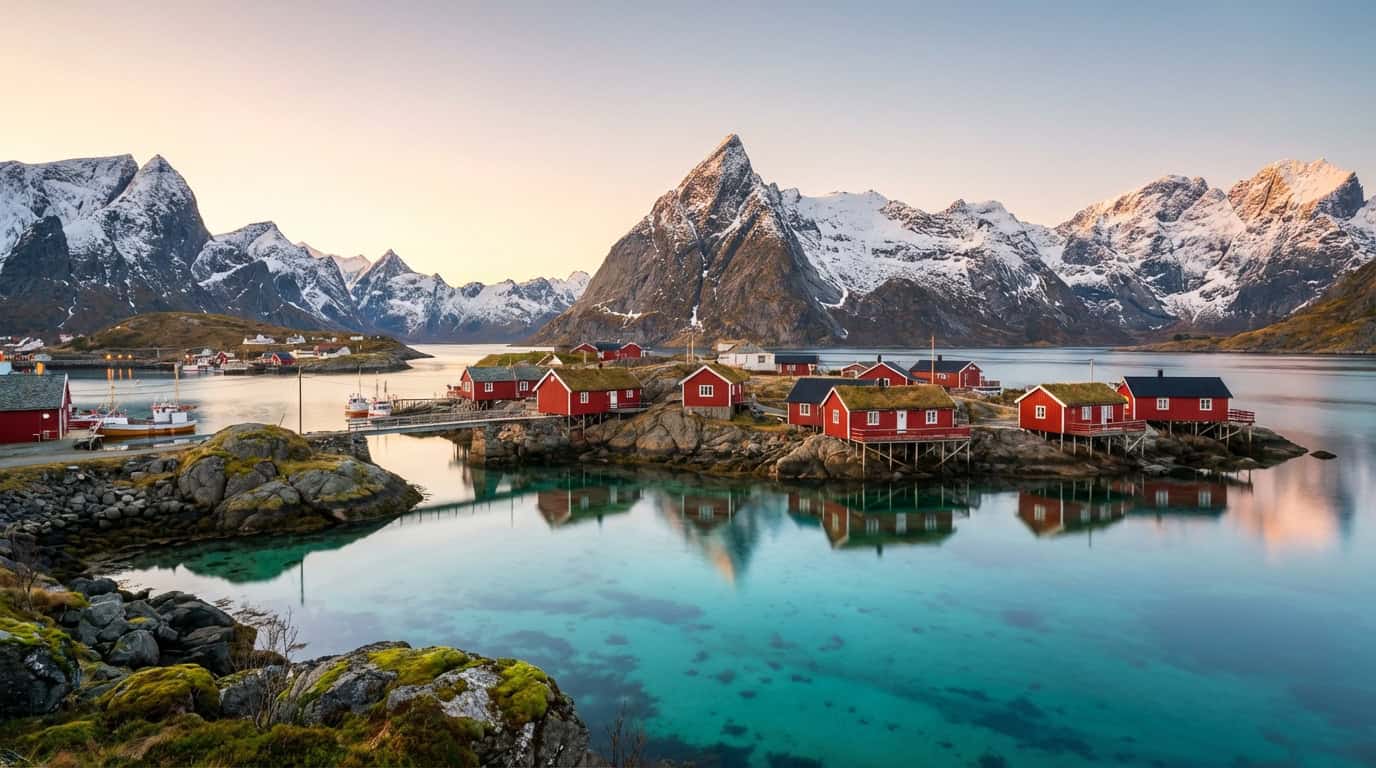
Standing on the bridge at Hamnøy during the blue hour is a rite of passage for every photographer visiting the Arctic Circle. The iconic view of the crimson rorbuer huddled at the base of the jagged Mount Olstind creates a perfect harmony between manmade structures and the raw power of nature. To capture the most balanced composition, I recommend setting up your tripod on the walkway of the main bridge to catch the leading lines of the shoreline. The deep red of the cabins provides a stunning contrast against the moody blues of the fjord, especially when the peaks are dusted with fresh winter snow.
When you move further south to the village of Reine, the photographic opportunities only become more enchanting. My favorite angle involves framing the traditional fishing huts with the massive granite walls of the surrounding mountains reflecting in the still waters of the harbor. If you visit during the winter months, the low arc of the sun provides a perpetual golden glow that bathes the red rorbu cabins in a warm, ethereal light. It is a place where the history of the Norwegian fishing industry meets a landscape that feels almost prehistoric, offering endless possibilities for creative storytelling through your lens.
To get the most out of these classic locations, timing your shoot with the tide and the weather is essential for success. During the summer, the midnight sun allows you to experiment with long exposures at two in the morning, while the autumn brings a dramatic sense of isolation as the first storms roll in. I always suggest bringing a wide angle lens to capture the scale of the mountains, but do not forget a telephoto lens to compress the layers of the rorbuer against the vertical cliffs. These islands offer a rare chance to document a world where life is still dictated by the rhythm of the sea and the shifting Arctic light.
Midnight Sun Photography Above The Arctic Circle
Experiencing the Midnight Sun in the Lofoten Islands is a surreal shift in perspective that completely redefines the traditional photography schedule. Since the sun never actually sets below the horizon between late May and mid July, you are gifted with a golden hour that lasts for several hours instead of just a few minutes. I found that the best way to embrace this phenomenon is to flip your internal clock entirely, sleeping during the bright afternoon and heading out into the wild around midnight. The light at 2:00 AM possesses a soft, ethereal quality that paints the jagged granite peaks in shades of pink and deep orange. It is an incredible feeling to stand on a coastline in total silence, watching the sun hover just above the Norwegian Sea while the rest of the world is asleep.
To capture the most iconic perspective of the archipelago, you should plan a late night ascent of the famous Reinebringen hiking trail. I recommend starting your hike around 11:30 PM to ensure you reach the summit ridge well before the sun reaches its lowest point on the horizon. The stone steps make for a steep climb, but the reward is a panoramic view of the Reinefjord and the tiny fishing villages of Hamnøy and Sakrisøy far below. Once you reach the top, set up your tripod and prepare for a marathon shooting session as the light transitions through endless hues of gold. This itinerary allows you to avoid the daytime crowds while witnessing the dramatic topography under the most flattering conditions imaginable.
For those planning their first Arctic summer journey, remember that the constant daylight can be as exhausting as it is beautiful. I always suggest packing a high quality eye mask for your accommodation, as your body will need help realizing it is time to rest after a night of chasing the sun. Practicality is key when hiking at these hours, so bring extra layers and a thermos of coffee to stay warm in the crisp mountain air. The beauty of Lofoten photography during the summer is the lack of urgency, giving you plenty of time to experiment with different compositions and focal lengths. By the time you hike back down at 4:00 AM, the soft morning light will already be illuminating the valleys for your trek home.
Essential Gear For Unpredictable Norwegian Landscapes
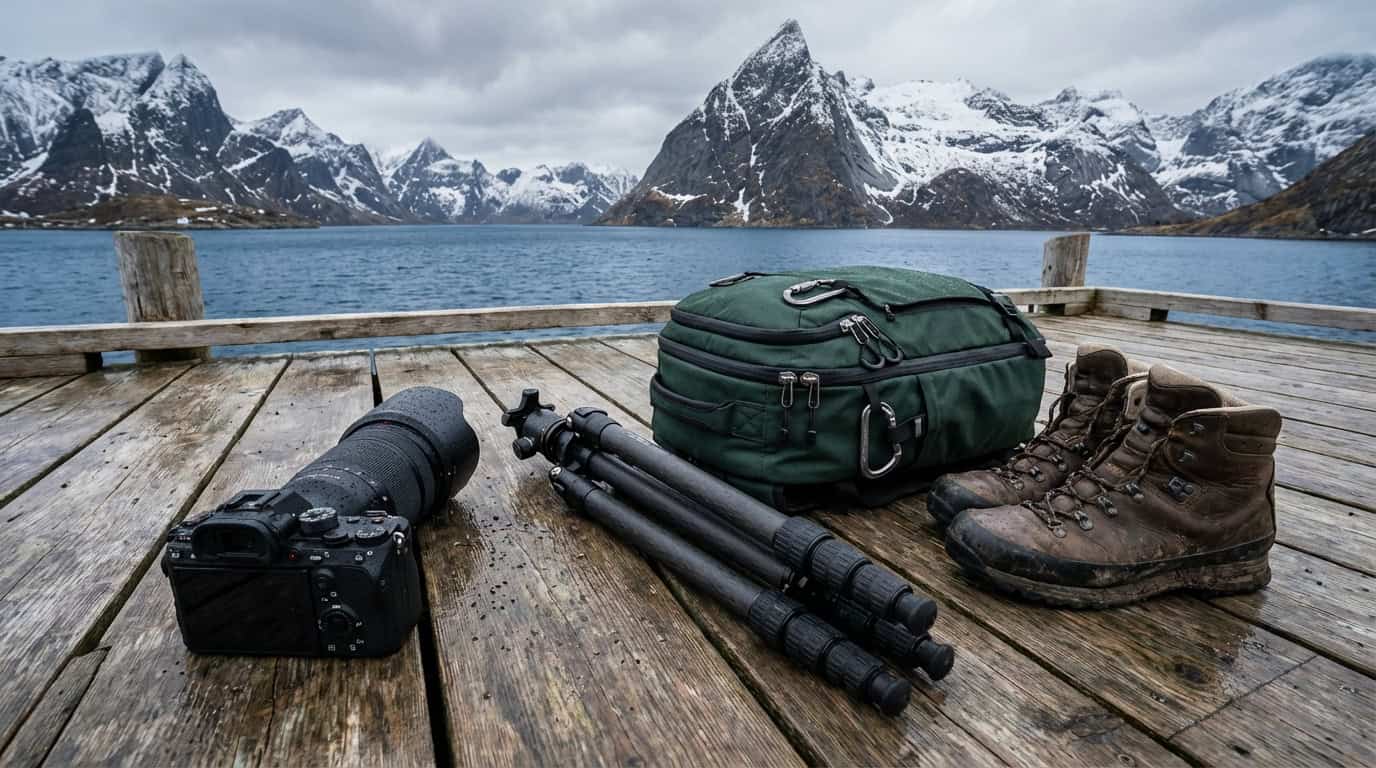
When you are standing on a windswept beach in the Arctic Circle, your gear is the only thing standing between a masterpiece and a missed opportunity. I always recommend packing a sturdy, carbon fiber tripod because the coastal gusts in places like Hamnøy can be powerful enough to topple lighter setups. Since the weather changes from brilliant sunshine to driving sleet in a matter of minutes, a high quality rain cover for your camera body is non negotiable. I also suggest carrying a selection of neutral density filters to help you capture those silky water textures against the jagged granite peaks. Keeping your glass dry with a stash of microfiber cloths will ensure that the sudden sea spray does not blur your perfect shot of the midnight sun.
Dressing for the Lofoten climate requires a strategic layering system that prioritizes moisture management and wind protection. I have found that a reliable GORE-TEX outer shell is your best friend when chasing the Aurora Borealis during the freezing winter months. Beneath that shell, you should wear a warm wool base layer and a down mid layer to trap heat while you wait for the lights to dance. Do not forget sturdy, waterproof hiking boots with excellent grip for those steep treks up to viewpoints like Reinebringen. Taking care of your hands is equally important, so I suggest using thin liner gloves that allow you to operate camera dials without exposing your skin to the biting cold.
Safety and protection extend beyond your body to how you transport your equipment across the rugged terrain. I prefer using a weather sealed backpack with a dedicated rain fly to keep my lenses safe during long treks through the fjords. It is also wise to bring extra batteries and keep them tucked inside your inner coat pockets where your body heat can prevent them from draining in the Arctic chill. I have learned the hard way that salt air can be corrosive, so remember to wipe down your tripod legs with fresh water after a day of shooting near the crashing waves. By preparing for the worst conditions, you allow yourself the creative freedom to focus entirely on the breathtaking landscapes surrounding you.
Capturing the Arctic’s Ethereal Land and Light
Photographing the Lofoten Islands is more than just a trip to a beautiful location, as it is a transformative experience that reshapes how you perceive the relationship between land and light. Standing 300km inside the Arctic Circle, you will find that the atmosphere possesses a crystalline quality that makes every mountain peak and turquoise bay pop with surreal clarity. Whether you are chasing the ethereal dance of the Aurora Borealis in the dead of winter or hiking to high altitude viewpoints under the endless glow of the Midnight Sun, these islands demand your full creative attention. I found that the sheer scale of the dramatic mountain-meets-ocean topography challenges you to think bigger with your compositions. You will likely leave with a memory card full of stunning images and a soul deeply nourished by the raw power of the Norwegian wilderness.
Planning your journey to this Arctic paradise requires a bit of logistical foresight, but the rewards are truly unparalleled for any hobbyist or professional. I recommend choosing your season based on the specific mood you want to capture, as the golden light of an Arctic autumn feels entirely different from the soft blue hues of a polar night. Take the time to explore the iconic red rorbuer cabins in Reine and the jagged peaks surrounding Hamnøy, but do not be afraid to pull over at an unnamed turnout when the light hits a fjord just right. This unique environment teaches you to be patient and to respect the rapidly changing weather patterns that define life in the north. Much like mapping out an unforgettable mountain adventure, once you experience the magic of Lofoten through your lens, your perspective on landscape photography will be forever changed by the haunting beauty of the Arctic.
Frequently Asked Questions
1. When is the best time to photograph the Aurora Borealis in Lofoten?
To catch the Northern Lights dancing over the peaks, you should plan your visit between late September and late March. I recommend focusing on the window from December to February when the nights are longest and the snow creates a reflective foreground for the green glow above.
2. What makes the winter light in Lofoten so special for photographers?
During the winter months, the sun hugs the horizon and never fully rises, creating an incredible phenomenon where the golden hour lasts for the entire day. This provides you with soft, directional light and pastel skies that bathe the red rorbu cabins in a warm, ethereal glow.
3. Do I need a professional camera to capture the beauty of the islands?
While high-end gear helps with technical details, photography here is truly about capturing the raw, elemental wonder of the Arctic landscape. You can get stunning results with any camera as long as you focus on the dramatic compositions found at places like Reine and the frozen beaches.
4. What should I pack to stay comfortable during a winter shoot?
Arctic weather is notoriously unpredictable, so dressing in layers is the most important tip I can give you. Ensure you have high-quality thermal base layers, a windproof outer shell, and sturdy boots to navigate the icy coastal roads and snowy viewpoints.
5. Is the hike to Reinebringen worth it for the photography?
The steep climb up Reinebringen is absolutely worth the effort for the classic bird’s eye view of the archipelago. Once you reach the top, you are rewarded with a breathtaking panorama of jagged granite peaks and turquoise water that looks like a dragon’s spine rising from the sea.
6. How do I find the best photography locations across the archipelago?
I spent countless hours navigating the winding coastal roads to find the perfect vantage points away from the crowds. My advice is to stay in a traditional red rorbu cabin in Reine or Hamnøy, which puts you right in the heart of the most iconic and accessible scenery. Much like planning an island hopping adventure in the Atlantic, success in Lofoten comes down to scouting the right spots at the right time. Much like planning an unforgettable adventure in the Scottish Highlands, success in Lofoten comes down to scouting the right spots at the right time.