
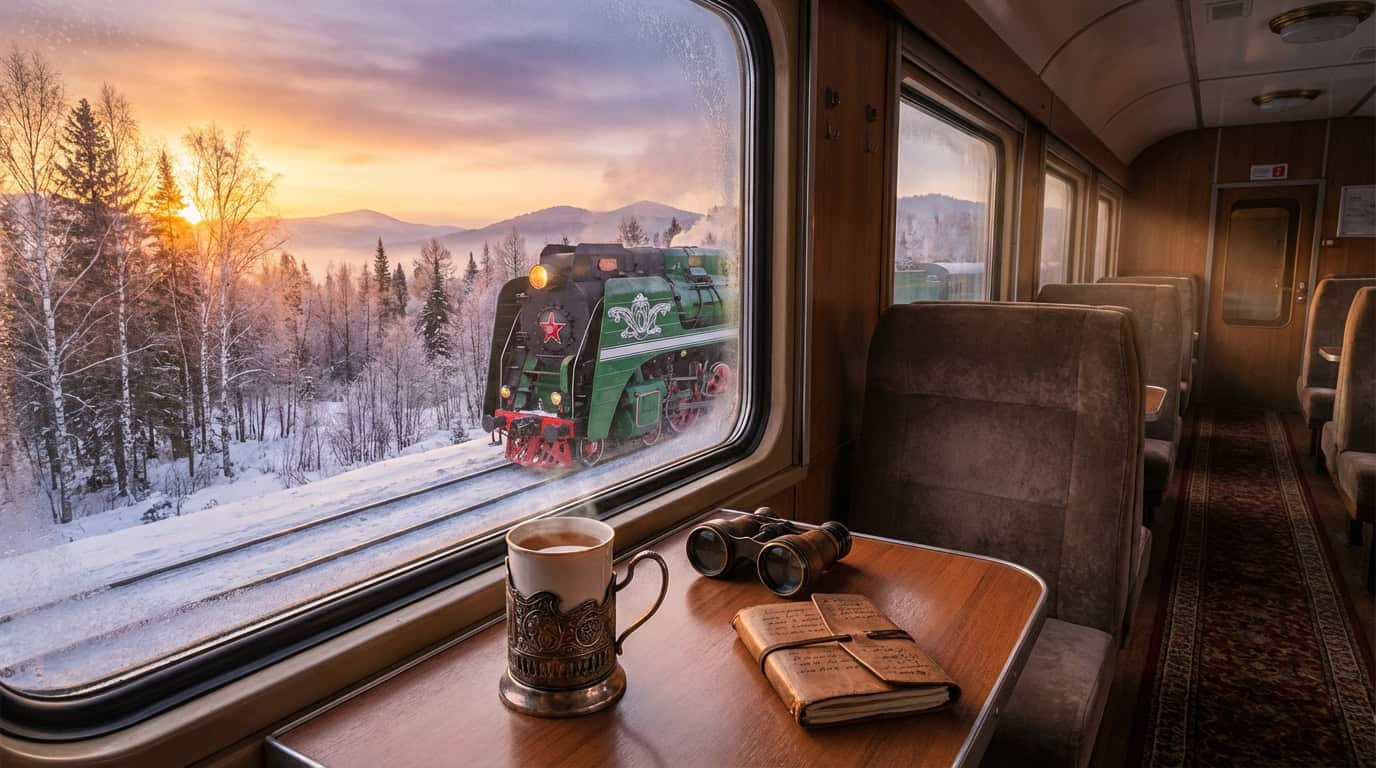
There is a certain magic in watching eight time zones blur past your window as you traverse the vast, wild expanse of the Eurasian continent. Crossing over 9,000 kilometers of rugged taiga and rolling steppe, this journey is the ultimate rite of passage for any wanderer seeking a deeper connection to the world. I designed this trans-siberian railway guide to help you navigate the logistics of this epic trek, from choosing between the classic route to Vladivostok or the desert vistas of the Trans-Mongolian.
Nothing compares to the rhythmic clinking of tea glasses in a cozy cabin while the golden light of a Siberian sunset spills across Lake Baikal. Planning such a massive undertaking can feel overwhelming, but the secret lies in embracing the slow pace and the spontaneous friendships formed over shared meals in the dining car. You deserve a trip that balances the grit of long-haul travel with the wonder of seeing the Great Wall and the Kremlin in a single journey. Success on these rails comes down to packing the right essentials and knowing exactly where to step off the train for local hidden gems.
Key Takeaways
- Select the route that aligns with your cultural goals, choosing the Classic Trans-Siberian for a deep dive into the Russian soul or the Trans-Mongolian for a diverse transition through the Siberian taiga, Mongolian steppes, and China.
- Book individual segments of the journey rather than one continuous ticket to allow for essential multi-day stops at landmarks like Lake Baikal, Ulaanbaatar, and the Gobi Desert.
- Embrace a slow-travel mindset by disconnecting from digital distractions and prioritizing onboard social connections in the dining car while managing life across eight time zones.
- Prepare for the logistics of transcontinental travel by applying for visas at least three months in advance and packing a dedicated train kit with essentials like slip-on shoes, a power bank, and personal snacks.
Choosing Your Epic Eurasian Rail Route
Choosing your path across the Eurasian continent is less about picking a destination and more about selecting the cultural tapestry you want to unroll. If you are a purist who craves the ultimate test of endurance and solitude, the Classic Trans-Siberian route from Moscow to Vladivostok is your calling. This 9,288-kilometer odyssey takes you through the heart of the Russian soul, passing endless forests of silver birch and the deep, mystical waters of Lake Baikal. I remember sitting by the window for hours, watching the sunrise over the Ural Mountains while sipping tea from a traditional glass podstakannik. This route is perfect for the traveler who wants to witness the gradual shift of time zones and the quiet resilience of Siberian towns.
For those who want to see the world transform, the Trans-Mongolian route offers a breathtaking transition between three distinct regions. You will begin in the grand, imperial streets of Moscow before the scenery shifts into the rolling green steppes and nomadic gers of Mongolia. I highly recommend hopping off in Ulaanbaatar to spend a few nights under the stars in the Gobi Desert before reboarding for the final leg into China. Watching the train wind through the rugged mountains toward Beijing is a visual feast that feels like traveling through a living history book. This path is the gold standard for travelers who want to maximize their cultural exposure in a single sitting.
The Trans-Manchurian route provides a fascinating middle ground, bypassing Mongolia to head directly into the industrial and historical heart of Northeast China. This journey follows the original path of the Chinese Eastern Railway, offering a unique look at the shared border cultures and the vast landscapes of Manchuria. It is often quieter than the Mongolian line, making it an ideal choice if you prefer a more contemplative atmosphere to write or reflect. You still get the full Siberian experience, including the legendary stop at Irkutsk, but with a smoother transition into the bustling energy of Harbin and Beijing. No matter which line you choose, the rhythmic clatter of the wheels becomes a heartbeat that stays with you long after the journey ends.
Life Onboard Across Eight Time Zones
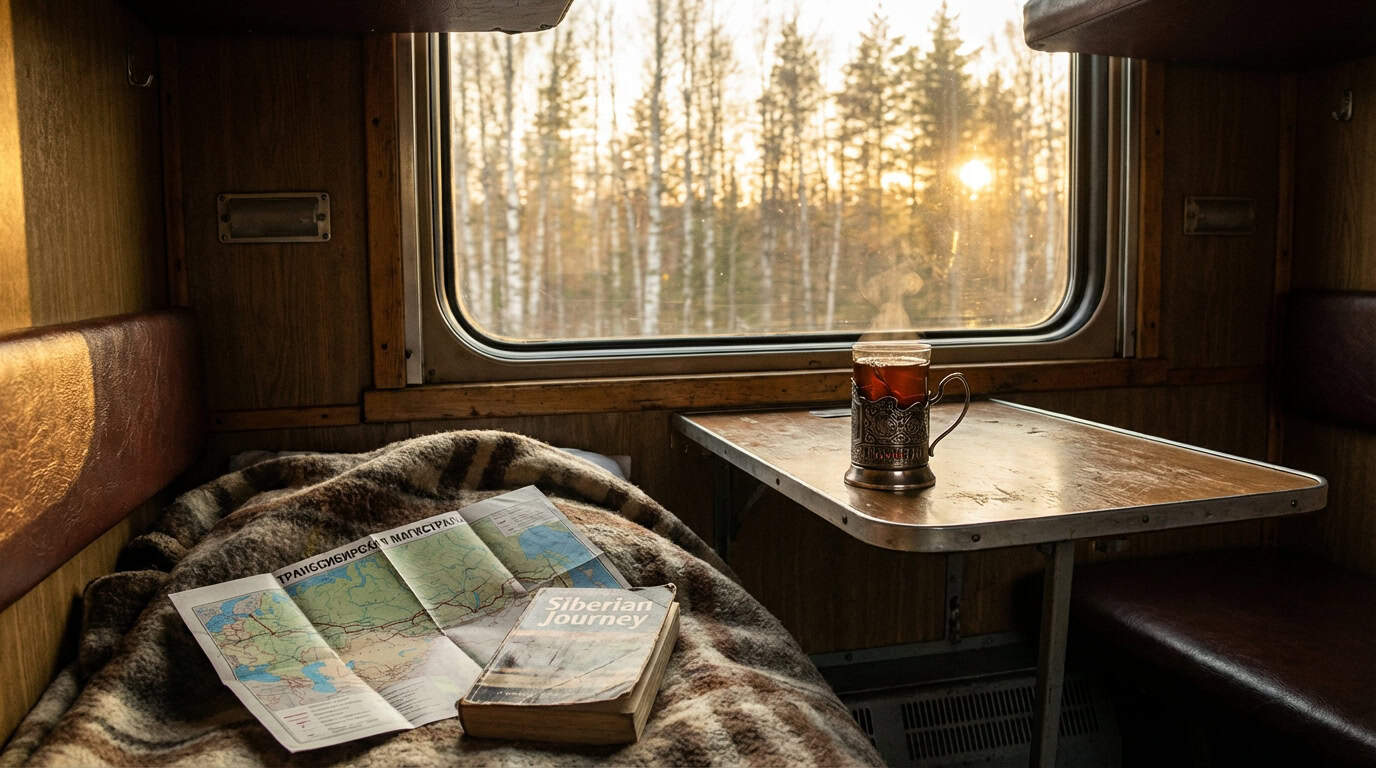
Stepping onto the train for a week-long journey feels like entering a different dimension where the ticking clock loses its authority. As the birch forests of the Russian interior blur past your window, the rhythm of the rails becomes your new heartbeat. You will find that life settles into a slow, meditative cycle of sipping hot tea from traditional glass holders and watching the sunlight shift across the cabin. This is the ultimate slow-travel experience, offering a rare chance to disconnect from the digital world and reconnect with the simple joy of the passing scenery.
The dining car serves as the social soul of the journey, acting as a crossroads where travelers from every walk of life meet. I spent many afternoons squeezed into a booth, sharing stories with locals over bowls of hearty soup while we crossed through the Ural Mountains. Even with a language barrier, the act of pointing at a map or sharing a snack creates a bond that transcends words. These spontaneous interactions turn a long transit into a moving celebration of human connection.
Maintaining a sense of normalcy in a small cabin requires strategy and a positive attitude. I recommend packing the right essentials with wet wipes, dry shampoo, and comfortable slip-on shoes to navigate the corridors with ease. Sleeping becomes an art form as you adjust to the gentle swaying of the carriage while crossing into new time zones every night. By embracing the lack of a traditional shower and focusing on the grandeur of the Gobi Desert or the Siberian taiga, you discover that the true luxury of this trip is the gift of time itself.
Essential Stops From Moscow To Beijing
Our journey begins amidst the grand splendor of Moscow, where the Kremlin and Red Square set a dramatic stage for the thousands of miles ahead. I spent my first few days marvelling at the opulent metro stations that look more like underground palaces than transit hubs, offering a perfect prelude to the historic architecture of the city. Before boarding the train, I highly recommend visiting the GUM department store for some snacks and exploring the Arbat district to soak in the local artistic soul. This starting point is essential because it grounds you in the imperial history that built this iron artery across the continent. Once you hear the conductor’s whistle and the wheels begin to turn, the urban sprawl slowly gives way to the endless, rhythmic beauty of the birch forests.
After days of watching the Siberian taiga blur past your window, the arrival at Irkutsk signals a breathtaking transition toward the deep blue waters of Lake Baikal. Known as the Pearl of Siberia, this massive freshwater sea is best experienced by taking a short side trip to the village of Listvyanka or the rugged Olkhon Island. I remember standing on the shore and feeling the crisp, ancient air while watching the sunlight dance across waves that seem to stretch into infinity. You can hike the Great Baikal Trail for stunning clifftop views or sample smoked omul fish from a local market stall for a true taste of the region. This stop provides a necessary moment of stillness and natural wonder before the train turns southward toward the vast horizon of the Mongolian border.
The final leg of this epic itinerary sweeps across the nomadic plains of Mongolia, where the landscape transforms into the rolling grasslands of the steppe and the golden dunes of the Gobi Desert. Stopping in Ulaanbaatar allows you to venture out into Terelj National Park to stay in a traditional ger and experience the legendary hospitality of local herding families. I found that riding a horse across the open range under an endless sky was the perfect antidote to the confined quarters of a railway carriage. As the tracks eventually lead you through the mountains and toward the bustling energy of Beijing, you will witness the dramatic shift from quiet wilderness to the Great Wall and the Forbidden City. This transition from nomadic silence to the vibrant pulse of China marks the unforgettable conclusion of this iconic experience.
Planning Your Trans-Siberian Logistics And Visas
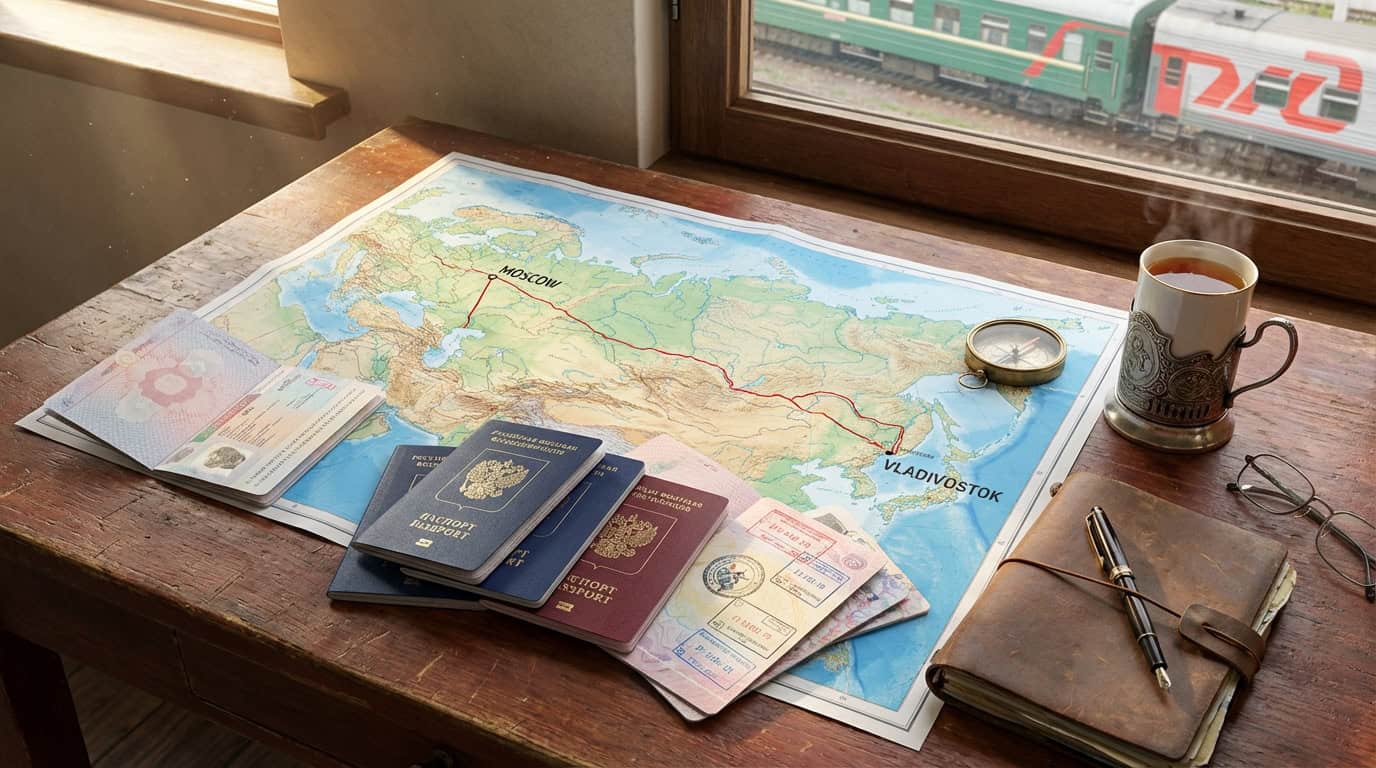
Navigating the logistics of this epic trek requires a blend of meticulous organization and a spirit of adventure. When I first sat down to map out my route, I realized that booking tickets is less about a single transaction and more about stitching together a series of experiences. To truly embrace the slow-travel philosophy, I recommend booking individual legs of the journey rather than one continuous ticket. This approach allows you to hop off in fascinating cities like Irkutsk or Ulaanbaatar to explore local markets and hidden temples before catching the next train. By managing your bookings in segments, you gain the flexibility to linger in places that capture your heart along the way.
Securing the necessary visas is a manageable part of the preparation with a bit of patience. Since you will likely be crossing several international borders, you must carefully coordinate the entry and exit dates for each country to match your train schedule. I found that starting the application process at least three months in advance saved me from unnecessary stress as the departure date approached. Keep a digital and physical folder of all your invitations and confirmation vouchers, as these are often required by consular officers. Navigating these requirements is a rite of passage that makes finally stepping onto that platform feel even more rewarding.
Packing for a week or more on a train is an art form that prioritizes comfort and practicality. My most valued items were those that turned a small bunk into a cozy home, such as a pair of sturdy slip-on shoes for moving between carriages and a high-quality portable power bank. You should also pack a dedicated train kit containing loose, breathable clothing, a quick-dry towel, and a collection of your favorite snacks to supplement the dining car offerings. Bringing a physical journal or a long novel is essential for those quiet moments when the Siberian wilderness stretches endlessly outside your window. These small comforts ensure that you can focus on the breathtaking landscapes and the new friends you will inevitably meet during the ride.
Embrace the Rhythm of the Rails
Stepping onto the platform to begin this transcontinental odyssey is about much more than just crossing a map, as it represents a total commitment to the art of slow travel. Over thousands of miles, you will watch the architectural grandeur of Moscow give way to the endless birch forests of the Siberian taiga and the golden dunes of the Gobi Desert. This journey forces you to disconnect from the frantic pace of modern life, replacing digital distractions with the rhythmic clatter of steel on rails. You will find that the true magic lies in the quiet moments, like sharing a pot of tea with a local traveler or watching the sunrise over the crystal waters of Lake Baikal. It is a rare opportunity to witness the gradual shift of cultures and landscapes across eight different time zones in a single, continuous flow.
Planning your own rail adventure may feel daunting at first, but the rewards of such an epic undertaking are truly life-changing. I encourage you to embrace the logistics as part of the story, from navigating the classic route to Vladivostok to exploring the essential multi-day stops through Mongolia and China. Every stop along the way offers a new chapter, whether you are hiking the Great Baikal Trail or wandering through the vibrant markets of Ulaanbaatar. This trip is proof that the world is still vast and full of wonder for those seeking a magical three day escape or a months-long trek across continents. Grab your guidebook, pack your favorite books, and prepare to see the Eurasian continent through a lens that only a train window can provide. Your seat on the world’s most legendary railway is waiting, and the memories you make will stay with you long after you reach the final station.
Frequently Asked Questions
1. Which route should I choose for my first journey?
If you want the ultimate test of endurance and a deep dive into the Russian soul, the classic Moscow to Vladivostok route is your best bet. For those who want more cultural variety, the Trans-Mongolian route offers a stunning transition from the Siberian taiga to the Gobi Desert and the Great Wall of China.
2. What is the best time of year to experience the Trans-Siberian?
Summer offers the longest days and the chance to see the golden light reflecting off Lake Baikal, but winter provides a magical, snowy landscape that feels like a true Russian fairytale. I personally love the shoulder seasons because you get milder weather and fewer crowds at the major stops.
3. Is it difficult to manage life on the train for several days?
Life on the rails is all about embracing the slow pace and finding joy in the rhythmic clinking of tea glasses in your cabin. You will quickly adapt to the routine of shared meals in the dining car and the spontaneous friendships that form over maps and stories with fellow travelers.
4. What are the essential items I should pack for the trek?
Comfort is king, so bring slip-on shoes for the train and a high-quality power bank to keep your camera ready for those sunset views. I also highly recommend bringing your own tea leaves and a few snacks to supplement the dining car meals during the longer stretches of the journey.
5. Where are the best places to hop off the train?
You absolutely must stop at Irkutsk to spend a few days exploring the mystical shores of Lake Baikal, the deepest lake in the world. Ulan-Ude is another hidden gem where you can experience a fascinating blend of Russian and Buryat cultures before heading further east or south.
6. How do I handle the logistics of crossing eight time zones?
The best strategy is to keep your watch set to Moscow time, which is what the railway operates on, while also keeping track of local time for your arrival at stations. It is a surreal experience to watch the sun rise and set at odd hours, but it is all part of the magic of traversing the Eurasian continent.