
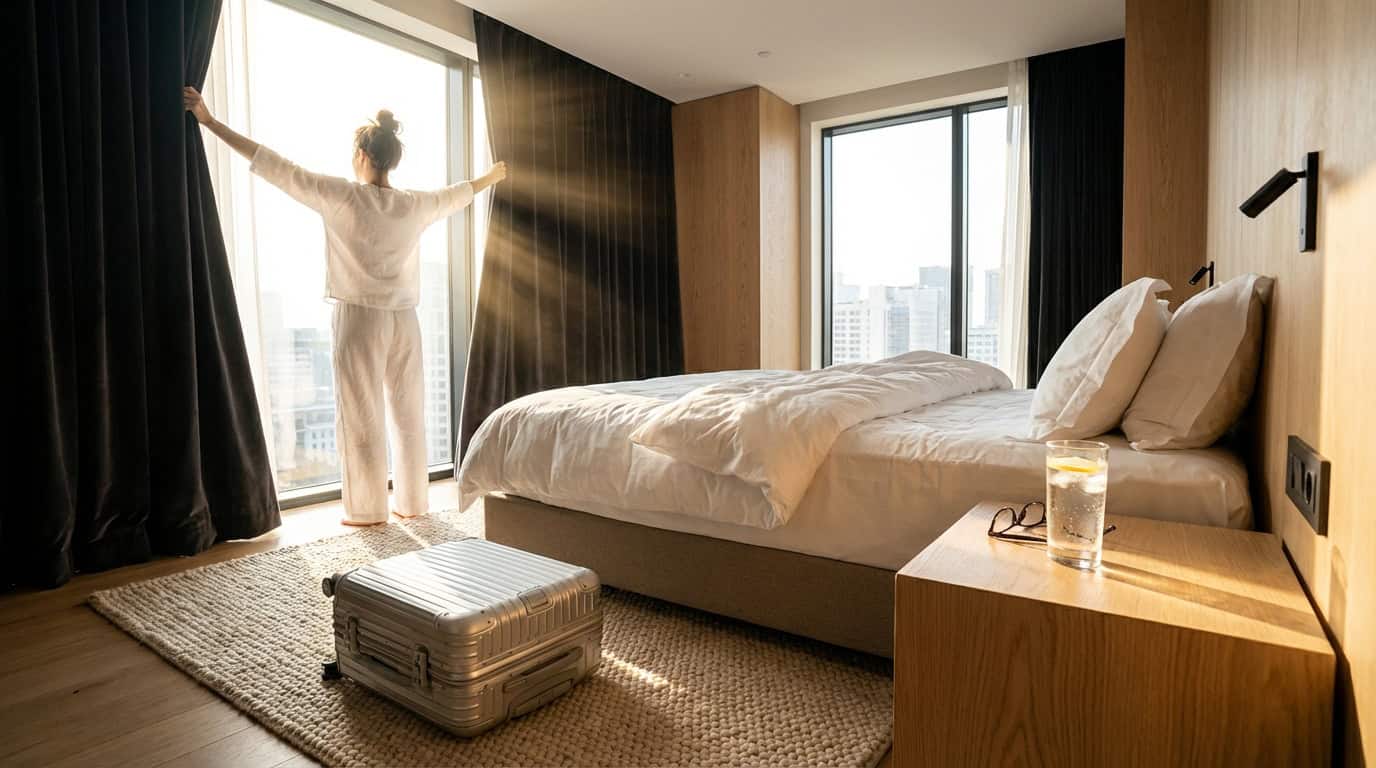
I still remember watching the sunrise over the ancient, sun-drenched temples of Kyoto, feeling utterly captivated but physically exhausted from crossing fourteen time zones. We travel to experience the world’s most breathtaking destinations, but that magic quickly fades when your internal clock is completely out of sync with local time. Finding the right jet lag recovery strategies completely transformed how I travel, turning those first few blurry days of a massive trip into vibrant, energy-filled adventures.
While it typically takes about a day to naturally recover for every time zone crossed, you never have to surrender your precious vacation days to a misaligned circadian rhythm. By strategically using natural light, soaking up the morning sun when flying east or chasing the sunset when heading west, you can rapidly reset your internal clock. You deserve to savor every single moment of your hard-earned journey, feeling fully present and awake from the very first passport stamp to the flight home.
Key Takeaways
- Strategically time sunlight exposure based on your travel direction to rapidly reset your internal clock. Seek morning light when flying east, and chase late afternoon or evening light when heading west.
- Immediately adopt the local schedule for meals and bedtime upon arrival to help your biological timers adjust. If travel fatigue becomes overwhelming, limit yourself to a strict twenty-minute power nap to avoid disrupting nighttime sleep.
- Swap in-flight alcoholic beverages for massive amounts of plain water from takeoff to touchdown. Staying highly hydrated combats the dry cabin air that causes severe travel exhaustion and mental fog.
Harnessing Sunlight To Reset Your Internal Clock
For years, I lost precious days of my dream vacations wandering around in a foggy haze of exhaustion. I finally discovered that the most powerful tool for resetting my internal clock is absolutely free and waiting right outside my hotel door. Sunlight acts as a natural signal to the brain, telling your body exactly what time it is in your new destination. Instead of relying on countless cups of coffee, I now use a science-backed approach to align my body with the local time zone. By strategically timing my exposure to the sun, I can shave days off my recovery period and start exploring right away.
Whenever my travel plans take me east across the globe, I make it a priority to chase the morning light. Stepping out into the early sunshine signals my body to wake up and helps advance my circadian rhythm naturally. I love finding a cozy outdoor cafe in cities like Paris or Rome to soak up those bright morning rays while sipping an espresso. Later in the day, I intentionally avoid bright sunshine and dim my screens to help my brain prepare for an earlier bedtime. This simple routine tricks my body into adjusting faster, allowing me to wake up refreshed and ready to wander through cobblestone streets.
Heading west requires the exact opposite strategy to successfully delay my internal clock. If I land in a tropical paradise like Hawaii, I force myself to stay awake and embrace the late afternoon and early evening sunshine. Taking a long walk along the beach during sunset is my favorite way to soak in the fading light and keep my energy levels up. This late exposure tells my brain that the day is not over yet, effectively pushing my natural sleep time back a few hours. Mastering this delicate dance with the sun has completely transformed my travel experiences, turning exhausting transition days into beautiful moments of discovery.
Adopting Local Schedules Immediately Upon Arrival

The moment my feet touch the ground in a new destination, I pretend my old time zone no longer exists. This strict rule of immediately syncing my meals and bedtime to the local schedule has completely transformed how I experience travel. Whether I am strolling through the vibrant streets of Tokyo or settling into a cozy Parisian cafe, forcing myself to eat lunch at local noon instead of my internal midnight signals my body to start adjusting. Science backs up this approach, as our digestive systems are closely tied to our circadian rhythms and help reset our biological timers. By embracing the local rhythm right away, I can begin exploring magical new sights much faster and leave the exhaustion of long-haul flights behind me.
Pushing through that overwhelming wave of afternoon travel fatigue is often easier said than done. When the heavy eyelids become too much to bear, my ultimate survival tactic is the strict twenty-minute power nap. I set multiple loud alarms on my phone to ensure I do not fall into a deep sleep cycle, which would only make the jet lag significantly worse. This brief rest provides just enough of an energy boost to keep me going until a socially acceptable local bedtime. Waking up from that short snooze allows me to catch a stunning evening sunset and truly soak in the atmosphere of my new surroundings.
Pairing this rigid new schedule with strategic sunlight exposure is the final piece of the recovery puzzle. If I travel east, I make sure to soak up the bright morning rays to help advance my body clock, while westward trips call for enjoying the late afternoon sun. Experts note that it typically takes about one full day to recover for every time zone crossed, but combining local meal times with proper light exposure dramatically speeds up the process. Before I know it, I am waking up refreshed and ready to conquer a full day of wandering through ancient ruins or bustling local markets. Mastering this quick transition allows me to maximize every precious moment of my journey without feeling sluggish.
Hydrating Away The Post-Flight Travel Fog
I used to think that kicking off a long-haul flight with a complimentary glass of wine was the ultimate way to celebrate the start of a new adventure. However, I quickly learned that arriving at my dream destination with a pounding headache and heavy eyelids completely ruined the magic of the first day. The recycled cabin air is notoriously dry, and combining that environment with alcohol only accelerates the dreaded travel exhaustion. After losing too many precious vacation hours to a dark hotel room, I finally realized that my worst jet lag symptoms were actually just severe dehydration in disguise. By understanding this simple truth, I completely transformed how my body handles crossing multiple time zones.
Now, my absolute strictest travel rule is to swap those tempting alcoholic beverages for massive amounts of plain water from takeoff to touchdown. Science shows that aircraft cabins have incredibly low humidity levels, which silently drains your body of moisture and amplifies the fatigue associated with resetting your internal clock. To combat this hidden energy thief, I always bring an oversized reusable bottle and kindly ask the flight attendants to keep it full throughout the journey. Drinking all that water might mean a few extra trips down the narrow airplane aisle, but those mini walks actually help keep your blood flowing. Treating hydration as a crucial part of your flight plan ensures that your body stays resilient against the harsh atmospheric changes.
Stepping off the plane fully hydrated feels like gaining a secret superpower for your travels. Instead of battling an intense mental fog, you will find yourself energized and genuinely ready to wander through cobblestone streets or soak up the sunset at a new beach. I vividly remember landing in Rome after a twelve-hour flight and immediately heading out for gelato because my mind felt incredibly clear and refreshed. Committing to a water-only flight strategy guarantees that you can jump right into your itinerary without losing a single moment to avoidable travel sickness. Trust me, making this one simple swap will help you conquer the skies and embrace your next breathtaking destination with wide-open eyes.
Conquer Jet Lag and Embrace Your Adventure
I still remember stumbling through the vibrant streets of Kyoto on my first day in Japan, feeling completely dazed from the fourteen-hour time difference. My body was begging for sleep at noon, but the scent of blooming cherry blossoms and sizzling street food kept my spirit wide awake. That initial exhaustion is a universal rite of passage for any passionate traveler crossing multiple time zones. While those first few days of adjusting to a new circadian rhythm can feel incredibly heavy, you will get through it by sticking to the light exposure tricks and hydration habits we discussed. The temporary fog is just a small toll we pay for the privilege of experiencing the magic of our beautiful planet.
Your next grand adventure deserves your full energy, so treat your recovery process with just as much care as your itinerary planning. Whether you are chasing the sunrise over the ancient ruins of Machu Picchu or exploring the bustling night markets of Bangkok, your body will eventually sync with the rhythm of your new destination. Give yourself plenty of grace during that brief adjustment period, and remember to step outside into the natural morning sunlight. Every yawn and heavy eyelid will quickly fade into the background once you are fully immersed in the sights and sounds of a foreign land. Trust the process, pack your favorite sleep mask, and get ready to embrace every unforgettable moment of your upcoming journey.
Frequently Asked Questions
1. How long does it usually take to recover from jet lag?
It typically takes your body about one day to naturally recover for every time zone you cross. However, you never have to lose your precious vacation days to exhaustion. By using natural light strategically, I have found you can drastically speed up this process and get right to exploring.
2. Why is sunlight so important for fighting jet lag?
Sunlight is absolutely free and acts as a natural signal to your brain, telling your body exactly what time it is in your new breathtaking destination. Instead of relying on endless cups of coffee to stay awake, stepping outside helps align your internal clock with local time. I always use this science-backed trick to shave days off my recovery period.
3. What is the best strategy for adjusting when I fly east?
Whenever my adventures take me east across the globe, I make it my top priority to chase the morning light. Stepping out into the early sunshine signals your body to wake up and naturally advances your circadian rhythm. I love finding a cozy outdoor cafe for breakfast to soak in those bright rays and start my day full of energy.
4. How should I manage my light exposure when traveling west?
When you fly west, your goal is to delay your internal clock so you can stay awake longer and enjoy those vibrant evening hours. I always recommend chasing the sunset and getting plenty of late afternoon light. This simple change keeps you energized through dinner and helps you sleep perfectly through your first night in paradise.
5. What should I do on my very first day in a new time zone?
Drop your bags at the hotel and immediately head outside to immerse yourself in the local environment. I always plan a gentle walking tour or visit a beautiful park to ensure I am breathing fresh air and soaking up the sunshine. Staying active and engaged with your surroundings will keep that heavy fog of exhaustion completely at bay.
6. Is it okay to take a nap if I feel completely exhausted after my flight?
I know how tempting that plush hotel bed looks after a long flight, but I highly recommend resisting the urge to sleep if it is daytime. If you are truly struggling to keep your eyes open, limit yourself to a quick twenty-minute power nap. Pushing through the fatigue guarantees you will sleep deeply that night and wake up ready for a vibrant adventure.
7. Can I drink coffee to stay awake while my body adjusts?
A cup of coffee at a charming local cafe is a wonderful way to experience a new city, but try not to overdo the caffeine. I have learned that relying too heavily on espresso can actually disrupt your sleep later in the evening and worsen your jet lag. Focus on drinking plenty of water instead, as staying hydrated is a powerful tool for feeling fresh and vibrant.