
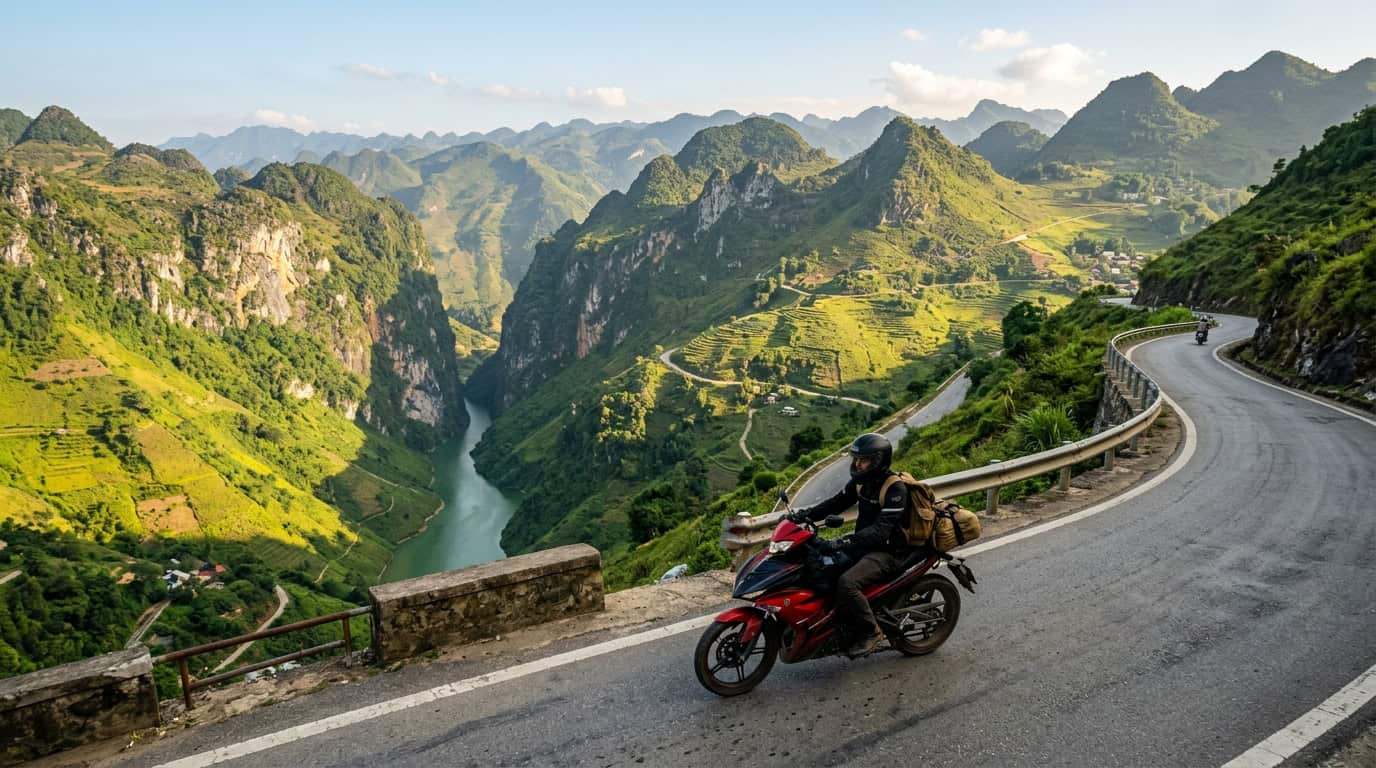
Imagine leaning into a sharp mountain curve as the mist clears to reveal a sea of limestone peaks stretching all the way to the Chinese border. The Ha Giang Loop is no longer just a whispered secret among backpackers; it has become the ultimate pilgrimage for anyone seeking the raw, unfiltered heart of Northern Vietnam. Over the course of 350 kilometers, I navigated the dramatic canyons of the Dong Van Karst Plateau, where the air is thin, the culture is vibrant, and every turn feels like a scene from a cinematic masterpiece.
I still remember the first time I stood atop the Ma Pi Leng Pass, looking down at the turquoise ribbon of the Nho Que River thousands of feet below. While you can rush the circuit in a couple of days, the true magic happens when you slow down to four days to explore hidden ethnic villages and winding side roads. Planning this journey requires a balance of grit and preparation, but the reward is a front-row seat to some of the most spectacular scenery on the planet.
Key Takeaways
- A four-day itinerary is the ideal duration for the 350-kilometer circuit, providing the necessary time to explore ethnic villages and side roads without rushing through the mountain passes.
- The Ma Pi Leng Pass and the Dong Van Karst Plateau offer the most dramatic scenery, but they require absolute focus, technical riding skills, and a high level of caution due to steep drops and unpredictable winds.
- Choosing between self-driving and hiring a local ‘easy rider’ is a critical safety decision; passengers can focus entirely on the UNESCO landscapes, while self-drivers must possess a valid permit and significant experience with mountain terrain.
- Preparation for the loop’s diverse microclimates requires a versatile layering system, waterproof gear, and high-quality protective equipment like full-face helmets and hardshell pads.
Navigating The Epic Ma Pi Leng Pass
Riding the Ma Pi Leng Pass is the undisputed crown jewel of the Ha Giang Loop, offering a sensory overload that few places on earth can match. As I leaned my bike into the sweeping curves, the massive limestone cliffs seemed to touch the sky while the road clung precariously to the mountainside. This stretch of the journey requires your absolute focus because the drops are steep and the winds can be unpredictable. I found myself pulling over every few minutes just to stare at the sheer scale of the surroundings. It is a place where you feel incredibly small against the backdrop of Vietnam’s most dramatic geological wonders.
Looking down from the high viewpoints, the Nho Que River looks like a thin ribbon of vibrant emerald silk cutting through the deep canyon floor. The contrast between the dark, jagged rocks and the glowing green water is a dream for photography enthusiasts, especially during the golden hour when the light hits the peaks. I highly recommend stopping at one of the small roadside cafes to soak in the view while gripping a warm cup of coffee. It is the perfect moment to check your brakes and tires before continuing the descent. These quiet moments of reflection make the adrenaline-fueled ride feel even more rewarding.
Safety is paramount on this legendary stretch of road, so I always advise keeping a steady pace and staying alert for oncoming local traffic. The road is narrow and shared with trucks and other motorbikes, meaning you should never compromise your lane for a photo op. Make sure your camera gear is easily accessible but securely fastened, as you will want to capture the mist rolling over the Tu San Canyon. Taking your time allows you to truly appreciate the engineering marvel of this road, which was hand-carved by local ethnic groups decades ago. It is not just a transit point, but a powerful testament to the spirit of the northern highlands.
Choosing Your Ha Giang Riding Style
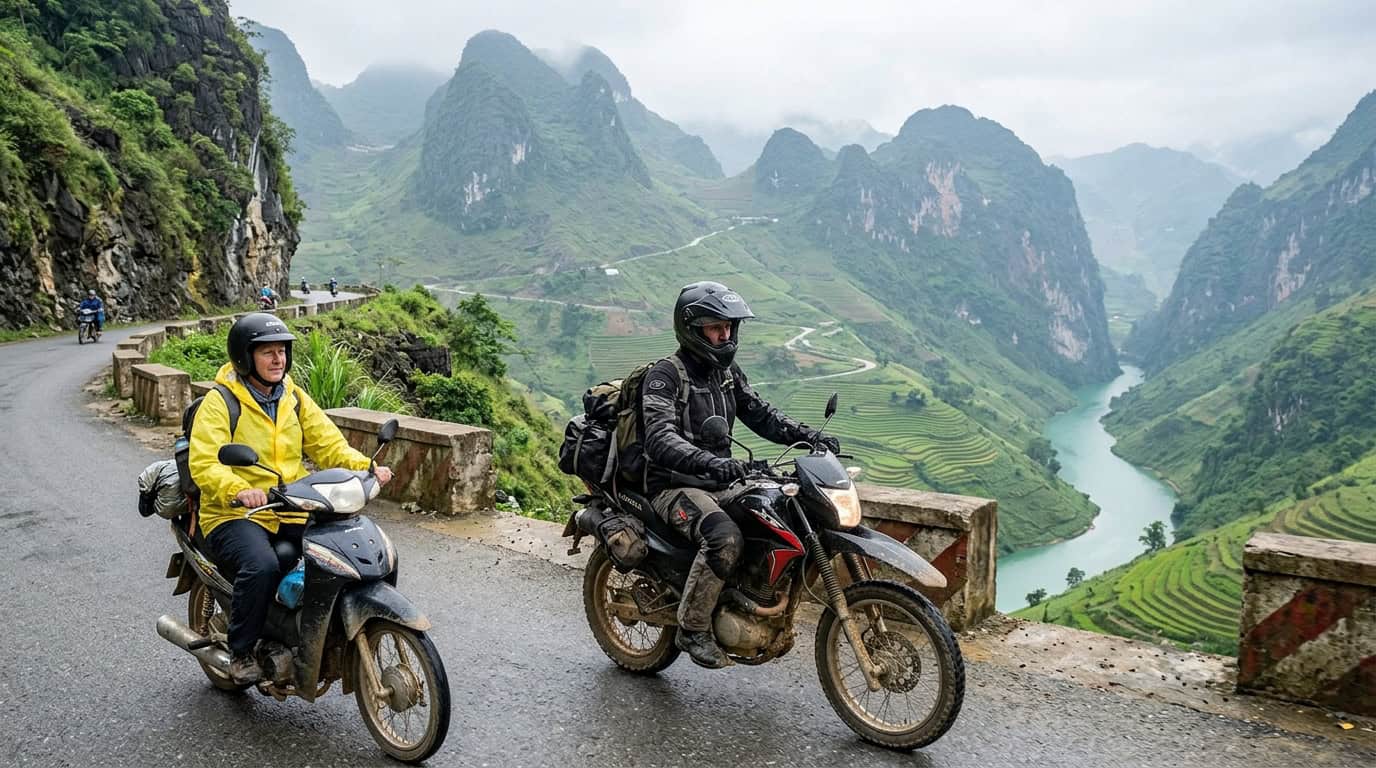
Deciding how to tackle the legendary switchbacks of the Ha Giang Loop is the most important planning choice you will make for your northern Vietnam adventure. For many travelers, hiring a professional local driver is the gold standard for experiencing these dramatic limestone karsts without the stress of navigating treacherous mountain passes. Sitting pillion allows you to fully immerse yourself in the UNESCO recognized scenery, snapping high quality photos of the deep canyons and ethnic minority villages while an expert handles the technical riding. It is an incredible way to bridge the cultural gap, as your driver often shares personal stories and hidden viewpoints that you might otherwise miss on your own.
If you have a high level of confidence and a valid permit, self-driving a semi-automatic motorbike offers an unparalleled sense of freedom and adrenaline. There is something deeply rewarding about shifting gears as you climb toward the clouds, feeling the cool mountain air and the vibrating power of the bike beneath you. However, these roads are not for the faint of heart, featuring sharp hairpin turns and steep drops that require total focus and technical skill. Choosing to drive yourself means you can pull over whenever a particular peak catches your eye, but it also requires a serious commitment to safety and a deep respect for the unpredictable mountain terrain.
Whichever style you choose, the goal is to balance the thrill of the journey with the practical realities of such a demanding route. Those who prefer a relaxed pace often find that being a passenger allows for a more meditative connection to the scenery and the local hill tribe cultures. Conversely, enthusiasts who live for the twisties will find the 350 kilometer circuit to be a personal milestone in their riding history. Regardless of your seat on the bike, the key is to prioritize your comfort level so you can focus on the awe-inspiring beauty of the Dong Van Karst Plateau rather than worrying about the mechanics of the road.
A Four Day Ha Giang Loop Itinerary
Conquering the Ha Giang Loop is a transformative experience that begins with a scenic climb from Ha Giang City toward the mountain town of Yen Minh. On your first day, you will navigate the legendary Bac Sum Pass and stop at the Heaven Gate in Quan Ba to see the iconic Twin Mountains. This stretch is perfect for finding your rhythm on the bike while capturing your first dramatic photos of the limestone peaks. As the sun sets over the terraced valleys, you will settle into a local homestay to share a traditional meal with your fellow riders.
The second day takes you deeper into the UNESCO Karst Plateau as you ride from Yen Minh to the historic town of Dong Van. A highlight of this leg is the Hmong King Palace, a century-old fortress that showcases a unique blend of Chinese and European architecture tucked away in the mountains. You will spend the afternoon winding through the jagged rock forests of the Tham Ma Pass, where the hairpin turns provide an exhilarating challenge for any motorbike enthusiast. Reaching Dong Van at dusk allows you to explore the ancient quarter and enjoy the vibrant atmosphere of the night market.
Your third and fourth days are dedicated to the most breathtaking scenery of the trip, specifically the world-famous Ma Pi Leng Pass. Riding along the Sky Path offers a bird’s eye view of the emerald Nho Que River snaking through the deep canyon far below, which is a sight that truly defines the spirit of northern Vietnam. After a boat trip on the river or a trek through the clouds, you will head toward Meo Vac before beginning the long, winding descent back to Ha Giang City. Following a four-day itinerary is a time for reflection on the incredible safety skills you have gained and the stunning photography filling your camera roll.
Essential Gear For Rugged Mountain Roads
Packing for the Ha Giang Loop requires a strategic approach because you will experience multiple microclimates in a single afternoon. I found that the secret to staying comfortable while navigating the dramatic elevation changes is a versatile layering system. Start with a moisture-wicking base layer to handle the humid valleys, then add a fleece or lightweight down jacket for the chilly mountain passes like Ma Pi Leng. A high-quality waterproof shell is non-negotiable, as sudden rain clouds can roll over the limestone karsts without a moment’s notice. This flexible setup ensures you stay focused on the breathtaking views rather than shivering through the next hairpin turn.
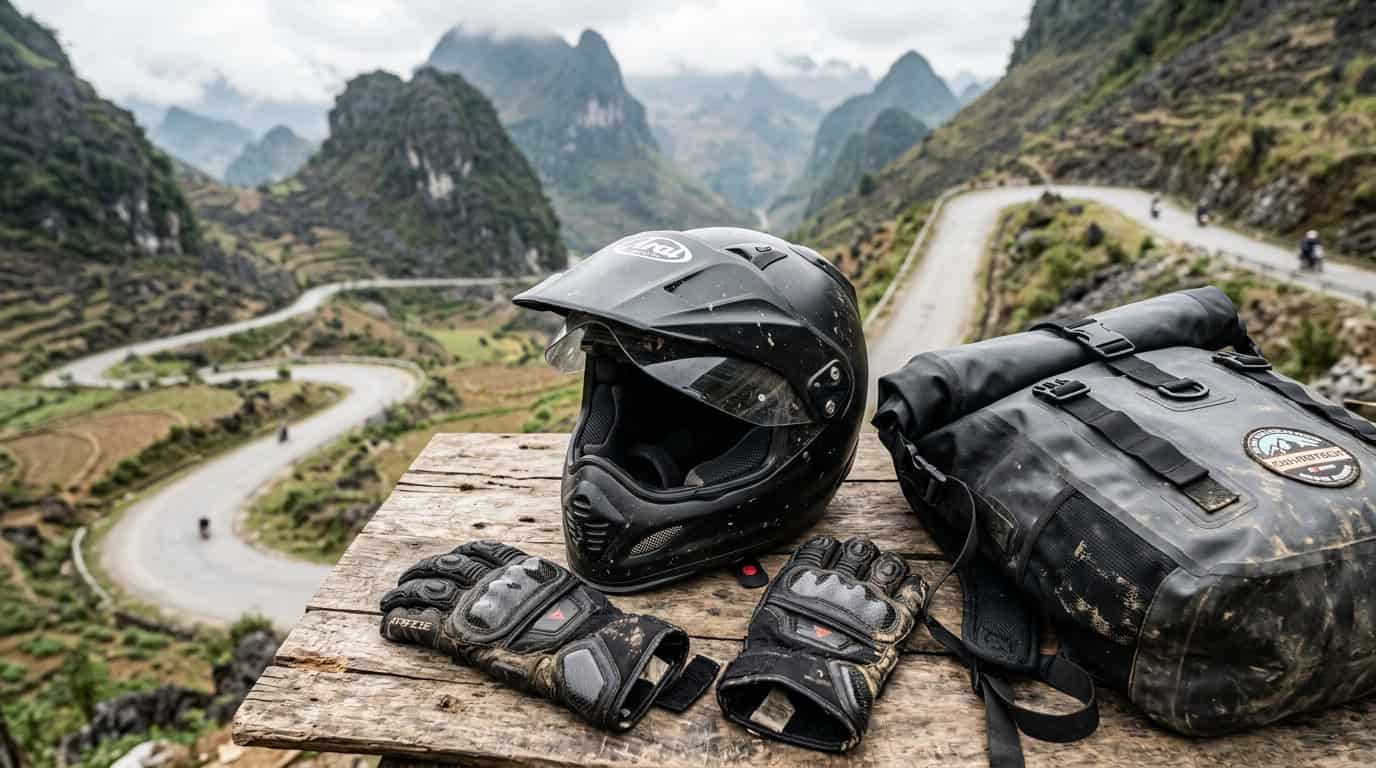
Safety is the absolute priority when you are tackling these rugged northern roads, so never compromise on your protective gear. While many travelers opt for basic pads, I highly recommend investing in high-quality, hardshell knee and elbow guards that stay securely in place during long rides. A full-face helmet provides the best protection against the elements and potential falls, giving you the confidence to lean into those winding curves. Don’t forget a sturdy pair of riding gloves to protect your hands from windburn and improve your grip on the handlebars. These essentials act as your insurance policy, allowing you to immerse yourself in the vibrant ethnic cultures and stunning landscapes with peace of mind.
To capture the sheer scale of the Dong Van Karst Plateau, your gear should also include a few photography essentials that are easy to access. I keep my camera or smartphone in a padded, waterproof chest bag so I can pull over quickly when the sunlight hits the rice terraces just right. Since you will be spending hours on the bike, a small dry bag for your electronics is a lifesaver during river crossings or unexpected downpours. Packing light is key, but prioritizing these specific safety and weather-resistant items made all the difference in my journey. Much like a coast to coast mountain adventure, having the right equipment turned a challenging trek into the most rewarding adventure of my life. Before you even arrive in Vietnam, make sure you arrive refreshed by preparing for the long journey to Southeast Asia.
An Unforgettable Journey Into Vietnam’s Heart
The Ha Giang Loop is far more than just a challenging ride through limestone karsts and deep canyons. It is a profound immersion into the heart of northern Vietnam, where the vibrant colors of Hmong and Tay traditions paint a landscape that feels frozen in time. As you navigate the winding turns of the Ma Pi Leng Pass, you are not just chasing an adrenaline rush, you are witnessing a way of life that remains deeply connected to the earth. Every village stop offers a chance to share a smile or a meal with local families, making the cultural richness as memorable as the mountain peaks. This journey demands respect for the road and an open heart for the people you meet along the way.
Ultimately, completing this 350km circuit is a transformative experience that deserves a spot on every traveler’s bucket list. The combination of dramatic photography opportunities and the pure freedom of the open road creates a sense of wonder that is hard to find elsewhere. Much like navigating Namibia on a self-drive adventure, the terrain requires focus and safety remains the top priority, but the rewards are found in the quiet moments between the hairpins and the golden light hitting the rice terraces. If you are looking for your next coastal thrill, you might consider the ultimate Albania coast road trip as a Mediterranean alternative. You will leave the loop with more than just incredible photos, you will carry a new perspective on resilience and beauty. Now is the time to prepare your gear, check your bike, and set out on this unforgettable northern adventure.
Frequently Asked Questions
1. How many days should I set aside for the Ha Giang Loop?
While you can technically rush the circuit in two days, I highly recommend spending four days to truly soak in the magic. This pace allows you to explore hidden ethnic villages and navigate winding side roads without feeling like you are constantly racing against the sunset.
2. Is the Ma Pi Leng Pass difficult to ride?
The Ma Pi Leng Pass is the crown jewel of the loop, but it requires your absolute focus and a bit of grit. The drops are steep and the winds can be unpredictable, so take your time leaning into those sweeping curves and pull over often to safely enjoy the views.
3. What is the most scenic part of the entire journey?
Standing atop the Ma Pi Leng Pass and looking down at the Nho Que River is an experience that will stay with you forever. The contrast between the jagged limestone cliffs and the emerald silk of the river below is some of the most spectacular scenery on the planet.
4. What kind of landscapes can I expect to see along the route?
You will navigate the dramatic canyons of the Dong Van Karst Plateau, where the air is thin and limestone peaks stretch all the way to the Chinese border. It is a raw, unfiltered environment that feels like a cinematic masterpiece at every turn.
5. What should I keep in mind when planning my trip?
Preparation is key to balancing the rugged nature of the road with the incredible rewards of the journey. Make sure your bike is in top condition and be ready for a sensory experience as you transition from mist-covered mountains to vibrant cultural hubs.
6. Is the Ha Giang Loop suitable for photography enthusiasts?
This journey is a dream for photographers, especially the stretch overlooking the Nho Que River. The deep canyon floor and vibrant green water provide a stunning contrast against the dark rocks, making it impossible to put your camera away.