
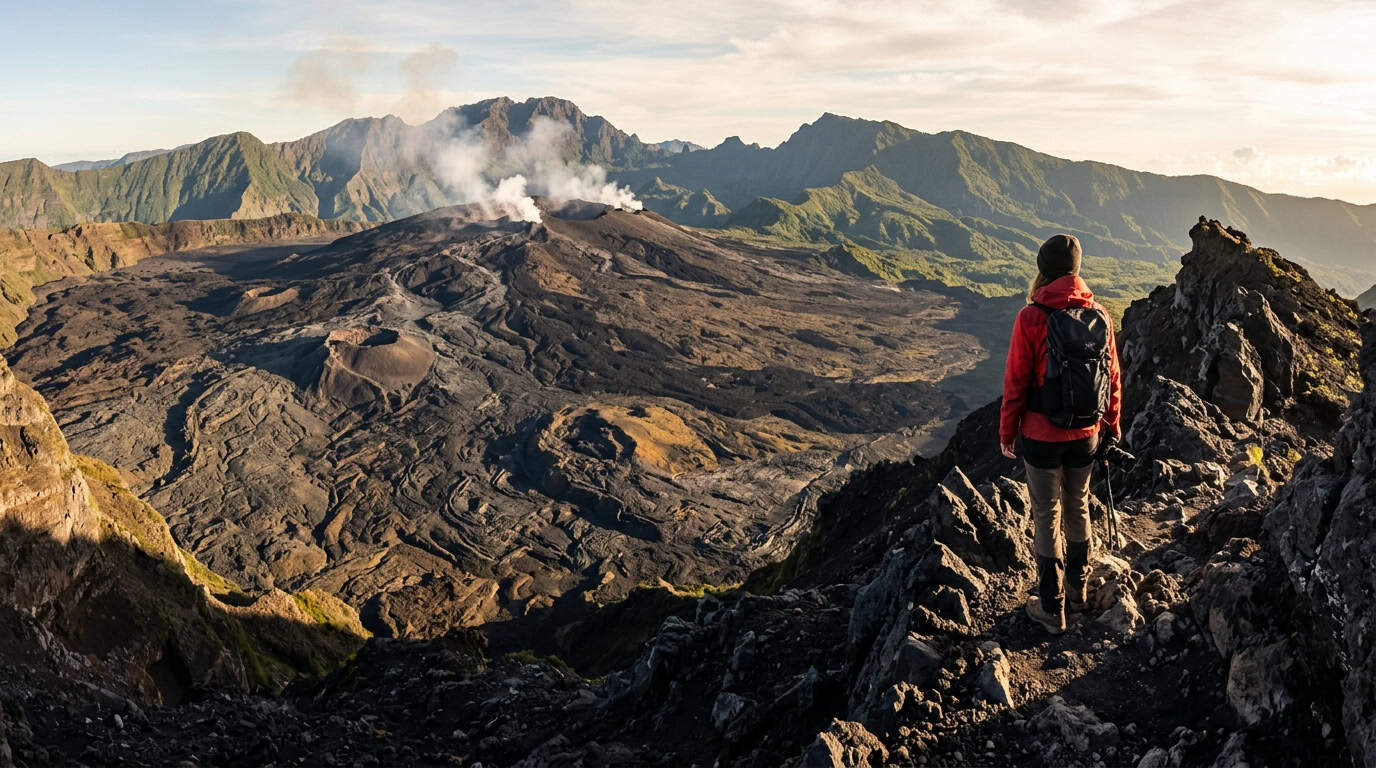
Imagine standing atop a jagged ridge where the clouds swirl beneath your feet, revealing a hidden world of emerald valleys and ancient volcanic craters. This is the magic of reunion island hiking, a place where over 900 kilometers of trails wind through a terrain so dramatic it earned a spot on the UNESCO World Heritage list. Whether you are trekking across the lunar surface of the active Piton de la Fournaise or conquering the 3,070-meter summit of Piton des Neiges, every step feels like a journey to the heart of the Earth.
I still remember the burn in my lungs and the surge of pure adrenaline as I looked out over the Cirque de Cilaos for the first time, watching the morning sun ignite the sheer cliff walls. This Indian Ocean gem isn’t just a destination for casual walkers; it is a playground for those who crave vertical challenges and breathtaking biodiversity. From the misty rainforests to the high-altitude peaks, the island offers a raw, unfiltered connection to nature that stays with you long after you’ve dusted off your boots.
Key Takeaways
- Réunion Island offers over 900 kilometers of demanding, vertical trails through UNESCO World Heritage sites, ranging from the roadless volcanic caldera of Mafate to the 3,070-meter summit of Piton des Neiges.
- Successful trekking requires high-quality hiking boots with ankle support, versatile layers for extreme temperature shifts, and early morning starts to reach summits before midday cloud cover obscures the views.
- The island’s unique mountain gîtes provide essential overnight lodging and traditional Creole meals, but these must be booked several months in advance due to limited space in remote settlements.
- Navigating the diverse terrain of active volcanoes and rainforests requires strategic planning, including the use of offline topographic maps and regular monitoring of local volcanic activity reports.
Trekking Through The Roadless Wilds Of Mafate
Stepping into the Cirque de Mafate feels like entering a hidden world that time forgot, accessible only by a network of steep, winding footpaths. Unlike the more developed regions of Réunion Island, this volcanic caldera is completely roadless, meaning every supply and visitor arrives either on foot or via a helicopter. As I descended the rocky switchbacks from the heights of Col des Boeufs, the silence of the wilderness was broken only by the rustle of tropical vegetation and the distant sound of waterfalls. It is a place where the rugged, vertical environment dictates the pace of life, forcing you to slow down and appreciate the sheer scale of the UNESCO World Heritage site surrounding you.
The sense of community in the tiny hamlets, known as islets, provides a heartwarming contrast to the daunting mountain peaks that tower over them. During my stay in La Nouvelle, I sat down for a traditional carry cooked over a wood fire and listened to stories of how locals manage life in such a remote enclave. There are no cars or sirens here, only the rhythmic sounds of nature and the sight of children playing in mountain meadows. This isolation preserves a unique Creole culture that feels both ancient and incredibly resilient against the backdrop of the Indian Ocean’s most dramatic topography.
For those planning to tackle these trails, remember that the terrain is demanding and requires sturdy boots and plenty of water. The elevation changes are significant, often involving thousands of feet of climbing in a single afternoon, so it is best to pack light and start your treks early to avoid the midday clouds. Booking your mountain gîtes well in advance is essential since space is limited in these small settlements. While the hike is physically taxing, the reward of watching the sunrise over the jagged ramparts of the cirque is an experience that no beach holiday could ever replicate.
Conquering Piton Des Neiges And The Volcanic Peaks
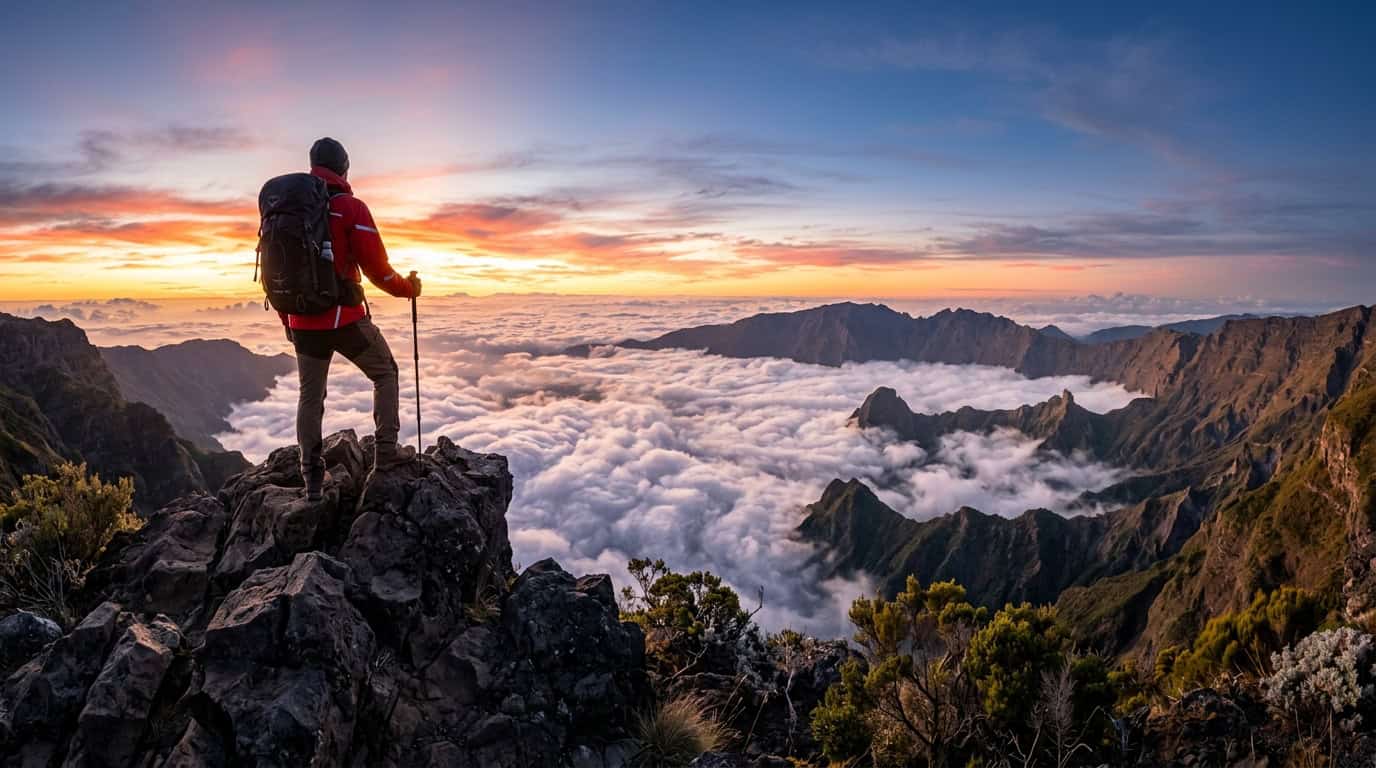
Standing atop Piton des Neiges at dawn is a transformative experience that makes you forget the grueling midnight ascent. As the highest point in the entire Indian Ocean, reaching this 3,070 meter summit feels like standing on the roof of the world. While many travelers flock to popular beaches, I found that the rugged interior of Réunion offers a raw, primal energy that those islands simply cannot match. The trail is steep and demanding, but the reward is a 360 degree panorama of the island’s lush cirques bathed in golden light. You will want to pack high quality layers, as the temperature at the peak can drop significantly compared to the tropical coast below.
The adventure continues as you head toward Piton de la Fournaise, one of the most active and mesmerizing volcanoes on the planet. Walking across the Plaine des Sables feels like you have been transported to Mars, with its vast stretches of red and black volcanic sands. The hiking trails here wind through ancient lava flows and craggy craters, offering a surreal, lunar environment that is unlike anything else in the tropics. I highly recommend checking the local volcanic activity reports before you set out, as the terrain is constantly being reshaped by nature. It is a humbling reminder of the earth’s power, providing a sense of discovery that beach resorts rarely offer.
To make the most of these volcanic peaks, plan to stay in the mountain gîtes to get an early start on the trails. These rustic mountain huts provide a cozy atmosphere and a chance to swap stories with fellow hikers over a warm Creole meal. Most trails are well marked, but the weather can change rapidly in the high altitudes of this UNESCO World Heritage site. Bring plenty of water and sturdy boots to navigate the sharp volcanic rock that characterizes much of the terrain. Exploring these peaks is not just a physical challenge, but a deep look into the geological heart of a truly unique island destination.
Navigating The Steep Ridges Of Cilaos And Salazie
Stepping into the cirques of Cilaos and Salazie feels like entering a lost world where jagged emerald peaks pierce the clouds at every turn. Unlike the flat coastal stretches of other Indian Ocean islands, these collapsed calderas offer some of the most vertical and rewarding terrain I have ever encountered. The trails here are notoriously steep, often requiring you to navigate tight switchbacks and stone staircases carved directly into the volcanic rock. You will find that the humidity of the lush Salazie forest contrasts sharply with the high altitude dryness of Cilaos, making every hour of the trek feel like a new adventure. I highly recommend starting your climbs at dawn to witness the mist lifting off the ramparts before the midday heat settles in.
For those planning to conquer these ridges, the difficulty level ranges from moderate to strenuous, so sturdy boots with excellent grip are a non negotiable requirement. The sheer elevation gain can be taxing on the knees, but the panoramic views of the UNESCO World Heritage areas make every bead of sweat worthwhile. To truly immerse yourself in the mountain culture, booking a stay at a local gite or mountain hut is an absolute must for any multi day itinerary. Places like the Caverne Dufour hut near Piton des Neiges provide a rustic but cozy atmosphere where you can share a warm Creole meal with fellow hikers. These communal stays offer a unique chance to rest your legs and swap stories under the stars before tackling the next ridgeline at sunrise.
Essential Gear And Planning For Reunion Island Trails
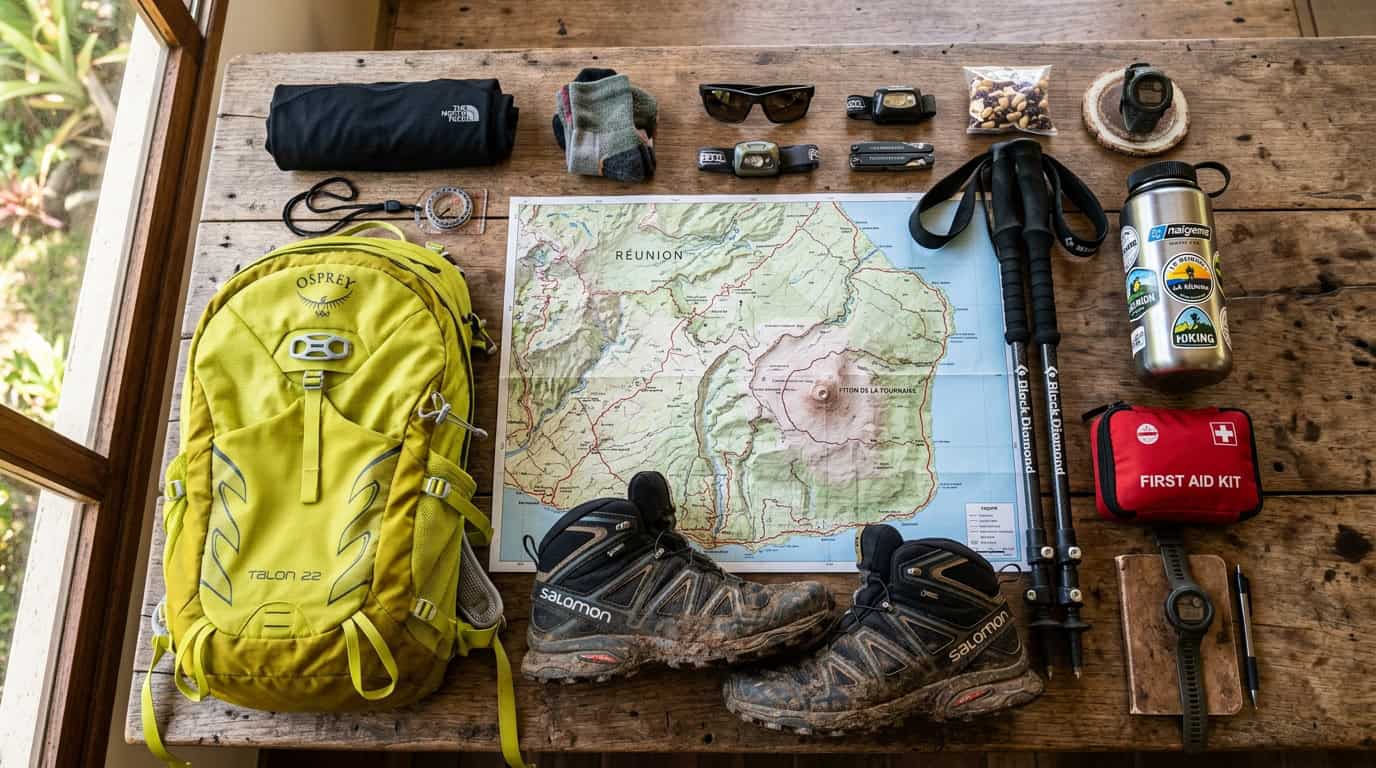
Preparing for the rugged terrain of Reunion Island requires more than just a standard pair of sneakers and a water bottle. Because you will be navigating everything from humid tropical forests to the lunar, volcanic areas of Piton de la Fournaise, high quality hiking boots with excellent ankle support are non negotiable. I always recommend packing versatile layers, as the temperature can plummet unexpectedly when you ascend the 3,070 meter Piton des Neiges. A lightweight waterproof jacket is another essential item, since the island microclimates often bring sudden afternoon showers even during the dry season. Don’t forget a high SPF sunscreen and a hat, because the sun at these high altitudes is incredibly intense despite the cool mountain air.
Navigating the 900 kilometer trail network is a dream for any adventurer, but it does require some strategic planning and respect for the environment. I found that the best way to stay safe is to download offline topographic maps, as cell service can be spotty within the deep, dramatic cirques. If you are planning to tackle the legendary GR R1 or GR R2 long distance trails, make sure to book your mountain gites or lodges several months in advance. These mountain huts offer a warm bed and a communal meal, which is the perfect way to recharge after a grueling two-day trek of elevation gain. Always check the local weather bulletins and volcanic activity reports before setting out, as trails can close quickly for safety reasons.
Safety on these volcanic slopes also means being mindful of your physical limits and the unique geography of the Indian Ocean. Start your hikes as early as possible, ideally at sunrise, to reach the summits before the clouds roll in and obscure those world class views. Carrying at least two to three liters of water is vital, especially when trekking across the exposed caldera where natural water sources are scarce. I love how well marked the paths are with yellow and white blazes, but it is still wise to carry a physical whistle and a basic first aid kit for emergencies. By respecting the terrain and coming prepared, you can focus entirely on the breathtaking beauty of this UNESCO World Heritage site.
Beyond the Peaks: Embracing Réunion’s Raw Beauty
Standing atop the rugged peaks of Réunion Island, I realized that this French gem offers something far more profound than your typical tropical getaway. While many travelers seek out the predictable palm trees and white sands of more common island destinations, Réunion challenges you to engage with the raw, creative power of the earth itself. Trekking through the collapsed calderas of the three cirques felt like walking through a living museum of geological history. The sheer scale of the vertical ramparts and the lush, emerald valleys tucked inside them provides a transformative experience that stays with you long after you have descended. It is a place where the environment demands your respect and rewards your effort with views that feel truly otherworldly.
If you are looking for an alternative to crowded beaches, this volcanic paradise needs to be at the very top of your bucket list. With over 900 kilometers of marked trails, including the ascent of Piton des Neiges, the highest point in the Indian Ocean, the island is a playground for anyone who finds peace in movement. I found that the true magic lies in the diversity of the terrain, from the lunar areas of Piton de la Fournaise to the hidden waterfalls of the rainforest. Every mile of these trails offers a fresh perspective on what it means to be an adventurer in a world that often feels over-explored. Réunion is not just a hiking destination, but a call to start your island adventure today and rediscover the wilder, more untamed corners of our planet.
Frequently Asked Questions
1. What is the best time of year to go hiking on Réunion Island?
The dry season from May to October is the ideal time to explore the trails because the skies are clearer and the temperatures are cooler. I always recommend early morning starts to reach the summits before the daily mist rolls in to cover those spectacular caldera views.
2. Do I need a guide to hike into the Cirque de Mafate?
You can certainly navigate Mafate on your own since the trails are well marked with standard Gîte signs. However, because there are no roads, you must be confident in your fitness and carry enough water to reach the next mountain hamlet or islet.
3. How difficult is the hike to the summit of Piton des Neiges?
Conquering the highest peak in the Indian Ocean is a strenuous challenge that requires a steep ascent over rocky terrain. It is a physically demanding trek that usually takes two days, but watching the sunrise from 3,070 meters is a soul stirring experience that makes every bit of effort worth it.
4. Is it safe to hike the Piton de la Fournaise volcano?
Hiking across the lunar area of this active volcano is safe as long as you stay on the marked paths and check the local volcanic observatory reports before heading out. The weather can change in an instant at high altitudes, so I always pack layers and a sturdy pair of boots for the sharp volcanic rock.
5. What should I pack for a multi day trekking trip on the island?
Pack light but prioritize high quality waterproof gear and warm layers for the chilly nights in the mountain lodges. You will also need a reliable pair of broken in hiking boots to handle the 900 kilometers of diverse, vertical terrain that ranges from muddy rainforests to jagged ridges.
6. Are there places to stay within the roadless areas like Mafate?
You can find charming mountain gîtes or hostels in the small islets where locals provide a warm bed and a hearty traditional Creole meal. These remote stops offer a wonderful chance to rest your legs and connect with the local community in the heart of the UNESCO World Heritage site.