
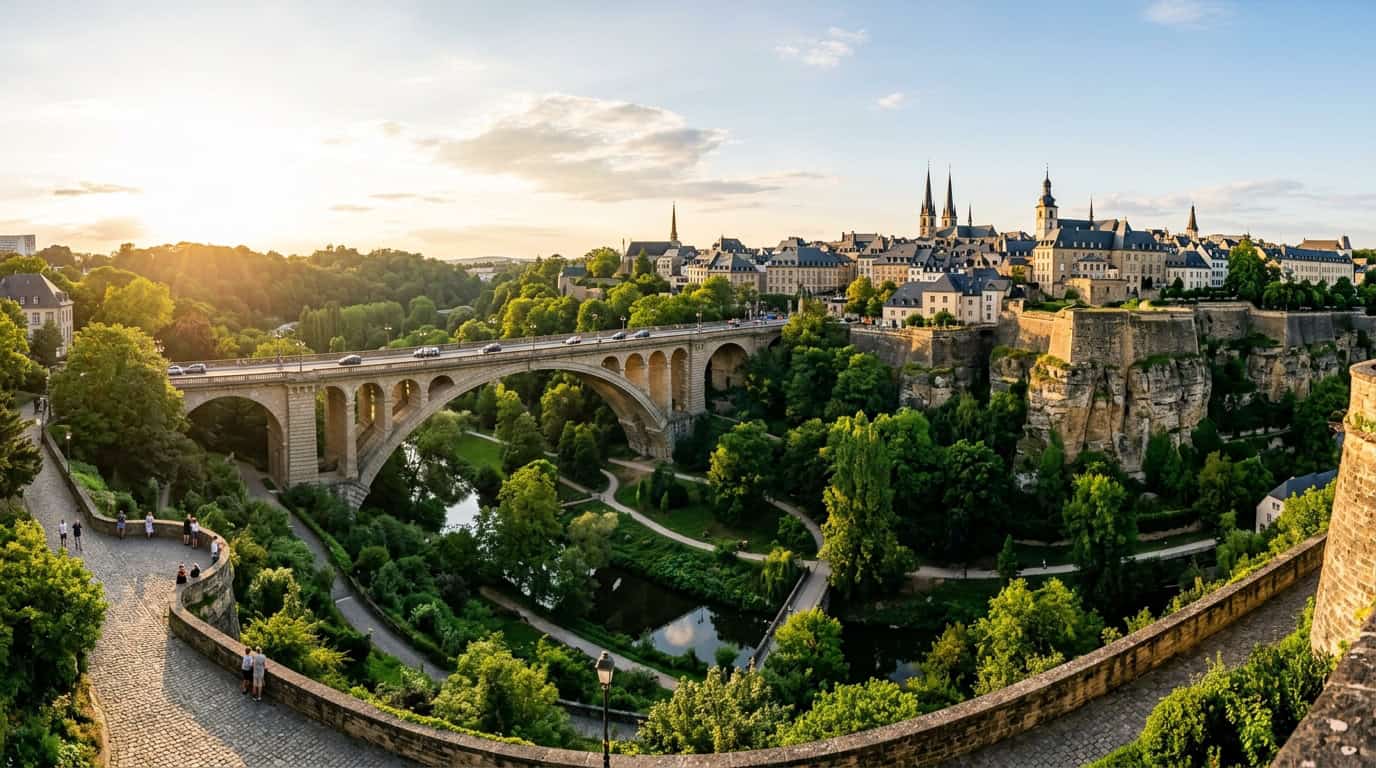
Perched atop dramatic sandstone cliffs, Luxembourg City is a multi-layered masterpiece where medieval fortifications meet the sleek glass of global financial centers. I remember the first time I stood on the Chemin de la Corniche, often called “Europe’s most beautiful balcony,” and watched the sunset glow hit the ancient stone spires of the Grund below. This Luxembourg City guide is designed to help you explore this unique capital, where 160 nationalities mingle in a compact, walkable space that feels like a living fairy tale.
With a high standard of living, the city offers a polished, high-end experience, yet its heart remains rooted in history and is incredibly accessible. You can spend your morning wandering through the UNESCO-listed Bock Casemates and your afternoon riding the world’s first entirely free public transport system to the modern Kirchberg district. Whether you are here to taste crisp Moselle wines in a cozy bistro or explore the deep ravines that slice through the city center, the Grand Duchy promises a blend of cosmopolitan flair and old-world charm.
Key Takeaways
- Luxembourg City offers an unparalleled, stress-free travel experience as the first country in the world to provide entirely free public transport, including all buses, trams, and trains.
- The city’s unique ‘multi-layered’ geography allows visitors to seamlessly transition between the medieval UNESCO-listed Bock Casemates and the sophisticated, cosmopolitan atmosphere of the Upper Town.
- A walk along the Chemin de la Corniche, known as ‘Europe’s most beautiful balcony,’ provides the best vantage point for viewing the dramatic contrast between the sandstone cliffs and the picturesque riverside district of the Grund.
- The capital’s immense international diversity, with nearly 70 percent of residents being foreign-born, creates a welcoming, multilingual environment where English is widely spoken alongside French, German, and Luxembourgish.
Navigating The Fairy Tale Cliffs Of Ville Haute
Stepping into Ville Haute feels like walking through the pages of a storybook, where the wealth of the world’s only Grand Duchy meets centuries of fortress history. As you wander the cobblestone streets of the Upper Town, the Grand Ducal Palace stands as a magnificent centerpiece with its intricate Flemish Renaissance facade. I highly recommend timing your visit to catch the ceremonial changing of the guard, a display of precision that perfectly encapsulates the city’s blend of tradition and culture. The surrounding squares are lined with sophisticated boutiques and upscale cafes, making it the perfect place to pause for a glass of local Crémant while soaking in the atmosphere.
To truly appreciate the dramatic geography of this capital, you must take a stroll along the Chemin de la Corniche. This pedestrian promenade winds along the 17th-century ramparts, offering staggering views of the Alzette River winding through the valley floor far below. From this vantage point, the multi-layered nature of the city becomes clear as the ancient stone fortifications of the Bock Casemates contrast with the lush greenery of the Grund. It is an accessible yet awe-inspiring walk that proves why this compact city is a premier destination for those seeking history without the overwhelming crowds of larger hubs.
Navigating this historic core is best done on foot to fully appreciate the architectural details hidden in every alleyway and courtyard. While the city serves as a major global financial center, the atmosphere in Ville Haute remains intimate and inviting, especially during the golden hour when the sun hits the sandstone cliffs. You can easily spend an afternoon transitioning from world-class art galleries to the quiet serenity of the Notre-Dame Cathedral. For a seamless experience, remember that all public transport in the country is free, allowing you to effortlessly zip from the modern plateau back to these enchanting heights whenever you desire.
Descending Into The Grund And Casemates Bock
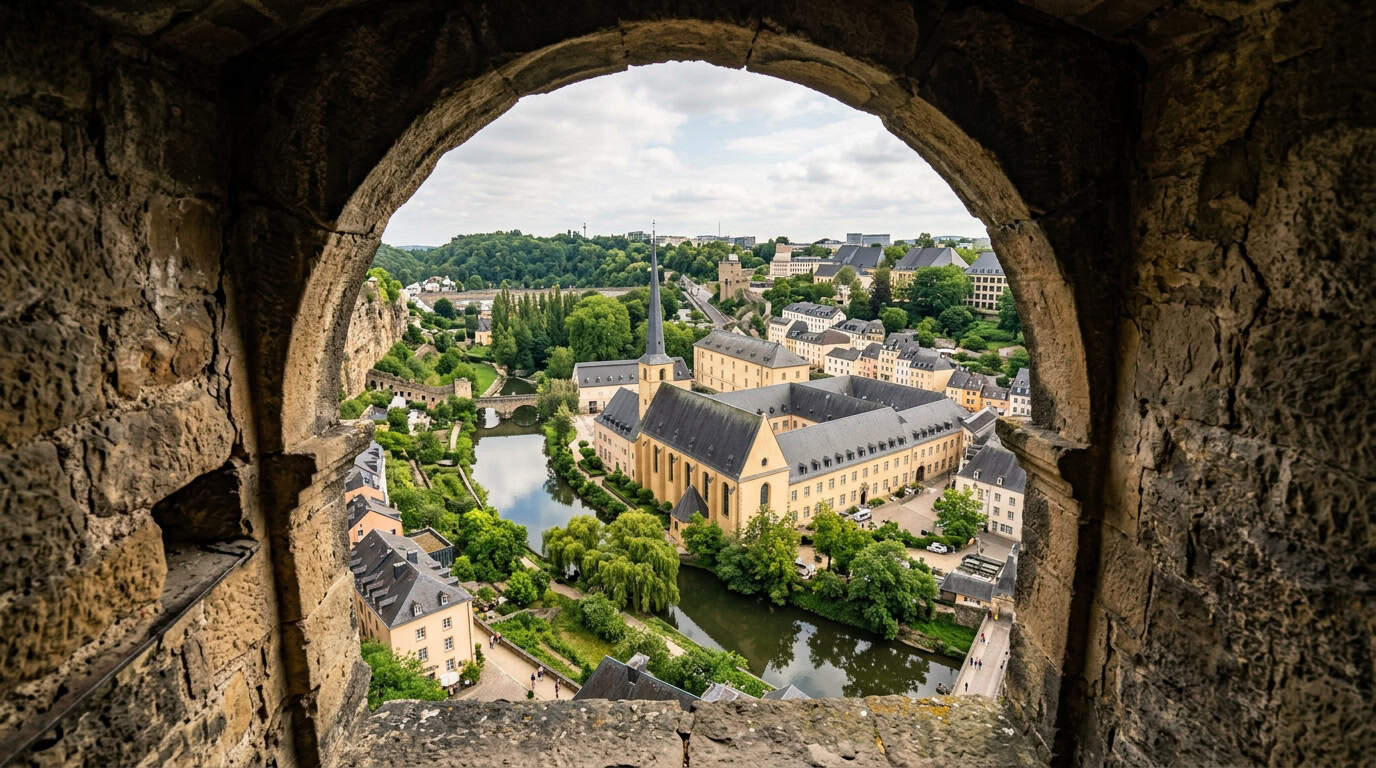
To truly understand why Luxembourg City is nicknamed the Gibraltar of the North, you have to descend into the UNESCO-listed Bock Casemates. This labyrinth of stone tunnels once stretched for over twenty kilometers, providing a formidable defense system that carved right into the steep cliffs. Walking through these cool, subterranean passages, I felt the weight of centuries of military history while catching glimpses of the valley through narrow arrow slits. It is an atmospheric experience that perfectly balances the city’s high-end cultural polish with its rugged, medieval bones.
After exploring the heights of the fortress, I recommend taking the scenic path or the public elevator down into the Grund, the city’s most picturesque lower district. This riverside quarter feels like a secluded village tucked away from the bureaucratic hub above, characterized by cobblestone streets and the gentle flow of the Alzette River. The reflection of the ancient stone walls in the water creates a stunning backdrop for a leisurely afternoon stroll. It is the ideal place to grab a local craft beer or a glass of Moselle wine at a cozy waterfront bistro.
For the best experience, I suggest visiting the Casemates in the late morning before the crowds arrive and then heading down to the Grund for a long, relaxed lunch. The transition from the dark, imposing tunnels to the bright, floral charm of the valley floor is one of my favorite contrasts in all of Europe. You can easily spend hours wandering the narrow lanes, admiring the colorful facades and the quiet gardens that line the riverbanks. This multi-layered layout is exactly what makes Luxembourg City such a rewarding destination for a sophisticated weekend break.
Practical Tips For The Capital
Navigating this capital is surprisingly stress-free thanks to the country’s approach to urban mobility. Since 2020, Luxembourg has offered free public transport across the entire nation, meaning you can hop on any bus, tram, or train without ever fumbling for a ticket or a credit card. I found that the sleek, modern tram system is the best way to glide between the historic Upper Town and the futuristic Kirchberg plateau. For a more scenic perspective, the glass-walled Pfaffenthal Lift offers a breathtaking, free ride that connects the high city cliffs to the valley floor below. It is a dream for any traveler who wants to maximize their time exploring ancient fortifications rather than worrying about logistics.
The city’s social fabric is just as fascinating as its architecture, with nearly 70 percent of residents hailing from outside Luxembourg’s borders. This incredible international diversity creates a welcoming atmosphere where you will hear a melodic mix of French, German, and Luxembourgish on every street corner. English is exceptionally common and serves as the bridge for the city’s 160 different nationalities, making it incredibly easy to strike up a conversation at a local bistro. I loved how this multicultural energy transforms the dining scene into a global playground where high-end European elegance meets flavors from across the world. You will feel right at home whether you are asking for directions to the casemates or ordering a glass of local sparkling Crémant.
To truly master the layout of this multi-layered metropolis, I recommend using the city’s verticality to your advantage during your stay. Because the city is built across deep gorges, walking routes often involve dramatic bridges and hidden elevators that cut through the limestone cliffs. You can spend your morning wandering the UNESCO-listed fortress walls and your afternoon browsing high-end boutiques in the cosmopolitan center with minimal effort. Don’t be afraid to wander off the main tourist paths, as the compact size makes it nearly impossible to get lost for long. This unique blend of medieval history and modern efficiency makes Luxembourg City one of the most accessible yet sophisticated getaways in all of Europe.
A Perfect Forty Eight Hour Luxembourg Itinerary
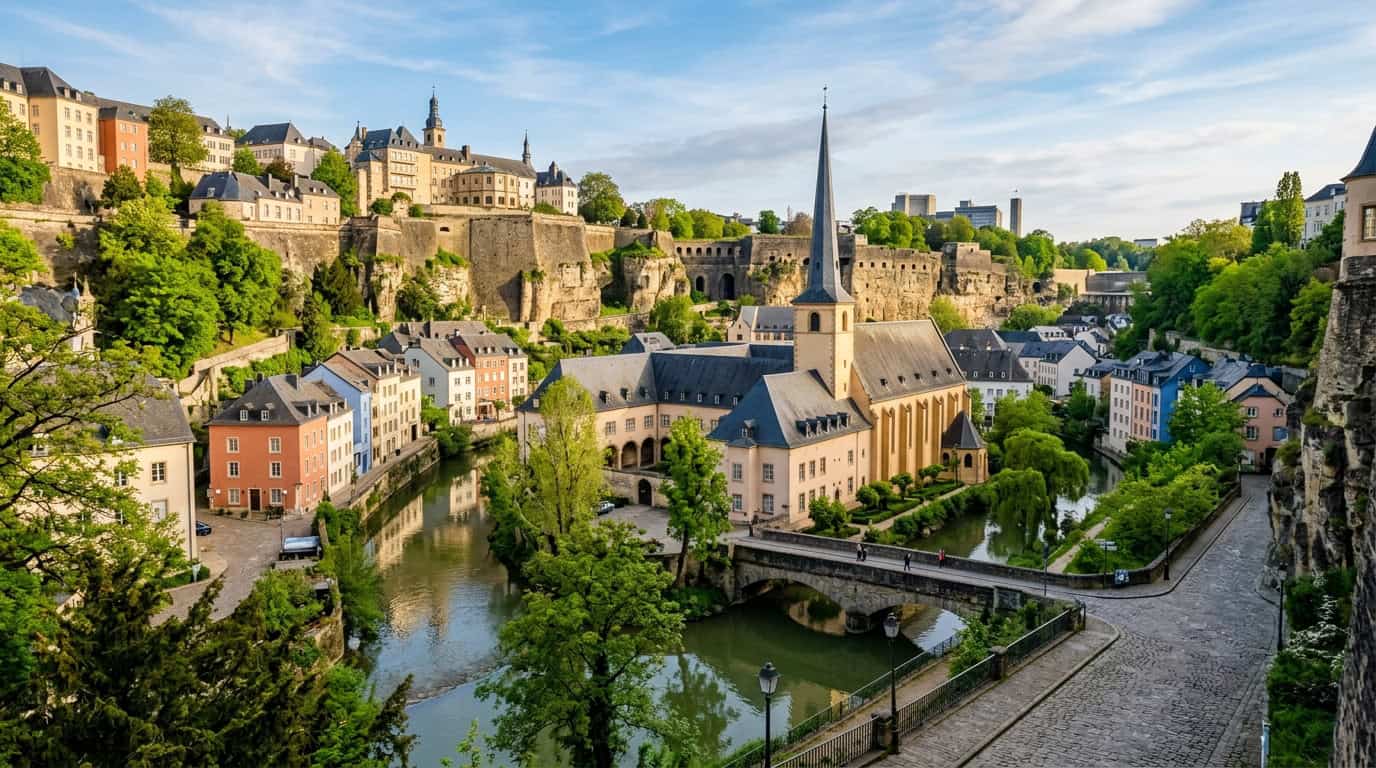
Luxembourg City is the perfect destination for a sophisticated weekend escape, offering a seamless blend of medieval history and modern luxury. You should begin your first day in the historic Ville Haute, where the golden stone of the Grand Ducal Palace glows against the morning sky. After exploring the intricate fortifications of the Bock Casemates, I recommend heading to the Place d’Armes for a high-end lunch at one of the city’s renowned establishments. The afternoon is best spent wandering through the Chemin de la Corniche before descending into the charming Grund district for an evening of fine dining by the river.
On your second day, trade the urban bustle for the serene greenery of the Pétrusse Parks, which sit in the deep valley beneath the city’s towering bridges. I love walking along the winding paths of the Pétrusse Valley, where the lush foliage provides a quiet sanctuary just steps away from the financial district. After your stroll, take the panoramic glass elevator up to the Pfaffenthal area to witness the city’s multi-layered architecture from a breathtaking vantage point. End your forty eight hour journey by visiting the Mudam Museum of Modern Art, located on the site of an old fort, which perfectly encapsulates the city’s ability to honor its past while embracing a global, forward-thinking future.
Why Luxembourg City Belongs on Your Bucket List
Luxembourg City is far more than just a financial center or a bureaucratic hub. During my last visit, I was struck by how the city manages to feel both incredibly grand and remarkably intimate at the same time. You can spend your morning wandering through the ancient stone tunnels of the Bock Casemates and your afternoon sipping local sparkling wine in a chic, cosmopolitan plaza. The multi-layered environment creates a unique vertical beauty where the lush valley of the Alzette River sits peacefully below the dramatic, soaring fortifications of the upper town. It is a rare destination that offers such a high density of history and culture without the overwhelming crowds found in other European capitals.
This compact gem is the perfect solution for travelers who want a sophisticated weekend break that is easy to navigate. Because the city is so accessible and offers free public transportation, you can maximize every hour of your trip without any logistical stress. I highly recommend taking a slow walk along the Chemin de la Corniche to truly appreciate the fairy-tale views. Whether you are drawn to the fine dining scene or the fascinating blend of three official languages, this city provides a rich, multicultural experience that stays with you. Now is the perfect time to visit this Grand Duchy and start booking your magical Central European escape to one of the world’s most unique capitals.
Frequently Asked Questions
1. Is public transport really free in Luxembourg City?
Yes, Luxembourg is the first country in the world to offer entirely free public transport for everyone. You can hop on any bus, tram, or train within the city and national borders without spending a cent, making it incredibly easy to explore from the Grund to Kirchberg.
2. What is the best way to see the city’s famous fortifications?
I recommend starting at the Bock Casemates to explore the subterranean tunnels before walking along the Chemin de la Corniche. This path offers breathtaking views over the canyon and the ancient stone spires, earning its reputation as the most beautiful balcony in Europe.
3. Can I visit the Grand Ducal Palace?
You can admire the stunning Flemish Renaissance facade of the Grand Ducal Palace year round and watch the ceremonial changing of the guard. During the summer months, guided tours are available inside, allowing you to see the elegant state rooms where the Grand Duke hosts world leaders.
4. What should I pack for a trip to Luxembourg City?
Comfortable walking shoes are a must because the city is built on multiple levels with many steep, cobblestone streets. Since the weather can be unpredictable, I always suggest bringing layers and a light waterproof jacket so you can enjoy the outdoor cafes and cliffside views in comfort.
5. Is Luxembourg City a good destination for food and wine lovers?
The city is a paradise for foodies, blending French sophistication with hearty Germanic influences. You must try the local Crémant, a sparkling wine from the nearby Moselle Valley, while relaxing in one of the upscale bistros in Ville Haute.
6. How many days do I need to see the main highlights?
While the city is compact enough to see the major UNESCO sites in a single day, I suggest staying for two or three days. This gives you enough time to wander the deep ravines of the Grund, explore the modern art at Mudam, and truly soak in the fairy tale atmosphere at a slower pace.