
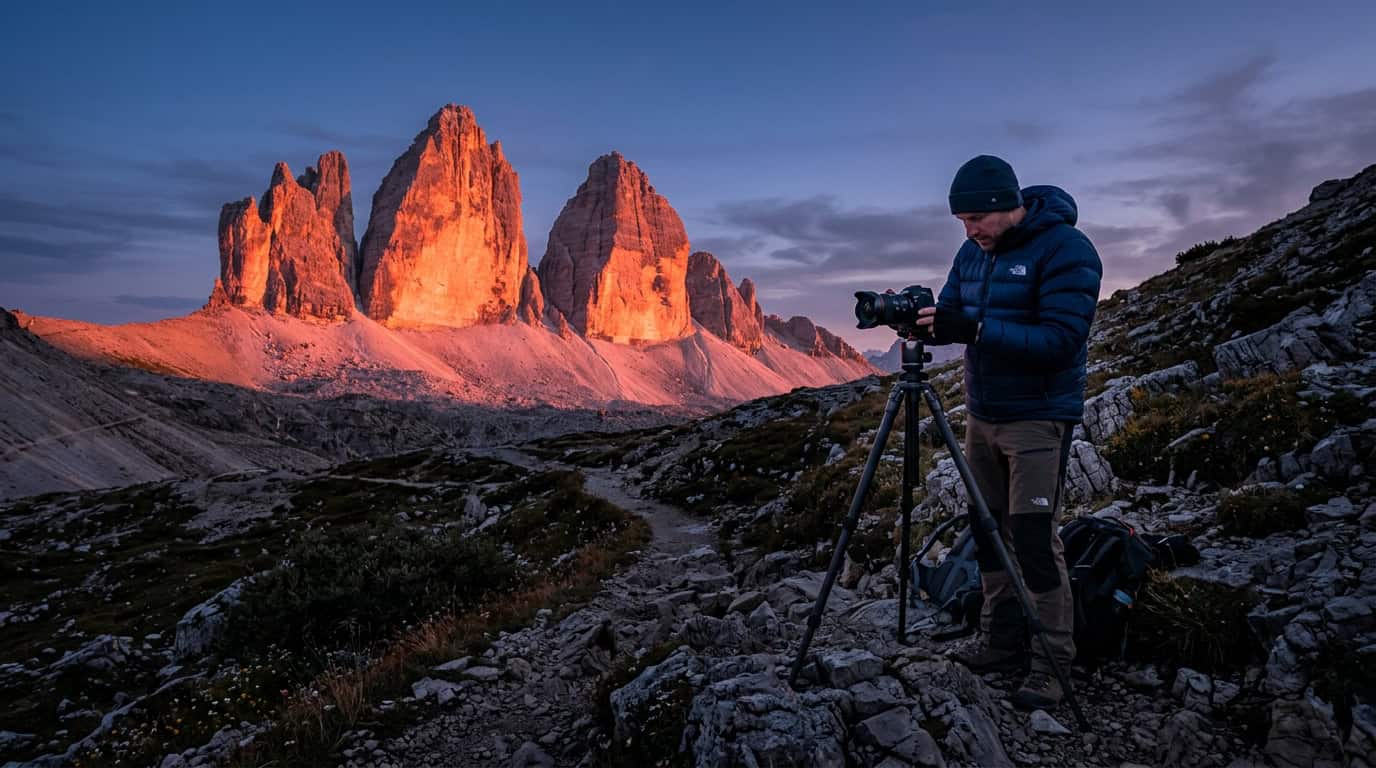
There is a fleeting moment just before the sun dips behind the pale limestone peaks of Northern Italy when the entire world turns a fiery shade of pink. It’s called the alpenglow, and it’s the reason I find myself returning to these jagged horizons year after year to scout the best Dolomites photography spots. From the legendary spires of Tre Cime di Lavaredo to the mist-covered meadows of the high alpine, this region offers a dramatic canvas that feels almost otherworldly.
Capturing that perfect frame in 2025 requires more than just a good lens; it requires a solid strategy to navigate new vehicle access regulations and growing crowds. I’ve spent countless sunrises on rocky ridges like the Cadini di Misurina runway to learn exactly when to arrive and where to stand. Balancing the dream of the perfect shot with the reality of local conservation efforts is the key to a successful photography expedition in these mountains.
Key Takeaways
- Mastering Dolomites photography in 2025 requires strict adherence to new vehicle quotas and pre-booked parking systems at iconic locations like Lago di Braies and Tre Cime di Lavaredo.
- Arrive at key locations at least one hour before sunrise or sunset to secure tripod positioning and capture the fleeting alpenglow while avoiding peak tourist crowds.
- Utilize a combination of wide-angle lenses for sprawling meadows like Alpe di Siusi and telephoto lenses to compress jagged ridgelines at Seceda and Cadini di Misurina.
- Protect the fragile alpine ecosystem by staying strictly on marked paths and using lens compression to achieve dramatic perspectives without causing soil erosion.
Chasing Sunrise At Alpe Di Siusi And Seceda
To capture the ethereal beauty of Alpe di Siusi, I recommend arriving at least an hour before the first light touches the Sassolungo and Sassopiatto peaks. As the morning mist rolls through Europe’s largest alpine meadow, you will want to use a wide angle lens to emphasize the sprawling green foreground and the rustic wooden huts scattered across the hills. I found that positioning myself near the Adler Lodge area provides the most iconic perspective of the undulating landscape as the sun begins to paint the peaks in a soft pink glow. Be mindful of the local traffic restrictions that limit vehicle access between 9:00 AM and 5:00 PM, making an early start essential for both your creative vision and logistical ease.
Transitioning over to the dramatic ridgelines of Seceda requires a bit more planning but offers some of the most rewarding compositions in the entire mountain range. Standing at the edge of the Odle Group, you can use a telephoto lens to compress the jagged, knife edge peaks that look like they have been sliced directly out of the earth. I love experimenting with vertical orientations here to highlight the sheer scale of the drop off into the valley below. The play of light and shadow during the golden hour creates a three dimensional effect on the rock faces that is impossible to replicate during the harsh midday sun.
When you are planning your shoot at these high altitude locations, remember that the weather can shift from clear skies to heavy cloud cover in a matter of minutes. I always pack a sturdy tripod and a set of graduated neutral density filters to balance the bright sky against the dark, textured foregrounds of the meadows. These technical tools allow you to capture the full dynamic range of the sunrise without losing the intricate details in the limestone cliffs. Beyond the gear, the experience of watching the world wake up from these silence-filled heights is a spiritual moment that defines the magic of Dolomites photography.
Iconic Peaks Of Tre Cime And Cadini
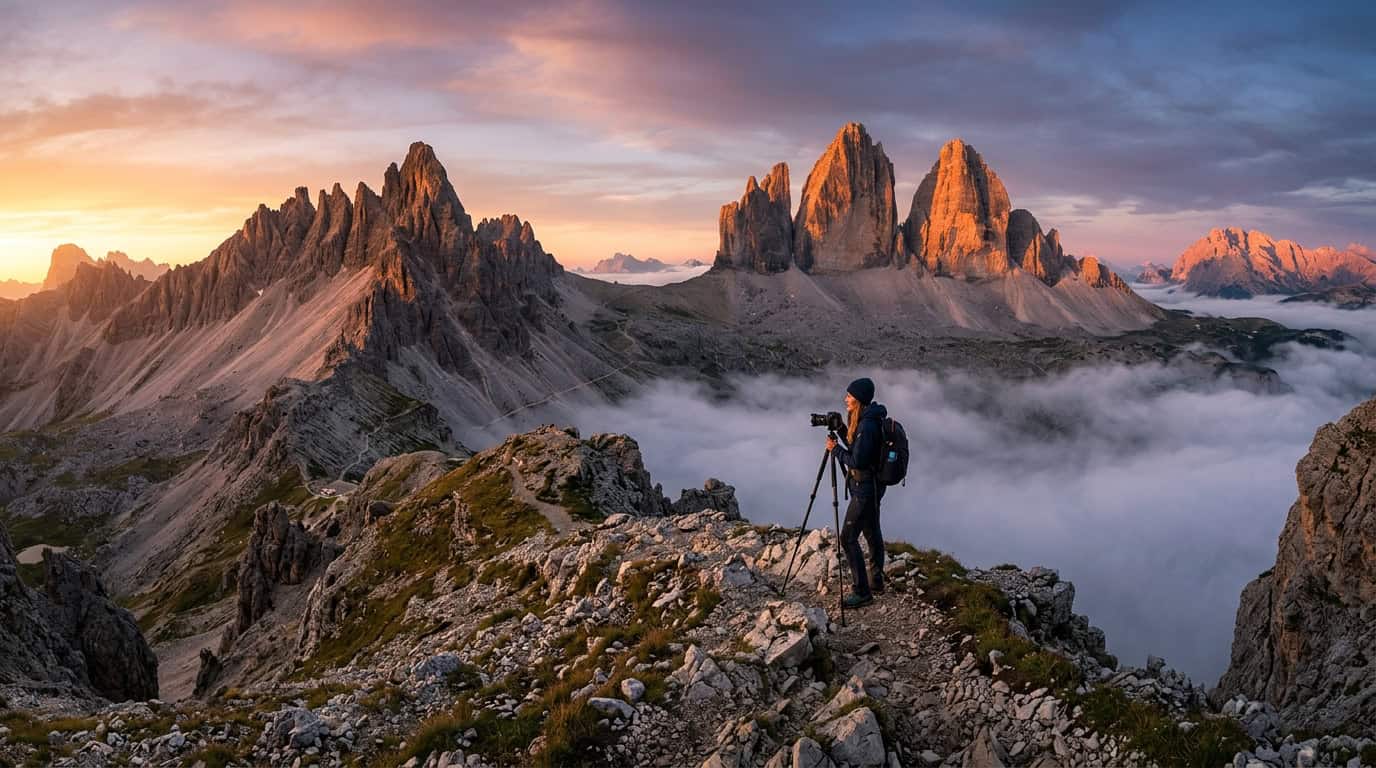
Standing on the edge of the Cadini di Misurina viewpoint feels like stepping into a dream where the earth has been shattered into a thousand jagged limestone shards. This location is home to the famous rock runway, a narrow natural path that offers a sense of scale against the backdrop of the towering peaks. To truly capture the grandeur of this scene, I highly recommend using a 70-200mm lens to utilize lens compression, which makes the background mountains appear much larger and more imposing behind your subject. Because this spot has exploded in popularity, I suggest arriving at least an hour before sunrise to secure your tripod position and experience the stillness of the mountains before the morning hikers arrive.
The journey continues toward the three peaks of Tre Cime di Lavaredo, where the geological drama reaches its absolute peak. For the most iconic perspective, make your way toward Rifugio Locatelli or the small stone chapel nearby to frame the three massive monoliths against the shifting sky. Sunset is the magic hour here, as the pale dolomite stone catches the light and glows with a fiery orange hue known as alpenglow. Be mindful of the new vehicle access regulations and parking limits that have been implemented to protect this fragile environment. Planning your hike for the late afternoon not only rewards you with the best lighting conditions but also allows you to enjoy a quieter trail as the midday crowds begin to descend.
Reflective Beauty At Lago Di Braies And Carezza
Capturing the perfect mirror reflection at Lago di Braies requires more than just a good eye, as it demands a deep appreciation for the early morning stillness. I found that arriving at least an hour before sunrise is the only way to beat the crowds and secure a spot where the wooden rowboats align perfectly with the Seekofel peak. To achieve that glass-like surface, you should use a sturdy tripod and a circular polarizer to cut through the surface glare while enhancing the deep emerald tones of the water. This location is a masterclass in symmetry, so I recommend using a wide-angle lens to frame the historic boathouse against the towering limestone walls. The soft, pre-dawn light creates a dreamy atmosphere that feels far more intimate than the busy midday rush.
Moving toward the Val d’Ega, Lago di Carezza offers a completely different palette of vibrant turquoise and rainbow hues that seem almost otherworldly. Local legends call it the Rainbow Lake, and when you see the Latemar mountain range reflected in its crystalline depths, you will understand why. I suggest focusing on the intricate textures of the sunken trees and the sharp contrast between the dark evergreens and the pale mountain rock. Because you must stay behind the protective fences to preserve the delicate ecosystem, a 24-70mm lens is your best friend for capturing both the grand scale and the finer details. Try to visit during the late afternoon when the sun hits the peaks, creating a glowing backdrop that pops against the cool, colorful water below.
Navigating Overtourism And Seasonal Photography Regulations
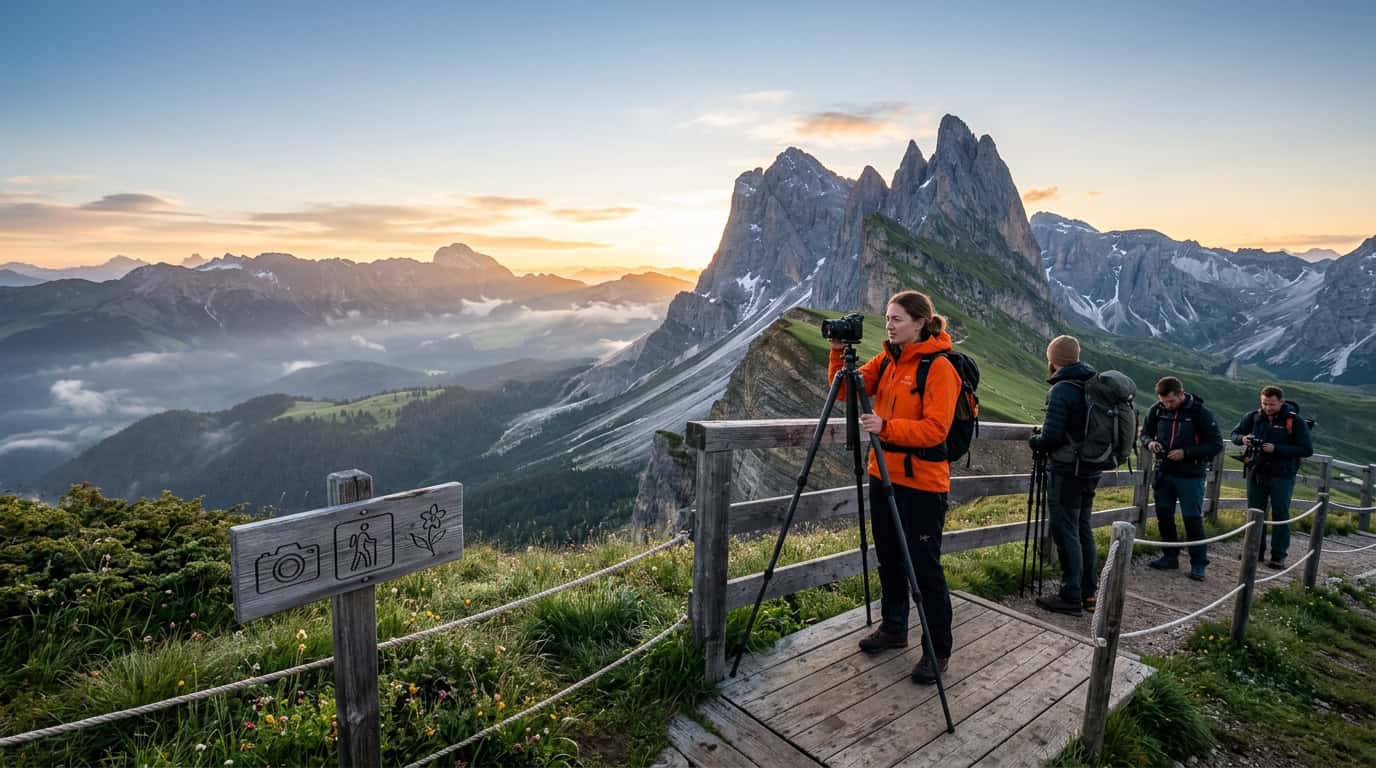
Capturing the ethereal alpenglow of the Dolomites has become a dream for photographers worldwide, but the surge in popularity means we have to be much more intentional about how we visit. For the 2025 and 2026 seasons, several iconic spots like Lago di Braies and the road to Tre Cime di Lavaredo have implemented strict vehicle quotas and mandatory pre-booked parking systems. I highly recommend checking the official local transport portals months in advance to secure your spot, or better yet, using the extensive network of shuttle buses that run during peak light hours. Planning your shoot around these logistics ensures you spend more time behind the lens and less time navigating traffic or being turned away at a trailhead.
If you want to avoid the mid-day crowds and capture the most dramatic shadows, I suggest leaning heavily on the local cable car schedules for your planning. Many lifts now offer extended summer hours or specific sunrise operations that allow us to reach high-altitude plateaus like Seceda without a grueling overnight hike. However, always verify the final descent times, as missing the last car can turn a sunset session into an unplanned mountain bivouac. By timing your arrival for the shoulder hours just before the first lift or after the last one, you can often find a few moments of solitude to frame up those jagged limestone peaks in peace.
Beyond the logistics, being a responsible photographer in this fragile alpine environment means staying strictly on marked paths to protect the delicate flora. I have seen firsthand how social media trails can scar the landscape, particularly at the Cadini di Misurina viewpoint where erosion is a growing concern. Using a telephoto lens is a great trick for compressing the landscape and making those dramatic ridges look even closer without needing to step off the designated trail. When we respect these boundaries and follow the new seasonal regulations, we ensure that these breathtaking vistas remain pristine for the next generation of creators to discover.
Capture the Glow: Your Dolomites Photography Adventure
The Dolomites are far more than just a collection of jagged peaks and limestone walls, they are a playground for anyone with a creative soul and a camera in hand. Standing on a ridge at sunrise while the first light turns the pale rock into a glowing crown of fire is an experience that stays with you long after the memory card is full. Whether you are framing the perfect compression shot of the Cadini di Misurina or waiting for the soft blue hour light to settle over a mountain chapel, these landscapes demand your focus and reward your patience. I have found that the most magical moments happen when you step away from the tripod to simply breathe in the crisp alpine air. Every trail offers a new perspective, and every change in weather brings a fresh opportunity to capture the Arctic light or the warm glow of the Italian sun.
Now is the perfect time to pack your gear and start planning your own photographic journey through these legendary Italian peaks. While the new access regulations require a bit more foresight and early starts, the effort only makes the resulting images feel more earned and personal. Remember to bring a versatile range of lenses to capture both the sweeping vistas and the intimate details of the mountain textures. There is a profound sense of accomplishment in navigating the winding roads and high altitude paths to find that one shot that speaks to your artistic vision. If you enjoy this terrain, you might also love hiking the Austrian Alps, where similar limestone formations create endless creative possibilities. If you are looking for a different kind of mountain adventure, the glacial lakes of North America offer a similarly grand scale. I hope these tips inspire you to chase the alpenglow and discover your own favorite corners of this breathtaking region. The mountains are waiting for you, so grab your bag and go create something beautiful.
Frequently Asked Questions
1. When is the best time to photograph the alpenglow in the Dolomites?
The most magical light occurs just moments before the sun dips behind the limestone peaks, turning the horizon a fiery pink. I recommend arriving at your location at least an hour before sunset to set up your tripod and catch the full transition of colors. This window is fleeting, so being prepared with your composition beforehand is essential.
2. What are the vehicle access restrictions for Alpe di Siusi?
To protect the delicate alpine meadows, local regulations strictly prohibit private vehicle access between 9:00 AM and 5:00 PM. I always plan to arrive well before dawn to secure a spot and ensure I am settled before the road closes. If you miss the morning window, you will need to use the cable car or wait until the evening to drive up.
3. Which lenses should I pack for a photography trip to the Dolomites?
I find that a versatile kit including both a wide angle and a telephoto lens is necessary for this landscape. Use a wide angle lens at Alpe di Siusi to capture the sprawling meadows and rustic huts, while a telephoto lens is perfect for compressing the dramatic, jagged ridgelines of Seceda. This combination allows you to capture both the scale of the valley and the intimate details of the peaks.
4. How can I avoid the crowds at popular spots like Tre Cime di Lavaredo?
Beating the crowds in 2025 requires a mix of early starts and strategic hiking. I often find that shivering through a pre-dawn hike to spots like the Cadini di Misurina runway pays off with a peaceful experience before the tour groups arrive. Balancing your desire for the perfect shot with a respect for local conservation efforts will help you find quieter, more authentic perspectives.
5. Where is the best vantage point for photographing the Sassolungo peaks?
The area near the Adler Lodge offers the most iconic and breathtaking perspective of the Sassolungo and Sassopiatto groups. From here, you can capture the undulating hills of Europe’s largest alpine meadow as the morning mist rolls through the valley. It is a classic shot that perfectly encapsulates the ethereal beauty of the region.
6. Is it difficult to photograph the Seceda ridgeline?
While Seceda requires careful logistical planning regarding lift schedules and hiking trails, the rewards are some of the best in the world. Standing at the edge of the Odle Group provides a dramatic drop-off that creates a sense of immense scale in your photos. I suggest checking the weather and lift times a day in advance to ensure you have enough time to scout the ridge for the best composition.