
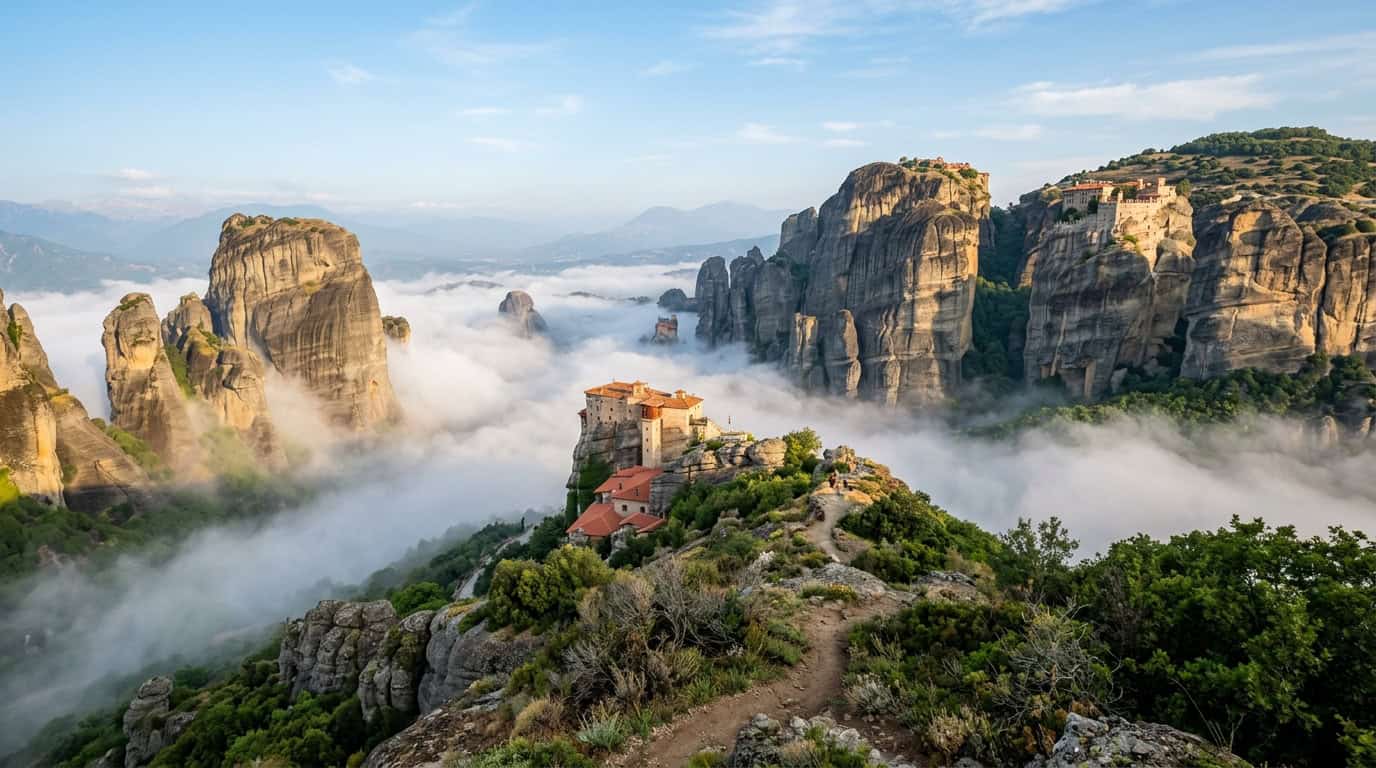
High above the plains of Thessaly, the giant sandstone pillars of Greece reach toward the heavens, topped by ancient retreats that seem to defy gravity. While most travelers view these wonders from a tour bus window, I found that the only way to truly feel the spiritual pulse of this area is through a meteora monastery hike. Stepping onto the same rugged, cobblestone paths that monks have traversed for centuries, you trade the hum of engines for the scent of wild thyme and the quiet majesty of the columns of the sky.
Navigating this UNESCO World Heritage site on foot allows you to discover hidden hermit caves and panoramic vistas that remain invisible from the main road. With a trail network stretching over 40 kilometers, planning your route is the key to balancing physical challenge with awe-inspiring history. Whether you are aiming for the 18.3 km full loop or a gentle morning trek, these ancient trails offer a profound sense of connection to a world built on faith and stone.
Key Takeaways
- Hiking the ancient 40-kilometer trail network is the only way to access hidden hermit caves and panoramic vistas that remain invisible from the main tour bus roads.
- Visitors must balance physical performance with religious modesty by wearing moisture-wicking layers for the 500-meter ascent and carrying wraps to cover shoulders and knees at monastery gates.
- Starting a trek at sunrise is essential to capture the best photography light, avoid the intense midday Greek heat, and experience the monasteries before the arrival of large crowds.
- Sturdy hiking boots or trail runners with high-traction soles are required to safely navigate the slippery conglomerate stone and the 300+ ancient steps of the Great Meteoron.
Navigating The Ancient Monk Path From Kalambaka
Stepping onto the ancient stone path that winds upward from the northern edge of Kalambaka feels like a direct invitation into the past. This historic route was once the only way for monks to reach their secluded sanctuaries, and walking it today offers a profound sense of spiritual adventure that you simply cannot get from a car window. As I walked the initial incline, the modern sounds of the town quickly faded, replaced by the rustle of wind through the brush and the looming presence of the dark conglomerate pillars. Finding the hidden trailhead near the Byzantine Church of the Virgin Mary required a bit of careful observation, but once your feet hit the worn cobblestones, the direction feels intuitive.
The ascent toward the Holy Monastery of Saint Stephen is a masterclass in natural beauty, taking you through what locals affectionately call the rock forest. I found myself frequently pausing, not just to catch my breath, but to marvel at how the monastic cells seem to grow directly out of the vertical cliffs. The trail is roughly 8 kilometers if you take your time to explore the overlooks, with an elevation gain of about 500 meters that rewards you with panoramic views of the Peneas Valley. It is helpful to remember that while the path is well-trodden, some sections have loose gravel, so sturdy hiking shoes are a must for a comfortable climb.
Reaching the heights near Saint Stephen provides a unique perspective on the engineering marvels of the 14th century. I was struck by the quiet dignity of the surroundings, where the silence is only broken by the distant tolling of monastery bells. For those planning a trek in 2025 or 2026, I recommend starting your hike shortly after sunrise to capture the softest light against the stone and to beat the midday heat. This ancient monk path bridges the gap between a standard sightseeing trip and a true pilgrimage, making the destination feel earned through every step taken among the giants.
Conquering The Stone Stairs Of Great Meteoron
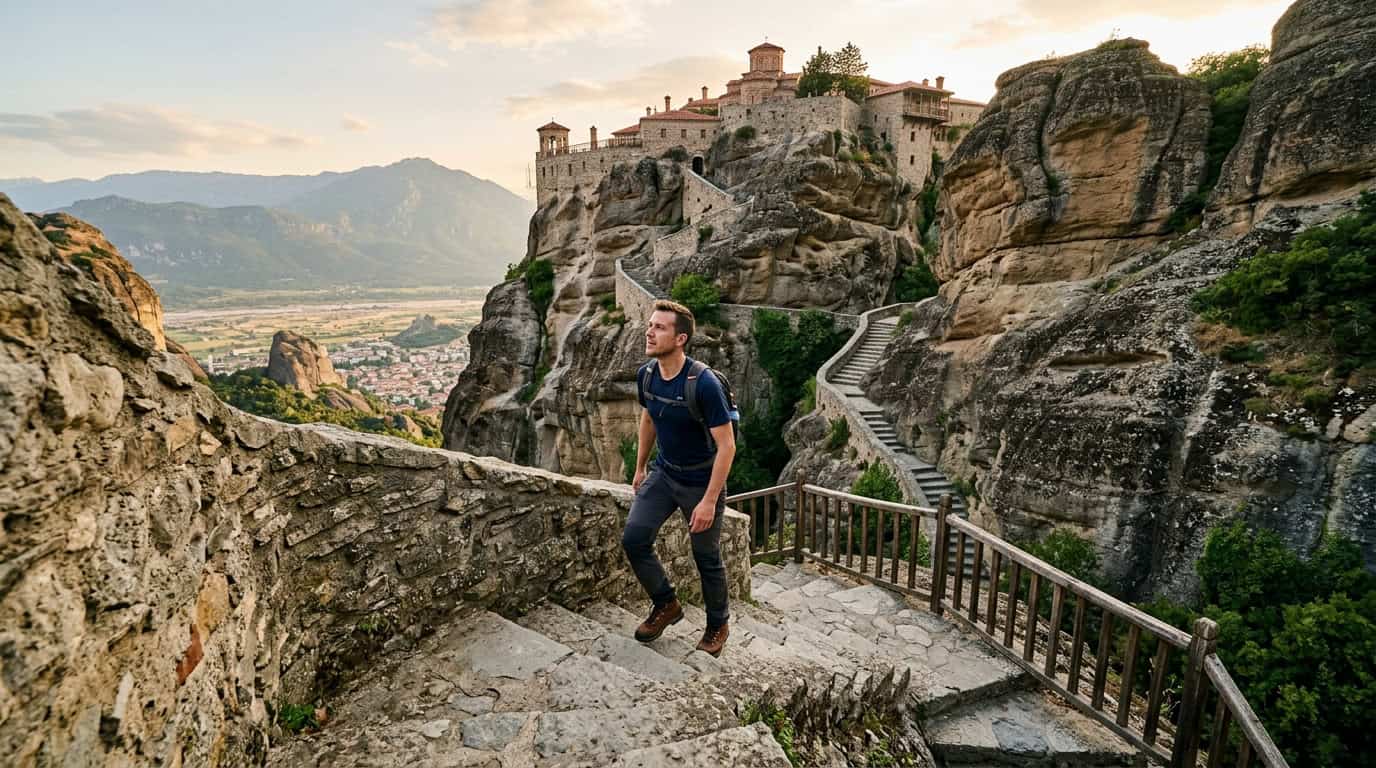
Standing at the base of the Great Meteoron, the sheer scale of the sandstone pillars makes you feel incredibly small against the backdrop of the Greek sky. To reach the largest and oldest monastery in the complex, you have to conquer a winding staircase of over 300 stone steps carved directly into the rock face. While the climb is physically demanding and will certainly get your heart racing, the rhythmic thud of your boots on the ancient stone connects you to the monks who traversed these heights long before modern roads existed. Every few flights, I recommend pausing to catch your breath and look back at the valley, as the perspective shifts beautifully with every foot of elevation you gain. Once you cross the threshold at the summit, the burn in your legs is instantly forgotten in favor of the spiritual stillness and the sprawling views of the Pindus Mountains.
If you are looking for the ultimate way to experience this UNESCO World Heritage site, the full 18 kilometer loop is an adventure that bridges the gap between a physical trek and a spiritual pilgrimage. This trail system winds through ancient forests and hidden caves, eventually connecting all six active cliff top retreats in a single, challenging day of exploration. Navigating the roughly 600 meters of elevation gain requires a steady pace and plenty of water, but the rewards are far greater than any bus tour could provide. You will find yourself walking on original paths that feel worlds away from the tourist crowds, offering a quiet intimacy with the surroundings. By the time you complete the circuit back to the town of Kalabaka, you will have earned a deep appreciation for the architectural marvels perched precariously above you.
Essential Gear And Dress Codes For Sacred Trails
Conquering a 500 meter elevation gain while respecting centuries of spiritual tradition requires a clever approach to your hiking wardrobe. Because these ancient paths lead directly into active places of worship, you must balance the physical demands of the trail with strict modesty requirements. I recommend wearing breathable, moisture wicking athletic layers for the steep climb up from Kalabaka, as the Greek sun can be intense even in the shoulder seasons. Keep a lightweight, oversized scarf or a thin linen wrap tucked into the outer pocket of your daypack for easy access. This allows you to transition from a sweaty hiker to a respectful visitor the moment you reach the monastery gates without needing a full wardrobe change.
Footwear is perhaps your most critical decision when navigating the mix of paved stairs and rugged, dusty forest trails. While many tourists arrive in sandals, I found that sturdy trail runners or hiking boots with excellent grip were essential for the uneven stone sections. The sacred trails can be surprisingly slippery, especially if there has been a light morning mist on the smooth rock surfaces. You will also want to ensure your socks are made of high quality wool to prevent blisters during the four hour trek. Remember that most monasteries require women to wear long skirts and men to have their knees covered, so carrying a wrap-around sarong is a lifesaver if you prefer hiking in shorts.
Packing light is the secret to enjoying the breathtaking vistas without feeling weighed down by your gear. I always carry a small backpack equipped with at least two liters of water, as there are very few places to refill once you leave the town floor. A wide brimmed hat and high SPF sunscreen are non negotiable for the exposed ridge sections where the shade of the trees disappears. I also suggest bringing a small pouch for your camera and phone to keep them protected from dust while you scramble over the ancient boulders. By planning your outfit to be modular and functional, you can focus entirely on the awe inspiring sight of monasteries perched atop limestone pillars.
Finding The Best Sunset Viewpoints At Psaropetra
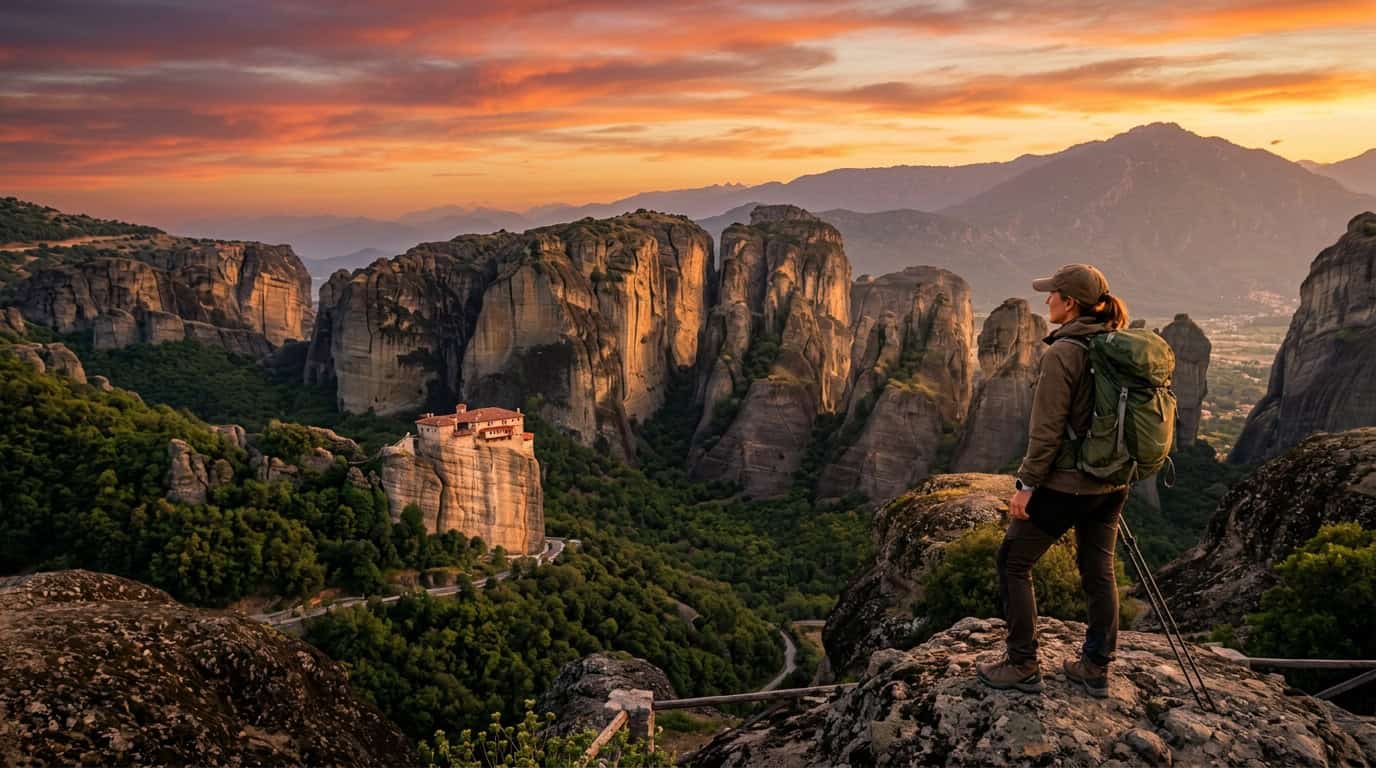
As the golden hour approaches, I recommend making your way toward the Psaropetra lookout, which serves as the ultimate finale to a day spent trekking between ancient monasteries. This specific rocky plateau offers a staggering panoramic view where the Grand Meteora and Varlaam monasteries appear to float amidst a sea of stone pillars. I found that arriving about forty-five minutes before the scheduled sunset gives you the best chance to claim a flat ledge and watch the light begin its transformation. The atmosphere here is deeply reverent, as hikers and pilgrims alike gather in silence to witness the world shift from dusty grey to a fiery, glowing orange. It is the perfect moment to rest your legs and reflect on the spiritual journey you have just completed across these historic Byzantine trails.
The magic truly begins when the sun dips behind the jagged peaks of the Pindus Mountains in the distance, casting long and dramatic shadows across the valley floor. From this vantage point, you can see the winding roads and hiking paths you conquered earlier in the day, now illuminated by a soft, ethereal purple hue. I suggest bringing a light jacket even in the summer, as the breeze atop the cliffs can turn chilly the moment the sun disappears from view. This itinerary point is not just about the photography, but about feeling the ancient energy of a place where monks have sought solitude for centuries. As the first stars begin to twinkle over the dark silhouettes of the rocks, you will understand why this UNESCO site is considered one of the most soul-stirring locations on the planet.
Finding Solitude on the Ancient Monastic Trails
Standing atop these ancient sandstone pillars, the true magic of the Meteora monastery hike reveals itself in the moments between the crowds. While the tour buses gather at the monastery gates, the winding paths below offer a profound sense of solitude that connects you to the spiritual history of this UNESCO site. Walking the same dirt tracks that monks used for centuries allows you to hear the wind through the oaks and the distant chime of bells without the hum of engines. This quiet immersion is where the bridge between outdoor adventure and spiritual reflection truly exists. It is a rare chance to see these columns of the sky from angles that most travelers simply miss from their car windows.
If you are planning your own Greek adventure, I cannot encourage you enough to lace up your boots and take the long way up. The physical challenge of the 500 meter elevation gain is a small price to pay for the breathtaking panoramas and the hidden hermit caves tucked into the cliffside. You will find that the rhythm of your own footsteps provides a much deeper connection to the surroundings than any quick photo stop could offer. Whether you are seeking a physical challenge or a budget friendly alpine escape, these trails provide a perspective that stays with you long after you leave the mainland. Pack your water, respect the dress codes of the holy sites, and prepare to be forever changed by the stillness of the rocks.
Frequently Asked Questions
1. Where do I find the trailhead for the ancient monk path?
You can find the hidden trailhead near the Byzantine Church of the Virgin Mary at the northern edge of Kalambaka. Once you step onto the worn cobblestones, the path becomes intuitive and leads you directly into the heart of the rock forest.
2. How long is the full hiking loop around the monasteries?
The complete loop covers approximately 18.3 kilometers of diverse terrain and breathtaking views. If you prefer a shorter experience, you can explore sections of the trail network for a gentle morning trek instead.
3. What should I wear for a hike in Meteora?
Choose sturdy hiking boots with good grip to navigate the rugged conglomerate stone and ancient cobblestones. Since you will be visiting active religious sites, please remember to bring modest clothing like long skirts or trousers to cover your shoulders and knees.
4. Is it difficult to hike between the monasteries?
While some sections involve steep inclines and stone stairs, the paths are well established and accessible for most hikers with a moderate fitness level. The physical challenge is incredibly rewarding, offering views of hidden hermit caves that you would miss from a tour bus. For those who enjoy hiking the Austrian Alps, the verticality of Meteora provides a similarly thrilling experience in a Mediterranean setting.
5. What is the best time of day to start my hike?
I recommend starting your ascent at sunrise to catch the soft morning light hitting the sandstone pillars and to avoid the midday heat. Early starts also allow you to reach the monastery gates just as they open, giving you a peaceful experience before the crowds arrive.
6. Can I see things on foot that I can’t see from the road?
Hiking allows you to discover hidden hermit caves and secret panoramic vistas that are completely invisible from the main driving routes. Moving at a slower pace connects you to the spiritual pulse of the area and the scent of wild thyme along the ancient trails.