
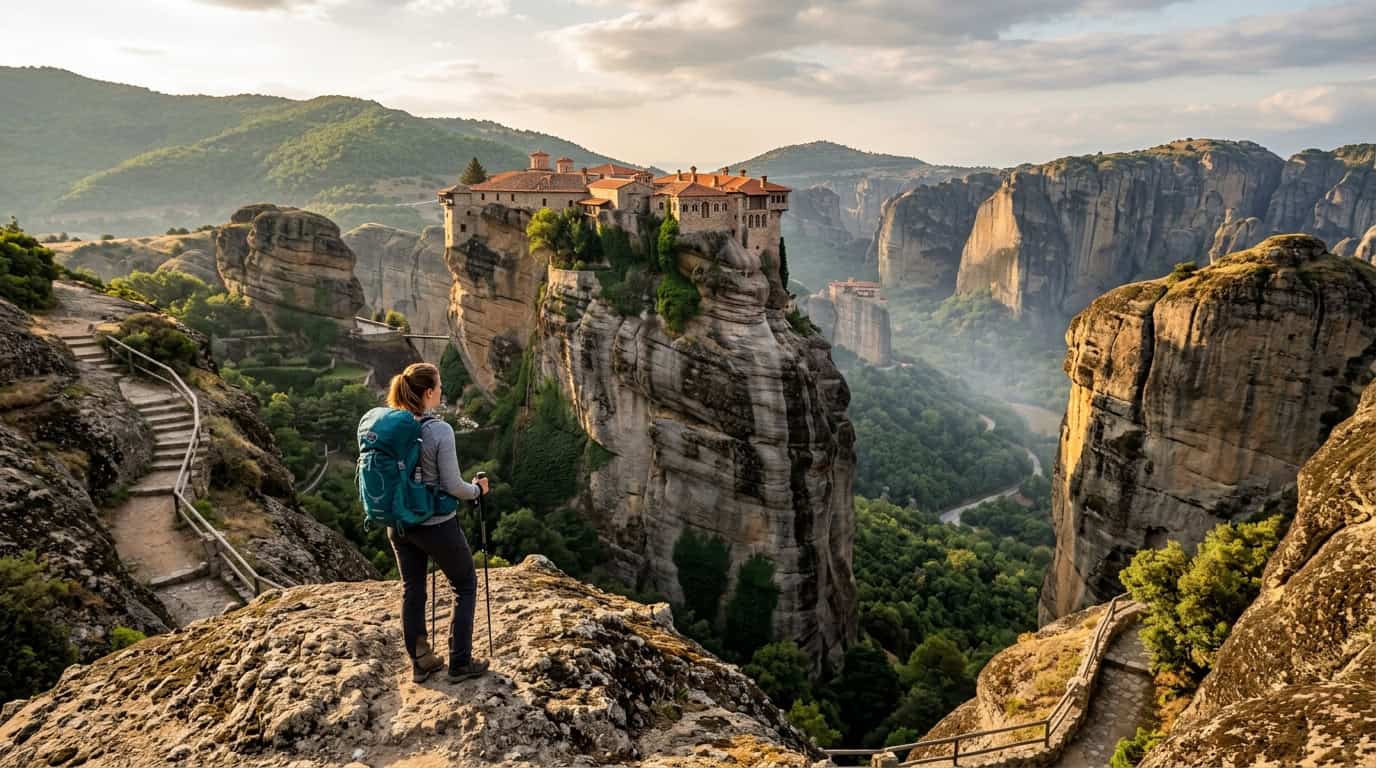
Standing at the base of the towering, wind-sculpted sandstone pillars of Kalabaka, I realized that the true magic of this place isn’t found through a tour bus window. To truly feel the pulse of this spiritual area, I had to lace up my boots and step onto the ancient meteora greece hiking trails that have connected these “columns of the sky” for centuries. These moss-covered stone paths, originally hand-carved by 14th-century monks, wind through hidden caves and emerald forests that feel like a secret world far removed from the crowded lookout points.
Walking these trails offers a profound sense of peace as I navigate the same 35 kilometers of interconnected paths that pilgrims have trodden for generations. The air smells of wild herbs and pine, and with every moderate 300-meter climb, I am rewarded with a perspective of the six active monasteries that feels earned rather than just visited. Whether I am tackling the steep steps of the Great Meteoron or wandering through spring wildflowers, the intimate connection between the earth and the heavens becomes clear with every stride.
Key Takeaways
- Hiking the 16-kilometer Grand Monasteries Circuit from Kastraki is the most authentic way to experience all six active monasteries while avoiding the crowds of tour buses.
- Navigating the 35 kilometers of ancient, hand-carved stone paths requires sturdy hiking boots with excellent grip to handle steep 500-meter elevation gains and potentially slick surfaces.
- Visitors must balance technical hiking gear with strict monastic dress codes, requiring long trousers for men and long skirts for women to enter the sacred sites.
- Exploring the northern trails and Holy Spirit Rock offers a more rugged, secluded experience that includes hidden cave chapels, rock forests, and panoramic views of the Pindos Mountains.
Walking The Grand Monasteries Circuit
If you are looking for the ultimate way to experience the majesty of Meteora, the Grand Monasteries Circuit is the definitive path to take. This legendary 16 kilometer loop isn’t just a physical challenge, it is a journey through history that connects all six active monasteries via the same stone paths used by monks for centuries. I found that starting early from Kastraki allowed me to beat the tour buses and enjoy the silent, misty atmosphere of the giant rock pillars. You should prepare for a moderate elevation gain of about 500 meters, which will definitely get your heart pumping as you navigate the ancient staircases. The sense of accomplishment I felt when reaching the top of the Great Meteoron after climbing over 300 steps was truly unparalleled.
For the photographers, this circuit offers some of the most dramatic vantage points in all of Greece. I highly recommend stopping at the panoramic cliffs between the Monastery of Varlaam and Roussanou for that iconic shot of the red-roofed complexes perched precariously on sandstone spires. The lighting is particularly magical during the late afternoon, though you will want to keep an eye on the time to ensure you finish the loop before sunset. Make sure to pack plenty of water and wear sturdy hiking boots, as the terrain can be uneven and rocky in several sections. These trails provide an intimate connection to the landscape that you simply cannot get from the window of a car or bus.
Planning your route carefully is essential because each monastery has different opening days and strict dress codes. I suggest checking the weekly schedule beforehand so you can time your arrival when your favorite sites are accessible to visitors. Most hikers find that the full loop takes between four and six hours, depending on how long you spend exploring the interior frescoes and museums. Bringing a light snack and a portable charger for your camera is a smart move for this half-day adventure. As you walk through the lush forests and look up at the towering cliffs, you will understand why this UNESCO World Heritage site is considered one of the most spiritual places on earth.
Scaling The Holy Spirit Rock Trail
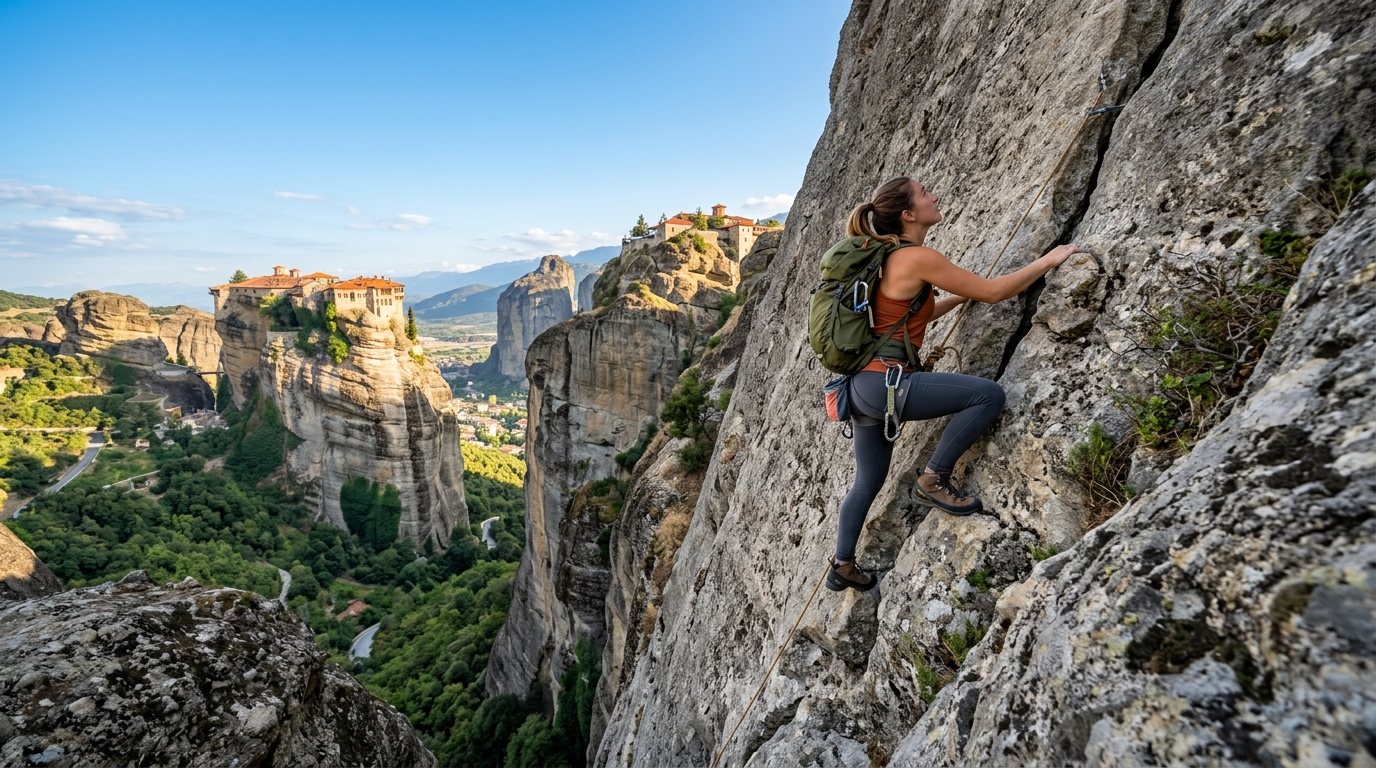
Stepping onto the Holy Spirit Rock Trail feels like stepping back into a time when the only way to reach the heavens was through sheer physical effort and faith. This particular path is a highlight of the network, offering a more rugged and vertical challenge than the standard monastery circuits. As I began the ascent from the village of Kastraki, the massive limestone pillars seemed to grow more imposing with every step. The trail winds through dense greenery before opening up to the raw, weathered face of the rock. It is a thrilling climb that requires a bit of scrambling, but the sense of connection to the ancient monks who first carved these steps is incredibly powerful.
Once you reach the summit area, the view over the red-tiled roofs of Kastraki is nothing short of breathtaking. The village looks like a miniature model nestled at the feet of these geological giants, providing a sense of scale that you simply cannot get from a car window. I spent a long moment at the Agion Pneuma cave chapel, a tiny sanctuary tucked directly into the cliffside that radiates a profound sense of peace. Standing on the plateau where the Greek flag flutters in the wind, you are rewarded with a 360-degree panorama of the entire valley and the distant Pindos Mountains. It is the perfect spot to catch your breath and realize that the physical exertion was a small price to pay for such a spiritual vantage point.
For those planning to tackle this climb, I recommend starting early in the morning to avoid the midday sun and the heavier crowds found at the main monasteries. The terrain can be quite steep and slippery in sections, so sturdy hiking boots with good grip are an absolute necessity for safety. Make sure to pack plenty of water and a camera, as the perspective of the surrounding monoliths changes beautifully with the shifting light. This hike truly captures the essence of Meteora, combining the thrill of an outdoor adventure with the awe-inspiring history of the Greek mainland. It remains one of my favorite memories from the region because it forces you to slow down and earn the spectacular views.
Secret Paths To Ypapanti And Rock Forests
The northern side of Meteora offers a dramatic escape from the tour bus crowds, leading you into a silent world of towering rock forests and ancient history. As I stepped onto the narrow dirt path winding toward the Ypapanti monastery, the air felt cooler and the sounds of the city of Kalabaka completely faded away. This trail is a hidden gem for active travelers who want to feel the physical challenge of the terrain while soaking in the spiritual atmosphere of the 14th century. You will find yourself surrounded by massive, vertical pillars of stone that look like giant fingers reaching for the sky. It is a place where nature and faith collide in the most spectacular way imaginable.
Reaching the Ypapanti monastery feels like discovering a secret, as it is uniquely built directly into a hollow cave high up a cliff face. Unlike the six main active monasteries, this site is often quiet, allowing you to appreciate the intricate stonework and the sheer determination of the monks who lived here centuries ago. Just a short walk further into the forest, you can find the ruins of abandoned hermitages tucked away in the crevices of the rocks. These small, weathered dwellings provide a hauntingly beautiful glimpse into a life of total solitude. I highly recommend bringing a pair of sturdy hiking boots for the steep stone steps that lead up to the viewing platforms.
To make the most of this northern circuit, aim to start your hike in the early morning when the light hits the rock faces at a golden angle. The trail network here spans several kilometers of moderate terrain, featuring elevation gains that will definitely get your heart pumping. I suggest packing plenty of water and a light snack, as there are no shops or cafes once you leave the main road behind. This specific route offers some of the best photography opportunities in Greece, far away from the selfie sticks and long lines. It is a rewarding trek that combines physical exertion with a deep sense of peace and historical wonder.
Essential Gear For Meteora Stone Steps
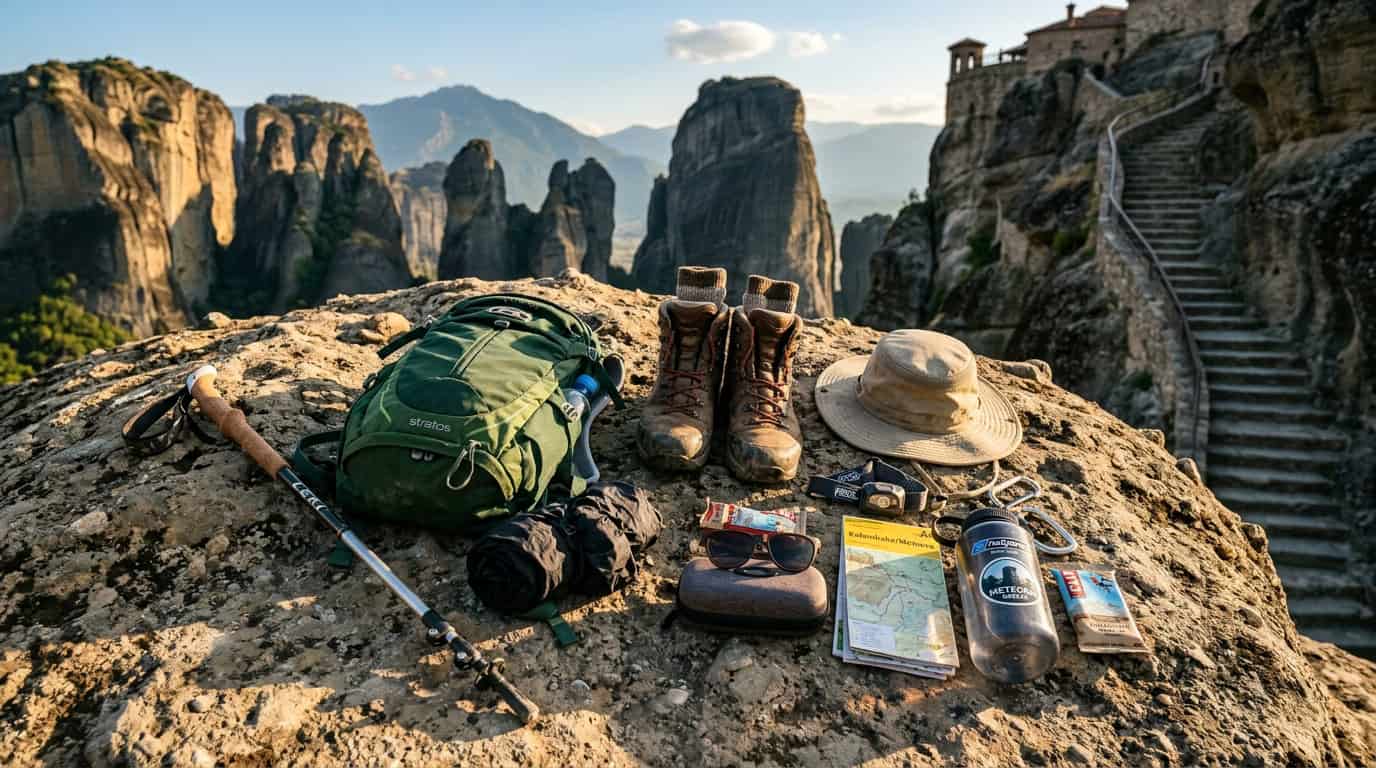
When I first stood at the base of the ancient stone steps leading up to the Great Meteoron, I quickly realized that my footwear would be the most important decision of the day. For the 2026 season, I highly recommend a sturdy pair of trail running shoes or lightweight hiking boots with excellent grip to handle the smooth, centuries-old stones. These steps can be surprisingly slick, especially if there is a morning dew or a bit of dust, so you want something that secures your ankle while providing traction. I also found that a pair of moisture-wicking socks made a world of difference during the steep 500-meter climbs. Keeping your feet dry and cushioned is essential when you are tackling several hundred stairs across multiple monasteries in a single afternoon.
The spiritual nature of these sites means that your gear must also respect the monastic dress codes while remaining functional for a vigorous hike. Men are required to wear long trousers, and women must wear long skirts that cover the knees, though many monasteries provide wrap-around skirts at the entrance if you arrive in hiking shorts. To stay comfortable, I suggest wearing lightweight, breathable athletic layers and carrying a thin, packable skirt or zip-off pants in your daypack. I always bring a light scarf or shawl as well, which serves as a great shoulder cover inside the chapels and provides a bit of sun protection on the exposed ridges. This balance of modesty and technical fabric ensures you can transition seamlessly from a challenging trail to a quiet place of worship.
Navigating the 40 kilometers of interconnected paths requires a well-organized daypack filled with a few specific essentials. Hydration is your top priority, so I carry a two-liter water bladder to keep my hands free for balance on the narrower, steeper sections of the trail. I also pack a high-quality sunscreen and a wide-brimmed hat because the Greek sun can be intense even during the cooler spring and autumn months. A small portable power bank is another must-have, as you will likely find yourself taking hundreds of photos of the dramatic sandstone pillars and the red-tiled roofs. Having these items tucked away allows you to focus on the iconic views rather than physical discomfort or a dead phone battery.
Step Into the Footsteps of Monks
Choosing to explore the ancient footpaths of Meteora is the most profound way to experience the intersection of nature and human spirit. While tour buses zip along the paved roads, hikers get to walk the same stone trails hand-carved by 14th-century monks who sought solitude among these towering pillars. You will find yourself standing in the quiet shadows of the giants, hearing nothing but your own breath and the distant chime of monastery bells. This intimate perspective allows you to appreciate the sheer architectural impossibility of these structures in a way that a car window simply cannot offer.
Planning your own Grecian trekking adventure is a rewarding challenge that balances physical exertion with spiritual awe. With roughly 40 kilometers of trails to explore, you can easily customize a route that hits the Grand Monasteries Circuit or find a secluded spot for a sunset view. Much like exploring the Austrian Alps, you should remember to pack sturdy shoes for those steep stone steps and aim for the mild temperatures of spring or autumn to see the landscape in its best light. Taking that first step onto the trail transforms a standard vacation into a personal pilgrimage through one of the most unique places on the planet.
There is a specific kind of magic that happens when you reach the summit of a trail and see the monasteries floating above the morning mist. It serves as a powerful reminder that the most beautiful sights in the world often require a bit of sweat and determination to reach. I encourage you to lace up your boots and move beyond the typical island itinerary to discover the rugged, historical heart of the Greek mainland. Meteora is waiting to be discovered one step at a time, and the memories you make on these ancient trails will stay with you long after you return home.
Frequently Asked Questions
1. How long is the main hiking route through the monasteries?
The Grand Monasteries Circuit is a legendary 16 kilometer loop that connects all six active monasteries. It is a full-day journey through history that follows the same stone paths used by monks for centuries.
2. How difficult are the hiking trails in Meteora?
You should prepare for a moderate challenge with elevation gains of about 300 to 500 meters depending on your specific route. The climbs are heart-pumping, especially when you tackle the 300 stone steps leading up to the Great Meteoron.
3. What is the best starting point for a day of hiking?
I highly recommend starting your journey early from the village of Kastraki to beat the tour buses. This allows you to experience the silent, misty atmosphere of the giant rock pillars before the crowds arrive.
4. Are the hiking paths well maintained?
The trails consist of 35 kilometers of interconnected, moss-covered stone paths that have been hand-carved into the landscape since the 14th century. These ancient pilgrim routes are still very much accessible and offer a rugged, authentic connection to the earth.
5. What should I expect to see along the trails?
Beyond the six active monasteries, you will wander through emerald forests and hidden caves filled with the scent of wild herbs and pine. Each climb rewards you with a perspective of the columns of the sky that feels deeply earned and intimate.
6. Is it possible to see all the monasteries in one hike?
Yes, the Grand Monasteries Circuit is designed specifically to link all six active sites in one incredible loop. It is the definitive way to experience the majesty of the landscape while avoiding the view from a tour bus window.
7. What is the best time of year to hike in Meteora?
Spring is a particularly magical time to visit because the trails are lined with vibrant wildflowers and the weather is perfect for hiking. The emerald forests are at their most lush, making the moderate climbs feel like a walk through a secret world.