
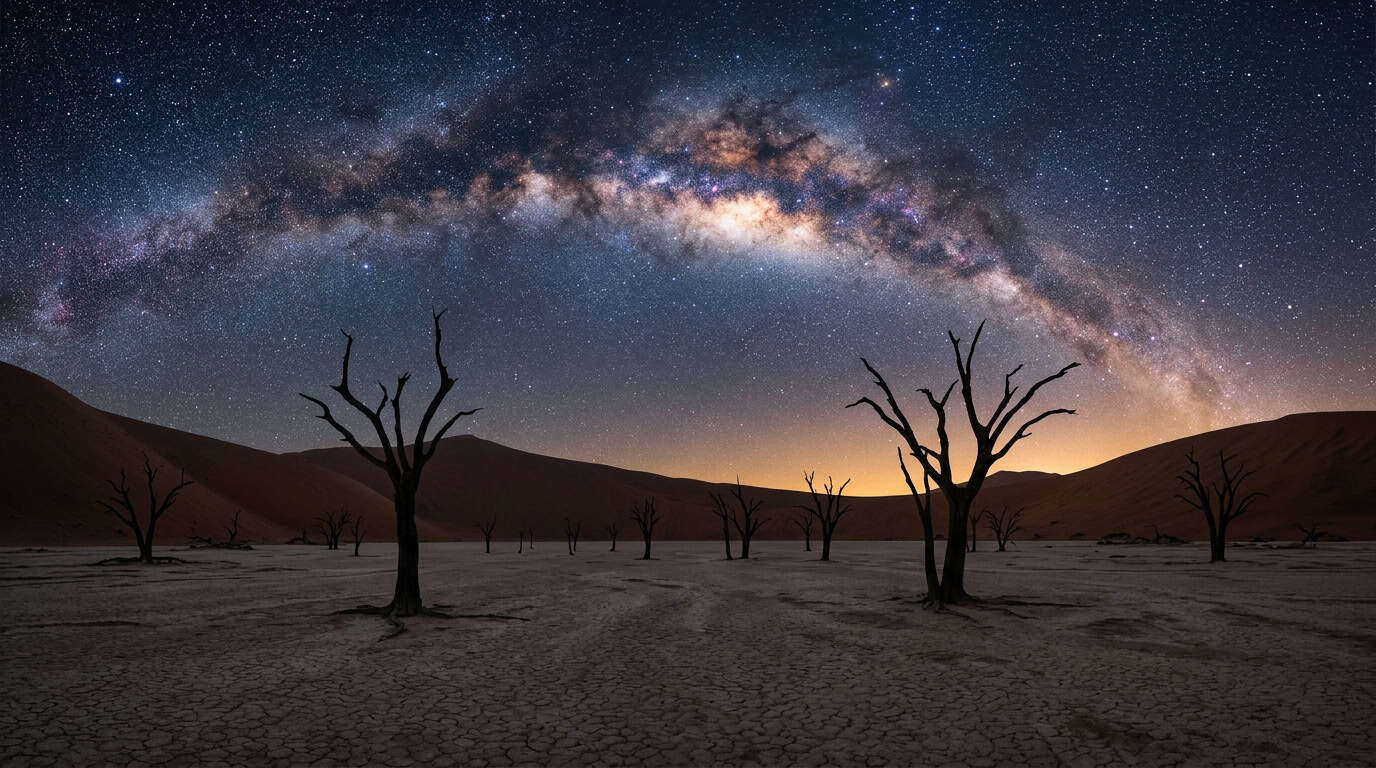
Imagine standing in a place so silent you can hear your own heartbeat, beneath a canopy of stars so bright they cast shadows on the desert floor. Namibia is a celestial wonderland where the air is bone-dry and the population is sparse, creating the perfect conditions for the world’s most pristine Namibia stargazing spots. I’ll never forget my first night in the desert; the Milky Way didn’t just look like a faint cloud, but a brilliant, three-dimensional river of light stretching from horizon to horizon.
As we move through 2026, this corner of Africa has solidified its status as the ultimate destination for noctourism, boasting some of the darkest skies on the planet. Whether you are reclining on a roll-out star-bed under a Gold Tier International Dark Sky Reserve or peering through a professional-grade telescope at a high-altitude observatory, the clarity is life-changing. Planning a trip here is about more than just a vacation; it is a journey to the edge of the universe, where the lack of light and noise pollution allows you to reconnect with the cosmos in its rawest form.
Key Takeaways
- Namibia offers world-class stargazing conditions due to its arid climate, high-altitude plateaus, and the NamibRand Nature Reserve’s status as a Gold Tier International Dark Sky Reserve with Bortle Class 1 darkness.
- The optimal time for astrotourism is during the dry winter months from May to September, specifically during the New Moon phase when the absence of lunar glare reveals the Milky Way in three-dimensional detail.
- Successful stargazing and astrophotography in the desert require specialized preparation, including red-light headlamps to preserve night vision, sturdy tripods for long exposures, and heavy thermal layers to combat plummeting nighttime temperatures.
- Namibian ‘noctourism’ blends scientific research with luxury, offering travelers access to professional-grade observatories, resident astronomers, and unique ‘star-beds’ that allow for sleeping directly under the celestial canopy.
The Gold Tier Magic Of NamibRand Nature Reserve
Standing beneath the heavens in the NamibRand Nature Reserve is a humbling experience that completely redefines your understanding of the night sky. As Africa’s first Gold Tier International Dark Sky Reserve, this vast wilderness offers a Bortle Class 1 rating, which represents the darkest and most pristine conditions achievable on our planet. I remember looking up for the first time and feeling a sense of vertigo because the stars were so dense and bright that they seemed to pull me upward. Without any city lights for hundreds of miles, the Milky Way casts an actual shadow on the desert floor, appearing as a thick, swirling river of violet and silver. It is a rare place where you can witness the cosmos in its rawest form, undisturbed by the modern world.
The true magic of this region lies in the specialized roll-out star-bed offered at luxury desert lodges, where you can literally sleep under the celestial canopy. There is nothing quite like having your bed rolled out onto a private deck, allowing you to drift off while watching shooting stars streak across the horizon. Many of these lodges also feature on-site observatories and resident astronomers who help you navigate the southern constellations using professional-grade telescopes. You will spend your evenings identifying the Southern Cross or the Magellanic Clouds, all while wrapped in a warm blanket with the cool desert breeze on your face. It is the ultimate form of noctourism, blending high-end comfort with a profound, spiritual connection to the universe.
To make the most of your visit, I recommend planning your trip during the new moon phase when the sky is at its darkest and most detailed. Because Namibia is so arid, the lack of atmospheric moisture ensures that the stars do not twinkle so much as they glow with a steady, piercing intensity. You should bring a red-light flashlight to preserve your night vision and a tripod if you hope to capture the breathtaking astrophotography this environment allows. Whether you are a dedicated stargazer or simply a traveler seeking a moment of peace, the silence of this Wilderness Quiet Park provides a backdrop of stillness that is just as moving as the visual display above. It is a bucket-list destination that reminds you just how vast and beautiful our world really is.
Scientific Wonders At Gamsberg And Khomas Highlands
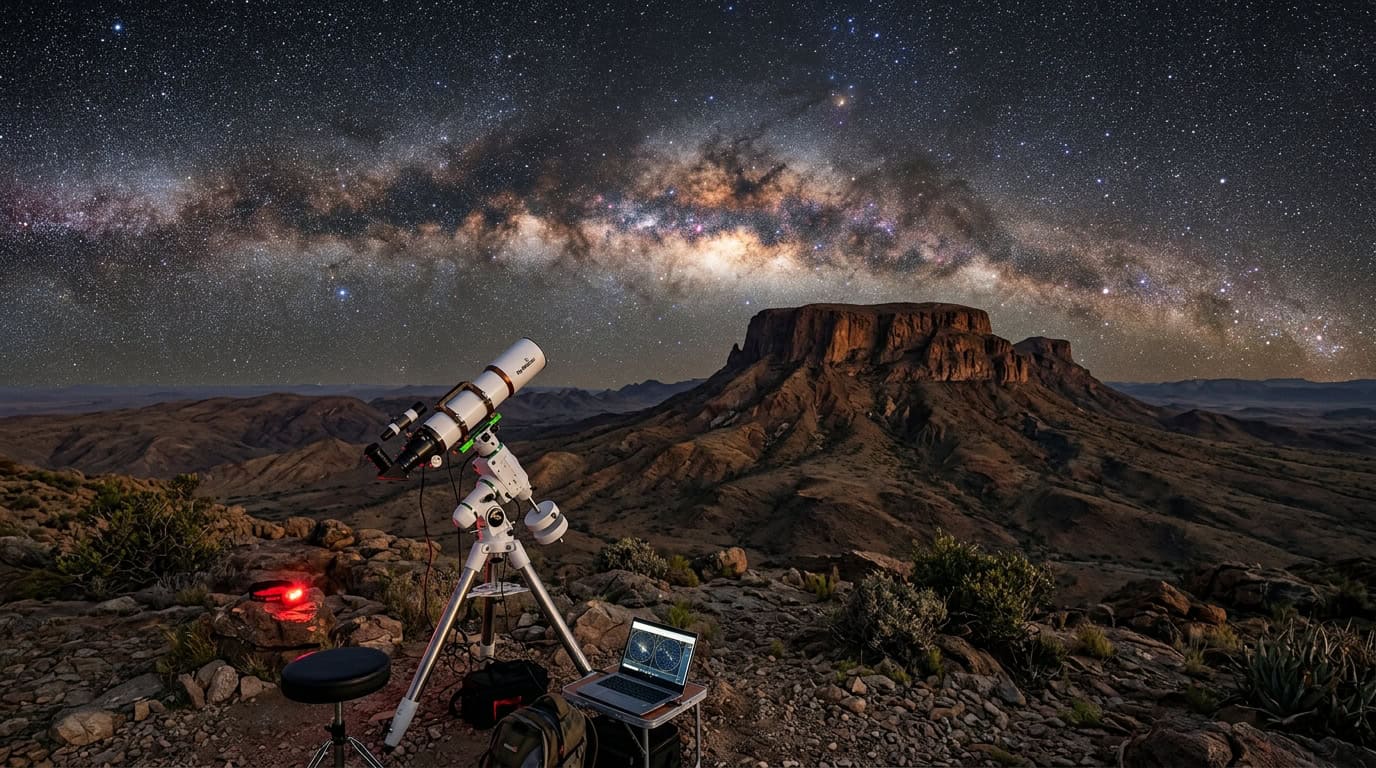
Standing atop the Khomas Highlands, I felt as though I could reach out and touch the Milky Way while the crisp mountain air sharpened every celestial detail. This high-altitude plateau is home to the Gamsberg, Namibia’s largest table mountain, which provides a stable atmosphere that is a dream for serious astrophotographers. The region is so scientifically significant that it hosts the Africa Millimetre Telescope, a project that places this remote area at the forefront of global black hole research. For those of us who travel with telescopes in tow, the lack of turbulence here ensures that stars remain steady points of light rather than flickering blurs. I recommend planning your visit during the new moon phase to experience the full, uninhibited glory of the southern celestial hemisphere.
Many of the guest farms in this rugged region have evolved into dedicated havens for noctourism, offering sophisticated observatories for guest use. I spent my evenings jumping between high-end telescopes and specialized cooling cameras provided by local hosts who truly understand the needs of a stargazer. These farms often feature roll-off roof observatories and concrete piers, allowing you to set up your own equipment with professional-grade stability. If you are a beginner, do not worry, as many properties offer guided sky tours where resident experts point out the Magellanic Clouds and the Jewel Box Cluster. It is a deeply personal experience to sit in the silence of the highlands while the universe reveals its oldest secrets right above your head.
To make the most of your trip to the Gamsberg area, you should pack layers of warm clothing because temperatures drop rapidly once the sun dips below the horizon. Most guest farms require advanced booking for their observatory slots, so I suggest reaching out early to secure your time under the glass. I have found that staying for at least three nights gives you the best chance of dodging any rogue clouds and allows your eyes to fully adapt to the profound darkness. Be sure to bring a red-light headlamp to preserve your night vision while navigating between your cabin and the viewing decks. This corner of Namibia is not just a destination, it is a scientific sanctuary that will leave you feeling small in the best possible way.
Planning Your Namibian Astrotourism Road Trip Itinerary
To witness the heavens in their purest form, your journey begins in Windhoek before heading southwest toward the Gamsberg Nature Reserve. This high altitude plateau serves as the perfect gateway, offering crisp air and stable atmospheric conditions that make the stars feel close enough to touch. I recommend timing your departure to coincide with the New Moon phase, as the absence of lunar glare ensures the Milky Way reveals its intricate dust lanes and vibrant clusters. This initial leg of the trip sets a profound tone, transitioning you from the city lights into a realm where the darkness is velvety and absolute.
As you continue toward the NamibRand Nature Reserve, the environment transforms into a crimson sea of dunes that provides a dramatic backdrop for the night sky. Staying at a lodge with a dedicated observatory or a star bed is a transformative experience, allowing you to drift off while tracking the slow arc of the Southern Cross. You should spend at least three nights in this Gold Tier International Dark Sky Reserve to fully appreciate the Bortle Class 1 conditions. During the day, you can explore the Sossusvlei salt pans, but the real magic happens after sunset when the silence of the desert amplifies the visual spectacle above.
Your final stop should focus on the Khomas Highlands, where the rugged terrain offers unique perspectives of the celestial sphere. I found that embarking on a self-drive adventure through these remote areas and bringing a simple pair of binoculars can reveal hidden nebulae and star nurseries that are invisible to the naked eye. Make sure to pack plenty of warm layers, because even in the desert, the temperatures drop significantly once the sun dips below the horizon. Planning your route with these specific stops ensures you move deeper into the wilderness, culminating in a stargazing adventure that feels both deeply personal and cosmically vast.
Essential Gear For Capturing The Southern Cross
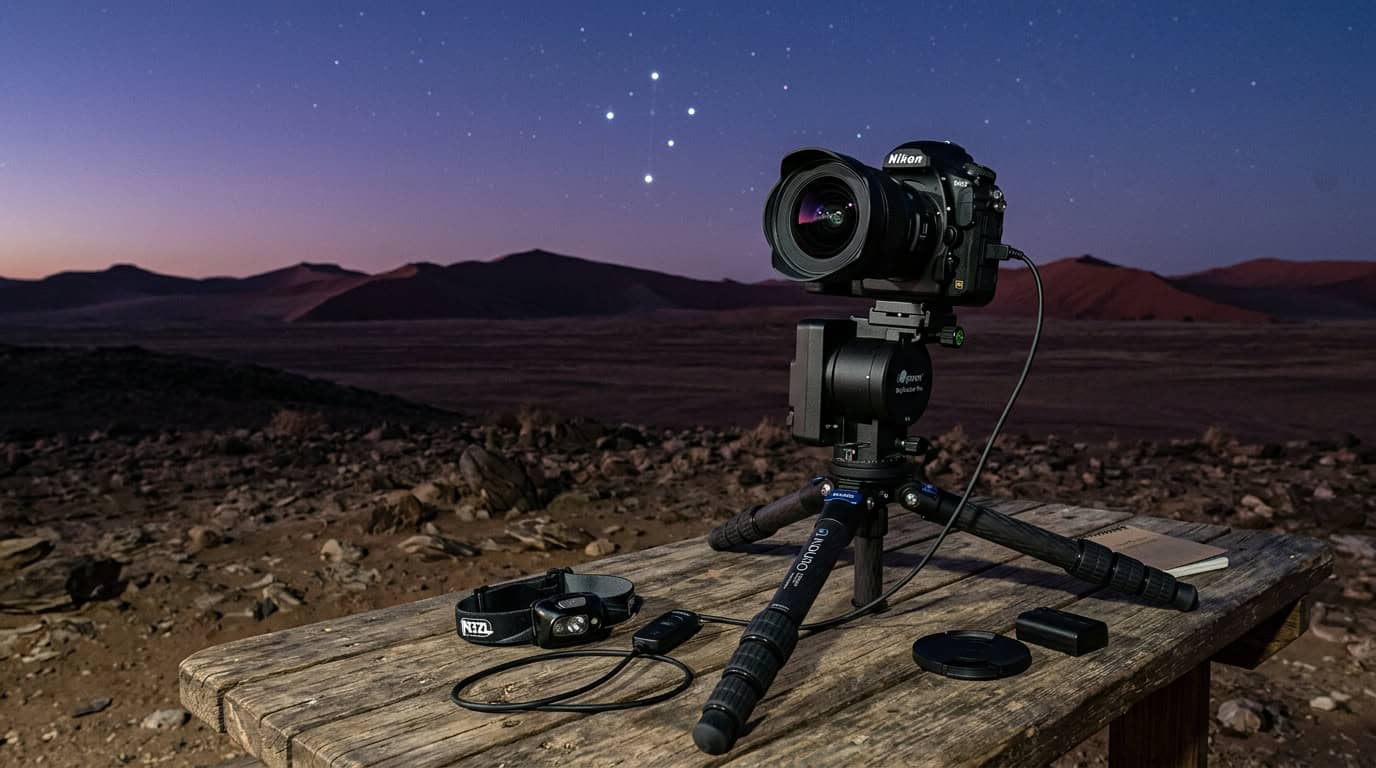
Packing for a night under the Namibian sky requires a thoughtful balance between high-tech optics and simple, practical tools. To keep your night vision sharp while navigating your camera gear, a headlamp with a dedicated red-light mode is your most important companion. White light can instantly reset your eyes’ adaptation to the dark, making it much harder to spot the delicate glow of the Large and Small Magellanic Clouds. I always suggest bringing a sturdy, weighted tripod to combat the desert winds that can occasionally sweep across the high-altitude plateaus. Since you will be capturing long exposures of the Southern Cross, any slight vibration can blur the crystalline pinpoints of light you are working so hard to document.
Temperature management is another crucial element of the experience because the desert heat vanishes as soon as the sun dips below the horizon. Even if you spent the afternoon in shorts, you will want high-quality thermal layers and perhaps a pair of fingerless gloves to operate your camera dials comfortably. I found that bringing a small beanbag or a specialized panning base for my tripod made tracking the celestial south pole much smoother during deep-sky photography sessions. Do not forget to pack extra camera batteries and keep them tucked inside your jacket pockets to stay warm, as the cold can drain their power surprisingly fast. Having these essentials ready ensures you can focus entirely on the breathtaking dance of the Milky Way rather than fumbling with your equipment in the dark.
Finding Connection Beneath the Namibian Firmament
Standing beneath the vast Namibian firmament is a spiritual experience that stays with you long after you have returned home. There is a profound sense of perspective that comes from witnessing the Milky Way arch across the horizon in such vivid, crystalline detail. In these silent, ancient environments, the modern world feels incredibly distant, replaced by a deep connection to the cosmos that few other places on Earth can offer. I have found that staring into the depths of a Class 1 dark sky reminds us of our place in the universe, offering a rare moment of clarity and peace.
Planning your journey to these celestial wonders is more than just a vacation, it is an investment in wonder. Whether you are reclining on a star-bed in the NamibRand or peering through a telescope on the Gamsberg plateau, the clarity of the air ensures every evening is a masterpiece. I encourage you to pack your bags, leave the city lights behind, and venture into the heart of the desert for the ultimate Namibia desert safari adventure. The stars are waiting for you in Namibia, and their silent beauty is a gift you truly deserve to experience firsthand.
Frequently Asked Questions
1. When is the best time of year for stargazing in Namibia?
The dry winter months from May to September offer the clearest skies because there is virtually no cloud cover or humidity to blur your view. I recommend planning your visit during a New Moon to ensure the darkness is absolute and the Milky Way is at its most brilliant.
2. What makes NamibRand Nature Reserve so special for observers?
As a Gold Tier International Dark Sky Reserve, it boasts a Bortle Class 1 rating, which is the highest level of darkness on Earth. You will experience such a dense concentration of stars that the celestial light actually casts shadows on the desert floor around you.
3. Do I need to bring my own professional telescope?
While bringing your own gear is great, many high end lodges in the NamibRand and Sossusvlei areas provide professional grade telescopes and on-site astronomers. You can enjoy a life changing view of the cosmos without the hassle of transporting heavy equipment across the globe.
4. What should I pack for a night out in the desert?
Even though the days are warm, desert temperatures plummet once the sun sets, so bring high quality thermal layers and a warm jacket. I also suggest a red light headlamp to preserve your natural night vision while you are navigating between your star bed and the telescope.
5. Can I see the Southern Cross from these locations?
Yes, Namibia is one of the premier places in the Southern Hemisphere to view the iconic Southern Cross and the Coalsack Nebula. The clarity at high altitude observatories allows you to see these constellations with a crispness that is simply impossible in the Northern Hemisphere.
6. Is it possible to take high quality star photos without experience?
Namibia is a dream for beginners because the sky is so dark that even basic long exposure settings on a tripod will capture the violet and silver hues of the Milky Way. Many local guides are experts in astrophotography and will happily help you dial in your camera settings for that perfect shot. If you have extra time, you can even extend your trip with a Namibian coast drive to see where the dunes meet the sea.