
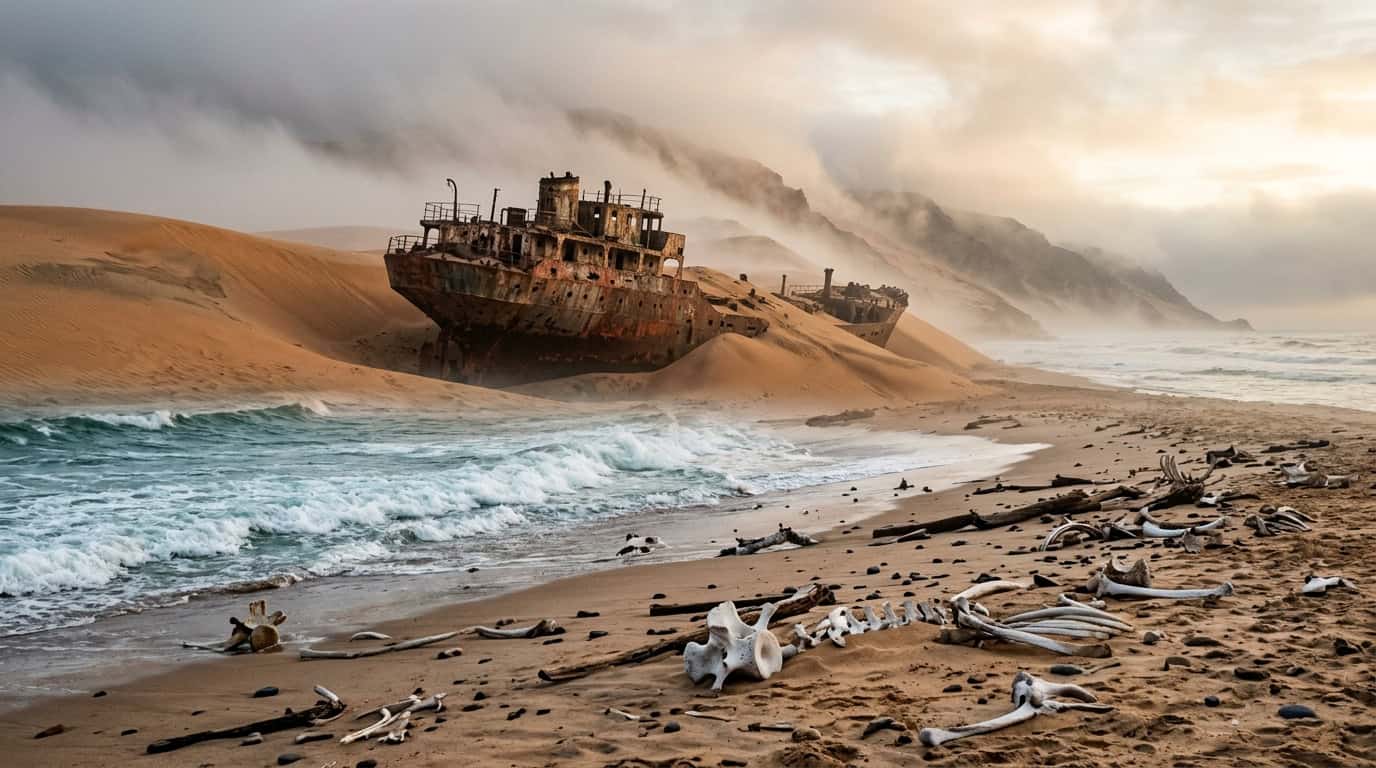
Imagine standing at the edge of the world, where the towering orange dunes of the Namib Desert crash directly into the icy, churning Atlantic surf. This is the namibia skeleton coast, a hauntingly beautiful wilderness where sun-bleached whale bones and rusted shipwrecks tell stories of a treacherous maritime past. On my first visit, the dense morning fog felt like a veil lifting to reveal one of the most remote places on the planet. It is a location that feels untouched by time, offering a profound sense of solitude that is becoming increasingly rare.
As we move into a period of high-value, low-impact travel, exploring this 500-kilometer stretch has become a masterclass in sustainable adventure. Whether you are navigating the rugged southern tracks in a 4×4 or soaring over the restricted northern wilderness in a bush plane, the sheer scale of the park is breathtaking. You will find desert-adapted elephants trekking through dry riverbeds and vast seal colonies barking at the waves. Planning a trip here requires careful permit navigation and a spirit of discovery, but the reward is an unparalleled encounter with nature at its most raw and resilient.
Key Takeaways
- The Skeleton Coast requires a dual-travel strategy: a rugged 4×4 for independent exploration of the southern shipwrecks and a fly-in safari to access the strictly managed northern wilderness.
- This ecosystem supports unique desert-adapted wildlife, including elephants with specialized biological memories and lions that hunt marine life along the Atlantic shore.
- Successful navigation of this remote park depends on securing permits from the Ministry of Environment and Tourism and preparing for extreme temperature shifts and dense coastal fog.
- Sustainable, high-value, and low-impact tourism is essential for preserving the region’s fragile wildlife corridors and maintaining its status as a pristine sanctuary.
Rust And Ruins Along The Shipwreck Coast
The Skeleton Coast is a place where the desert sands literally swallow history, creating a graveyard of rusted iron and bleached calcium that is a dream for any photographer. As I stood on the shore, the dense coastal fog began to lift, revealing the haunting silhouette of the Henrietta shipwreck half buried in the dunes. This particular wreck is a must see for anyone chasing that perfect shot of decay against the backdrop of the unforgiving Atlantic. The way the salty mist clings to the twisted metal creates an atmosphere that feels both eerie and deeply moving. You can almost hear the echoes of the treacherous Benguela Current that brought so many vessels to their end along this five hundred kilometer stretch of wilderness.
Walking further along the shoreline, I was struck by the scattered remains that gave this region its chilling name. Massive whale bones, polished white by the sun and wind, lay nestled in the sand like ancient sculptures from a forgotten era. These remnants of the old whaling industry provide a stark, beautiful contrast to the golden dunes and the deep blue of the ocean. For the best photography results, I recommend visiting during the golden hour when the low sun casts long shadows behind the ribs of these giants. It is a humbling experience to realize how nature reclaimed this territory, turning a site of maritime tragedy into one of the most visually stunning spots on the planet.
If you are planning your own adventure to this remote corner of Namibia, remember that the northern section is a strictly managed wilderness and is best explored via a fly in safari for the most dramatic aerial views. For those who prefer a hands on journey, the southern section from the Ugab Gate to Terrace Bay is accessible to self drive travelers with the right 4×4 vehicle and permits. I found that having a sturdy tripod and a polarizing filter was essential for capturing the textures of the rust and the glare of the coastal sun. Make sure to pack plenty of water and allow yourself time to sit in silence, as the true magic of the shipwreck coast lies in its profound and heavy stillness.
Desert Adapted Wildlife Of The Northern Wilderness
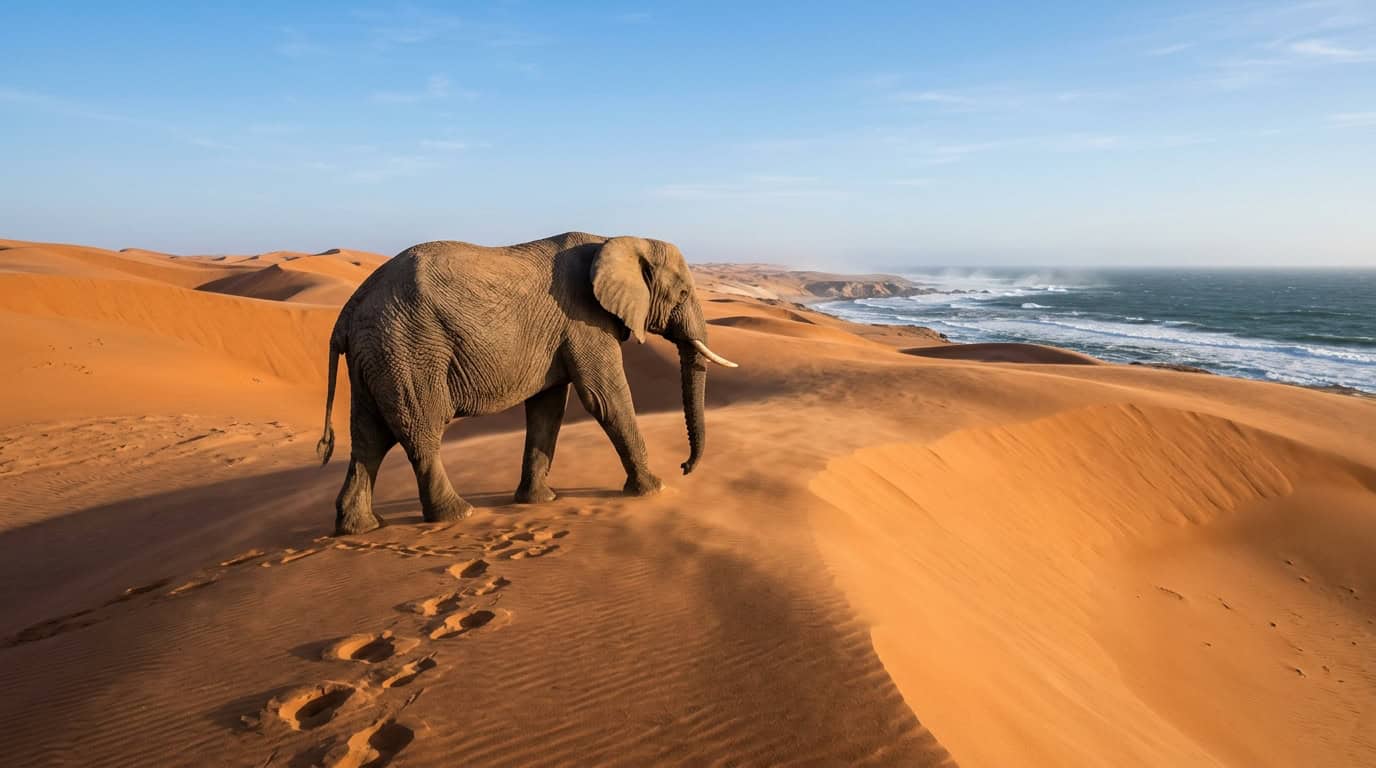
The northern reaches of the Skeleton Coast are home to some of the most resilient and fascinating creatures on the planet. I remember the first time I saw a desert-adapted elephant navigating the towering dunes, a sight that felt almost like a mirage against the scorched sand. These magnificent giants have evolved longer legs and larger feet than their savanna cousins, allowing them to traverse vast distances between hidden waterholes. They possess an incredible biological memory, passed down through generations, which helps them survive in a world that receives almost no rainfall. Watching them gracefully move through the dry riverbeds is a humbling reminder of nature’s ability to thrive in the most extreme conditions.
Equally legendary are the desert lions that roam this hauntingly beautiful coastline, occasionally hunt marine life along the Atlantic shore. These predators have adapted to the heat and the rugged terrain, often going days without water by drawing moisture from their prey. This unique ecosystem is currently the focus of a massive conservation project designed to protect these vital wildlife corridors. By supporting high value and low impact tourism, these initiatives ensure that the northern wilderness remains a pristine sanctuary for these rare species. It is an inspiring model for travel, where our presence actually contributes to the long term survival of the animals we come to photograph.
To experience this northern wilderness, you will likely need to join a fly in safari, as the terrain is strictly managed to preserve its fragile state. Hovering over the coastline offers a perspective you simply cannot get from the ground, revealing the scattered shipwrecks that give the region its name. You might spot a pride of lions resting in the shadow of a rusted hull or a lone elephant trekking toward the Hoanib River. I highly recommend packing a high quality telephoto lens for your camera, as these animals are best observed from a respectful distance to avoid disturbing their natural behavior. Planning a trip here requires some foresight, but the reward is an intimate encounter with a wild world that feels untouched by time, much like the experience of chasing the Milky Way in the vast, dark skies above the Namib.
Navigating From Ugab Gate To The Kunene River
Your journey into the heart of the Skeleton Coast begins at the Ugab Gate, where the iconic skull and crossbones signage welcomes you to one of the most inhospitable yet mesmerizing places on Earth. As a self-drive adventurer, you can navigate the southern section of the park independently, provided you have a sturdy 4×4 and a sense of wonder. This stretch between the Ugab River and Terrace Bay is a photographer’s dream, offering easy access to the rusted remains of shipwrecks like the Winston, which sits as a silent monument to the treacherous Benguela Current. You will find yourself driving through a world of shifting salt pans and lichen-covered gravel plains that feel like the very edge of the world. Be sure to stop at the Huab Lagoon to witness the contrasting colors of the blue Atlantic against the pale desert sands.
Once you venture beyond Terrace Bay, the environment transforms into a strictly managed wilderness that requires a shift in travel strategy. To reach the northernmost reaches near the Kunene River, you must trade your steering wheel for a window seat on an exclusive fly-in safari. This transition is where the true magic of the Skeleton Coast reveals itself, as you soar over massive barchan dunes that roar when the wind hits them just right. From the air, the scale of the Land God Made in Anger becomes clear, showing how the desert elephants and brown hyenas navigate this waterless expanse. Landing on remote strips near the Angolan border allows you to explore untouched shipwrecks and hidden oases that very few humans ever get to witness in person.
Planning this transition requires careful timing and a deep appreciation for high-value, low-impact tourism. I recommend spending at least three days self-driving the southern coast to soak in the eerie atmosphere of the shoreline before catching your flight north. This two-part itinerary ensures you experience both the rugged independence of the desert road and the profound silence of the inaccessible northern interior. Make sure to pack extra memory cards for your camera, as the interplay of coastal fog and morning light creates ethereal scenes you will want to capture forever. Ending your trip at the Kunene River provides a stunning finale, where the river’s life-giving waters cut a green ribbon through the ancient, scorched dunes.
Where the Desert Meets the Ghostly Atlantic
Standing on the edge of the Atlantic where the desert dunes plunge into the icy surf, I found that the most striking feature of the Skeleton Coast is its profound, heavy silence. The thick coastal fog rolls in like a living entity, muffling the sound of the crashing waves and wrapping the rusted shipwrecks in a ghostly embrace. There is a haunting beauty in seeing the skeletal remains of vessels like the Eduard Bohlen slowly being swallowed by the shifting sands. This region feels like a place where time has simply stopped, offering a rare chance to disconnect from the modern world and reconnect with the raw power of nature. It is a photographer’s dream, where the contrast between the bleached whale bones and the golden dunes creates a visual masterpiece at every turn.
I truly believe that every adventurous soul should experience this remote frontier before its quiet isolation becomes a memory of the past. Whether you are navigating the rugged southern tracks in a 4×4 or soaring over the inaccessible northern wilderness on a fly in safari, the Skeleton Coast leaves a permanent mark on your spirit. It is more than just a destination for your travel list, as it is a humbling reminder of the earth’s untamed majesty and resilience. Make sure to pack your camera and a sturdy pair of boots, but most importantly, bring an open heart ready for solitude. This stretch of Namibian coastline is calling to those who seek the extraordinary, so I encourage you to go now and witness its magic for yourself.
Frequently Asked Questions
1. What is the best way to explore the Skeleton Coast?
The most immersive way to experience this area is through a combination of a rugged 4×4 vehicle for the southern reaches and a bush plane for the restricted northern wilderness. Flying over the coastline gives you a breathtaking perspective of where the dunes meet the sea, while driving allows you to feel the raw power of the desert under your tires.
2. Can I see shipwrecks like the Henrietta on my own?
You can certainly visit several famous wrecks like the Henrietta, but you must be prepared for challenging driving conditions and dense coastal fog. I recommend bringing a high-quality camera and arriving early in the morning to capture the haunting silhouettes before the mist fully dissipates.
3. What kind of wildlife can I expect to see in such an arid environment?
Nature here is incredibly resilient, and you will likely encounter desert-adapted elephants trekking through dry riverbeds and massive Cape fur seal colonies along the shore. Keep a close eye on the horizon for jackals and brown hyenas that often scavenge near the shipwrecks and surf.
4. Do I need special permits to visit the Skeleton Coast National Park?
Yes, navigating the permit system is a crucial part of planning your journey since the park is a protected wilderness area. You should secure your entry permits in advance through the Ministry of Environment and Tourism to ensure you have access to both the southern and northern gates.
5. Is it safe to drive a 4×4 along the coastline?
Driving here is a thrilling adventure, but it requires a high-clearance 4×4 and a good understanding of sand driving techniques. The soft dunes and unpredictable tides can be treacherous, so always travel with plenty of water, extra fuel, and a reliable GPS or satellite communication device.
6. What should I pack for a trip to this remote region?
You need to prepare for extreme temperature swings, ranging from the icy Atlantic chill to the intense heat of the Namib Desert. Pack plenty of layers, high-factor sunscreen, and sturdy boots for walking through the salt-crusted sands and rocky outcrops.
7. When is the best time of year to visit the Namibia Skeleton Coast?
The most comfortable time to visit is between October and March when the weather is slightly warmer, though the iconic fog can appear at any time of year. This period offers the best visibility for photography and more predictable conditions for flying over the dunes.