
While Florence captures the headlines, I found my heart tucked away behind the massive, tree-lined Renaissance walls of a city that feels like Tuscany’s best-kept secret. Lucca, often called the City of 100 Churches, has become my favorite alternative for travelers seeking a slower, more authentic pace without the overwhelming crowds. This lucca italy itinerary is designed to help you explore its car-free cobblestone streets and hidden piazzas where the scent of fresh espresso and jasmine fills the air.
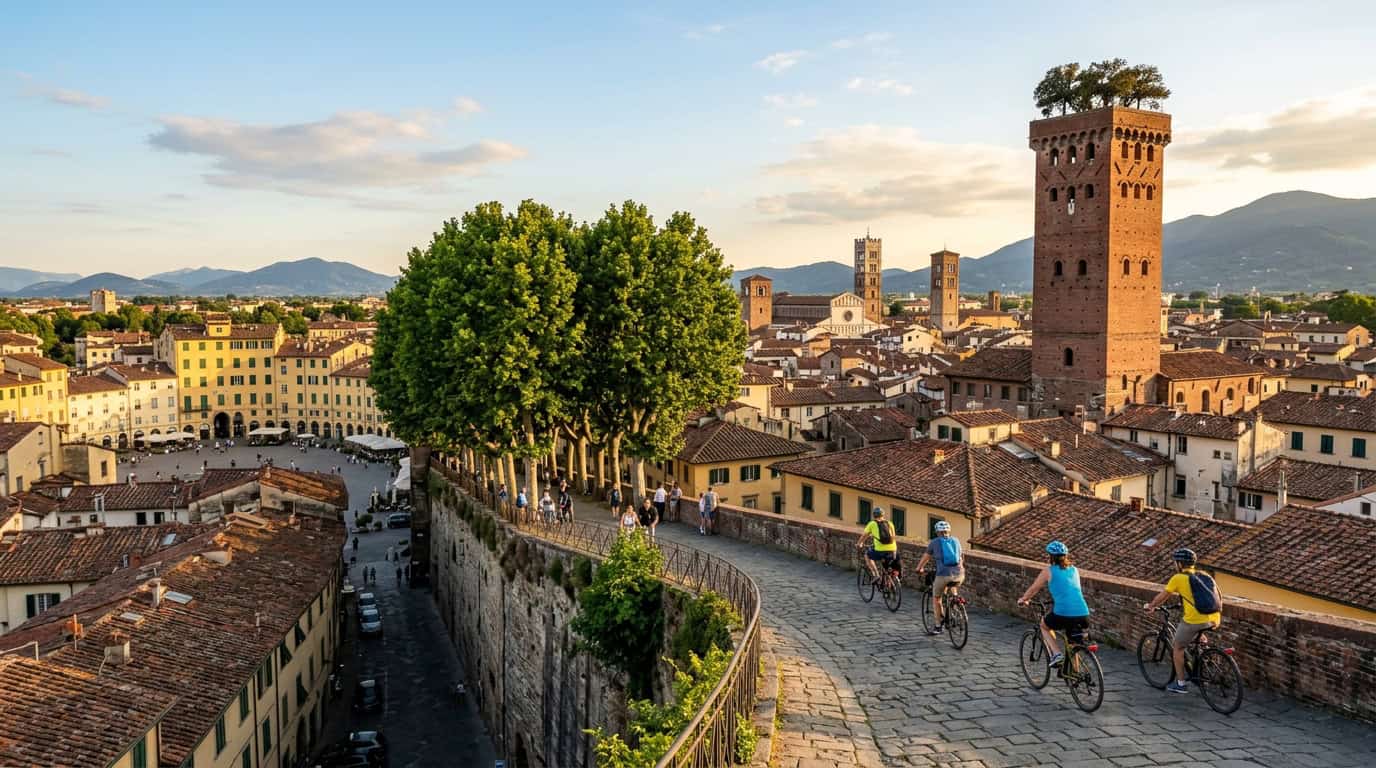
Imagine starting your morning cycling along a 4-kilometer elevated parkway that circles the entire city, offering a bird’s-eye view of terracotta rooftops and ancient bell towers. You’ll spend your hours climbing medieval towers topped with living oak trees and dining inside an oval-shaped square built directly into the ruins of a Roman amphitheater. It is a place where history isn’t just displayed behind glass, but lived in every corner of its vibrant, walkable historic center.
Key Takeaways
- Lucca offers a slower, more authentic alternative to Florence, featuring a car-free historic center that is easily navigable on foot or by bicycle.
- The city’s 4-kilometer Renaissance walls serve as an elevated, tree-lined parkway perfect for cycling and viewing the city’s terracotta rooftops.
- Lucca’s unique architectural history is best experienced at the Guinigi Tower, famous for its rooftop oak trees, and the Piazza dell’Anfiteatro, an oval square built on Roman ruins.
- As the birthplace of Giacomo Puccini and the ‘City of 100 Churches,’ Lucca provides world-class cultural and musical heritage without the overwhelming crowds and long lines of larger Italian cities.
Cycling The Renaissance Walls And Climbing Guinigi Tower
To start your morning in Lucca, I highly recommend heading straight to the city’s famous Renaissance walls for a scenic bike ride. Unlike the frantic energy you might find in larger cities, the 4km tree-lined loop here feels like a lush community garden suspended above the historic streets. I rented a simple cruiser for about three euros an hour and found it to be the perfect way to get my bearings while enjoying the fresh air. The path is wide, flat, and entirely car-free, making it an incredibly relaxing experience for any skill level. You will pass locals jogging and families strolling, all while catching glimpses of hidden palaces and secret gardens tucked behind the brickwork.
After you have completed a loop or two on the walls, make your way to the base of the iconic Guinigi Tower to see the city from a different perspective. This medieval structure is impossible to miss because of the ancient holm oaks growing right out of its rooftop. I climbed the 230 steps to the summit, and while the ascent got my heart racing, the reward at the top was absolutely worth the effort. Standing under the shade of those centuries-old trees while looking out over a sea of terracotta rooftops is a memory I will never forget. From this height, you can clearly see the unique oval shape of the Piazza dell’Anfiteatro and the distant, rolling hills of the Tuscan countryside.
Exploring Roman History At Piazza Dell Anfiteatro And San Michele
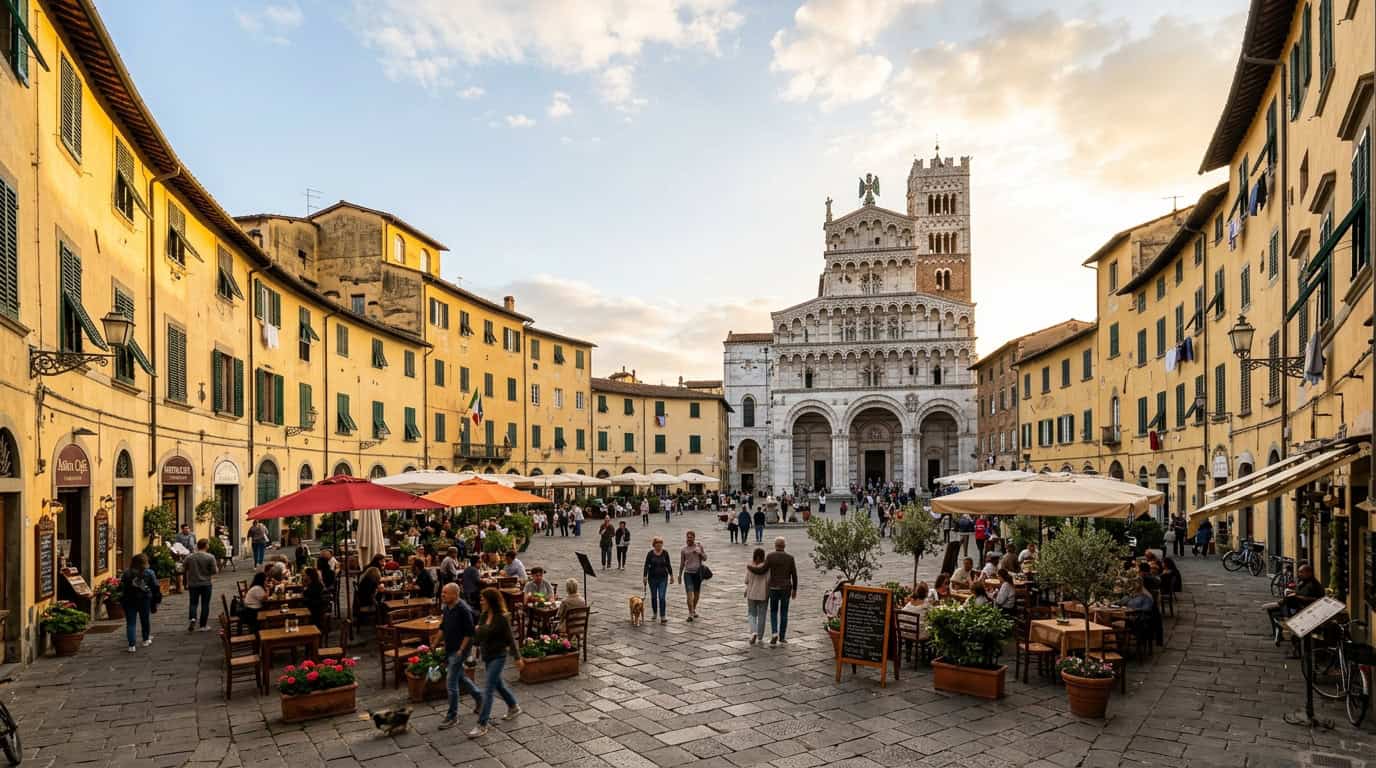
As you wander through the car free streets, you will eventually emerge into the breathtaking Piazza dell Anfiteatro, a space that feels like a warm embrace. This unique oval shaped square was built directly upon the foundations of a second century Roman amphitheater, and you can still see the ancient arches integrated into the modern buildings. Unlike the bustling crowds of Florence, this plaza offers a relaxed atmosphere where you can sip an espresso and watch local life unfold. The harmony of the yellow buildings against the blue Tuscan sky creates a perfect backdrop for photos. I love how the curved architecture tells a story of centuries of transformation, turning a place of gladiator combat into a peaceful community hub.
Just a short walk away, the stunning facade of San Michele in Foro rises above the city center like a marble masterpiece. This church sits on the site of the ancient Roman forum, which served as the heart of public life thousands of years ago. You should take a moment to look up at the intricate Pisan style columns, as each one features a completely unique design and decorative carving. At the very top, a massive statue of Archangel Michael overlooks the square, catching the sunlight in a way that feels truly magical. It is the perfect spot to appreciate Lucca’s nickname as the City of 100 Churches while enjoying the manageable pace of this historic gem.
Celebrating Puccini And The Cathedral Of San Martino
No visit to Lucca is complete without paying homage to its most famous son, the legendary opera composer Giacomo Puccini. I recommend starting your afternoon at the Puccini Birthplace Museum, where you can wander through the very rooms where he was born and raised. The atmosphere here is incredibly intimate, filled with original scores, personal letters, and the grand piano he used to compose Turandot. It is a refreshing change from the massive, crowded museums of Florence, allowing you to truly connect with the artist’s spirit at your own pace. You will find that the city honors his legacy every single evening with professional concerts held in the Church of San Giovanni, just a short walk away.
After soaking in the musical history, make your way to the Cathedral of San Martino to witness some of the most breathtaking art in Tuscany. The facade is a masterpiece of Romanesque architecture, and if you look closely, you will notice that no two marble columns are exactly alike. Inside, the hushed interior houses the Volto Santo, a sacred wooden crucifix shrouded in local legend, and the stunning tomb of Ilaria del Carretto. I found myself lingering here much longer than expected, captivated by the intricate carvings and the peaceful energy of the space. It is a perfect example of why Lucca is so special, offering world class cultural treasures without the overwhelming lines of larger Italian cities.
Savoring Authentic Lucchese Flavors And Evening Aperitivos
Dining in Lucca feels like a warm invitation into a local kitchen, far removed from the hurried tourist menus of larger Tuscan cities. You must try a steaming bowl of Ribollita, a hearty bread and vegetable soup that perfectly captures the rustic soul of the region. For a uniquely Lucchese twist, look for Tordelli Lucchesi, which are silk-soft pasta pockets filled with seasoned meat and topped with a rich ragu. I recommend wandering away from the main piazza to find the tiny, family-run osterias tucked into the narrow side streets where the locals eat. These hidden gems offer an intimate atmosphere where you can savor authentic flavors at a much slower, more intentional pace.
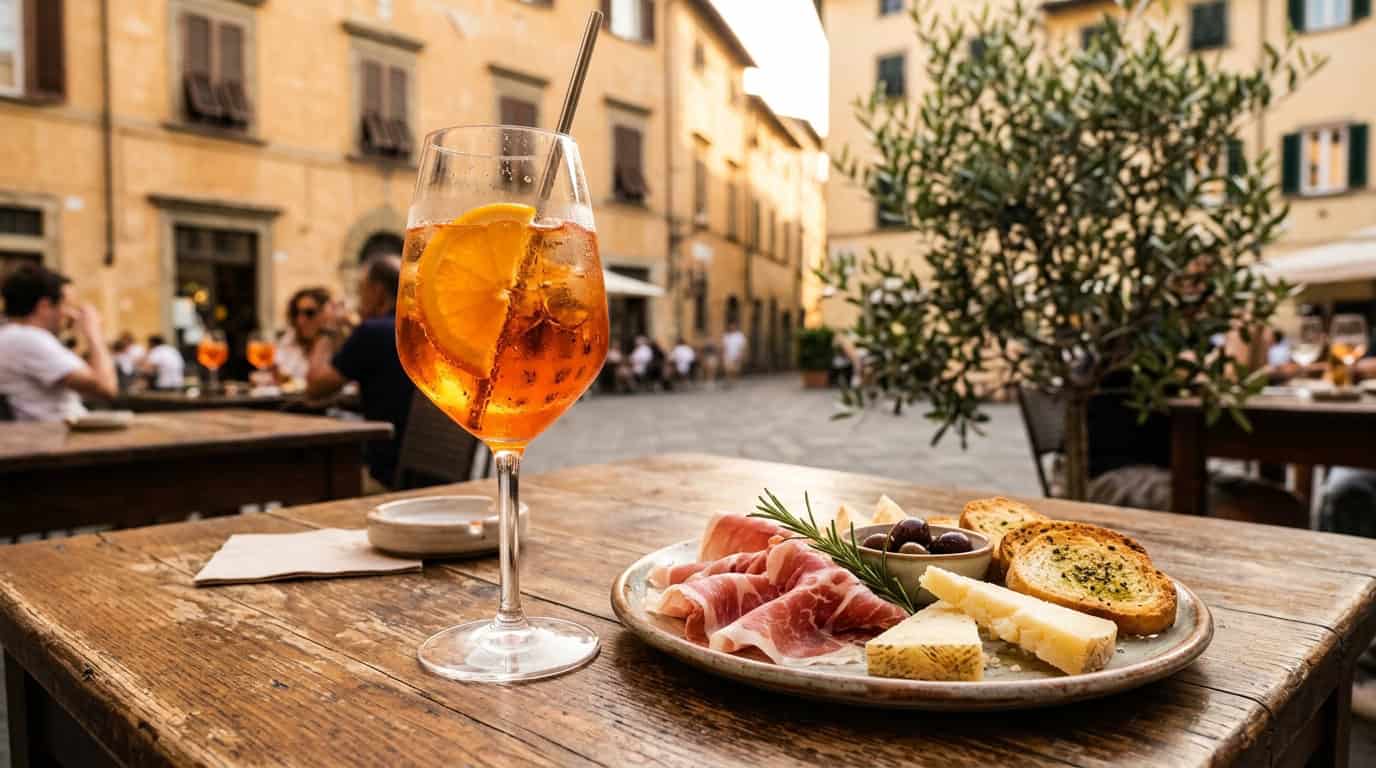
As the golden hour approaches, the city’s car-free center transforms into the ultimate setting for a relaxed evening aperitivo. I love grabbing a small table in Piazza dell’Anfiteatro, where the curved walls of the former Roman arena create a natural acoustic bowl for the evening’s chatter. Order a classic Spritz or a glass of local Colline Lucchesi wine, which usually arrives with a generous spread of olives, focaccia, and local cheeses. It is the perfect moment to pause and watch the light fade against the yellow ochre facades of the historic buildings. This ritual is not just about the drink, but about embracing the gentle rhythm of life that makes Lucca so incredibly special.
Savoring the Quiet Magic of Lucca
Wrapping up your time in Lucca feels like finishing a long, peaceful lunch with an old friend. While the grand monuments of Florence are undeniably beautiful, Lucca offers a rare sense of intimacy that larger cities often lose to the crowds. From the breezy bike ride along the top of the Renaissance walls to the shade of the oaks atop the Guinigi Tower, this itinerary is designed to help you slow down. You will find that the real magic happens in the quiet moments, like watching the golden light hit the facade of San Michele in Foro or sharing a gelato in the oval Piazza dell’Anfiteatro.
Choosing Lucca means choosing a more authentic, walkable, and stress-free version of Tuscany that feels entirely your own. It is a city where you can trade long museum lines for leisurely strolls through the City of 100 Churches without ever feeling rushed. Whether you are visiting for a single day or a long weekend, the flat streets and car-free center make it the perfect destination for travelers who want to truly live in the moment. I encourage you to pack your bags and head to these ancient walls, because a deeper and more meaningful Italian experience is waiting for you just inside the gates.
Frequently Asked Questions
1. Is one day enough time to see everything in Lucca?
One day is the perfect amount of time to fall in love with Lucca’s historic center. You can easily cycle the entire 4 kilometer wall loop, climb the Guinigi Tower, and enjoy a long lunch in the Piazza dell’Anfiteatro without feeling rushed.
2. How much does it cost to rent a bicycle for the city walls?
You can typically rent a simple cruiser for about three euros an hour from several shops near the city gates. It is an affordable and essential Lucca experience that allows you to see the terracotta rooftops from a beautiful, elevated perspective.
3. What makes the Guinigi Tower so unique compared to other towers?
The Guinigi Tower is famous for the ancient holm oak trees growing right at its summit. Climbing to the top gives you the surreal experience of standing in a hanging garden while looking out over the medieval city and the Tuscan hills.
4. Is the city center of Lucca easy to navigate on foot?
Lucca is incredibly walkable and mostly car-free, making it a dream for travelers who love to explore on foot. The streets are flat and lead you naturally toward hidden piazzas and the stunning Roman amphitheater ruins. For those planning a stress-free Italian escape, Lucca provides a perfect contrast to the complex logistics of other regions.
5. What should I not miss when visiting the Piazza dell’Anfiteatro?
You must take a moment to appreciate the oval shape of the square, which was built directly into the foundations of a 2nd-century Roman amphitheater. I recommend grabbing an espresso at a cafe table to soak in the vibrant atmosphere and the scent of jasmine in the air.
6. Why is Lucca often called the City of 100 Churches?
This nickname comes from the incredible density of beautiful religious sites packed within the city walls. As you follow this itinerary, you will encounter stunning facades like San Michele in Foro, where history is lived in every corner rather than kept behind glass.