
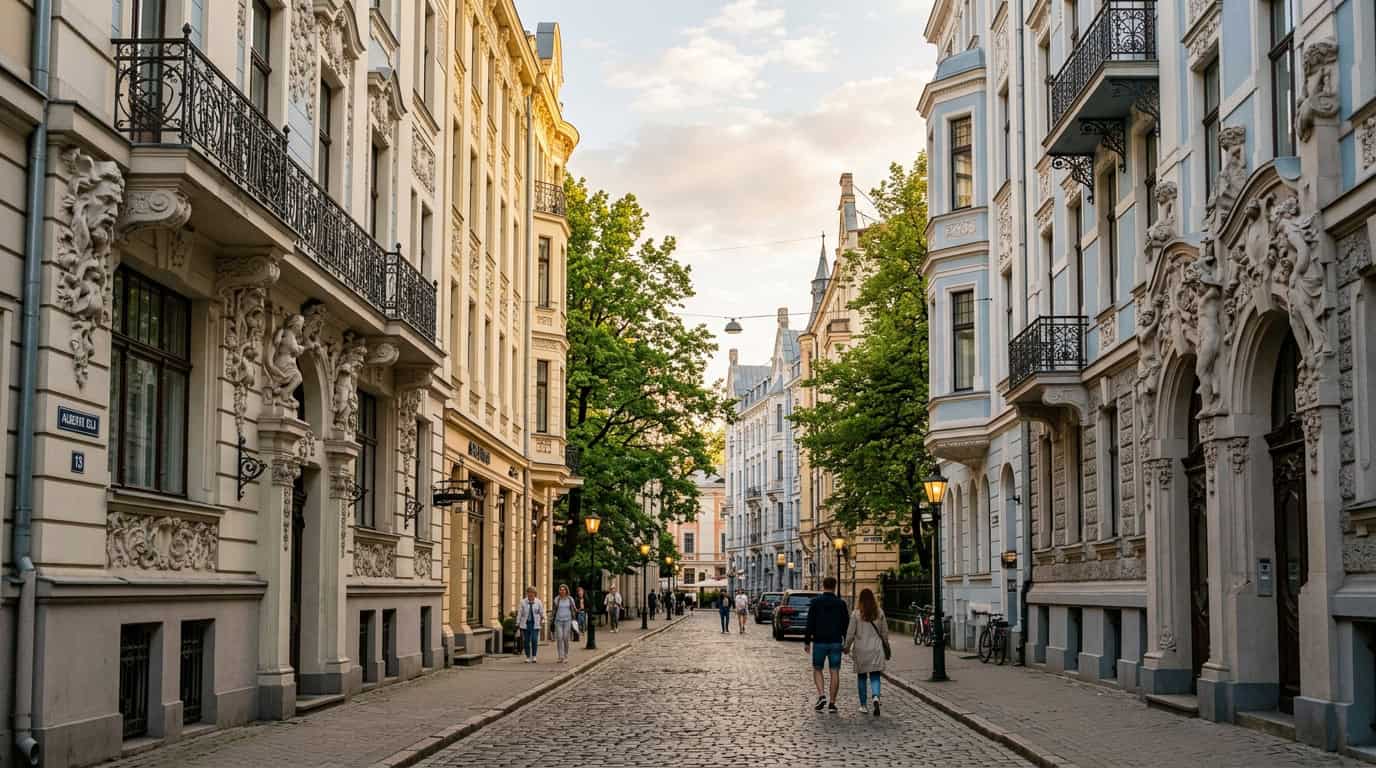
The first time I stepped onto the cobblestones of Latvia’s capital, I realized a self-guided Riga architecture walk was the best way to fall in love with the city. Stretching from medieval Hanseatic origins to the world’s densest collection of Art Nouveau facades, every block feels like an open-air gallery waiting to be discovered. I spent my afternoon marveling at intricate stone gargoyles, whimsical floral motifs, and soaring spires that proudly earned the historic center its UNESCO World Heritage status. It is a rare destination where centuries of urban design tell stories directly to passersby.
Beyond the breathtaking downtown core, where over 800 grand Art Nouveau buildings showcase the wealth of the early 20th century, lies an equally enchanting world of preserved wooden heritage. Wandering into these quieter neighborhoods reveals nearly 4,000 historic timber structures that lend the city an unforgettable, fairytale warmth. Trust me, lacing up your walking shoes and taking your time through these stunning streets is the most rewarding way to experience the magical soul of the Baltic capital.
Key Takeaways
- Riga boasts over 800 Art Nouveau structures, with Alberta Street in the Quiet Centre offering the world’s densest concentration of dramatic facades and ornate stone carvings.
- The compact, cobblestoned Old Town showcases Riga’s Hanseatic legacy through iconic medieval landmarks like St. Peter’s Church, the House of the Blackheads, and the Three Brothers.
- Beyond the stone city center, the Kalnciema Quarter highlights Riga’s rare wooden heritage, which features nearly 4,000 restored 19th-century timber structures and vibrant weekly artisan markets.
- A self-guided walking route connecting these three distinct architectural zones is best experienced on foot during spring or early autumn for optimal light and lighter crowds.
Exploring Art Nouveau Highlights Along Alberta Street
As you turn off the main boulevard into the Quiet Centre (Klusais Centrs), the fast pace of modern Riga immediately melts away into an enchanting open-air gallery. Alberta Street serves as the crown jewel of this neighborhood, showcasing some of the most dramatic Art Nouveau architecture anywhere in Europe. Most of the breathtaking facades here were designed by architect Mikhail Eisenstein, who infused his buildings with extravagant, theatrical flare. I love starting my morning walk at Alberta Street 2a, where expressive stone faces and grand sphinxes greet you right from the upper stories. As you stroll along these soaring structures, look out for intricate peacocks, mythic figures, and floral motifs carved into every available inch of pale blue and white plaster.
- Bring a zoom lens: Focus on high-level relief sculptures, gargoyles, and ornate window frames that are easy to miss from ground level.
- Shoot during golden hour: Early morning or late afternoon light casts soft shadows across the sculpted plaster, bringing out rich three-dimensional details.
- Look directly upward: Position yourself near the grand entrances to snap dramatic, vertically aligned photos emphasizing the sheer height of the facades.
Capturing the sheer complexity of Eisenstein’s creations requires a bit of patience and the right angle, especially on narrower streets where lighting changes quickly. I always recommend arriving early in the morning when the quiet avenues are free of touring crowds and delivery vehicles. The morning sun strikes the eastern facades at a gorgeous angle, casting soft shadows that accentuate every sculpted eyebrow and carved petal. If you are shooting with a smartphone, try stepping back across the street and enabling grid lines to keep those towering vertical pillars perfectly straight. Don’t forget to glance at the ground level entrances as well, because the wrought-iron doors and tiled foyers are just as breathtaking as the rooftops.
Beyond filling up your camera roll, taking a slow walk along Alberta Street feels like stepping straight into a storybook written at the turn of the twentieth century. Riga boasts over eight hundred Art Nouveau buildings across the city, but nowhere else feels quite as concentrated or magical as this single historic block. Take your time wandering from one end to the other, pausing at the corner of Alberta and Strelnieku streets to admire how seamlessly the surrounding structures blend together. After soaking in the views, you can pop into a cozy neighborhood cafe nearby to rest your feet and review your favorite shots over a fresh coffee. It is an unmissable experience that will make you fall in love with Riga’s artistic soul.
Wandering Historic Old Town and Hanseatic Gems
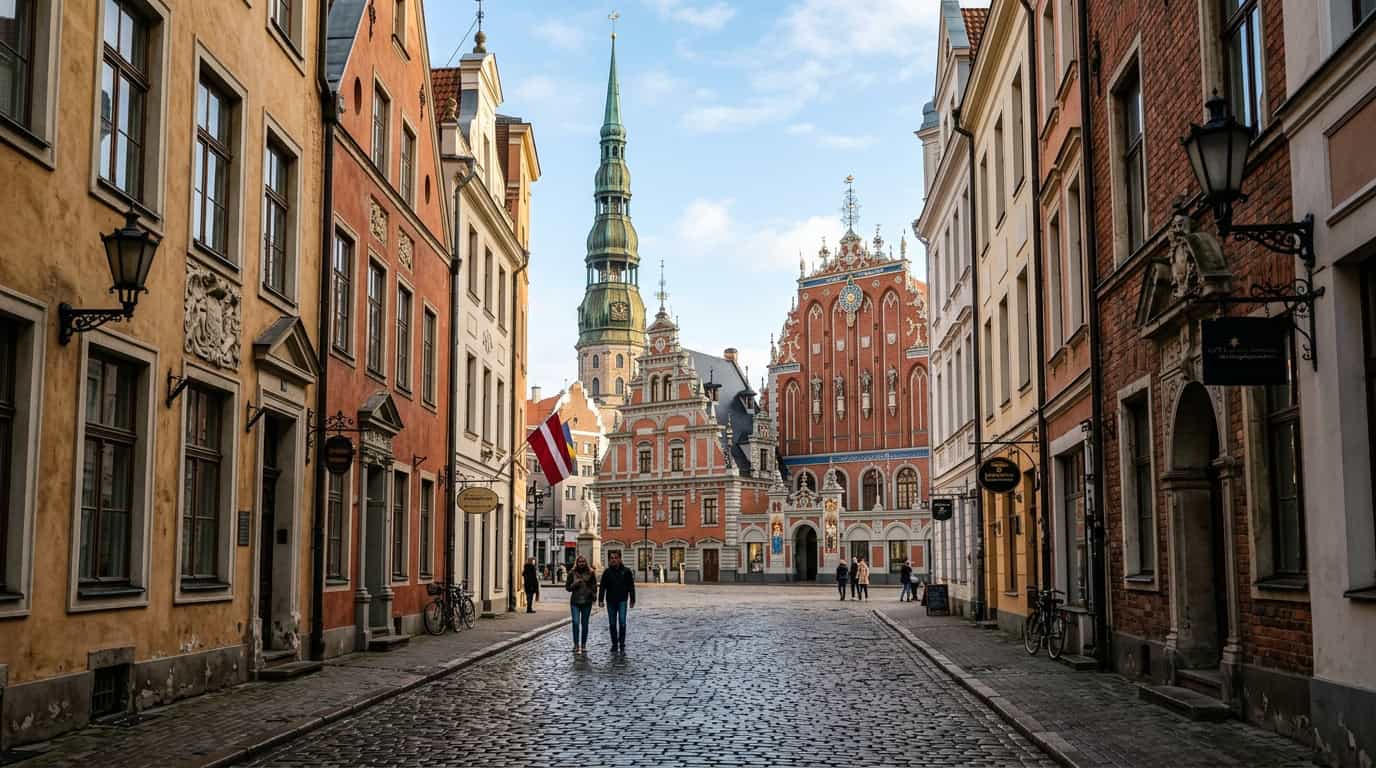
As I took my first steps onto the winding cobblestone streets of Riga’s Old Town, I instantly felt transported back to the height of the Hanseatic League. The crisp Baltic air carried the faint echo of church bells as I made my way toward Town Hall Square, where the soaring gothic tower of St. Peter’s Church dominates the skyline. Climbing up to the church’s observation platform provided a panoramic 360-degree view of red-tiled roofs, winding alleyways, and the shimmering Daugava River below. Wandering through these ancient thoroughfares, it is easy to imagine medieval merchants trading amber, timber, and wax along the busy riverbanks centuries ago. This historical core is wonderfully compact, making it effortless to explore entirely on foot during a quick weekend getaway.
My favorite stop along this historic loop was standing right in front of the iconic House of the Blackheads, an architectural masterpiece originally built in the 14th century for unmarried foreign merchants. The intricate Dutch Renaissance style facade is adorned with elaborate sculptures, gilded clockwork, and vibrant coat-of-arms details that demand a spot in your photo album. Right nearby, you will discover the Three Brothers, a charming trio of interconnected stone houses that showcase the evolution of local residential architecture over three distinct centuries. Each building tells a story about how wealth and craftsmanship flourished during Riga’s rise as a crucial trading hub between Western Europe and the East. Seeing these meticulously restored facades up close gives you a genuine appreciation for why UNESCO declared this entire area a World Heritage site.
- Town Hall Square: The vibrant heart of Old Riga, anchored by the magnificent House of the Blackheads.
- St. Peter’s Church: The best panoramic vantage point over the medieval rooftops and the river.
- The Three Brothers: Riga’s oldest complex of stone dwellings, displaying Gothic, Renaissance, and Baroque styles side by side.
- Swedish Gate: The only remaining city gate left standing from the original 17th-century fortification walls.
Walking these historic alleys early in the morning allows you to beat the tour crowds and capture the soft light bouncing off the pastel-colored plaster. I recommend grabbing a warm cinnamon roll and a fresh coffee from a local bakery to fuel your stroll while enjoying the quiet atmosphere before the shopfronts open up. Keep your eyes peeled for small decorative details, like the iron weather vanes perched atop the church spires and the quirky cat statues guarding historic rooftops. Spending a few hours tracing this medieval maze is the perfect warm-up before you venture beyond the ancient city canal to explore the city’s legendary Art Nouveau boulevards. Just make sure to wear sturdy, comfortable walking shoes, because those centuries-old cobblestones will put your footwear to the test.
Uncovering Riga’s Historic Wooden Neighborhoods
While most travelers stick to the famous Art Nouveau district, crossing the Daugava River to explore Riga’s wooden heritage turned out to be one of my favorite parts of my architectural walk. Nestled in the Pārdaugava district, the Kalnciema Quarter feels like an open museum showcasing beautifully restored 19th-century wooden buildings that survived decades of urban change. Riga preserves around 4,000 historic wooden structures, making it one of the richest collections of wooden architecture in Europe. Strolling along these quiet, tree-lined streets offers an intimate glimpse into a softer side of the city’s rich design history. As I admired the delicate carved trim and pastel facades, I felt transported to a cozy, bygone era.
If you time your walk for a Saturday morning, the tranquil neighborhood transforms into a buzzing hub of local culture during the weekly Kalnciema Farmers Market. Local artisans, bakers, and craftsmen set up stalls beneath the canopy of classic wooden manors, filling the air with the smell of freshly baked rye bread and smoked treats. I loved grabbing a warm coffee and wandering between the vibrant stalls while chatting with neighborhood creators about their handcrafted goods. To make the most of your visit to this charming pocket of the city, keep an eye out for these highlights:
- Restored 19th-Century Manor Houses: Admire the meticulous carpentry, traditional shutters, and warm amber tones of classic Baltic timber design.
- Artisan Craft Stalls: Browse handmade ceramics, traditional Latvian knitwear, and unique wooden design pieces straight from local makers.
- Open-Air Courtyard Cafes: Relax with local craft cider, fresh pastries, and live acoustic music under the leafy courtyard trees.
Reaching the Kalnciema Quarter is easy, making it a simple detour from the main sightseeing route in the central city. You can take a quick ten-minute trolleybus ride from the Old Town or opt for a scenic 30-minute walk across the Vanšu Bridge for skyline views along the way. I recommend dedicating at least two hours here to soak in the atmosphere, sample local treats, and snap photos of the intricate woodwork. Combining this laid-back neighborhood with your central Art Nouveau tour gives you a well-rounded perspective on Riga’s architectural soul.
Plan Your Own Architectural Stroll Through Riga
Stepping back to look at Riga’s skyline, I am reminded of how effortlessly this city bridges medieval history with theatrical Art Nouveau flair. If you are planning your own weekend getaway to the Baltics, I recommend dedicating a full morning to exploring the Quiet Centre along Alberta Street before wandering into the historic center. Riga is exceptionally walkable, so you can stroll between world-famous facades and cozy local cafes without relying on public transit. Spring and early autumn are my favorite times to visit, as the soft light beautifully illuminates the intricate building details while keeping the crowds light.
Do not forget to extend your route beyond the main tourist hub to admire the city’s unique wooden heritage, particularly around the Kalnciema Quarter. With thousands of historic wooden structures still standing, these quieter neighborhoods offer a peaceful contrast to the grand stone architecture of downtown. Grab a hot coffee from a neighborhood bakery and take your time admiring the delicate craftsmanship of these preserved homes. Packing a comfortable pair of walking shoes is essential, as those charming cobblestone streets can be unforgiving after a few miles.
A short city break here serves as the ideal introduction to the Baltic region, offering world-class architectural design and rich history in an accessible package. Standing beneath the towering carved faces of Alberta Street on a quiet morning is a magical experience that stays with you long after your trip ends. Whether you are an avid photography enthusiast or simply love discovering beautiful places on foot, this capital is bound to win your heart. I hope this self-guided walking route inspires you to pack your bags and begin planning your own Baltic adventure today.