
Open-jaw flights give me the freedom to see more without retracing my steps. I can fly from New York to London, travel overland to Paris by train, then fly home from Paris, turning one trip into a richer, more varied adventure. The unflown stretch, known as the surface sector, lets me connect cities by rail, car, ferry, or a separate flight.
This flexible approach works well when I want to visit multiple destinations, save time, or create a more scenic route. With a little planning, I can compare airports, coordinate transportation between them, and build an itinerary that feels less like a back-and-forth commute and more like a true journey.
Key Takeaways
- Open-jaw flights let you arrive in one city and depart from another, with the unflown “surface sector” covered by train, car, bus, ferry, or a separate flight. This eliminates backtracking and supports more natural multi-city itineraries.
- The main types are destination open jaw, origin open jaw, and double open jaw, differing in whether the arrival airport, departure airport, or both change. Choose the format that best matches your route and available transportation.
- Compare the complete door-to-door cost—not just the airfare—by including surface transportation, baggage fees, airport transfers, lodging, and one-way rental-car charges. An open-jaw itinerary may save more time than money, but it is most valuable when destinations follow a convenient regional route.
- Use multi-city searches, compare separate one-way tickets, and build generous buffers for independently booked connections. Confirm baggage rules, airport transfers, ticket protection, and entry or transit requirements before booking, especially when crossing borders by land.
Introduction To Open Jaw Flights
Open-jaw flights give me the freedom of a round trip without requiring me to return to the city where my journey began. I might fly from New York to London, explore England, then continue overland to Paris before flying home to New York from a different airport. That unflown stretch between London and Paris is called the surface sector, and it can become one of the most memorable parts of the trip. Instead of retracing my steps, I can cover it by train, rental car, bus, ferry, or a separate flight.
This format works especially well when I want to combine nearby destinations into one efficient journey. After wandering through London’s historic neighborhoods, I could take the train to Paris for riverside walks, museum visits, and relaxed café mornings before my flight home. Open-jaw flights can save travel time and sometimes money by eliminating an unnecessary return to the arrival airport, although the total cost depends on the ground connection and fare rules. I always compare the ticket price, surface-sector transportation, baggage fees, and airport transfers before deciding.
When I search, I treat the trip as two connected flight routes rather than looking only for a traditional return ticket. I compare different arrival and departure airports, check nearby cities, and leave enough time for the surface journey so a delay does not jeopardize my flight home. I also confirm whether the flights are on one ticket or separate bookings, since that affects connections, changes, and protection if plans go wrong. With a little planning, open-jaw flights can turn a simple round trip into a smoother, more varied multi-city adventure.
Open Jaw Flight Types Explained
A destination open jaw keeps the same starting point but uses different cities for arrival and departure. For example, I might fly from New York to London, travel independently from London to Paris by train, and then fly from Paris back to New York. The unflown gap is the short journey between London and Paris, which lets me explore two cities without backtracking. I choose this structure when the destinations are well connected by rail or road and I want to make the transfer part of the adventure.
An origin open jaw changes the starting airports while keeping the destination the same. I could fly from New York to Rome, spend time exploring Italy, and return from Rome to Boston, leaving the unflown gap between New York and Boston for a separate train ride, car journey, or positioning flight. This option works well when I live near more than one airport or can find a cheaper return from a nearby city. It also helps me avoid repeating a long drive or domestic connection after an international trip.
A double open jaw changes both the origin and destination, creating two separate surface sectors. One example is flying from New York to London, traveling independently through Europe to Paris, then flying to Boston, with the unflown gaps being London to Paris and Boston to New York. I consider this format when I am building a broader multi-city journey and want each flight to serve a different part of the route. When searching, I compare multi-city fares with separate one-way tickets, then check train schedules, airport transfer times, baggage rules, and the cost of covering each gap before booking.
Open Jaw Itineraries Worth Building
Open-jaw flights make it easier to explore several destinations without circling back to where the trip began. I love the classic route of flying into Rome, spending a few days wandering around the Colosseum and Trastevere, then taking trains north through Florence and Venice before continuing to Milan. After admiring the Duomo and enjoying an aperitivo in the Navigli neighborhood, I can fly home from Milan instead of retracing the journey to Rome. The unflown Rome-to-Milan portion is covered independently by train, creating a smoother itinerary and often saving a full day of backtracking.
A London-to-Paris open-jaw itinerary works beautifully for a shorter cultural escape. I might fly into London, spend time at the British Museum and National Gallery, and fill the evenings with neighborhood walks through Notting Hill, Covent Garden, or South Bank before taking the Eurostar to Paris. In Paris, I can explore the Louvre, stroll along the Seine, and linger in Montmartre before flying home from the city’s airport. Because the return flight departs from Paris, I avoid returning to London and make the journey between cities part of the experience.
When I search for open-jaw flights, I use a multi-city search and compare the total cost with a standard round trip plus separate tickets. I check nearby airports, train schedules, baggage rules, and realistic connection times, since the ground segment usually is not included in the flight ticket. This format is most useful when the cities follow a natural route and the savings in time, transportation, or hotel nights outweigh any fare difference. Building in some flexibility can also reveal better combinations, such as arriving midweek or flying home from a nearby city at the end of the trip.
Searching And Booking Open Jaw Flights
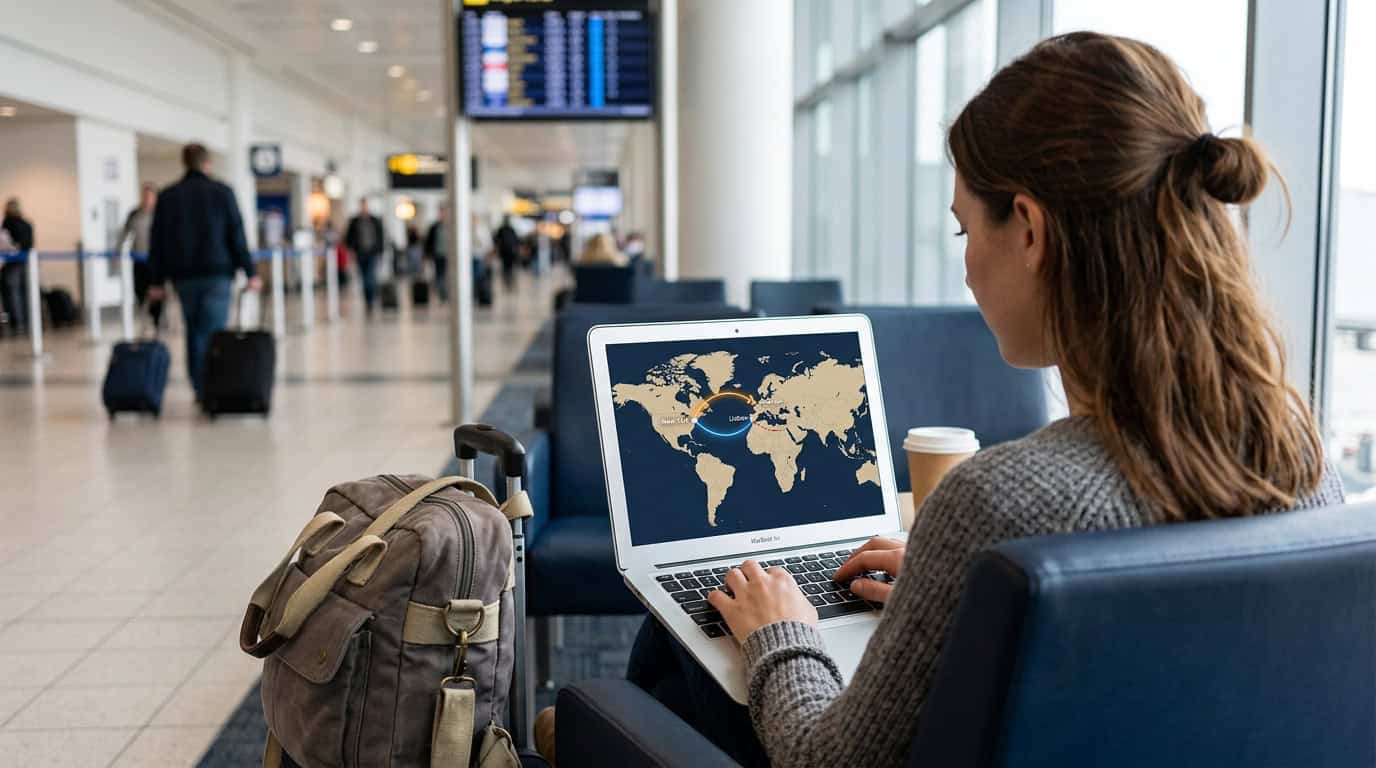
I usually begin searching for open-jaw flights with a multi-city tool, entering each flown segment separately. For example, I might book New York to London, travel overland to Paris, then fly from Paris back to New York, giving myself time to explore two cities without retracing my steps. I compare the open-jaw fare with separate one-way tickets, since either option can be cheaper depending on the dates, airports, and carriers involved. Flexible travel dates often reveal better combinations, while checking nearby airports can uncover useful alternatives, such as flying into one London airport and departing from another. Before booking, I confirm that the London-to-Paris surface sector is not included in the airfare and budget separately for the train, bus, rental car, or flight.
The details between the flights matter just as much as the headline price. I check baggage rules for every ticket because a generous allowance on one segment may not apply to another, and I leave plenty of time when connecting on separate tickets. If a delayed first flight causes me to miss an independently booked onward flight, the second carrier may not be responsible, so an overnight stop can provide welcome peace of mind. I also look at airport transfer times, terminal changes, and connection times before choosing a tempting combination. That extra planning can turn an open-jaw flight into a smooth route through several memorable places rather than a stressful race between airports.
Before paying, I verify entry, transit, and visa requirements for every destination and any country where I change planes. This is especially important when the surface sector crosses an international border because I may need permission to enter a country even if I am only traveling through it by land. I save the booking details, baggage conditions, airport information, and ground transportation plans in one place so the journey feels manageable from the start. With those checks complete, open-jaw flights can save valuable travel time, reduce backtracking, and make room for a richer itinerary.
Open Jaw Flight Costs And Logistics
The ticket price is only the starting point when I budget for an open-jaw flight. For a New York-to-London flight and a return from Paris to New York, I add the London-to-Paris train, airport transfers, meals, and any overnight stay needed before the return flight. If I choose a rental car instead, I also calculate fuel, tolls, parking, and one-way drop-off fees. Ferries and regional flights deserve the same careful review. I compare this complete door-to-door cost with a traditional round trip before deciding whether the open jaw actually saves money. Often, the biggest benefit is not a lower fare but the time saved by ending the trip in a different city.
Separate tickets and surface connections call for generous planning buffers. I avoid scheduling a train or ferry to arrive just before an international departure, especially when weather, strikes, border checks, or limited seasonal schedules could cause delays. When an overnight stay is necessary, I choose a hotel near the departure airport or train station and treat it as part of the itinerary rather than an inconvenience. I also keep confirmation numbers, transfer details, and backup routes together, and I check luggage rules when moving between independently booked tickets. These small precautions protect the journey and make the open-jaw experience feel relaxed instead of rushed.
The surface route can be practical and memorable, so I look beyond the fastest connection when the cost difference is reasonable. On a London-to-Paris journey, for example, I might allow time for a countryside rail stop, a coastal ferry crossing, or a night in a smaller town rather than moving directly between airports. While searching, I test nearby arrival and departure airports, flexible travel dates, and one-way combinations, then map the ground distance between each pair. I pay attention to total travel time, transfer complexity, and the value of the places I can visit along the way. With that approach, open-jaw flights can turn a simple round trip into a smoother, more scenic multi-city adventure.
Open Jaw Flight Takeaways
Open-jaw flights can make a one-direction journey feel much more natural because they eliminate the need to backtrack to the arrival airport. I might fly into London, explore the city, continue by train to Paris and Amsterdam, then fly home from Amsterdam instead of returning to London. The unflown stretch between the two airports becomes part of the adventure, giving me more time for museums, neighborhood walks, and local food. This format works especially well when my route already moves steadily across a region.
Before booking, I map my ideal journey from the first landing to the final departure and mark every airport, train ride, ferry, rental car, and bus connection. I then compare the complete transportation cost, since an open-jaw flight can look inexpensive until I add ground travel, luggage fees, airport transfers, or a separate ticket for the surface sector. I also check connection times and arrival locations because a slightly higher fare may be worthwhile if it saves half a day of complicated travel. Planning the route first helps me choose the flight pattern around the trip rather than forcing the trip to fit a convenient-looking fare.
The best open-jaw flight is usually the one that leaves more time for exploring, not simply the one with the lowest price. I look for an arrival airport that puts me close to my first destination and a departure airport that matches the natural endpoint of my itinerary. For example, flying into Rome, traveling north through Florence and Venice, and departing from Milan can create a smoother Italian adventure than returning to Rome. With the route, ground costs, and travel time compared side by side, I can book with confidence and spend less of the trip retracing my steps.
Explore More with Open-Jaw Flights
Open-jaw flights have become one of my favorite ways to plan a multi-city adventure because they let me see more without backtracking. Instead of flying into London and returning from London, I can arrive in London, travel overland to Paris, and fly home from Paris. That unflown section, or surface sector, gives the itinerary flexibility and can save hours of retracing my route. It may also reduce costs when I compare the full journey rather than booking separate round trips.
The best time to choose an open-jaw flight is when nearby destinations are connected by convenient trains, buses, ferries, or rental-car routes. When searching, I compare different arrival and departure airports, check the cost and schedule of the ground connection, and confirm that the fare rules allow the combination I want. I also leave enough time between major travel segments, especially when the surface sector crosses a border or involves a long drive. A lower airfare is only worthwhile if the complete journey remains practical and comfortable.
With a little planning, an open-jaw itinerary can turn a standard vacation into a smoother, more inspiring journey through several places. I can spend my days exploring one region, move naturally from one destination to the next, and finish somewhere new instead of circling back to the beginning. Before booking, I review baggage rules, airport locations, transfer times, and the total price of every segment. That small amount of preparation makes it easier to travel farther, waste less time, and enjoy the adventure from the moment I arrive.