
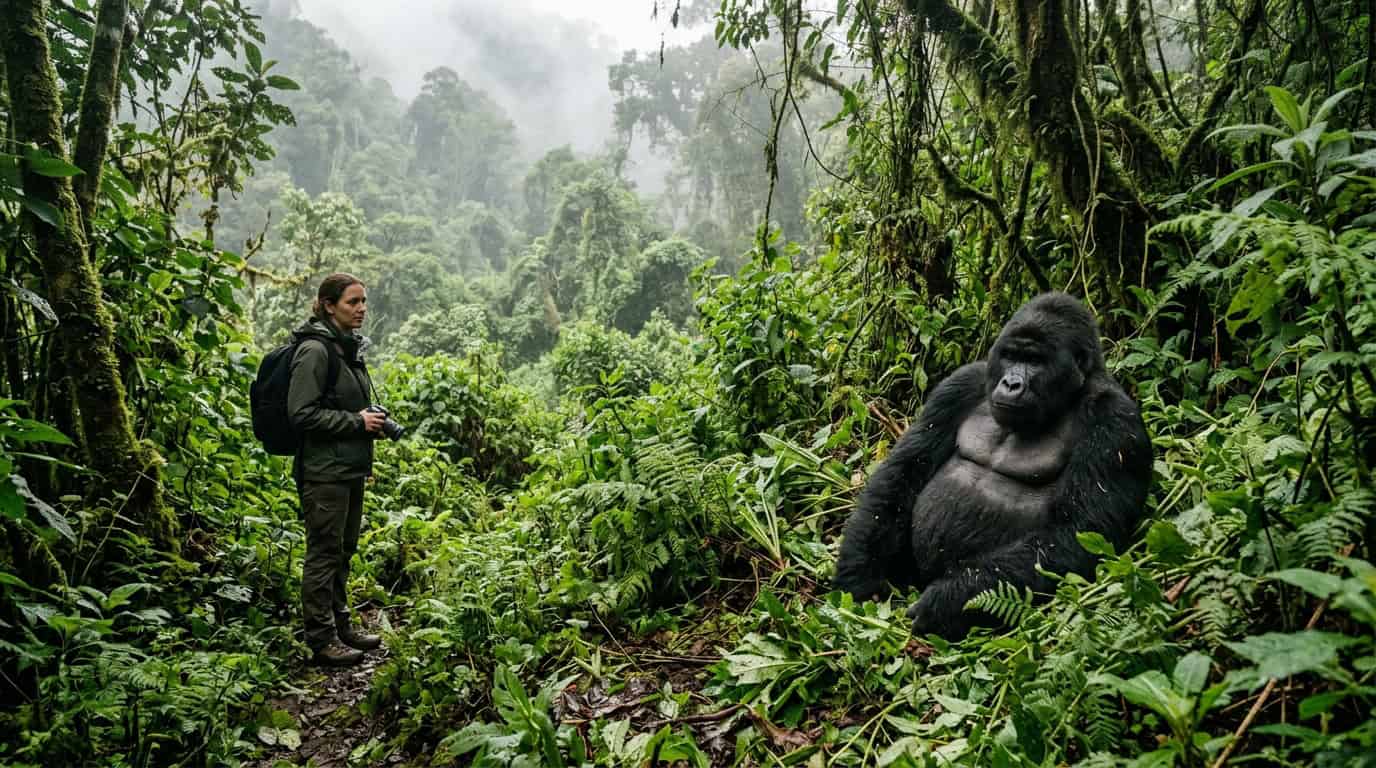
Rwanda gorilla trekking is the kind of adventure that stays with me long after the trail ends: mist curling around volcanic peaks, dense forest closing in, and a powerful mountain gorilla emerging just a few steps away. In Volcanoes National Park, near Kinigi and Musanze, I can spend one unforgettable hour observing a habituated gorilla group in its natural home. Visits are carefully limited to eight people per group, making each encounter feel intimate and deeply personal.
Planning matters, especially with permits priced at US$1,500 for foreign non-residents and a minimum age of 15. I need to prepare for steep, muddy trails, arrive in good health, and choose lodging and transport near the park to make an early trek easier. With the right expectations and preparation, this journey becomes far more than wildlife viewing. It is a rare chance to connect with one of the world’s most remarkable animals.
Key Takeaways
- Rwanda gorilla trekking takes place in Volcanoes National Park near Kinigi and Musanze, where visits to habituated groups are limited to eight people for one hour and trekkers must be at least 15 years old.
- Foreign non-resident permits cost US$1,500 and should be booked well in advance, especially for the drier, more popular months of June–September and December–February.
- Prepare for steep, muddy, changeable mountain conditions with waterproof hiking boots, layered clothing, rain gear, gloves, gaiters, water, snacks, and a flexible itinerary.
- Protect gorilla health and habitat by postponing your trek when ill, following guide instructions, keeping a respectful distance, avoiding flash photography and contact, and leaving no litter; permit revenue supports conservation and local communities.
Introduction To Rwanda Gorilla Trekking
My first glimpse of a mountain gorilla in Volcanoes National Park came through a veil of mist, where dark eyes watched quietly from a tangle of bamboo. After a steep, muddy climb through Rwanda’s volcanic slopes, the forest suddenly felt still, apart from leaves shifting as the family moved around me. For one unforgettable hour, I watched their gestures and gentle grunts at close range while our guide explained the relationships within the group. Rwanda gorilla trekking feels extraordinary because the encounter is intimate yet carefully managed to protect these remarkable animals.
Planning starts with securing a permit, which costs US$1,500 per foreign non-resident and allows a maximum of eight visitors to spend one hour with an assigned gorilla group. Trekkers must be at least 15 years old, and anyone with a cold, flu, or other contagious illness may be refused entry to help safeguard the gorillas. I recommend booking well ahead, especially for the drier periods from June to September and December to February, although the wetter months bring lush scenery and fewer crowds. Permit revenue also supports conservation and local communities, making responsible behavior essential. I keep my distance, follow the guide’s instructions, and never use flash photography.
For the trek itself, I pack waterproof hiking boots, long trousers, gaiters, a light rain jacket, gardening gloves, water, snacks, sunscreen, and a small daypack. The weather can change quickly around the Virunga volcanoes, and trails may be slippery even when the morning begins bright, so layered clothing is more useful than a single heavy jacket. Staying near Kinigi or Musanze makes early starts more convenient, with Volcanoes National Park serving as the gateway to the experience. I come prepared for a demanding hike but leave room for wonder, because the quiet moment when a gorilla meets my gaze is worth every muddy step.
Rwanda Gorilla Trekking In Volcanoes National Park
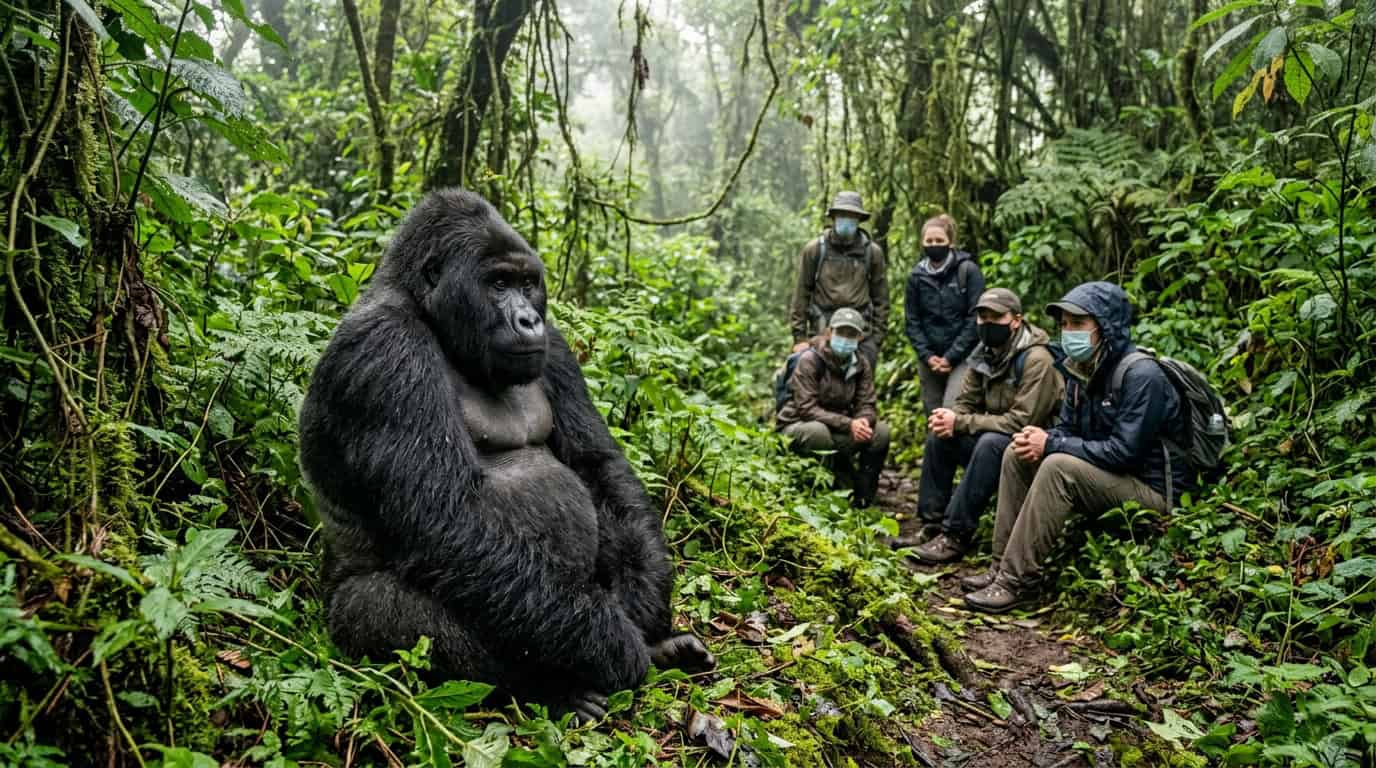
Volcanoes National Park sits in Rwanda’s northwest, close to Kinigi and Musanze, where green foothills rise into the dramatic Virunga volcanic range. I find the setting unforgettable, with mist drifting around volcanic peaks and dense bamboo and high-altitude forest covering the slopes. Each morning, guides assign trekkers to a habituated gorilla family, considering fitness levels and the group’s location so the experience remains respectful and manageable. A trek may be a relatively short walk or several hours of steep hiking, depending on where the gorillas have moved. The terrain can be muddy, wet, and physically demanding, so sturdy waterproof hiking boots, layered clothing, rain gear, gloves, and walking poles are practical additions.
A foreign non-resident permit currently costs US$1,500, and trekkers must be at least 15 years old. Visits are limited to eight people per gorilla group and one hour with the gorillas, giving everyone a precious but carefully managed opportunity to observe feeding, grooming, and quiet family interactions. I recommend booking well ahead, especially for popular travel periods, and arriving rested because the altitude and slopes can make the hike more strenuous than expected. Anyone with a cold, flu, or another contagious illness may be refused access to protect the gorillas, whose health must come first. Following the guide’s instructions, keeping a respectful distance, and avoiding sudden movements help make the encounter ethical as well as unforgettable.
For the most comfortable conditions, many travelers plan around the generally drier months of June through September or December through February, although rain can arrive at any time in this lush mountain environment. I still pack for changeable weather, since a bright morning near Kinigi can quickly become a cool, dripping climb beneath the forest canopy. The trek itself is only part of the experience. Anticipation builds with every muddy step and every distant rustle in the bamboo. When the family finally appears, the silverback’s presence, expressive faces, and wild volcanic surroundings feel profoundly intimate. Allowing a full day for the activity gives me time to travel slowly, recover afterward, and appreciate the scenery rather than rushing back down.
Rwanda Gorilla Trekking Permits And Rules
A Rwanda gorilla trekking permit costs US$1,500 for foreign non-residents, and I recommend securing one well ahead of your preferred date because each gorilla group can host no more than eight visitors per day. Trekkers must be at least 15 years old, and the encounter lasts a maximum of one hour once the group is found. That hour can pass quickly as I watch silverback families move through the bamboo and listen to the forest come alive, so I try to stay present rather than focus entirely on my camera. Before booking, I check the latest permit terms and plan extra time in Volcanoes National Park in case the hike through the mountain terrain takes longer than expected.
Protecting the gorillas begins with protecting their health, which is why anyone with a cold, flu, or another contagious illness may be denied access or asked to postpone the trek. During the visit, I keep a respectful distance, follow the guide’s instructions, avoid sudden movements and loud voices, and never attempt to touch or feed a gorilla. Photography is welcome, but flash should be avoided. I find that keeping my equipment quiet and compact helps me enjoy those remarkable moments without disturbing the group. Comfortable hiking clothes, sturdy waterproof boots, layers, water, and a light rain jacket are practical choices for the cool, changeable conditions.
These rules may feel strict, but they are central to responsible Rwanda gorilla trekking. They help keep habituated mountain gorillas safe while allowing carefully managed visits. Permit revenue supports conservation, anti-poaching work, park management, and nearby communities, so every trek contributes to the long-term protection of this rare habitat. I also aim to leave no litter, stay on designated routes, and listen closely to the local guides whose knowledge makes the experience safer and more meaningful. With thoughtful preparation and patience, the trek becomes more than a wildlife encounter. It becomes a direct investment in the future of the gorillas and the people who live alongside them.
Best Time For Rwanda Gorilla Trekking
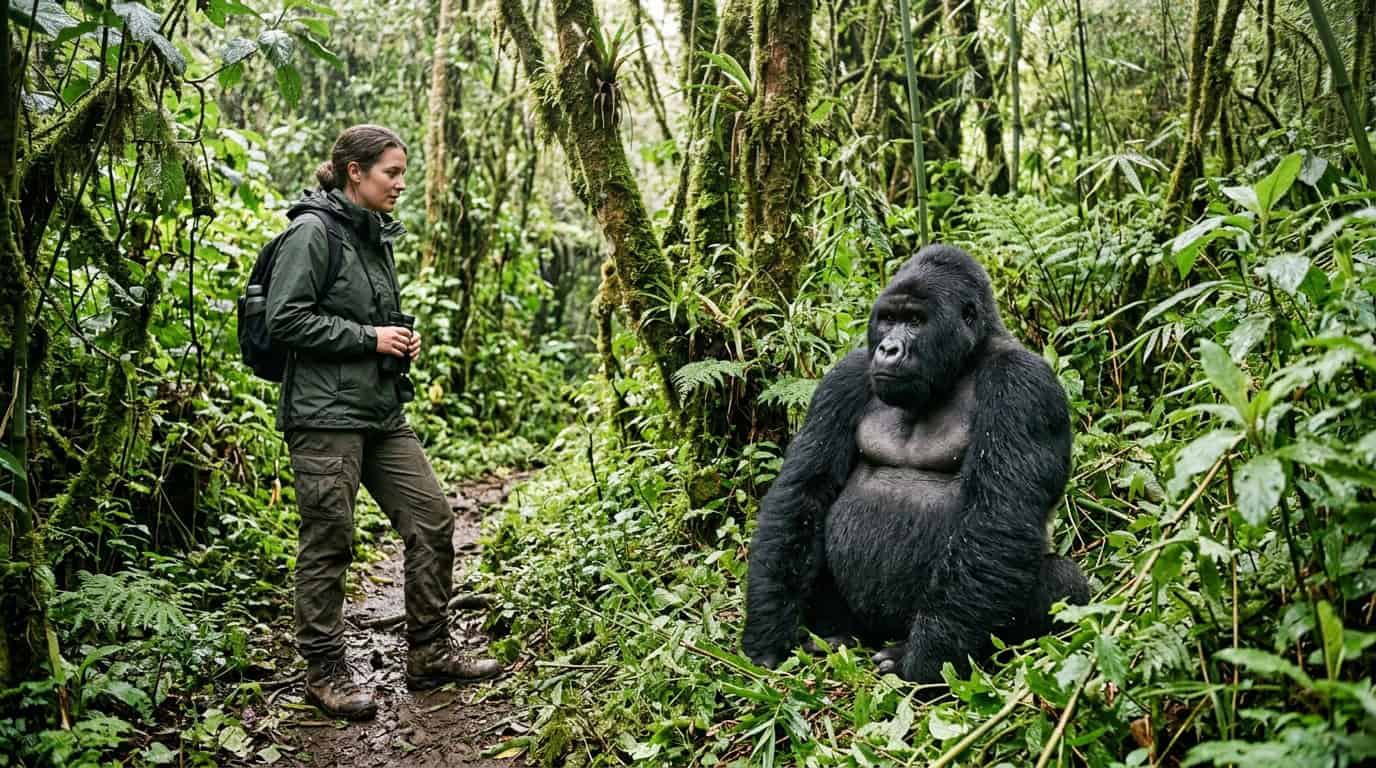
The most comfortable time for Rwanda gorilla trekking is generally June through September, when Volcanoes National Park sees less rain, firmer trails, and clearer mountain views. December through February offers another relatively dry window, although showers can still arrive without warning in the Virunga mountains. I find these months especially appealing for first-time trekkers, but they are also popular, so permits, accommodation, and preferred trekking dates can fill quickly. Rwanda’s gorilla permit is typically US$1,500 for foreign non-residents, and the price usually does not drop during the wetter season, although lodging and transport deals may be easier to find. Booking well ahead is the best way to balance ideal weather with availability and budget.
The wetter seasons, usually March through May and October through November, bring lush slopes, dramatic clouds, and fewer crowds, but they can also turn volcanic trails into slippery, muddy climbs. Rain does not mean a disappointing sighting, since gorillas remain in the forest and trackers work hard to locate them. Reaching the group may take more effort, and the one-hour encounter can happen beneath a steady drizzle. I still love the atmosphere of a rain-washed forest, where moss glows against dark volcanic soil, but travelers who want easier walking conditions should favor the drier months. Whenever I go, I pack waterproof hiking boots with good grip, moisture-wicking layers, a light rain jacket, and a dry bag for my phone and camera. Gloves, warm layers, and spare socks are useful too, because temperatures can feel cool at altitude even when Musanze is mild.
Unpredictable mountain weather makes flexibility more valuable than chasing a perfect forecast. I usually leave room in my itinerary for a relaxed day before trekking, check local conditions with my lodge, and avoid scheduling an important flight immediately after the hike. A trekking pole, water, high-energy snacks, sunscreen, and insect repellent can make the climb more comfortable, while subdued clothing helps me stay respectful and unobtrusive around the gorillas. If I develop a cold, flu, or another contagious illness, I would postpone the experience rather than risk passing it to these vulnerable animals. The best time for Rwanda gorilla trekking is the season that matches your priorities, whether that means drier trails, quieter dates, or the verdant beauty of the rainy forest.
Rwanda Gorilla Trekking Gear And Itinerary
I pack for changing mountain weather and steep, muddy trails because Volcanoes National Park can feel cool and misty one moment and warm under the equatorial sun the next. My essentials include sturdy waterproof hiking boots, moisture-wicking layers, a warm fleece, rain protection, gardening gloves for gripping vegetation, and gaiters to keep mud and stinging plants at bay. I also carry plenty of water, high-energy snacks, sunscreen, insect repellent, and a small daypack that leaves both hands free for walking and photography. Before setting out, I check that my permit is confirmed, remembering that the current fee for a foreign non-resident is US$1,500, the minimum age is 15, and each gorilla group visit is limited to eight people for one hour.
- Waterproof hiking boots with reliable traction
- Layered clothing, including a fleece and waterproof jacket
- Gardening gloves and knee-high gaiters
- Water, snacks, sunscreen, insect repellent, and tissues
- A lightweight daypack, camera, and spare battery
A practical itinerary begins in Kigali, where I enjoy an early breakfast before driving north through green hills toward Musanze and Kinigi, the gateway to the park. After checking in near Kinigi, I attend the mandatory morning briefing, meet my guide and trackers, and learn the rules for a respectful wildlife encounter before entering the forest. The trek may take anywhere from a few hours to most of the day, depending on where the gorilla family has moved, so I plan to return to my lodge with time for a hot meal and unhurried recovery. On a second day, I might explore Musanze, visit a local community project, or choose a conservation-focused experience that helps me understand how tourism supports gorilla protection.
Because mountain weather is wonderfully unpredictable, I build flexibility into the schedule and avoid planning a demanding activity immediately after the trek. Rwanda permits year-round trekking, although the drier months are often more comfortable. Wet-season travelers should expect slippery trails and heavier rain. I never trek when I have a cold, flu, or another contagious illness, since visitors may be denied access to protect the gorillas. Following the ranger’s instructions, keeping the required distance, staying quiet, and never reaching toward a gorilla help make the encounter safe, ethical, and unforgettable.
Rwanda Gorilla Trekking Conclusion
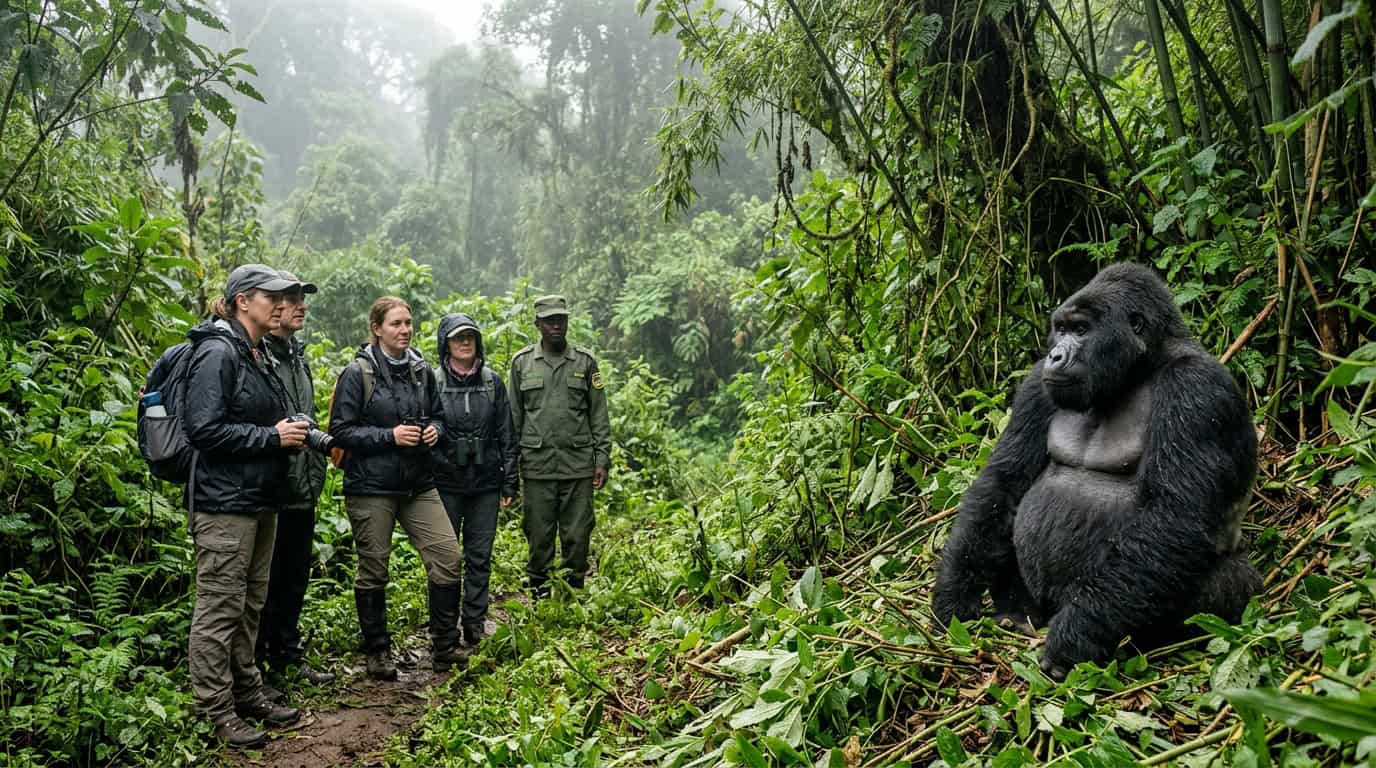
Planning Rwanda gorilla trekking means securing a permit well in advance, especially for the popular dry seasons from June to September and December to February. A permit for foreign non-residents costs US$1,500 per person, trekkers must be at least 15 years old, and each gorilla group can receive no more than eight visitors for a one-hour encounter. I would also build flexibility into the itinerary, since the trek can take several hours across steep, muddy volcanic terrain and gorillas move on their own schedule. Regular walking and hill training before the trip can make the experience far more enjoyable.
Packing thoughtfully makes a real difference in Volcanoes National Park, where mist, rain, and changing temperatures are part of the mountain adventure. I recommend broken-in waterproof hiking boots, moisture-wicking layers, a rain jacket, gardening-style gloves, gaiters, water, snacks, sunscreen, insect repellent, and a small daypack. Trekking poles can also help on slippery slopes. Anyone with a cold, flu, or another contagious illness may be denied access, so protecting the gorillas begins with being honest about your health. During the encounter, I keep my voice low, avoid flash photography, follow the guide’s instructions, maintain the required distance, and resist the urge to reach toward the animals, even when a curious gorilla comes close.
The most meaningful Rwanda gorilla trekking memories come from patience rather than proximity, whether I am watching a silverback settle into the foliage or hearing leaves rustle somewhere just beyond the trail. Respectful behavior helps protect these remarkable families and supports the conservation model that makes responsible tourism possible. Rwanda’s planned Volcanoes National Park expansion, together with ongoing habitat restoration, offers hope for stronger ecological protection and a healthier future for the wider Virunga region. By preparing carefully, traveling considerately, and allowing the gorillas to set the pace, I can leave with unforgettable memories while contributing to the region’s long-term conservation.
Plan Your Rwanda Gorilla Trekking Adventure
Rwanda gorilla trekking brings me into Volcanoes National Park, where misty slopes, bamboo forests, and volcanic peaks create an unforgettable setting near Musanze and Kinigi. For me, the experience feels most meaningful when the excitement of seeing a gorilla is balanced with respect for its space and habitat. A permit costs US$1,500 for foreign non-residents, trekkers must be at least 15 years old, and each gorilla group can receive no more than eight visitors for a one-hour encounter. Booking well ahead is essential, especially for popular travel periods, and visitors with colds, flu, or other contagious illnesses may be refused entry to protect the gorillas.
Good preparation makes the trek far more enjoyable, so I would pack sturdy waterproof hiking boots, lightweight layers, a rain jacket, gardening gloves, water, snacks, sunscreen, and a small daypack. The drier seasons, generally June to September and December to February, can offer more manageable trail conditions, although rain is possible at any time in this highland environment. I would also plan enough time around the trek to rest, adjust to the altitude, and explore the scenery and communities near the park rather than treating the gorilla visit as a rushed day trip. With patience, responsible choices, and a willingness to follow every conservation guideline, Rwanda gorilla trekking becomes more than a wildlife encounter. It becomes a powerful reminder of how carefully protected nature can inspire us.