
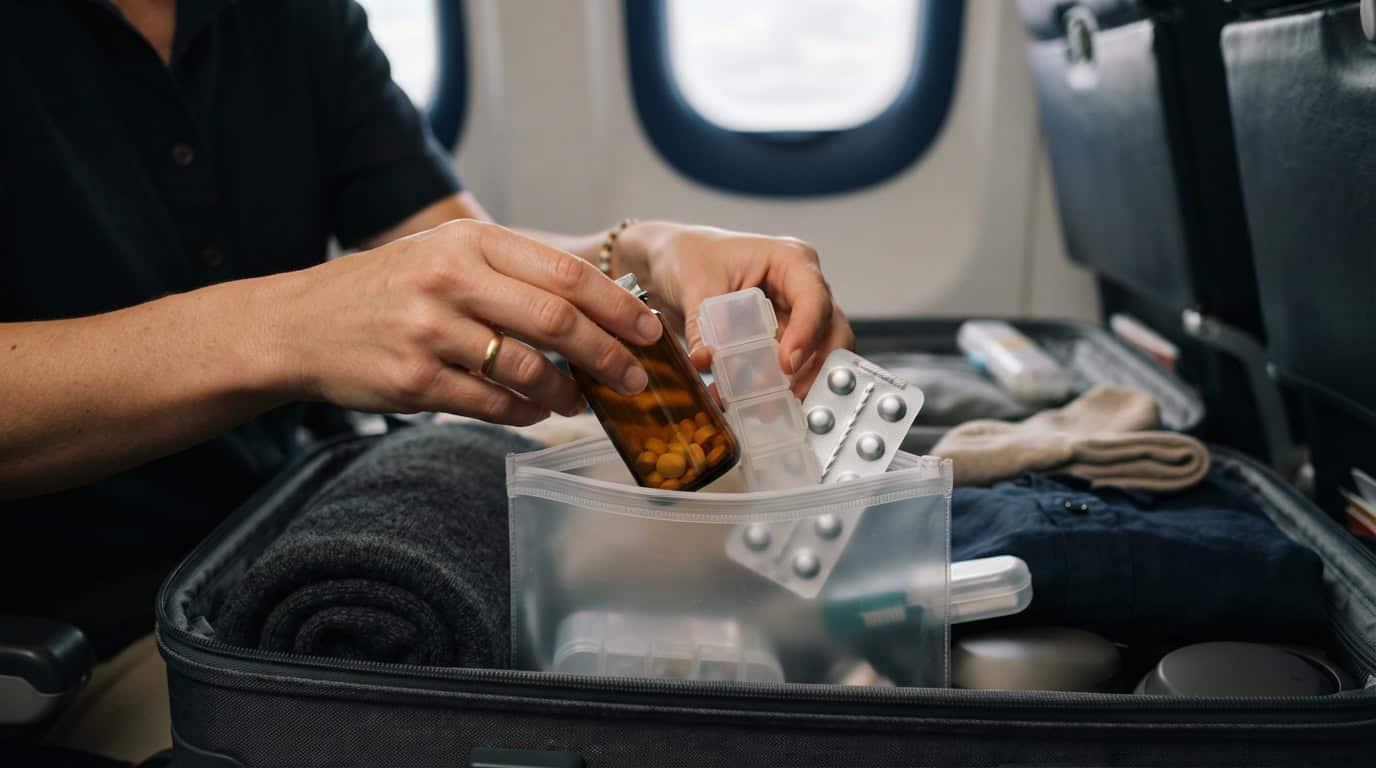
Traveling with prescription medication is usually possible, but whether you may bring a particular medicine depends on the laws of your destination and every country where you change planes. A prescription that is lawful at home may be restricted abroad, so check each stop rather than assuming airport screening gives you permission to cross a border. The U.S. Department of State advises checking local laws throughout your itinerary.
At U.S. airports, medically necessary liquid medication may exceed 3.4 ounces or 100 milliliters in carry-on baggage, but this screening allowance does not establish whether another country permits the medicine at its border. See TSA guidance on medically necessary liquids.
Plan ahead. The CDC recommends meeting with a healthcare provider or travel health specialist at least 4–6 weeks before departure. Pack enough medication for your trip, plus extra for delays, in your carry-on. Keep it in its original labeled container, and bring prescription copies listing generic drug names, as the CDC recommends. A little preparation can help keep your plans and your health on track while you travel.
Key Takeaways
- Travelers should check official rules for every destination and transit country, including places where they only change planes, because a home-country prescription does not guarantee that a medicine is allowed across another border.
- Travelers should check controlled medicines separately for country-specific quantity limits, permits, prescriptions, or medical certificates, since general medicine allowances may not apply.
- Travelers should meet with a healthcare provider or travel health specialist 4–6 weeks before departure, then pack enough medicine for the trip plus extra for delays in carry-on luggage, in original labeled containers with prescription copies listing generic names.
- Travelers should ask their healthcare provider how to manage doses across time zones and any storage needs, and make a plan for lost or delayed medicine before departure.
Can You Travel With Prescription Medication?
Usually, yes, but permission to carry a prescription medicine depends on the rules in your destination and any country where you connect. A connection can bring another country’s laws into play, even if you are only changing planes. The U.S. Department of State guidance on local laws advises checking the laws of every country on your itinerary, including transit stops.
A medicine that is lawful at home may be restricted or illegal abroad because another country may not approve or permit it. A prescription from home does not establish that the medicine is allowed across another country’s border. The FDA advises travelers not to assume that a prescription medicine approved in one country is approved or legal in another.
To check a medicine, identify it precisely rather than relying on its familiar brand name alone. Note the brand name and generic name, dosage form, strength, and frequency of use. The FDA advice for traveling with prescription medications recommends carrying these details so the medicine can be clearly identified.
Some medicines, particularly controlled medicines, may have specific quantity limits or documentation requirements. The CDC notes that requirements vary by country, so consider both the exact medicine and your route when preparing for a trip.
How Do You Check Medication Rules Abroad?

Check the exact medicine and quantity against official rules for every destination and transit country. Requirements vary, and a prescription from home does not determine what another country permits. Use general medicine allowances as a starting point, not confirmation for controlled medicines. The CDC travel guidance says many countries allow a 30-day supply of certain medicines, but some require a prescription or medical certificate.
- List every country where you will enter or change planes, then check each country’s official government guidance. A transit stop can have separate rules.
- Look up each medicine by its generic and brand names, and check the amount you plan to carry. Confirm any prescription or medical-certificate requirement with the country’s official source.
- Check controlled medicines separately. General allowances may not cover narcotic drugs or psychotropic substances, which can have their own quantity limits and paperwork requirements.
- For the United Kingdom, check whether you qualify for its personal-import rules. Qualifying visitors may carry up to a 3-month supply of certain lawfully prescribed controlled medicines on their person. The UK Home Office rules say to seek exceptional permission to import more 1 month before travel.
- For travel involving Schengen States, check whether you need a certificate for prescribed narcotic or psychotropic substances. The Schengen certificate decision sets a maximum validity of 30 days and requires a separate certificate for each such drug.
Follow the relevant country authority’s current instructions, especially when a medicine is controlled or your route includes multiple borders. A rule that applies in one country does not guarantee entry elsewhere.
How Should You Pack Medication for a Flight?
Pack prescription medication in your carry-on, with enough for the trip plus extra for delays, and keep it protected and easy to reach. Keep medicines in their original labeled containers, and bring prescription copies that include generic drug names. The CDC packing recommendations also advise carrying medicine in your carry-on and planning for delays. Use this checklist to organize your flight kit:
- Place essential medicine in an easy-to-reach part of your carry-on, not in checked luggage.
- Keep labeled containers and prescription copies together so you can identify each medicine if needed.
- Pack according to any storage instructions, and keep enough on hand for connections or unexpected delays.
For U.S. airport screening, medically necessary liquid medicine may exceed 3.4 ounces or 100 milliliters in carry-on baggage. It must be screened separately and does not need to go in a zip-top bag. See the TSA guidance on medically necessary liquids for screening details. TSA screening rules apply at U.S. airports and do not establish whether another country will allow a medicine across its border. Keep the medicine accessible during travel, and check each destination and transit country’s official requirements separately.
What Documents Should You Carry?
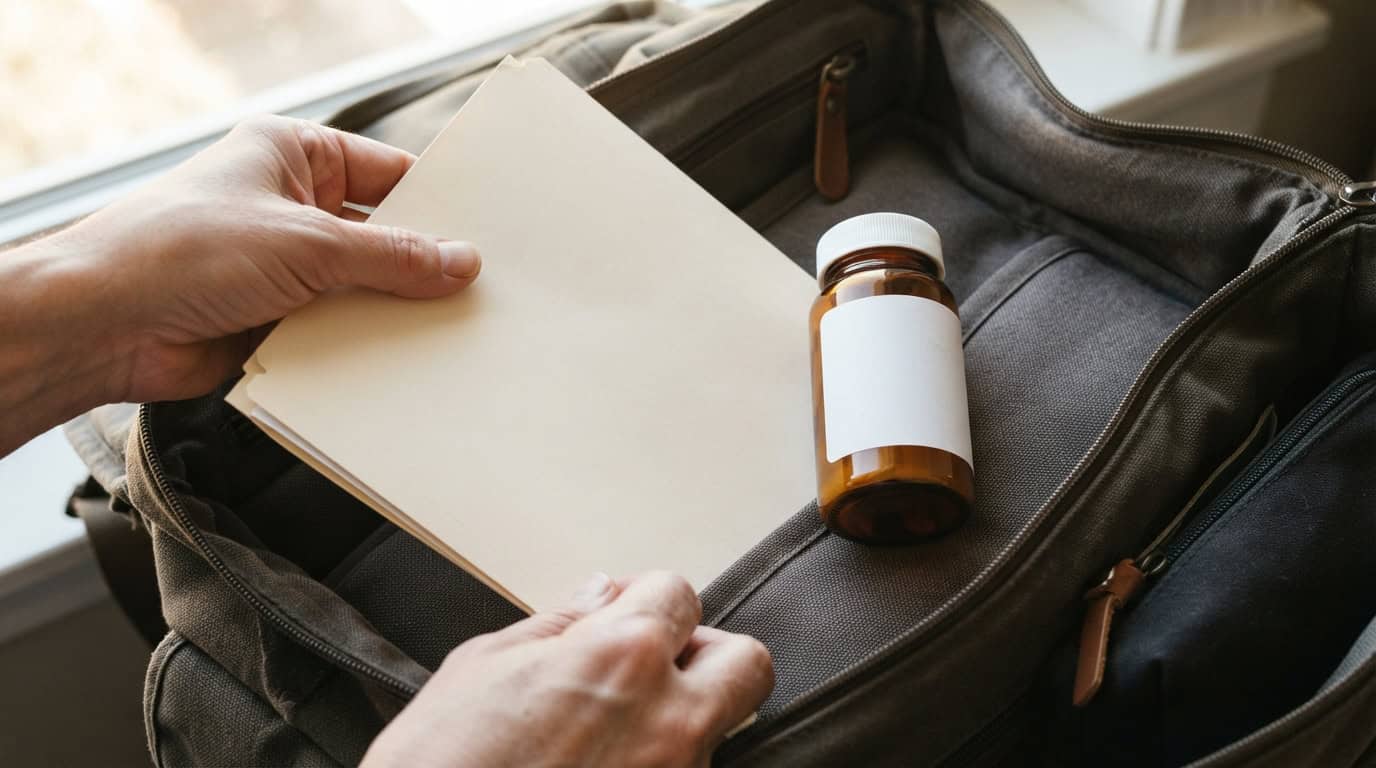
Carry a copy of your prescription listing each medicine’s generic name, and keep the medicine in its original labeled container. The CDC recommends bringing prescription copies when traveling abroad. Original labels can help identify the contents if questions arise. CDC guidance on traveling with medicine explains what to bring.
For each medicine, record its brand name and generic name, dosage form, strength, and frequency of use. The FDA recommends carrying these details so officials or health professionals can identify the medicine accurately. FDA medication identification guidance outlines the information to note.
Check official guidance for every destination and transit country to learn whether you need a prescription, medical certificate, permit, or other supporting paperwork. Requirements can depend on the medicine and the amount you carry, especially for controlled drugs. Don’t assume a prescription copy or any single document meets every country’s rules. Confirm the exact requirements with the relevant government source before departure. The CDC notes that medication rules vary by country.
How Do You Manage Doses Across Time Zones?
Ask your healthcare provider how to adjust your medication schedule before departure rather than changing dose times on your own. Share your itinerary, including flight times and connections, so your provider can advise you about timing for your specific medicine. The CDC advises taking medicine according to the time since your last dose, rather than relying only on the local clock. Read the CDC advice on medication timing across time zones.
Build medication timing and storage into your trip planning. Before you leave, ask your provider how to manage doses during the journey and after arrival, and what to do if a flight delay affects your schedule. The right plan can depend on the medicine and the time between doses, so avoid guessing or making changes based only on the new time zone.
When packing, plan for any medicine with specific storage needs, such as a requirement to stay within a particular temperature range. Ask your healthcare provider or pharmacist how to maintain those conditions in transit, including during flights and connections. Follow the medicine’s storage instructions, and account for the time it may spend away from its usual storage setup.
What If You Need Medicine While Abroad?

If you need medicine while abroad, follow a plan made with your healthcare provider before departure rather than assuming a local pharmacy can replace your prescription. Discuss what to do if your supply is lost or delayed, or if you need an unscheduled refill, and whether a safe alternative exists for your medicine. Medicine availability and quality can vary between countries. The CDC reports estimates that 9%–41% of medicines sold in low- and middle-income countries are counterfeit, compared with less than 1% in high-income countries such as the United States. Read the CDC information on counterfeit medicines before relying on a replacement abroad.
Make One Final Medication Check
Before you leave, review your itinerary and medication list together, then do one final country-by-country check. For each medicine, record its brand and generic names, dosage form, strength, frequency, and the exact quantity you plan to carry. Check your destination and every transit stop against official guidance, using the CDC Yellow Book 2026 guidance on restricted medicines as a reference.
If a rule does not clearly cover your medicine or the amount you plan to bring, contact the relevant country authority with the generic name, strength, and quantity, and ask what paperwork or permission applies. Keep the response with your travel documents. The U.S. Department of State advises checking local laws in every country on your itinerary, including places where you only change planes. Save the official pages offline alongside your medication list.
Compare your packed supply with the amount you verified, and check that any required paperwork names the same medicine and quantity. If your route or prescription changes, revisit the rules for affected countries. For questions about dose timing or storage during your flight schedule, ask your prescriber or pharmacist to confirm the plan. The CDC’s medication guidance covers both. Keep the authority’s contact details with your documents.