
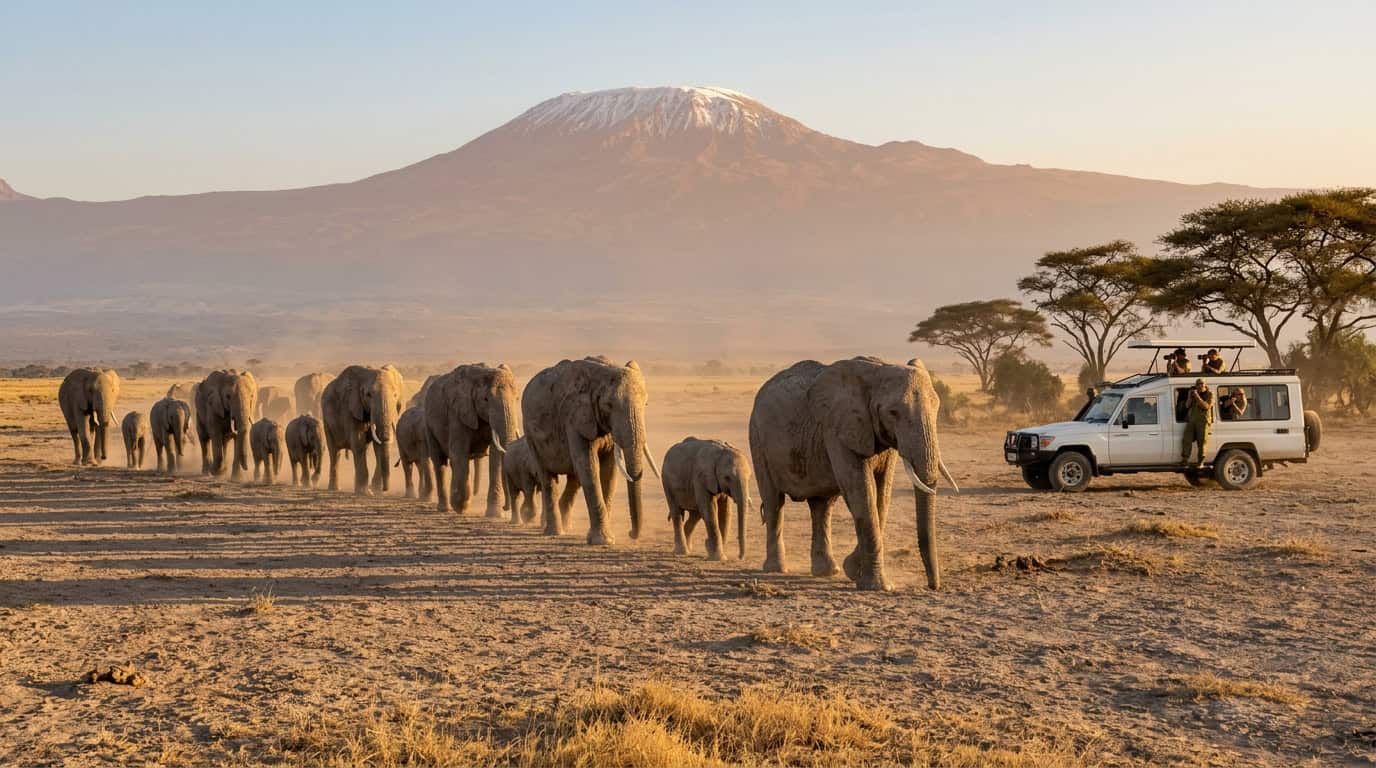
A practical Kenya safari itinerary pairs Nairobi National Park with longer stays in Amboseli National Park and the Maasai Mara National Reserve, using the capital for arrival, recovery, and a morning game drive before you head out. Keep safari package costs and park entry on separate lines of your budget. Non-resident adults entering Narok County pay US$100 per day from January through June and US$200 per day from July through December, and that charge sits on top of whatever your package includes. Plan each park for at least two full game drives rather than squeezing every reserve into one hurried day.
Expect road time to take a real bite out of your schedule. The Nairobi-to-Mara drive often runs five to seven hours depending on the gate and traffic, and the Amboseli route via Emali covers 204 km, so a short flight or a rest day between stops can keep your energy up. Kenya Wildlife Service gate hours run from 6 a.m. to 6 p.m., which means you will want to be at the gate early and finished driving before dusk. Before you book, confirm your paperwork: most foreign visitors must complete an electronic travel authorization through Kenya’s official portal ahead of arrival. A seven-day loop is a good starting point, and the sections below show how the route stretches or shrinks around it.
Key Takeaways
- A seven-day Kenya safari itinerary is the practical starting point for most first-time visitors, with Nairobi serving as the arrival, recovery and departure base and the Maasai Mara getting three days.
- Non-resident adults entering Narok County pay US$100 per day from January through June and US$200 per day from July through December, and that park charge sits on top of whatever your safari package includes, so budget for it on its own line.
- Plan at least two full game drives in each park, and schedule every drive within Kenya Wildlife Service gate hours of 6 a.m. to 6 p.m. so you are finished driving before dusk.
- Allow five to seven hours for the Nairobi-to-Mara drive and 204 km for the Amboseli route via Emali, and complete your electronic travel authorization through Kenya’s official portal before you fly.
How Many Days Does a Kenya Safari Itinerary Need?
A Kenya safari itinerary needs about seven to ten days to visit Nairobi, Amboseli and the Maasai Mara at a relaxed pace, and seven days is the most practical starting point. Nairobi works best as your arrival, recovery and departure base. Spend your first night there to adjust to the time difference, and use a morning in Nairobi National Park to stretch your legs before the longer drives begin.
The length you choose changes how much of each day goes to the road. Here is how the same route stretches or shrinks:
- 5 days: One main reserve, with Nairobi at both ends. You get a few full game drives, but travel eats a large share of the trip, and you cannot pair two parks without rushing.
- 7 days: Nairobi National Park plus one longer stay in either the Maasai Mara or Amboseli. This gives you enough time for at least two game drives in your main park without feeling squeezed.
- 10 to 14 days: Amboseli and the Mara in one trip, with rest days between drives. You lose the least time to transit and can take a slower morning when you need it.
Shorter trips feel exciting but leave little margin. If a flight is delayed or traffic slows your drive, a five-day plan can lose an entire game drive. Longer trips spread the road time across more days, so each day has a higher share of time spent in the reserves. A 14-day route also lets you build in a slower day at camp, which keeps the trip from feeling like a checklist.
Seven days is a good balance for most first-time visitors. You see one park in depth, cover Nairobi National Park on the way, and still have a restful final morning before your flight home. If you have ten or more days, adding Amboseli usually makes the trip feel complete rather than rushed.
What Does a 7 Day Kenya Safari Route Look Like?
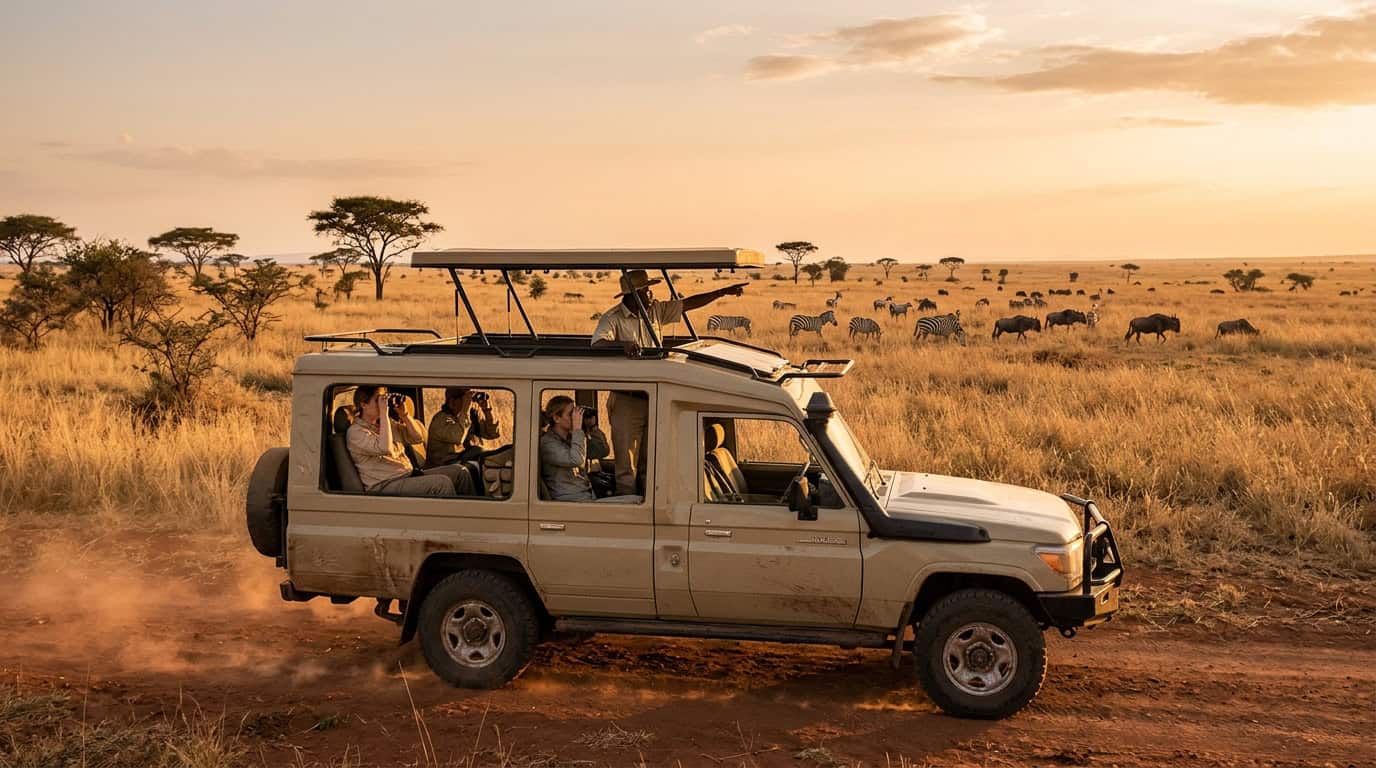
A seven-day Kenya safari route starts and ends in Nairobi, spends one morning in Nairobi National Park, gives the Maasai Mara three days including a full day on the road, and offers an optional community visit on Day 6. Each day has a clear job, so you can see where the drive time falls and where you have room to rest.
- Day 1: Arrive in Nairobi and rest. Check into a hotel in the city and take a short orientation with your hotel or tour staff. Cover the gate hours, your packing list and the next day’s plan, then go to bed early to adjust to the time difference.
- Day 2: Morning game drive in Nairobi National Park. Be at the gate when it opens at 6 a.m. Look for giraffe, zebra and antelope on the open grassland, with the city skyline on the horizon, and return to your hotel by early afternoon. Keep the rest of the day free for a swim, a long lunch or a nap.
- Day 3: Drive to the Maasai Mara. Set aside the whole day for the road. A current route guide estimates five to seven hours from Nairobi, depending on the gate and traffic. Leave early, take a midday break, and arrive at camp with enough daylight left to settle in before the evening.
- Day 4: First full game drive in the Mara. Head out early in the morning while animals are most active, return to camp for a midday rest, and go out again in the late afternoon until the gate closes at 6 p.m.
- Day 5: Second game drive in the Mara. Choose a different area of the reserve from the day before, such as the river crossings or the open plains, so you see a wider range of habitats. Keep the afternoon slow.
- Day 6: Optional visit to a community-led conservancy. Book a visit to the Nashulai Maasai Conservancy in advance, since it accepts organized day visits by booking. Its proceeds support community development and ecological regeneration, and a morning visit leaves the afternoon for rest at camp.
- Day 7: Return to Nairobi for departure. Leave camp early and allow the full drive back. If your flight leaves the next morning, book a Nairobi hotel for the night so a delayed road journey does not put your departure at risk.
Timing matters as much as the route. The Kenya Tourism Board identifies December to March and July to October as peak seasons, when dry, warm conditions make wildlife easier to spot. From April to June, the long-rains low season, some park roads may need a four-wheel-drive vehicle, so ask your operator whether your Day 3 transfer and game drives can handle wet tracks.
How Long Is the Drive from Nairobi to the Maasai Mara?
The drive from Nairobi to the Maasai Mara usually takes five to seven hours, and the exact time depends on the gate you enter and how heavy the traffic is on the way out of the city. Treat the whole day as a travel day rather than hoping to squeeze in a game drive on the way.
Traffic is the biggest variable. Leaving during the morning rush or the late-afternoon commute can add a long delay before you reach open road, so aim to depart at first light. An early start also helps you clear the city before traffic builds and gives you a comfortable margin if something goes wrong on the road.
Build a midday stop into the plan. Ask your driver to schedule a break for lunch and fuel, and carry water, snacks and a warm layer, since the air can be cool in the early hours. The final stretch to camp is often slower than the highway, so plan to arrive with daylight still left. That gives you time to unpack, wash off the dust and settle in before the evening.
The Amboseli route via Emali is 204 km, according to Kenya Wildlife Service. That distance sounds manageable, but it still means a substantial part of the day once you add traffic, stops and the rougher final kilometers. Plan it with the same early departure as the Mara drive.
Do not book a game drive on the afternoon of a long transfer. Use that day for something gentle, such as a short walk around camp, a swim or a nap, so you arrive at your next drive rested rather than worn out. Your energy on the second morning will make a real difference to what you see.
If your arrival runs late, the gate hours become a problem. Kenya Wildlife Service gates open at 6 a.m. and close at 6 p.m., so a late arrival can cost you an evening drive you had planned. Ask your operator to move that drive to the following morning instead of trying to rush out after dark.
When Is the Best Time for a Kenya Safari?
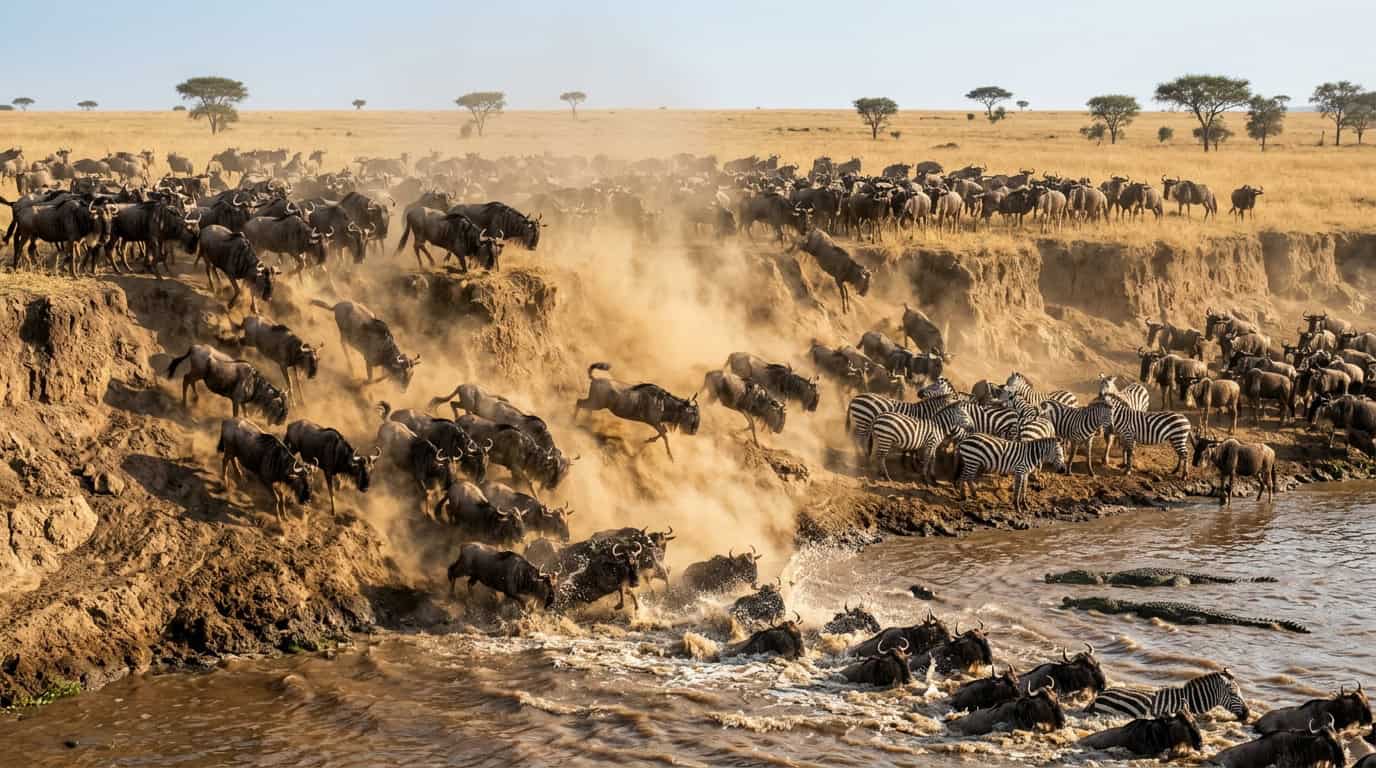
The best time for a Kenya safari is generally during one of the two dry-season peaks, December to March or July to October, when the weather is dry and warm and wildlife is easier to spot. Both windows are the country’s busiest tourist seasons, so they also call for the earliest bookings.
In the dry months, grass thins and animals gather around rivers, waterholes and open plains. That concentration makes game drives in the Maasai Mara and Amboseli National Park more rewarding, because you spend less time searching and more time watching herds, predators and elephants close to the track. Clear, dry days also make the open landscape easier to photograph.
April to June is the long-rains low season. Fewer visitors travel then, and the countryside turns green, which can be beautiful, but wet weather changes how you move around. The Kenya Wildlife Service notes that some park roads may need a four-wheel-drive vehicle, so ask your operator whether your transfers and game drives can handle muddy tracks. Rain can also slow the drive from Nairobi, which already takes five to seven hours on a good day.
Cost is the third factor. Non-resident adults entering Narok County pay US$100 per day for the Maasai Mara from January through June, but US$200 per day from July through December. That means a three-day stay costs a non-resident adult US$300 in the first half of the year and US$600 in the second half, before lodging, transport or guiding. The July change lands right in the middle of the dry-season peak, so travelers who want the best sightings in July and August pay the higher rate.
Before you choose dates, check the current seasonal Mara charges and confirm whether your package includes park entry. Some operators quote one total price, while others list entry fees separately, and the difference can be substantial.
If you can travel in shoulder periods, you may find a good balance between sightings, road conditions and fees. Whatever month you pick, keep your Mara days flexible, because a wet morning or a late arrival can change which drives you can take.
How Do You Balance Game Drives With Rest Days?
Balance comes from building each day around the park gate window. Kenya Wildlife Service gates open at 6 a.m. and close at 6 p.m., so every game drive has to fit inside those hours, and the rest of the day belongs to recovery.
Start with an early morning drive. The gate opens at 6 a.m., and the cooler hours are when animals are most active and easiest to follow. Return to the lodge by late morning, then use the middle of the day for rest. A nap, a swim in the pool, or a short walk around the grounds will loosen stiff legs after a bumpy track. Eat a proper lunch, drink plenty of water, and leave anything strenuous until the heat eases.
Afternoon drives work well on the second or third day of a stay, but avoid stacking them on top of a long road transfer. If you spent the morning on a five-to-seven-hour drive, skip the evening game drive and keep the afternoon slow. The same rule applies to the day you reach a new camp. Arrive, unpack, and rest before you head out again.
Never schedule back-to-back long drives. A full day on the road followed by a full day of game driving leaves you tired, and tired guests miss sightings. Alternate the two so that a travel day is followed by a day at camp.
Build one flexible day into every stay. Rain can turn tracks to mud, a vehicle can need a repair, and a park road can close for a while. Leave one day in the Mara and one in Amboseli without fixed game drives, so you can shift a drive without losing the whole trip. If nothing goes wrong, use that spare day for a slow walk, a visit to a local market, or a long lunch on the terrace.
Before you book, ask your operator for a daily schedule that shows gate times, transfer hours and rest blocks. A written plan makes it easy to spot two busy days in a row, and it lets you move an evening drive to the next morning instead of rushing out after dark.
Where Can You Add a Community Visit Near the Mara?
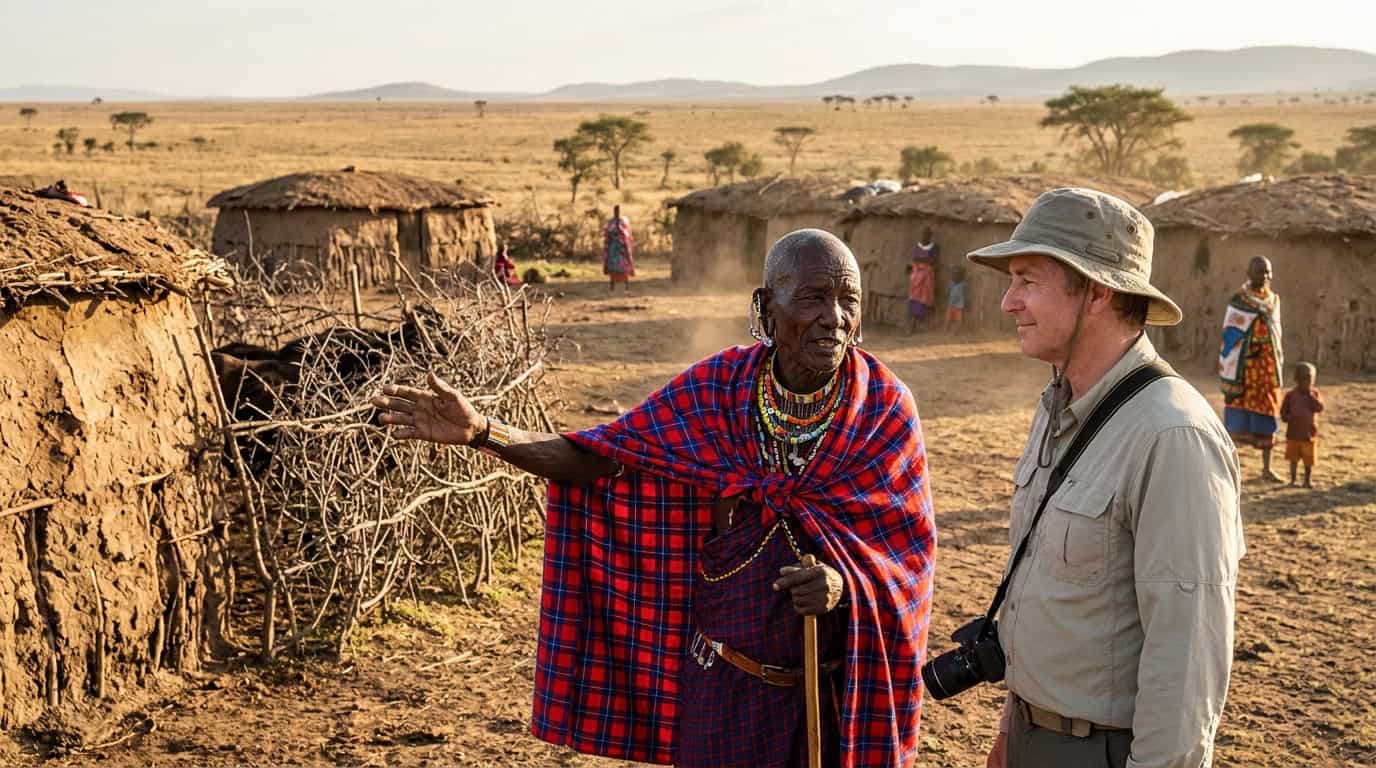
A community visit near the Mara fits best as an optional morning on Day 6, between your second game drive and an afternoon of rest at camp. The conservancy accepts organized day visits, but only by advance booking, so you need a reserved place before you arrive.
Book early enough to match the visit to your group’s schedule. Give your operator your travel dates and the number of people in your party, and ask them to confirm the visit time in writing. If your group includes travelers who tire easily, ask whether the walking portion can be shortened.
Keep the road in mind when you choose your slot. The visit should sit inside your Mara day rather than adding another long transfer, because the goal is depth, not distance. A morning that requires a second long drive would undo the pace you built into the route.
Proceeds from the conservancy’s safaris and visits go toward community development and ecological regeneration. That means your booking supports projects that both the people living nearby and the land itself depend on, which gives the morning more meaning than a simple sightseeing stop.
Arrive with a few practical things in mind. Wear modest clothing, carry a water bottle, and bring a notebook if you like to record what you learn. Ask questions and listen closely, because visitors who come with curiosity usually leave with the most memorable stories from the trip.
What Paperwork and Budget Should You Plan Before Leaving?
Before you leave, you need an electronic travel authorization and two separate budget lines, one for your safari package and one for park entry. Most foreign visitors other than citizens of East African Community member states must submit immigration forms before travel under section 48 of the Kenya Citizenship and Immigration Act No. 12 of 2011. Complete this well before your flight, and save the approval so you can show it on arrival.
Safari packages usually bundle the vehicle, the driver-guide, lodging and meals, but they often leave park entry out. Ask every operator whether their quote includes reserve fees. Some list one total price, while others show entry as a separate charge, and that difference can change your budget by a wide margin. Keep the two figures on different lines so you can compare quotes fairly.
Set your dates before you finalize any costs. The Maasai Mara entry charge changes with the season, so a trip in the first half of the year and a trip in the second half can cost very different amounts per day. Choose your month, check the current Narok County rate for that period, and only then ask operators for firm prices.
A simple budget works well with four lines:
- Safari package: vehicle, driver-guide, lodging and meals, quoted for your group size
- Park entry: Nairobi National Park, Amboseli National Park and Maasai Mara daily fees
- Community visit: a reserved place at Nashulai Maasai Conservancy, booked in advance
- Transfers and buffer: extra road time, airport rides and a cushion for changes
The buffer matters most. Roads can slow down with traffic or rain, a flight can leave late, and a park track can close without notice. Set aside enough to cover one unplanned night in Nairobi or a rebooked transfer, so a change to the route does not force you to drop a game drive you were looking forward to.
Finally, ask how park fees are paid and keep every receipt. Carry a copy of your travel authorization, your package confirmation and the written daily schedule with you, so everyone at the gate and at camp knows what you have booked.
Choosing Your Kenya Safari Dates and Route
Start by writing down two or three possible travel months and the number of days you can take away from work or home. If you have about seven days, use the Day 1 to Day 7 layout above. If you have ten or more, add Amboseli between your Nairobi stops and the Mara. Then look up the Narok County entry rate for each candidate month, because it can change the total cost of your Mara days more than almost anything else on your list.
Once you have a month and a length, pick the route that fits your days and send the same questions to two or three operators. Ask whether their quote includes park entry, whether their vehicles can handle wet tracks if you travel in April, May or June, and whether they can reserve a morning at Nashulai Maasai Conservancy on your Day 6. Ask for the daily schedule in writing, with gate times, transfers and rest blocks.
When the answers match your budget and your calendar, book your first night in Nairobi and your flight home so that your last night falls before a fixed departure. Then check your electronic travel authorization well before you fly, and save the approval where you can show it at arrival. You will be ready to head out on the road when the gate opens.