
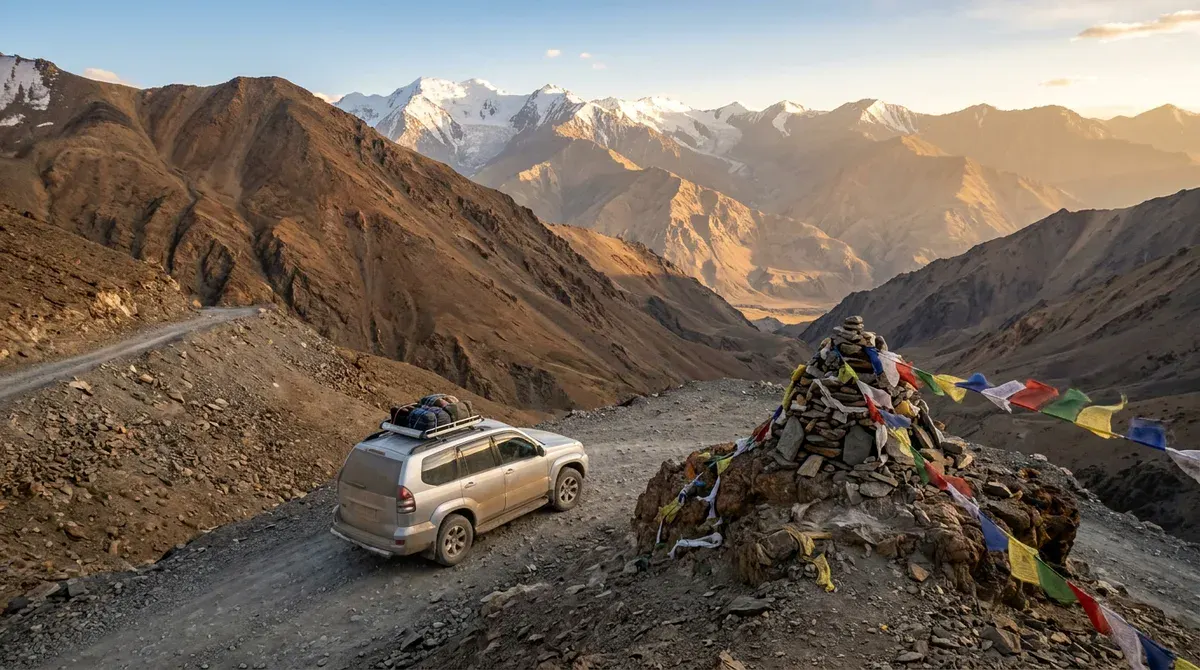
A Ladakh road trip is a drive into high Himalayan desert, usually starting from one of two established gateways: the 434 km Srinagar to Leh Highway through Drass and Kargil, or the 473 km Manali to Leh Highway over Rohtang, Baralacha La and Taglang La. Both routes climb above 10,000 feet, so the most important planning decision is not which road to take but how you will adjust to the altitude. The District Leh Administration advises visitors to acclimatize for at least 48 hours before heading to higher places such as Khardung La and Pangong Lake. That pause is what turns a dramatic arrival into a trip you can truly enjoy.
Timing matters just as much. The usual access windows run from May to November or December on the Srinagar route and from May or June to September or October on the Manali route. These are seasonal estimates, not guarantees, so check current conditions close to departure. Ladakh’s tourism advisory adds practical warnings: drive in daylight, fill up whenever you can because pumps are scarce in remote areas, expect patchy mobile coverage, and be ready for paved stretches to turn rough and uneven. Domestic visitors also pay a fee through the Leh District Tourist Management System, so sort that out before you leave home. All that planning is worth it, because Pangong Tso sits at 14,270 feet.
Key Takeaways
- Travelers on a Ladakh road trip should spend at least 48 hours in Leh before heading to higher spots like Khardung La and Pangong Lake, because routes into Ladakh climb above 10,000 feet and the District Leh Administration advises that pause for acclimatization.
- Ladakh road trip planners can choose the Srinagar to Leh Highway for a gradual shift from Kashmir over 434 km, usually open from May to November or December, or the Manali to Leh Highway for a 473 km drive with more high passes, usually open from May or June to September or October.
- Domestic visitors on a Ladakh road trip should register for the tourist fee through the Leh District Tourist Management System before arriving, then carry the payment slip, Leh arrival boarding pass and any required protected-area permit in both digital and paper form, since mobile coverage along the route is patchy.
- Drivers on a Ladakh road trip should fill up at every fuel pump they pass, drive only in daylight and check current road conditions shortly before departure, because pumps are scarce in remote areas and seasonal access windows are estimates rather than guarantees.
Which Ladakh Road Trip Routes Can You Take?
The three main road axes into Ladakh are the Srinagar to Leh Highway, the Manali to Leh Highway, and the newer Nimmu–Padam–Darcha road. Each one gives the same destination a different character.
The Srinagar route is the classic Kashmir approach. The 434 km drive leaves the Kashmir Valley behind and climbs past Drass, one of the coldest inhabited places in India, before reaching Kargil. Beyond Kargil, the scenery widens into broad river valleys and villages set against bare, rounded mountains. The rise in elevation feels gradual, and the landscape keeps changing.
The Manali route is the high-passes option. Its 473 km run crosses Rohtang, passes through Keylong in the Lahaul valley, and then climbs over Baralacha La, Lachung La and Taglang La. Each crossing brings a new change in terrain, which makes the journey feel more like a mountain expedition than a simple drive. Keylong is a useful place to break the trip before the higher sections.
The Nimmu–Padam–Darcha road is the newest of the three. The Border Roads Organisation connected this 298 km road on 25 March 2024, and the Ministry of Defence’s release describes it as a third axis linking Ladakh to the hinterland, crossing Shinkun La. Nimmu sits on the Indus near Leh, while Padam and Darcha lie in the Zanskar and Lahaul country. This route suits travellers who want to combine Ladakh with a wider loop through the mountains.
Treat every route as a seasonal estimate rather than a guarantee. The Lahaul and Spiti road-status page lists Keylong to Leh as open, but it was last updated in May 2024, so that entry is not a live report. Confirm the road you plan to use shortly before you set off.
Should You Choose the Srinagar or Manali Route?
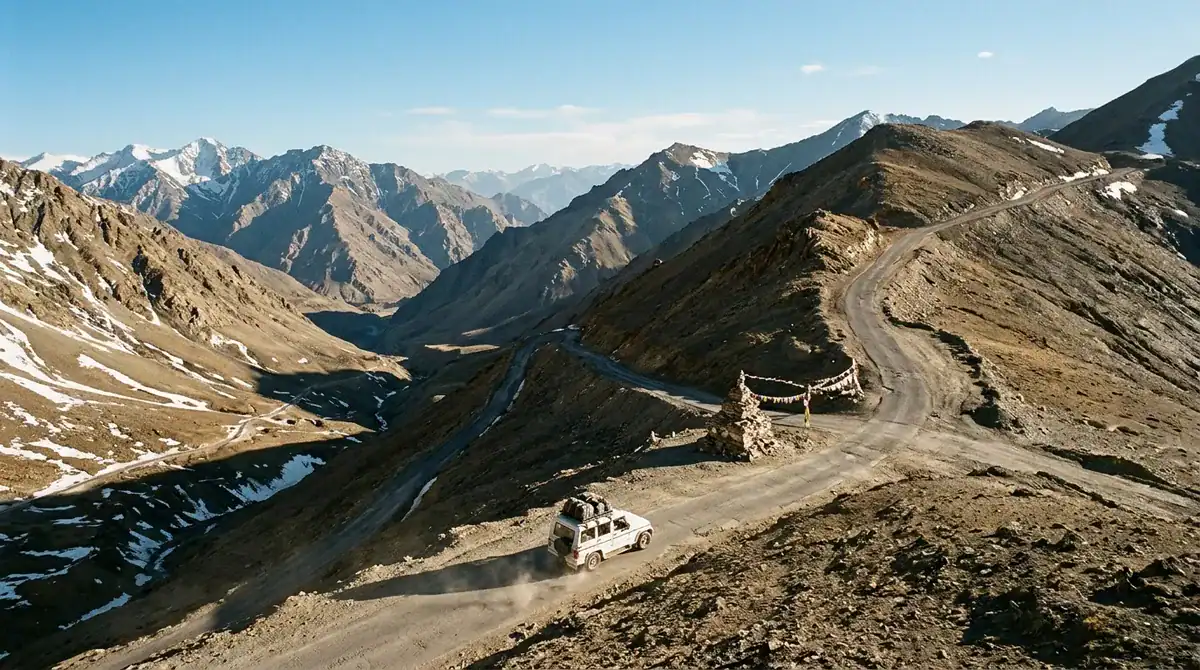
Choose the Srinagar route if you want Kashmir to give way gradually to Ladakh. Choose the Manali route if you want a longer drive with more high passes and bigger gains in altitude.
The Srinagar to Leh Highway usually stays open from May to November or December, which gives it the longer seasonal window of the two. Many travellers split the 434 km drive with overnight stops in Drass and Kargil. Kargil is a highlight for many, because its rugged valleys open into wide river plains and scattered villages, and the scenery shifts from one day to the next. This route suits people who enjoy small towns, roadside tea stalls and time to wander between driving days.
The Manali to Leh Highway is usually open from May or June to September or October, so its window is shorter and more sensitive to snow at the passes. The 473 km run is the more demanding option. Baralacha La and Taglang La are the headline crossings, and Lachung La adds another climb between them. Each pass brings a sharp change in terrain, so the drive feels more like a mountain expedition than a straight run to Leh. It suits travellers who enjoy a long, varied journey and are comfortable with repeated altitude gains.
Both seasonal windows are estimates, not confirmation of current conditions. A pass that looks open in early June can still be affected by late snow, and weather at altitude can change within a single afternoon. If your dates are flexible, build in a few spare days so you can wait out a closure rather than rush a crossing. Whichever road you choose will shape how your days feel, so match it to the pace and terrain you actually enjoy.
How Do You Acclimatize Safely for Ladakh?
Give yourself at least 48 hours in Leh before you travel to higher places such as Khardung La or Pangong Lake. Altitude matters on a road trip because the risk is not only the arrival. It builds with every pass and lake you reach afterward, and your body needs time to adjust before the drive gets steeper. The Ladakh Gazette‘s 2024 adventure-tourism standards describe acute mountain sickness as an illness that can affect travellers above 10,000 feet (3,050 metres). The first days in Leh are where you can head off trouble early.
Pangong Tso sits at 14,270 feet, which makes it a high-altitude destination rather than a starting point. Treat it as the reward at the end of your acclimatization, not the place you sleep on your first night.
The pause is not wasted time. Leh town has plenty to see at a gentle pace, from the old royal Leh Palace to the white dome of the Shanti Stupa, which rises above the town and rewards an unhurried walk. Use those days to drink water, sleep well and notice how you feel after each outing.
Follow this order to keep the climb gradual:
- Rest on your arrival day in Leh, sip water steadily and keep your first meals light.
- Spend the next two days exploring Leh town on foot, taking your time on any stairs or slopes.
- Plan your drive to Khardung La only after the 48-hour pause is complete.
- Add one full extra day before any adventure activity in high terrain, since the Gazette makes that day of acclimatization mandatory.
- Visit Pangong Tso only after you have adjusted, and avoid booking it as your first overnight stop.
- Descend to a lower altitude if headaches, nausea or breathlessness get worse, and do not push on.
Build spare time into your schedule for these pauses. A trip with room to slow down is far more enjoyable than one that forces you to climb through symptoms just to keep to a plan.
What Permits Do You Need for a Ladakh Road Trip?
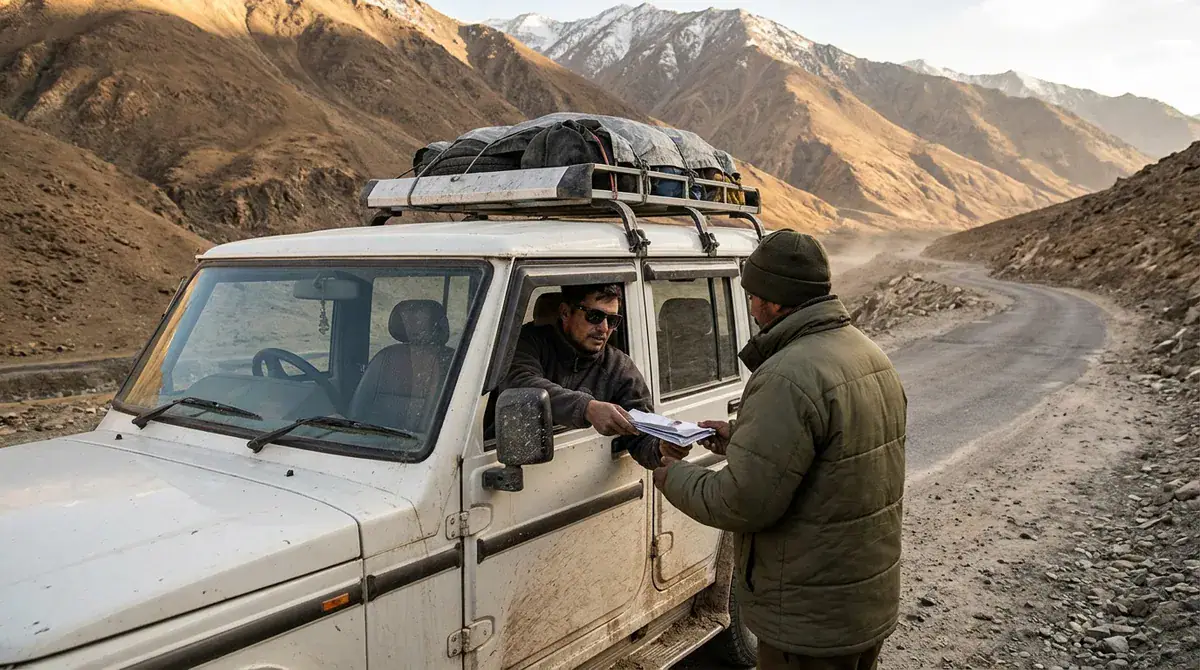
Domestic visitors pay a tourist fee online through the Leh District Tourist Management System before they reach Ladakh. Citizens of Pakistan, Afghanistan and China, along with certain passport and visa holders, need a protected-area permit for listed restricted areas. The rules are straightforward once you know which category you fall into, so check yours before you book flights or vehicles.
The domestic tourist fee is made up of three parts: the environmental or green fee, the Red Cross Fund and the wildlife fee. You can pay the whole amount online, through the same portal where you register. The current total is not stated in this article, so look it up on the portal close to your departure date rather than relying on an older guide.
The official Leh permit portal advertises a 10% discount on total fees when the permit is completed through a local travel agent. That is worth comparing against the cost of doing everything yourself, especially if you are travelling as a group. Read the terms on the portal carefully before you decide.
Once you have paid, you do not need to visit the District Magistrate’s office to verify your payment. The portal says you can show your payment slip at the relevant check posts on the road. Keep the slip handy in a folder or on your phone, because the drive will take you through several checkpoints in a single day. Carry these items together:
- Your payment slip from the Leh District Tourist Management System
- The Leh arrival boarding pass, which must be shown along with the permit
- Your protected-area permit, if your nationality or passport category requires one
Protected-area permits are a separate matter. Citizens of Pakistan, Afghanistan and China need a permit from India’s Ministry of Home Affairs for listed restricted areas. Holders of diplomatic, UN, international-organisation, official or journalist passports and visas need a permit from the Ministry of External Affairs instead. The authorities list the restricted areas, so confirm whether your planned stops appear on that list before you commit to them.
Mobile coverage is patchy along much of the route, so save digital copies of your slip, boarding pass and permit while you still have a signal in Leh. Keep paper copies in your vehicle as well. A few minutes spent organizing these documents in Leh will save you a stressful stop at a checkpoint on a high pass.
What Does a Ladakh Road Trip Itinerary Look Like?
A practical Ladakh itinerary starts with a few days in Leh, moves out to Nubra and Pangong Tso in order of rising altitude, and returns to Leh to rest between each push. If you also want the Srinagar approach, allow extra days for that leg, since each stretch needs daylight driving and a settled night.
If you arrive by the Srinagar to Leh Highway, Drass and Kargil become your first two overnight stops. Drive from Srinagar to Drass in daylight, continue to Kargil the next day, and reach Leh on the third. The Srinagar route is long enough that you should not try to cover a whole stretch after dark, so set off early and leave time for a slow lunch in Kargil’s villages.
Once you reach Leh, the outward loop begins only after the 48-hour pause. This rhythm keeps each day manageable:
- Days 1 and 2: Stay in Leh, walk the bazaar and the quieter lanes, and drink water steadily.
- Day 3: Cross Khardung La and drive north to the Nubra Valley, then settle into a guesthouse in Diskit or Hundar.
- Day 4: Watch the double-humped camels at Hundar and visit Diskit’s 108-foot Maitreya Buddha statue, which overlooks the valley.
- Day 5: Take the afternoon at Panamik’s hot springs, then drive back over Khardung La to Leh.
Leave the next day free in Leh, because the return over Khardung La is a long day of altitude changes, and you will feel it later. Nubra is about 120 km north of Leh, so the drive is manageable, but the pass and the valley’s dusty roads reward a relaxed start. Check the Nubra Valley stops for opening hours before you set off, especially for the camel rides, which depend on the weather.
Pangong Tso comes after that rest. The lake sits at 14,270 feet, so treat it as the highest point of the loop rather than a place to sleep on your first night in the region. The lake is 134 km long, and about two-thirds of it lies in China, with one-third in India. Plan one night at the lakeside so the drive from Leh is not squeezed into a single day, then head back to Leh for another rest.
After Pangong, spend a full rest day in Leh to repack, refuel and confirm the road conditions for your next leg. Fuel is scarce on the route, so top up whenever you pass a pump, and keep a spare can if your vehicle allows it. If you are leaving by the Srinagar route, reverse the order from Leh: Kargil first, then Drass, with each day’s driving finished in daylight.
How Do You Plan Fuel, Signal and Road Conditions?
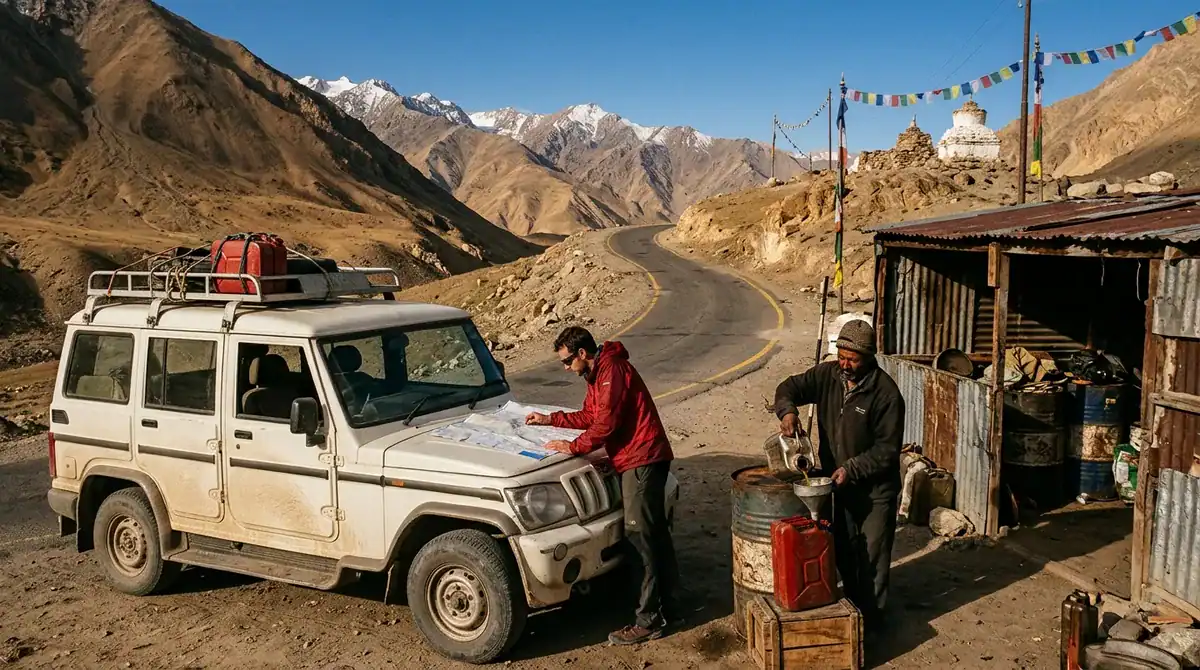
You plan fuel, signal and road conditions by filling up whenever you pass a pump with room to spare, saving offline maps and your route before you lose coverage, and checking the road again close to each departure. These risks are real on the high roads, so deal with them before you find yourself stranded without them.
The Ladakh Tourism self-drive advisory from 2024 makes three blunt points: fuel pumps are scarce in remote areas, mobile coverage can be limited, and road quality can shift from paved stretches to rough, uneven surfaces. Treat those warnings as the starting point for each day’s plan.
Fuel is the risk that is easiest to ignore. Do not wait for the gauge to drop low. Top up at every pump you pass, even if the next town looks close on the map, because a closed pump or a queue can turn a short hop into a long wait. A spare can, if your vehicle allows one, adds a margin for the longer legs between towns.
Signal is patchy, so download offline maps for the day’s route while you still have coverage. Then share your route, overnight stop and expected arrival time with someone at home or a travelling companion. Agree on a check-in message from the next town with a signal, so someone knows when to worry.
Road conditions can change within a single leg. Allow extra time for rough sections rather than trusting the average speed on your map. The Keylong to Leh entry in the listing mentioned above shows the road as open, but that listing was last updated on 14 May 2024, so treat it as a reminder to check rather than a current report.
Before you leave each leg, run through this list:
- Check the road status locally on the day, not from an older article.
- Confirm your fuel level and note where the next pump is.
- Make sure offline maps and your route are saved on your phone.
- Carry your payment slip, boarding pass and any permit for the checkpoints ahead.
- Send your planned arrival time to your check-in contact.
Drive only in daylight, and set off early enough that a delayed pass or a rough patch does not push you into the dark. If conditions look doubtful, stay another night rather than pressing on. A spare day costs far less than a stranded afternoon at altitude.
How Much Does a Ladakh Road Trip Cost?
A Ladakh road trip costs whatever your vehicle, fuel, permits, beds and days on the road add up to, and each of those choices can shift the total a long way. Start with the vehicle, because that decision moves the budget more than anything else.
A motorcycle can be cheaper to run, but it leaves you more exposed to cold, dust and altitude. A self-drive car gives you comfort and control, but fuel, maintenance and any breakdown fall on your budget. A hired vehicle with a driver usually costs the most per day, yet the driver handles unfamiliar high roads so you can focus on the scenery.
Fuel is where remote distances add up. Pumps are scarce on the long stretches between towns, so build a margin into your estimate, and expect to pay more or carry spare fuel where supply is thin.
Permits and fees come next. Domestic visitors pay a tourist fee online, and the total can change, so check the current figure on the official portal close to departure. Booking through a local travel agent can bring a 10% discount on total fees, so compare that saving with doing the paperwork yourself.
Stays and days shape the budget most. Acclimatization days in Leh mean extra nights of accommodation before you travel anywhere, so a cautious itinerary costs more than a rushed one. Count every rest day in your plan, because each one carries its own room, meals and possibly driver time.
Group size changes the sums. The vehicle, driver and fuel are fixed costs that a group of four can split four ways, so each person often pays less than a couple sharing the same costs between two. Couples may find a package that bundles transport and stays simpler, while groups of four often find a self-drive car or hired driver more economical per head.
Compare quotes line by line, so you can see exactly what each option includes.
Start Your Ladakh Road Trip Checklist
Start with a calendar. Choose your travel month, then decide whether the Srinagar or Manali approach fits those dates better. Pick a window, then leave a few spare days at the end so a closed pass does not force you to rush.
Next, register for the domestic tourist fee online before you book anything expensive. Look up the current total on the official site rather than trusting an older article. While you are there, compare the 10% discount offered through a local travel agent with the time and effort of doing everything yourself.
Book your first nights in Leh now, and count them honestly. Plan a relaxed day for walking the old Leh Palace and climbing to the white dome of the Shanti Stupa, then keep at least one more open day before any drive over Khardung La.
Finally, create a document folder this week. It should hold your payment slip, your Leh arrival boarding pass and, if your passport category requires one, your protected-area permit. Save scans on your phone and print a paper set for the vehicle. A few days before you leave, check the road status for your chosen route again, because the most recent listing you can find may already be out of date. Then pack a warm layer and a water bottle, and start planning your first day in Leh.