
A first-time Saudi Arabia itinerary can follow one clear line from Riyadh to Jeddah, linking the state-making history of Diriyah with the Nabataean tombs of AlUla and the Red Sea port that has welcomed traders and pilgrims for centuries. The route suits newcomers because the country is opening up quickly. Saudi Arabia recorded 116 million domestic and inbound tourists in 2024, including 29.7 million inbound visitors, a sign of how fast the tourism sector is growing.
Pace matters as much as places. Hegra, Saudi Arabia’s first World Heritage property, is explored on organized tours rather than by self-driving, and the year-round Hegra Day Tour starts at SAR 95 per person and takes about three hours. Before you book flights, check visa eligibility. The Saudi tourist eVisa is valid for one year, allows stays of up to three months, and requires a passport with at least six months of validity from your date of entry. Read on for each leg of the route, with practical tips on timing, transfers and local etiquette.
Key Takeaways
- A first-time Saudi Arabia itinerary works best as one clear line from Riyadh and Diriyah through AlUla to the Red Sea port of Jeddah, and seven days gives each stop enough room to breathe.
- Book the Hegra Day Tour before anything else, since it costs SAR 95 per person, takes about three hours, and is the organized-tour route into Hegra, because self-driving is not permitted there.
- Check your eVisa eligibility before booking flights, because the Saudi tourist eVisa is valid for one year, allows stays of up to three months, and requires a passport with at least six months of validity from your date of entry.
- Build one buffer day into your Saudi Arabia itinerary, because long road distances between cities can turn a relaxed trip into a rushed one.
- Dress modestly in Riyadh, Diriyah and Jeddah, since Saudi Arabia’s Public Decency Regulations apply in lanes, markets and museums alike.
What Does a Good Saudi Arabia Itinerary Look Like?
A good Saudi Arabia itinerary follows one clear line: from the kingdom’s roots in Riyadh and Diriyah, across desert heritage in the northwest, to the Red Sea port of Jeddah. The order mirrors the country’s story, from the rise of the Saudi state to ancient desert kingdoms and then to the sea gateway that connected Arabia with the wider world. Saudi Arabia recorded 116 million domestic and inbound tourists in 2024, including 29.7 million inbound visitors. The country is welcoming more people than ever, and a logical route keeps your days from doubling back.
Start in Riyadh, then spend a day in ad-Dir’iyah, northwest of the capital. The mud-brick district of At-Turaif is where the Saudi dynasty first held power, and its place on the UNESCO World Heritage List, granted in 2010, reflects its importance. Wandering its earthen lanes gives you the context you need before you see anything else.
From the capital, head toward AlUla, the oasis town of the Nabataeans. Most travelers reach it by road through Tabuk, a city about four hours away by car from AlUla. Hegra, the rock-cut site nearby, holds 111 monumental tombs, and 94 of them have decorated façades. Self-driving is not permitted there, so join an organized tour and let a guide handle the route through the sandstone valleys.
The journey ends on the Red Sea coast. Historic Jeddah grew from a port founded in the 7th century to serve Indian Ocean trade, and for centuries it was the sea gateway for pilgrims bound for Makkah. Non-Muslims may not enter the Holy Mosque or its premises in Makkah, so spend your time instead on the coral-stone merchant houses and the lively old markets.
How Long Should a First Trip to Saudi Arabia Be?
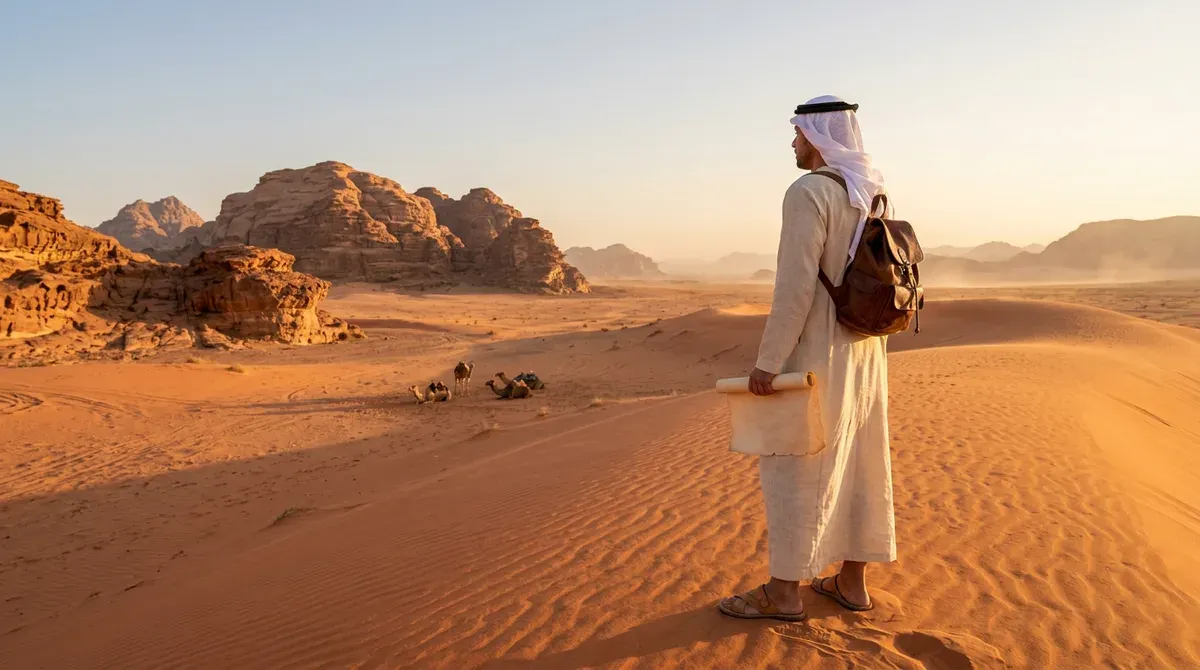
A first trip to Saudi Arabia works best at seven days, which is enough time to cover the core route with one or two nights in each main stop. Shorter trips are possible, but they cost you time on the road. Longer ones let the desert slow you down in the best way.
Here is how the three common lengths compare:
- Five days: Riyadh and Diriyah plus a short AlUla visit, or Riyadh and Jeddah without the desert.
- Seven days: The core route, with one or two nights in Riyadh, AlUla and Jeddah.
- Ten to fourteen days: Room for slow desert mornings, a second look at Riyadh and unhurried walks through Jeddah’s historic streets.
A five-day trip looks generous on paper, but the travel days do most of the work. If you add AlUla, you spend a night there and little more, and a delayed flight or a late transfer can wipe out the Hegra tour you booked. Build in one buffer day, and drop the desert if you have only five days and want a relaxed pace in the cities.
Seven days gives each stop enough room to breathe. Spend the first full day in Diriyah’s earthen lanes, then travel north for the AlUla leg and join the Hegra tour before the afternoon heat sets in. Finish with a night or two in Jeddah, where the Red Sea breeze makes evening walks around the old town a pleasure.
When time runs short, the first things to go are usually the extra stops, not the highlights. Skip a second museum, cut the long evening in Riyadh, or pass on a side trip. Do not cut the buffer. Saudi road distances are long, so an empty day between cities can make the difference between a calm trip and a rushed one.
Ten to fourteen days changes the rhythm entirely. You can spend two or three mornings in AlUla with no tour booked, watching the sandstone cliffs change color as the sun moves. You can return to Riyadh for a second visit to the museums and markets, and give Jeddah’s coral-stone houses the time they deserve. Longer trips also leave room for detours, since routes from Jeddah and Riyadh can include stops along the way.
Riyadh and Diriyah: Where Saudi History Begins
The first leg of the route begins in Riyadh, where the modern capital sits on the same ground that once shaped the Saudi state. Give the city one or two days. Spend one morning at the National Museum, where the country’s story unfolds in clear order, and another at Masmak Fortress in the old town, where the mud-brick walls still show the scale of the city’s past.
For the historic heart of the trip, set aside a half-day for Diriyah, a short drive northwest of Riyadh. The At-Turaif District was the first capital of the Saudi Dynasty, the place where the family built its power before the state grew outward. UNESCO inscribed the district on the World Heritage List in 2010, and walking its streets is the best way to understand why.
Go early, when the air is cool and the lanes are quiet. The buildings rise from the same earth they are made of, and their walls are thick enough to hold the night’s chill well into the day. Look for the small, high windows, the stacked rooms around open courtyards, and the rounded corners where the clay has been smoothed by generations of weather. Notice how the streets bend and narrow. They shade pedestrians from the sun, and they guide visitors through the quarter in a way that makes every turn feel like a discovery.
Take your time inside the palace complexes and the residential lanes, reading the walls as a record of daily life. A guide can point out which spaces served the ruling family and which housed townspeople, and that contrast explains how a desert settlement became a seat of government. Before you leave, step back and look at the ridge above the valley, then imagine the caravans and rulers who once passed beneath it.
A full day can stretch to include Riyadh’s museums in the afternoon, or a longer excursion to the dramatic cliffs of the Edge of the World, which requires a longer drive and a booked driver. Keep your clothing modest in these public places, as Saudi Arabia’s Public Decency Regulations apply in the lanes, markets and museums alike. Doing so lets you focus on the history around you, and it prepares you for the quieter pace of the desert ahead.
Is AlUla Worth the Trip?
Yes, AlUla is worth the trip, and for many first-time visitors it is the stretch of the route that feels most like an adventure. The oasis town sits among towering cliffs of red and cream sandstone, and its best-known site, Hegra, was a major Nabataean city on the trade routes that once carried incense and goods across the desert.
UNESCO inscribed Hegra in 2008, making it the first property in Saudi Arabia to earn World Heritage status. Its rock-cut tombs are the highlight. The site holds 111 monumental tombs cut straight into the cliff face, and 94 of them still have decorated façades, with carved pillars, pediments and doorways that look almost freshly chiseled against the pale rock.
Hegra is explored only on organized tours, so you cannot self-drive through the site. That rule suits the place well. The year-round Hegra Day Tour costs SAR 95 per person and takes about three hours, which leaves enough time to walk among the tombs, follow a guide through the stories behind the carvings and pause for photographs without rushing. Book ahead so the tour time fits around your transfer.
Getting to AlUla takes some planning. Most travelers reach it by road, and Tabuk is about four hours away by car, so it is worth arranging your onward transport before you arrive in the region. Longer road trips from Jeddah and Riyadh are also possible, and they let you stop at towns and desert landscapes along the way. If you choose a longer drive, leave a margin before your Hegra tour. A late arrival can cost you the slot you booked.
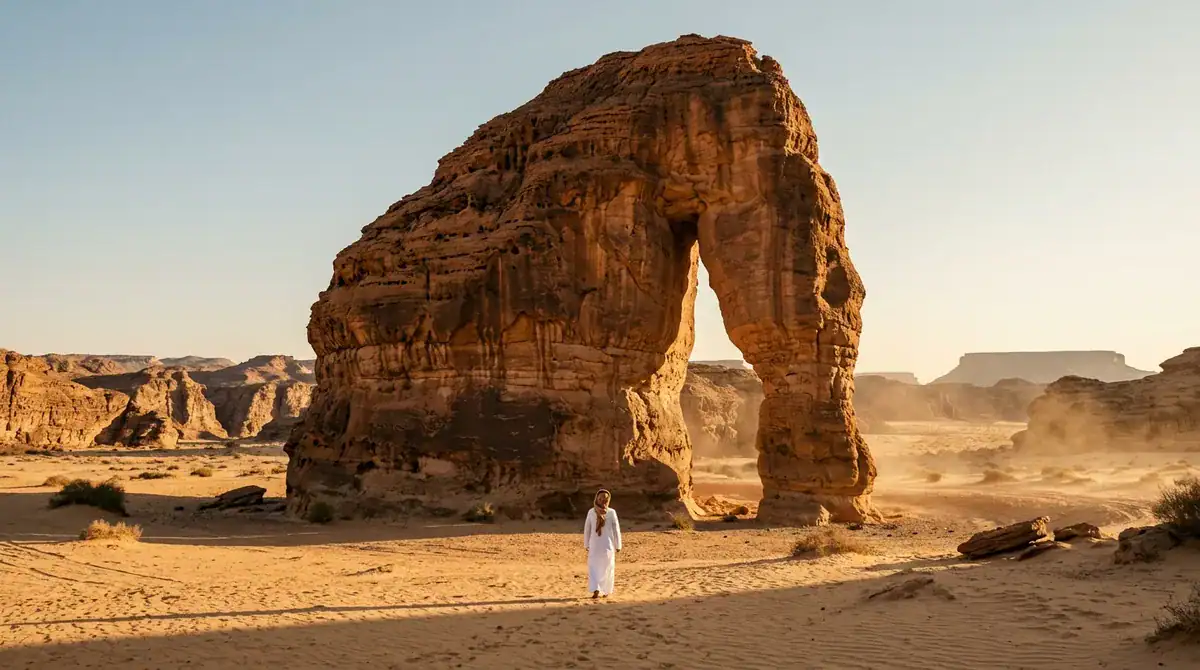
Hegra is the headline, but the wider valley is just as memorable. Elephant Rock, a huge sandstone formation shaped by wind and time, makes a good stop before or after the tour. The old town of AlUla, with its mud-brick houses climbing a hillside above the palm groves, rewards a slow stroll at the end of the day.
Pack for the sun. Bring water, a hat, sunglasses and light layers, because desert days can be bright and dry even when the mornings feel cool. Wear clothing that respects local customs, and keep your plans flexible enough to enjoy the valley at its quietest hours.
What Makes Historic Jeddah a Good Final Stop?
Historic Jeddah makes a good final stop because it ends the route on the sea, a fitting close after the desert days in Diriyah and AlUla. Many trips finish with a coastal stay near the airport, and the old town is close enough to the water that a last evening there feels like a natural farewell.
The port has a long history. UNESCO’s listing for Historic Jeddah describes it as a Red Sea harbor that grew from the 7th century onward, handling goods moving along Indian Ocean trade routes. Ships also brought pilgrims ashore here before they continued overland to Makkah, so the city became the gateway many travelers passed through on the way to the holy cities.
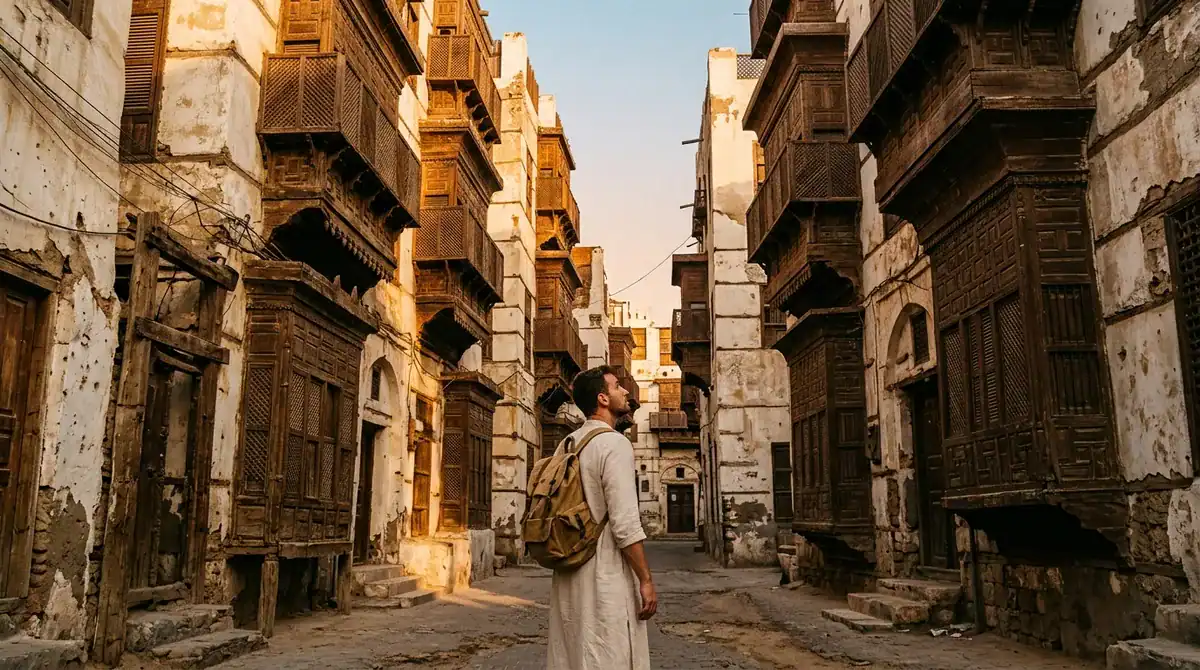
Give the old quarter, known as Al-Balad, a full morning. Its narrow lanes are lined with coral-stone merchant houses, many with carved wooden balconies called rawashin that shade the windows and let the breeze through. Walk slowly, stop at the Bab Makkah gate, and wander the nearby souks, where spices, fabrics and coffee fill the air. Historic houses such as Nasif House offer a look inside the family life that once filled these walls.
Save the afternoons for rest. The shaded courtyards of the old town are cooler than the streets, and a long lunch gives the heat time to pass.
Reserve your second evening for the Corniche. As the sun drops, families stroll along the seafront, fishing boats rock in the harbor, and the lights of the modern city begin to glow across the water. It is the easiest place to sit with a tea and look back over the route.
That is where the trip’s arc becomes clear. You began among the mud-brick lanes of Diriyah, crossed the sandstone valleys of AlUla, and now you stand where the desert meets the Red Sea, watching the same kind of sea routes that once carried caravans’ goods and pilgrims’ hopes.
Do You Need a Visa and What Should You Know Before You Go?
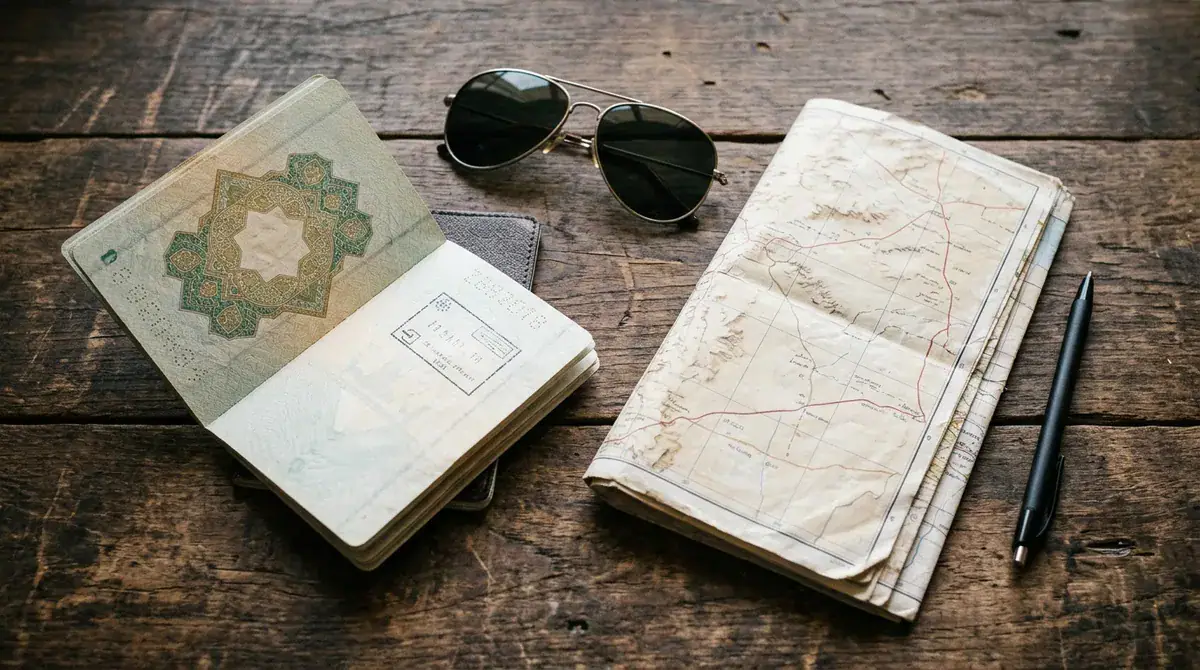
If your passport is from an eligible country, you can apply for the Saudi tourist eVisa, so confirm your eligibility before you book flights. The official eVisa terms set out the rules that matter most for this route.
The visa is valid for one year and allows multiple entries unless the visa itself says otherwise. That flexibility helps if your plans shift and you return to Riyadh after a few days in AlUla. Each stay can last up to three months, far longer than a seven-day route needs, so the limit is rarely the constraint for a first trip.
Your passport is the detail most travelers overlook. For eligible countries, it must have at least six months of validity remaining from the date you enter Saudi Arabia, so check the expiry date before you apply. Paying the application fee does not guarantee approval or entry. Wait for your visa to be confirmed before you commit to non-refundable hotels, domestic flights or tours.
Some sacred sites are closed to non-Muslims. The same terms state that non-Muslims may not enter the Holy Mosque and its premises in Makkah, or the Prophet’s Mosque and its premises in Madinah. Because entry rules can change, check the current terms before you book any travel built around those cities.
Public life follows the Public Decency Regulations, which apply in streets, markets, cafés and museums. Dress modestly, behave respectfully toward local people, and ask before photographing anyone. Our editors suggest keeping a few simple items ready before you fly:
- A printed copy of your eVisa confirmation and passport details
- Proof of your accommodation and onward transport
- Your passport, with at least six months of validity on arrival
- A light layer for air-conditioned museums and cooler evenings
Keeping these details organized makes arrival far smoother, and it leaves you free to enjoy the desert and the coast.
How Do You Move Between Cities Without Losing a Day?
Plan the AlUla leg first, and the rest of the route will fall into place around it. Saudi distances are long, so the stops follow the road: Riyadh and Diriyah come first, AlUla sits in the middle, and Jeddah closes the trip on the coast. AlUla is the most remote stop, so a missed connection there costs more than a delay anywhere else.
Most travelers reach AlUla by road, and Tabuk is about four hours away by car. Longer drives from Jeddah and Riyadh are also possible, and they let you break the journey at towns and desert landscapes along the way. Each option adds hours, so count the drive before you choose a departure time.
Hegra is explored on organized tours, so your transfer must get you to the site with time to spare. Use this order to lock in the AlUla leg:
- Pick your Hegra tour time first, then work backward from it, leaving a buffer for the drive and hotel check-in.
- Compare road and air using distance, time of day, group size and flight connections. Long distances and tight connections favor flying, while small groups with flexible timing often do well on the road.
- Book the day’s tour and transfer together, so a delay on the road cannot cascade into a missed tour.
- Save the pickup window and booking details on your phone and in print.
Build one flexible day into the schedule, ideally right after your AlUla tour. Use it for rest, for a change in weather, or for a stop you spot on the drive. Without that open day, one late flight can take the next leg with it.
Building Your First Saudi Route Step by Step
Your next step is a calendar, not a booking. Choose the dates you can give the trip, then count backward from your flight to see whether seven days fit comfortably. If you only have five days, skip AlUla and build the trip around Riyadh, Diriyah and Jeddah, so the travel days don’t swallow the visits.
Before you spend money, check your passport and visa eligibility. Your passport needs at least six months of validity from your date of entry, so renew it first if it expires sooner. Paying the application fee does not guarantee approval, so hold off on non-refundable hotels and domestic flights until your visa is confirmed.
If AlUla is on your list, reserve the Hegra Day Tour first. It costs SAR 95 per person and takes about three hours, so pick a slot and then plan your road transfer from Tabuk around it.
Once the core route is set, look ahead. Saudi Arabia has eight properties on the UNESCO World Heritage List, including the Cultural Landscape of Al-Faw Archaeological Area, inscribed in 2024. A return trip could cover ground this first route leaves out.
Write your dates, bookings and pickup times on one sheet of paper, and carry a printed copy with you.