
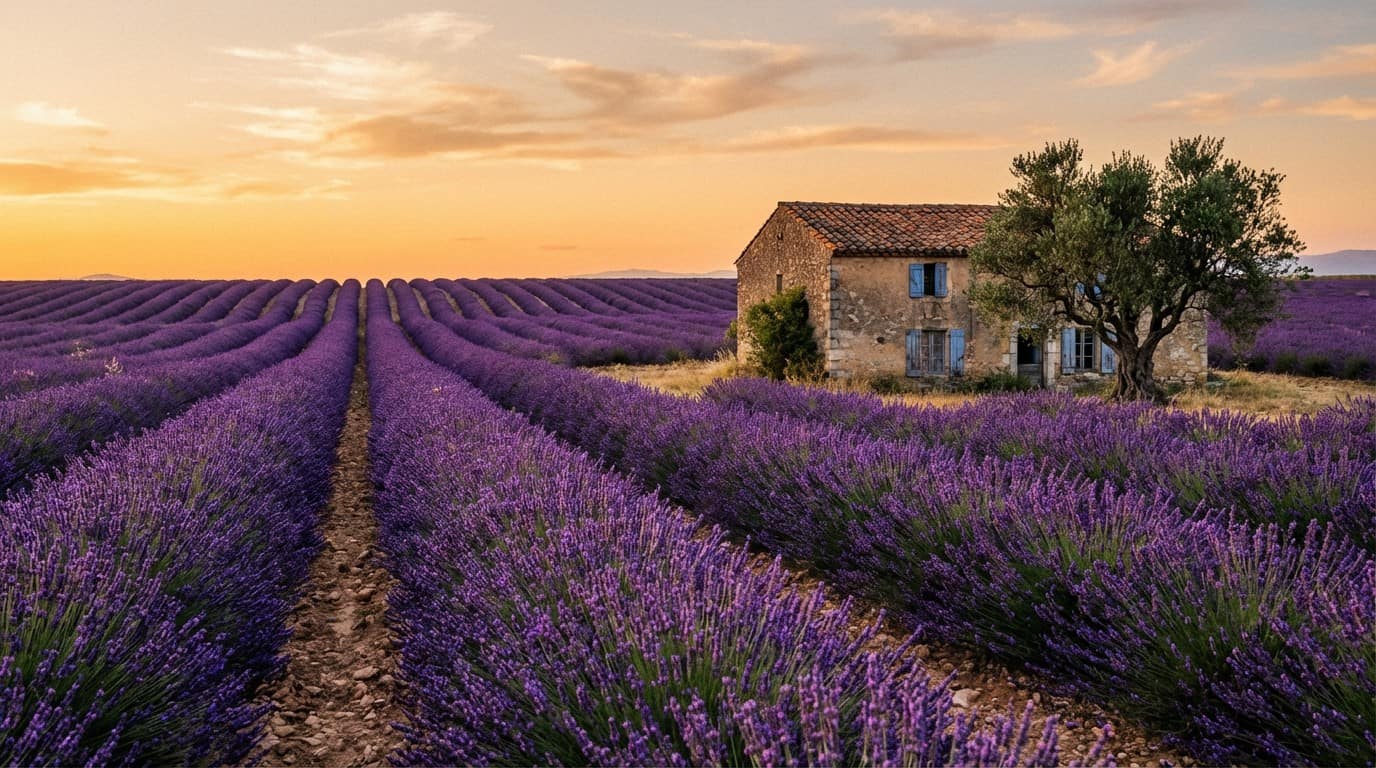
Close your eyes and imagine a horizon painted in endless ribbons of deep violet, where the scent of warm honey and floral spice hangs heavy in the Mediterranean breeze. Standing amidst the provence lavender fields is a sensory experience that feels like stepping directly into a living postcard, a dream I first realized while wandering through the sun-drenched Luberon valley. Whether you are chasing that perfect golden hour photograph or simply want to lose yourself in the humming of bees and the rustle of purple stalks, timing your visit is the secret to capturing this fleeting seasonal magic.
The 2025 season is shaping up to be spectacular, but success depends entirely on understanding the unique geography of the region. I’ve learned from experience that a week’s difference or a few hundred feet in elevation can mean the difference between vibrant blooms and a post-harvest field. From the low-lying plains of Valensole that peak in late June to the high-altitude hideaways of Sault where the purple lingers into August, knowing exactly where to go ensures you won’t miss a single petal of this iconic French summer.
Key Takeaways
- Timing your visit is essential to catching the peak bloom, with lowland areas like the Valensole Plateau peaking from late June to mid-July and higher elevations like Sault remaining vibrant into August.
- Plan your itinerary to move from the lowlands to the highlands as the season progresses to ensure you avoid post-harvest fields and experience the different varieties of lavender and lavandin.
- Immerse yourself in the local culture by visiting village markets and harvest festivals, which offer authentic artisanal products like lavender honey, essential oils, and handmade soaps.
- Explore the region by car to access scenic backroads, hidden viewpoints, and iconic landmarks like Senanque Abbey while respecting farmers by staying on designated paths.
Timing Your Visit to the Valensole Plateau
To witness the quintessential Provencal dream, you must aim for the sweet spot between the last week of June and the middle of July. During this window, the Valensole Plateau transforms into a sea of deep purple as the hybrid lavandin reaches its vibrant peak. I remember standing on the edge of a field just after sunrise, watching the first light turn the rows into ribbons of glowing violet. This lowland region is the first to bloom because of its sunny climate, making it the perfect starting point for your summer road trip. Be sure to arrive before the harvest begins around July 15th, as the tractors move quickly to gather the fragrant bounty.
The sheer scale of the horizon here is something you have to experience in person to truly understand. Walking through the neat rows, you are immediately enveloped in the humming of honeybees and the heavy, floral scent that defines the French countryside. Unlike the smaller patches found elsewhere, Valensole offers vast, uninterrupted views where the purple earth seems to touch the bright blue sky. I always recommend wearing comfortable shoes and bringing plenty of water, as the summer sun can be intense while you are exploring. It is a sensory experience that feels like stepping directly into a living postcard, far removed from the busy streets of the city.
Planning your itinerary around the local markets is a wonderful way to immerse yourself in the local culture. While the fields are the main event, the nearby villages come alive with stalls selling everything from lavender honey to handmade soaps and essential oils. I love grabbing a fresh baguette and some local goat cheese to enjoy a quiet picnic overlooking the purple landscape. If you are driving from Aix-en-Provence, the journey takes about an hour and offers some of the most scenic views in southern France. Just remember to respecting farmers by staying on the designated paths and leaving the delicate blooms exactly where they are.
Exploring the Luberon and Sault Highlands
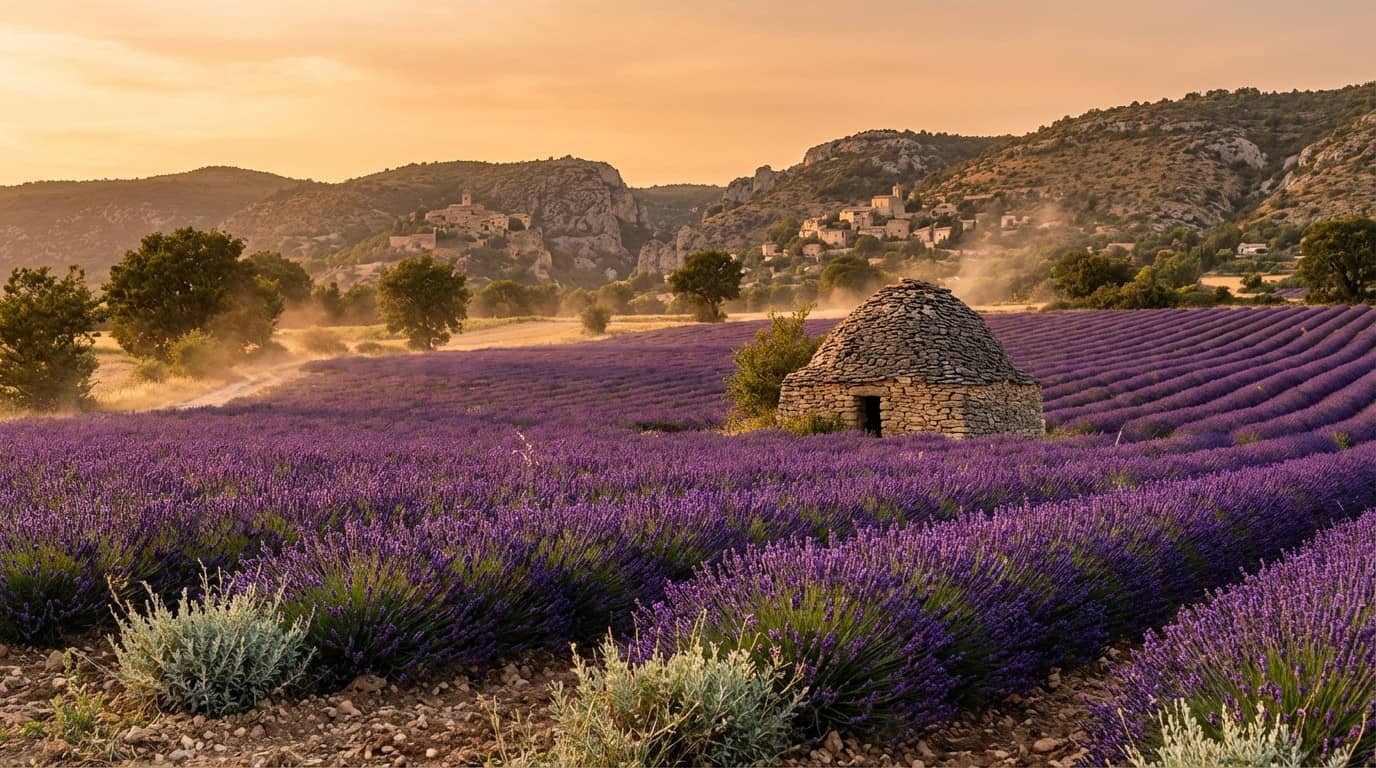
If you find yourself visiting Provence later in the summer, do not worry about missing the purple spectacle, as the higher elevations of the Luberon and Sault offer a second act to the season. While the lowland fields are often harvested by mid-July, these rugged highlands sit at over 2,600 feet, meaning the lavender holds its deep violet hue well into August. Driving through this region feels like a more intimate experience, where the air is noticeably cooler and the landscape is dotted with smaller, family-run farms. I love wandering through these hillside patches because they offer a quiet, rustic atmosphere that feels worlds away from the busier tourist hubs. You can often find artisanal producers selling bundles of dried flowers and essential oils directly from their stone barns.
The charm of this area is amplified by the stunning stone villages like Gordes and Bonnieux that overlook the rolling purple valleys. I recommend spending a morning browsing the local markets, where the scent of fresh lavender honey and handmade soaps fills the narrow, cobblestone alleys. These towns provide the perfect base for a slow-paced itinerary, allowing you to pair your field tours with long lunches featuring local rosé and goat cheese. The architecture here is breathtaking, with golden limestone buildings that glow against the vibrant lavender backdrop during the golden hour. It is a sensory experience that captures the true essence of the French countryside without the frantic rush of the peak season.
To make the most of your trip, plan a route that winds through the backroads toward the village of Sault, which is widely considered the capital of lavender. This area is less about massive commercial monocultures and more about the traditional, wilder varieties of the plant that thrive in the rocky soil. You can walk along dedicated botanical paths that explain the different species while offering panoramic views of the Mont Ventoux foothills. I always suggest bringing a sturdy pair of walking shoes and a camera for the late afternoon when the light softens over the plateau. Ending your day at a small farmstead for a tasting of lavender-infused treats is the ultimate way to embrace the slow rhythm of Upper Provence.
Navigating Local Markets and Seasonal Harvest Festivals
To truly experience the soul of the lavender season, you must wander through the village markets where the scent of the harvest fills the morning air. My favorite stop is the Friday market in Carpentras, where the stalls are a vibrant tapestry of deep purples and sun-drenched yellows. Here, you can find small-batch essential oils distilled directly from the nearby Valensole Plateau, which I always recommend for their purity and calming scent. I love chatting with the local producers who take immense pride in their handmade soaps, often triple-milled and infused with dried blossoms. These markets offer a sensory overload in the best way possible, blending the fragrance of fresh herbs with the bustling energy of provincial life.
Beyond the weekly shopping, the seasonal harvest festivals in late July offer a deeper look into the agricultural traditions of the Luberon highlands. The village of Sault hosts a legendary celebration where the entire community gathers to honor the “blue gold” of their fields. You can watch traditional sickle-cutting competitions and listen to local music while sampling unique delicacies like lavender-infused honey and crunchy almond macarons. I always tell my friends to arrive early to beat the heat and secure a jar of the rare highland honey before it sells out. These festivals are not just about shopping, but about celebrating a way of life that has persisted in these hills for centuries.
Navigating these local hubs requires a bit of planning, as the peak harvest moves from the lowlands to the higher altitudes as summer progresses. If you are visiting in early July, focus your efforts on the markets near the Plateau de Valensole to catch the freshest oils from the first cuttings. For those traveling in August, the higher elevation villages near Sault remain the place to be for vibrant colors and active festivals. I suggest carrying plenty of small euro notes and a sturdy reusable tote bag for your floral treasures. Embracing the rhythm of the local harvest schedule ensures you bring home the most authentic pieces of Provence while supporting the artisans who keep these traditions alive.
Planning Your Perfect Lavender Road Trip Itinerary
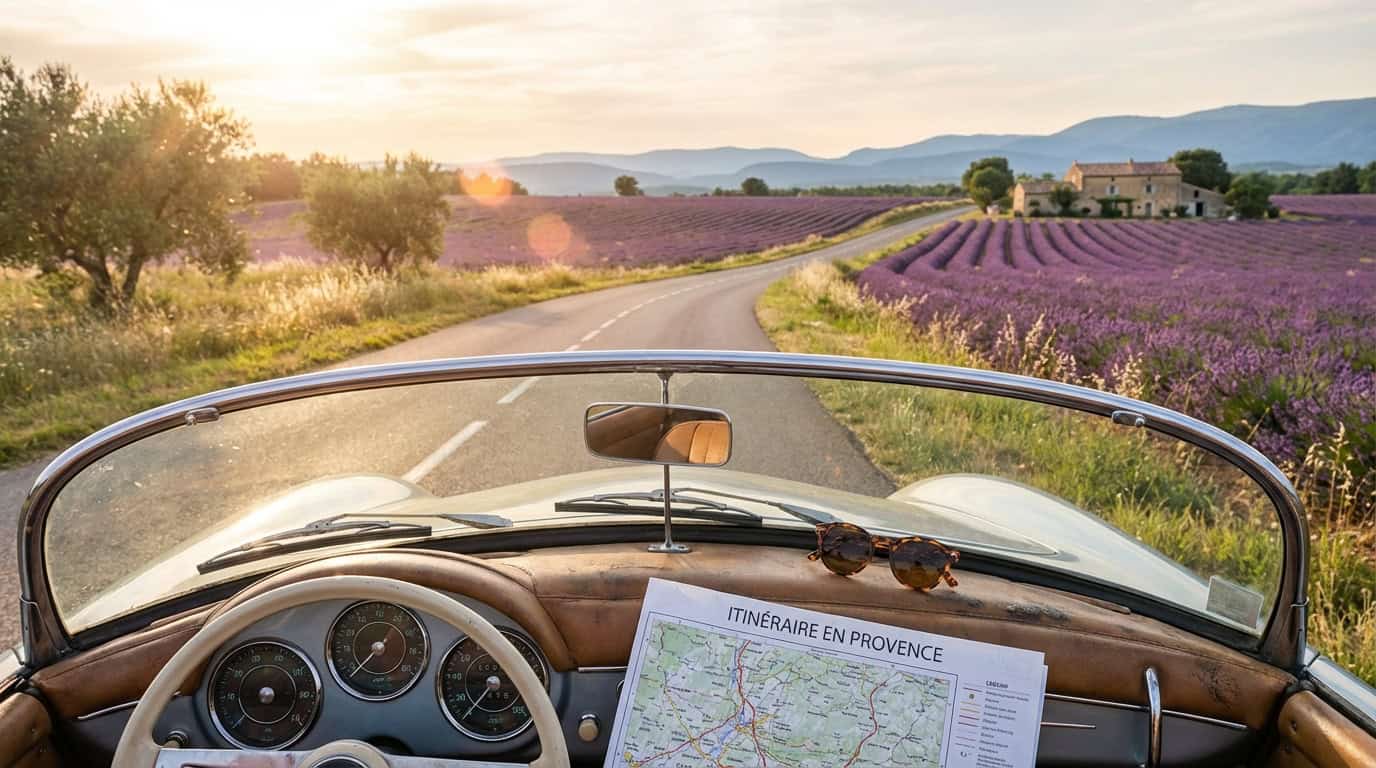
To begin your journey through the purple-hued heart of Provence, I recommend starting your engine in the historic city of Avignon before heading east toward the Luberon Valley. Your first essential stop is the breathtaking Senanque Abbey, where the monks have meticulously tended to rows of lavender that frame the ancient stone architecture since the twelfth century. Arriving early in the morning allows you to catch the soft light hitting the grey stone and vibrant blossoms before the midday crowds arrive. It is a sensory experience like no other, as the hum of honeybees and the scent of warm earth fill the air while you wander the perimeter of the abbey. After soaking in the spiritual quietude of the valley, continue your drive through the winding hills toward the perched village of Gordes for a panoramic view of the mosaic landscape below.
The next leg of your road trip takes you higher into the highlands toward the charming village of Sault, which is widely considered the capital of lavender. Because of its higher elevation, the fields here bloom later than those in the lowlands, making it the perfect destination if you are visiting in late July. I love wandering the dedicated lavender paths that wind through the local farms, allowing you to get up close to the different varieties of fine lavender used in world-class perfumes. Take a moment to browse the local markets for artisanal honey and handmade soaps, which capture the essence of the French countryside in a bottle. This route offers a slower pace of life that perfectly complements the rhythmic beauty of the swaying purple stalks against the bright blue Provencal sky.
As you navigate these scenic backroads, remember that the best photo opportunities often happen at the small, unnamed turnouts between the major landmarks. Keep your camera ready for the contrast of golden wheat fields sitting right next to deep violet rows, a classic sight that defines the agricultural heritage of the region. I suggest packing a picnic of local goat cheese, fresh baguette, and seasonal apricots to enjoy under the shade of an olive tree overlooking the Luberon plains. Always check the local harvest schedules before you set out, as the farmers begin their work quickly once the blooms reach their peak potency. Ending your day with a sunset drive back to Avignon will leave you with a permanent memory of the most fragrant landscape in all of France.
Timing Your Perfect Lavender Road Trip
To make the most of your journey into the purple heart of France, remember that timing your visit is everything when it comes to the harvest. If you are visiting the lower plains of Valensole, aim for the final week of June to catch the fields at their most vibrant before the mid-July harvest begins. For those who prefer a slower pace, the higher altitudes near Sault offer a stunning late-season bloom that often stretches into early August. I always recommend renting a small car to navigate the winding backroads where the best hidden views are tucked away. Don’t forget to pack a sturdy pair of walking shoes and a sun hat to stay comfortable while exploring the fragrant rows.
Beyond the famous photo opportunities, the true magic of Provence lies in the sensory details of the local village markets. You should definitely plan your route to include a stop in Gordes or Roussillon, where you can sample lavender-infused honey and artisanal soaps crafted by local families. These morning markets are the perfect place to pick up picnic supplies like fresh goat cheese and crusty baguettes for an afternoon in the fields. Taking the time to chat with the growers gives you a deeper appreciation for the agricultural heritage that sustains this beautiful landscape. Watching the sun set over a sea of violet is an experience that stays with you long after the suitcase is unpacked.
There is something truly transformative about standing in the middle of a blooming field with nothing but the sound of buzzing bees and the scent of summer in the air. This region offers a ultimate European escape from the rush of modern life, inviting you to trade city skylines for rolling hills and ancient stone farmhouses. Whether you are a photography enthusiast or simply a traveler in search of peace, the lavender season provides a spectacular backdrop for creating lifelong memories. Now is the perfect time to start mapping out your dream Albania coast road trip or 2025 adventure to ensure you witness this fleeting purple spectacle for yourself. The French countryside is calling, and its timeless beauty is waiting to welcome you home.
Frequently Asked Questions
1. When is the best time to see the lavender fields in bloom?
The magic happens between late June and early August, but timing depends on the specific location. I recommend visiting Valensole in early July, while the higher altitude fields near Sault stay vibrant until the middle of August.
2. Where are the most iconic photo locations in Provence?
The Valensole Plateau offers those famous, endless horizons of deep violet ribbons that look like a living postcard. For a more historic backdrop, the fields surrounding Sénanque Abbey provide a stunning contrast between the purple blooms and ancient stone architecture.
3. What is the difference between lavender and lavandin?
Lavandin is a hardy hybrid found in the lowlands like Valensole, known for its intense color and large, round bushes. True lavender grows at higher elevations, possessing a more delicate scent and a softer, refined blue hue that is highly prized by perfumers.
4. Will I miss the flowers if I arrive in late July?
Not at all, provided you head to the higher elevations. While the lowland harvests usually begin around July 15th, you can still find breathtaking blooms in the cooler climate of the Sault plateau well into the first week of August.
5. What should I wear for a photoshoot in the fields?
Flowing dresses in white, cream, or soft yellow create a beautiful contrast against the deep purple rows. Wear sturdy sandals or closed shoes, as the soil can be uneven and the fields are full of busy, buzzing bees working the flowers.
6. Do I need a car to visit the lavender fields?
Yes, renting a car is the best way to explore at your own pace and reach the hidden gems tucked away in the Luberon valley. Having your own wheels allows you to chase the golden hour light and stop whenever a particular patch of purple catches your eye.
7. Is there an entry fee to visit the lavender fields?
Most of these stunning fields are working farms and are free to view from the roadside. Please remember to be respectful by not picking the flowers or stepping deep into the rows, as this is the local farmers’ livelihood.