
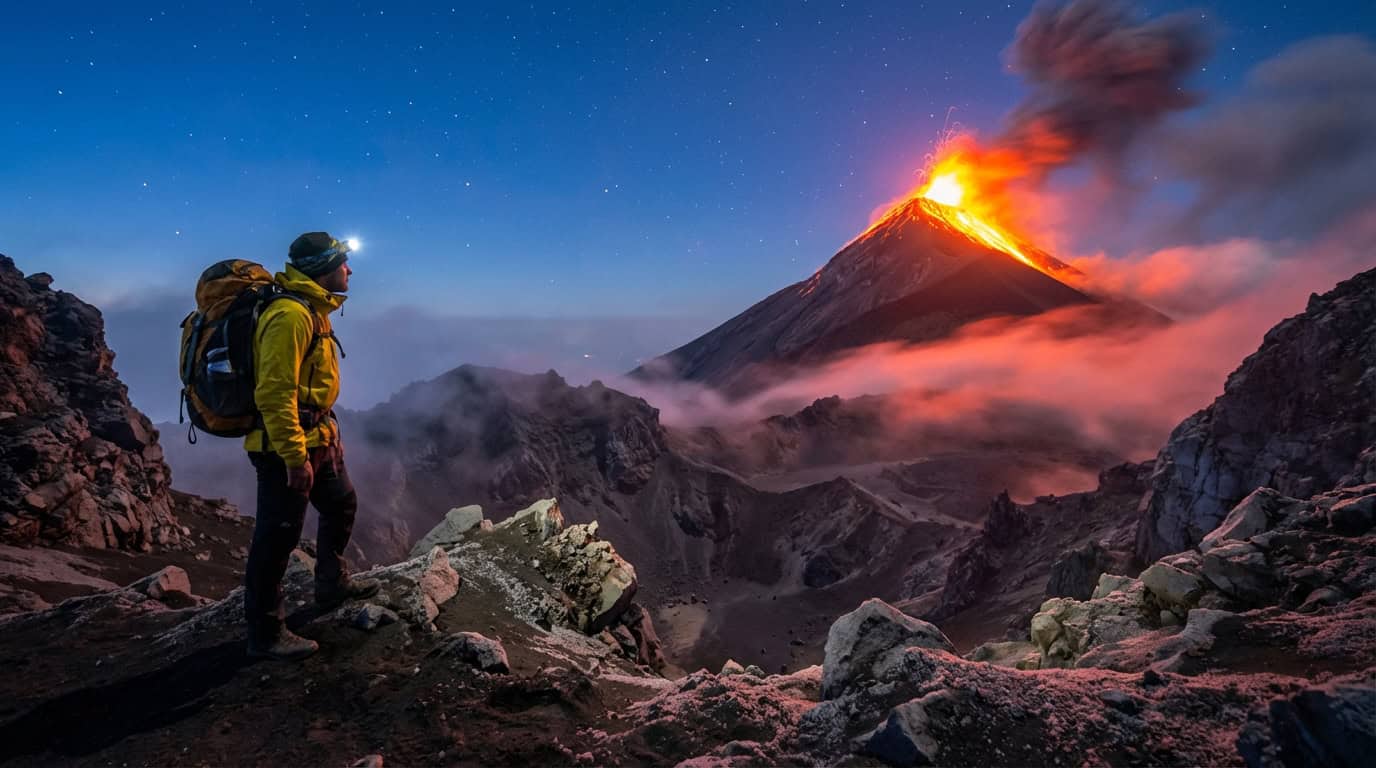
I will never forget the ground trembling beneath my boots as a glowing plume of lava shattered the pitch-black Guatemalan sky. Tackling the Acatenango volcano hike had been on my bucket list for years, but nothing truly prepares you for the raw power of watching the neighboring Volcán de Fuego erupt right in front of your base camp. The biting wind and the exhausting climb instantly faded away, replaced by pure, unfiltered awe. This is easily one of the best adventure experiences in Guatemala, offering a front-row seat to one of the most active volcanoes in the world.
Conquering this legendary two-day trek meant pushing past steep inclines, loose volcanic scree, and a grueling 1,500-meter elevation gain. Yet, the moment I zipped open my tent to watch the sunrise above the clouds at 3,600 meters, every breathless step up the mountain felt profoundly worth it. Surviving the freezing temperatures and high altitude to reach the summit takes serious mental grit, smart packing, and a solid preparation strategy to ensure your adventure is a success.
Key Takeaways
- Conquering the Acatenango volcano is a grueling two-day trek with a 1,500-meter elevation gain, but it rewards hikers with unparalleled, close-up views of Volcán de Fuego’s active lava eruptions.
- Surviving the freezing high-altitude temperatures and transitioning through four distinct microclimates requires strategic packing, including heavy thermal layers and a zero-degree sleeping bag.
- The steep, loose volcanic scree makes the final ascent incredibly challenging, making trekking poles and broken-in hiking boots absolute necessities for a successful climb.
- To prevent altitude sickness and safely reach the 3,976-meter summit, spend at least two days acclimatizing in Antigua before beginning your adventure.
Trekking Through Four Distinct Volcanic Microclimates
Stepping onto the trail for the Acatenango hike immediately tested my endurance as the grueling 1,500-meter ascent began. The journey kicked off in humid, sun-drenched farmlands where local agriculture thrived in the rich volcanic soil. Within an hour, the dusty agricultural fields faded away, and I found myself swallowed by a dense, misty cloud forest. Ancient trees draped in thick moss towered overhead, providing a brief but welcome relief from the intense Central American sun. Every steep step through this lush green canopy reminded me why this bucket-list trek is legendary among thrill-seekers.
As I pushed past the 3,000-meter mark, the thick humidity vanished and the scenery transformed dramatically into a stark alpine forest. The towering broadleaf trees were replaced by stubborn pines that somehow clung to the side of the mountain. The air grew noticeably thinner and colder, forcing me to slow my pace and focus entirely on my breathing. Soon, even those hardy trees disappeared entirely, giving way to the notorious volcanic scree that makes this hike so incredibly challenging. Navigating this loose, gravel-like terrain felt like taking two steps forward and one step back, demanding absolute mental toughness to keep climbing.
Arriving at the high-alpine environment near the 3,600-meter base camp felt like stepping onto the surface of another planet. The vibrant greens of the lower elevations were completely gone, replaced by a barren, windswept expanse of dark volcanic rock. Standing above the cloud line, the freezing wind whipped around me, but the sheer sense of accomplishment kept my spirits incredibly high. Surviving those four distinct microclimates is a brutal physical test, yet it prepares you perfectly for the ultimate reward waiting just across the valley. If you are planning this epic adventure, remember to pack strategic layers so you can comfortably transition from the sweltering jungle to the freezing summit.
Witnessing Volcán De Fuego Eruptions At Basecamp
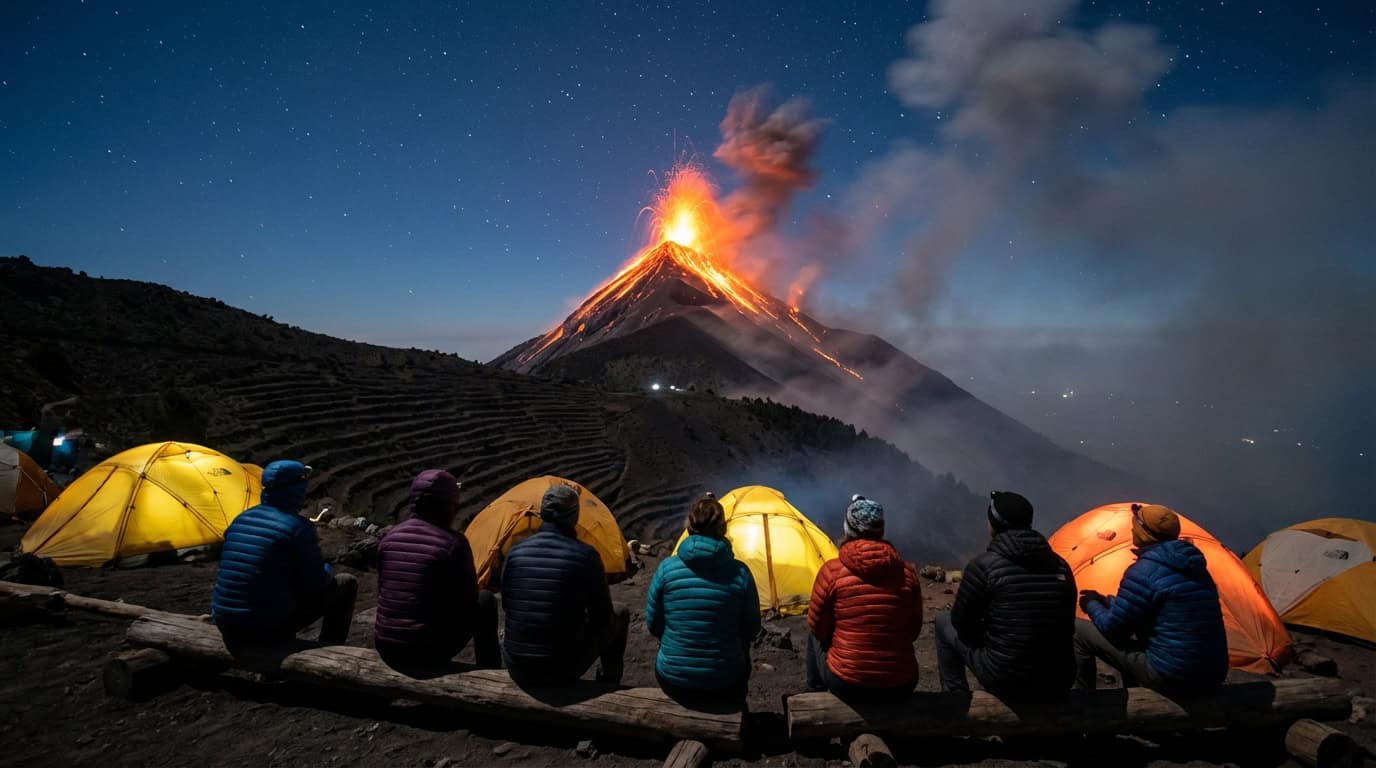
Reaching our basecamp at 3,600 meters was a brutal test of endurance, but the reward waiting for us made every agonizing step completely worthwhile. As the sun dipped below the horizon, the freezing mountain air quickly set in, forcing my friends and me to huddle tightly together in our thick layers. We sat on the edge of the volcanic scree with steaming mugs of hot chocolate in hand, staring intently at the jagged silhouette of Volcán de Fuego just across the valley. Suddenly, the ground beneath us rumbled with a deep, guttural roar that vibrated right through my hiking boots. A massive plume of ash shot into the twilight, followed instantly by a violent explosion of glowing red lava that illuminated the entire sky.
That initial eruption was just the opening act for a spectacular natural fireworks show that lasted well into the night. Underneath a brilliant canopy of stars, Fuego continued to violently spit molten rock into the air every fifteen to twenty minutes. Watching the bright orange rivers of lava cascade down the steep slopes of the neighboring peak felt like looking directly into the raw, untamed heart of the earth. For thrill-seekers looking for the ultimate bucket-list experience, there is simply nothing quite like the adrenaline rush of sleeping beside a highly active volcano. We barely slept a wink in our tents that night, completely mesmerized by the booming explosions and the neon red glow piercing the pitch-black darkness.
If you are planning to tackle this unforgettable trek yourself, packing the right gear for the freezing overnight temperatures is absolutely essential. You will want a high-quality zero-degree sleeping bag, thermal base layers, and a thick windproof jacket to survive the bitter cold at this altitude comfortably. I also highly recommend bringing a sturdy tripod to capture those long-exposure shots of the glowing lava against the starry Guatemalan night sky. Enduring the freezing weather and the grueling uphill climb is a small price to pay for such an awe-inspiring adventure. Witnessing the sheer power of Volcán de Fuego from the Acatenango basecamp will easily become the most spectacular highlight of your entire Central American journey.
Final Push To Acatenango Summit For Sunrise
My alarm pierced the freezing darkness at 4:00 AM, signaling the start of the most demanding part of our entire Guatemalan adventure. Leaving the relative warmth of base camp behind, I layered up against the biting wind and clicked on my headlamp. The final one-hour scramble to the 3,976-meter peak is a notorious test of endurance for even the most avid thrill-seekers. Almost immediately, the trail transformed into a vertical wall of loose volcanic scree that made every step an exhausting battle. For every two steps I pushed forward, the slippery gravel sent me sliding one step back down the mountain.
Breathing the thin, high-altitude air became increasingly difficult as our small group marched silently upward in the pitch black. My legs burned with an intensity I had never felt before, but the promise of a bucket-list view kept me moving. If you are planning this trek, I highly recommend bringing trekking poles to help anchor yourself in the shifting ash. The bitter cold gnawed at my fingers, making me question my sanity as the wind howled across the exposed face of the volcano. Finally, after what felt like an eternity of struggling against gravity, the ground leveled out and I stepped onto the rocky summit of Acatenango.
Huddling together with my fellow hikers, I watched the horizon slowly transition from deep purple to a brilliant, fiery orange. As the sun finally peeked over the edge of the world, it illuminated an endless, fluffy blanket of clouds spread out far below our feet. The majestic Volcán de Fuego erupted in the distance, shooting bright red lava into the glowing morning sky. All the exhaustion and freezing temperatures instantly melted away, replaced by an overwhelming sense of awe and emotional triumph. Standing on top of the world at nearly 13,000 feet, I realized this breathtaking moment was exactly why we push ourselves to the absolute limit.
Essential Planning And Packing Tips For Acatenango
Planning your Acatenango volcano hike starts with finding the right local guides to safely lead you up the mountain. I highly recommend booking a solid tour operator that charges anywhere from $45 to $90, as this usually ensures quality gear, warm meals, and experienced leaders. You will definitely need that support system because this 18-kilometer trek is an absolute beast of a challenge. Mentally preparing for the steep inclines and loose volcanic scree is just as crucial as your physical training. Remind yourself that the grueling 1,500 meters of elevation gain will lead to the most breathtaking bucket-list views of your life.
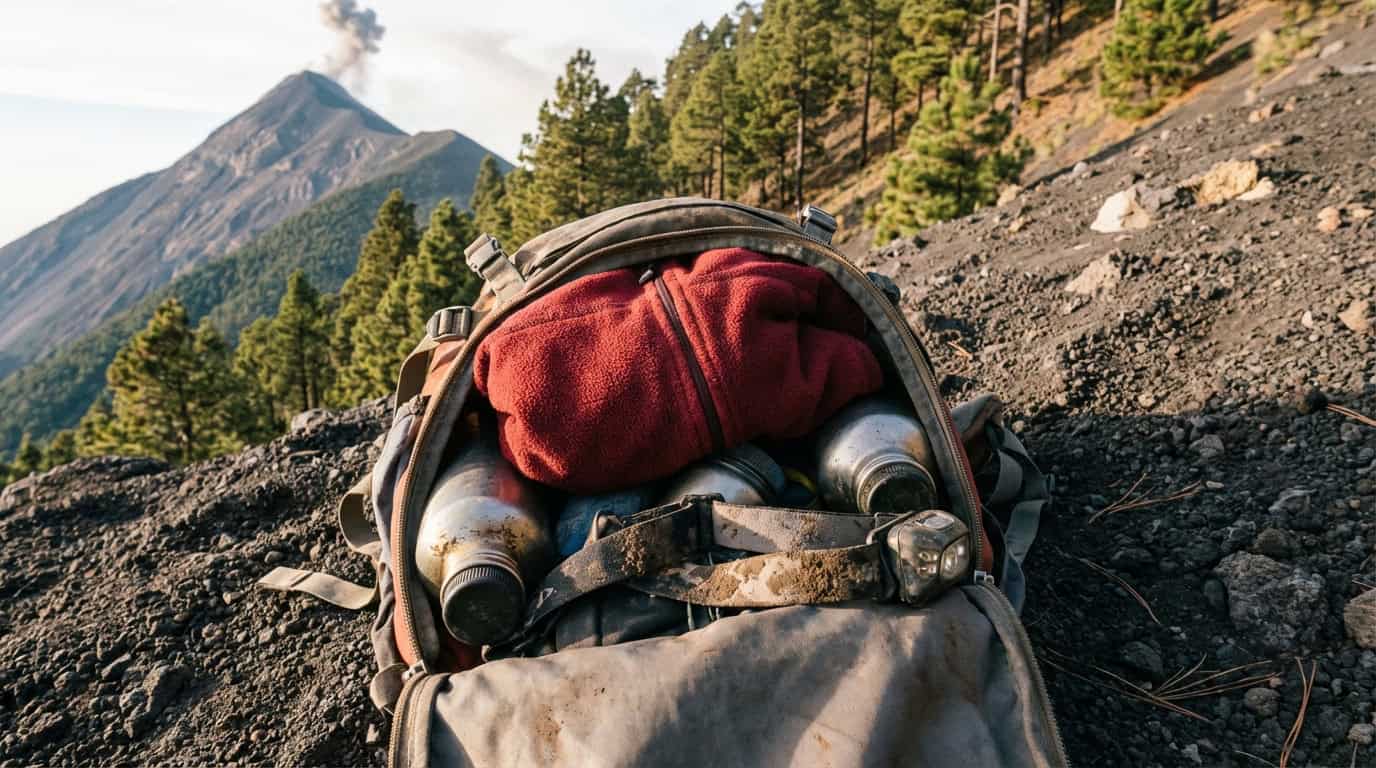
Packing for this adventure requires a careful balance since you will experience multiple microclimates on your way to the 3,976-meter summit. Even though Guatemala is a tropical country, the extreme altitude at the base camp brings freezing winds and icy overnight temperatures. I learned the hard way that you must bring heavy layers, including thermal underwear, a thick fleece, and a windproof winter jacket. A sturdy pair of broken-in hiking boots is absolutely essential to help you grip the slippery ash as you push toward the top. Do not forget to pack plenty of water and high-energy snacks to keep your spirits up during the hardest sections of the climb.
Standing at the peak after such a demanding journey completely washes away the exhaustion of the previous day. You will find yourself huddled under the stars while watching Volcán de Fuego violently erupt against the night sky. Every single step through the thick forest and loose gravel feels entirely justified when you witness glowing red lava shooting into the air. I promise that the burning in your legs will fade, but the memory of this incredible Guatemalan adventure will stay with you forever.
Why Conquering Acatenango is Completely Worth It
Looking back on the grueling inclines and the loose volcanic scree, I can confidently say that the Acatenango volcano hike is the most rewarding adventure you will find in Central America. Pushing through those fifteen to eighteen kilometers of steep trails is undeniably tough, but the payoff is unlike anything else on earth. When you finally reach base camp at 3,600 meters and drop your heavy pack, all the exhaustion instantly melts away. You are suddenly treated to the mesmerizing sight of Volcán de Fuego violently erupting right before your eyes. Watching those glowing red rivers of lava light up the night sky is a memory that will stay etched in my mind forever.
Waking up at dawn to conquer the final ascent to the 3,976-meter summit is the ultimate test for any true thrill seeker. The biting cold and the thin air make every step a battle, yet standing above the clouds at sunrise makes it all entirely worth the effort. I have tackled many treks around the world, but this specific two-day journey in Guatemala holds a completely unique spot on my bucket list. It bridges the gap perfectly between a physically demanding challenge and a deeply spiritual connection with the raw power of nature. There is simply no other high-reward trekking experience that compares to feeling the earth rumble beneath your boots as a neighboring peak explodes.
If you have been searching for that one unforgettable trip to push your boundaries, this is your sign to start planning. I encourage you to lace up your sturdiest hiking boots, pack plenty of warm layers, and embrace the beautiful struggle of this incredible mountain. The journey will test your physical limits, but it will also reward you with a profound sense of accomplishment. Grab your friends, book those tickets to Antigua, and prepare yourself for the premier outdoor adventure of a lifetime. I promise that once you witness the magic of Acatenango for yourself, you will be daydreaming about your next great climb before you even reach the bottom.
Frequently Asked Questions
1. How difficult is the Acatenango volcano hike?
I can honestly say this legendary trek takes serious mental grit and physical endurance. I pushed past steep inclines and loose volcanic rocks during a grueling 1,500-meter elevation gain. However, the moment I watched the sunrise above the clouds, every breathless step felt profoundly worth it.
2. How long does the Acatenango hike take?
I highly recommend planning for a two-day adventure to truly soak in the magic of this mountain. The first day involves a tough climb through diverse microclimates to reach our base camp at 3,600 meters. After a freezing but awe-inspiring night watching Volcán de Fuego erupt, we summit early the next morning before heading back down.
3. What kind of environments will I hike through?
I was amazed by how quickly the scenery changed as I climbed through four distinct microclimates. My journey kicked off in humid farmlands before moving into a dense cloud forest and then a stark alpine environment. You need to prepare for intense Central American sun at the bottom and freezing temperatures at base camp.
4. Will I actually see lava erupting?
Yes, and nothing truly prepares you for the raw power of watching the neighboring Volcán de Fuego erupt right in front of your tent. I will never forget the ground trembling beneath my boots as a glowing plume of lava shattered the pitch-black sky. It is simply the premier adventure experience in Guatemala.
5. What should I pack for an overnight stay at base camp?
Surviving the freezing temperatures at high altitude requires smart packing and warm layers. I packed thermal base layers, a thick fleece, a windproof jacket, and plenty of warm socks to survive the biting wind. A sturdy pair of hiking boots is also essential to conquer the loose volcanic scree on the trail.
6. Do I need to worry about altitude sickness?
Since base camp sits at an impressive 3,600 meters, altitude is definitely something I had to prepare for before my trek. I suggest spending at least two days in Antigua beforehand to let your body acclimatize to the thinner air. Drinking plenty of water and taking slow, steady steps up the mountain ensured my hike was a success.
7. Can a beginner do the Acatenango trek?
While it is a grueling climb, I have seen plenty of determined beginners successfully conquer this beautiful mountain. It just takes a solid preparation strategy, a slow pace, and plenty of mental toughness to push through the hardest sections. If you keep a positive mindset and take frequent breaks, you can absolutely experience this bucket-list adventure.