
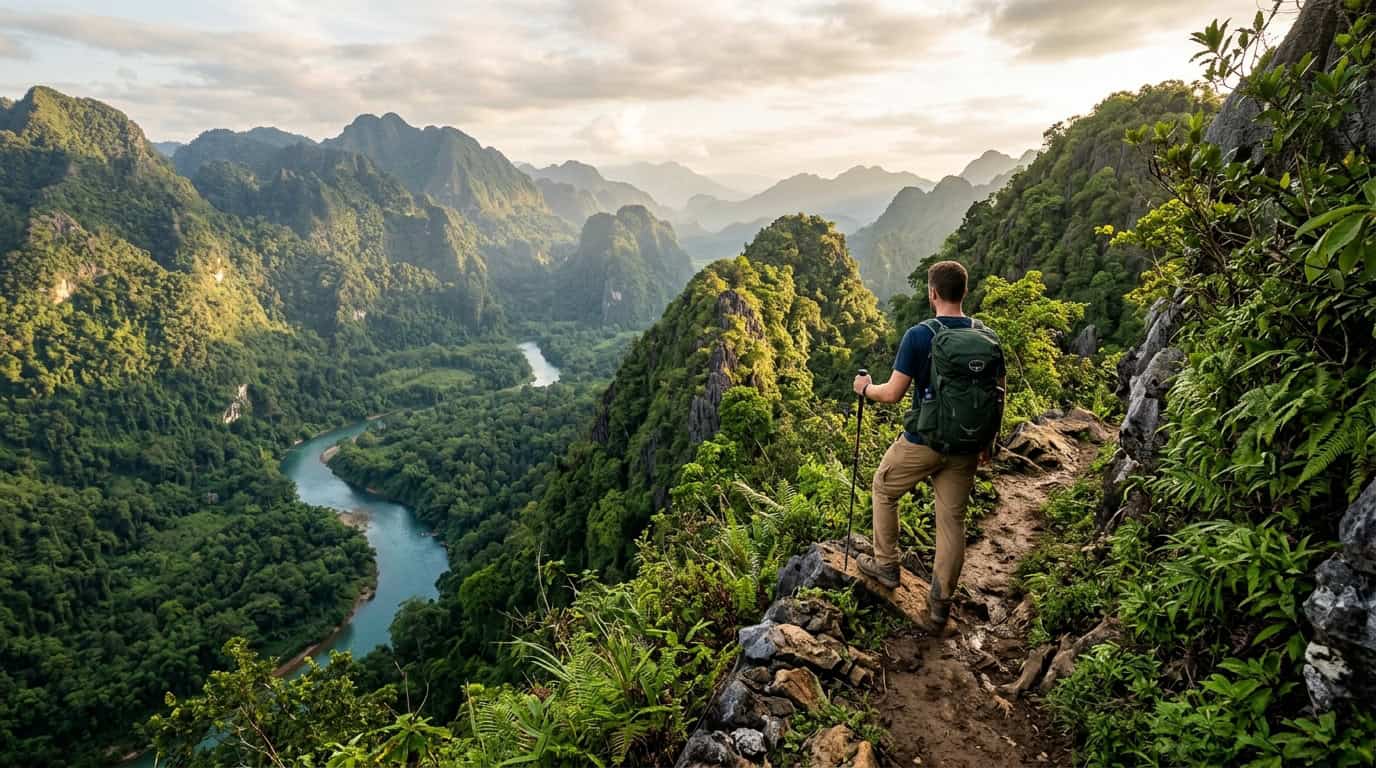
Stepping off the Lao-China Railway, the air feels different, thick with the scent of wild ginger and the promise of untouched horizons. I’ve found that the best laos trekking routes are no longer just about the physical challenge; they are a gateway into a world where time slows down to the pace of a village heartbeat. Whether you are navigating the misty karst peaks of Nong Khiaw or sharing a communal meal in a Khmu homestay, this is the year to trade the crowded tourist hubs for the rugged, authentic soul of Southeast Asia.
You don’t need a massive budget to experience some of the most dramatic landscapes on the planet, from the emerald canopy of the Nam Ha National Protected Area to the secret waterfalls of the Nam Ou River. I’ve spent weeks wandering these trails, and the magic lies in those quiet moments, watching the sea of clouds break over Phakao Peak or learning traditional weaving in a remote riverside community. Planning your journey here is about embracing the unexpected and letting the ancient footpaths of the Akha people lead you toward a truly transformative adventure.
Key Takeaways
- The Lao-China Railway has revolutionized travel to remote northern regions, allowing hikers to reach world-class trekking hubs like Luang Namtha and Nong Khiaw in a fraction of the previous travel time.
- Laos offers diverse, high-altitude landscapes ranging from the ancient tea forests of Phongsaly and the volcanic soil of the Bolaven Plateau to the steep limestone karst peaks of Nong Khiaw.
- Hiring local guides is essential for navigating the dense, rugged jungle terrain safely and facilitating authentic cultural exchanges within remote Khmu and Akha village homestays.
- The optimal trekking season occurs between November and February, offering dry trails and clear views of the signature ‘sea of clouds’ from mountain summits.
Epic Jungle Treks In Luang Namtha And Nam Ha
If you are looking to trade the slow boat for a pair of muddy boots, the rugged trails of Luang Namtha offer the most authentic mountain adventure in Laos. I remember the air turning thick and cool as I stepped into the Nam Ha National Protected Area, where the dense canopy instantly swallows the sounds of the modern world. The Nalan Trail is a particular favorite of mine because it challenges your fitness while rewarding you with sightings of rare birds and the occasional footprint of a clouded leopard. Navigating these steep, vine-draped ridges requires some grit, but the sense of isolation is exactly what makes this region so special. It is a world away from the tourist hubs, offering a raw look at the country’s primary rainforest.
Staying in remote Khmu and Akha villages along the route transformed my trek from a simple hike into a profound cultural exchange. I spent one evening huddled around a communal fire in a traditional wooden longhouse, sharing a simple meal of sticky rice and forest herbs with my hosts. These communities have preserved their ancestral traditions for generations, and their hospitality is as warm as the homemade rice whiskey they often share with guests. You will wake up to the sound of roosters and the mist rolling off the Nam Ha River, feeling a deep connection to the land that a hotel could never provide. It is a humbling experience that reminds you why slow, intentional travel is so rewarding.
Planning your expedition has become significantly easier thanks to the Lao-China Railway, which whisks you from Luang Prabang to the far north in just a couple of hours. I recommend booking a multi-day trek that includes jungle camping to truly immerse yourself in the nocturnal symphony of the forest. Make sure to pack sturdy, waterproof hiking shoes and plenty of insect repellent, as the tropical terrain can be unforgiving during the rainy season. Most routes involve river crossings and slippery karst climbs, so traveling with a local guide is essential for both safety and navigating the complex network of trails. This is the ultimate destination for active travelers who want to see the wild, untamed heart of Southeast Asia before the rest of the world catches on.
Karst Peaks And Waterfall Trails Of Nong Khiaw
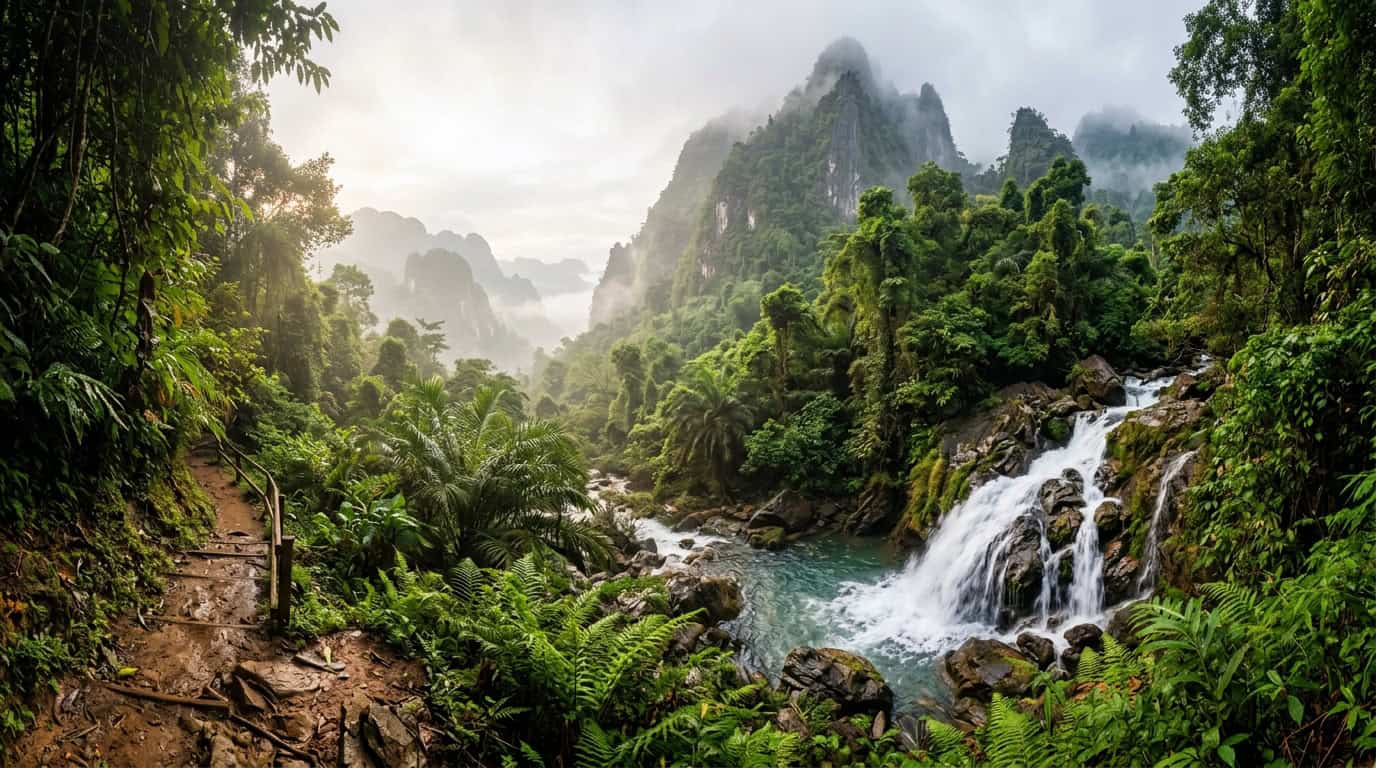
If you are searching for that quintessential sea of clouds moment, waking up early to scale Phakao Peak is an absolute necessity. The trail is undeniably steep and will certainly test your quad strength, but reaching the summit as the sun begins to crest over the jagged karst horizon makes every drop of sweat worth it. From the top, the morning mist clings to the valleys like a thick white blanket, leaving only the dark limestone spires poking through the surface. It is a surreal, quiet experience that feels worlds away from the bustling tourist hubs, offering a raw connection to the rugged landscape of Northern Laos.
For a completely different pace, the 100 Waterfalls hike offers an immersive journey through lush jungle terrain that was only discovered by explorers relatively recently. Instead of a traditional dirt path, you will spend much of the day hiking directly up the cascading falls, using your hands and feet to navigate the refreshing, crystal-clear pools. This route is best accessed by a scenic boat ride up the Nam Ou River, providing a wonderful transition from the water to the deep green canopy. It is an adventurous, tactile way to experience the rainforest while learning about the local ecosystem from guides who grew up in these very mountains.
Planning your visit to Nong Khiaw has never been easier thanks to the improved connectivity of the Lao-China Railway, which allows you to reach this remote paradise much faster than in years past. I recommend staying in a local guesthouse overlooking the river to fully embrace the slow travel lifestyle that defines this region. Make sure to pack sturdy hiking boots with excellent grip, as the limestone trails can be slippery, especially after a light morning rain. By combining these challenging climbs with authentic village interactions, you get a true sense of the wild, untamed beauty that makes trekking in Laos so special.
High Altitude Authenticity In The Phongsaly Tea Forests
For those of you craving a journey that feels like a step back in time, the mist-covered peaks of Phongsaly offer an experience that few travelers ever witness. As I hiked through the ancient tea forests, some of which feature trees over 400 years old, the air grew cool and crisp, a refreshing change from the tropical humidity below. These are not your typical manicured tea plantations, but rather wild, towering trees that form a unique canopy above the forest floor. We spent our afternoons learning the delicate art of hand-picking leaves with local villagers, a tradition that has remained unchanged for centuries. The earthy aroma of fermenting tea leaves followed us through the trails, grounding us in the rugged beauty of the northernmost tip of Laos.
Staying in the high-altitude villages of the Akha people provides a raw, unfiltered look into a culture that remains fiercely authentic. I remember arriving at a remote settlement just as the sun dipped behind the karst mountains, where we were welcomed into a traditional wooden home for a communal meal. Life here is dictated by the seasons and the harvest, and the lack of modern distractions allows for deep, meaningful connections with your hosts. To reach these communities, you can now take the Lao-China Railway to the northern hubs before jumping on a local transport to the trailhead. I recommend packing layers for the chilly nights and bringing a sturdy pair of boots for the steep, rewarding climbs that lead to these cloudswept summits.
Mist Shrouded Coffee Loops Of The Bolaven Plateau
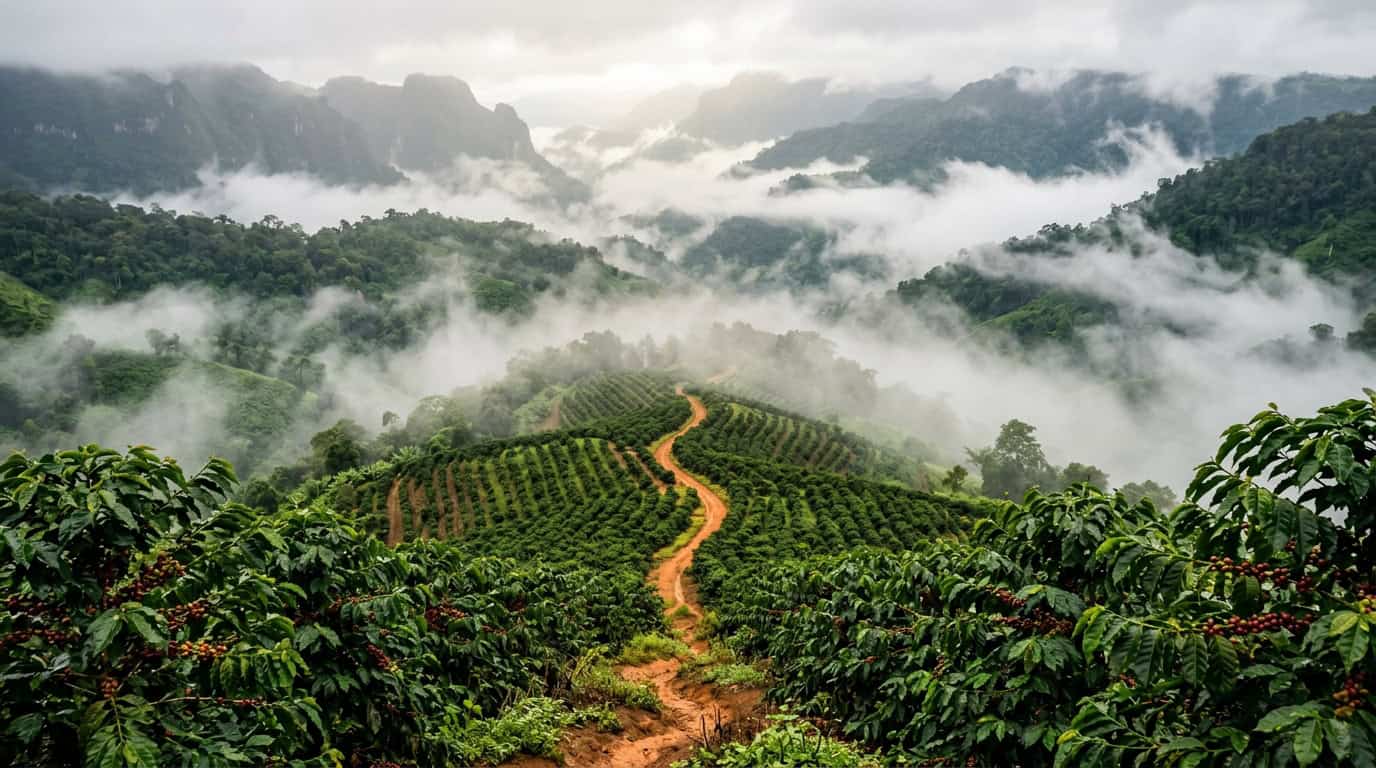
Stepping onto the Bolaven Plateau feels like entering a different world where the humid heat of the Mekong lowlands is replaced by a crisp, cool breeze. My trek began in the early morning mist, winding through emerald-green coffee plantations where the scent of ripening beans hangs heavy in the air. The terrain here is rugged and lush, offering a glimpse into the agricultural heart of southern Laos while challenging your legs with undulating volcanic soil paths. Navigating these trails requires a bit of stamina, but the reward of seeing local farmers harvesting their crops against a backdrop of rolling hills is worth every step. It is the perfect escape for those of us looking to trade the typical tourist trail for a more authentic, slow-paced mountain adventure.
The highlight of this loop is undoubtedly the trek toward the thunderous Tad Fane waterfalls, where twin silver ribbons of water plunge over three hundred feet into a verdant gorge. Reaching the viewpoints involves hiking through dense jungle canopy, listening to the calls of hidden birds and the distant roar of the falls growing louder with every mile. I found that the mist here creates a magical, almost ethereal atmosphere that clings to the mossy rocks and giant ferns surrounding the trail. Standing at the edge of the lookout, watching the clouds swirl around the massive drop, provides a perspective on the raw power of the Lao wilderness that you simply cannot get from a bus window.
For those planning to tackle these trails, I recommend starting your journey in Paksong and hiring a local guide to help navigate the more remote plantation paths. These guides offer incredible insight into the different varieties of Arabica and Robusta coffee, often inviting you to sample a fresh brew at a village homestay along the route. Make sure to pack a light rain jacket and sturdy hiking boots, as the plateau weather can be unpredictable and the trails often get slippery near the water. Ending the day in a remote village, sharing a meal with a local family while the mist settles over the coffee trees, is an experience that truly captures the soul of the southern highlands.
Reaching Remote Trails via High-Speed Rail
Navigating the rugged mountains of Northern Laos has been completely transformed by the Lao-China Railway, making these remote trekking hubs more accessible than ever before. You can now swap the grueling ten-hour bus rides for a sleek, high-speed train that whisks you from Vientiane to Luang Prabang or Muang Xai in a fraction of the time. While in the area, you might consider the ultimate Luang Prabang itinerary to balance your rugged mountain adventure with some cultural exploration. I recommend booking your tickets a few days in advance through the official app to ensure you secure a seat during the busy trekking season. Once you hop off the train, local transport options are always waiting to take you the rest of the way into the lush Nam Ha National Protected Area or the riverside charm of Nong Khiaw.
While the famous slow boat and the golden temples of the cities have their own magic, the true soul of Laos is found along the muddy trails and narrow ridgelines of the highlands. Choosing the path less traveled means waking up to a sea of clouds in a remote Akha village or sharing a traditional meal with a Khmu family who has lived in harmony with the jungle for generations. These landscapes offer a rare sense of raw adventure that is becoming harder to find in Southeast Asia, providing a deep connection to nature and culture. Put on your sturdiest boots, embrace the humidity of the rainforest, and let the wild beauty of the Lao backcountry redefine what travel means to you.
Frequently Asked Questions
1. When is the best time of year to explore the trekking routes in Laos?
The optimal trekking season is between November and February when the air is cool and the trails are dry. You will enjoy crisp mornings and clear views of the karst peaks without the intense heat or muddy paths of the monsoon season.
2. What should I pack for a multi day trek in the Nam Ha National Protected Area?
Focus on lightweight, moisture-wicking clothing and a sturdy pair of broken-in hiking boots to handle the steep ridges. Do not forget a high-quality insect repellent and a reusable water bottle, as staying hydrated in the humid jungle canopy is essential.
3. Do I need a guide to hike the trails around Luang Namtha and Nong Khiaw?
Hiring a local guide is highly recommended for both safety and cultural immersion. These experts navigate the dense vines with ease and act as a vital bridge between you and the remote Khmu and Akha communities you will visit along the way.
4. What can I expect from a village homestay experience during my trek?
You will find yourself sharing communal meals and sleeping in traditional wooden homes that offer a raw, authentic look at rural life. It is a beautiful opportunity to witness ancient traditions like weaving while supporting the local economy of the riverside villages.
5. Are the trekking routes in Northern Laos physically demanding?
The terrain can be quite rugged with steep inclines and vine-draped paths that require a moderate level of fitness. While some routes like the Nalan Trail are challenging, the reward of watching a sea of clouds break over the peaks makes every ounce of effort worth it.
6. How do I reach the remote trekking hubs like Luang Namtha?
The Lao-China Railway has made these northern regions much more accessible, allowing you to swap the city for the jungle in just a few hours. Once you arrive, local transport can take you to the trailheads where your mountain adventure truly begins.