
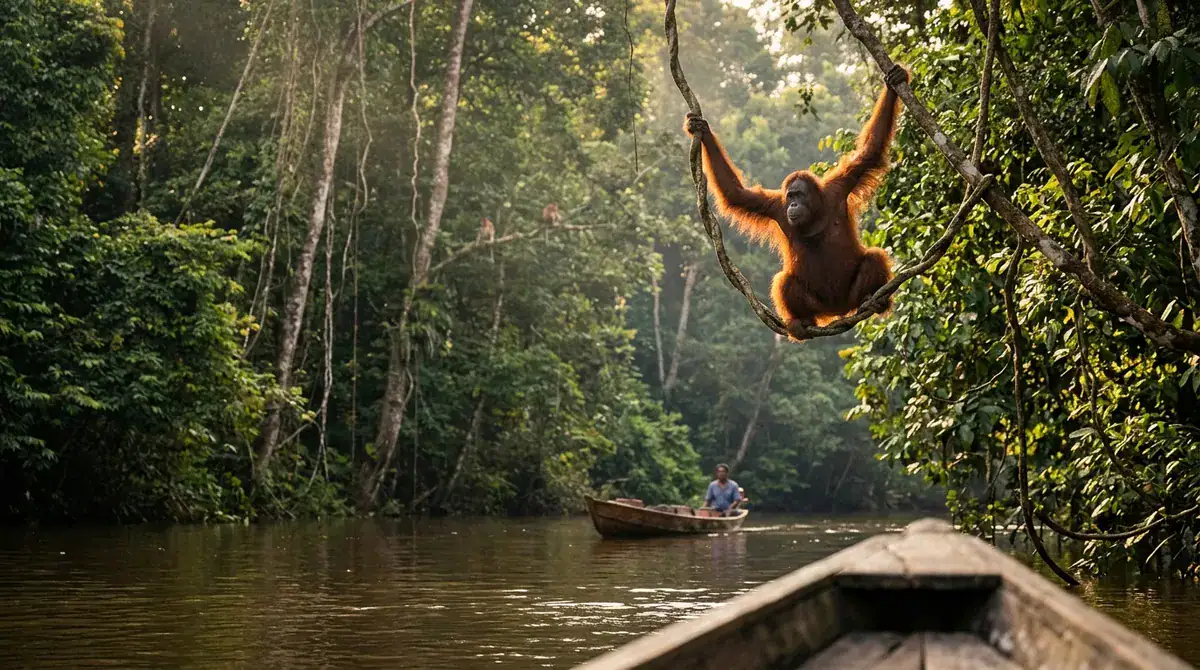
A practical Borneo orangutan itinerary in Sabah starts in Sandakan at the Sepilok Orang Utan Rehabilitation Centre, a rehabilitation centre established in 1964 about 23 km from the city centre. This Borneo orangutan itinerary works best when you use that first stop to see how rehabilitation works, since feeding sessions run at 10:00 am and 3:00 pm and fit neatly into a single day. Watching young orangutans learn to climb and forage gives the rest of the trip its context, because the animals you meet later in the wild are part of the same story.
From Sandakan, the route continues overland to the Lower Kinabatangan, roughly 1.5 hours away by road. The Sabah Tourism Board recommends at least three days in this area, and notes that a longer stay improves your chances of seeing wildlife. Those days are spent on boat trips along the river, walking forest trails and watching the wetlands and their birds, reptiles and mammals. Wildlife viewing here calls for care. Follow the rules posted at each site, and keep the IUCN’s best-practice guidance for great apes in mind, since it sets minimum viewing distances, mask use and time limits. Build your own route around that respect for the animals, and the forest will reward you with the kind of sightings you will remember for years.
Key Takeaways
- Kota Kinabalu lies far from Sandakan, so travelers choosing it as a base need a separate transfer to reach the orangutan stops.
- Wildlife viewers should follow the stricter of site rules or IUCN guidance, which sets at least 7 metres from great apes.
- Sepilok sightings are never guaranteed, because wild orangutans sometimes skip the feeding platform when forest fruit is plentiful.
- Kinabatangan Wetlands Resort is reached by boat, so travelers should plan around its noon boat departure.
- Danum Valley Conservation Area requires advance arrangements for permits, transport, or lodging, so plan well ahead.
Planning a Sandakan to Kinabatangan Orangutan Route
Sandakan is the natural place to begin. Sepilok is close by, and the city sits on the route that leads onward to the Lower Kinabatangan, so you can move from rehabilitation to wild forest without backtracking.
A practical rhythm starts with arriving in Sandakan and spending an afternoon on the Sandakan Heritage Trail. The walk takes about an hour and passes Masjid Jamik, the Pryer Memorial, the Hundred Steps and Agnes Keith House, so it is an easy way to learn the town before the forest takes over.
Agnes Keith House is open from 9 am to 5 pm daily. Admission is RM15 for non-Malaysian guests and RM2 for Malaysian guests, so check which rate applies to you before you head in.
On the second day, go to Sepilok and choose the feeding session that suits your schedule. Leave the afternoon free for the road to the river, which gives you a relaxed start to the forest days.
Count the days on the river before you add any extra stops. Three days is the minimum, and every additional morning or evening on the water gives the wildlife another chance to appear. A trip that adds a fourth or fifth night along the river will often do more for your sightings than a rushed visit to a second town.
If you want beaches and night markets, Kota Kinabalu can serve as an alternative base. It lies far from Sandakan, though, so you will need a separate transfer to reach the orangutan stops, and that adds planning time to the trip. Our itinerary guides cover travel times, fares and tips for routes like this one, including the Uruguay itinerary that links Montevideo, Colonia del Sacramento and the Atlantic coast.
Watching Orangutans Responsibly: Distance, Masks and Time
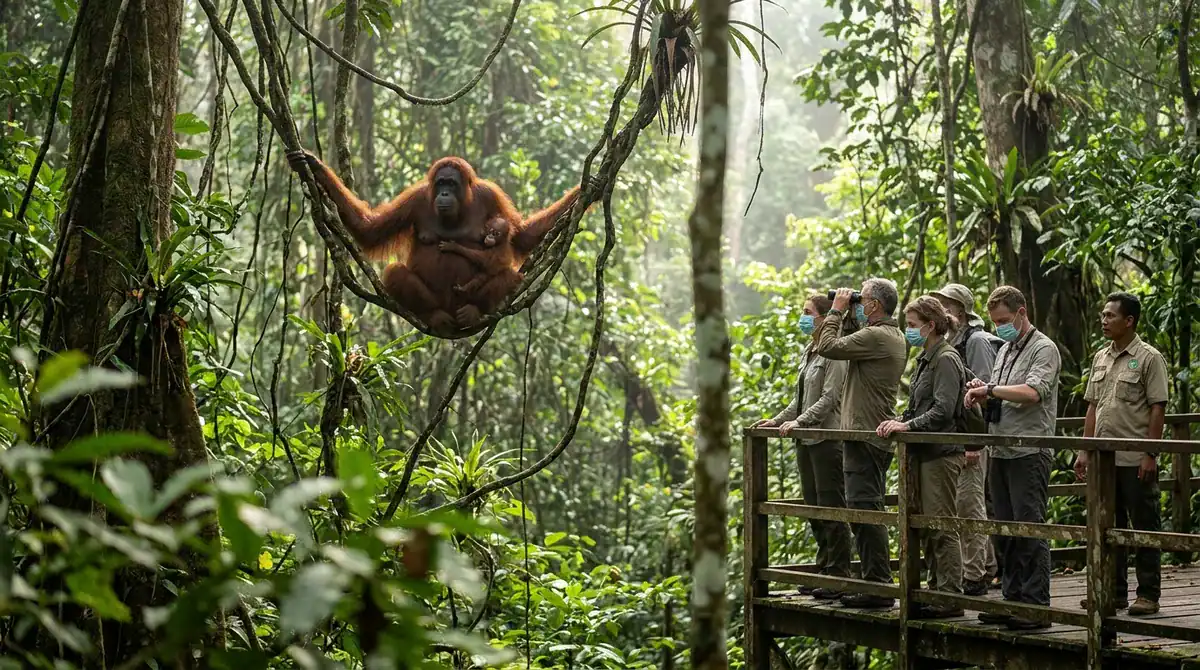
Two different kinds of rules shape how you watch great apes, and it helps to know which is which. Individual sites post their own visitor instructions, while the international standard comes from the IUCN’s 2015 Best Practice Guidelines for Health Monitoring and Disease Control in Great Ape Populations. Those guidelines recommend staying at least 7 metres from great apes, wearing a surgical mask within 10 metres, and limiting close visits to no more than one hour.
When site instructions and IUCN guidance differ, follow the stricter rule. Some centres ask visitors not to touch orangutans, because human diseases can spread to them. Rangers and guides on the ground also know how the animals are moving on a given day, so their instructions come first, even when they feel more cautious than the printed guidance.
In 2025, the IUCN Species Survival Commission published an update to its great-ape health guidance that adds newer information on health concerns, disease surveillance and prevention. It is a reminder that a passing cold or cough can matter as much as the distance you keep.
Guided walks and boat cruises are the safest way to see wildlife in this region. A good guide knows where the animals are, how close is appropriate, and when to turn the boat around. Ask your guide before each outing how far away you should stay.
A few habits make a real difference on the water and in the forest. Never feed wildlife, since food changes animal behaviour and can make animals depend on people. Keep your voice low, and let the animals decide whether to approach rather than moving toward them. A patient pause often brings a closer look than a rushed chase.
Sepilok Orangutan Rehabilitation Centre: Orphans Learning to Climb
Sepilok sits inside the Kabili-Sepilok Forest Reserve. You walk raised walkways through the forest to a feeding-platform viewing area, then visit the outdoor nursery, where young orangutans practise climbing. Briefings and visitor information explain how orphaned animals are cared for and prepared for life in the forest. This is a walkway visit, not a river cruise or a guided jungle trek.
Sightings are never guaranteed. Wild orangutans sometimes skip the platform when fruit is plentiful in the forest, so plan a second visit or an extra day in the region if you want a fuller chance. A travel guide estimates that one visit takes three to four hours, and that visiting both daily feedings can fill a day.
Sabah Tourism listed admission in February 2025 at RM30 for non-Malaysian adults and RM15 for non-Malaysian children, with RM5 and RM2 for Malaysian adults and children. Because prices and opening hours change, check the official site for current details. Jungle lodges sit within 1 km of the centre, which makes an early arrival easy.
Sepilok suits first-time orangutan watchers, families with children, and photographers who want a close look at the animals in a setting shaped by conservation work.
At a glance
- Best for: first-time orangutan watchers, families and photographers who want a close look at the animals
- Time Needed: three to four hours for one visit, or a full day to take in both feeding sessions
- Entry Fee or Permits: RM30 for non-Malaysian adults and RM15 for non-Malaysian children; RM5 and RM2 for Malaysian adults and children (listed February 2025)
- Getting There: about 40 minutes by road from Sandakan city centre
- Accommodation: jungle lodges within 1 km of the centre
Kinabatangan River: Dawn Cruises Through Orangutan Country
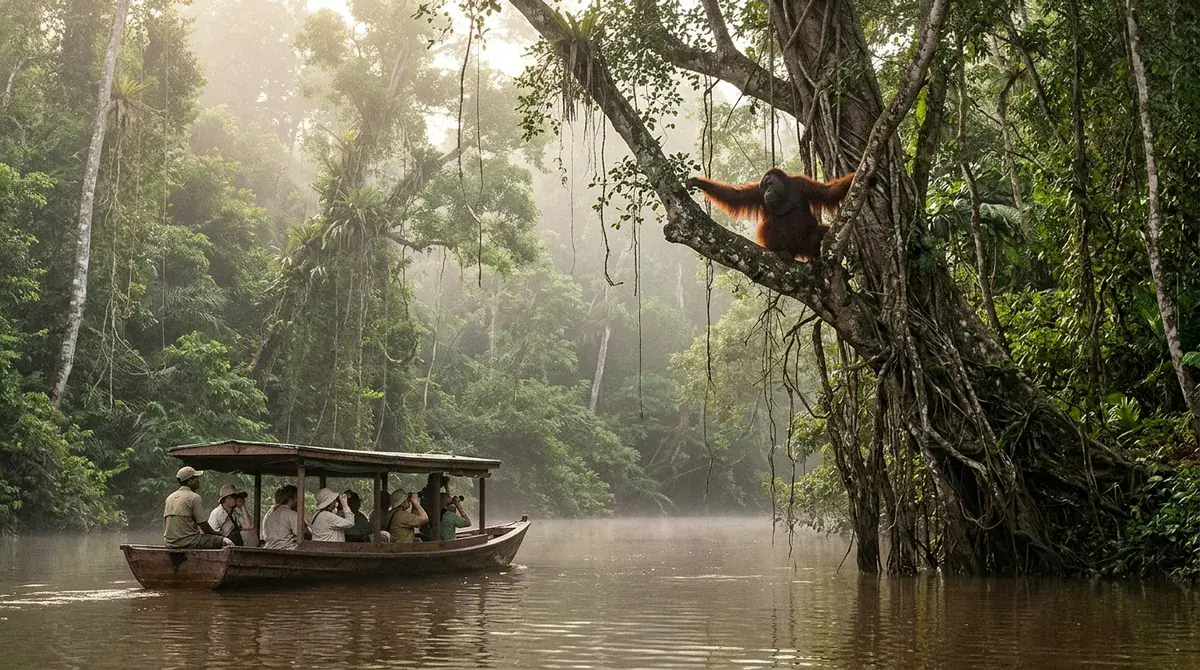
Most of your time in the Lower Kinabatangan is spent on the water. Guided boat cruises run at dawn and dusk, and some lodges add night cruises, jungle walks and night walks. Lodges and community tourism bases around Sukau, Bilit and Abai range from backpacker-level to luxury, and packages often bundle accommodation, transport, meals and guided tours. Hornbill Lodge notes that its river cruises are not physically demanding, while its walks take an hour or more over uneven ground.
Along the banks you may see orangutans, proboscis monkeys, hornbills and crocodiles. Pygmy elephants and wild orangutans are never guaranteed, so think of each cruise as an invitation rather than a promise. The river is a Ramsar wetland, and early mornings are often the quietest and most rewarding time to drift slowly past the trees with a guide who knows where the animals gather.
The conservation story runs deep here. In Sabah, 26,000 hectares were gazetted as the Kinabatangan Wildlife Sanctuary under the Wildlife Conservation Enactment 1997. The wider Kinabatangan Biosphere Reserve, nominated in 2025, covers 413,867 hectares and is home to 127 mammal, 315 bird, 100 reptile and 33 amphibian species, 64 of which are globally threatened. Indigenous Orang Sungai communities live along the river alongside this wildlife.
Photographers and travelers who enjoy slow, boat-based days will feel most at home here. If you want a side trip, Gomantong Cave lists admission at RM30 for international adults and RM15 for visitors under 18. Commercial or professional photography and filming there require permission and a permit, so plan that before you pack your gear.
At a glance
- Best for: wildlife photographers and travelers who enjoy slow, boat-based days
- Best Season: year-round, with the wettest period usually between November and February and no closed season
- Time Needed: at least three days
- Getting There: about 1.5 hours overland from Sandakan
- Accommodation: lodges from backpacker-level to luxury, often sold as packages
Sukau Rainforest Lodge: A Riverside Base for Night Cruises
Sukau Rainforest Lodge sits on the banks of the Kinabatangan River, and that position makes it a practical base for a three-day or longer river stay. Your mornings and evenings are spent on boat safaris, when wildlife is more likely to be along the bank. The optional night cruise searches for crocodiles, owls, kingfishers and proboscis monkeys sleeping in the trees.
On land, boardwalks and guided jungle walks take you into the forest, with conservation-focused interpretation running through your stay. The optional RASIG Wildlife Trek starts with a 15-minute boat ride and follows a Bornean elephant migration path at medium difficulty. It closes during the monsoon and is cancelled if elephants are near the land. A separate orangutan-and-langur outing combines a morning cruise with a guided boardwalk at Gomantong Cave, where sightings depend on patience and a bit of luck.
Expect orangutans, proboscis monkeys, Bornean elephants, macaques, hornbills and crocodiles, but the wildlife roams freely, so no sighting is guaranteed. Rain can fall at any time of year, so pack for wet conditions. The lodge’s FAQ recommends at least three nights to give the wildlife more chances, and its packages are bundled with meals and river cruises rather than sold as room-only stays.
This lodge suits travelers who want one comfortable base and plenty of guided boat time, especially wildlife watchers and photographers who prefer a remote, lodge-centred stay to a series of day trips.
At a glance
- Best for: lodge-centred stays with plenty of guided river cruises and night safaris
- Best Season: year-round, though rain is possible throughout the year
- Time Needed: at least three nights for the best wildlife chances
- Getting There: from Sandakan, with the transfer arranged overland or by river depending on your itinerary
- Accommodation: three-day, two-night packages with meals and river cruises included
Kinabatangan Wetlands Resort: Mangroves and Nipah Palms
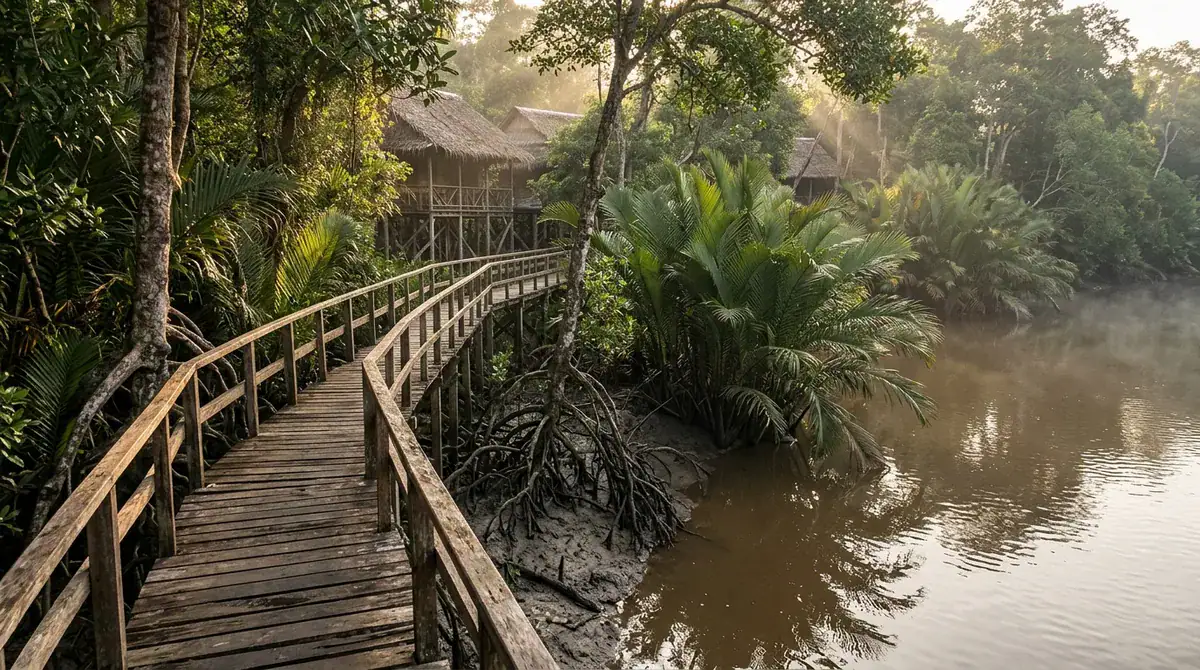
The Kinabatangan Wetlands Resort sits in the Lower Kinabatangan-Segama Ramsar wetland, and you reach it by boat, past fishing villages and through mangroves until the timber villas appear among nipah palms. The Ramsar information sheet describes 78,803 hectares of protected mangrove, brackish and peat-swamp forest and wet grassland, and records orangutans and proboscis monkeys there. Sightings are not guaranteed, but this habitat gives you a real chance to see them.
The package centers on guided river cruises and a night walk along the resort’s boardwalks, so you stay on raised planks rather than the forest floor, and proper shoes are enough. The pace is far gentler than jungle trekking, which makes it a good fit if you want to rest between outings. The isolation is real, since the approach is by boat through the mangroves. Chalets are air-conditioned, and electricity runs around the clock from solar panels and generators.
This stop suits slow travelers, photographers and wetland birders who would rather watch the water than cover ground. You can add a Sepilok visit before the noon boat departure. The resort’s published rates list a two-day, one-night package at MYR 1,810 per person and a three-day, two-night package at MYR 2,615, so check with the resort for current rates.
At a glance
- Best for: slow travelers, photographers and wetland birders
- Getting There: by boat, with land and boat transfers included in the packages
- Time Needed: from one night, with two-day and three-day packages
- Entry Fee or Permits: the published rates list no separate entry fee or permit charge
- Accommodation: air-conditioned timber chalets among nipah palms
Deramakot Forest Reserve: A Working Forest for Rare Mammals
Deramakot is a working forest, not an untouched national park. The Sabah Forestry Department manages its 55,507 hectares of mixed dipterocarp forest using reduced-impact logging. In 2024, Deramakot regained Forest Stewardship Council certification for its forest management after a pandemic-related disruption.
Your days here revolve around wildlife. You arrange guided wildlife drives, including after-dark spotlighting, and fill the mornings with walks and jungle treks. Wild orangutans, pygmy elephants and proboscis monkeys may appear, but no sighting is ever assured. Recent visitors have also reported gibbons, civets and flying squirrels on night drives, so patience matters as much as luck.
Getting there takes effort. Only four-wheel-drive vehicles can reach the reserve, and the estimated drive from Kota Kinabalu to the base camp is about seven hours. You must book through local tour operators in advance. Accommodation is basic, with a three-bedroom chalet or dormitory rooms with bunk beds, and bedding, towels, soap and shampoo are provided. A 2018 mammal-watching trip report found June to September generally favorable, while heavy rain from November to February can make driving difficult. For current availability and details, check with the local operators.
Photographers and wildlife watchers who don’t mind early starts and night drives will get the most from Deramakot.
At a glance
- Best for: wildlife photographers and watchers comfortable with early starts and night drives
- Best Season: June to September, generally favorable for mammal activity
- Time Needed: multiple nights, for the best chance to see the range of mammals
- Getting There: four-wheel-drive only, about seven hours by road from Kota Kinabalu to base camp
- Accommodation: basic on-site lodging only, so pack for simple conditions
Danum Valley Conservation Area: Near-Pristine Lowland Rainforest
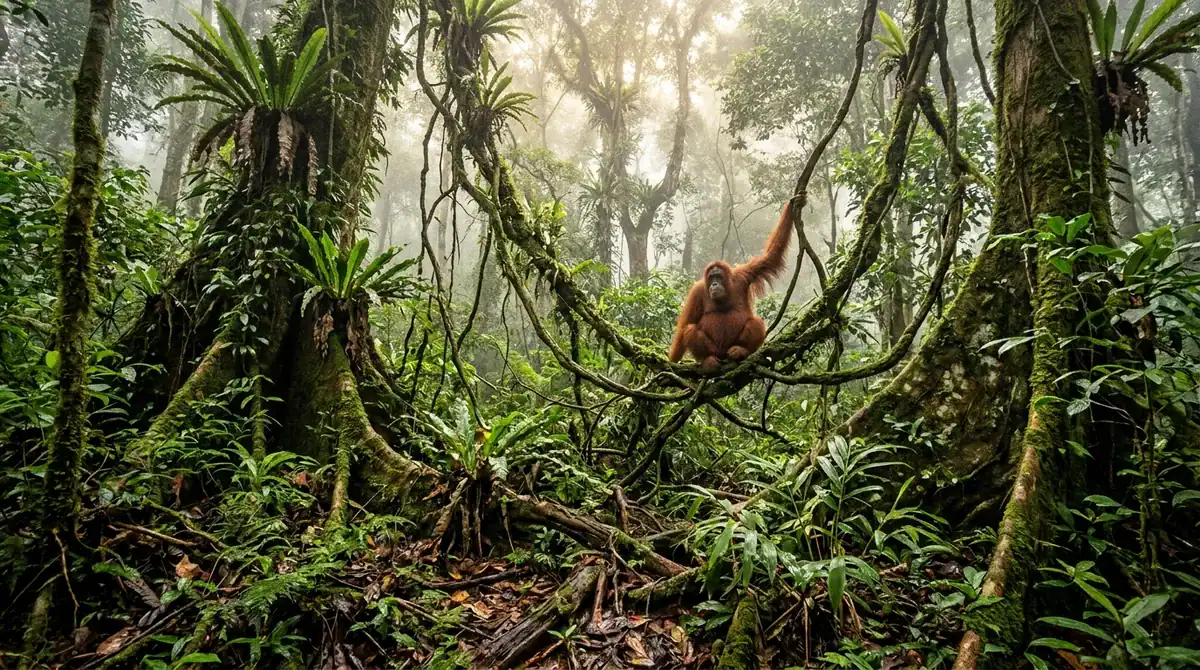
Danum Valley Conservation Area is a Class I Protection Forest Reserve about 80 km from Lahad Datu, and the journey in is part of the adventure. The last stretch is a roughly 2.5-hour drive from Lahad Datu airport over an unpaved gravel road. Once you arrive, your days revolve around guided jungle trekking and nature walks, with birdwatching, river swimming, waterfalls and night safaris filling the gaps.
Wild orangutans, clouded leopards and Bornean pygmy elephants all live in this forest, but no sighting is promised, so treat each walk as an open invitation. The air is hot and humid, and rain can fall in any month, so pack quick-drying layers and sturdy boots. Trails vary in difficulty, and a guide sets the pace. The sense of wilderness builds with every hour on the trail.
The conservation area is known for its primary rainforest, and it has a research base to match. The Danum Valley Studies Centre was established in 1986 for research, education and recreation, so the forest is studied as well as walked. Its lowland rainforest stretches across a wide area and remains near-pristine.
Plan well ahead. Permission, transport and accommodation must be arranged in advance, and vehicle access is limited to permitted vehicles. Packages run from three days and two nights to five days and four nights, so confirm current details with the operators before you book. This is a place for serious nature lovers, researchers at heart and travelers who want primary forest rather than views from a boat.
At a glance
- Best for: serious nature lovers, researchers at heart and travelers who want primary forest
- Best Season: March to October generally has slightly lower recorded rainfall, though rain falls throughout the year
- Time Needed: multi-night stays only, given the long drive in from Lahad Datu
- Getting There: about 2.5 hours by road from Lahad Datu airport, over an unpaved gravel road
- Accommodation: lodges, Studies Centre hostels, resthouses, chalets and camping
Borneo Rainforest Lodge: Canopy Walks Inside Danum Valley
Borneo Rainforest Lodge sits deep inside the Danum Valley Conservation Area, a 43,800-hectare expanse of protected virgin rainforest. The drive from Lahad Datu, about 97 km away, takes roughly two and a half hours, mostly on an unsealed gravel road. Access has to be arranged in advance, including permissions, transport and accommodation, and only officially registered vehicles can enter.
Your days are built around guided jungle walks on rainforest trails, which usually last two to three hours and are rated mild to moderate. You can also visit the canopy walkway, which hangs 27 metres above the forest, take in a viewpoint, go river tubing or swimming, and join guided night drives or night walks. Orangutans live in the area, but they travel high through the canopy, and the lodge says sightings happen by chance. This is a forest stay, not a dedicated orangutan viewing centre, so pack for the jungle itself: hot, humid weather, frequent rain and slippery trails are the norm, so bring waterproof layers, quick-dry clothing and boots with good grip.
What sets Danum apart is the forest itself. Few places in Sabah let you spend nights among such intact lowland rainforest, and the lodge’s own FAQ suggests three nights as an ideal stay. Pair it with a river base such as the Kinabatangan, and you get two very different sides of Borneo on one route. This lodge suits travelers who want real comfort after a day of trekking, along with direct access to primary rainforest.
At a glance
- Best for: travelers who want lodge comfort with access to primary rainforest
- Time Needed: three nights is ideal, and five to seven nights suits visitors with special interests
- Getting There: arranged transfer from Lahad Datu; the lodge is about 97 km away
- Accommodation: a remote lodge inside Danum Valley Conservation Area, reached by arranged transport
Tabin Wildlife Reserve: Mud Volcanoes in Eastern Sabah
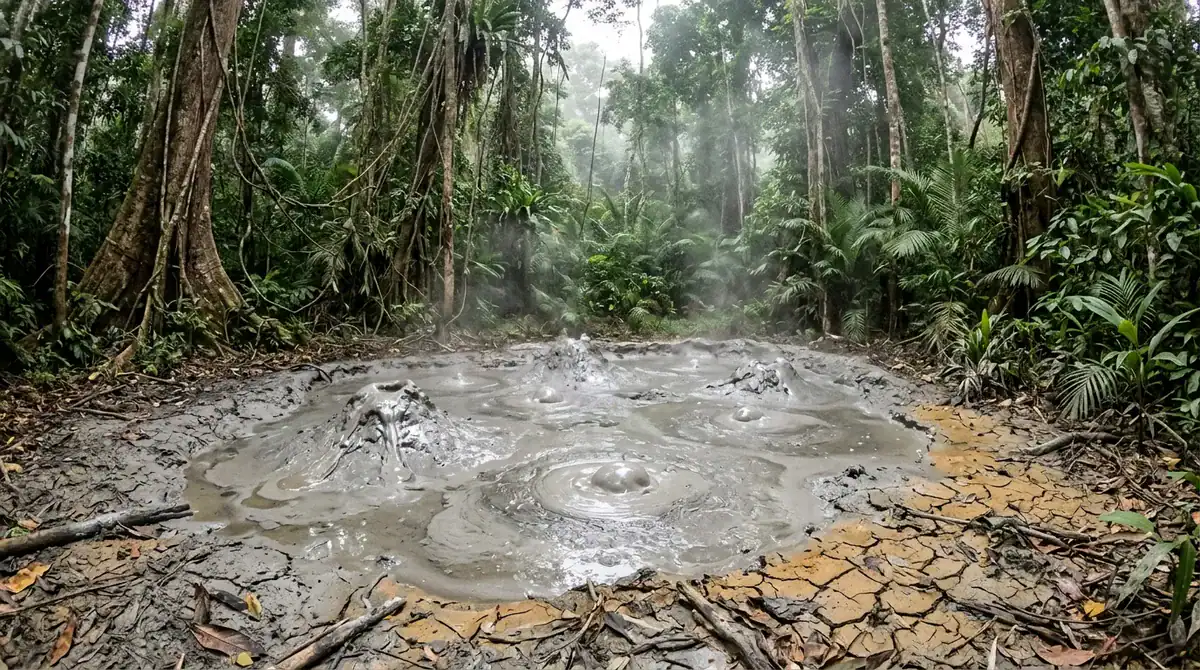
Tabin Wildlife Reserve is a large protected lowland forest in eastern Sabah, far from the busier river routes further west. The reserve covers 111,971 hectares and is reached through Lahad Datu. Tabin Wildlife Resort sits within the reserve, so your days are built around guided jungle walks, birdwatching and night activities.
The signature stop is the Lipad Mud Volcano, a mineral-rich salt lick that wildlife visits, reached by a 20-minute jungle trek. The Lipad Waterfall walk covers about 3 kilometres of regenerating forest and ankle-deep mud, taking roughly 1.5 hours at a fairly easy pace. The mud volcano’s observation tower is temporarily closed for maintenance, but you can still view the volcano from ground level. Some itineraries add a visit to an Orang Utan Release Centre.
Orangutans, Bornean pygmy elephants, proboscis monkeys, hornbills and nocturnal animals may all appear, but none of them is guaranteed. Phone and internet coverage can be limited, and the trails are muddy, so this suits travelers comfortable with remote rainforest. The resort is about 45 kilometres from Lahad Datu Airport. The operator lists a two-day, one-night package from RM2,190 per person, including guided activities, return transfers from Lahad Datu, and the conservation-area entry permit and taxes.
Tabin suits wildlife watchers, birders and photographers who want a less-visited reserve and an unusual landscape. Visits are possible year-round, but the lodge recommends March through October for better wildlife sightings.
At a glance
- Best for: birders and wildlife watchers seeking quieter forest and striking mud volcanoes
- Best Season: March through October for better wildlife sightings, though visits are possible year-round
- Entry Fee or Permits: no special permit required; the two-day package includes the conservation-area entry permit and taxes
- Time Needed: a two-day, one-night minimum, with a four-day itinerary for a fuller programme
- Getting There: about 45 km from Lahad Datu Airport, with a transfer of around 1 hour 10 minutes
- Accommodation: Tabin Wildlife Resort
Sungai Kapur Virgin Jungle Reserve: Mangroves and Ground-Cuckoos
Sungai Kapur Virgin Jungle Reserve is a Class VI reserve in Sabah’s Lahad Datu area, managed by the Sabah Forestry Department. You don’t simply walk in here. Access is arranged through Utan Rainforest Lodge, which sits about two hours overland from Lahad Datu, and tour packages include transfers from the airport or hotels.
The reserve blends lowland primary rainforest, mangroves and river habitat. River cruises wind through mangrove estuaries, while night drives and birdwatching walks take you into the forest after dark and at first light. Sun bears, helmeted hornbills, orangutans, proboscis monkeys and pygmy elephants may appear, but the lodge warns that wildlife can be elusive, so nothing is guaranteed. The ground is unpaved and often muddy, so bring hiking shoes and leech socks for the rainforest walks.
Birders will want to know about the Bornean Ground-Cuckoo hide, which sits in alluvial lowland primary forest. A June 2025 Malaysian Bird Report notes that the resident birds appeared almost daily except during breeding. The dry season, March through October, is generally the better window for sightings, though the reserve can be visited year-round.
This reserve suits birders, wildlife photographers and travelers who want few other visitors and are comfortable with remote, muddy forest. Book the lodge ahead, since the official Utan tour listings include a three-day wildlife-experience package.
At a glance
- Best for: birders, wildlife photographers and travelers who want few other visitors
- Best Season: the dry months, March to October; year-round visits are possible
- Time Needed: three-day wildlife-experience package listed in the official Utan tours
- Getting There: about two hours overland from Lahad Datu, with airport or hotel transfers included in tour packages
Utan Rainforest Lodge: Eco Base for Sungai Kapur
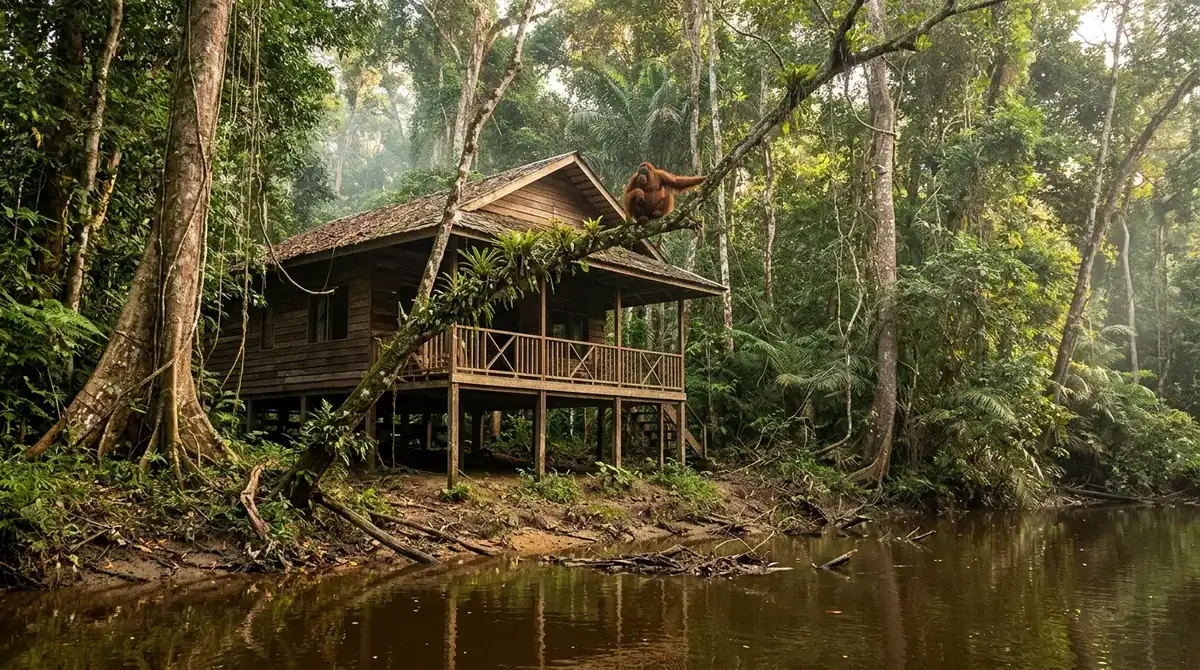
Utan Rainforest Lodge sits inside the Sungai Kapur Virgin Jungle Reserve, a remote base reached overland from Lahad Datu. The operator’s itinerary gives an overland journey of about 2.5 hours, with pickup and drop-off at Lahad Datu Airport or its Lahad Datu office. Your days are built around guided jungle walks and treks, birdwatching, river cruises through mangroves and estuaries, and night drives or walks.
Wildlife is the main draw, though nothing is promised. The operator lists Bornean orangutans, proboscis monkeys, sun bears, Bornean ground-cuckoos and helmeted hornbills in the reserve, and dolphins can appear on river cruises. The setting joins rainforest with ancient primary mangrove forest, so one morning you may be under the canopy and the next on slow, tidal water. The walking is gentle: the standard three-day tour is rated “Soft” and includes short hikes and a jungle trek, and you can ask your guide about a longer trek. Some cruises depend on weather and sea conditions.
The lodge suits wildlife and bird enthusiasts, photographers and eco-conscious travelers who want comfort after a full day outdoors. Its 14 air-conditioned rooms give you a restful base between boat trips and forest walks. For current room rates and tourism tax details, check the official site.
At a glance
- Best for: birders and photographers who want lodge comfort with boat and forest days
- Time Needed: three days and two nights on the standard Utan Wildlife Experience
- Getting There: about 2.5 hours overland from Lahad Datu
- Accommodation: 14 air-conditioned rooms
- Entry Fee or Permits: foreign passport holders pay a tourism tax of RM10 per room per night (see the official site for current details)
Maliau Basin: The Lost World of Sabah
Maliau Basin is a remote, protected rainforest conservation area in Sabah, known as “Lost World” for its distinctive basin landscape. The reserve is a Class I Forest Reserve covering 58,840 hectares, and there are no roads inside it. Current access and trip details are available on the official Maliau Basin site.
Most visits are built around guided forest walks and multi-day treks, with waterfalls, birding and canopy walks along the way. The longest option is a five-day, four-night waterfall trek that visits several falls, including seven-tiered Maliau Falls, and sleeps at remote jungle camps. Medium tours may cover up to 10 kilometres a day with 300 to 400 metres of elevation gain.
The terrain is uneven, with occasional river crossings, and the advanced tours are meant for fit visitors with multi-day hiking experience. Birdlife is exceptional, and you may also come across mammals, reptiles and amphibians, but wildlife is never promised. This is not a dependable orangutan stop. Facilities are few, so you might stay in the Studies Centre rest house or hostel, at the camping ground, or in approved camps in the forest.
Getting there takes four to five hours from Tawau or Keningau, and a four-wheel-drive vehicle is essential on the logging-road section. Permits must be arranged in advance, hikes must be guided, and travel insurance covering hiking, medical treatment and emergency evacuation is required.
At a glance
- Best for: hikers, birders and travelers with trekking experience who want an immersive rainforest trip
- Best Season: year-round access, with trips planned around seasonal conditions
- Entry Fee or Permits: permits arranged in advance, guided hikes only, and travel insurance required
- Time Needed: multi-day treks, such as a five-day, four-night waterfall trip
- Getting There: a four-to-five-hour drive from Tawau or Keningau
- Accommodation: few facilities; the Studies Centre offers a rest house and hostel, with camping as an option
Kota Kinabalu: Sabah’s Coastal Gateway and Night Markets

Kota Kinabalu is Sabah’s coastal capital, a modern city on the west coast with hotels, transport and easy access to islands, beaches and markets. Kota Kinabalu International Airport is Sabah’s main air entry point, so the city makes a natural first or last stop on a Borneo trip. Island boats leave from Jesselton Point and DBKK Jetty.
Tunku Abdul Rahman Park is the standout day out. This protected marine reserve covers five islands, coral reefs and coastal waters, and the Sabah Tourism Board describes the speedboat ride from Jesselton Point as about 20 minutes. Once you land, you can snorkel, dive, kayak, picnic on the sand or walk forest trails. Sabah Parks lists the entrance fee at RM25 per person per day for international visitors aged 18 and above.
Evenings belong to food. The city’s seafood and night markets are the reason many travelers linger, and a stroll after a day on the water is a fine way to end the trip. Timing matters for the boats, though. The Malaysian Guide says March to September is generally the driest period, while heavier rain and choppier seas from October to February can disrupt island services. City sights take about half a day, and island hopping makes an easy half-day outing.
Kota Kinabalu is a gateway, not an orangutan destination. Sepilok is near Sandakan, so you will need a separate transfer to reach it, and that adds planning time to your route.
At a glance
- Best for: travelers who want an urban base with food, island day trips and an easy start or finish
- Best Season: March to September, generally the driest period
- Entry Fee or Permits: RM25 per person per day at Tunku Abdul Rahman Park for international visitors aged 18 and above
- Time Needed: about half a day for city sights, and a half-day outing for island hopping
- Getting There: Kota Kinabalu International Airport; island boats depart from Jesselton Point and DBKK Jetty
- Accommodation: island lodging on Gaya, Manukan and Mamutik, with reservations required through the operators
Mount Kinabalu: Sunrise Above a Sea of Clouds
Mount Kinabalu, the highest peak in Borneo, rises inside Kinabalu Park, a protected World Heritage landscape. The main experience is a strenuous, guided ascent from Timpohon Gate, usually spread over two days and one night. The first day ends at Panalaban, where you rest before a summit attempt that starts before dawn over granite.
The scenery changes with every hour of climbing. The trail passes through six vegetation levels, moving from rainforest into mountain forest and then into rocky alpine terrain after Layang Layang Hut. The exposed granite summit makes a striking finish, and the reward is sunrise over a sea of clouds. You need a registered mountain guide and at least basic fitness, and weather can close the summit route for safety, so the climb depends on both your legs and the sky.
This is not an orangutan-viewing stop, so don’t expect primates on the trail. Sabah Parks recommends three days for a more comfortable pace and time to appreciate the park’s biodiversity. Hikers, nature lovers and landscape photographers who want a real mountain challenge will get the most from it.
At a glance
- Best for: hikers, nature lovers and landscape photographers who want a mountain challenge
- Best Season: year-round, though weather can close the summit route
- Entry Fee or Permits: climbing permits listed at RM100 for Malaysian adults and RM400 for international adults, with fees effective 1 January 2023 (see the official site for current details)
- Time Needed: two days and one night, with three days recommended for a more comfortable pace
- Getting There: about 90 km from Kota Kinabalu city centre; register at Kinabalu Park headquarters, then transfer to Timpohon Gate
- Accommodation: Panalaban, with lodges run by Sabah Parks, Sutera Sanctuary Lodges and Mountain Torq
Kinabalu Highlands: Cool Mountain Air Around Kinabalu Park
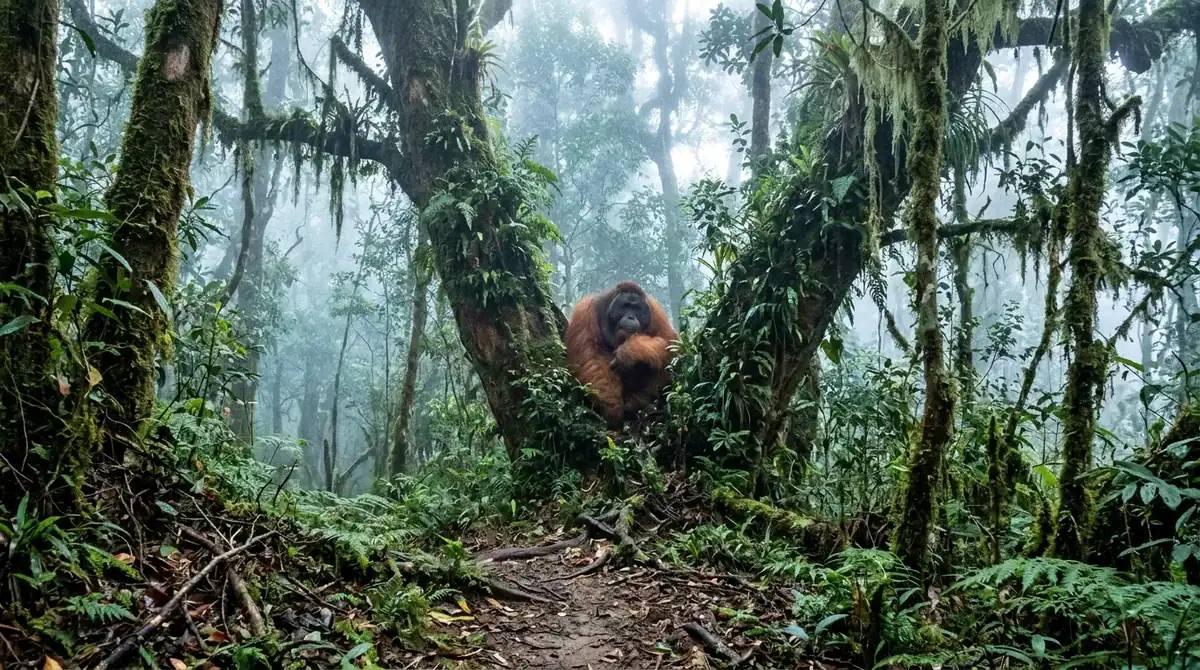
When you want cooler air between river days and rainforest walks, head up to the highlands below Mount Kinabalu. The closest match for this area is Kinabalu Park, a protected landscape of about 754 square kilometres, with its headquarters roughly 92 km from Kota Kinabalu. Mist often drifts through the trees here, and the slower pace feels like a deliberate change of rhythm after the boats.
The park’s habitats climb from tropical lowland and hill rainforest into mountain forest and sub-alpine scrub, and UNESCO estimates 5,000 to 6,000 vascular plant species live across that range. Botanical Garden visits and guided nature-trail walks let you study that variety up close. Keep an eye out for orchids and pitcher plants, which are among the highlights for botanists. This is a scenery and plant stop, not an orangutan-viewing site, so save your primate watching for the lowland forests.
Local Dusun communities are part of the cultural side of the highlands, and their presence adds depth to a walk through the mountain landscape. Climbing Mount Kinabalu is a separate and far more strenuous undertaking, so most visitors treat the park as a gentle counterpoint. Sabah Parks lists daily hours of 8:00 am to 5:00 pm and an international-adult conservation fee of RM50.
At a glance
- Best for: slow travelers and botanists who want a cooler break in the mountains
- Entry Fee or Permits: RM50 conservation fee for international adults
- Getting There: headquarters about 92 km from Kota Kinabalu
Sutera Nepenthes Villa: A Base at the Foot of Kinabalu
Sutera Nepenthes Villa is a place to stay inside Kinabalu Park, right at the base of Mount Kinabalu. The villa is a semi-detached, log-cabin-inspired stay with two bedrooms, intended for a small family or a group of four. Mornings suit early birdwatching, and the day can continue along the forest nature trails, through the Botanical Garden or on a guided nature walk. A short hike leads to Kiau Gap Viewpoint, where the mountain fills the view.
The operator describes the forest trails as suitable for casual walkers and nature lovers, which makes this a relaxed base if you want to avoid steep days. A separate route heads toward the mountain’s summit, but that is a far bigger commitment. Sabah Parks lists a guided nature-trail walk at 11 a.m. and Botanical Garden sessions at 9 a.m., noon and 3 p.m. The park’s habitats run from lowland rainforest to sub-alpine forest and scrub, with high diversity and endemism, so the plants and birds are the main reward here.
This is not an orangutan encounter. Treat it as a mountain-park stay for travelers who want to slow down and let the scenery set the pace. It suits casual walkers and birders who want a mountain base, and the drive from Kota Kinabalu takes about two hours.
At a glance
- Best for: casual walkers and birders who want a mountain base
- Entry Fee or Permits: Kinabalu Park conservation fees of RM50 per international adult and RM25 per international visitor aged 17 or under, per Sabah Parks, with separate Botanical Garden charges; see the official site for current details
- Getting There: about two hours by car from Kota Kinabalu
- Accommodation: two-bedroom log-cabin-inspired villa for up to four
Floating Mosque: A Kota Kinabalu Stop Above the Lagoon
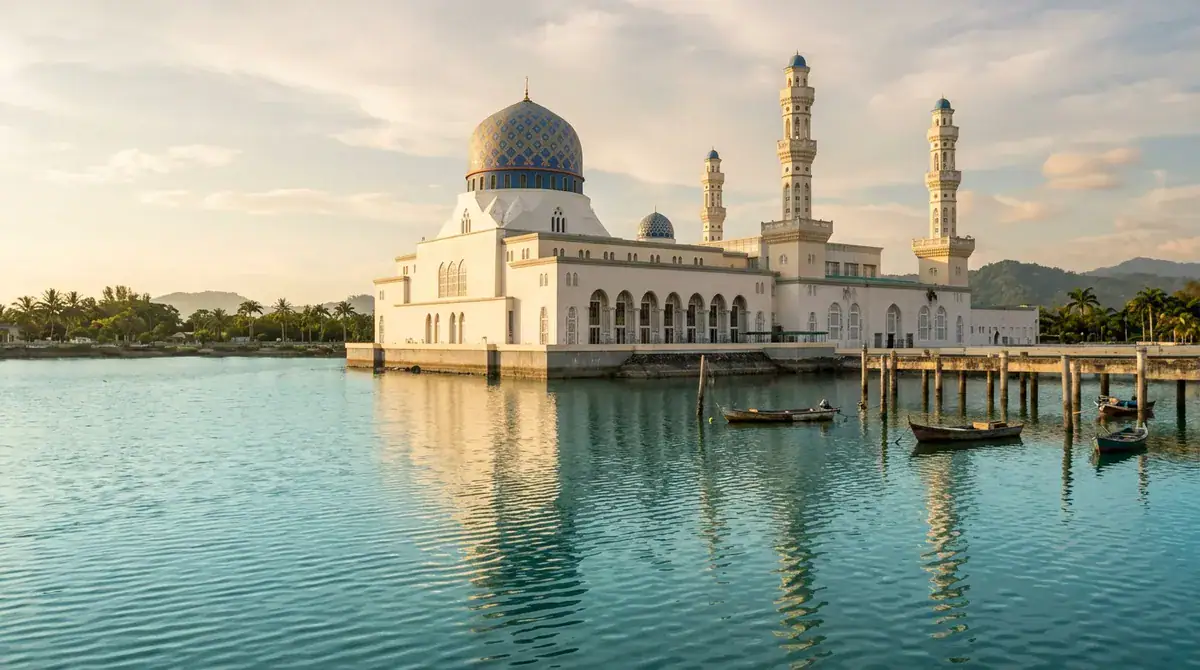
The Kota Kinabalu City Mosque, also called the Floating Mosque, is an active place of worship beside Likas Bay. A man-made lagoon surrounds it, so the building seems to rest on the water, and the reflections are the main reason photographers come. Its prayer hall can hold 9,000 to 12,000 people.
Respect comes first. Visitors must register with the mosque’s tourism management, dress modestly, and wear the coverall the mosque provides before entering. Coverall rental was listed at RM5 to RM10 in November 2025. Visitor hours were listed as 8:00 a.m. to noon, 2:00 to 3:30 p.m. and 4:00 to 5:00 p.m., with the mosque closed to visitors on Fridays. Admission was RM5 at the same listing, and the Sabah Tourism Board’s city mosque page has current details.
This is a short stop, so it works best within a Kota Kinabalu city day. A guided city tour typically allows about 30 minutes here for an explanation and photographs from designated viewing areas. Afterward, the waterfront markets and seafood make a natural lunch. The mosque is not a jungle trek, so treat it as a complement to the orangutan days in Sandakan and the Kinabatangan rather than a replacement for them. It suits architecture lovers and photographers.
At a glance
- Best for: architecture lovers, photographers and travelers interested in culture
- Time Needed: about 30 minutes on a guided city tour
- Entry Fee or Permits: RM5 admission (listed November 2025); coverall rental RM5 to RM10
- Getting There: Jalan Pasir, Teluk Likas, by taxi, bus, train or e-hailing
Tunku Abdul Rahman Marine Park: Five Islands and Clear Water
Tunku Abdul Rahman Park is a marine and island park of five islands, surrounded by coral reefs, forested shores and clear water about 3 kilometres offshore from Kota Kinabalu. It was gazetted in 1974. Most visitors island-hop for snorkeling, swimming and beach time, and the boats make it an easy morning or afternoon out. The Jesselton Point Ferry Terminal describes itself as the gateway to the park and lists daily island departures.
Some islands have forest trails. Gaya Island has a short plank-walk trail at its Base Camp, which fits neatly between swims. Keep your eyes open for birds, long-tailed macaques, monitor lizards, bearded pigs and pangolins, though none of these sightings is guaranteed. This is a marine-life and island break, not a remote rainforest, and it is not a place to look for orangutans. Wildlife photographers should treat it as a coastal stop.
Timing matters for the water. The SabahTravel guide recommends March through September, because heavy rain and rough currents in wetter months can reduce snorkeling and diving visibility. Manukan Island has accommodation and a restaurant, and camping is available on every island except Manukan and Sulug. This park suits families and snorkelers who want a relaxed day trip built around the reef.
At a glance
- Best for: families and snorkelers who want a relaxed day trip
- Best Season: March through September, since wetter months bring heavy rain and rough currents
- Entry Fee or Permits: RM8 per day for Malaysian adults aged 18 and above
- Accommodation: accommodation and a restaurant on Manukan Island; camping on all islands except Manukan and Sulug
Gaya Island: Reef and Rainforest in One Stop
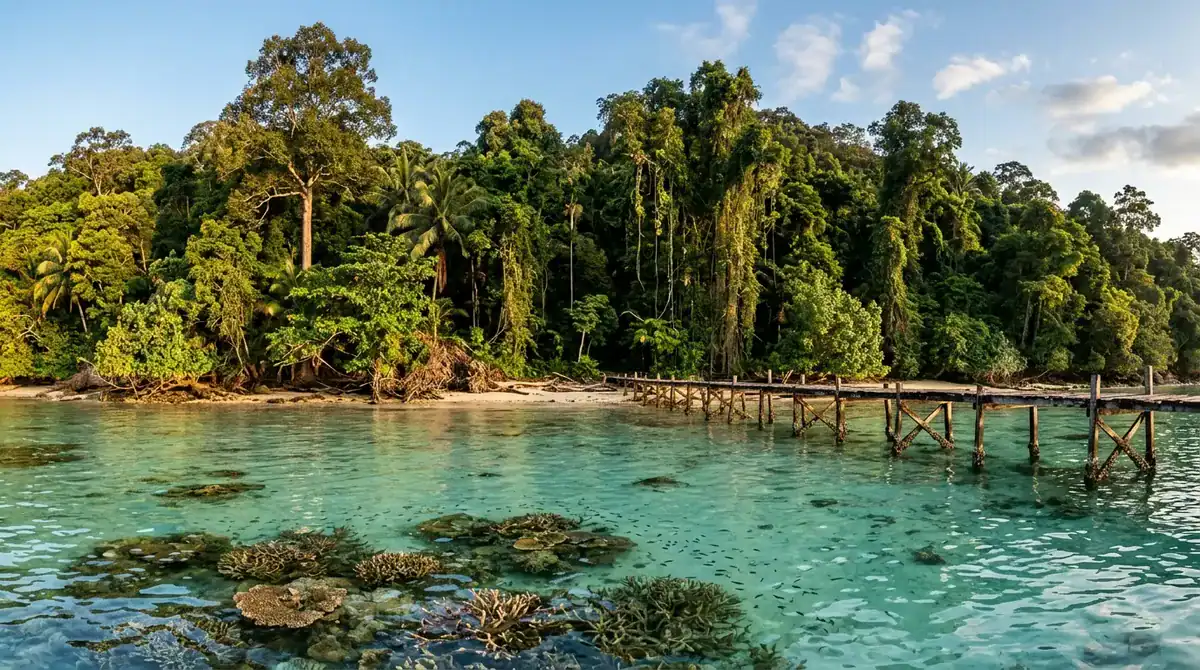
Gaya Island is the largest island in Tunku Abdul Rahman Park, a protected marine park just offshore from Kota Kinabalu. Its roughly 20 kilometres of marked trails climb to a central high point about 300 metres above sea level. The easiest route is a short plank walk through mangrove swamp from the Base Camp, where jungle trekking also begins.
Once you have sampled the forest, turn to the water. Snorkelling and diving on the surrounding reefs are the island’s main draw, and the Gaya Island Resort adds naturalist-led mangrove kayaking and forest walks. Those walks range from leisurely strolls to rugged treks and night explorations, so choose the one that matches your pace. Encounters can include mangrove crabs and oriental pied hornbills, though no sighting is promised.
The island’s conservation work gives the day more meaning. The resort’s conservation centre works to preserve proboscis monkeys, and the wider projects here also cover turtles and coral reefs. A speedboat from Jesselton Point takes roughly 10 minutes, and overnight stays are available at Gayana Marine Resort, Bunga Raya Island Resort and Gaya Island Resort, which all need advance reservations. Gaya is not an orangutan-viewing stop, but it makes a welcome change of pace in an orangutan itinerary, and it suits snorkelers, families and anyone who wants reef and rainforest in one place.
At a glance
- Best for: snorkelers, families and travelers who want reef and forest in one stop
- Time Needed: day visits and resort stays are both possible
- Getting There: roughly a 10-minute speedboat trip from Jesselton Point
- Accommodation: Gayana Marine Resort, Bunga Raya Island Resort and Gaya Island Resort, with reservations made in advance
Sipadan Island Park: Reef Walls for Certified Divers
Sipadan Island Park is a remote marine park off eastern Sabah, and it is best known for scuba diving on steep reef walls. The park is an oceanic island in the Celebes Sea, where a coral-covered volcanic cone rises about 600 metres from the seabed. Some sites have strong currents, so divers should go with a qualified operator and stay within their training. Snorkelling is also possible through an operator, but access and permits need to be arranged well ahead.
Under the surface, you may see green and hawksbill turtles, which the park describes as common, along with schooling barracuda, bumphead parrotfish, reef sharks and abundant coral. Sightings are never guaranteed, and sea conditions can change from one day to the next, so treat each dive as a chance rather than a promise. Sipadan is not a jungle-trekking or orangutan destination, so your time is spent on the water rather than on forest trails.
Getting there takes some planning. The usual route is to fly to Tawau, travel to Semporna, and then take a speedboat that covers the roughly 45 minutes to the island in calm seas. Because accommodation on the island is closed, Sipadan works as a day visit. Bookings can be made through the park or a registered operator up to six months ahead, and Sabah Parks decides permit issuance and availability. The official park page lists conservation fees of RM100 per international visitor and RM50 per Malaysian visitor, plus scuba-diving fees of RM350 and RM250.
Certified divers and underwater photographers get the most from Sipadan. One dive guide reports the clearest visibility from March to October and says the island is closed to tourism throughout November.
At a glance
- Best for: certified divers and underwater photographers
- Best Season: March to October, when visibility is clearest
- Entry Fee or Permits: RM100 conservation fee per international visitor and RM50 per Malaysian visitor, plus scuba-diving fees of RM350 and RM250
- Time Needed: a day visit
- Getting There: about 45 minutes by speedboat from Semporna in calm seas, usually reached by flying to Tawau first
Choosing Sabah Stops Around the Orangutan Core
Start with entry requirements. Check visa rules with official government sources before you book flights or lodges, because the rules change and the answer depends on your passport.
Travel insurance matters more on this route than on a city break. Remote lodges and boat trips are far from hospitals, so confirm that your policy covers medical care and evacuation from forest areas, not just treatment in town.
Visit a travel clinic several weeks before you leave to ask about vaccinations and about malaria and dengue risk in the areas you plan to visit. Pack insect repellent for forest walks, boat rides and lodge evenings.
Transport changes from stop to stop, so map each leg before you book:
- Road transfers from Sandakan to Sepilok and onward to the Lower Kinabatangan
- Boat transfers along the Kinabatangan River to riverside lodges
- Overland access from Lahad Datu to eastern reserves such as Danum Valley and Tabin
Mobile signal is strongest in towns and thins out at remote lodges, so buy a local SIM card in Sandakan or Kota Kinabalu if you need connectivity. Lodges usually provide drinking water, but toilets range from basic to modern, so ask about facilities when you book.
Plan around the drier part of the year, and pack rain gear for every season.
If you are considering Indonesian Borneo, Tanjung Puting National Park’s tariff listing sets a foreign visitor entry fee of Rp250,000, effective from 30 October 2024. The park also has tourism closures from 15 to 31 January 2027 and from 1 to 15 June 2027, and the same periods recur in later years, so build your dates around them.
Mapping Your Own Sabah Orangutan Route
Start by sketching your route on paper before you open any booking page. Count your nights, then give Sandakan one full day for the heritage walk, a morning or afternoon to Sepilok, and at least three nights on the Lower Kinabatangan. If you have a fourth or fifth night to spare, put it on the river rather than adding another town.
Next, choose one river base and write to it before you commit. Ask what time the dawn cruise leaves, whether a guide rides on every boat trip, and how the transfer from Sandakan is arranged. Guides know where the animals have been gathering, so their answers will tell you whether the lodge fits the kind of watching you want.
Leave one spare morning on the water. Wildlife is never guaranteed, and a second try often matters more than a longer stay in a second town. If you have the time, keep the eastern reserves such as Danum Valley for a separate trip rather than squeezing them into this one.
Before you leave town, download the lodge’s transfer details, pack a dry bag for your camera and a headlamp for night cruises, and note the Sepilok feeding times on your calendar. Those few details will keep the river days running smoothly.