
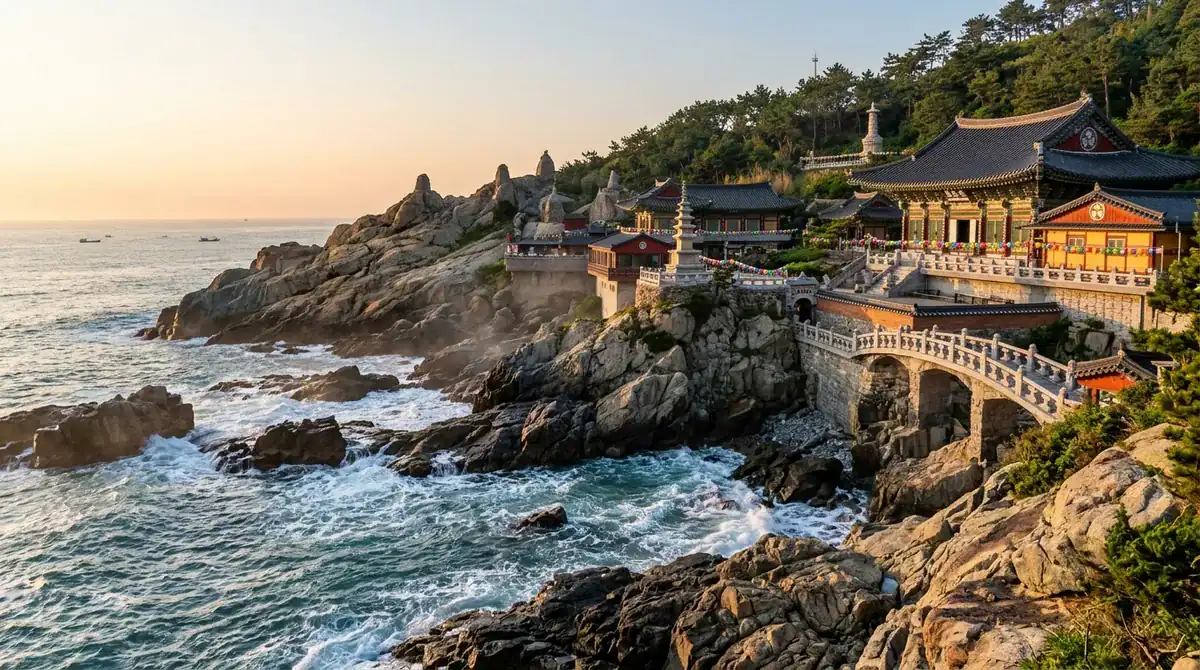
Busan is South Korea’s southeastern port city, and a good Busan travel guide starts with a simple promise: you can swim at a beach in the morning, eat fresh seafood at a market by noon, and climb to a mountain temple before dinner. The sea sets the rhythm here, but the beaches follow a seasonal calendar. Check the 2026 opening dates and hours for Haeundae and Songjeong before you pack your swimsuit, because those dates shape the whole plan.
Getting between those worlds is simpler than it sounds. Metro Line 1 and bus routes such as Bus 90 connect the beaches, the markets and the inland neighborhoods. A standard taxi starts at ₩4,800 for the first 2 km, with ₩100 added for each additional 132 meters or 33 seconds. Late-night rides carry surcharges of 20 to 30 percent, so it pays to plan your return ahead of time. If you plan to visit several major attractions, the Visit Busan Pass offers a 24-hour option for ₩55,000. The right choice depends on how many stops you want to fit into each day.
Key Takeaways
- Pair one coastal stop with one inland temple each day in Busan, such as a Jagalchi Market morning followed by a Beomeosa Temple afternoon, so your transfers stay short.
- Check the 2026 opening dates and hours for Haeundae and Songjeong Beaches before you plan a swim, because the city sets a seasonal window each year.
- Plan your late-night return early, since taxis in Busan add a 20 to 30 percent surcharge after 11 p.m. on top of a standard fare that starts at ₩4,800 for the first 2 km.
- Buy the Visit Busan Pass only if your paid attractions add up to more than its ₩55,000 24-hour price, because a pass only pays off when you use several paid entries.
Where Should First-Time Visitors Start in Busan?
Choose a base near Haeundae if beach time is your priority, or near the central market area if seafood and old-town streets matter more. Busan rewards a split plan, and where you sleep shapes how your days unfold.
Haeundae has the easier seaside rhythm. Mornings are perfect for a walk along the sand before the crowds arrive, and evenings bring a slow stroll along the promenade, with the bay lights reflecting on the water. Staying close means you can drop your bag, change into swimwear, and reach the sand within minutes.
The central market area runs on a different clock. Jagalchi Market is at its liveliest early in the morning, when the day’s catch arrives and vendors call out prices above rows of tanks. By midday, the lanes of Nampo-dong and the old streets behind them are better suited for browsing, snacking and an unhurried coffee.
Inland, the pace slows again. Beomeosa Temple sits on the slopes of Geumjeong Mountain, and the path through the trees feels far removed from the harbor below. Take Metro Line 1 there, then give yourself a relaxed afternoon among the halls and forest trails.
Pair one coastal area with one inland temple each day. A beach morning followed by a mountain temple in the afternoon, or a dawn market visit followed by a hillside walk, keeps transfers short and avoids the long cross-city rides that can swallow a day. Official Busan sources describe the city as easy to combine within a single trip, and a well-chosen base is what makes that promise work in practice.
When Can You Swim at Haeundae and Songjeong Beaches?
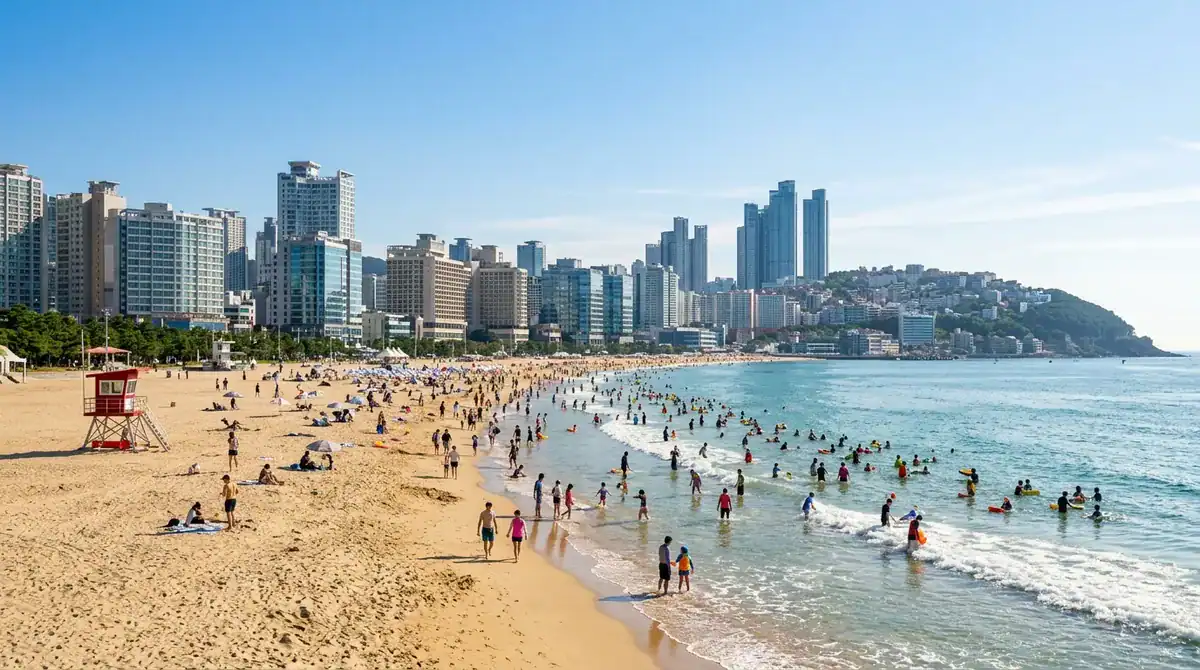
You can swim at Haeundae and Songjeong only within the seasonal window the city sets each year, so check the 2026 opening dates and hours before you plan a swim. A swim that works on a midsummer afternoon may not be possible in spring or autumn, and the official calendar decides which days are available.
The city has also introduced new safety and accessibility measures for 2026 at these beaches. Read the notices before you arrive, especially if you are traveling with a stroller, a wheelchair or an older relative, since access routes and beachside facilities can differ from one year to the next. Plan a few extra minutes for the walk from the metro or bus stop to the sand.
If you want to look beyond the two best-known beaches, a 2025 city guide lists schedules for all seven beaches in Busan. It is a useful reference when Haeundae is packed on a warm weekend and you would rather find a quieter stretch of sand nearby.
Once you are there, the sensory experience is the reason to come. The sand is fine and warm under the midday sun, and the waves roll in long, steady lines that rattle the shoreline pebbles and smell faintly of salt. Behind the beach, the seafront promenade fills with joggers, cyclists and families, and the breeze carries the scent of grilled snacks and sunscreen from nearby stalls.
Outside the swimming season, the beaches still reward a visit. Walk the sand early in the morning, when the water is calm and the shoreline belongs to fishermen and dog walkers, or time your stroll for sunset, when the sky turns orange over the bay and the promenade lights begin to glow. Dress for the wind, bring a light layer, and check the weather forecast before you set out.
Is Jagalchi Market Worth a Morning Visit?
Yes, Jagalchi Market is worth an early start, and it is Busan’s best-known seafood market. Arrive in the morning and you will catch the fish auctions and stalls at their busiest, with buyers and vendors moving between rows of crates and tanks.
Plan to eat there, too. Many visitors choose a fish or shellfish from a stall, then have it cleaned and prepared at a restaurant in the market’s eating areas. Ask about the price before you commit. Live seafood is usually sold by weight and by species, and prices can vary from one stall to the next.
Market hours matter more here than at many attractions. Stalls keep their own rhythm, and the liveliest part of the morning does not last all day. Official sources publish the current hours, so check them before you leave your hotel, and check again if a public holiday falls during your trip.
Give yourself time to wander once the auction energy settles. Walk a few minutes toward the harbor, where fishing boats and ferries crowd the water and the air carries the smell of salt and diesel. The waterfront is an easy place to slow down with a takeaway snack.
From there, you can turn inland through the streets near the market and link the visit to the rest of your morning. Most of the walk is flat and short, so it fits well before a midday beach stop or a lunch break. Wear comfortable shoes with good grip, since the floors can be wet near the stalls, and bring some cash for smaller vendors.
How Do You Reach Beomeosa Temple by Metro?
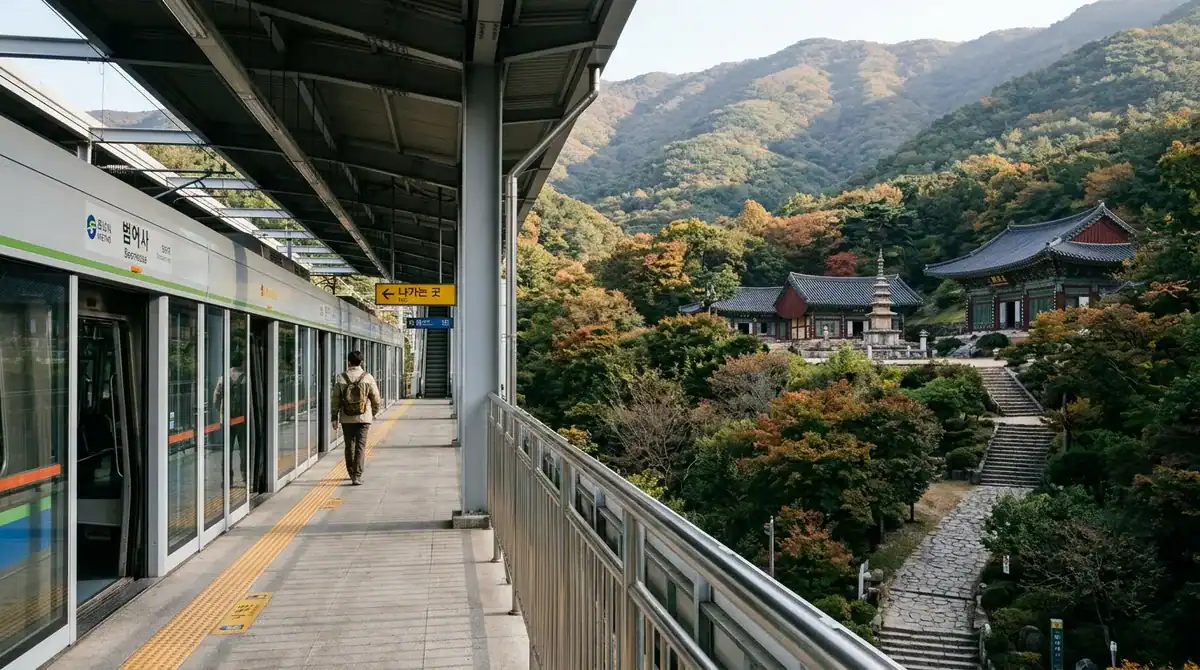
Take Metro Line 1 to Beomeosa Station, then walk uphill to the temple gate. The ride is short, but the mood shifts quickly once you leave the traffic and harbor noise behind.
Official sources publish the route from the metro, and the steps below follow it in order.
- Leave the station and follow the signs for Beomeosa Temple, which point you toward the road that climbs into the hills.
- Walk up the paved approach past small shops and snack stalls, keeping an eye out for the city view opening up behind you.
- Where the road narrows, turn onto the forest path and let the pines and the sound of running water guide your pace.
- Pass through the temple gate and slow down at the halls, where curved wooden eaves and stone courtyards invite a pause.
The temple sits on the northern edge of the city, in the hills that rise above the urban grid. The forest trail is the best part of the approach. Tall trees filter the light into soft patches on the path, and the air feels cooler than it does down by the water. Benches and small clearings give you room to stop, and the noise of the city fades within a few minutes.
Once you reach the temple buildings, the atmosphere changes again. The halls are arranged around open courtyards, and the wood and stone look weathered in a way that rewards a slow look. You may hear chanting or the low note of a bell, which adds to the calm that draws visitors up here.
Go early in the morning or later in the afternoon for the quietest paths. At those hours the light comes in at a low angle, warming the granite and wood, and the crowds thin out. Check the official opening times before you set out, since they determine how much of the day you have for the walk and the halls.
Metro, Bus 90, or Taxi: How Should You Get Around?
Use Metro Line 1 and Bus 90 for daytime trips between the beaches, the markets and the temple area. Take a taxi when you are heading back late from a nightlife district or carrying heavy luggage.
Metro Line 1 is the backbone for the market and temple leg. It serves Jagalchi Market and runs up to Beomeosa Station, so a dawn seafood visit and an afternoon hillside walk can share one line with few transfers. Bus 90 fills the gaps where the metro does not reach, linking coastal stretches and inland neighborhoods. Buses slow down in traffic, so leave extra time when your plans depend on a fixed arrival.
For short hops between a beach morning and a midday market, the metro and bus are the relaxed choice. Metro rides stay clear of road traffic, you never have to bargain over a meter, and the cost stays low. Keep a transit map on your phone, because stations and bus stops can be busy, and signs are not always easy to follow if you are new to the city.
A taxi makes more sense when the distance is longer or the timing is tight. The standard fare is ₩4,800 for the first 2 km, and each additional 132 m or 33 seconds adds ₩100. A daytime ride of about 6 km therefore works out to roughly ₩7,800. Slow traffic also adds to the meter through the time charge, so the final total can climb on busy roads.
Late-night rides cost more. The surcharge rules, which took effect on June 1, 2023, add 20 percent between 11 p.m. and midnight, 30 percent between midnight and 2 a.m., and 20 percent between 2 a.m. and 4 a.m. On a ₩7,800 fare at 1 a.m., the 30 percent surcharge adds ₩2,340, bringing the total to about ₩10,140. That difference is worth planning around, especially after a long evening in Nampo-dong.
Taxis are also the easier choice when you arrive with suitcases or several bags. Hauling luggage up and down metro stairs or waiting for a bus with a large case can drain the energy from a travel day. Check the last metro departure before you head out for dinner, and you will know exactly when a taxi becomes your best option.
Is the Visit Busan Pass Worth the Price?
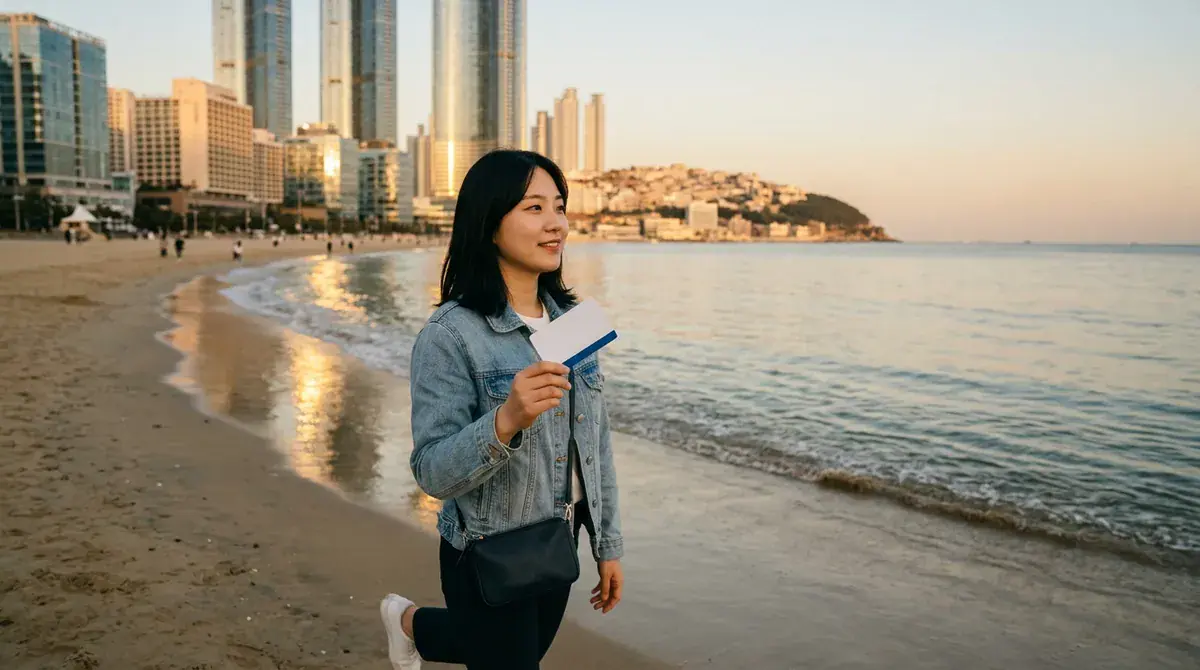
The Visit Busan Pass is worth buying only when you plan several paid entries, and a quick count of your stops will show which option fits. The guide lists ₩55,000 for 24 hours, ₩85,000 for 48 hours, ₩45,000 for the Big 3 and ₩65,000 for the Big 5. The two timed passes activate on your first visit to a free attraction, so the clock may start earlier than you expect. The Big 3 and Big 5 are attraction-count passes that remain valid for 180 days from first use, which suits a longer stay.
Start with a simple count. Write down every attraction you hope to see, mark the ones that charge admission, and group them by day. If your paid stops fit into one or two busy days, a timed pass is usually the simpler choice. If your paid visits are spread across a longer trip, with a temple here and a viewpoint there, an attraction-count pass gives you more room to choose, as long as you will use most of the entries it includes.
A pass only saves money when you use it for several paid entries. A couple of admissions rarely cover the price of a 24-hour pass, while a longer list of paid stops can change the math quickly. Beach walks, market browsing and promenade strolls do not involve admission, so leave them out of the count. Their value comes from time and atmosphere, not from the pass.
Before you buy, check the current ticket price at each paid attraction on your list and add them up. Compare that total with the pass price for the option you are considering. If the difference is small, the flexibility of a pass may still be worth paying for. If you only plan a few paid visits, paying individually will likely cost less.
How Would a Perfect Busan Day Look?
A perfect Busan day starts at Jagalchi Market, moves down the coast to Haeundae, and finishes in the hills at Beomeosa Temple. The route needs only two line changes, both at Seomyeon, so you spend more of your time on the sand and the forest trail and less on platforms.
Start early at Jagalchi while the stalls are busy and the catch is still fresh. Buy a fish or some shellfish, have it prepared in the market’s eating area, and then walk the short, flat route toward the harbor before the heat builds.
- Morning: Jagalchi Market for seafood, followed by a slow walk along the harbor
- Midday: Metro Line 1 to Seomyeon, switch to Line 2 for Haeundae, then lunch and a coastal walk
- Afternoon: Line 2 back to Seomyeon, then Line 1 to Beomeosa Station for the forest trail and temple halls
- Evening: A stroll along the seafront, or a taxi back to your base
Before you leave for Haeundae, check the day’s beach notices. If the swimming season is closed, the sand and promenade still make a pleasant lunchtime walk, and a seafood lunch near the station pairs well with the breeze off the water.
Keep the afternoon loose. Give the forest path room to breathe, and aim to reach the temple while the light still warms the wood and stone. Leave with enough daylight to walk the trail back down at an easy pace.
The evening is where a good plan can slip. If you finish after 11 p.m., a taxi carries a late-night surcharge. A ride that meters at ₩6,000 would add 20 percent, or ₩1,200, before midnight. Check the last metro departure from Beomeosa Station before you set out, and decide in advance whether the seafront stroll or the taxi fits your energy.
Packing Your Busan Plan for Sea, Temple and Market
Start by checking the calendar. Look up the city’s 2026 opening dates and hours for Haeundae and Songjeong, then check the current hours at Jagalchi Market and the last Metro Line 1 train from Beomeosa Station. Those three checks tell you which day suits a swim, which morning suits the fish auctions, and how late you can stay out.
Next, sketch your route on paper. Pick one coastal stop and one temple for each day, then count every paid attraction on your list. If your list has only a few admissions, paying individually will likely cost less. If the number climbs, work through the pass options and see which one fits your dates.
For a broader view of who visits the city, read Busan’s 2024 visitor survey. It ran from July through December 2024 and interviewed 1,063 domestic visitors and 1,060 foreign visitors at gateway points and major tourist sites. It offers a dated baseline, so treat it as background on who visits the city rather than a current picture, and use it alongside the seasonal and practical details above as you choose between a quiet beach and a busy market.
Finally, save the transit map to your phone, pack a light layer for the windy seafront, and wear shoes with good grip for the wet market floors. Then pick your first morning and head to the water.