
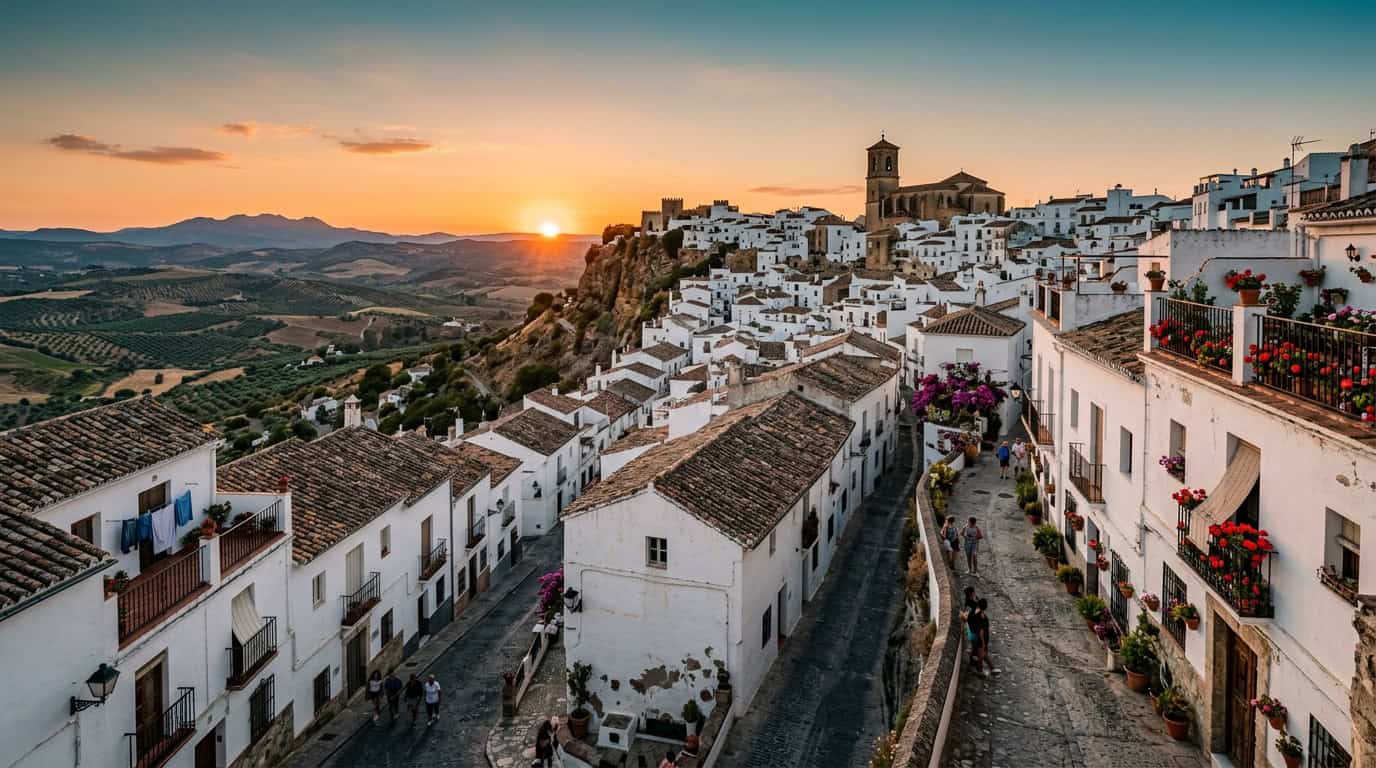
Imagine standing atop a sun-drenched cliff, where a maze of dazzling, lime-washed houses spills down the hillside like a sprinkle of sugar against the rugged Sierra de Grazalema. Exploring the andalusia white villages feels like stepping back into a Moorish dream, where every winding cobblestone alley leads to a hidden plaza blooming with bright pink bougainvillea. On my first trip to Arcos de la Frontera, I remember the sheer awe of watching the sunset turn those stark white walls into a palette of soft gold and violet.
Whether you are chasing the perfect photograph of Zahara de la Sierra’s medieval castle or hunting for the best tapas in a sleepy mountain square, these villages offer a soul-stirring escape. Navigating the twisting mountain roads requires a bit of nerve and a good map, but the reward is a glimpse into a timeless Spanish lifestyle. The magic lies in the slow pace, the scent of orange blossoms, and the dramatic vistas that stretch toward the Mediterranean.
Key Takeaways
- Rent a small vehicle with full insurance coverage to navigate the region’s notoriously narrow, steep, and winding mountain roads effectively.
- Follow a slow-travel itinerary starting in Arcos de la Frontera and continuing through Zahara de la Sierra and Setenil de las Bodegas to experience the diverse Moorish history and unique cliffside architecture.
- Visit during the shoulder months of May and June to capture the best photography lighting and blooming floral balconies while avoiding the intense summer heat.
- Pack comfortable walking shoes and prepare for physical climbs, as the most spectacular viewpoints and historic plazas are often reached via steep, uphill cobblestone paths.
Iconic Stops Along The Sierra De Grazalema Route
Arcos de la Frontera serves as the perfect gateway to this rural adventure, greeting travelers with its dramatic position atop a sheer sandstone cliff. As I wound my way up the narrow, cobblestone streets, the reward was a breathtaking view from the Plaza del Cabildo. Standing at the edge of the mirador, you can look straight down into the valley below where the Guadalete River meanders through lush farmland. It is the kind of place where you should intentionally lose your map, grab a cold glass of sherry, and simply soak in the slow pace of life.
Continuing deeper into the heart of the Sierra de Grazalema, the silhouette of Zahara de la Sierra appears like a medieval fairy tale. This village is one of the most striking stops on the route, characterized by its Moorish castle ruins that keep watch over the whitewashed houses below. My favorite moment was standing at the castle gates and looking out over the incredible turquoise waters of the reservoir, which provides a stunning color contrast to the bright white walls of the town. It is an ideal spot for a midday picnic or a quiet hike, offering a sense of serenity that is hard to find in the bigger Andalusian cities.
To make the most of this driving itinerary, I recommend starting your morning early in Arcos before the midday sun peaks, then heading east toward Zahara for a leisurely lunch. The roads connecting these villages are winding and scenic, so take your time and pull over at the various roadside lookouts to capture the scenery. Make sure to pack comfortable walking shoes, as both villages involve a fair amount of uphill climbing to reach the best viewpoints. This stretch of the route captures the essence of slow travel, inviting you to appreciate the history and natural beauty of the Spanish countryside at your own rhythm.
Living Under The Rocks In Setenil De Las Bodegas
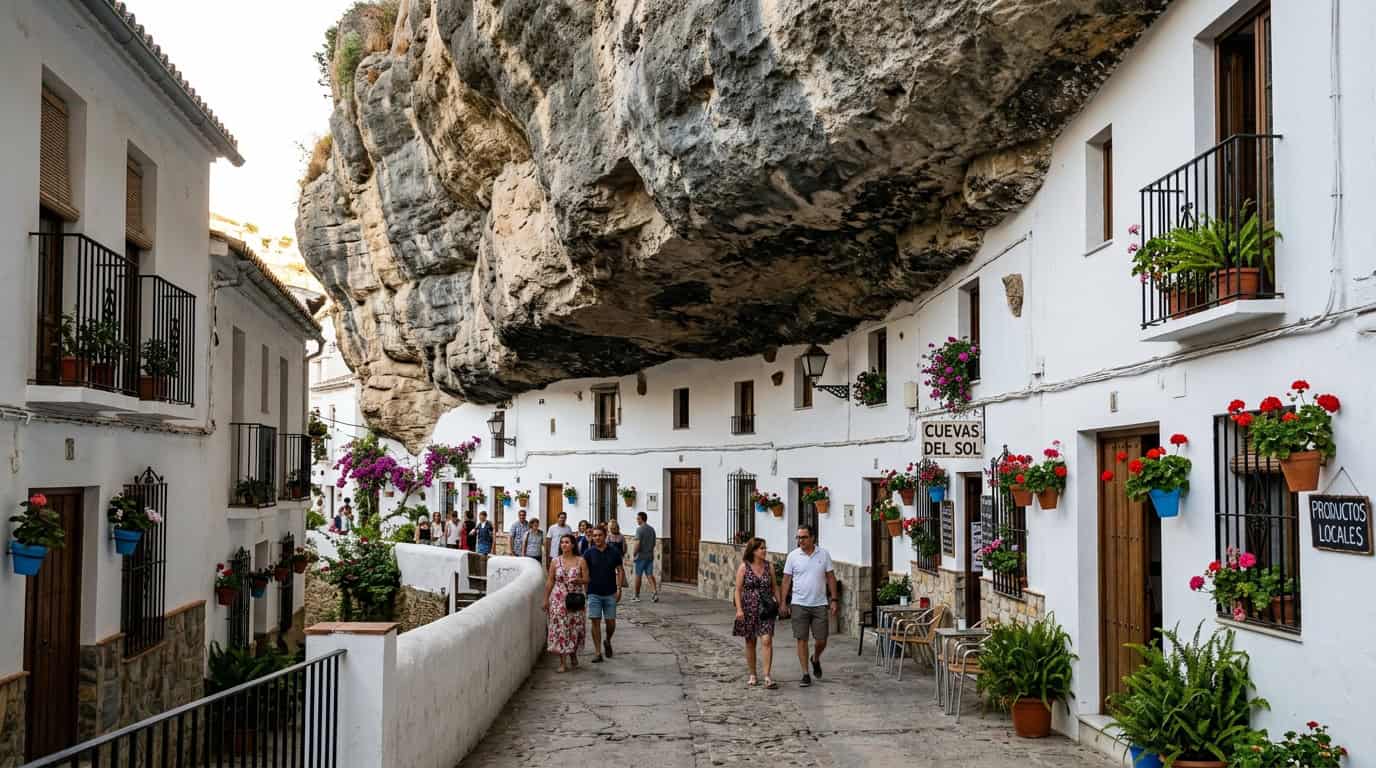
While many of the White Villages perch high on hillsides to touch the sky, Setenil de las Bodegas takes a different approach by embracing the earth itself. As I drove deeper into the Cadiz countryside, the scenery shifted into dramatic limestone gorges where the houses are not just built on the rocks, but directly into them. Walking down Calle Cuevas del Sol for the first time felt surreal because the massive stone overhangs serve as natural roofs for the shops and cafes below. This is a unique experience where the cliffside architecture is dictated by the ancient geology of the Trejo River. You can truly feel the cooling effect of the stone as you wander through these narrow, shaded passages that have protected residents from the sun for centuries.
The highlight of my visit was the afternoon I spent tucked away in a tiny tapas bar carved into the cliffside. I found a small table at a local spot beneath the heavy limestone ceiling and ordered the regional specialty, wild asparagus soup, alongside a plate of salty Jamon Iberico. Sitting there with a glass of local wine, I watched the play of light against the whitewashed facades while the massive boulders loomed just inches above my head. It is a sensory experience you simply cannot find in the bigger cities like Seville or Malaga. If you are planning your own driving route through the andalusia white villages, make sure to arrive early in the morning to secure a parking spot outside the town center. This allows you to explore the lower cave streets and the higher castle views on foot without rushing.
A Perfect Three Day White Villages Driving Itinerary
To truly experience the soul of Andalusia, you must trade the bustling city streets for the winding, sun-drenched roads of the Sierra de Grazalema. My favorite three day route begins in Arcos de la Frontera, where you can wander through narrow alleys that open up to breathtaking cliffside views. From there, head toward Zahara de la Sierra to see its medieval castle reflected in the turquoise waters of the reservoir below. This journey is all about slow travel, so I recommend picking up your rental car in Cádiz early in the morning to beat the crowds. Make sure to choose a smaller vehicle, as navigating the charming but incredibly tight cobblestone streets requires a bit of nimbleness.
On your second day, drive deeper into the mountains toward Grazalema, a village famous for its high-quality wool blankets and lush hiking trails. After a morning trek, continue your journey toward the dramatic gorge of Ronda, which serves as a spectacular midpoint for your road trip. While many travelers stop there, the real magic happens on day three when you venture north toward the Subbética Cordobesa region. This area is home to Zuheros, a hidden gem tucked into a limestone mountain range that feels like a step back in time. You can spend your afternoon exploring the nearby bat caves or simply enjoying a glass of local olive oil on a terrace overlooking the rolling hills.
Planning this trip requires a bit of logistical foresight, especially regarding your pace and the local driving conditions. I suggest booking a car with full insurance coverage to give yourself peace of mind while parking in the steep, narrow lots found in hilltop towns. Always keep a physical map handy, as GPS signals can sometimes falter when you are deep in the mountain passes. Taking the time to stop at roadside venttas for a traditional lunch of Iberian ham and fresh bread will make your drive feel like a cultural immersion. By the time you reach the olive groves of Córdoba, you will have captured the true essence of rural Spanish life.
Essential Tips For Navigating Narrow Andalusian Streets
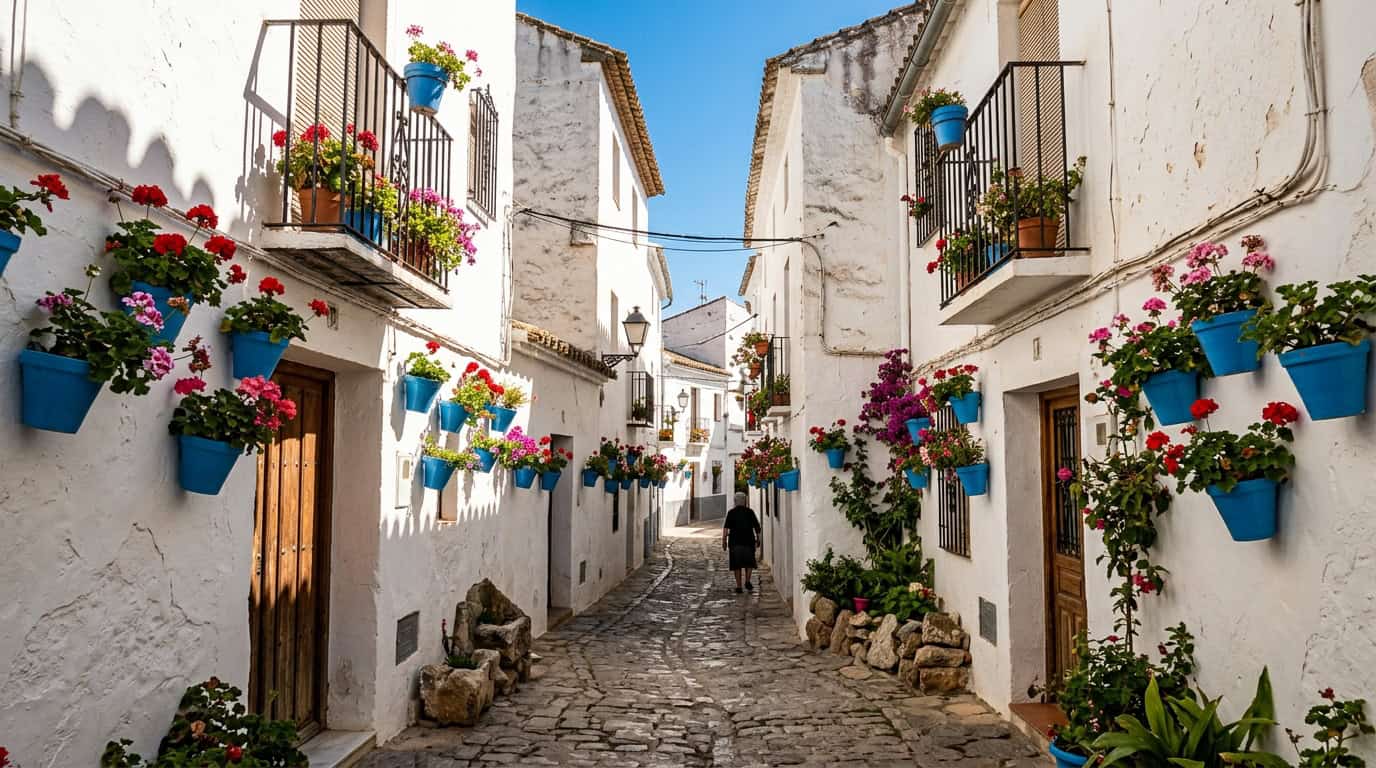
Navigating the winding, sun-bleached alleys of the Pueblos Blancos requires a blend of patience and a sense of adventure. During my first drive through Arcos de la Frontera, I quickly learned that what looks like a pedestrian sidewalk is often the only available road for your car. To make the most of this experience, I highly recommend opting for the smallest vehicle possible to avoid getting wedged between ancient stone walls. Folding in your side mirrors is a local trick that saved my paint job more than once while squeezing past a delivery truck. If you find yourself facing a steep, cobblestone incline, remember to maintain steady momentum and keep a sharp eye out for hidden plazas where you can pull over.
The visual reward for mastering these tight turns is most spectacular during the late spring months of May and June. During this time, the midday sun hits the lime-washed facades at a perfect angle, creating a brilliant glow that contrasts beautifully against the deep blue sky. This season also offers a floral bonus, as the iconic iron balconies are draped in vibrant purple bougainvillea and red geraniums. Visiting in the shoulder season allows you to enjoy the crisp brightness of the architecture without the intense summer heat. You will find that the light in the early morning provides the best opportunity for photography before the shadows stretch across the narrow corridors.
To truly embrace the rural charm of the region, plan a slow-travel itinerary that starts in the gateway town of Arcos de la Frontera before heading deep into the Sierra de Grazalema. From there, make your way toward Zahara de la Sierra to witness its medieval castle reflected in the turquoise waters of the reservoir below. Spend your afternoon in Grazalema, where you can park on the outskirts of town and wander the pedestrian center on foot to sample local goat cheese. Ending your journey in the cliffside town of Ronda provides the perfect finale, especially if you arrive just as the golden hour softens the white walls. This route encourages a deliberate pace that allows you to stop at every scenic overlook and hidden tapas bar.
Finding the Soul of Andalusia’s White Villages
Stepping away from the vibrant energy of Seville and into the quiet embrace of the white villages feels like entering a different era entirely. There is a specific kind of magic found in the stillness of the Sierra de Grazalema, where the only sound might be the distant chime of a goat bell or the wind whistling through a Moorish archway. Trading the bustling city plazas for these winding, cobblestone streets allows you to breathe deeper and truly connect with the soul of Andalusia. It is in these moments, perched on a cliffside in Arcos de la Frontera or overlooking the reservoir in Zahara de la Sierra, that the rush of modern travel finally fades away.
I encourage you to grab a map, rent a car, and lose yourself in the slow rhythm of the Spanish countryside for a few days. While the major cities offer incredible monuments, the heart of the region beats most clearly in the whitewashed homes and flower-filled balconies of the hills. You can spend your mornings hiking through cork forests and your afternoons sharing local cheese and wine in a sleeper village square. This rural itinerary is more than just a scenic drive; it is an invitation to slow down and appreciate the simple beauty of the Mediterranean lifestyle.
The serenity of the Pueblos Blancos will likely stay with you long after you have returned home and unpacked your bags. There is something deeply restorative about navigating the narrow alleys of Grazalema or watching the sunset paint the walls of a medieval castle in gold. These hills offer a sanctuary for the restless traveler looking for authenticity away from the typical tourist crowds. Do not just rush through on a day trip, but instead take the time to linger, explore, and let the quiet charm of the white villages transform your perspective on Spain.
Frequently Asked Questions
1. What is the best way to travel between the white villages?
Renting a car is the absolute best way to experience the region because it gives you the freedom to explore hidden mountain corners at your own pace. While navigating the twisting mountain roads requires a steady hand, the ability to stop for a sudden photo op or a spontaneous tapas break is worth every hairpin turn.
2. Which village should I use as my starting point?
Arcos de la Frontera is the ideal gateway for your adventure because of its accessible location and dramatic cliffside views. I always recommend spending your first evening here to watch the sunset turn the lime-washed walls into gold before heading deeper into the Sierra de Grazalema.
3. Are the roads in the Sierra de Grazalema difficult to drive?
The roads are well maintained but can be quite narrow and winding as they climb through the rugged terrain. You should bring a reliable GPS or a good physical map and plan for extra travel time so you can drive slowly and enjoy the dramatic vistas. If you enjoy this type of terrain, you might eventually want to try a mountain adventure across the north of the country as well.
4. What makes Zahara de la Sierra a must-visit stop?
Zahara de la Sierra feels like a medieval fairy tale come to life with its iconic castle perched high above a turquoise reservoir. It offers some of the most striking photography opportunities in Andalusia and is the perfect spot for a slow afternoon wandering through history.
5. What should I pack for a trip to the Andalusia white villages?
Comfortable walking shoes are non-negotiable because those charming cobblestone alleys can be quite steep and slippery. You should also bring a camera and a light layer for the evenings, as the mountain air in the Sierra de Grazalema can get surprisingly crisp after the sun goes down.
6. What is the best time of day to explore the villages?
Early morning and late afternoon are the magic hours when the soft light makes the white houses truly glow. During the midday heat, I suggest finding a shaded plaza to enjoy a cold glass of sherry and some local olives while the villages take their traditional siesta. Much like finding my soul in the historic north, these southern streets reveal their secrets to those who wait for the right light.