
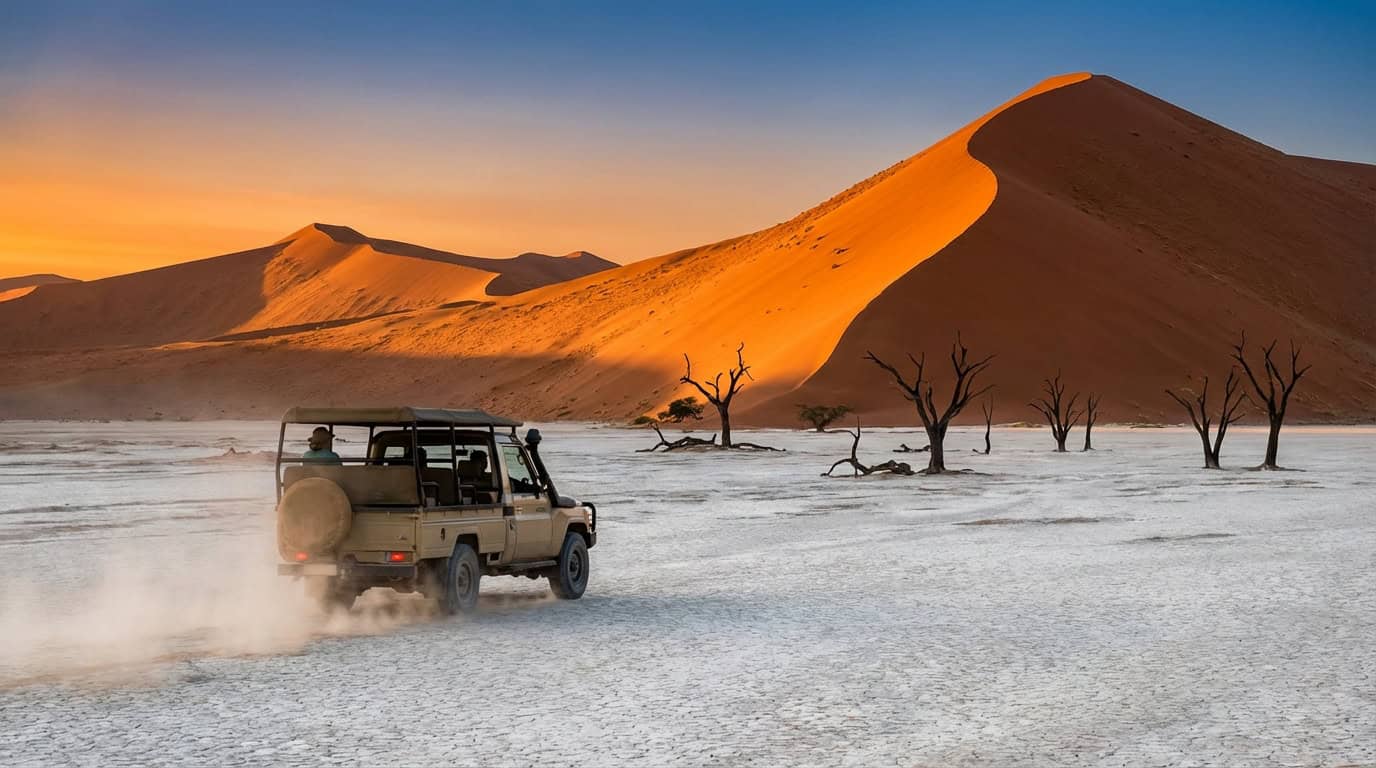
Imagine standing atop Big Daddy, a 325-meter sand giant, watching the sunrise ignite the ancient copper sands of the world’s oldest desert. My first namibia desert safari felt less like a traditional vacation and more like stepping onto another planet where 55-million-year-old dunes meet the crashing Atlantic surf. Between tracking elusive desert-adapted lions and navigating the skeletal beauty of Deadvlei, this region offers a raw, soul-stirring connection to nature that you simply can’t find anywhere else.
Planning a trip here requires a balance of adventure and timing to truly capture the magic of the Namib’s unique geography. Beyond the towering dunes, the area has become a global sanctuary for high-end conservation and some of the clearest stargazing on Earth at the NamibRand Nature Reserve. Whether you are hunting for the perfect photograph of Dune 7 or seeking the silence of an International Dark Sky Reserve, the desert’s vastness provides a transformative escape for every traveler.
Key Takeaways
- Conquer the iconic dunes of Sossusvlei, specifically Big Daddy and Dune 7, by starting your ascent at sunrise to witness the dramatic light shifts and avoid the peak desert heat.
- Track rare desert-adapted wildlife, such as elephants and lions, through guided safaris along the Skeleton Coast where the ancient Namib sands meet the Atlantic Ocean.
- Experience world-class stargazing at the NamibRand Nature Reserve, an International Dark Sky Reserve that offers unparalleled celestial clarity and high-end eco-lodges dedicated to conservation.
- Navigate the vast desert terrain using a sturdy 4×4 vehicle and a well-planned itinerary that balances the vertical challenges of the dunes with the rugged beauty of Deadvlei and the coastal shipwrecks.
Conquering the Iconic Dunes of Sossusvlei
Ascending the sheer face of Big Daddy is a physical test that rewards you with a profound sense of solitude. As you trek up the narrow spine of the dune, the shifting orange sands challenge every step, but the panoramic view from the 325-meter summit is life changing. Looking out over the undulating sea of the Namib, you feel a deep spiritual connection to a world that has remained largely unchanged for 55 million years. The descent is a joyful contrast to the climb, as you can run down the steep face into the white clay floor of Deadvlei below.
To witness the desert at its most magical, aim to reach the crest of the dunes just as the sun begins to break over the horizon. I recommend staying at a lodge inside the park gates to gain a head start on the crowds and secure your spot before the light hits the skeletal camel thorn trees. When the first rays strike the dunes, the contrast between the glowing apricot sand and the deep purple shadows creates a photographer’s paradise. This fleeting moment offers a quiet clarity that makes the early morning wake-up call and the strenuous hike worth every ounce of effort.
If you are seeking the ultimate vertical challenge, heading toward Dune 7 near Walvis Bay provides an even more intense climbing experience. Standing as the tallest dune in the region at 388 meters, it requires stamina and a steady pace to conquer its towering heights. Once you reach the top, the sight of the massive dunes meeting the cold Atlantic Ocean serves as a powerful reminder of Namibia’s unique geography. Bringing plenty of water and wearing high-top boots will help you manage the heat and the sand as you explore this iconic highlight.
Tracking Rare Wildlife Across the Skeleton Coast
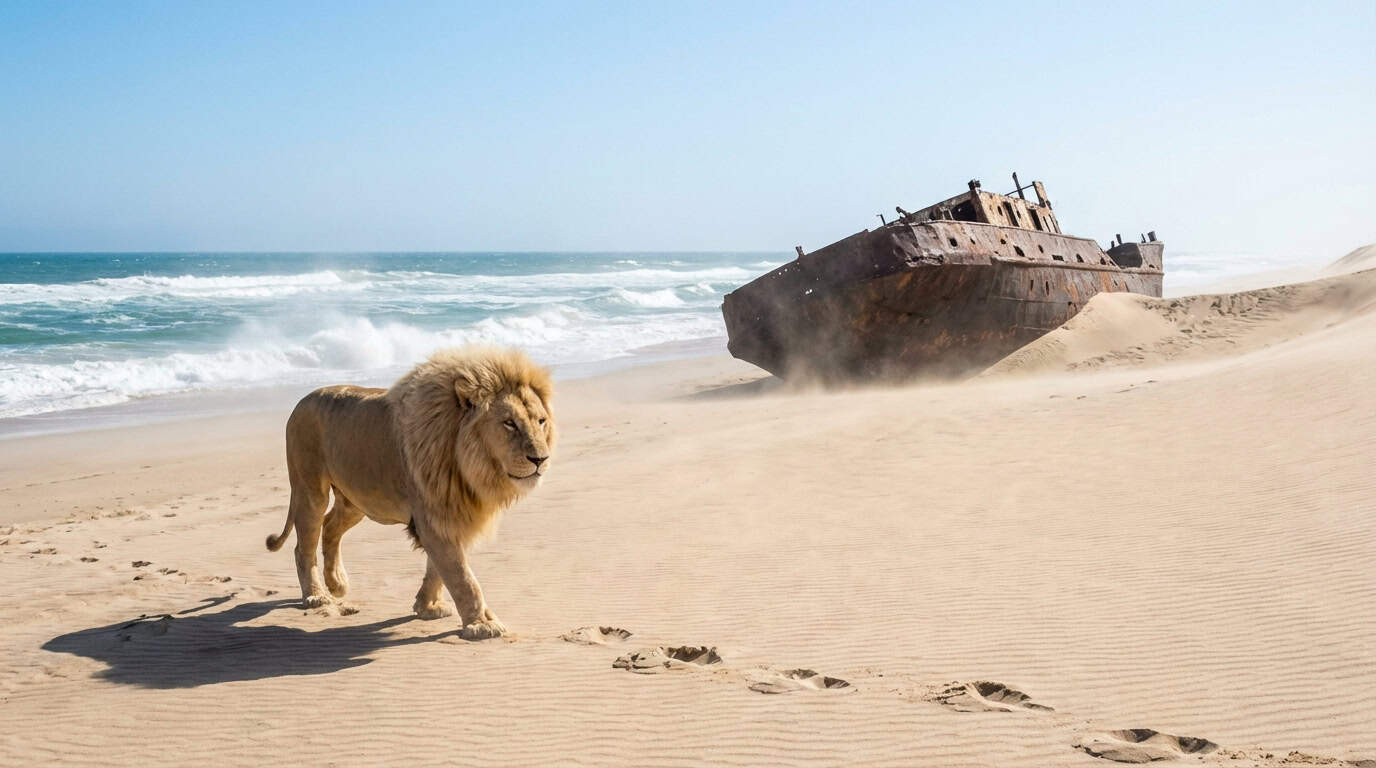
Traversing the rugged Skeleton Coast felt like stepping onto another planet where the scorched orange sands of the ancient Namib Desert collide with the icy Atlantic. I remember the silence being broken only by the distant roar of the surf as our guide pointed out a group of desert-adapted elephants navigating a dry riverbed. These majestic giants are a testament to resilience, having evolved longer legs and larger feet to trek across the soft dunes in search of underground water. Watching them move with such grace through a world that seems entirely devoid of life was a humbling reminder of nature’s ingenuity. It is essential to book a guided tracking safari if you want to find these elusive herds, as their movements are unpredictable across this vast wilderness.
The thrill of the hunt shifted from giants to ghosts when we encountered a pride of desert-adapted lions prowling the shoreline. These predators have mastered the art of survival in one of Earth’s harshest environments, occasionally scavenging from the sea to supplement their diet. Seeing a lion silhouetted against a backdrop of ancient shipwrecks and towering dunes is an image I will never forget. For travelers planning this remote exploration, I highly recommend staying at a conservancy-based lodge that supports local anti-poaching efforts. This ensures your visit contributes directly to the protection of these rare carnivores while providing you with expert trackers who know the terrain intimately.
As the sun began to dip below the horizon, the true magic of the NamibRand Nature Reserve revealed itself through an explosion of stars. Because this region is a designated International Dark Sky Reserve, the lack of light pollution makes the Milky Way appear bright enough to cast shadows on the sand. I spent hours simply looking up, feeling small beneath a celestial canopy that has remained unchanged for millions of years. If you are adding the Skeleton Coast to your itinerary, try to schedule your visit during a new moon for the best stargazing conditions. Bringing a tripod and a wide-angle lens is a must for capturing the dramatic contrast between the prehistoric desert floor and the shimmering galaxy above.
Stargazing in the NamibRand Nature Reserve
Stepping into the NamibRand Nature Reserve at dusk feels like entering a silent, primordial world where the orange dunes gradually dissolve into a deep velvet indigo. As Africa’s first International Dark Sky Reserve, this vast expanse offers a level of celestial clarity that is almost impossible to find anywhere else on the planet. I remember lying on my outdoor star bed at a luxury eco-lodge, watching the Milky Way emerge with such intensity that it cast soft shadows across the desert floor. The absence of light pollution means you can see the Magellanic Clouds and the Southern Cross with the naked eye, making the universe feel incredibly close. It is a humbling experience that transforms a standard safari into a magical three day escape under the oldest desert skies.
Capturing this cosmic display requires a bit of technical preparation, but the results are worth every second of effort. I recommend bringing a sturdy tripod and a wide-angle lens with an aperture of at least f/2.8 to let in as much light as possible. Set your camera to a high ISO around 3200 and use a shutter speed of about twenty seconds to freeze the stars before they begin to trail. For the best composition, try to frame a skeletal camel thorn tree or a distant dune ridge in the foreground to provide a sense of scale against the infinite galaxy. Remember to use a remote shutter or a timer to avoid any camera shake during these long exposures.
Planning your stay in this remote wilderness means choosing from some of the world’s most impressive high-end eco-lodges that prioritize conservation. Properties like Wolwedans or Kwessi Dunes offer specialized star-gazing platforms and even rooms with retractable roofs for an immersive overnight experience. These lodges often employ resident astronomers who use professional-grade telescopes to guide guests through the constellations and planets. I suggest booking your visit during a new moon phase to ensure the darkest possible conditions for photography and observation. These sustainable retreats ensure that your presence supports the protection of this fragile ecosystem while providing world-class comfort in the heart of the Namib.
A Seven Day Namibia Desert Safari Itinerary
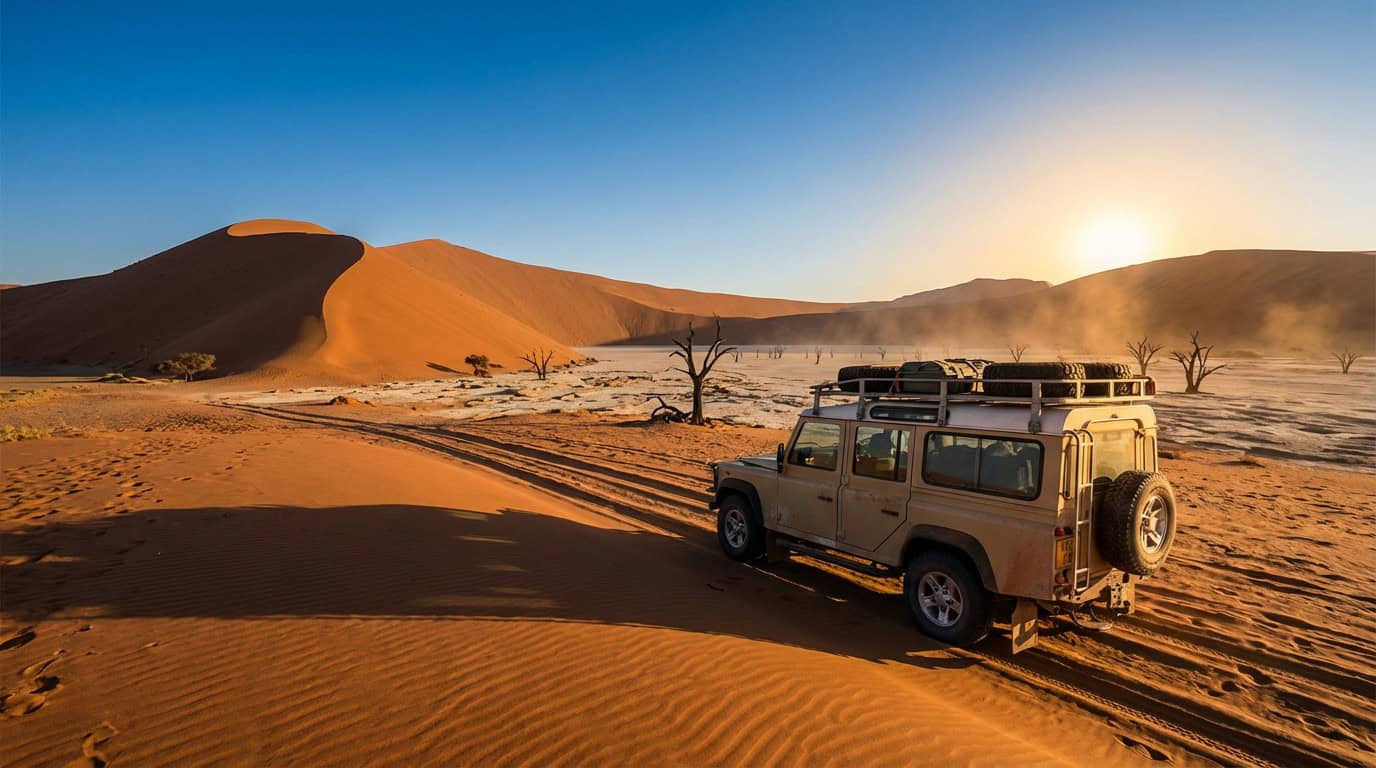
Our journey begins in the capital city of Windhoek, where we will pick up a sturdy 4×4 vehicle before heading south toward the ancient wonders of the Namib Desert. For the first two days, we will immerse ourselves in the Sossusvlei region to climb the towering crest of Big Daddy and wander through the haunting, sun-bleached trees of Deadvlei. Standing atop these 55-million-year-old dunes at sunrise offers a perspective on time that few other places on earth can provide. I recommend packing plenty of water and starting your climbs before the desert heat peaks around midday. This initial leg of the trip is all about witnessing the dramatic shift of colors from burnt orange to deep crimson as the sun moves across the sky.
On days three and four, we move deeper into the Namib-Naukluft Park to explore the rugged canyons and hidden watering holes that support desert-adapted wildlife. This area is a prime spot for tracking resilient species like the oryx and springbok, which have evolved incredible ways to survive in this arid environment. As night falls, we will find ourselves in the NamibRand Nature Reserve, an International Dark Sky Reserve where the stars feel close enough to touch. I spent hours here simply staring upward, mesmerized by the clarity of the Milky Way in one of the least light-polluted places on the planet. This portion of the itinerary balances active exploration with quiet, awe-inspiring moments of natural reflection.
The final three days of our safari take us toward the Atlantic coastline, where the scorching desert sands finally meet the cold, crashing waves of the ocean. We will stop in the charming town of Swakopmund to experience a unique blend of colonial history and adrenaline-pumping activities like sandboarding. From there, a drive along the Skeleton Coast reveals the desolate beauty of rusted shipwrecks and massive seal colonies resting on the foggy shores. This route offers a fascinating contrast between the silent dunes and the powerful energy of the sea. It is the perfect way to finish a week of remote exploration before looping back to Windhoek for your flight home.
The Timeless Magic of the Namib Desert
Standing atop the crest of Big Daddy as the morning sun ignites the sand in shades of burnt orange and crimson is a moment that stays with you forever. There is a profound, quiet power in the Namib Desert that forces you to slow down and truly appreciate the ancient rhythms of our planet. Watching a desert-adapted oryx traverse the base of a 55-million-year-old dune reminds us of the incredible resilience of life in extreme environments. This journey is more than just a sightseeing trip. It serves as a soul-stirring reminder of the vast beauty found in the world’s most remote corners.
If you are ready to trade the noise of the city for the crackle of a campfire under the stars of the NamibRand Nature Reserve, I cannot encourage you enough to start planning. Remember to book your 4×4 vehicle well in advance and always carry extra water and fuel for those long, breathtaking stretches of coastal road. Whether you are trekking through the skeletal trees of Deadvlei or gazing at the Milky Way in a certified Dark Sky Reserve, Namibia offers a sense of freedom that is hard to find anywhere else. Pack your camera and your sense of wonder, because the oldest desert on Earth is waiting to show you its beauty.
Frequently Asked Questions
1. When is the best time of day to climb Big Daddy?
You should aim to reach the crest of the dune just as the sun breaks over the horizon to see the sands ignite in a vibrant copper glow. Staying at a lodge inside the park gates is my top tip for getting a head start on the crowds and capturing that perfect morning light.
2. How difficult is the hike up the dunes in Sossusvlei?
Trekking up the narrow spine of a 325-meter sand giant like Big Daddy is a physical challenge that tests your endurance with every shifting step. The effort is completely worth it for the life-changing panoramic views and the joyful run down the steep face into the white clay floor of Deadvlei below.
3. What makes the Namib Desert different from other safari destinations?
This is the world’s oldest desert, offering a raw and soul-stirring connection to nature through 55-million-year-old dunes and unique desert-adapted wildlife. You can experience the rare phenomenon of towering sand dunes meeting the crashing Atlantic surf while enjoying some of the clearest stargazing on Earth.
4. Where can I find the best stargazing in Namibia?
The NamibRand Nature Reserve is an International Dark Sky Reserve that offers a transformative escape for anyone seeking the silence of the stars. Because of the lack of light pollution, you will experience a cosmic display that feels close enough to touch in the vast desert night.
5. What should I expect to see at Deadvlei?
Deadvlei is a hauntingly beautiful white clay pan home to skeletal camel thorn trees that have stood for centuries against the orange dunes. It is a photographer’s dream where the stark contrast of the dark wood, white floor, and blue sky creates a world that feels like another planet.
6. Can I see wildlife during a Namibia desert safari?
Yes, the desert is a sanctuary for incredible conservation efforts where you can track elusive desert-adapted lions and other resilient species. Watching these majestic animals navigate the ancient sands is a powerful reminder of nature’s ability to thrive in the most extreme environments.