
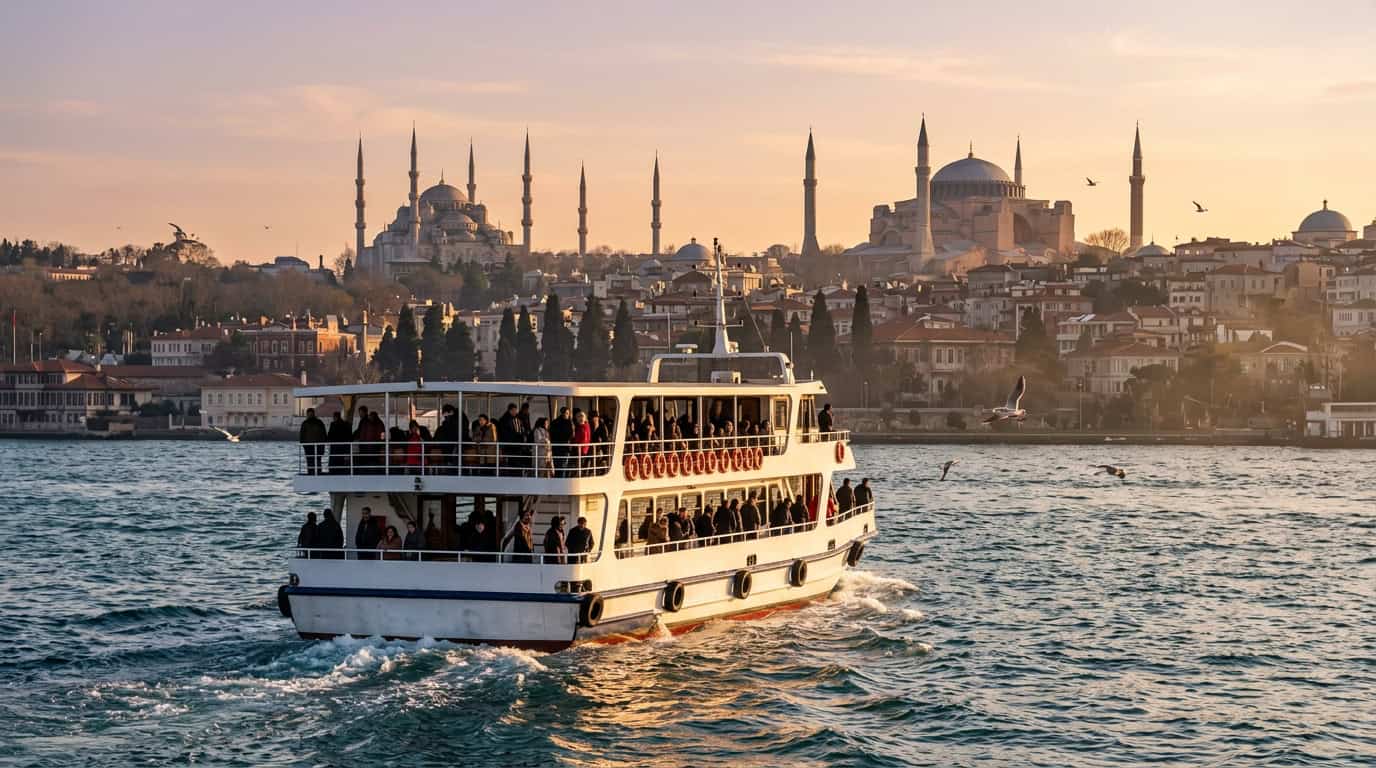
A first-time Istanbul trip is really about balance: the historic peninsula on one side of the water and the Asian-side neighborhoods on the other, joined by ferries that make the crossing part of the adventure. The city is no quiet secret. TÜRSAB reports that the province welcomed 18.4 million foreign visitors in 2024, so expect crowds around the big monuments and plan your mornings early.
We think the best way to see it is to choose a base by mood. Sultanahmet puts the major landmarks within walking distance. Balat and Fener reward slow wandering along historic streets and past religious sites on the Golden Horn. Kadıköy and Moda bring cafés, a relaxed local rhythm, and an entirely different view of the city. Getting between them is simple: a full-fare trip on the Karaköy to Kadıköy ferry costs 65.21 TL when paid with an İstanbulkart. Stand at the rail for the crossing. The call to prayer drifts over the water, gulls wheel above the wake, and the skyline turns gold as the afternoon fades.
Key Takeaways
- We recommend choosing your Istanbul base by mood: Sultanahmet for walking to the major landmarks, Balat and Fener for history and quiet streets, and Kadıköy or Moda for cafés and a slower local rhythm.
- We suggest buying the combined Topkapı Palace ticket for 2,750 TL on the day you plan to visit, since that foreign-visitor ticket covers Topkapı Palace, Hagia Irene and the Harem and is valid for one day from purchase.
- We recommend the Long Bosphorus Tour for a full day on the water, with a 10:35 departure from Eminönü, a 12:25 arrival at Anadolu Kavağı and a 16:40 return to Eminönü.
- We advise paying for ferry rides with an İstanbulkart or a contactless credit or debit card, where the Karaköy to Kadıköy crossing costs 65.21 TL at full fare, and checking the Şehir Hatları timetables and fares shortly before you travel.
- We urge travelers to confirm that their passport is valid for at least 60 days beyond their intended stay under Türkiye’s Law on Foreigners and International Protection No. 6458 before they book flights.
Why Istanbul Works Best on Both Sides of the Water
Sultanahmet sits on the European side like a stage set for the city’s long history. Its streets hold many of the major landmarks, so a first morning here can begin with the domes and minarets while the square is still quiet and the stone catches the soft early light. A few minutes’ walk takes you into narrow lanes lined with tea gardens and carpet shops, where the call to prayer seems to rise from every direction at once.
Cross the Golden Horn and the pace changes. Balat and Fener feel like another century, with painted wooden houses leaning over cobbled hills. The district holds the Greek Orthodox Patriarchate, the Ahrida Synagogue, Sveti Stefan Church and Fener Greek High School, so you can spend a whole afternoon moving from one door to the next. Pause in a courtyard, let a cat cross your path, and let the neighborhood set the rhythm.
On the Asian side, Kadıköy shifts the tempo entirely. Produce stalls and fishmongers fill the market streets, and the cafés of Moda spill onto leafy sidewalks where locals linger over tea long after their cups are empty. GoTürkiye describes Kadıköy as an Asian-side district with ferry access from the historic sights, and it names Yeldeğirmeni and Moda as distinct neighborhood areas, each with its own character. Give yourself at least half a day here, and wander without a fixed list.
The water shapes how the whole city moves. The Bosphorus separates the European and Asian shores, while the Golden Horn cuts through the old city, which makes ferries the most natural way to get around. Board at Eminönü or Karaköy and you trade the traffic on the bridges for a seat by the rail. Spray hits your cheek, gulls wheel over the wake, and the skyline turns gold as the afternoon fades.
Paying for the crossing is easy. An İstanbulkart works on ferries, buses, the metro and the tram, and visitors can also use contactless credit or debit cards for public transport. Keep a little time unplanned on each side, because the best moments in Istanbul often happen between stops, over a glass of tea or on a bench where the ferry horn carries across the water.
Which Istanbul Neighborhoods Should You Explore First?
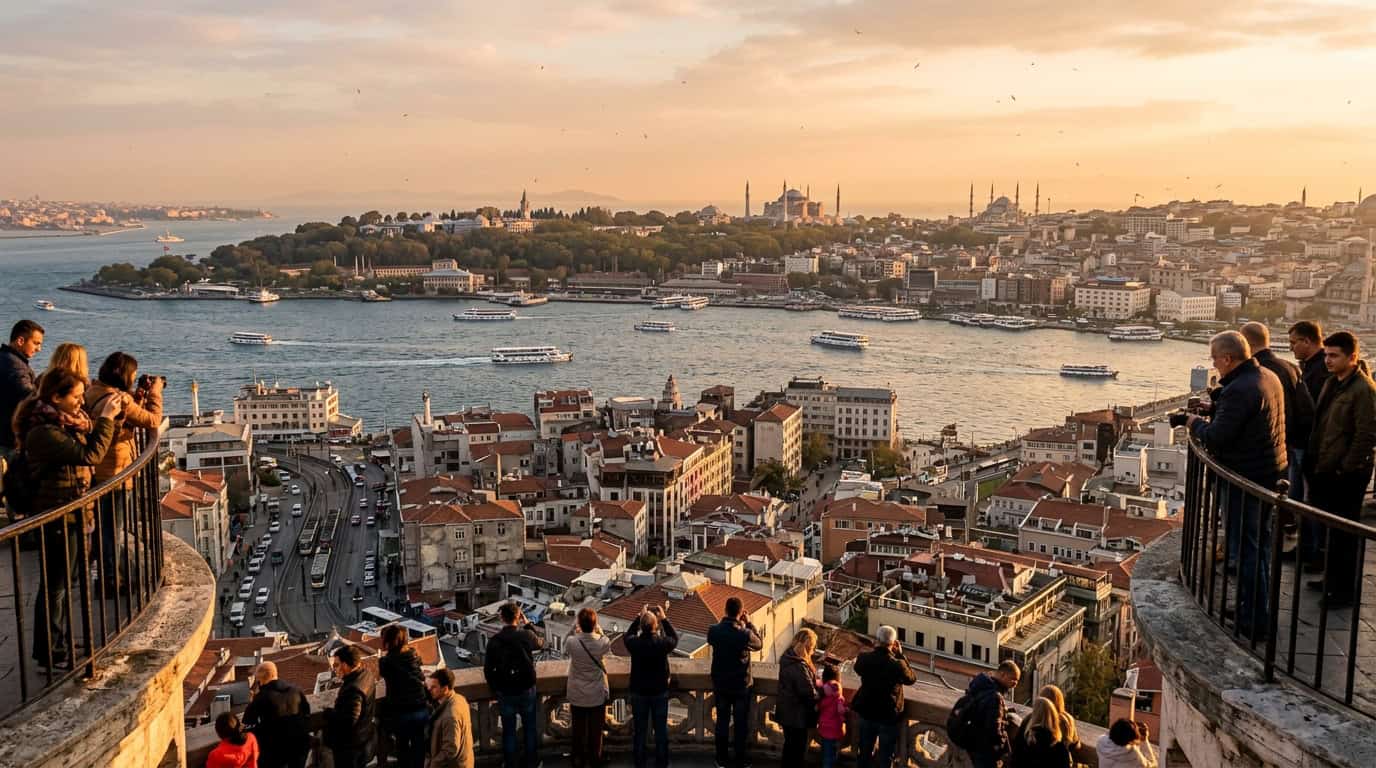
Sultanahmet is the best first base if you want the major landmarks within walking distance, Balat and Fener suit travelers who care most about history, and Kadıköy or Moda suit those who want cafés and a slower local rhythm. The right choice depends less on which district is “best” and more on the kind of day you want.
Sultanahmet is the simplest option for a first trip. Its streets hold many of the major monuments, so you can walk to the domes and minarets in the morning and return to your room for a midday rest. The square fills up quickly once the tour groups arrive, so start early, when the stone is still cool and the call to prayer carries across the rooftops.
Balat and Fener sit side by side along the Golden Horn, and they reward a slow pace. A single unhurried walk can take you from a historic church to a religious site and back again. Expect steep hills, uneven cobblestones and narrow lanes that bend without warning. Wear comfortable shoes, carry a bottle of water, and leave room in your schedule for stopping whenever a doorway or a view catches your eye.
Kadıköy is a different kind of day altogether. It is an Asian-side district with ferry access from the historic sights, which makes it an easy add-on to a day spent on the European side. The market streets are busy with produce stalls and fishmongers, and a short walk brings you to Moda, where cafés spill onto leafy sidewalks. Yeldeğirmeni, whose name recalls the windmills that once stood nearby, offers quieter lanes a few steps from the main bustle, which makes it a good place for a late breakfast or an aimless wander.
Getting between these bases is straightforward. A ferry ride from Eminönü to Üsküdar costs 58.52 TL at full fare when paid with an İstanbulkart, a modest price for a crossing that doubles as a sightseeing trip. Choosing your base by mood will shape the rest of your itinerary:
- For history: stay in Sultanahmet to walk to the landmarks, or in Balat and Fener for quieter streets and religious sites.
- For cafés: choose Kadıköy or Moda, where long lunches and tea breaks are the main event.
- For easy ferry access: pick a base near Eminönü or Karaköy, where the boats leave for both shores.
If you are unsure, split your stay. Spend the first nights near the historic peninsula, then move across the water for the final days. You will see more of the city, and the ferry ride between the two sides becomes a highlight in its own right.
How Do You Get Around Istanbul by Ferry?
Ferries are the quickest way to cross between Istanbul’s European and Asian shores, and an İstanbulkart or a contactless bank card pays for the trip. The İstanbulkart works on buses, the subway, the tram, the cable car, Marmaray, Metrobus and ferries, so one card can cover most of a first visit. Visitors can also pay for public transport with a contactless credit or debit card, so you can skip buying a card altogether.
Fares depend on the route. At full fare, paid with an İstanbulkart, the Karaköy to Kadıköy crossing costs 65.21 TL, and the Üsküdar to Eminönü crossing costs 58.52 TL. Those are the figures on the official Şehir Hatları price list, but fares change, so check the price list and the timetables shortly before you travel.
Consider the alternative for a moment. Getting from the historic peninsula to Kadıköy by road means crossing a bridge, and traffic can crawl for long stretches at busy hours. The boat takes you across the water in a short crossing, well away from the road traffic, and you step off in a neighborhood that feels like a different city. For many travelers, that short trip is the most efficient part of the day.
Boarding is simple once you know the sequence. Most travelers can manage the process in a few minutes at the pier:
- Choose the pier that matches your route, such as Eminönü or Karaköy for Kadıköy, or Üsküdar for Eminönü.
- Tap your İstanbulkart or contactless card on the reader at the turnstile.
- Check the departure board for the next boat to your destination.
- Walk to the correct gangway before the crew calls the final boarding.
- Find a seat near the rail, where the wind, the gulls and the skyline are at their best.
Keep a small balance on your İstanbulkart so you are never stuck at the turnstile with a long queue behind you. If you plan several rides in one day, load enough credit at the start so you do not need to top up mid-outing. Carry a little cash as a backup, since some kiosks and machines can be busy or out of order at peak times.
The crossings also make excellent sightseeing in their own right. Sit on the open deck, let the wind pull at your hair, and watch the minarets slide past the rail as the boat pulls away from the shore.
Is the Long Bosphorus Tour Worth a Full Day?
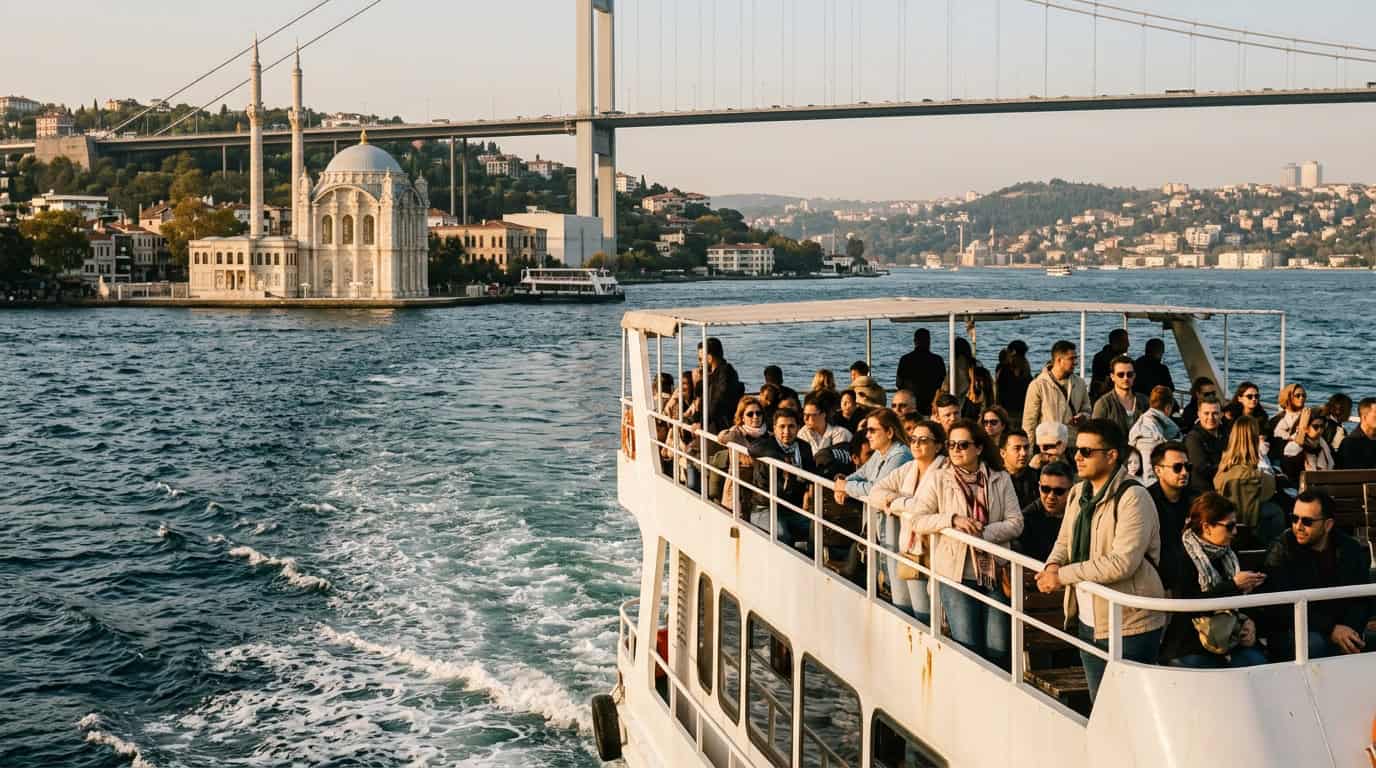
Yes, the Long Bosphorus Tour is worth a full day if you want to see the strait from the water instead of from a bridge. The outing is long, but it has a clear shape: a morning departure, a relaxed midday stop in a northern village, and an afternoon return as the light softens over the city.
The boat leaves Eminönü every day at 10:35, pulling away from the busy pier in the shadow of the New Mosque. It reaches Anadolu Kavağı at 12:25, so the first leg takes just under two hours. The official Şehir Hatları timetable sets the departure from the village at 15:00 and the return to Eminönü at 16:40.
From departure to return, the scheduled outing runs 6 hours 5 minutes. Most of that time is spent on the water, but the break at the village lasts from 12:25 until 15:00, which gives you about two and a half hours on land.
The shoreline is the reason to go. Wooden waterfront houses, called yalı, stand with their balconies almost touching the waves, their paint faded to pinks, creams and soft greens. Palaces, old fortress walls and hillside villas slide past one after another, and the skyline changes with every bend. The domes and minarets of the historic peninsula shrink behind you, and the hills of the Asian shore grow greener and quieter.
Plan lunch at Anadolu Kavağı before anything else. The waterfront is lined with fish restaurants where you can sit at a table near the water and order grilled fish with bread and a plate of fresh salad. Eat slowly, because the hours pass quickly once the plates are cleared.
After lunch, walk the harbor and climb a little way up the lanes toward the ruined fortress on the hill above the village. The view back toward the strait is one of the best on the whole trip. Give yourself a comfortable margin, and be back at the pier well before 15:00, so the return boat does not leave without you.
Bring a hat, a light layer for the open deck, and water. The sun is strong on the water, and the breeze can feel cool even on a warm afternoon.
What Are the Topkapı Palace Ticket Prices and Opening Tips?
The combined ticket for the foreign-visitor rate is 2,750 TL, and it covers Topkapı Palace, Hagia Irene and the Harem in one purchase. Prices and opening hours can change, so confirm them with the Directorate of National Palaces before you set out.
The palace is the best place to start a day on the historic peninsula, and the combined ticket is the simplest option because it gathers the main sights into one purchase. Hagia Irene, a Byzantine church that stands in the palace’s first courtyard, is part of the same ticket, so you do not need a separate queue for it. The Harem, with its tiled rooms and narrow corridors, is also included, and it deserves more time than most visitors expect.
The ticket is valid for one day from the moment you buy it. That rule matters more than it sounds. If you buy in the afternoon, you cannot use it the next morning as a head start, so buy it on the day you plan to visit and walk in with the time you need ahead of you.
Children aged 0 to 6 enter free of charge, which makes the palace an easy family stop. Students aged 7 to 25 receive discounted tickets when they show a valid student identification card at the ticket desk. Carry the card in your bag rather than in a hotel safe, because a discount is only available if you can show it on the spot.
Once inside, we suggest a loose order. Begin in the outer courtyards, where the gardens and views over the Bosphorus open up, then move into the inner rooms while your energy is high. Leave the Harem for later in the visit, when the crowds in the lower courtyards have thinned and the rooms feel more personal. Save a few minutes at the end for the terraces, which offer some of the most photographed views of the water and the Asian shore beyond it.
Expect queues at the entrance during busy periods, and carry water, since there is a lot of walking on stone paths. Wear shoes you can rely on, because many of the surfaces are uneven. If you plan to combine the palace with a walk to nearby monuments, keep your ticket handy, as you may need to show it again at certain points inside the complex.
How Should You Spend Three Days in Istanbul?
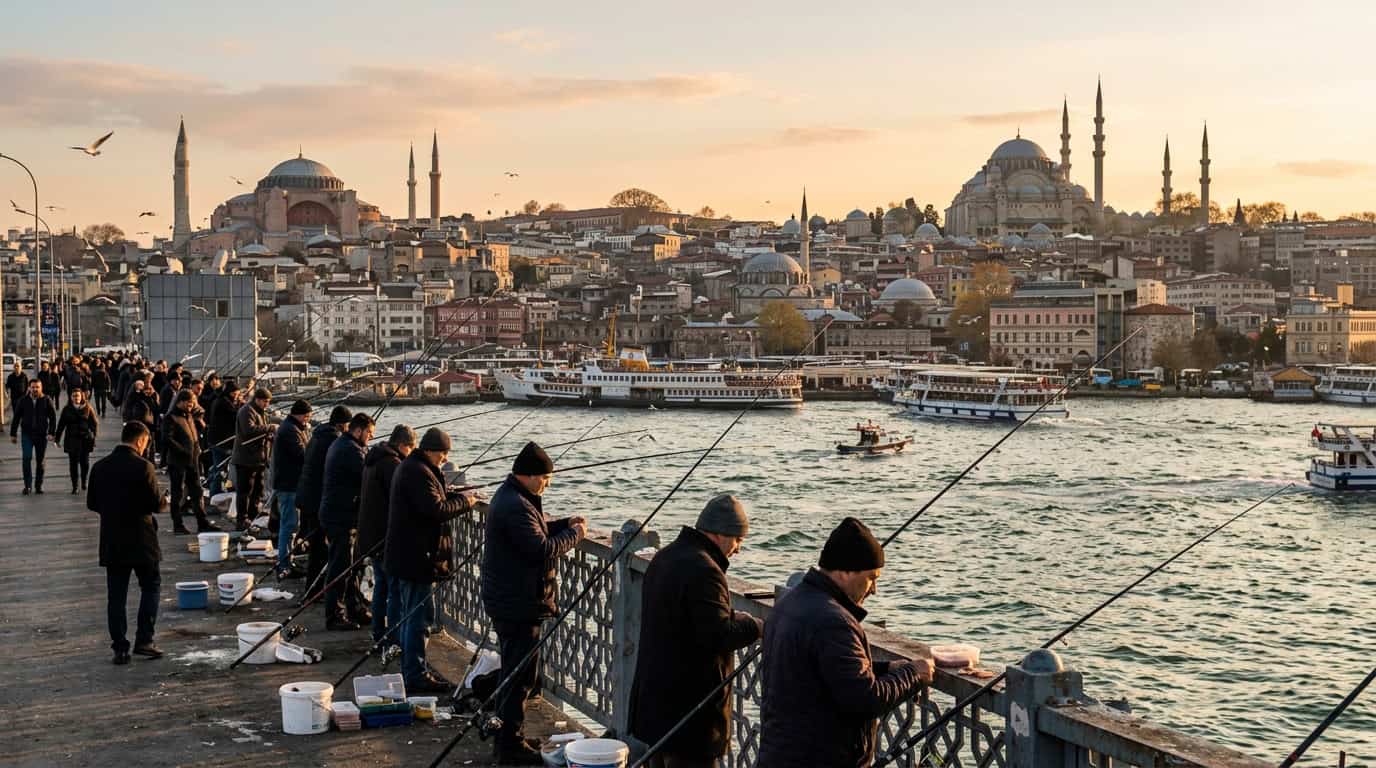
Three days in Istanbul works best when each day has one clear anchor: the palaces and monuments of Sultanahmet, the water and the bazaars on day two, and the colorful hillside neighborhoods followed by a ferry to the Asian side on day three. Start with the palace, since it is the one ticket you need to plan ahead for.
Day one: Sultanahmet’s monuments
Buy the combined Topkapı ticket for the morning you plan to visit, because it is valid for one day from purchase. Arrive before the tour groups, and spend the first two hours in the palace’s outer courtyards, the Harem and the terraces above the Bosphorus. Hagia Irene is covered by the same ticket, so you can step inside without joining a second queue.
Walk across the square to Hagia Sophia by late morning. Its dome has dominated the skyline for centuries, and the gallery levels let you look down at the vast interior. Stop for lunch at a small restaurant on one of the side streets near the square, where tables spill out under awnings.
Save the early afternoon for the Blue Mosque. The mosque closes to visitors during prayer times, so check the schedule at the entrance before you queue. Remove your shoes, cover your shoulders and knees, and keep your voice low. End the day with tea in a garden as the minarets catch the last light.
Day two: the Bosphorus and the bazaars
Be at the Eminönü pier well before the 10:35 departure of the Long Bosphorus Tour. Use your İstanbulkart or a contactless card for every tram or ferry ride on the way to the pier, and tap at the turnstile each time. The boat carries you north past palaces, wooden waterfront houses and fishing villages, so bring a hat and a light layer for the open deck.
You return to Eminönü in the late afternoon, which leaves time for the bazaars. The Spice Bazaar is only a few minutes’ walk from the pier, and its stalls are stacked with saffron, sumac and Turkish delight. Continue uphill to the Grand Bazaar, where lamps, ceramics and tea glasses fill the covered lanes. Browse slowly and bargain politely, and do not be surprised if the crowds thicken around dusk.
Day three: Balat, Fener and the ferry to Kadıköy
Start in Balat early, when the painted houses catch the morning sun and the streets are quiet. Look for the Ahrida Synagogue and Sveti Stefan Church, then continue to Fener to see the Greek Orthodox Patriarchate and the Fener Greek High School. Let the hills and dead ends lead you, and stop at every small café with a view of the Golden Horn.
When you are ready for dinner, take a bus back toward Karaköy and pay with your İstanbulkart or contactless card on the bus, or take a taxi and pay the fare directly. From there, the ferry to Kadıköy is the simplest route, and the crossing takes you away from the traffic on the bridges. Follow these steps at the pier:
1. Walk to the Karaköy pier and check the departure board for the next boat to Kadıköy. 2. Tap your İstanbulkart or contactless card at the turnstile before you walk to the gangway. 3. Board before the crew calls the final boarding, and head for the upper deck if the weather is fine. 4. Step off at Kadıköy and walk to Moda for dinner, where seaside restaurants serve fish meze and grilled dishes.
Before you settle in for dinner, look up the return timetable, because the last boat back to the European side can leave earlier than you expect. Tap your card again on the way back, and watch the lights of the historic peninsula come up across the water as you cross home.
Do You Need a Visa to Visit Türkiye?
Whether you need a visa for Türkiye depends on your nationality and your passport, so there is no single answer that fits every traveler. Check your own situation before you book flights, because the rules that apply to a neighbor’s passport may not apply to yours.
Begin with the passport. Under Türkiye’s Law on Foreigners and International Protection No. 6458, your passport must be valid for at least 60 days beyond the length of your intended stay. The official e-Visa portal adds that further requirements depend on nationality. Look at the expiry date early, since a passport that expires shortly after your planned departure can cause problems at the check-in desk.
Travelers with ordinary U.S. passports have one of the simpler cases. The Turkish Consulate General in Los Angeles states that these passport holders are exempt from a tourist visa for stays of up to 90 days within a 180-day period. The same guidance says some e-Visa applicants must hold a valid visa or residence permit from the Schengen area, the United States, the United Kingdom or Ireland, and must also show a return ticket, a hotel reservation and at least US$50 for each day of the stay.
If you are not in one of those groups, the e-Visa route may apply, and the paperwork can be more involved than a quick online form suggests. Many travelers find it helpful to gather the following before they start:
- A passport valid for at least 60 days beyond your planned stay
- A return ticket that matches your travel dates
- A hotel reservation or other proof of where you will stay
- Funds of at least US$50 for each day, if your application requires it
- A valid visa or residence permit from an eligible country, if your nationality requires one
Keep copies of these documents in your email and on paper, so you can show them quickly at the border or at the airport. Rules can change, and the requirements for your nationality may differ from the examples above, so confirm them yourself on the official portal shortly before you travel. Keep the confirmation page or reference number in your bag so you can prove your status on arrival.
Planning Your First Istanbul Trip
Your next step is to choose a base for your first two nights. If you want to walk to the monuments each morning, book a room in Sultanahmet. If cafés and slow afternoons appeal more, look for a stay near Kadıköy or Moda and plan your first ferry crossing as the opening outing.
Then sketch your three days on a calendar around the fixed points. Mark 10:35 on day two for the Long Bosphorus Tour leaving Eminönü, since that one departure shapes the whole day. Put the Topkapı Palace visit on the morning of day one. The combined ticket is valid for one day from purchase, so buy it on the day you go, not the evening before.
Before you pay for anything, check the official timetables and fare list for the exact week you travel, because sailing times and prices change. Load your İstanbulkart with enough credit for several rides, or confirm that your contactless card works at the turnstile.
Last, check your passport’s expiry date and the entry rules for your nationality this week, not the night before your flight. Once those boxes are ticked, save your plan on your phone and keep a paper copy in your bag. Then set out, and let the route bend wherever the water, the lanes or a good café pull you in.