
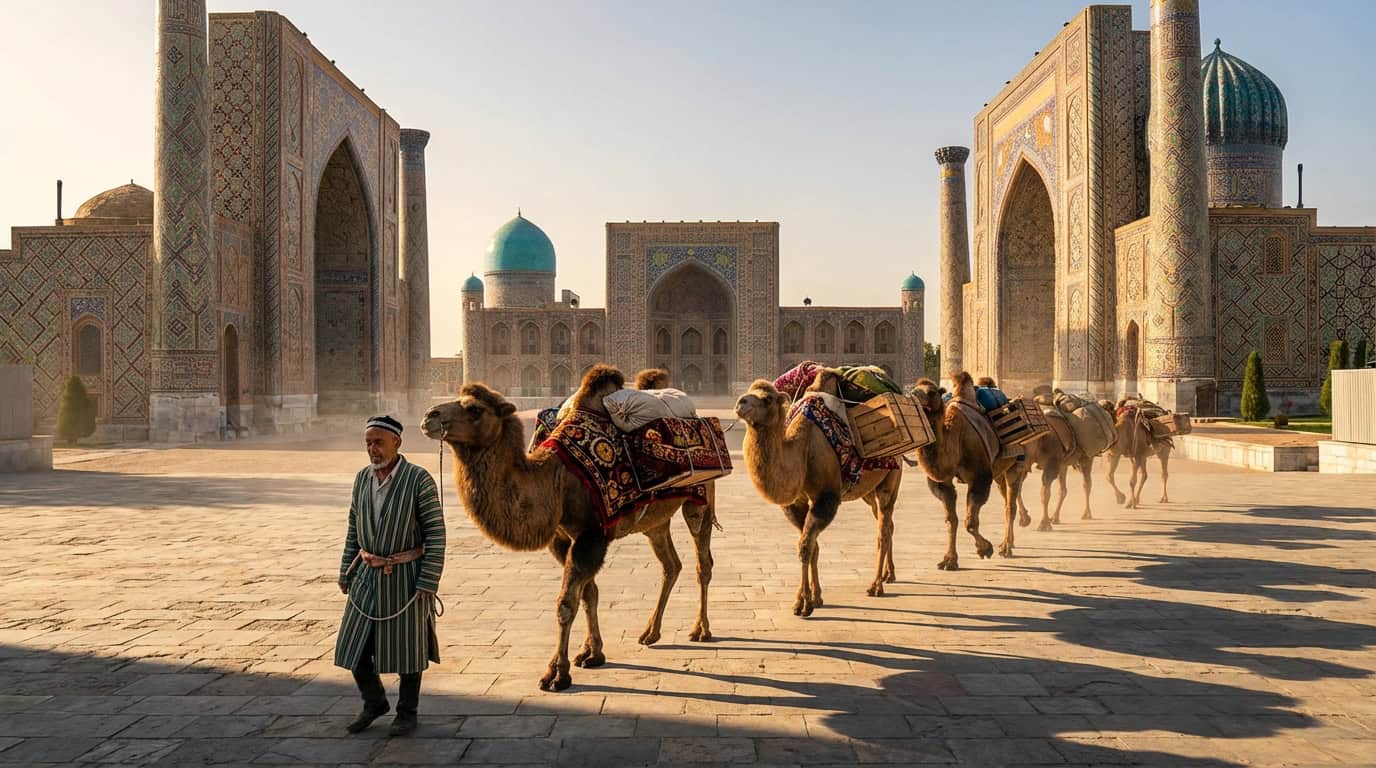
I still remember the first time I stood before the towering, sapphire-tiled minarets of Samarkand’s Registan Square, mesmerized by the sheer scale of history surrounding me. Exploring the Uzbekistan Silk Road feels like stepping straight into the pages of a centuries-old epic, where caravans once traded exotic spices, sweet peaches, and fine mulberry paper. With a tourism boom sweeping the country in 2025 and 2026 thanks to brilliant infrastructure upgrades, there has never been a better time to pack your bags and experience this captivating region.
As the undeniable heart of this ancient trade route, the country boasts three powerhouse medieval cities that will leave you breathless. You can wander through the bustling trading domes of Bukhara or watch the sun set over the perfectly preserved mud-brick walls of Khiva’s Itchan Kala, just as desert merchants did thousands of years ago. Navigating these beautifully restored UNESCO sites requires just a bit of clever planning to ensure you capture the true magic of Central Asia’s most spectacular cultural crossroads.
Key Takeaways
- The Uzbekistan Silk Road centers around three essential medieval cities: Samarkand with its dazzling blue mosaics, Bukhara’s active ancient trading domes, and the perfectly preserved walled fortress of Khiva.
- Recent infrastructure upgrades and modern high-speed train connections make 2025 and 2026 the ideal time to experience the region’s booming cultural tourism.
- A comprehensive journey through the Zarafshan-Karakum UNESCO corridor requires 10 to 14 days to fully explore the monumental architecture and living history at a relaxed pace.
- To ensure a seamless travel experience during this tourism boom, book high-speed train tickets weeks in advance and visit popular architectural sites at sunrise to avoid crowds.
Marveling At Samarkand And The Registan Square
Nothing could have prepared me for the scale and beauty of Samarkand when I first arrived in this legendary crossroads of cultures. Stepping into the iconic Registan Square felt like walking straight into a vibrant, living painting. I stood frozen as I tried to take in the three magnificent madrasas surrounding me, each covered in millions of vivid blue mosaics that seemed to glow under the Central Asian sun. Every intricate geometric pattern and sweeping archway whispered tales of ancient merchants arriving with caravans full of exotic treasures. It is easy to see why this breathtaking plaza remains the undisputed jewel of the Uzbekistan Silk Road.
Just a short walk from that dazzling center, the towering architecture of the Bibi-Khanym Mosque left me equally speechless. Built to be the grandest mosque in Tamerlane’s vast empire, its massive dome dominates the skyline and makes you feel small as you wander through the ancient courtyard. I spent hours exploring the nearby market stalls, imagining a time when this exact spot buzzed with traders swapping famous Samarkand peaches and high-quality mulberry paper. If you are a history lover planning a trip to the region, I highly recommend carving out at least two full days just to soak up the atmosphere of these monumental sites. The sheer magnitude of preservation here proves why this captivating city serves as the unmissable heart of any modern journey through Central Asia.
Wandering Bukhara And Ancient Trading Domes
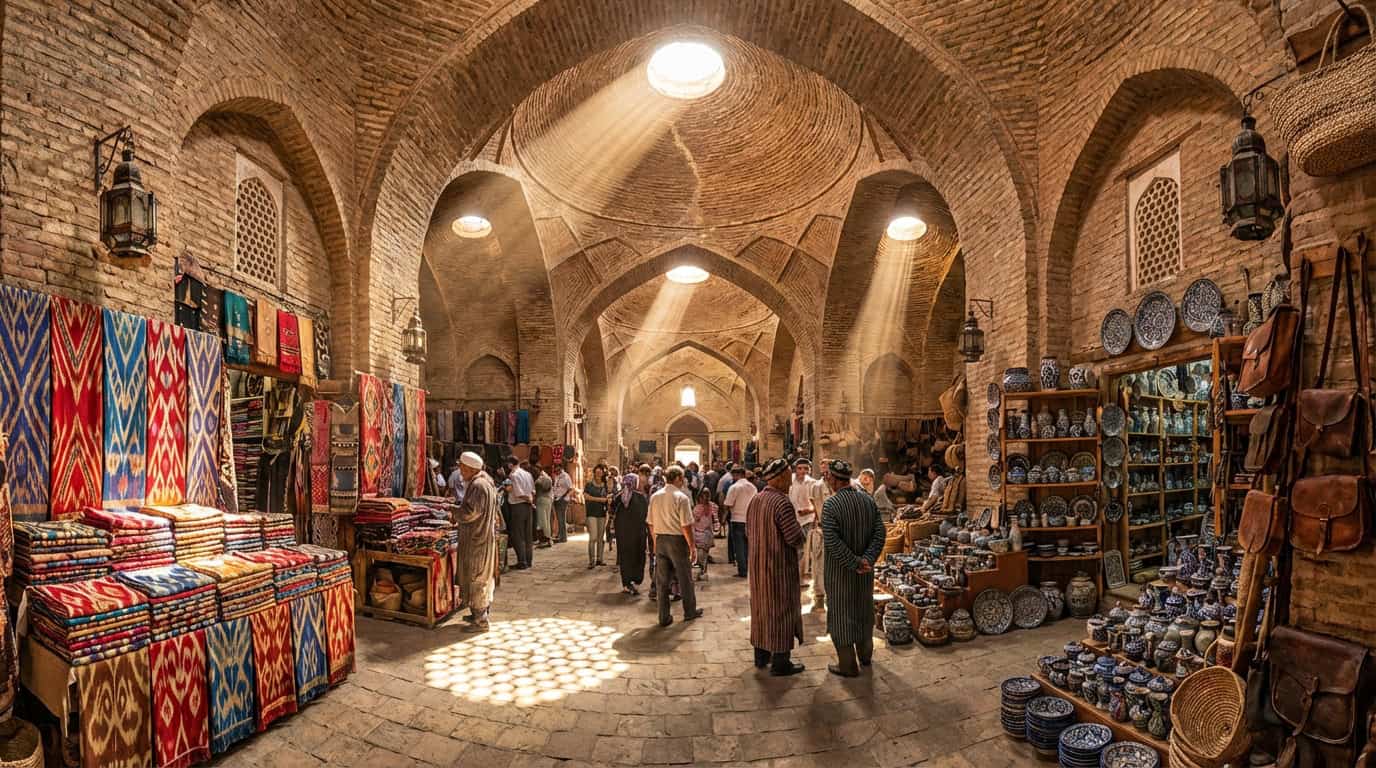
Stepping into the heart of Bukhara feels like walking onto the set of an ancient epic, where every sandy-colored alleyway whispers tales of the legendary Uzbekistan Silk Road. I spent hours wandering through this incredibly preserved 2,000-year-old living museum, mesmerized by the labyrinth of narrow streets and mud-brick buildings. Unlike some historical sites that feel frozen behind glass, this city pulses with a vibrant energy that connects its storied past to the present day. You can almost hear the echoes of weary merchants leading their camel caravans toward the city gates after months of crossing the harsh desert. For history-loving travelers planning a Central Asian adventure, getting lost in these timeless streets is an absolute must.
My most unforgettable moment came when I finally stood before the spectacular Po-i-Kalyan complex at the center of the old city. I remember craning my neck to take in the towering Kalyan Minaret, a structure so magnificent that even Genghis Khan reportedly ordered it spared from destruction during his conquests. The intricate turquoise tilework covering the mosque and madrasa facades caught the late afternoon sun, creating a dazzling display of color against the desert sky. I highly recommend timing your visit for the golden hour, as the shifting light brings the ancient geometric patterns and Arabic calligraphy to life. Sitting in the quiet courtyard, I felt a profound connection to the countless scholars and traders who rested in this exact spot centuries ago.
Just a short walk from the grand mosques, the ancient trading domes of Bukhara offer a sensory overload that will thrill any modern explorer. These historic bazaars are still active today, overflowing with vibrant textiles, hand-forged knives, and mountains of fragrant spices. I had the best time chatting with local artisans over cups of green tea while browsing through endless displays of stunning silk carpets and beautifully embroidered suzanis. If you are building your own itinerary, be sure to leave plenty of room in your suitcase and do not be afraid to engage in some friendly haggling. Exploring these bustling domes is the perfect way to experience the true spirit of the Silk Road before continuing your journey through Central Asia.
Stepping Back In Time Inside Walled Khiva
Walking through the imposing mud-brick gates of Khiva feels like stepping directly into a living history book. I was immediately struck by the scale of the Itchan Kala fortress, an exceptionally preserved open-air museum that once served as a vital desert oasis. As I wandered through the labyrinth of narrow alleys, the golden afternoon sun cast long shadows over intricate turquoise tilework and towering minarets. You can almost hear the echoes of ancient merchants bartering over spices and heavy rolls of silk in the bustling squares. This was the final major outpost for weary caravans, offering a safe haven before they braved the unforgiving desert journey toward Persia.
To truly appreciate the magic of this ancient citadel, I highly recommend starting your day early before the crowds arrive. Make your way to the Juma Mosque, where you will find hundreds of uniquely carved wooden pillars supporting an atmospheric prayer hall. Climbing the Islam Khodja Minaret is an absolute must for any itinerary, rewarding you with sweeping panoramic views of the entire walled city and the endless sands beyond. Take your time exploring the ancient trading domes, which still house active bazaars filled with vibrant textiles and handcrafted ceramics. Purchasing a locally made souvenir here not only supports the artisan community but also connects you directly to the legendary trading heritage of the region.
As evening falls, the fortress transforms into a beautifully illuminated maze that demands a leisurely sunset stroll. I found a quiet rooftop cafe near the West Gate to sip warm green tea while watching the sky turn brilliant shades of orange and purple. Sitting there, it is easy to imagine the relief those ancient travelers felt when they finally reached these protective walls after weeks of harsh travel. Make sure to wear comfortable walking shoes, as the uneven cobblestone streets are authentic but challenging to walk on in the dark. Experiencing Khiva is an essential part of understanding the true heart of the Silk Road, leaving you inspired and ready for the next leg of your adventure.
Exploring The Zarafshan-Karakum UNESCO Corridor Itinerary
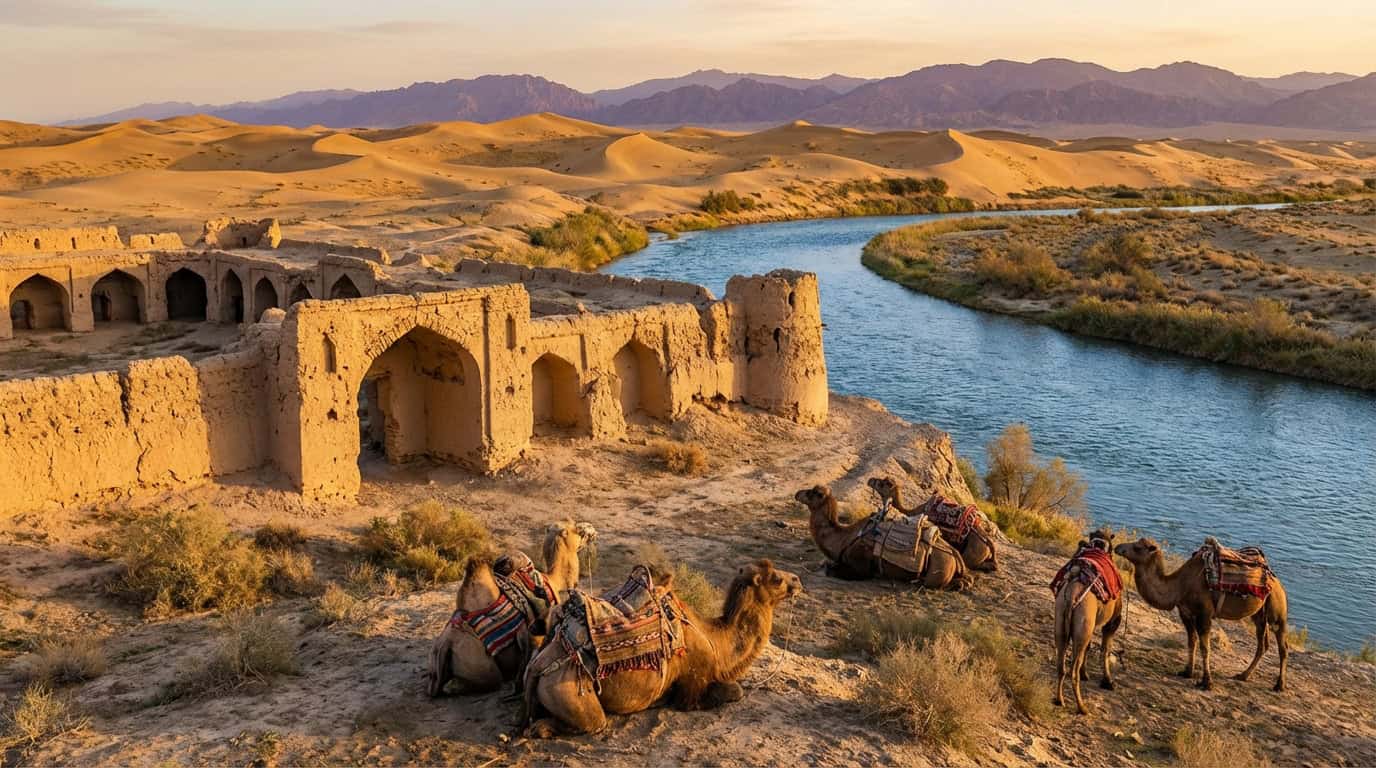
I cannot overstate how thrilling it is to finally see the Zarafshan-Karakum corridor recognized by UNESCO, firmly placing Central Asia on the map for history lovers. To experience this booming Uzbekistan Silk Road route properly, I recommend starting your overland journey in the dazzling city of Samarkand. As the former capital of Tamerlane’s empire, this crossroads of culture will steal your heart the moment you step into the iconic Registan Square. You will want to spend at least two full days here marveling at the intricate blue tilework and wandering through the massive courtyard of the Bibi-Khanym Mosque. Make sure to arrive at these architectural wonders right at sunrise to capture the magic before the midday tour groups arrive.
After soaking in the grandeur of Samarkand, hop on the high-speed train and head west toward the living museum of Bukhara. Because the country is experiencing such a travel boom right now, I highly suggest booking these train tickets weeks in advance to secure your spot. Once you arrive in Bukhara, you will feel like you stepped back in time while exploring the breathtaking Po-i-Kalyan religious complex. I spent hours getting lost inside the ancient trading domes, which still house active bazaars selling beautiful textiles and handcrafted ceramics. Take your time strolling through these narrow sandy alleyways to truly appreciate over two millennia of rich Islamic history.
The final leg of your UNESCO corridor itinerary takes you across the desert to the exceptionally preserved oasis town of Khiva. Your main focus here will be the Itchan Kala, an ancient walled fortress that serves as a spectacular open-air museum. This was historically the last major stop for tired caravans before they braved the harsh desert sands, and walking its streets today feels remarkably authentic. I recommend climbing the Islam Khodja Minaret just before dusk for a sweeping, golden-hour view of the entire mud-brick city. Following this step-by-step route guarantees you will experience the best of the legendary Silk Road without feeling overwhelmed by the region’s exciting tourism growth.
Reliving the Magic of Uzbekistan’s Silk Road
As I look back on my time exploring the Uzbekistan Silk Road, I am still mesmerized by the sheer scale and beauty of this Central Asian treasure. Wandering through the ancient streets of Samarkand and standing before the towering blue mosaics of Registan Square felt like stepping directly into a vibrant history book. The magic of this region lies in its ability to transport you back to the days of Tamerlane and bustling merchant caravans. From the living museum of Bukhara with its active trading domes to the perfectly preserved walls of Khiva, every stop offers a profound connection to the past. This is a place where history lovers can truly lose themselves in the architectural wonders of a bygone era.
If you have been waiting for the perfect moment to cross this majestic destination off your travel bucket list, there has never been a better time to pack your bags. With recent infrastructure upgrades and a major tourism boom expected over the next couple of years, traveling between these powerhouse medieval cities is easier and more comfortable than ever before. I highly recommend giving yourself at least ten days to fully soak in the vibrant culture, taste the incredible local cuisine, and explore the countless UNESCO sites at a relaxed pace. You will quickly discover why this magnificent country is widely considered the unmissable heart of the ancient trade routes. Trust me when I say that the breathtaking sights and welcoming locals will leave a lasting mark on your wanderlust-filled soul.
Frequently Asked Questions
1. What are the must-see cities along the Uzbekistan Silk Road?
The undisputed heart of this ancient trade route features three powerhouse medieval cities that will leave you breathless. You must visit Samarkand for its dazzling mosaics, wander through the bustling trading domes of Bukhara, and watch the sunset over the perfectly preserved mud-brick walls of Khiva. I promise that each city feels like stepping straight into a beautiful historical epic!
2. Is 2025 a good time to visit Uzbekistan?
There has never been a better time to pack your bags and experience this mesmerizing region. With a tourism boom sweeping the country in 2025 and 2026, you will get to enjoy brilliant infrastructure upgrades that make traveling between these ancient cities a total breeze. I highly recommend booking your trip soon to experience the magic of Central Asia while it is beautifully restored and highly accessible.
3. What can I expect to see at Registan Square in Samarkand?
Stepping into Registan Square feels like walking straight into a vibrant, living painting. I was mesmerized by the three magnificent madrasas, each covered in millions of vivid blue mosaics that seem to glow under the Central Asian sun. You will be captivated by the intricate geometric patterns and sweeping archways that whisper tales of ancient merchants.
4. How difficult is it to travel between the major Silk Road sites?
Navigating these beautifully restored UNESCO sites is easy with just a bit of clever planning. Thanks to recent infrastructure upgrades, modern fast trains now connect Samarkand and Bukhara, making your journey comfortable. I always suggest booking your train tickets a few weeks in advance to ensure a smooth and relaxing adventure.
5. What is the best way to experience Khiva?
My favorite way to experience Khiva is by exploring the perfectly preserved mud-brick walls of the Itchan Kala just before dusk. As the sun sets, the ancient city glows with a warm golden light, making you feel like the desert merchants did thousands of years ago. Make sure to climb the minarets for a breathtaking panoramic view of this spectacular cultural crossroads.
6. What kind of historical sites will I see in Bukhara?
Bukhara is an absolute dream for history lovers, filled with ancient trading domes where caravans once traded exotic spices and fine mulberry paper. I love getting lost in its winding alleys, discovering historic mosques and vibrant bazaars hidden around every corner. Be sure to bring a comfortable pair of walking shoes so you can comfortably soak in all the magical medieval architecture.
7. How much time do I need to explore the Uzbekistan Silk Road?
To truly capture the magic of Central Asia without feeling rushed, I recommend setting aside at least ten to fourteen days for your journey. This gives you plenty of time to marvel at the sapphire-tiled minarets of Samarkand, shop in Bukhara, and wander through Khiva. Taking it slow allows you to fully immerse yourself in the rich history and vibrant culture of the region.