
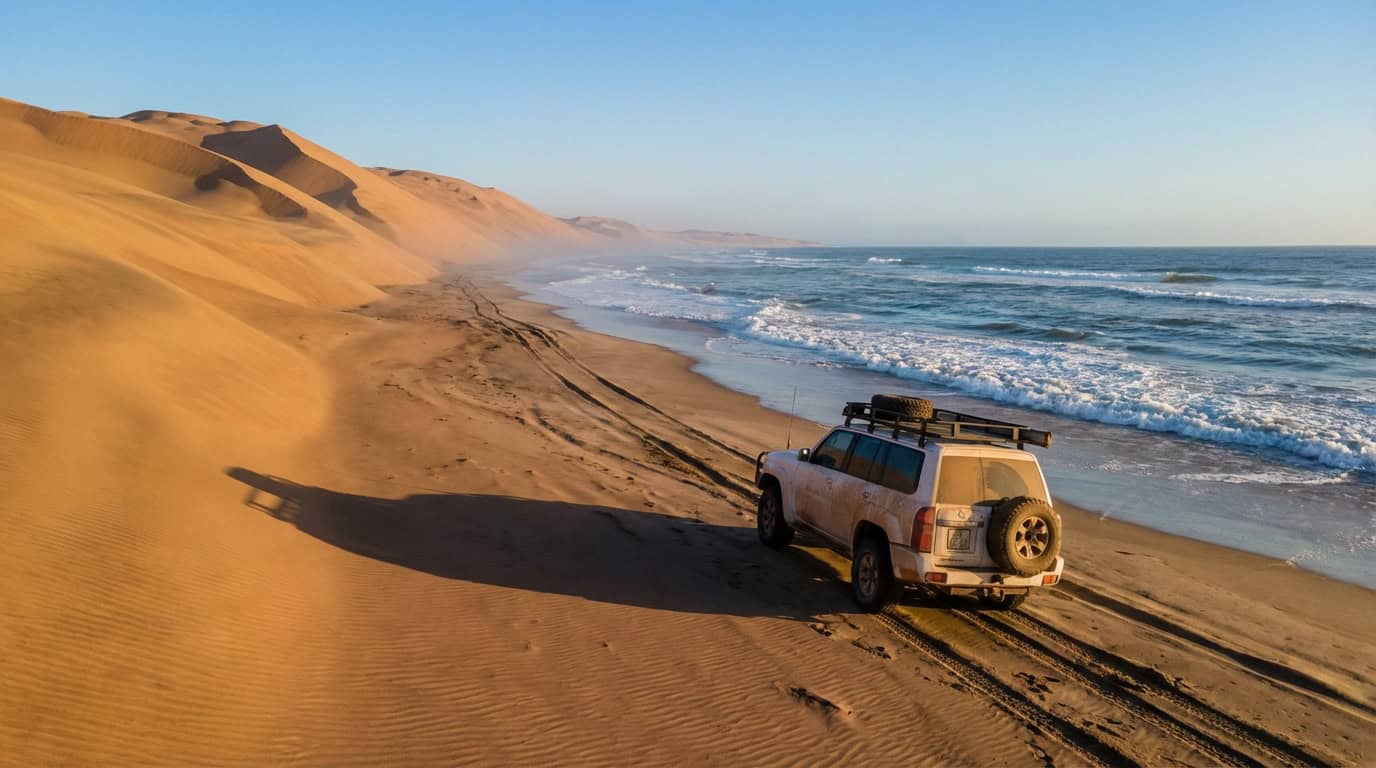
I still remember the first time I watched the towering golden dunes of the Namib Desert plunge directly into the icy, churning waters of the Atlantic Ocean. Driving the Namibian coast feels like stepping onto another planet entirely, one where dense morning fog rolls over rusted shipwrecks and bleached whale bones. Stretching for hundreds of miles along the desolate edge of the continent, this remote journey through the infamous Skeleton Coast is undeniably one of the most dramatic road trips you could ever experience.
Driving this breathtaking 500-kilometer stretch requires an adventurous spirit and solid preparation, but the visual payoff is absolute magic. You will spend your days cruising through an eerie, beautiful sea of mist created by the cold Benguela Current, pulling over to marvel at massive seal colonies and the haunting remains of ships claimed by treacherous tides. I have learned a few essential tricks for conquering this wild terrain safely, from managing tire pressure in the deep sand to timing coastal stops perfectly, ensuring your own trip through this raw environment is nothing short of unforgettable.
Key Takeaways
- Renting a high-clearance 4×4 vehicle and packing extra fuel, water, and warm layers are absolute necessities for safely navigating the deep sand and unpredictable coastal fog.
- Mandatory transit permits must be secured in advance to access the restricted northern wilderness through the Ugab River gate, which strictly requires entry before 3:00 PM.
- Expect a dramatic, otherworldly landscape where towering desert dunes meet the icy Atlantic Ocean, highlighted by haunting historic shipwrecks and massive Cape fur seal colonies.
- Dedicate at least three to four days to drive this 500-kilometer stretch, starting in Swakopmund, to ensure enough time for exploring the desolate terrain without rushing.
Starting In Swakopmund And The Cape Cross Seals
I always recommend kicking off your Namibian coast drive in the charming, historic coastal town of Swakopmund. From here, you will head north into the National West Coast Recreation Area, where the scenery quickly transforms into a surreal world of extremes. As you cruise along the desolate highway, you will witness the dramatic collision of the towering Namib Desert dunes plunging directly into the icy Atlantic Ocean. The cold Benguela Current frequently meets the hot desert air to create a thick, haunting sea of fog that blankets the coastline for over 200 days a year. This otherworldly atmosphere sets the perfect stage for the wild, remote adventures waiting just up the road.
Continuing north, keep your eyes peeled for the rusted, skeletal remains of historic shipwrecks that give this treacherous stretch of coastline its famous name. These haunting vessels serve as a stark reminder of the unforgiving ocean currents, but they also make for incredible, moody photography stops along your route. About two hours from Swakopmund, you will arrive at the unforgettable Cape Cross Seal Reserve. Prepare yourself for a complete sensory overload as you step out of your vehicle to view tens of thousands of Cape fur seals basking, barking, and playing in the surf. Walking along the wooden boardwalks puts you right in the middle of this massive colony, offering an incredibly intimate wildlife encounter that you will cherish forever.
Chasing Shipwrecks Along The Skeleton Coast
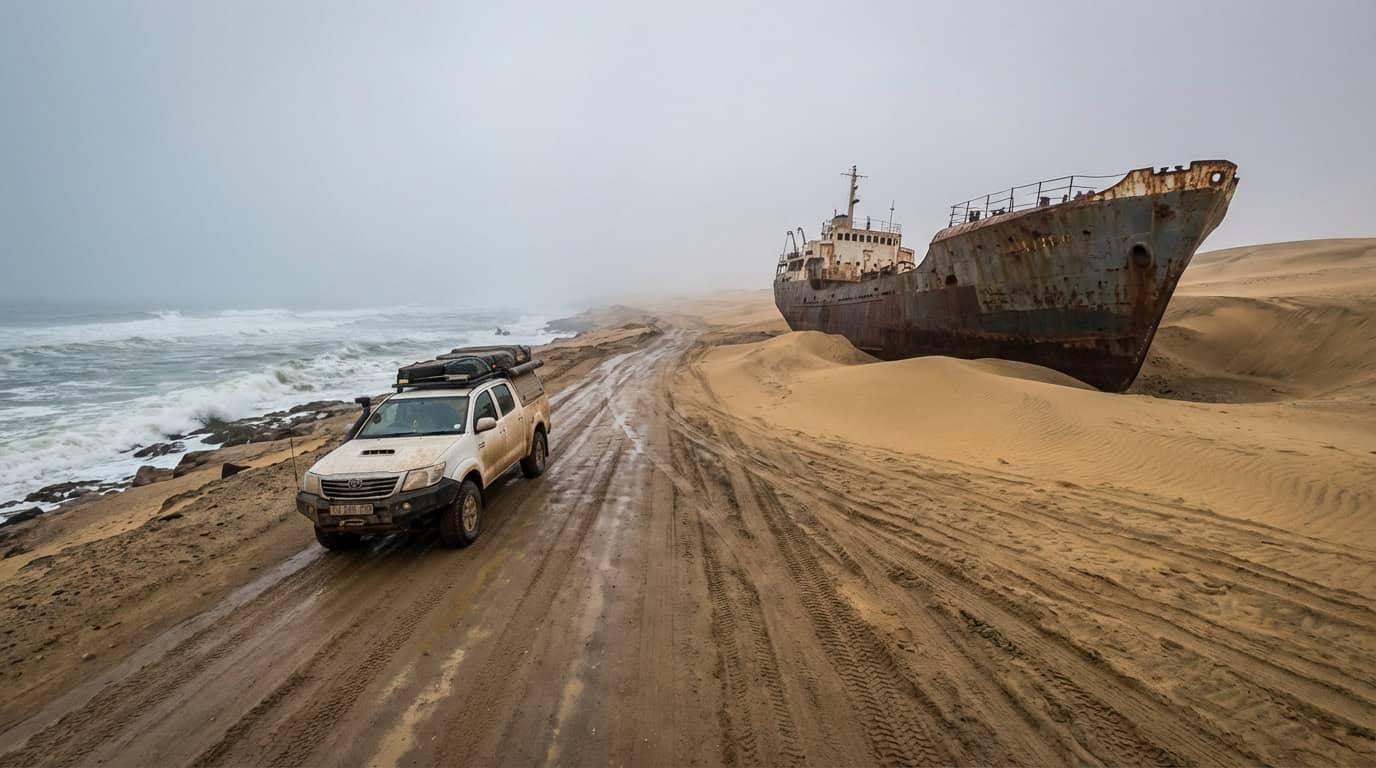
Cruising along the famous Namibian coast feels like stepping onto another planet, especially when the notorious sea of fog rolls in from the Atlantic Ocean. I remember clutching the steering wheel as this bizarre weather phenomenon enveloped our vehicle, a result of the freezing Benguela Current colliding with the scorching air of the Namib Desert. As the thick mist occasionally parted, it revealed a dramatic scene where towering, golden sand dunes plunge directly into the violent, churning waves. This remote stretch is not your typical sunny beach road trip, but rather an awe-inspiring drive through one of the most desolate and captivating environments on Earth. You will want to keep your headlights on and drive slowly, taking time to fully absorb the haunting beauty of this isolated shoreline.
The real magic of this route reveals itself when you spot the rusted, skeletal remains of historic shipwrecks emerging like ghosts from the coastal haze. Over a thousand doomed vessels have been claimed by these treacherous currents and deceptive fogs, leaving behind a fascinating outdoor museum scattered across the sand. Pulling over to explore these massive, decaying hulls up close gave me absolute chills, as each twisted piece of metal tells a silent story of maritime disaster. I highly recommend packing a good pair of walking boots and a windbreaker, because the coastal breeze is relentless when you step out to photograph these haunting relics. Walking among the decaying wooden ribs and rusted engine blocks offers a profound reminder of nature’s raw, untamed power over human engineering.
Beyond the haunting maritime ruins, this fascinating coastal stretch is teeming with surprising bursts of wildlife that you simply must add to your itinerary. I was completely mesmerized when we stumbled upon massive colonies of Cape fur seals lounging and playing right beside the crashing surf. The original name of this coastline actually came from the whale and seal bones left behind by early hunters, but today these protected marine mammals thrive in astonishing numbers. Be sure to roll down your windows to hear their chaotic barks echoing through the mist, creating a stark contrast to the quiet, lifeless shipwrecks just miles away. Experiencing this vibrant wildlife against the backdrop of an unforgiving desert makes the Skeleton Coast an absolutely unforgettable chapter of any road trip adventure.
Essential Permits For Your Namibian Coast Drive
Driving along the Namibian coast is an otherworldly experience where towering desert dunes violently collide with the icy Atlantic Ocean. I will never forget my first time witnessing the rusted carcasses of ancient shipwrecks emerging from the thick ocean fog alongside massive colonies of barking seals. To safely explore this hauntingly beautiful stretch of the Skeleton Coast, you absolutely must rent a high-clearance 4×4 vehicle. The shifting sands and treacherous coastal tracks are unforgiving to standard cars, making a specialized off-road vehicle your most critical piece of gear. Securing a reliable truck ensures you can confidently experience this remote wilderness without getting bogged down in the deep sand.
Once you have your rugged vehicle sorted, your next major hurdle is passing through the Ugab River entry gates that guard the restricted northern wilderness. This desolate checkpoint serves as the official dividing line between the accessible recreation areas and the highly protected zones of the national park. You cannot simply drive through this gate on a whim, as the government requires mandatory park permits to protect the fragile desert ecosystem. I highly recommend securing your overnight transit permits well in advance through the wildlife ministry office in Windhoek or Swakopmund to avoid being turned away at the border. The rangers at the gate are incredibly strict about these documents, and they will meticulously check your paperwork before allowing you to proceed into the mist.
Timing is everything when dealing with these remote coastal checkpoints, as the Ugab River gate operates on strict daylight hours. You must enter before three in the afternoon if you plan to transit through to the Springbokwater gate, ensuring you do not get stranded among the dunes after dark. While the bureaucratic preparation might feel a bit tedious, having your permits in hand unlocks one of the most magnificent road trips on the planet. I promise that the moment you cross that threshold into the foggy, shipwreck-littered expanse, every ounce of planning becomes entirely worth it. Just remember to pack plenty of extra water and fuel, as the raw isolation that makes this drive so spectacular also demands absolute self-sufficiency.
Driving Namibia’s Hauntingly Beautiful Skeleton Coast
After days of tracking wildlife through the sun-baked inland reserves, I can promise you that steering your vehicle toward the Namibian coast offers a completely different kind of magic. Experiencing the exact moment where the towering, apricot-colored dunes of the Namib Desert plunge directly into the churning Atlantic Ocean is nothing short of breathtaking. This hauntingly beautiful stretch of the Skeleton Coast provides a stark, cinematic contrast to a traditional desert safari. You will find yourself driving through thick, mysterious coastal fog while spotting the rusted skeletons of ancient shipwrecks that rest eternally on the desolate shores. It is a profound reminder of nature’s raw power and a deeply humbling experience that added incredible depth to my own African journey.
Beyond the dramatic maritime history, the sheer abundance of life thriving in this harsh environment will completely captivate you. I will never forget pulling up to the massive Cape fur seal colonies, where thousands of playful animals dart through the icy Benguela Current. Adding this remote, windswept route to your itinerary transforms a great vacation into a truly wild, unforgettable road trip. I highly recommend packing warm layers for the unpredictable coastal chill and renting a reliable four-wheel-drive vehicle to comfortably traverse the rugged terrain. The haunting collision of sand and sea is waiting to be explored, so start mapping out your own extraordinary Namibian adventure today.
Frequently Asked Questions
1. Where is the best place to start a Namibian coast drive?
I always recommend kicking off your journey in the charming coastal town of Swakopmund. From there, you can head north into the National West Coast Recreation Area where the towering dunes meet the icy Atlantic. It is the perfect jumping-off point for this otherworldly adventure.
2. What makes the weather so unique along the Skeleton Coast?
You will quickly notice a thick, haunting sea of fog that blankets the coastline for over 200 days a year. This eerie mist is created when the freezing Benguela Current collides with the scorching hot air of the Namib Desert. I find that it adds an incredibly dramatic and mysterious vibe to your entire road trip.
3. Is it difficult to drive through the Namibian coastal terrain?
Driving this breathtaking 500-kilometer stretch definitely requires an adventurous spirit and a bit of preparation. I highly suggest learning how to manage your tire pressure for deep sand driving before you head out. With a sturdy vehicle and careful driving, you will conquer this wild environment safely and confidently.
4. What kind of wildlife can I expect to see on this road trip?
Prepare to be absolutely amazed by the massive seal colonies waiting for you at Cape Cross. As you cruise along the desolate edges of the continent, you might also spot bleached whale bones scattered among the rusted shipwrecks. It truly feels like stepping onto another planet entirely.
5. How many days should I plan for driving the Skeleton Coast?
I recommend setting aside at least three to four days to fully absorb the magic of this raw region. This gives you plenty of time to pull over, marvel at the haunting shipwrecks, and time your coastal stops perfectly with the tides. Rushing through this beautiful sea of mist would mean missing out on its profound, desolate beauty.
6. Can I see the famous shipwrecks from the main road?
Yes, if you keep your eyes peeled as you continue your journey north, you will spot several rusted remains of ships claimed by treacherous tides. Some of these haunting wrecks are easily visible right off the coastal tracks. I love pulling over just to photograph these eerie skeletons against the churning ocean backdrop.
7. What should I pack for a drive along the Namibian coast?
Because the dense morning fog creates surprisingly chilly conditions, I always pack warm layers to stay comfortable outside. You will also need plenty of drinking water, a reliable tire pressure gauge for the sandy terrain, and a great camera. Coming prepared ensures your journey through this raw wilderness is nothing short of unforgettable.