
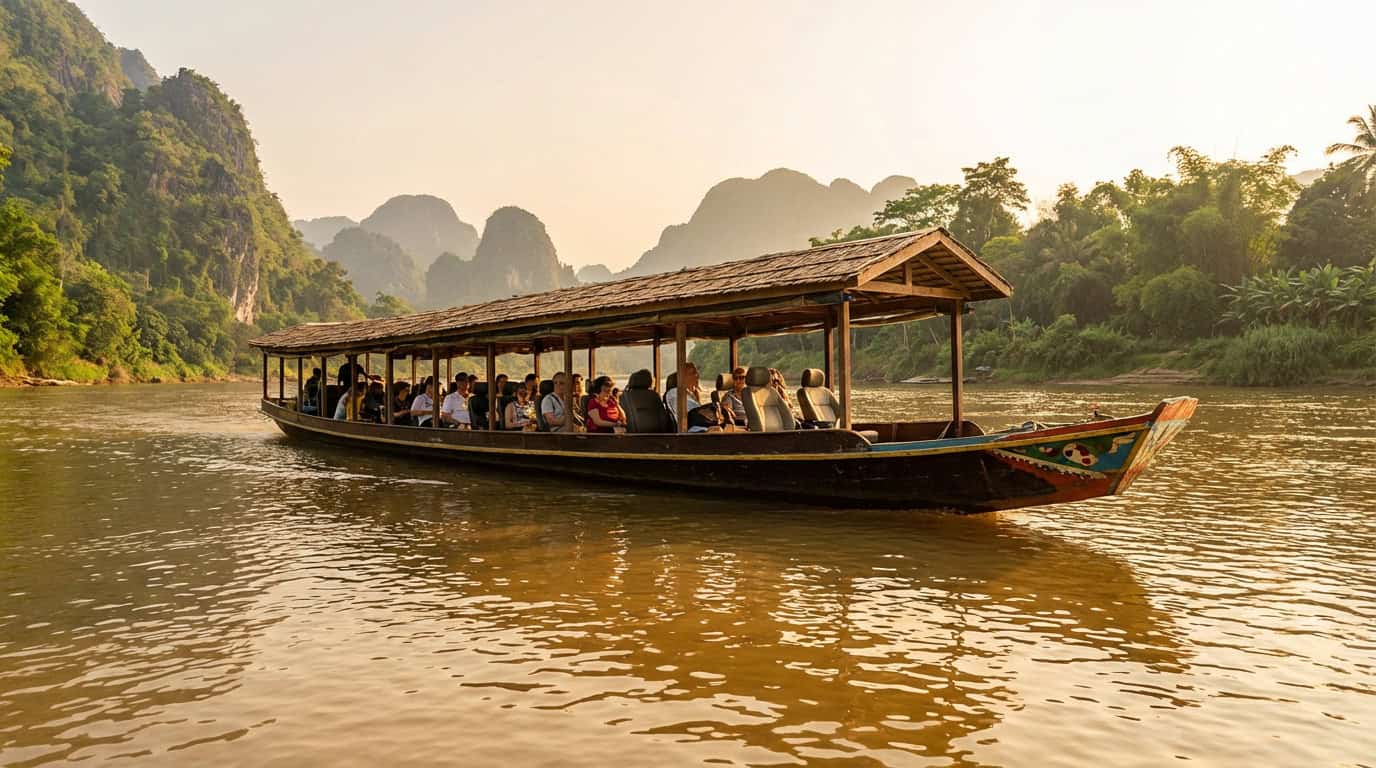
The mist clinging to the jagged limestone karsts of the Mekong River creates a scene straight out of a watercolor painting. Drifting downstream on a traditional laos slow boat has long been the ultimate rite of passage for soul-searchers looking to swap chaos for the rhythmic pulse of northern Laos. I remember the sun hitting the water as we glided past remote villages and water buffalo, feeling a profound connection to a landscape that has not changed in centuries. It is a journey that promises unmatched beauty and a rare chance to truly disconnect.
While the allure of the river remains timeless, navigating this route today requires a mindful approach to safety and logistics. Recent changes on the river highlight the importance of being an informed traveler, especially when choosing the right season and understanding the water’s power. By prioritizing preparation and staying alert to the Mekong’s shifting conditions, you can ensure your voyage to Luang Prabang remains the inspiring experience it was meant to be.
Key Takeaways
- The two-day slow boat journey from Huay Xai to Luang Prabang requires an overnight stop in Pakbeng and serves as a vital cultural rite of passage through the heart of northern Laos.
- Prioritize personal safety by wearing life jackets, choosing reputable operators, and staying alert during turbulent sections near the Pak Ou Caves where underwater obstacles can shift with the seasons.
- Enhance comfort during the long voyage by bringing a seat cushion for the wooden benches, dressing in layers for the chilly morning mist, and packing a dry bag to protect electronics from river spray.
- Organize arrival logistics in advance by carrying small denominations of Lao Kip for the mandatory tuk-tuk transfer from the pier into the Luang Prabang city center.
Navigating The Two Day Route From Huay Xai
The journey begins early in the morning at the Thai border town of Chiang Khong, where you will complete departure formalities before crossing the friendship bridge into Huay Xai, Laos. After obtaining your visa on arrival, a short tuk-tuk ride brings you to the riverbank to board a traditional long wooden vessel. The first leg of the trip is a mesmerizing introduction to the Mekong, as you settle into repurposed car seats and watch the lush, emerald hills of northern Laos drift slowly by. I recommend bringing plenty of snacks and a warm jacket, as the breeze off the water can be surprisingly chilly even under the tropical sun.
By late afternoon on day one, the boat pulls into the riverside village of Pakbeng, a remote outpost that serves as the halfway point and mandatory overnight stop. This charming hillside town comes alive each evening with travelers sharing stories over cold drinks and local Laotian dishes at the various guesthouses overlooking the water. While the atmosphere is festive, it is wise to keep an eye on your belongings and book your accommodation in advance to ensure a comfortable night’s rest. The village is small enough to explore on foot, allowing you to stretch your legs and soak in the rural mountain scenery before the early morning departure the following day.
The final stretch toward Luang Prabang is arguably the most scenic, as the river narrows and winds through dramatic limestone cliffs and dense jungle. You will pass remote fishing villages and water buffalo cooling off in the shallows, offering a rare glimpse into a traditional way of life. As you approach the final destination, the boat glides past the famous Pak Ou Caves, where thousands of Buddha statues are tucked into the rock face. While the journey is a beautiful rite of passage, always remain mindful of safety by wearing life jackets when provided and staying alert during sections where the river current becomes more turbulent.
Essential Safety Realities And Mekong River Precautions
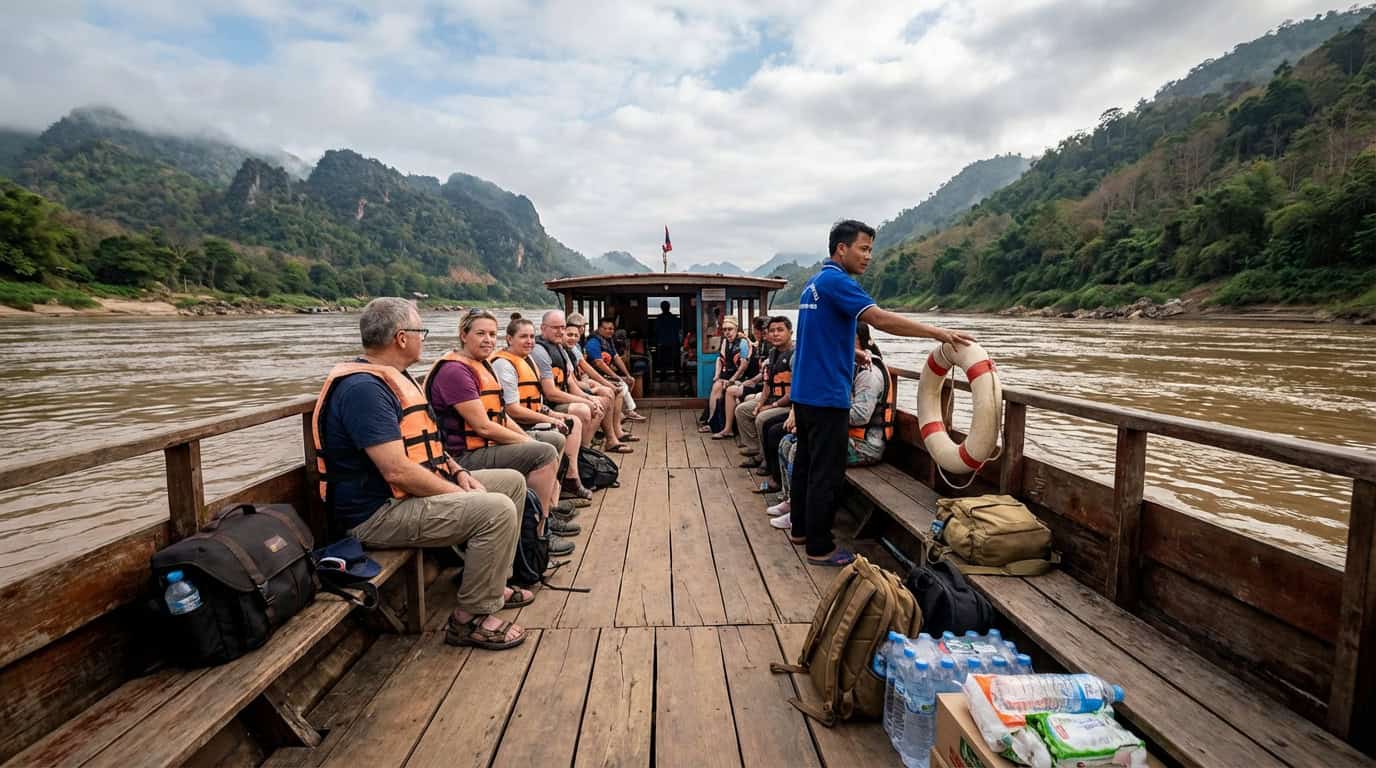
While the journey down the Mekong is a breathtaking experience, recent events near the Pak Ou Caves serve as a sobering reminder of the river’s power. A tragic incident involving a boat striking underwater rocks near Luang Prabang has highlighted the urgent need for increased vigilance. I always tell my friends that the Mekong is a living, changing force where hidden obstacles can shift with the seasons. It is vital to stay alert as you approach the final stretch toward the Pak Ou Caves, where the currents can become particularly tricky. Taking this journey seriously ensures that your memories remain filled with wonder rather than worry.
Safety on these traditional wooden vessels often comes down to personal preparation and choosing reputable operators. I highly recommend scanning the deck for lifejackets the moment you step on board to ensure they are accessible and in good condition. If you do not see adequate safety gear, do not be afraid to speak up or wait for a boat that prioritizes passenger security. Professional operators who maintain their vessels and respect capacity limits are worth the extra effort to find. Your peace of mind is the most important part of the adventure, so always trust your instincts before the engines start.
I found that being proactive about my own safety allowed me to truly relax and enjoy the mist rising off the jungle banks. Pack a small dry bag for your most important electronics and documents just in case the splashing gets intense. It is also wise to avoid the very front of the boat where the impact of waves is strongest, opting instead for a central seat that offers better stability. By staying informed about recent river conditions and keeping a watchful eye, you can focus on the stunning limestone cliffs and golden sunsets. This approach turns a potentially stressful transit into the soulful, inspiring experience that Laos is famous for.
Packing Gear For Life On The Mekong River
Preparing for two days on the Mekong requires foresight to ensure your journey is as comfortable as it is scenic. While the traditional wooden boats offer an incredible window into Laotian river life, the wooden benches can become quite taxing after several hours. I highly recommend picking up a colorful seat cushion from a local vendor before boarding in Huay Xai or Luang Prabang. This small investment makes a world of difference when you are settling in to watch the limestone cliffs drift by. You will also want to dress in light, breathable layers because the morning mist on the river can be surprisingly chilly. As the sun rises higher, the breeze remains steady, so having a light jacket or a sarong handy allows you to adjust to the shifting temperatures without missing a moment of the view.
Since the food options on board are usually limited to basic noodles or snacks, I found that packing a personalized picnic made the trip much more enjoyable. I stocked up on fresh baguettes, local seasonal fruits, and plenty of water from the morning market to keep me fueled throughout the day. It is also wise to keep your most important gear in a waterproof dry bag, especially since the river can be unpredictable and splashing is common. Having my camera and electronics protected gave me peace of mind while I moved around the deck to capture photos of the water buffalo and remote villages. Remember to pack a portable power bank as well, because you will likely find yourself taking hundreds of photos of the dramatic landscapes.
Safety is a vital consideration for any river journey, so I always make sure my life jacket is easily accessible as soon as I find a seat. Recent incidents on the river serve as a reminder to stay vigilant and aware of your surroundings while enjoying the slow pace of travel. I prefer to sit toward the middle of the boat to maintain better balance and stay clear of the loud engine at the back. It is important to keep your heavy luggage stowed securely in the central hold to ensure the vessel remains stable as it navigates the swirling currents. By staying organized and prepared with the right essentials, you can focus on the rhythmic pulse of the Mekong and the breathtaking beauty of northern Laos.
Arriving In Luang Prabang By Traditional Slow Boat
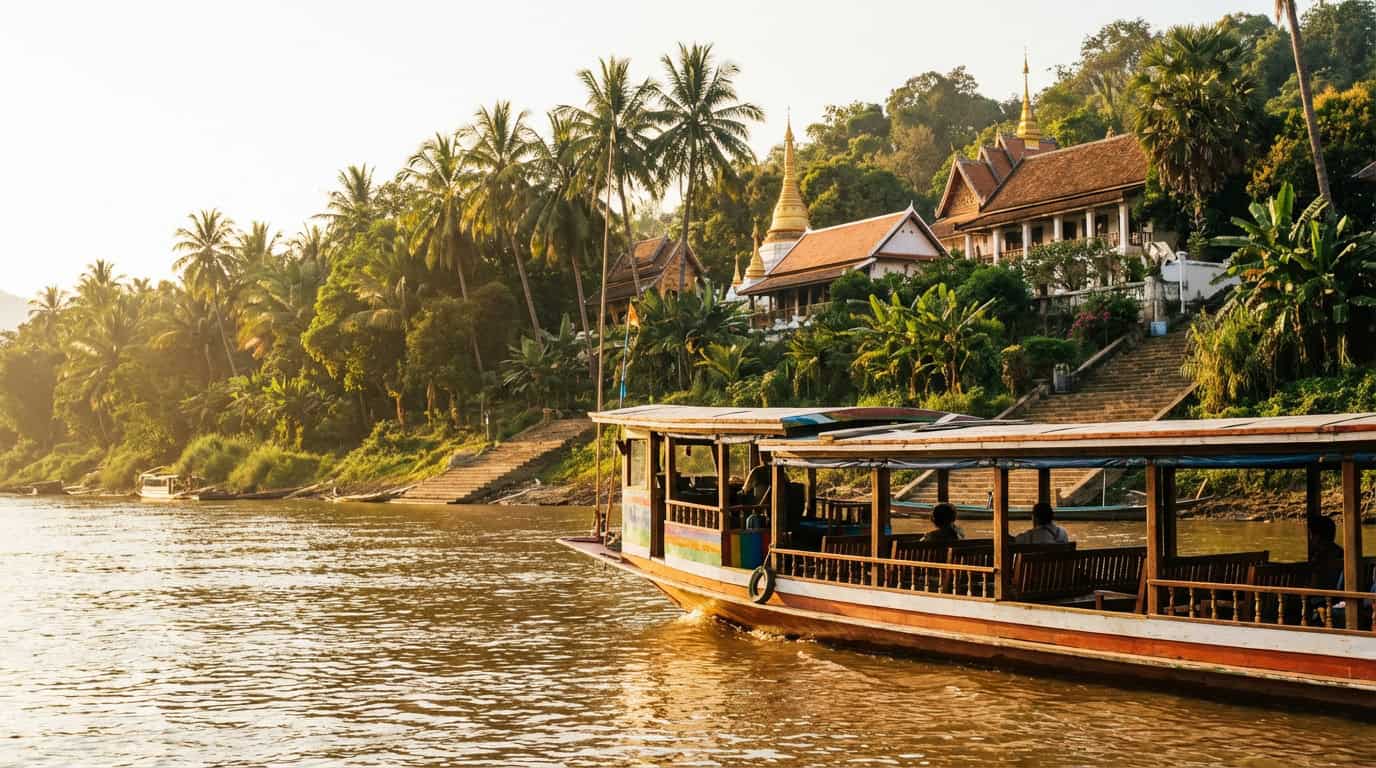
As the golden hour light reflects off the Mekong River, the first glimpse of Luang Prabang feels like stepping back into a different century. The long, wooden slow boat glides past emerald green mountains and traditional fishing villages, eventually slowing as it nears the historic peninsula. You will see the shimmering rooftops of ancient temples poking through the tropical canopy, signaling that your multi day river journey is finally coming to an end. It is a soulful, quiet arrival that makes you appreciate the slow pace of life in Laos before you even step onto the wooden pier.
While the scenery is undeniably magical, navigating the arrival logistics requires practical preparation. The boat typically docks a few kilometers outside of the main heritage zone, meaning you will need to organize transport to reach your guesthouse. After disembarking, you will find a dedicated ticket booth where you can purchase a fixed price fare for a shared tuk-tuk ride into the city center. It is helpful to have small denominations of Lao Kip ready for this transaction to avoid any confusion with change.
Keep in mind that while the slow boat is a rite of passage, recent changes in river conditions mean you should always prioritize your personal safety throughout the trip. Make sure your life jacket is easily accessible and keep your most valuable belongings in a waterproof dry bag near your seat. Once you settle into your tuk-tuk, the short drive into town offers a beautiful introduction to the colonial architecture and quiet streets of this UNESCO World Heritage site. Watching the sunset over the river one last time from the road is the perfect way to transition into your Luang Prabang adventure.
Embracing the Magic of the Mekong
Choosing to drift down the Mekong on a slow boat is more than just a transportation choice, as it represents a true rite of passage for any traveler exploring the heart of Southeast Asia. While the journey requires a patient spirit and a tolerance for basic amenities, the reward is a front row seat to some of the most untouched landscapes in the region. I found that the simple act of watching the limestone karsts glide by while sipping a cold drink creates a sense of peace that you simply cannot find on a bus or a plane. It is a rare opportunity to disconnect from the digital world and reconnect with the natural rhythm of the river.
Despite the recent logistical changes and the sobering reminders of the river’s power, this voyage remains a beautiful way to transition into the magic of Luang Prabang. You will witness local life in its purest form, from children playing on the muddy banks to fishermen casting nets in the golden afternoon light. Safety should always be your top priority, so I recommend checking local conditions and ensuring your vessel is not overcrowded before you depart. Taking these precautions allows you to focus on the breathtaking scenery and the shared camaraderie of fellow travelers.
Ultimately, the two days spent on the water will likely become one of the most vivid memories of your entire trip through Laos. The slow boat teaches you to embrace the unexpected and find beauty in the gradual pace of traditional travel. Much like a timeless journey down the Nile, as you finally pull into the pier at Luang Prabang, you will arrive with a deeper appreciation for the geography and culture of this incredible country. It is a journey that requires respect and preparation, but the stories you bring home are worth every moment spent on those wooden benches.
Frequently Asked Questions
1. Where does the slow boat journey begin and end?
The classic two-day slow boat route starts at the Thai border town of Huay Xai and concludes in the stunning UNESCO World Heritage town of Luang Prabang. You will cross the friendship bridge from Chiang Khong, Thailand, to complete your visa formalities before boarding your vessel on the Mekong riverbank.
2. How long does the river journey take?
The voyage is a two day experience that allows you to fully immerse yourself in the rhythmic pulse of northern Laos. You will spend roughly seven to eight hours on the water each day, with an essential overnight stay in the riverside village of Pakbeng halfway through the trip.
3. What should I pack for the two days on the water?
I highly recommend bringing a warm jacket because the breeze off the river can be surprisingly chilly even when the sun is out. You should also pack plenty of snacks, a reusable water bottle, and a good book to enjoy as you drift past the emerald hills and remote villages.
4. How do I handle the visa process at the border?
You will complete your Thai departure formalities at Chiang Khong before crossing over to the Huay Xai checkpoint. Most travelers can obtain a Laos visa on arrival at the border, but make sure you have US dollars in cash and a few passport photos ready to keep the process smooth.
5. Is the slow boat safe for modern travelers?
The journey is a peaceful and inspiring way to travel, but it requires a mindful approach to the river’s shifting conditions. By choosing the right season and staying alert to the Mekong’s power, you can ensure your voyage remains a safe and bucket list worthy experience. Much like a Norway fjord cruise, the beauty of the water is best enjoyed when you are well-prepared for the environment.
6. What are the seating arrangements like on the boat?
These traditional long wooden vessels are surprisingly charming, often featuring repurposed car seats that offer comfort for the long journey. I suggest arriving early to snag a seat toward the front, away from the engine noise, so you can better hear the sounds of the water and the jungle.