
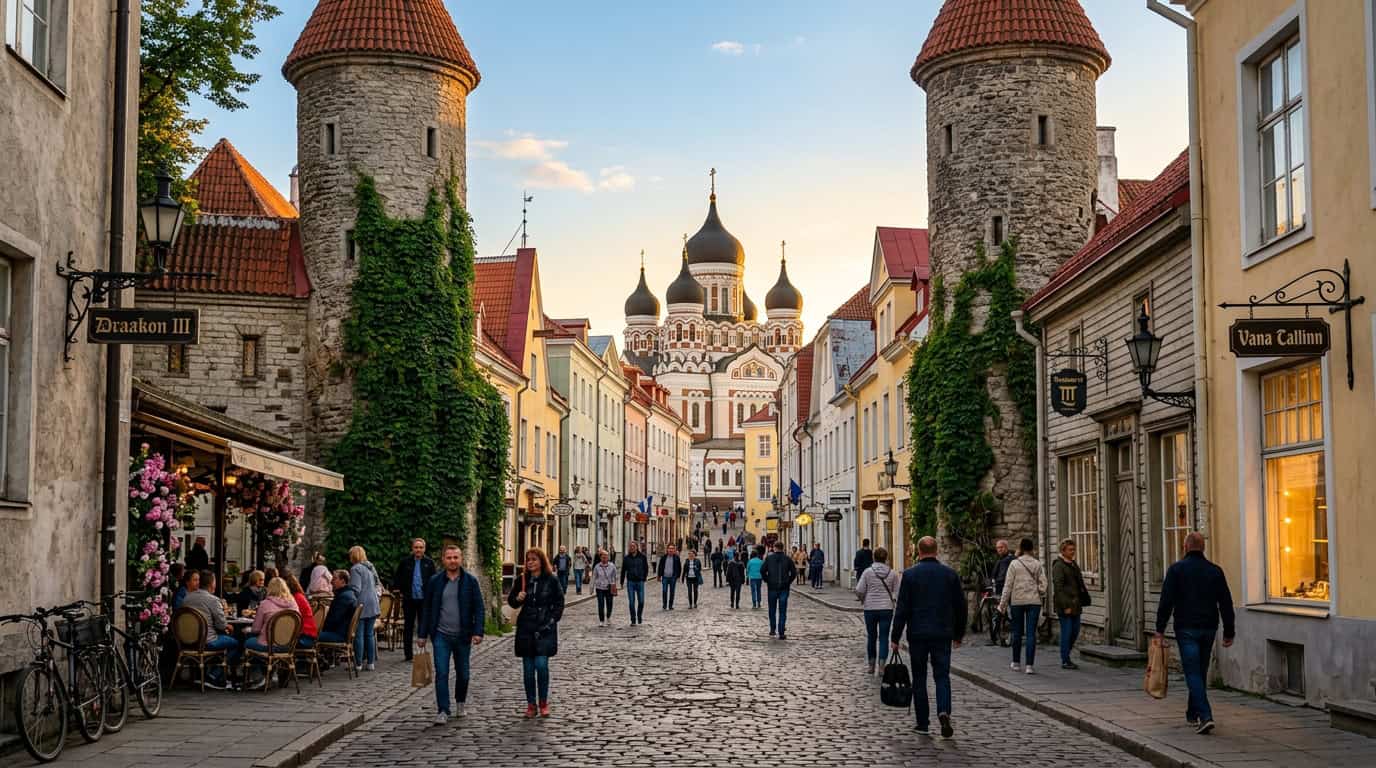
Stepping into the tallinn estonia old town feels like walking directly into the pages of a 13th-century storybook, where limestone walls and red-tiled roofs whisper secrets of the Hanseatic League. I remember my first time standing in the shadow of the defensive towers. The air smelled of spiced almonds, and the cobblestones underfoot felt like a tangible link to a medieval past that is still very much alive. Whether you are climbing the steep hills of Toompea to see the seat of power or getting lost in the winding merchant alleys of the Lower Town, this UNESCO World Heritage site offers a rare blend of ancient grit and fairy-tale charm.
What makes this walled city truly special right now is its evolution from a museum into a breathing, vibrant neighborhood where history meets modern life. As the city moves forward with its long-term development goals, the streets are pulsing with a renewed energy that prioritizes local soul alongside its iconic 26 defensive towers. You aren’t just visiting a relic of Northern Europe; you are experiencing a functional masterpiece where centuries-old architecture hosts cozy hidden cafes and innovative galleries. It is the perfect moment to explore these 113 hectares of living history and discover why this Baltic gem remains one of the most impeccably preserved treasures on the continent.
Key Takeaways
- Tallinn’s Old Town is one of Europe’s most impeccably preserved 13th-century Hanseatic cities, offering a rare blend of medieval defensive architecture and a vibrant, living neighborhood.
- Explore both the Lower Town to experience merchant history and Town Hall Square, and the Toompea Hill plateau for iconic panoramic views of red-tiled roofs and the Baltic Sea.
- Walking the surviving 14th-century limestone walls and defensive towers provides an authentic, physical connection to the city’s past as a formidable Northern European fortress.
- Immerse yourself in Estonian heritage by sampling medieval-inspired game dishes in cellar restaurants and visiting historic confectioneries to try traditional hand-painted marzipan.
Exploring The Hanseatic Charm Of Lower Town
Stepping into Tallinn’s Lower Town feels like walking directly into the pages of a classic storybook, where every corner reveals a new layer of Hanseatic history. As I wandered through the winding cobblestone streets, I was immediately struck by the vibrant pastel facades of the merchant houses that once served as the backbone of the city’s maritime trade. These buildings are not just relics, but living parts of a functional district that manages to feel both ancient and remarkably fresh. You can almost hear the echoes of medieval traders negotiating over salt and silk as you brush past the sturdy stone walls. It is the kind of place where you should intentionally lose your map just to see where the narrow alleyways lead you.
The heart of this enchanting neighborhood is the Town Hall Square, a sprawling plaza that has served as a center of local life since the 13th century. Standing beneath the gaze of the Gothic Town Hall, I felt dwarfed by the sheer scale of the medieval architecture and the lively atmosphere of the open air markets. This area is perfect for grabbing a seat at a cozy cafe to watch the world go by while admiring the intricately carved doorways of the surrounding structures. Make sure to look up at the weather vanes and colorful shutters that give the square its distinct personality. It is easily one of the most well preserved public spaces in all of Northern Europe.
To truly appreciate the defensive legacy of the city, I recommend walking along the surviving sections of the massive stone walls and visiting the iconic defensive towers. There are over twenty towers still standing today, each with its own unique name and legendary backstory from the city’s days as a fortified trading hub. I found that climbing some of the accessible ramparts provides a breathtaking perspective of the red-tiled roofs stretching toward the Baltic Sea. These fortifications offer a tangible connection to the past, reminding every traveler of the strategic importance Tallinn held for centuries. It is a compact and walkable treasure trove that offers some of the best medieval immersion you can find anywhere in the world.
Climbing To The Toompea Hill Viewpoints
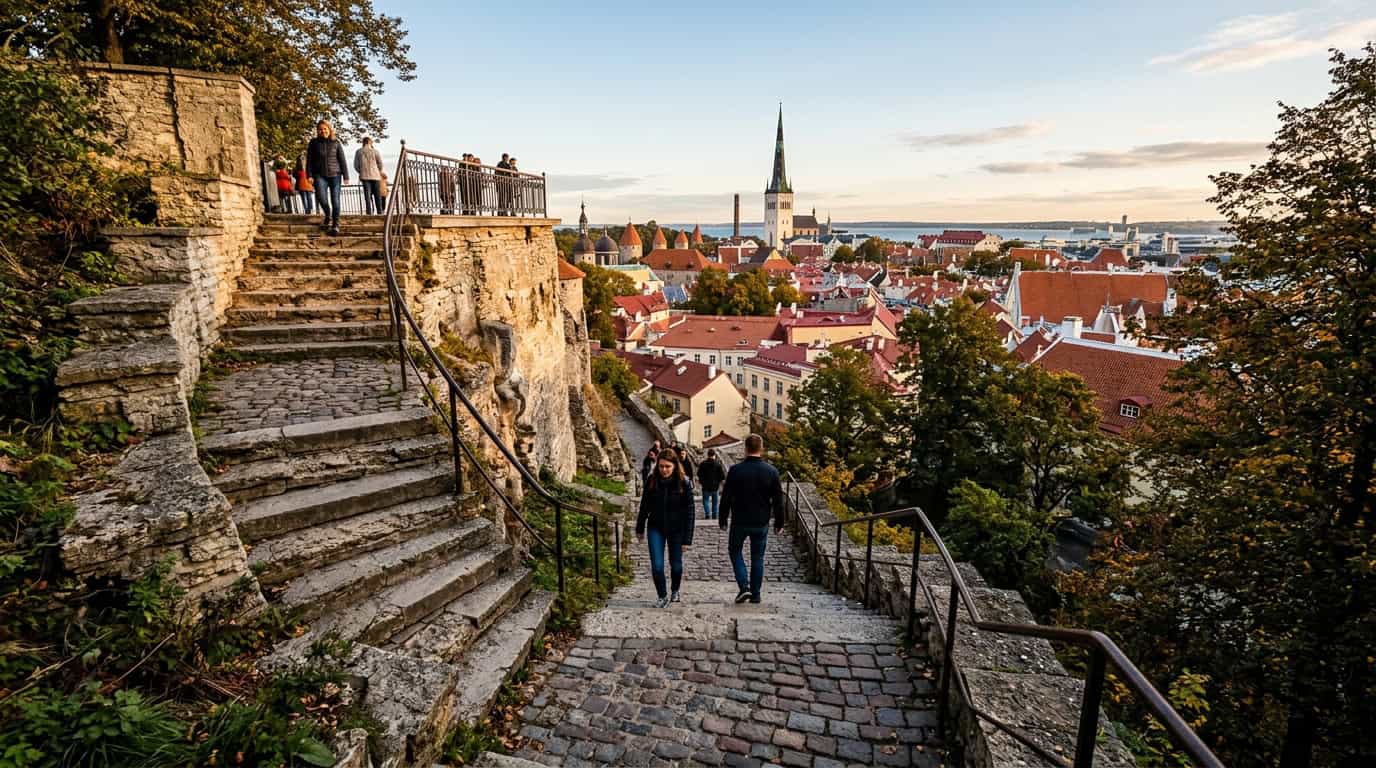
To reach the heart of Tallinn’s medieval power, you must wind your way up the cobblestone paths to the limestone plateau of Toompea Hill. This upper tier of the Old Town feels like stepping into a dream, where the pastel-colored walls of the Estonian Parliament stand proudly against the sky. As I walked past the grand Alexander Nevsky Cathedral, the air felt crisp and filled with the history of a city that has served as a vital Hanseatic trading hub for centuries. It is incredible to see how well these 13th century structures have been preserved, maintaining their royal atmosphere even as the city evolves into a modern Baltic gem.
The real magic happens when you reach the Kohtuotsa and Patkuli viewing platforms, which offer the most breathtaking vistas in Northern Europe. From these vantage points, the famous red-roofed skyline stretches out before you, punctuated by the sharp spires of ancient churches and the sturdy stone defensive towers. I spent nearly an hour just watching the light hit the terracotta tiles, capturing photos that truly look like postcards from another era. Make sure to look toward the Gulf of Finland in the distance, as the contrast between the medieval fortifications and the shimmering sea creates a perfect panoramic memory of your Estonian adventure.
Walking The Ancient Defensive City Walls
Stepping onto the narrow wooden gallery of Tallinn’s ancient city walls feels like walking directly into the pages of a medieval storybook. As I climbed the steep stone stairs of the Hellemann Tower, the cool dampness of the 14th century limestone walls reminded me just how well these fortifications have stood the test of time. From the top, you get a breathtaking view of the iconic red tiled roofs and the slender church spires that define the skyline of the Lower Town. It is easy to imagine sentries pacing these same planks centuries ago, keeping a watchful eye over the Hanseatic merchant ships in the harbor. This particular stretch of wall offers one of the most authentic glimpses into the city’s past as a formidable northern fortress.
The experience of exploring the interconnected towers is both physically engaging and visually stunning for any history lover. I found myself ducking through low doorways and peering through narrow arrow slits that once served as the primary defense against invaders. While modern Tallinn is evolving into a vibrant residential district, these stone giants remain the silent guardians of its UNESCO World Heritage status. Walking the ramparts provides a unique perspective on the city’s layout, connecting the aristocratic heights of Toompea with the bustling merchant streets below. I recommend wearing sturdy shoes for the uneven steps, as the climb is a bit rugged but absolutely worth the effort for the panoramic photos.
One of my favorite moments was pausing between two towers to watch the golden afternoon light hit the weathered stone facades. There is a tangible sense of preservation here that you rarely find in other European capitals, making the Old Town feel like a living museum rather than a reconstructed set. As you plan your visit, try to explore the wall sections near the Danish King’s Garden for a particularly atmospheric experience. The combination of heavy iron gates and towering defensive structures creates a fairytale aesthetic that perfectly captures the spirit of the Baltics. It is a must do activity that truly grounds you in the rich, complex layers of Estonian heritage.
Savoring Medieval Flavors In Estonias Historic Heart
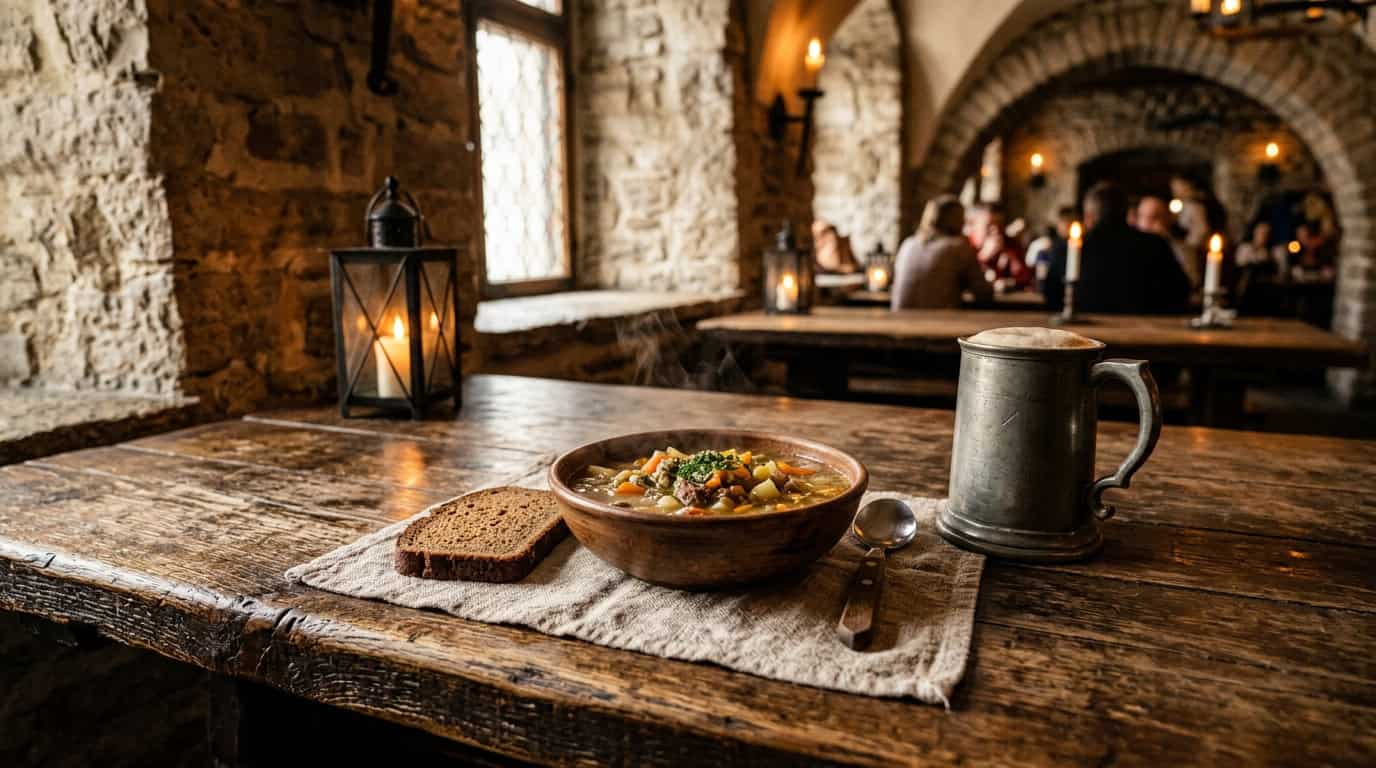
Stepping into the candlelit depths of a medieval cellar restaurant is the closest you will ever get to true time travel within Tallinn. These underground haunts, tucked away beneath the cobblestones of the Lower Town, feature heavy oak tables and stone walls that have stood for centuries. I highly recommend ordering a bowl of hearty elk soup or slow-roasted game dishes to fully embrace the Hanseatic merchant lifestyle. The atmosphere is thick with the scent of woodsmoke and cloves, making it the perfect retreat after a day of exploring the windy city walls. You will find that the flickering candlelight and lack of modern distractions create a cozy, intimate world that feels entirely separate from the 21st century.
No culinary journey through this fairytale capital is complete without indulging in the legendary local marzipan. This sweet almond paste has been a staple of the city since the Middle Ages, when it was famously sold in the Town Hall Pharmacy as a medicinal cure for heartache. I spent a delightful afternoon visiting a historic confectionery shop where you can watch artisans hand-paint delicate figurines just as they did hundreds of years ago. Sampling a piece of freshly molded marzipan, perhaps flavored with a hint of dark chocolate or local berries, is a rite of passage for every visitor. It is a sugary piece of Estonian heritage that perfectly captures the whimsical, artistic spirit of the Old Town.
Beyond the formal meals, the simple joy of grabbing a warm pastry from a street-side bakery adds a layer of magic to your Tallinn Old Town walk through the historic heart. As the city works to keep the Old Town a living, breathing neighborhood, you will notice small cafes tucked into quiet courtyards where locals sip coffee away from the main squares. These hidden gems often serve traditional rye bread and smoked fish, providing a savory balance to the sweeter treats found in the merchant stalls. Taking a moment to sit on a stone bench with a snack allows you to truly soak in the architectural details of the surrounding gabled houses. It is in these quiet, flavorful moments that the medieval history of the Baltics truly comes to life.
Planning Your Perfect Tallinn Old Town Escape
Tallinn Old Town is a rare architectural gem that feels like a living fairytale, offering a level of medieval preservation that is hard to find elsewhere in Europe. I recommend visiting during the shoulder seasons of May or September to enjoy the cobblestone streets without the peak summer crowds. If you are looking for a magical atmosphere, an Estonia winter break offers a unique perspective with snow-dusted roofs and festive markets. You should definitely wear sturdy walking shoes, as the historic limestone paving can be quite uneven and challenging for thin soles. Make sure to spend time in both the Lower Town, where the merchant history feels tangible, and the Upper Town of Toompea for the most iconic panoramic views. Staying within the city walls allows you to experience the quiet magic of the gas-lit alleys after the day-trippers have departed for the night.
The ongoing efforts to keep this district a functional residential area rather than just a museum make every visit feel authentic and grounded. You can grab a coffee in a hidden courtyard or browse local design shops that are tucked away inside centuries-old warehouses. This balance of Hanseatic heritage and modern Estonian life is exactly why the city remains one of my favorite stops in the Baltic region. Whether you are exploring the massive defensive towers or admiring the colorful gables of the Town Hall Square, you are participating in a history that stretches back to the 13th century. Tallinn is a destination that captures the heart of every traveler looking for history, beauty, and a truly compact city break.
Frequently Asked Questions
1. What makes Tallinn’s Old Town a must-visit destination?
Tallinn’s Old Town is one of the most impeccably preserved medieval cities in Europe, offering a rare blend of 13th-century history and modern vibrancy. You can wander through a UNESCO World Heritage site where ancient limestone walls and defensive towers now house cozy cafes and innovative art galleries.
2. Is it easy to explore the Old Town on foot?
Yes, the Old Town is a pedestrian-friendly district of 113 hectares that is best experienced by wandering its winding cobblestone alleys. I recommend wearing comfortable shoes as you navigate the steep hills of Toompea and the charming merchant streets of the Lower Town.
3. What is the vibe like in the Lower Town?
The Lower Town feels like a living storybook filled with pastel merchant houses and the lingering scent of spiced almonds. It is a functional neighborhood where the legacy of the Hanseatic League meets a renewed energy, making it feel both ancient and remarkably fresh.
4. What should I know about the local development plans?
The city is currently prioritizing its local soul and community life, ensuring the Old Town remains a breathing neighborhood rather than just a museum. This means you will find a wonderful balance of well-preserved relics and a thriving, modern cultural scene during your visit.
5. What are the best views in the Old Town?
For the most iconic vistas, you should head to the Toompea hill area to look out over the red-tiled roofs and the 26 defensive towers. The contrast between the medieval spires and the nearby Baltic Sea creates a breathtaking backdrop that is perfect for photography.
6. What kind of atmosphere can I expect when visiting?
You will encounter an enchanting atmosphere of ancient grit and fairy-tale charm that is truly unique to Northern Europe. It is the kind of place where history feels tangible underfoot, yet the streets pulse with a creative and welcoming spirit.