
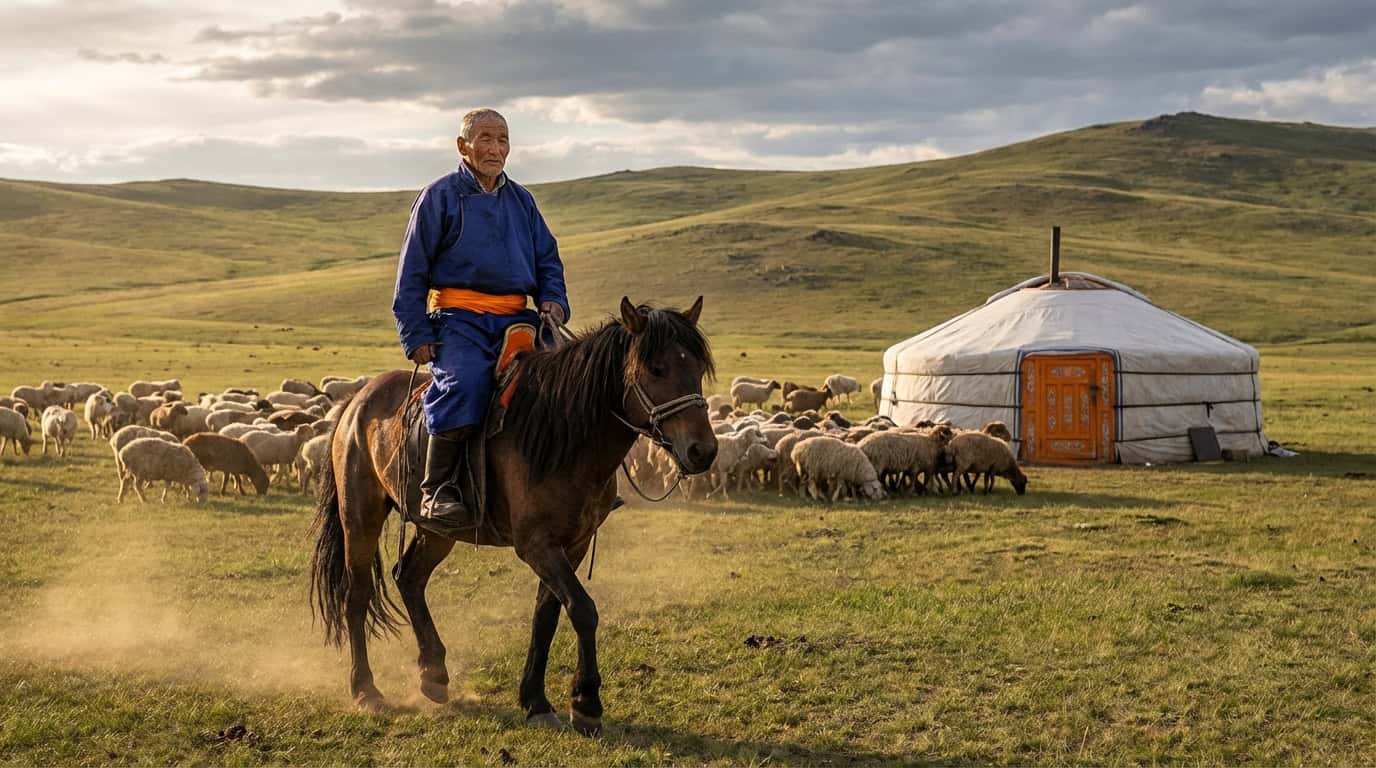
I’ll never forget the first time I stepped out of a traditional felt ger into the crisp, endless expanse of the steppe. I realized I was witnessing one of the world’s last surviving mobile pastoralist cultures. Immersing yourself in a true Mongolia nomad experience means leaving the modern hustle behind to follow the ancient, rhythmic cycles of the seasons. Here, roughly a third of the population still moves their herds of horses, sheep, and camels across the rugged terrain up to thirty times a year. It is a beautifully raw way of life that balances centuries-old survival traditions with a few surprising modern comforts.
Waking up to the sound of grazing livestock and sharing warm milk tea with a welcoming herding family completely changed how I view travel. Trading crowded tourist traps for the boundless freedom of the Asian steppes offers the ultimate adventure for anyone craving genuine human connection and untouched nature. Joining these remote seasonal migrations, understanding proper etiquette inside the family home, and learning to manage herds requires thoughtful preparation before you pack your bags. The reward is an unforgettable, soul-stirring journey where you weave your own story directly into the breathtaking fabric of the wilderness.
Key Takeaways
- Immersing yourself in the Mongolian nomadic lifestyle involves staying in traditional, wool-insulated gers that beautifully blend ancient survival practices with modern conveniences like solar power.
- Building genuine connections with host families requires observing essential cultural etiquette, such as receiving traditional milk tea with your right hand and keeping your sleeves unrolled.
- To fully experience the authentic seasonal migrations and daily livestock herding, plan your visit between June and September and book directly with local families.
- Prepare carefully for the unpredictable steppe weather and off-grid conditions by packing warm layers, sturdy boots, a thermal sleeping bag liner, and a portable power bank.
Sleeping In A Traditional Mongolian Ger
Stepping into my first traditional Mongolian ger felt like crossing a threshold into another century. After a long day of crossing the vast, seemingly endless steppe, the sight of this round felt tent offered a profound sense of relief. Our host family, part of the resilient population that still moves with their herds several times a year, welcomed me with warm smiles and steaming cups of milk tea. Thick layers of sheep wool insulation wrapped the structure in a cozy embrace, shielding us completely from the biting evening wind outside. It was the perfect introduction to an immersive, off-the-grid cultural travel experience I will never forget.
At the very heart of the circular room sat a small metal stove, radiating a comforting warmth that quickly thawed my chilled hands. I watched in fascination as the glowing embers cast dancing shadows across the brightly painted orange woodwork supporting the roof. What surprised me most was how beautifully these ancient pastoralist traditions blended with unexpected touches of modern adaptation. A small solar panel rested just outside the door, quietly gathering energy to power a single lightbulb and charge our phones for the night. This delicate balance of old and new makes the modern nomadic lifestyle both incredibly authentic and practical for today’s travelers.
Settling into my narrow wooden bed, I listened to the muffled sounds of horses and sheep moving gently in the distance. The absolute silence of the surrounding wilderness eventually took over, offering a kind of deep, restorative peace that is hard to find anywhere else on earth. If you are planning your own journey to the Mongolian countryside, I highly recommend packing a high-quality thermal sleeping bag liner for extra comfort during those crisp desert nights. You should also bring a portable power bank, as solar energy can be limited on cloudy days. Falling asleep under the protective felt roof of a ger is a truly magical experience that connects you intimately with one of the world’s last surviving mobile cultures.
Herding Livestock Across The Vast Steppe
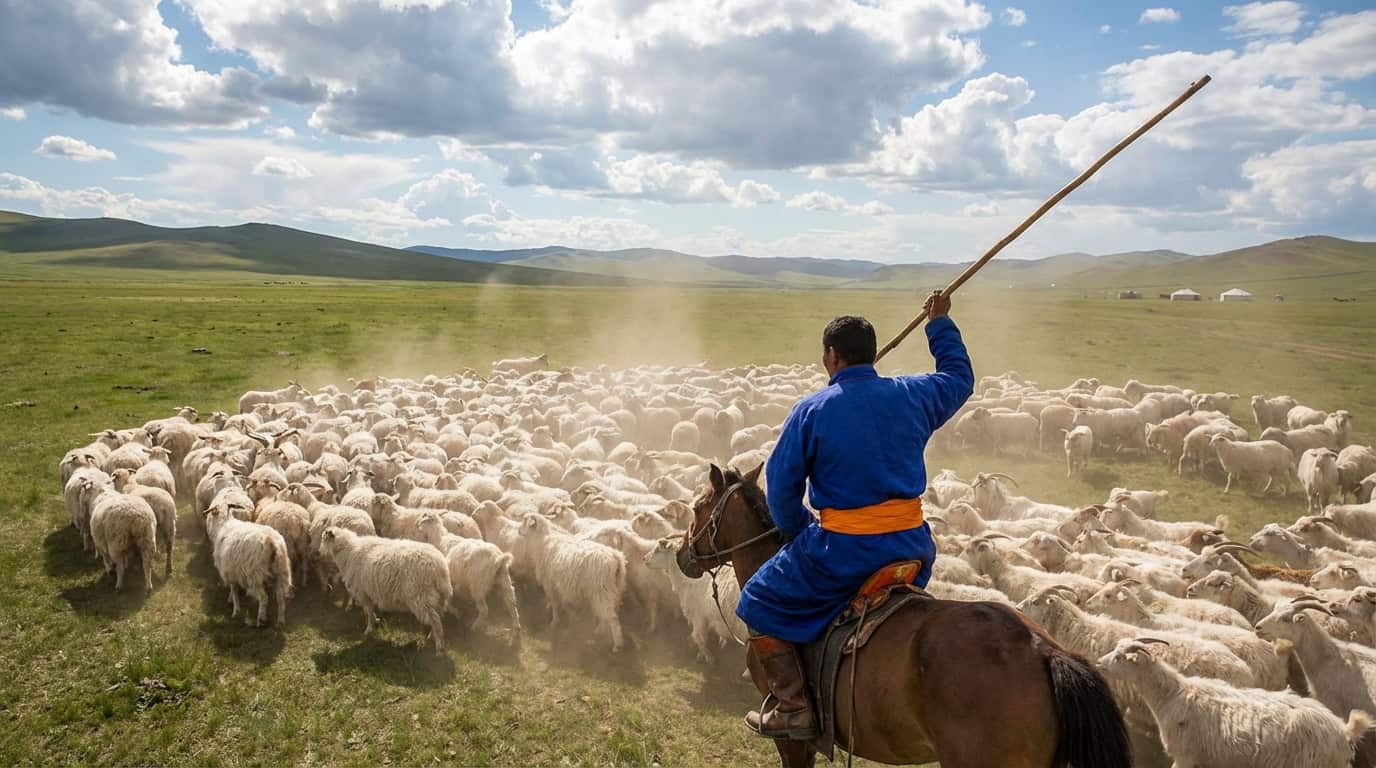
Waking up to the crisp morning air of the Mongolian steppe, I quickly learned that life here moves to the rhythmic hoofbeats of the family herd. Joining my host family for the morning gather, I saddled up a sturdy local horse and rode out into an endless ocean of green grass. These incredible mobile pastoralists manage dozens to hundreds of animals, acting as dedicated caretakers for their horses, sheep, goats, and camels. Trotting alongside the seasoned herders, I felt a profound sense of freedom that you simply cannot find in a modern city. The sheer scale of the plains makes you realize why this immersive, off-the-grid way of life has captured the hearts of adventurous travelers worldwide.
To truly understand the Mongolia nomad experience, you have to embrace the constant motion of their seasonal migrations. Depending on the size of their herds and the changing vegetation, families pack up their traditional felt gers and relocate anywhere from four to thirty times a year. Helping my hosts dismantle our cozy circular home was a humbling lesson in efficiency and teamwork. We loaded the wooden frames and thick felt coverings onto carts, crossing the vast terrain to find fresh pastures for the livestock. If you are planning your own journey, I highly recommend timing your visit between June and September to witness these fascinating summer migrations in comfortable weather.
Riding across these boundless plains offers a rare glimpse into one of the last surviving examples of a true pastoral culture. You will notice a fascinating blend of ancient survival skills and modern adaptations, like solar panels powering a single lightbulb inside the ger. Spending your days guiding cattle and your evenings sharing warm milk tea by a crackling fire creates memories that will stay with you forever. It is a deeply grounding experience that forces you to disconnect from digital distractions and reconnect with the natural world. Booking a homestay with a local herding family provides the ultimate cultural immersion for anyone seeking an authentic, transformative adventure.
Experiencing Suutei Tsai And Nomadic Hospitality
Stepping into a traditional ger on the endless Mongolian steppe feels like entering a completely different world. During my own journey off the grid, I was immediately struck by the incredible open-door culture that defines these mobile pastoralists. Even though these resilient families move their camps up to thirty times a year to find fresh grazing for their horses and camels, they always make space for weary travelers. You do not need a formal invitation to approach a camp, as hospitality is a sacred duty in this remote region. Walking through the brightly painted wooden door of my host family, I felt a profound sense of warmth that instantly washed away the exhaustion of travel.
The absolute heart of this welcoming ritual is a steaming bowl of suutei tsai, a unique traditional salty milk tea. When your host offers you a bowl of this savory brew, you must always receive it with your right hand while lightly supporting your right elbow with your left hand. Taking at least a small sip is a crucial sign of respect, even if the buttery and salty flavor profile surprises your palate at first. I quickly learned that rolling up my sleeves before accepting the tea is considered impolite, so always keep your wrists covered during this exchange. Sitting on the colorful rugs with my hands wrapped around the warm bowl, I realized this simple drink is the ultimate icebreaker.
Connecting deeply with your nomadic hosts goes far beyond spoken words and shared vocabularies. Since I spoke barely a word of Mongolian, I relied entirely on universal gestures, bright smiles, and a willingness to help with daily chores. Offering to herd the stubborn goats or peeling potatoes by the central stove created an instant bond of mutual respect. I highly recommend bringing a few small gifts from your home country, like postcards or simple games, to share with the children of the camp. By embracing the quiet moments and participating in their daily rhythm, you will forge an unforgettable connection that transcends any language barrier.
Embracing Nomadic Life on the Mongolian Steppe
Looking back on my time traversing the vast Mongolian steppe, I can honestly say this adventure completely transformed how I view the world. Trading my smartphone for a quiet existence in a traditional felt ger taught me the profound value of slowing down and living in harmony with nature. Sharing daily chores with my host family showed me exactly what it takes to manage herds of horses and sheep across these boundless plains. It is incredibly humbling to witness a culture where families pack up their entire lives multiple times a year just to follow the seasonal rhythms of the earth. This profound disconnection from modern distractions allowed me to reconnect with a simpler, more intentional way of living that I will carry with me forever.
If you are feeling the pull to experience this incredible mobile pastoralist culture for yourself, I urge you to take the leap and start planning your own journey. To get the most out of your trip, I highly recommend arranging your stay directly with local families to ensure your visit remains genuinely authentic. You should also pack plenty of warm layers and sturdy boots, as the weather on the open plains can change in the blink of an eye. Remember to approach every new experience with an open mind and a willingness to step far outside your usual comfort zone. Embracing the unpredictable magic of the nomadic lifestyle will undoubtedly reward you with the most unforgettable memories of your life.
Frequently Asked Questions
1. What exactly is a Mongolia nomad experience?
When I talk about a Mongolia nomad experience, I mean fully immersing yourself in the ancient rhythms of the steppe. You live alongside a herding family in a traditional felt ger, share warm milk tea, and help manage herds of horses, sheep, and camels. It is a soul-stirring adventure that completely changes how you view travel and human connection.
2. What is it like to sleep in a traditional Mongolian ger?
Sleeping in a ger feels like crossing a threshold into another century, and I always feel a profound sense of relief stepping inside after a long day. The thick layers of sheep wool insulation wrap the structure in a warm embrace, completely shielding you from the biting steppe wind. Waking up to the gentle sounds of grazing livestock outside your door is pure magic.
3. Do I need to prepare for ger etiquette before my trip?
Yes, understanding proper etiquette inside the family home is essential before you pack your bags. I highly recommend learning a few basic customs, like how to accept food or tea with your right hand, to show respect to your welcoming hosts. These small gestures go a long way in building a genuine human connection during your stay.
4. How often do the nomadic families move their herds?
Roughly a third of Mongolia’s population still practices this beautifully raw way of life, moving their herds up to thirty times a year. I was amazed to learn that they follow the ancient, rhythmic cycles of the seasons to find the best grazing lands for their animals. You might even get the chance to witness or help with these remote seasonal migrations during your visit.
5. Is this type of trip suitable for travelers who want modern comforts?
While this journey means leaving the modern hustle behind, you will be surprised by how masterfully these families balance centuries-old survival traditions with a few modern comforts. You will be off the grid, but the thick wool insulation of the ger and the steaming cups of milk tea keep you incredibly comfortable. I promise that trading crowded tourist traps for this boundless freedom is absolutely worth giving up Wi-Fi for a few days.
6. What kind of animals will I see and interact with on the steppe?
You will be surrounded by the beautiful, rugged terrain and the family’s vital herds of horses, sheep, and camels. I loved waking up and stepping out of my ger to watch the livestock grazing freely across the boundless Asian steppes. If you are feeling adventurous, your host family will often let you help manage and care for the animals.
7. What should I pack for a nomadic homestay in Mongolia?
I always tell my friends to pack warm, breathable layers because the steppe weather can change rapidly from a sunny afternoon to a biting evening wind. Bring sturdy walking shoes for walking across the rugged terrain and a good headlamp for nighttime trips outside the ger. Thoughtful preparation ensures you can focus entirely on the breathtaking wilderness and your welcoming host family.
8. Is it safe to travel to these remote seasonal migrations?
It is incredibly safe, and the nomadic herders are some of the most welcoming people I have ever met on my travels. While crossing the remote Asian steppes requires a knowledgeable local guide, you will be well cared for by your host family. This untouched nature offers the ultimate adventure, giving you a deeply rewarding and secure environment to weave your own story.