
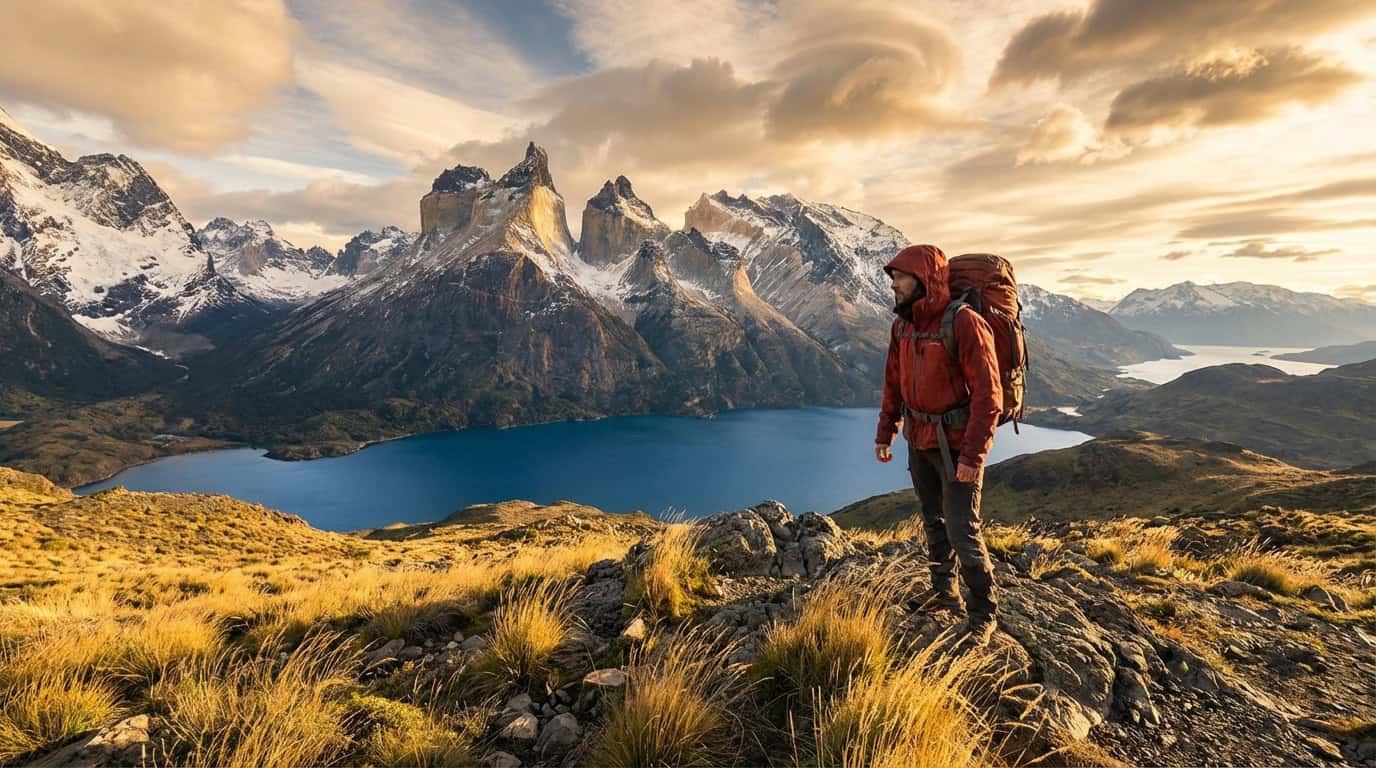
Stepping off the plane in Patagonia feels like landing on another planet where nature still rules. The sheer force of the wind whipping across the pampas instantly reminds you that you have truly arrived at the end of the world. I still remember my first glimpse of the granite spires piercing the sky, a sight that left me completely speechless. It is a place where glaciers groan and crack under the silence of untouched wilderness. Every corner of this rugged terrain promises an adventure that stays with you long after you return home.
Planning a trip here can feel overwhelming because the region spans two countries and countless sights. You will find yourself torn between the dramatic peaks of Torres del Paine in Chile and the jagged skyline of Mount Fitz Roy in Argentina. My own journey involved hopping across borders to experience the best of both sides, and I recommend you do the same. Whether you are tackling the famous W Trek or just soaking in the views from a cozy lodge, the diversity here is unmatched. This guide breaks down a comprehensive route to help you manage these vast distances with ease.
We will look at a flexible schedule that covers everything from challenging treks to accessible day hikes. You can expect to see wild guanacos grazing near the trails and Andean condors circling high above the peaks. I have crafted this itinerary to fit a standard one to three-week vacation so you do not miss the highlights. Get ready to lace up your boots for some of the most rewarding miles you will ever walk. It is time to start planning your ultimate adventure to the wild southern frontier.
Key Takeaways
- Plan a comprehensive cross-border itinerary that includes Chile’s Torres del Paine W Trek and Argentina’s Perito Moreno Glacier and Mount Fitz Roy.
- Master the art of layering with windproof gear and sturdy waterproof boots to handle Patagonia’s unpredictable ‘four seasons in one day’ weather.
- Optimize logistics by visiting during the shoulder months of March or April to avoid crowds and booking internal flights to save travel time.
- Allow for a flexible schedule, such as a 14-day route, that builds in buffer days for lengthy border crossings and potential weather delays.
Navigating Patagonia Seasons and Regional Logistics
Timing your visit to the end of the world completely transforms the experience you will have on the trails. While peak summer from December to February guarantees long daylight hours for tackling the W Trek, it also brings the strongest winds and the biggest crowds to the viewpoints. My absolute favorite time to explore is actually during the shoulder months of late March or April when the lenga forests turn fiery red. You might face chillier mornings and shorter days, but having the majestic silence of the Grey Glacier almost entirely to yourself makes every shiver worth it. Just remember that many refugios close by late April, so you need to confirm your accommodation dates well in advance.
Moving between the Chilean and Argentine sides requires patience and careful planning. I learned the hard way that crossing the border near El Calafate can take hours during high season, so always build a buffer day into your schedule. When you are ready to hop between regions, booking your internal flights within each country saves you a significant amount of money compared to international routing. Try to fly into Puerto Natales for Torres del Paine or El Calafate for Los Glaciares to minimize those long and bumpy bus rides. Keep all your custom forms handy and accessible because the officials will ask for them multiple times before you get your stamp.
Trekking Torres del Paine and the W Circuit
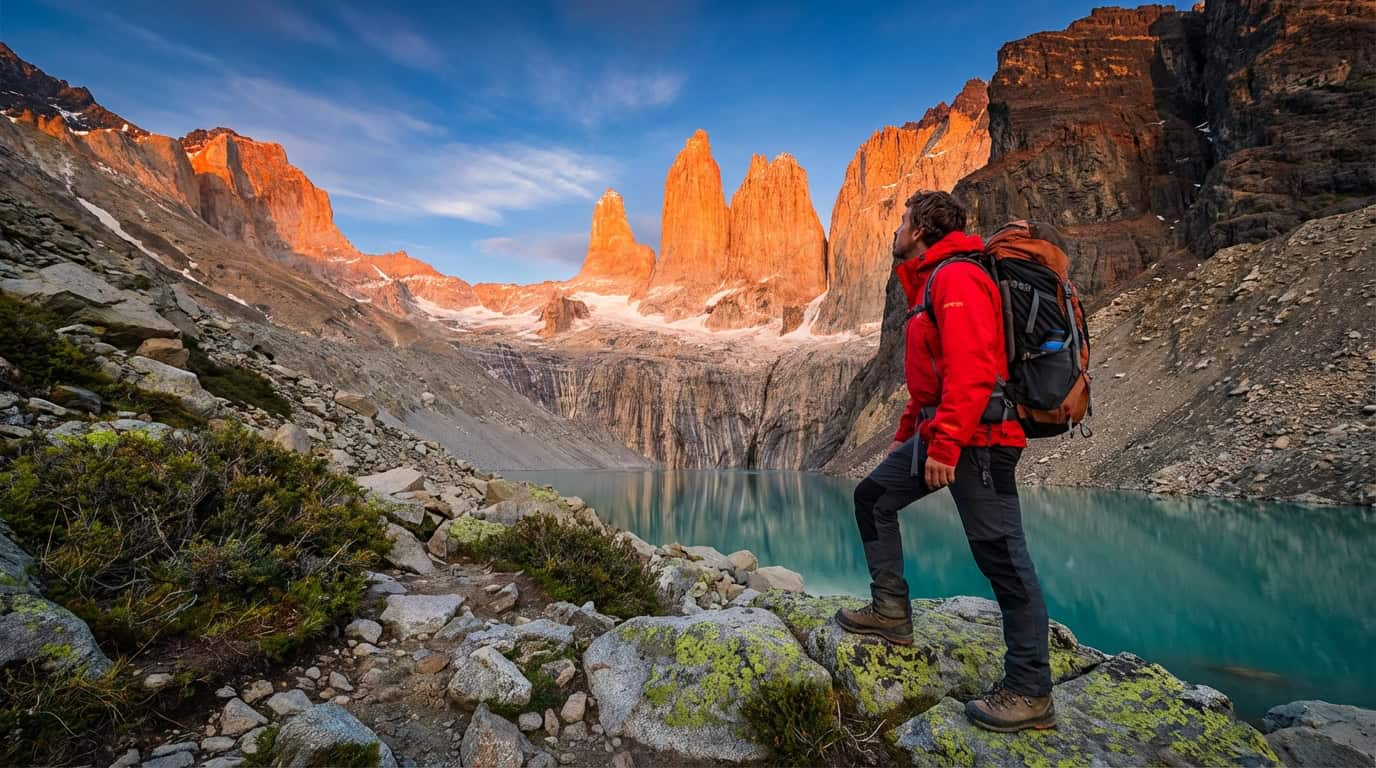
Stepping into Torres del Paine National Park felt like arriving on a different planet, where jagged peaks pierce the sky and guanacos roam freely across the pampas. The highlight of my trip was the demanding hike to Base Las Torres. It is a steep ascent that tests your endurance but rewards you with one of the most iconic views on Earth. I still remember the burn in my legs fading instantly as I crested the final rocky moraine to see those three granite spires reflecting in the glacial lagoon. You should plan to start this leg before dawn, as watching the sunrise paint the towers a fiery orange is a spiritual experience you cannot miss. Just be sure to pack layers, because the Patagonian wind at the top is relentless and unpredictable.
Continuing along the W Circuit, the terrain shifts dramatically from dry scrubland to lush lenga forests and roaring rivers. One of my favorite days involved trekking toward the massive Grey Glacier, where chunks of blue ice float eerily in the dark water of the lake below. Walking the suspension bridges on this leg offers dizzying but spectacular perspectives of the ice field stretching endlessly toward the horizon. If you have the energy, I highly recommend booking a kayaking excursion to get up close to the glacier face, as the scale of the ice walls is impossible to grasp from the trail alone. It is a humbling reminder of nature’s power that stays with you long after you unlace your hiking boots.
Walking on Ice at Perito Moreno Glacier
No stop in Argentina is complete without witnessing the raw power of Perito Moreno Glacier in Los Glaciares National Park. As soon as I stepped onto the viewing platforms, the sheer scale of this three-mile-wide wall of ice amazed me. The silence of the landscape is constantly broken by the thunderous roar of massive ice chunks calving into the turquoise waters of Lago Argentino below. It sounds like a gunshot or a cracking whip, followed by a splash that sends ripples across the entire lake. You can spend hours just leaning against the railing, mesmerized by the deep blue hues and waiting for that next dramatic crash.
To truly understand the magnitude of this frozen giant, you have to strap on a pair of crampons and step directly onto the ice yourself. I booked the Minitrekking tour, which starts with a short boat ride across the lake arm before guides help you gear up for the ascent. Walking on the glacier feels otherworldly as you move around deep crevasses and peer into sinkholes glowing with an electric blue light. The crunch of the ice beneath your boots makes you feel incredibly small against the vast, frozen landscape stretching toward the Andes. At the end of the hike, the guides surprise you with a glass of whiskey served over fresh glacial ice, a perfect toast to the adventure.
Conquering Mount Fitz Roy from El Chaltén
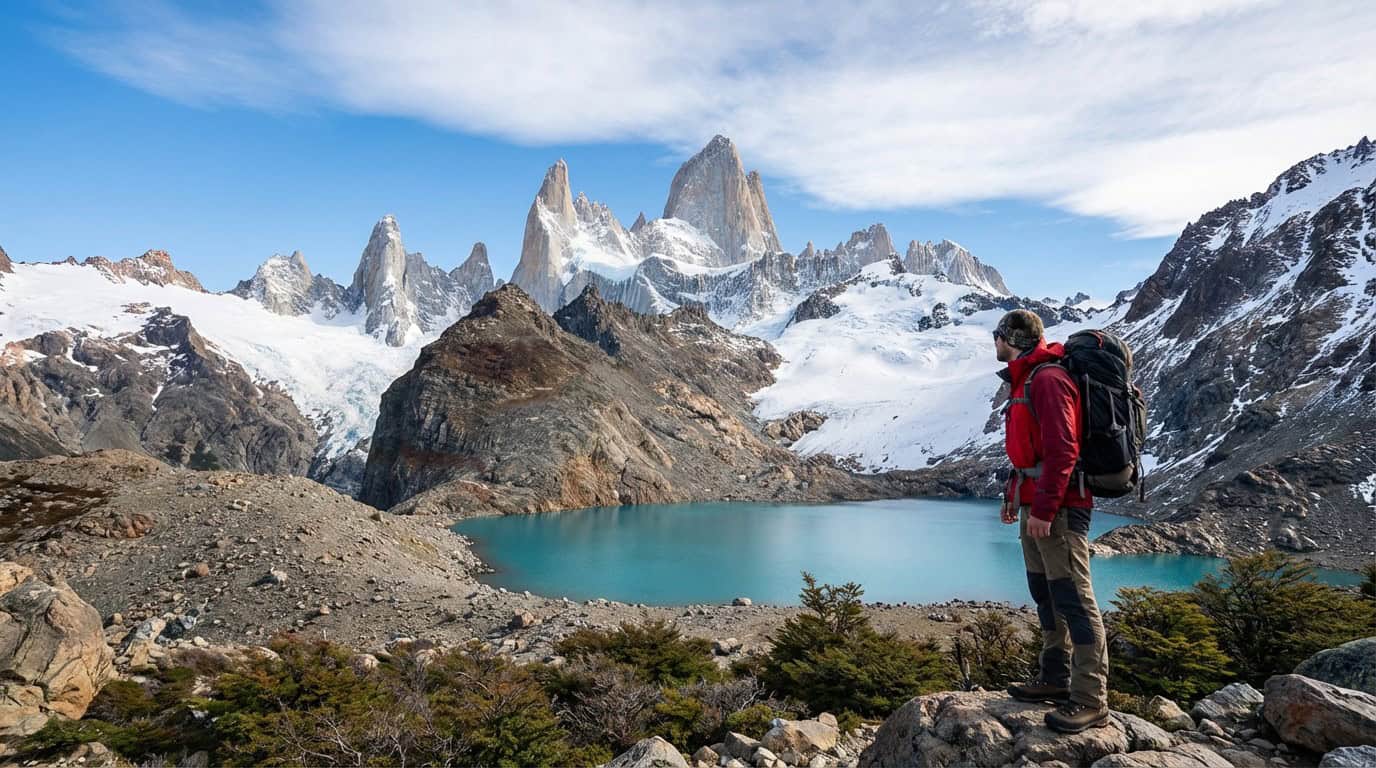
Arriving in El Chaltén feels like stepping into a hiker’s paradise where the jagged skyline constantly beckons you to explore. For the best part of your Argentine adventure, you must tackle the iconic Laguna de Los Tres trail during your stay here. This challenging twenty-kilometer round trip pushes your endurance with a steep final ascent, but every drop of sweat is worth the reward. Once you crest that last hill, the granite peaks of Mount Fitz Roy rise dramatically above the cobalt blue lagoon in a scene that looks photoshopped. I recommend starting before sunrise to catch the alpenglow hitting the spires, a magical moment that truly defines the Patagonian experience.
After a long day on the trails, the village itself offers the perfect cozy refuge to rest your weary legs. The atmosphere here is incredibly welcoming, filled with travelers from around the globe sharing stories over local craft beers and hearty stews. You will find that the rustic charm of the wooden cabins and the smell of fresh bread create an immediate sense of home. I loved unwinding at a small brewpub on the main street where the excitement for the next day’s adventure was palpable in the air. Make sure to try the lamb cordero, as it provides the essential fuel you need for tackling more trails the following morning.
Complete 14-Day Patagonia Route Breakdown
I recommend kicking off this two-week adventure in Puerto Natales, the gateway to the Chilean side, where you can stock up on supplies before heading into Torres del Paine National Park. For the first five days, tackle the famous W Trek to witness the granite towers glowing at sunrise and the massive Grey Glacier up close. Hiking through the French Valley was a personal highlight for me, as the hanging glaciers thunder in the distance while you walk through lenga forests. After completing the circuit, return to Puerto Natales for a well-deserved rest day and a warm meal to recharge. This initial leg offers the perfect introduction to the wild landscapes that make this region so unforgettable.
Days six and seven are dedicated to crossing the border into Argentina, a journey that takes about five hours by bus to reach the charming town of El Calafate. Once you settle in, dedicate a full day to visiting the Perito Moreno Glacier, where you can actually strap on crampons and trek across the deep blue ice. Standing on the viewing platforms to watch massive chunks of ice calve into Lake Argentino is a thunderous experience that shakes you to your core. I found the contrast between the arid steppe landscape and the icy giant absolutely mesmerizing during my visit. Make sure to book your boat tour or ice trek in advance since this is one of the most popular activities in the entire region.
For the final leg of your journey, travel three hours north to El Chaltén, known globally as the trekking capital of Argentina. Spend days nine through thirteen exploring the trails, with the hike to Laguna de Los Tres offering the most iconic view of Mount Fitz Roy. I suggest waking up well before dawn to catch the peaks turning fiery red with the morning light, a phenomenon known as the alpenglow. Another must-do is the trail to Laguna Torre, which is slightly less demanding but rewards you with stunning views of Cerro Torre and its glacial lake. On day fourteen, catch your transfer back to El Calafate airport with a camera full of photos and a heart full of memories.
Essential Gear for Patagonian Winds and Weather
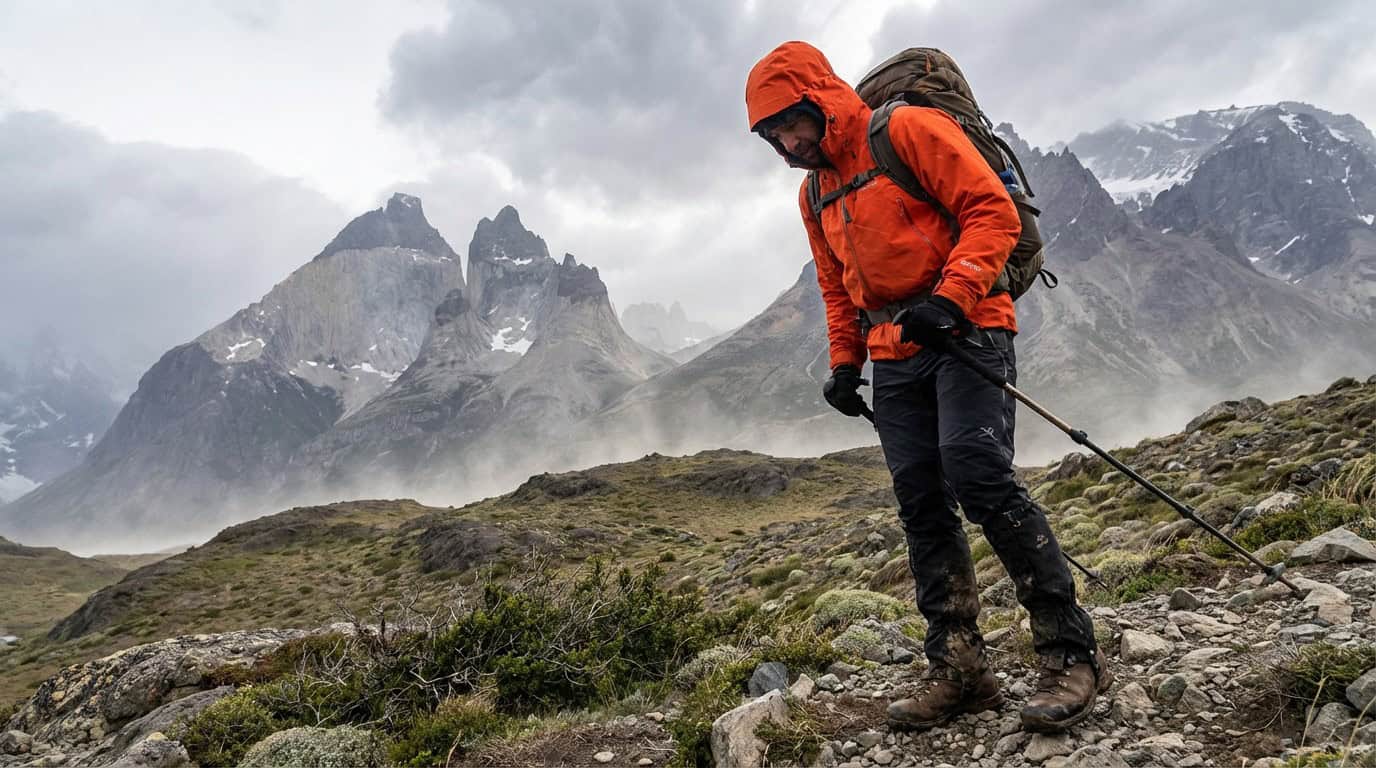
When I first stepped onto the trail in Torres del Paine, I experienced bright sunshine, horizontal rain, and sleet all within a single hour. This region is infamous for throwing four seasons at you in one day, so mastering the art of layering is the only way to stay comfortable on the trail. Your most valuable asset will be a high-quality hard shell jacket that is completely windproof and waterproof to combat the legendary Patagonian gusts. I recommend pairing this with a lightweight down jacket and a moisture-wicking base layer to trap heat without adding unnecessary bulk to your pack. Trust me, when the wind howls through the French Valley, you will be thankful for every single layer you decided to bring along.
Since your feet are your primary mode of transportation across these rugged landscapes, investing in sturdy trekking boots is absolutely non-negotiable. The trails around El Chaltén and the O Circuit are a mix of jagged granite, slippery roots, and deep mud that demand aggressive traction and solid ankle support. Please make sure you break your boots in thoroughly weeks before your trip to avoid painful blisters that could ruin your hike to Laguna de Los Tres. I always tell travelers to choose waterproof Gore-Tex models because dry feet are the key to happiness on long trekking days. Bringing an extra pair of dry wool hiking socks in your daypack is a small luxury that makes a massive difference during a lunch break.
Beyond the big items, small accessories play a huge role in protecting you from the relentless elements at the bottom of the world. A versatile neck gaiter or Buff is essential for shielding your face from stinging sand and keeping your neck warm during chilly mornings at camp. You should also pack polarized sunglasses to protect your eyes from the intense UV glare reflecting off Grey Glacier and the Southern Patagonian Ice Field. I learned the hard way to use a strap for my glasses after nearly losing them to a sudden gust on an exposed ridge. Being prepared for these wild conditions allows you to focus on the breathtaking scenery rather than fighting the cold.
Reflecting on the Windswept Patagonia Dream
Leaving Patagonia feels less like ending a vacation and more like waking from a vivid, windswept dream. I still remember the ache in my legs after conquering the steep ascent to the base of the Torres del Paine towers, but the sight of those granite spires piercing the sky made every step worth the struggle. Whether you spent your days navigating the challenging O Circuit or sipping mate while gazing at Mount Fitz Roy from El Chaltén, this region leaves an indelible mark on your soul. The raw power of nature here forces you to slow down and appreciate the sheer scale of our planet in a way few other places can. It is not just about checking landmarks off a list, but about the quiet moments of awe you find between the trail markers.
Planning a trip to the end of the world might seem daunting at first, especially when you are trying to coordinate bus schedules across the Chilean and Argentine borders. You have to embrace the unpredictability of the Patagonian weather, knowing that a sudden rainstorm often clears to reveal the most spectacular double rainbows over Lake Pehoé. I encourage you to pack your waterproof layers and trust that the wild beauty of the Southern Cone will reward your bravery with memories that last a lifetime. There is a unique freedom in disconnecting from the daily grind to listen to the cracking of Grey Glacier or the wind howling through the steppes. Take the leap to book that flight for 2025, because the magic of the deep south is something you truly need to witness with your own eyes.