
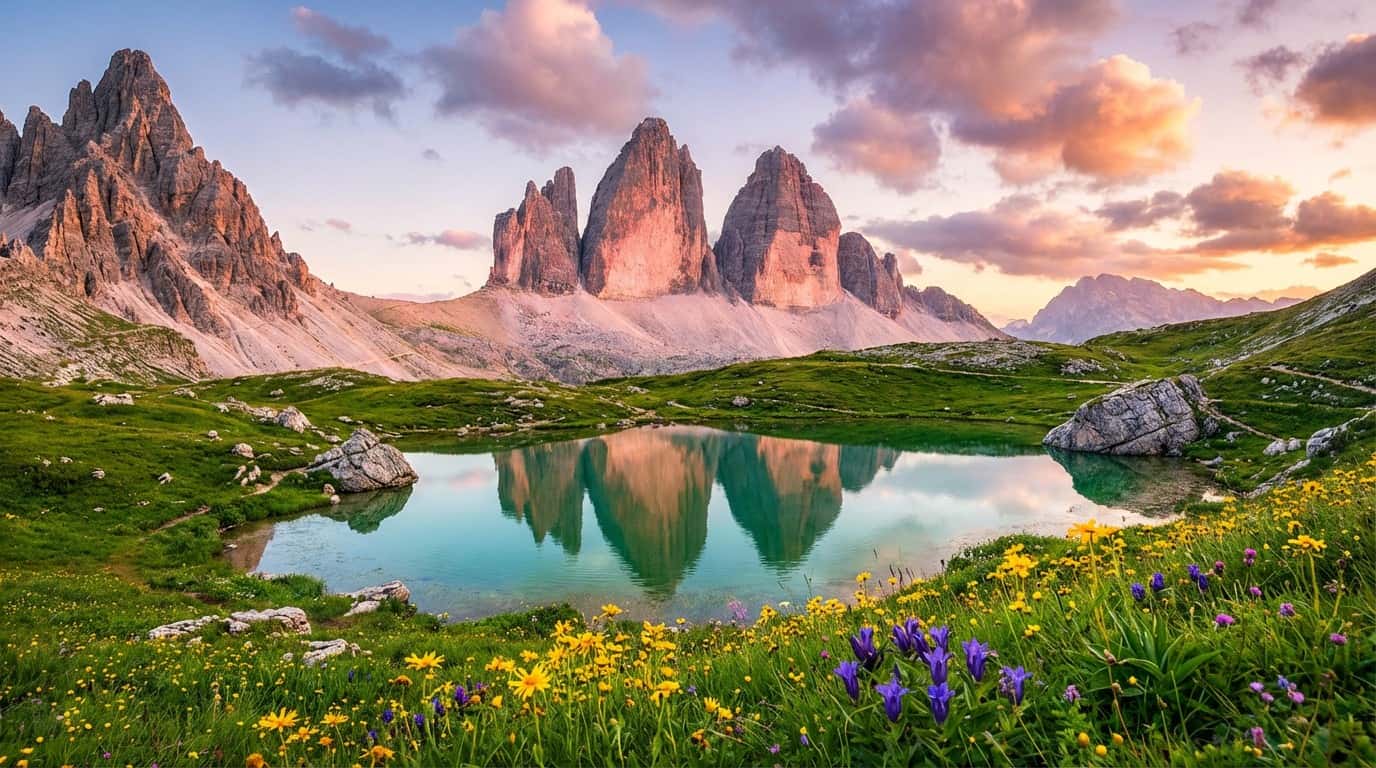
There is a specific moment during twilight when the jagged limestone peaks of the Dolomites seem to catch fire. Locals call this phenomenon Enrosadira, and seeing the pale grey rock transform into vibrant shades of coral and violet is a memory that stays with you forever. Standing there with the crisp alpine air filling my lungs, I realized that Northern Italy offers a mountain terrain unlike anywhere else on Earth. These massive formations rise vertically from rolling green meadows, creating a dramatic contrast that feels almost too perfect to be real. Whether you are gazing up at the Tre Cime di Lavaredo or watching the light fade over the Seceda Ridgeline, the sheer scale of this UNESCO World Heritage Site demands your full attention.
Beyond the visual spectacle, traveling through this region feels like stepping into a unique cultural intersection where Italian charm meets Austrian precision. You will hear a fascinating blend of languages as you wander through charming villages like Ortisei or Cortina d’Ampezzo, where Ladin traditions are still proudly preserved. The food is equally diverse, offering everything from hearty dumplings and apple strudel to refined Mediterranean pasta dishes served in high-altitude mountain huts. I found that the Dolomites are not just a backdrop for photos but a playground for adventure lovers seeking world-class hiking, climbing, and skiing. Every valley reveals a new surprise, making it easy to understand why travelers return year after year to explore these valleys.
Planning a trip here can feel overwhelming because there is simply so much ground to cover in this vast mountain range. I recommend setting aside at least five to seven days to truly soak in the turquoise lakes and drive the winding mountain passes without feeling rushed. This guide will walk you through the essential logistics of building your itinerary, from choosing the right base towns to selecting the best hiking trails for your skill level. We will explore how to connect iconic spots like Lago di Braies and Alpe di Siusi into a cohesive route that maximizes your time in the mountains. Get ready to pack your hiking boots and camera because we are about to explore the ultimate Dolomites travel experience.
Key Takeaways
- To efficiently explore the vast region and minimize driving on winding roads, plan for a 5-7 day trip split between two base camps like Cortina d’Ampezzo and Ortisei.
- Prioritize iconic outdoor experiences such as hiking the Tre Cime di Lavaredo loop, walking the Seceda Ridgeline, and visiting turquoise lakes like Braies and Sorapis early to avoid crowds.
- Embrace the region’s unique cultural blend of Italian, Austrian, and Ladin influences by dining on diverse cuisine at high-altitude mountain huts known as rifugi.
- Visit between mid-June and September for prime hiking conditions, but ensure you pack layers and waterproof gear to handle the rapidly changing alpine weather.
Navigating The Region And Choosing The Right Base Camp
Understanding the layout of this massive UNESCO World Heritage Site is the first step to a successful trip. The region is split broadly between South Tyrol in the north, where German is widely spoken, and Trentino in the south, which feels distinctly Italian. Because the mountain passes are winding and slow to drive, I always recommend picking two different base camps rather than trying to see everything from one spot. This strategy saves you hours of driving time and allows you to truly soak in the sunrise over the peaks without waking up at an ungodly hour. Trust me, you want to spend your time hiking the Alta Via trails rather than sitting in a rental car behind a slow-moving tour bus.
If you crave a touch of glamour and easy access to iconic spots like Tre Cime di Lavaredo, Cortina d’Ampezzo is an excellent choice for the eastern side. I loved wandering through its upscale pedestrian center after a long day of exploring the nearby turquoise waters of Lago di Sorapis. On the western side, Val Gardena offers a lively atmosphere that serves as a perfect jumping-off point for the Seceda Ridge and Alpe di Siusi. Staying in Ortisei gives you convenient access to cable cars that whisk you straight up into alpine meadows filled with wildflowers. It is the ideal blend of convenience and alpine charm for travelers who want plenty of restaurant options right outside their hotel door.
For those seeking solitude and those famous postcard views of the Odle Geisler peaks, the quiet Val di Funes is a magical alternative. This valley is much sleepier than its neighbors, making it perfect for photographers chasing the sunset at the tiny Church of St. Johann. I found that staying here allowed me to disconnect completely and enjoy the sound of cowbells ringing through the valley floor. Regardless of where you choose to drop your bags, remember that the distances on the map often take longer to drive than you expect. Choosing the right home base will transform your experience from a frantic road trip into a deeply relaxing mountain escape.
Iconic Hikes From Tre Cime To The Seceda Ridgeline
No trip to the Dolomites feels complete until you have stood in the shadow of the massive Tre Cime di Lavaredo. I remember arriving at the Rifugio Auronzo parking lot just as the sun began to paint the limestone peaks in shades of burning orange and soft pink. The loop trail is surprisingly accessible for most fitness levels, offering constant, jaw-dropping views that make every step worth the effort. You should aim to hike counter-clockwise toward Rifugio Locatelli for the classic postcard angle that reflects beautifully in the alpine lakes. Be sure to arrive before 8:00 AM to beat the crowds and secure a parking spot, as this is easily the most popular trail in the region.
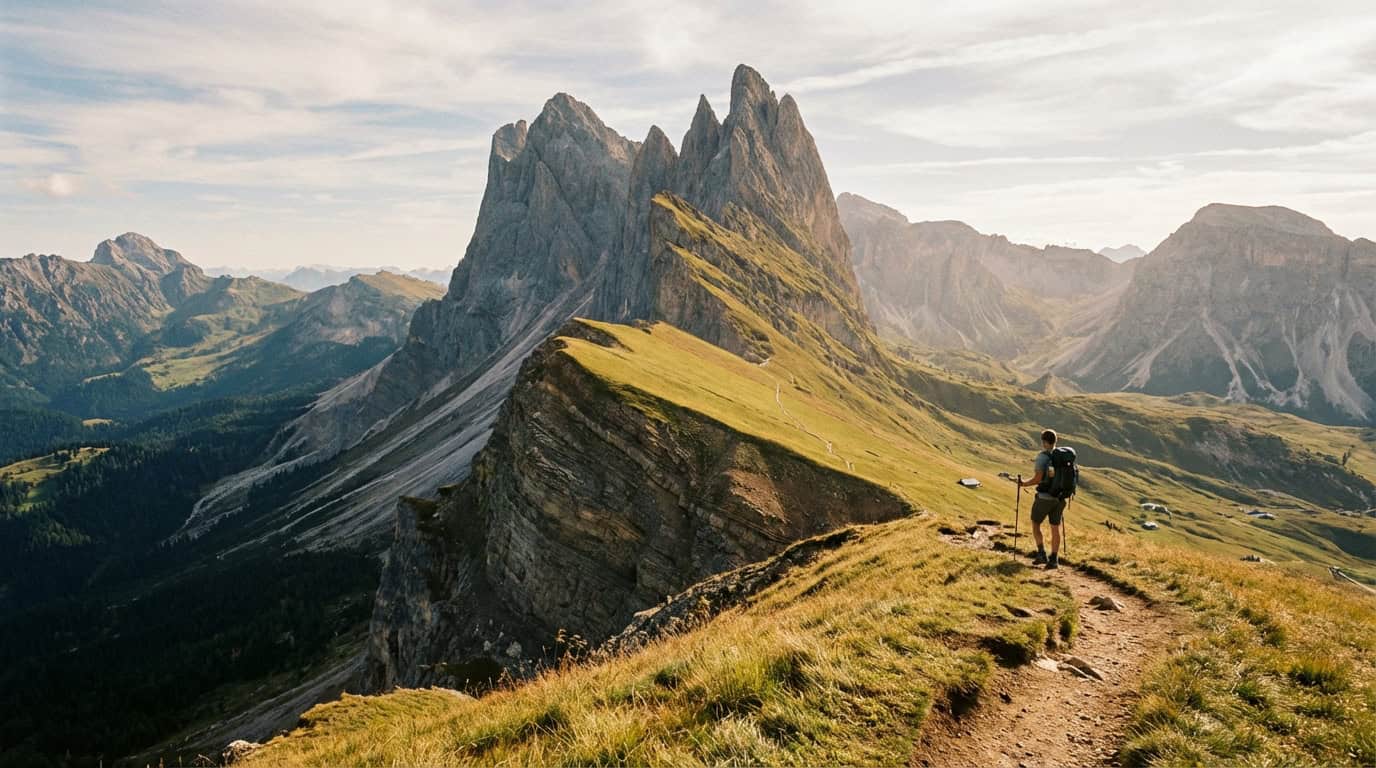
For a completely different but equally dramatic perspective, you must make your way to Val Gardena for the journey up to Seceda. Taking the cable car from Ortisei whisks you up thousands of feet in minutes, depositing you right at the edge of a sheer cliff that drops vertically into the valley below. Walking along the ridgeline felt like walking on the spine of a sleeping dragon, with the jagged Fermeda peaks slicing through the clouds ahead. It is the perfect spot to pack a picnic lunch and simply marvel at the sheer scale of the Italian Alps without needing a grueling ascent. The grassy slopes here are incredibly photogenic, especially when wildflowers bloom in early summer, creating a stark contrast against the gray rock.
If you are planning your first itinerary, balancing these two giants with quieter trails will give you the best overall experience. I recommend basing yourself in two different locations, perhaps Cortina d’Ampezzo for the peaks and Ortisei for the meadows, to minimize driving time on winding mountain roads. While the famous spots steal the show, do not be afraid to wander off onto smaller side trails where you can find solitude and arguably better views. The magic of this region lies not just in the summits you conquer, but in the quiet moments spent watching the light change over the valleys. Just remember to pack layers, as the weather at these high altitudes can shift faster than you can snap a photo.
Chasing Turquoise Waters At Lago Di Braies and Sorapis
Seeing Lago di Braies for the first time feels like stepping directly into a living postcard. The emerald green waters reflecting the massive limestone walls of the Croda del Becco create a scene that almost defies belief. Since this is arguably the most famous spot in the Dolomites, I highly recommend arriving before sunrise to secure a parking spot and enjoy a rare moment of stillness. Renting one of the iconic wooden rowboats as soon as the boathouse opens allows you to capture that classic shot without battling hundreds of other tourists on the shore. If you have extra time, walking the easy loop trail around the perimeter offers quieter perspectives away from the busy hotel entrance.
While Braies is easily accessible by car, reaching the surreal milky-blue waters of Lago di Sorapis requires significantly more sweat and determination. You will need to hike Trail 215 for roughly two hours each way, navigating some exposed ledges equipped with metal cables along the path. The physical effort vanishes instantly once you turn the final corner and see that distinct pastel turquoise hue nestled beneath the vertical rock walls of the Finger of God. Glacial dust suspended in the water gives the lake its unique opacity, making it look completely different from the crystal-clear alpine pools found elsewhere in the region. Make sure to pack plenty of water and sturdy hiking boots, as the rocky terrain can be slippery and steep in certain sections.
Dining In The Clouds At Traditional Mountain Rifugi
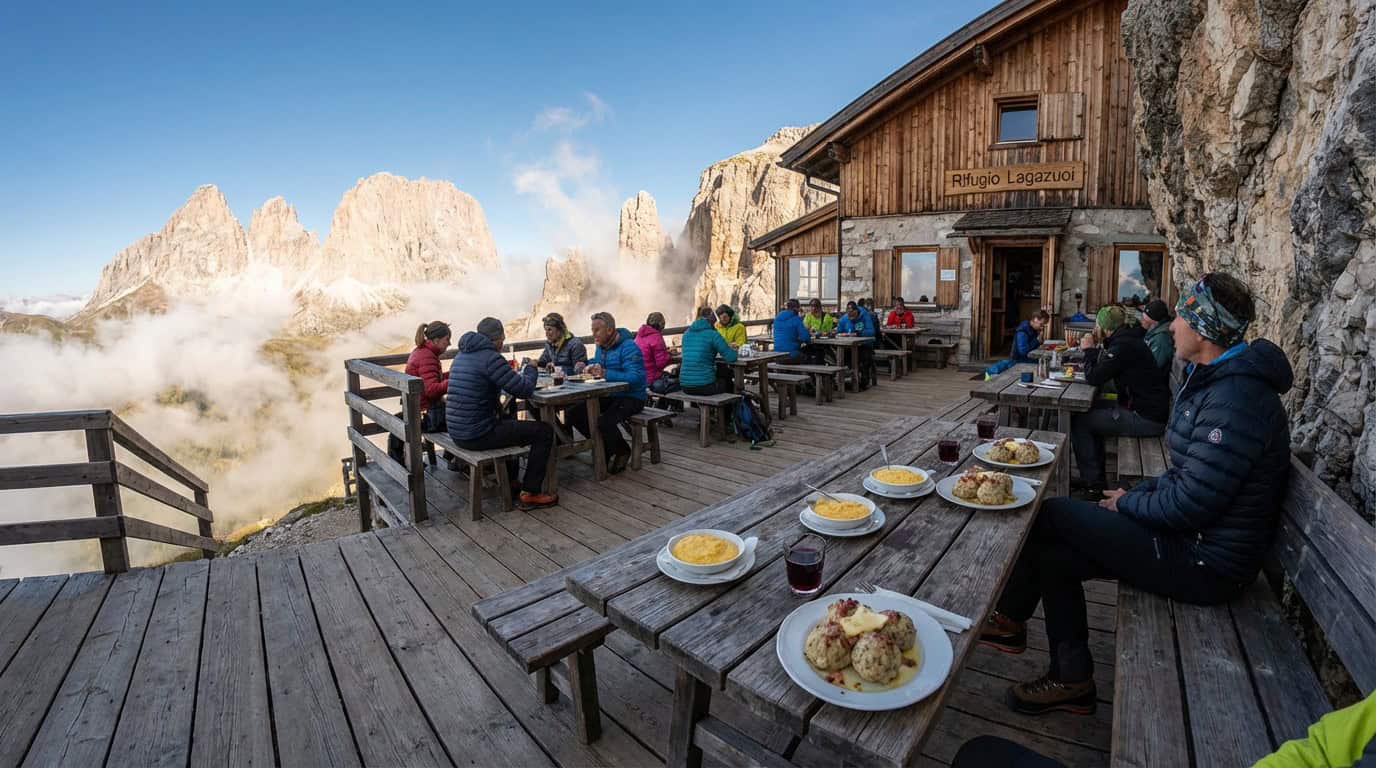
There is nothing quite like the feeling of cresting a steep ridge to spot the welcoming wooden shutters of a mountain rifugio perched on the cliffside. During my trek along the Alta Via 1, the physical exertion of the climb instantly vanished the moment I stepped onto the sun-drenched terrace of Rifugio Lagazuoi. The air up here is thinner and crisper, making the aroma of melted butter and sage wafting from the kitchen even more intoxicating. These high-altitude huts are not mere rest stops but are destinations in their own right, offering some of the most spectacular dining views in Europe. You sit shoulder-to-shoulder with fellow hikers, sharing stories of the trail while gazing out at a sea of limestone pinnacles that turn pink at sunset.
The culinary scene in the Dolomites is a fascinating borderland where hearty Austrian traditions collide beautifully with Italian finesse. You might find yourself torn between ordering a delicate plate of tagliatelle with venison ragu or a bowl of rich canederli bread dumplings swimming in broth. I highly recommend sampling the local Ladin specialties, such as casunziei, which are half-moon ravioli filled with beetroot and topped with poppy seeds. This unique fusion ensures that you are fueled properly for the next leg of your journey without sacrificing flavor or quality. It is comfort food elevated to an art form, perfectly designed to warm you up after a morning exposed to the alpine elements.
While many hikers stop for a quick lunch, staying overnight transforms a simple meal into an unforgettable alpine memory. Dinner service usually quiets down as day-trippers descend to the valley, leaving you to enjoy a glass of local Lagrein wine under a canopy of stars. Keep in mind that these remote kitchens often rely on helicopter deliveries, so prices can be slightly higher than in the villages below. Most huts accept credit cards now, but carrying cash is always a smart move in case the mountain connection fails. Whether you tackle a multi-day circuit or just hike up for lunch, dining at a rifugio is an essential part of the Dolomite soul that you simply cannot miss.
The Perfect One Week Dolomites Road Trip Itinerary
For the ultimate alpine adventure, I recommend starting your loop in Venice and driving north toward the glamour of Cortina d’Ampezzo. Spend your first two days exploring the eastern giants, including the iconic loop hike around Tre Cime di Lavaredo which offers some of the most dramatic jagged peaks in the region. Don’t forget to wake up early for a sunrise visit to Lago di Braies, where the reflection of the mountains on the still water creates a picture-perfect moment. This area also serves as the perfect base for visiting Lago di Sorapis if you are up for a rewarding turquoise-water hike. After soaking in the dramatic limestone towers here, you will drive the Great Dolomites Road westward to continue the journey.
The middle of your week should be dedicated to the breathtaking Val Gardena region, specifically basing yourself in the charming town of Ortisei. From here, catch the cable car up to Seceda to witness the jagged, knife-edge ridgeline that looks like it belongs on another planet. I love spending a full afternoon wandering through Alpe di Siusi, Europe’s largest high-alpine meadow, which is dotted with rustic wooden huts and grazing cows. The contrast between the rolling green hills and the vertical rock faces of Sassolungo creates a landscape that feels incredibly peaceful yet wild. Make sure to enjoy a hearty meal of dumplings and speck at a mountain rifugio before the sun dips behind the peaks.
As your road trip winds down, drive north to the quiet and majestic Val di Funes to see the famous church of Santa Maddalena framed by the Geisler peaks. This valley is slightly more secluded and offers some of the most photogenic sunsets I have ever witnessed in the Italian Alps. Your final stop is the city of Bolzano, where you can visit the South Tyrol Museum of Archaeology to see Ötzi the Iceman before returning your rental car. This bustling town perfectly blends Italian and Austrian cultures, offering a great spot for a final aperitivo in the main square. Completing this loop ensures you see the very best of the Dolomites without feeling rushed, leaving you with memories that will last a lifetime.
Seasonal Timing And Packing For Variable Alpine Weather
Choosing the right time to visit the Dolomites depends entirely on what kind of adventure you crave. For hikers and nature lovers, the window from mid-June to September is pure magic because the alpine meadows explode with colorful wildflowers and the high-altitude rifugi are open for business. I personally love visiting in early July when the contrast between the lush green grass and the pale limestone peaks is at its most vibrant. If you prefer carving up fresh powder, the winter ski season from December to March turns the region into a snowy wonderland perfect for the Dolomiti Superski circuit. Just remember that shoulder seasons like May or November can be tricky since many lifts and huts close down for maintenance.
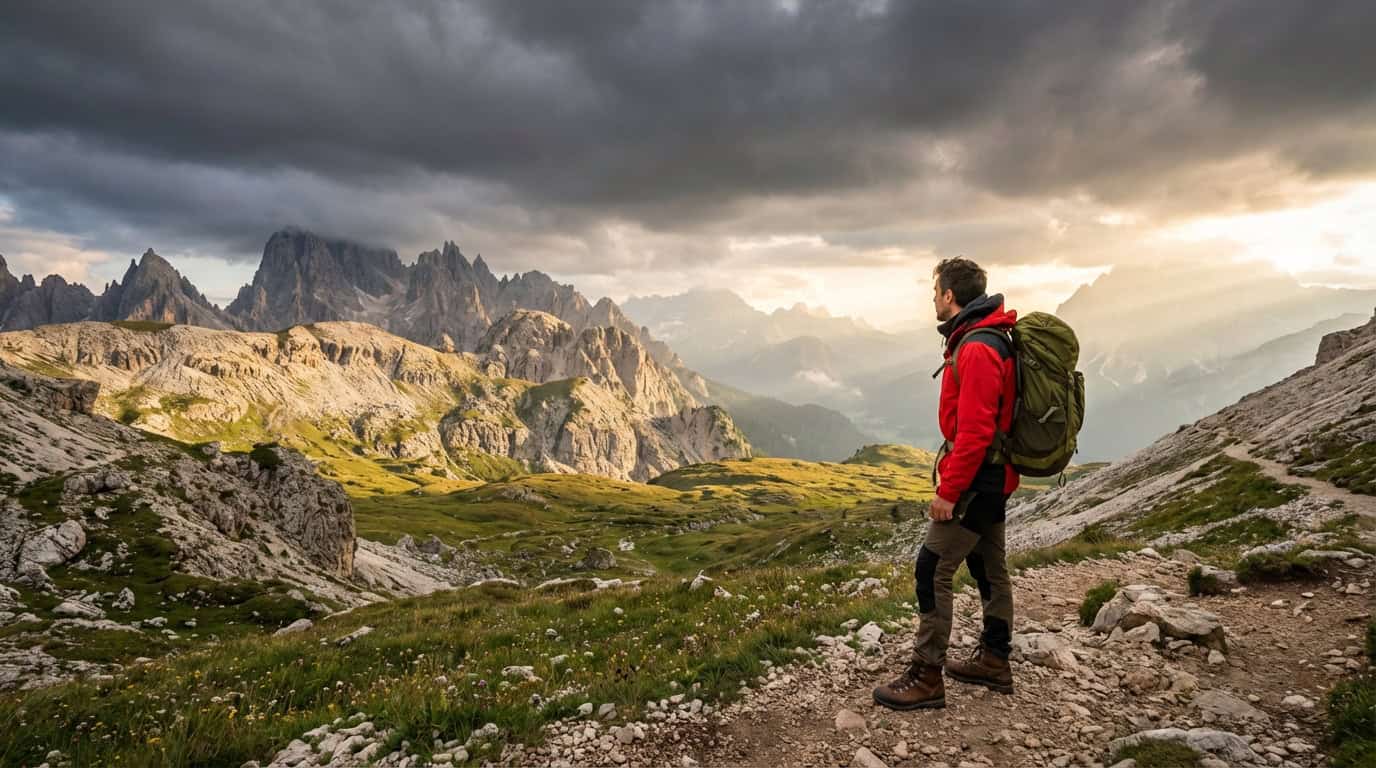
Regardless of when you book your trip, packing for the mountains means preparing for four seasons in a single day. I learned this lesson the hard way during a summer hike near Tre Cime di Lavaredo when a sunny morning quickly turned into a shivering hail storm. You absolutely need a reliable layering system that includes a moisture-wicking base layer to keep you dry and a warm fleece for insulation. A high-quality waterproof and windproof shell is non-negotiable since afternoon thunderstorms are common in these high altitudes. Don’t forget sturdy hiking boots with good ankle support and a pair of trekking poles to save your knees on those steep descents.
Now is the time to stop scrolling through social media feeds and finally commit to booking that flight to Northern Italy. While professional photographers capture stunning angles, no image can truly replicate the overwhelming scale of the vertical walls towering above you. Standing in the shadow of the Seceda ridgeline or watching the sunset turn the rock faces pink with alpenglow is an experience that resonates deep in your soul. The Dolomites are not just a destination to see but a landscape to feel, so go ahead and block out those dates on your calendar. Your future self will thank you for prioritizing this unforgettable journey into the heart of the Alps.
Embracing the Dolomites’ Peaks, Pasta, and Heritage
Planning a trip to this UNESCO World Heritage Site is truly about embracing the incredible contrast between jagged limestone peaks and soft alpine meadows. I still find myself daydreaming about the unique cultural blend where Italian pasta meets hearty Tyrolean dumplings in the cozy mountain huts. A comprehensive Dolomites travel guide isn’t just about ticking off locations like the Seceda Ridge or Val di Funes, but about slowing down to appreciate the Ladin heritage found in these valleys. Whether you are tackling a via ferrata or simply sipping coffee by a turquoise lake, the region offers a magic that is hard to replicate elsewhere. It really is a destination that demands you pause and soak in every dramatic sunset hitting the pale mountains.
To really do justice to this spectacular corner of northern Italy, I always recommend setting aside at least five to seven days for your adventure. This timeframe gives you the perfect buffer to hike the loop at Cinque Torri and relax by the shimmering waters of Lago di Sorapis without feeling rushed. If you can stretch your itinerary to over a week, you open up the possibility of exploring deeper into Val Gardena or even attempting a multi-day Alta Via trek. My own journey started from Venice, which proved to be an accessible and scenic gateway into the mountains. Regardless of your route, ensure you leave some flexibility in your schedule for spontaneous discoveries along those winding mountain passes.
Crafting your own Dolomites travel guide is the first step toward an experience that will undoubtedly change the way you see the mountains forever. Whether you visit in the winter for world-class skiing or in the summer for the vibrant wildflowers of Alpe di Siusi, the landscape never fails to inspire awe. I promise that the memories of waking up to the glow of the sunrise on the rock faces will stay with you long after you return home. There is no perfect time to go, so my best advice is simply to book the ticket and get ready for the adventure of a lifetime. The mountains are calling, and I know you will fall in love with them just as hard as I did.