
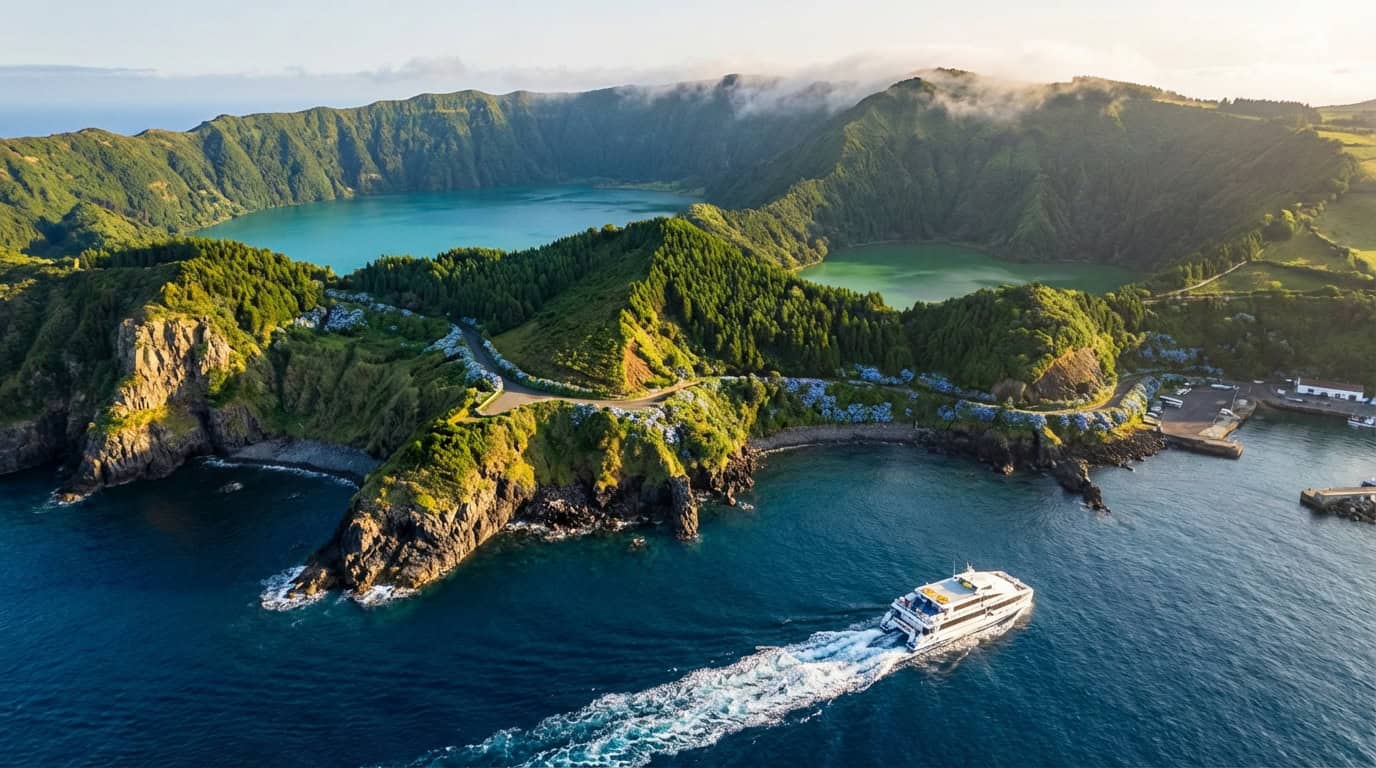
Stepping onto the tarmac in the middle of the Atlantic feels like entering a world where emerald peaks rise straight from the mist and the salt air carries the promise of adventure. Masterfully managing azores island hopping is less about a rigid schedule and more about dancing with the rhythm of the ocean and the whims of the wind. Whether you are soaring between island groups on a SATA turboprop or watching dolphins trail your ferry through the Central Group, the journey between these volcanic outposts is just as breathtaking as the destinations themselves.
I’ve learned through experience that a successful trip requires balancing your wanderlust with the logistical realities of the archipelago’s three distinct island groups. From the crater lakes of São Miguel to the rugged waterfalls of Flores, moving through this aerial transit network requires a bit of insider knowledge on weather and seasonal ferry routes. My goal is to help you transform those logistics into a seamless itinerary that lets you focus on the hydrangea-lined roads and thermal springs waiting at every stop.
Key Takeaways
- Utilize SATA Air Açores turboprop flights to bridge the long distances between the three island groups, while reserving Atlânticoline ferries for scenic, budget-friendly travel within the Central Group Triangle.
- Build flexible buffer days into your itinerary to account for unpredictable Atlantic weather and mountain fog, which can frequently cause delays in flight and ferry schedules.
- Focus on one or two island groups per trip rather than attempting to see all nine to ensure a balance between exploration and the logistical realities of island transit.
- Book all inter-island transport well in advance, particularly during the peak summer season, to secure seats on the small-capacity planes and popular ferry routes.
Navigating the SATA Air and Ferry Logistics
Mastering the rhythm of the Azores requires a strategic blend of air and sea travel, especially when you are eager to witness the dramatic volcanic peaks and rich marine life. SATA Air Açores serves as the essential lifeline between the three island groups, operating nimble SATA turboprop planes that offer breathtaking aerial views of the Atlantic. While these flights are efficient and function much like a local transit route, I always recommend building a little buffer into your schedule for the occasional mountain fog. Flying is your best bet for crossing large distances, such as moving from the bustling craters of São Miguel in the Eastern Group to the lush, waterfall-heavy landscapes of the Western Group.
For a more intimate connection with the ocean, the Atlânticoline ferries provide a scenic and budget-friendly alternative during the high season. This is particularly true in the Central Group, often called the Triangle, which includes the islands of Pico, Faial, and São Jorge. I found that moving between these three islands is incredibly simple because they are so close that you can see their silhouettes from across the water. Taking the ferry here feels less like a chore and more like a mini whale-watching expedition, as you scan the horizon for fins while moving between world-class vineyards and volcanic trekking paths.
Planning your logistics around the Triangle allows for a seamless flow that minimizes airport wait times and maximizes your time in nature. You can easily base yourself in Horta on Faial and take a quick morning boat to Pico to hike Portugal’s highest peak before returning in time for a sunset dinner. This multi-modal approach ensures you experience the distinct personality of each island without feeling rushed. By combining the speed of SATA with the seasonal charm of the ferries, you can enjoy an immersive European adventure that feels worlds away from the mainland crowds.
Exploring the Volcanic Wonders of the Eastern Group
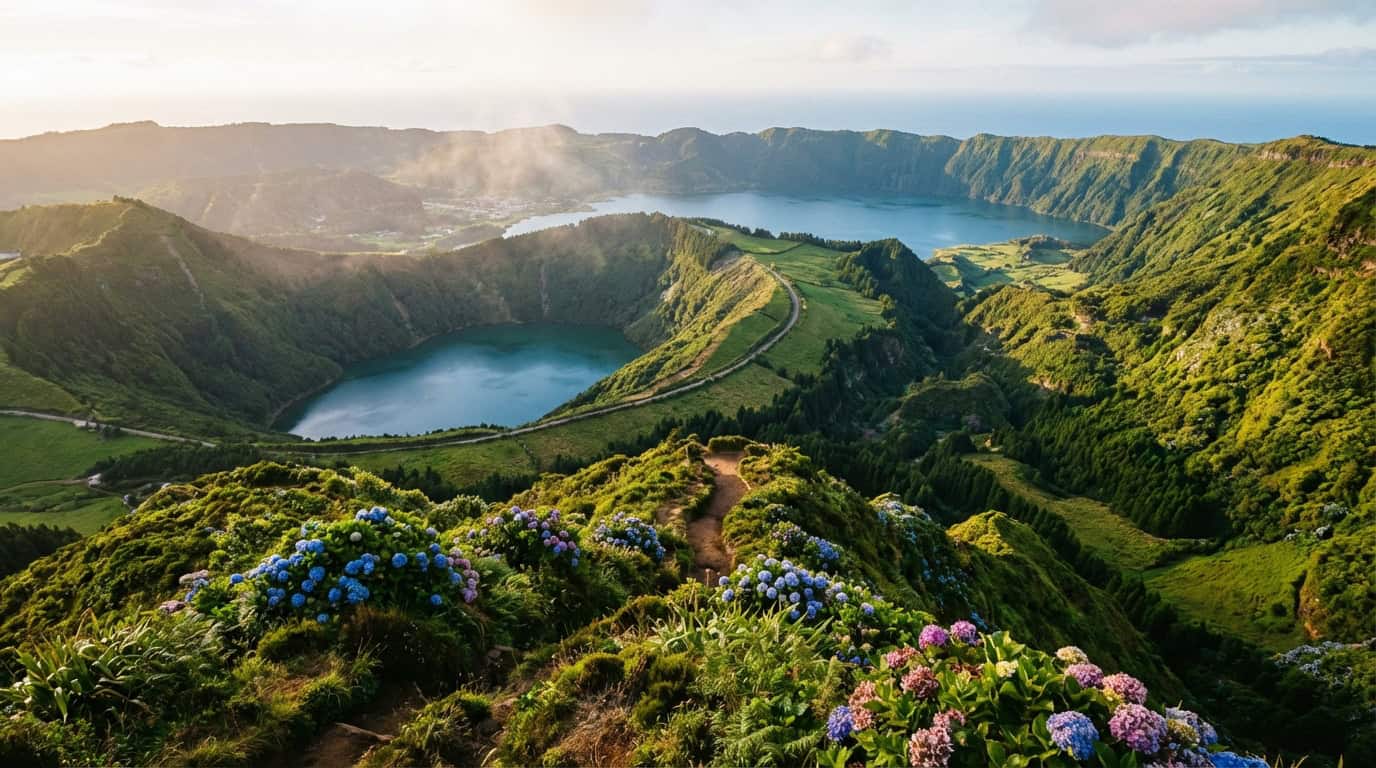
The Eastern Group provides the perfect introduction to the archipelago’s raw volcanic power, starting with the dramatic landscapes of São Miguel. I spent my mornings wandering around the geothermal lakes of Furnas, where the smell of sulfur and the sight of rising steam remind you that the earth is very much alive. My absolute favorite trek was the hike around Sete Cidades, where the contrasting blue and green lagoons look like something out of a dream from the rim of the caldera. After exploring the craters, you can soak in the natural iron-rich thermal pools at Terra Nostra Park to soothe your muscles. It is a sensory experience that perfectly bridges the gap between a traditional European escape and a rugged nature adventure.
A short flight south with SATA Air Açores brings you to Santa Maria, an island that feels worlds away from its lush neighbor. Known as the sunniest island in the group, it boasts golden sandy beaches and unique red deserts that contrast beautifully against the deep blue Atlantic. I highly recommend hiking the Trilho da Costa Norte, a trail that winds through sun-drenched vineyards and offers sweeping views of the rugged coastline. The pace of life here is slower, allowing you to appreciate the intricate stone walls and white houses that define the local architecture. It is the ideal spot to unwind before catching a ferry or flight to the next island group on your itinerary.
Sailing the Central Group Triangle Route
The Central Group of the Azores offers a unique opportunity to experience three distinct volcanic islands without ever needing to step foot on a plane. Known as the Triangle, the islands of Faial, Pico, and São Jorge are connected by a reliable year-round ferry system that makes island hopping feel like a true seafaring adventure. I recommend starting your journey in Horta on Faial, where the colorful marina serves as a global hub for sailors crossing the Atlantic. From here, you can head out onto the deep blue waters for world-class whale watching to spot sperm whales and playful dolphins against the backdrop of the massive Mount Pico. The short boat ride between these islands allows you to spend less time on logistics and more time immersed in the raw, dramatic beauty of the mid-Atlantic.
After a morning on the water in Faial, take the twenty-minute ferry across the channel to the rugged shores of Pico. This island is famous for its UNESCO-recognized vineyards where grapes grow out of black basalt stone pens called currais. I spent a golden afternoon wandering through the Criação Velha vineyards before heading to a local cellar to taste the crisp, mineral-driven Verdelho wines that are unique to this volcanic soil. If you have the energy, you can challenge yourself with a hike up the volcano, but simply sipping wine while watching the sunset over the ocean is equally rewarding. The contrast between the dark volcanic rock and the lush greenery creates a visual masterpiece that defines the spirit of the Azores.
The final leg of this nautical triangle brings you to the steep cliffs and hidden detours of São Jorge. This long, slender island is best known for its fajãs, which are small coastal plains created by ancient lava flows or landslides at the base of towering cliffs. I suggest hiking down to Fajã da Caldeira de Santo Cristo to see the unique lagoon and sample the island’s famous spicy unpasteurized cheese. The ferry ride back to your starting point offers a panoramic view of all three islands, cementing the realization of how interconnected this volcanic environment truly is. This route perfectly balances active exploration with the slow, rhythmic pace of island life that makes the Central Group so enchanting.
Discovering the Remote Western Group Wilderness
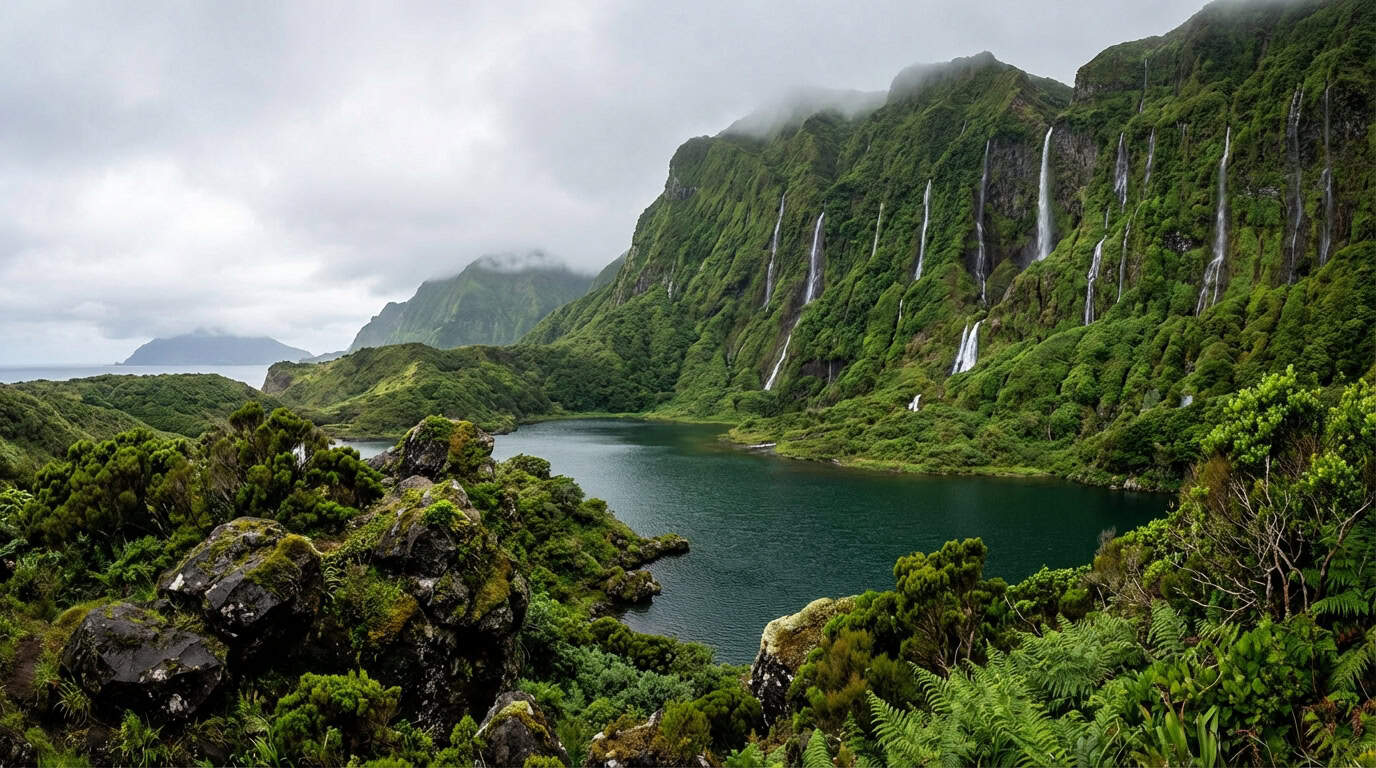
Stepping onto the shores of Flores feels like reaching the final frontier of Europe, where the air is thick with the scent of wild ginger and the sound of falling water. This island is a masterpiece of volcanic geography, defined by the sheer basalt cliffs of Rocha dos Bordões and the emerald lagoons nestled within ancient craters. I spent my afternoons hiking toward Poço Ribeira do Ferreiro, where dozens of silver waterfalls cascade down a lush green wall into a serene lake below. It is a place that feels completely untouched by the modern world, offering a raw connection to nature that you simply cannot find on the mainland. The surroundings are so dramatic and vibrant that it almost feels like you have stepped into a prehistoric paradise rather than a Portuguese territory.
To truly complete the Western Group experience, you must take the small ferry across the turbulent Atlantic channel to Corvo, the smallest and most isolated island in the archipelago. Standing on the rim of the massive Caldeirão crater provides a profound sense of solitude, as you are surrounded by nothing but deep blue sea and the occasional soaring seabird. This tiny community of around four hundred people lives at the mercy of the weather, reminding every visitor of the resilience required to thrive at the edge of the world. While the logistics of getting here depend heavily on the temperamental Atlantic winds, the reward is an unparalleled glimpse into a slow, traditional way of life. The silence here is heavy and peaceful, broken only by the wind whistling through the volcanic rock formations.
Navigating between these remote outposts requires a bit of patience and a flexible itinerary, especially when relying on the seasonal Atlânticoline ferries or SATA turboprops. I recommend booking your inter-island flights well in advance, as these small planes are the lifeblood of the western islands and fill up quickly. Always keep a buffer day in your schedule because the dense fog can settle in quickly, turning a quick hop into an unexpected overnight stay. Embracing these logistical quirks is part of the adventure, allowing you to slow down and appreciate the rhythmic pace of the islands. Whether you are searching for rare birds or simply want to stand where the European tectonic plate meets the American, this wild corner of the Atlantic will leave you forever changed.
Embracing the Wild Rhythm of the Azores
Island hopping through the Azores is an adventure that feels worlds away from the traditional European getaway, trading crowded city streets for raw volcanic power. I found that the best way to embrace this wild archipelago is to lean into the rhythm of the Atlantic, whether you are catching a SATA turboprop flight between island groups or riding a ferry across the blue waters of the Central Group. Each island offers a unique personality, from the steaming geothermal pools of São Miguel to the dramatic waterfalls of Flores. By planning around the three distinct island clusters, you can maximize your time exploring crater lakes and coastal cliffs rather than sitting in transit.
One of the most magical aspects of this journey is the opportunity to witness marine life in its most natural habitat during your inter-island transits. I highly recommend booking at least one whale-watching excursion, as these waters are a permanent home to sperm whales and a seasonal highway for blue whales. The logistics might seem a bit daunting at first due to the unpredictable Atlantic weather, but that uncertainty is part of the charm of such a remote destination. Just remember to pack a waterproof jacket and stay flexible with your schedule so you can truly enjoy the lush greenery and quiet villages.
Ultimately, your trip to the Azores will be defined by the breathtaking contrast between the deep sapphire ocean and the vibrant green hills. Whether you are trekking across ancient lava flows or sipping locally grown tea, the sense of isolation and beauty here is unmatched. It is a destination that rewards the curious traveler who is willing to swap a rental car for a ferry ticket and an open mind. Much like navigating the Albania coast road trip, I hope these tips help you navigate the practical side of SATA flights and Atlânticoline schedules so you can focus on the pure wonder of these islands. The Azores are waiting to show you a side of nature you will never forget.
Frequently Asked Questions
1. What is the best way to travel between the different island groups?
Flying with SATA Air Açores is the most efficient way to bridge the distance between the Eastern, Central, and Western groups. These nimble turboprop planes act like a transit system for the skies, offering incredible aerial views while saving you hours of travel time.
2. Should I take the ferry or a plane when island hopping?
I recommend using the ferry for shorter hops within the Central Group, where you can enjoy the salt air and watch for dolphins. For longer distances, such as traveling from São Miguel to Flores, booking a flight is much more practical and reliable.
3. How should I account for the unpredictable Atlantic weather?
The key to a stress-free trip is building a buffer into your itinerary to account for mountain fog or high winds. Always stay flexible and treat a weather delay as an opportunity to enjoy an extra local coffee or a slow morning by a thermal spring.
4. Is it easy to visit all nine islands in one trip?
While it is tempting to see everything, I suggest focusing on one or two island groups to truly soak in the emerald peaks and volcanic craters. Moving too quickly through the archipelago can turn your adventure into a logistical challenge rather than a relaxing escape.
5. What makes the Western Group worth the extra travel time?
The Western Group, specifically Flores, is a paradise of rugged waterfalls and lush landscapes that feel untouched by time. It offers a remote, wild beauty that serves as a perfect contrast to the more bustling crater lakes of the Eastern Group.
6. Do I need to book my inter-island transport in advance?
Yes, I highly recommend booking both your SATA flights and ferry tickets ahead of time, especially during the peak summer season. Planning early ensures you secure your preferred routes and allows you to focus on the hydrangea-lined roads once you arrive.