
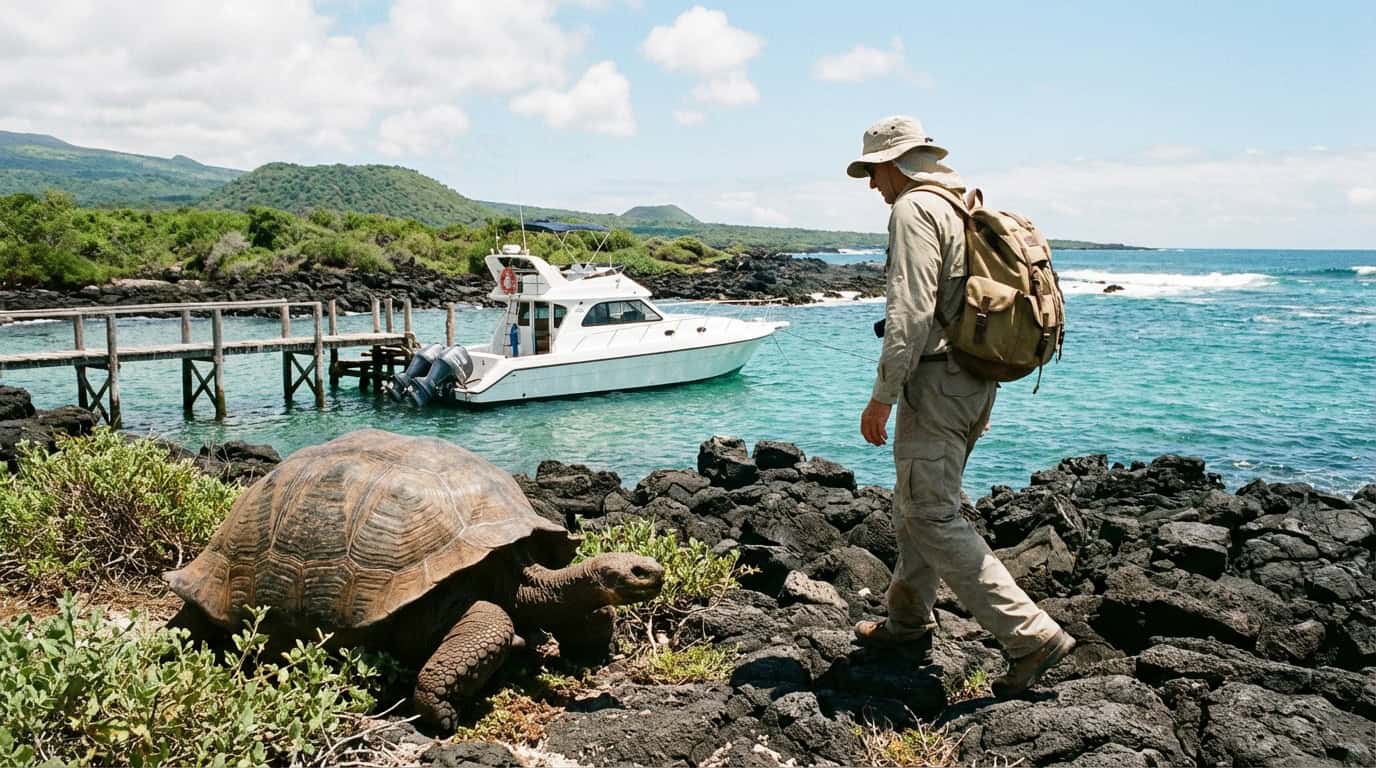
I still remember the first time I locked eyes with a giant tortoise in the wild, feeling like I had stepped straight into a prehistoric world. For years, I assumed the only way to experience this untouched magic was from the deck of an expensive cruise ship, but opting for a Galapagos land-based adventure completely changed my perspective. Island hopping between the four inhabited hubs of Santa Cruz, San Cristóbal, Isabela, and Floreana offers an incredible level of freedom to explore volcanic landscapes and pristine beaches at your own pace.
Waking up on solid ground means you can sip your morning coffee while watching sea lions lounge on the boardwalk before deciding exactly how to spend your day. Planning this type of independent journey just requires a bit of logistical know-how, like preparing for the $100 National Park entrance fee in cash and securing your $20 Transit Control Card before flying out of mainland Ecuador. Once those details are sorted, you open the door to a deeply personal, flexible way to encounter blue-footed boobies and marine iguanas on your own terms.
Key Takeaways
- Opting for a land-based, island-hopping adventure provides a flexible, budget-friendly alternative to traditional cruises while eliminating the risk of overnight seasickness.
- Travelers must secure a $20 Transit Control Card in mainland Ecuador and pay a $100 National Park entrance fee in crisp USD cash upon arrival.
- Hiring certified naturalist guides is mandatory for exploring protected zones and deeply enhances encounters with native wildlife like giant tortoises and marine iguanas.
- Customizing an itinerary across the four inhabited hubs of Santa Cruz, San Cristobal, Isabela, and Floreana allows for a highly personalized exploration of distinct volcanic landscapes and ecosystems.
Navigating Entry Fees And Island Logistics
Stepping off the plane onto the sun-drenched tarmac of the Galapagos feels like entering an entirely different world, but I always remind travelers to handle a few quick arrival logistics first. If you are prone to seasickness or simply watching your budget, a land-based journey offers incredible flexibility without the hefty price tag of a traditional cruise. Before you even leave mainland Ecuador, you must pick up a $20 Transit Control Card at the departure airport. Once you touch down in this wildlife paradise, you will need to pay the current National Park entrance fee of $100 for adults or $50 for children under twelve in crisp USD cash. I highly recommend having these exact bills ready in your travel wallet to breeze through customs, letting you start your exploration of Santa Cruz or San Cristobal much faster.
After clearing the entry gates, your land-based itinerary will revolve around the four inhabited hubs of Santa Cruz, San Cristobal, Isabela, and Floreana. While you can wander through certain beaches near the towns on your own, I cannot stress enough how essential it is to hire certified naturalist guides for your deeper explorations. These passionate local experts are strictly required by the national park for entering protected zones, ensuring the delicate ecosystem remains pristine for future generations. Beyond simply following the rules, a knowledgeable guide transforms a simple hike into an unforgettable story, pointing out hidden blue-footed boobies or explaining the fascinating volcanic geology beneath your boots. Booking these guided day tours from your island hotel base allows you to curate a perfect, budget-friendly wildlife safari on your own schedule.
Choosing Between Santa Cruz, Isabela, and San Cristobal
When I first decided to explore the Galapagos without booking a traditional cruise, I quickly realized that each inhabited island has its own completely unique rhythm and soul. Island hopping is the perfect way to experience this magical archipelago if you are prone to seasickness or simply want a more flexible, budget-friendly adventure. Santa Cruz serves as the bustling central hub with incredible restaurants and easy access to the Charles Darwin Research Station, making it an ideal starting point for your journey. In contrast, San Cristobal offers a laid-back surfer vibe where sea lions basically run the town, lounging on park benches and sidewalks right outside your door. Choosing between these distinct personalities means you can craft an itinerary that perfectly matches your travel style while keeping your feet firmly planted on solid ground each night.
If you are looking for raw, untamed wilderness, Isabela is the largest island but features unpaved sandy streets and a sleepy atmosphere that feels delightfully lost in time. Meanwhile, tiny Floreana is the ultimate off-the-beaten-path escape, boasting a fascinating pirate history and a local population of just a few hundred residents. One of the greatest joys of this land-based approach is discovering the charming local accommodations scattered across these four beautiful islands. I found a treasure trove of family-run guesthouses and boutique eco-lodges ranging from $80 to $300 a night, offering incredible value compared to expensive liveaboard boats. Waking up in a cozy $120 oceanfront room on Isabela, stepping out onto my private balcony, and watching marine iguanas sunbathe on the rocks below was an unforgettable highlight of my trip.
My Seven-Day Galapagos Land-Based Itinerary
Opting for a land-based adventure is the perfect solution if you are prone to seasickness or traveling on a careful budget. Instead of being confined to a boat, my seven-day island hopping journey allowed me to experience the magic of this destination at my own pace. I kicked off days one and two on Santa Cruz Island, which serves as the bustling main hub for independent travelers. After getting settled, I spent an unforgettable afternoon walking alongside ancient giant tortoises at the famous Charles Darwin Research Station. The evenings were free to wander through the lively local markets and enjoy fresh seafood without the rigid schedule of a traditional cruise.
For days three through five, I took a quick ferry over to Isabela Island to experience its beautifully rugged volcanic landscapes. This island offers an incredibly laid-back atmosphere that truly makes you feel like you have stepped into another world. The absolute highlight of my trip was booking a day excursion to snorkel the crystal-clear waters of Los Tuneles. Gliding through these unique lava formations, I swam inches away from graceful sea turtles, playful sea lions, and harmless whitetip reef sharks. Returning to a solid hotel bed each night instead of a rocking cabin made waking up for these early morning wildlife encounters wonderfully refreshing.
I wrapped up the final two days of my itinerary on San Cristobal Island, where the native sea lions practically outnumber the human residents. Day six involved hiking up to Tijeretas Hill for sweeping panoramic views before cooling off with a snorkel session in the vibrant bay below. On my final morning, I simply relaxed on the pristine white sands of Playa Mann and reflected on the sheer freedom this travel style provided. Island hopping between these inhabited hubs requires a bit of logistical planning, but the lower costs and ultimate flexibility are entirely worth the effort. You get to design your own daily adventures while keeping your feet firmly planted on solid ground every single night.
Discover the Freedom of Land-Based Galapagos Adventures
Choosing a land-based adventure in the Galapagos completely transformed my perspective on this magical archipelago. I quickly discovered that you do not need to spend thousands on a luxury cruise to experience the absolute wonder of these islands. By hopping between Santa Cruz, San Cristobal, and Isabela at your own pace, you gain the ultimate freedom to design a trip that fits your specific budget and travel style. You can linger on pristine white sand beaches alongside lounging sea lions without ever worrying about a rigid boat schedule calling you back. This flexible approach is the perfect solution for independent travelers who want to save money and avoid the dreaded seasickness that often comes with long ocean crossings.
Now is the perfect time to pack your bags and experience this extraordinary wildlife haven on your own terms. Booking your own ferries and local day tours allows you to connect more deeply with the welcoming island communities while keeping your costs surprisingly manageable. I will never forget the thrill of renting a simple bicycle to explore coastal trails before ending the afternoon snorkeling with sea turtles right off the local pier. Whether you are traveling on a tight budget or simply prefer keeping two feet firmly planted on solid ground, a customized island hopping journey offers an unforgettable escape. Grab your favorite hiking boots, prepare your cash for the transit fees, and get ready for the adventure of a lifetime in this spectacular natural wonderland.
Frequently Asked Questions
1. What exactly is a Galapagos land-based trip?
Instead of sleeping on a cruise ship, a land-based adventure means you stay in hotels on the inhabited islands. I love waking up on solid ground, sipping my morning coffee while watching sea lions lounge on the boardwalk. It gives you the ultimate freedom to explore volcanic landscapes and pristine beaches at your own pace.
2. Which islands can I visit on a land-based adventure?
You can easily island hop between the four stunning inhabited hubs of Santa Cruz, San Cristobal, Isabela, and Floreana. Each island has its own unique magic, offering everything from bustling wildlife boardwalks to quiet, sun-drenched beaches. I always recommend spending a few days on at least two or three of these islands to truly soak in the diverse ecosystems.
3. How much are the Galapagos National Park entrance fees?
When you touch down in this wildlife paradise, adults must pay a $100 National Park entrance fee, while children under twelve are $50. You need to pay this fee in crisp USD cash right at the airport. I highly recommend having exact bills ready in your travel wallet so you can breeze through customs and start exploring faster.
4. What is the Transit Control Card and how do I get it?
The Transit Control Card is a mandatory $20 document you must secure before flying out of mainland Ecuador. You will pick this up at a special kiosk in the departure airport before you check your bags. Sorting this out early opens the door to a deeply personal, flexible journey through the islands.
5. Is a land-based Galapagos trip a good choice for avoiding seasickness?
Absolutely! If you are prone to seasickness, a land-based journey is an incredible way to experience the islands without the constant rocking of a boat. You still get to take short ferry rides between islands, but you will spend your nights sleeping peacefully on solid ground.
6. What kind of wildlife will I see staying on land?
You will be amazed by the creatures you can encounter on your own terms just by walking around the islands. I still remember locking eyes with a giant tortoise in the wild, feeling like I had stepped into a prehistoric world. You will also easily spot blue-footed boobies, marine iguanas, and playful sea lions right from the local beaches and boardwalks.
7. Is a land-based itinerary more budget-friendly than a cruise?
A land-based journey offers incredible flexibility without the hefty price tag of a traditional cruise. You can choose your own restaurants, pick accommodations that fit your budget, and decide exactly how to spend your day. It completely changed my perspective on how accessible and affordable this untouched magic can truly be.