
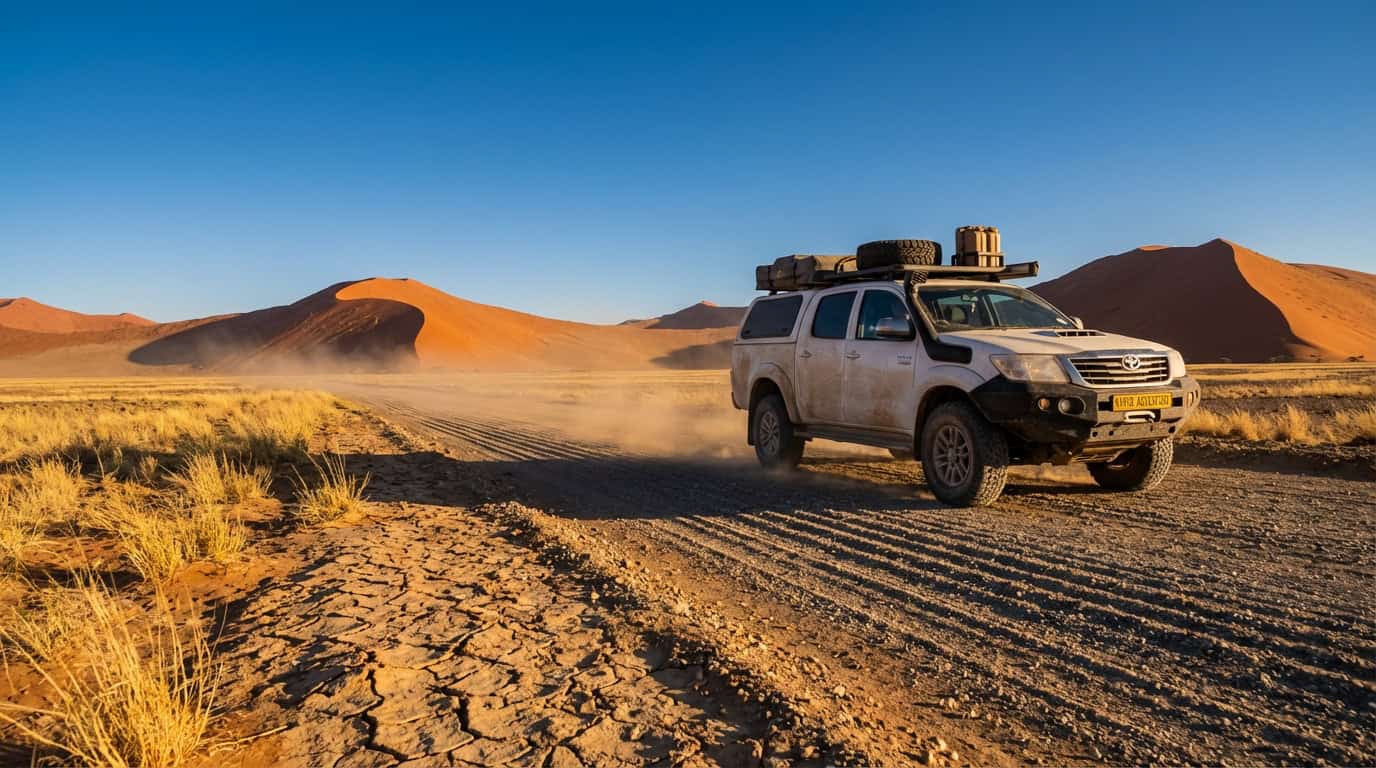
There is a profound sense of liberation that comes from watching the horizon stretch into an endless ribbon of ochre sand and violet mountains with nothing but your own four wheels to carry you forward. Namibia offers a raw, cinematic beauty that is best experienced at your own pace, where the silence of the desert is broken only by the crunch of gravel beneath your tires. To truly master this environment, you’ll need the right namibia self-drive tips to navigate the vast distances and rugged terrain that make this corner of Africa so enchanting.
I still remember the first time I lowered my tire pressure to tackle the soft sands of the Namib, feeling the exhilaration of total independence in a land where desert-adapted elephants roam free. While the solitude is soul-stirring, the country’s unique geography demands a blend of adventurous spirit and meticulous preparation. From choosing a high-clearance 4×4 to mastering the art of gravel road navigation, setting yourself up for success ensures your journey remains focused on the starlit campsites and towering dunes rather than logistical hurdles.
Key Takeaways
- A high-clearance 4×4 vehicle equipped with a rooftop tent and dual spare tires is essential for navigating rugged gravel roads and staying self-sufficient in remote regions.
- Lowering tire pressure when transitioning to gravel or sand is a critical safety measure that provides necessary traction and prevents dangerous fishtailing.
- Strictly avoid driving after sunset to prevent collisions with nocturnal wildlife and navigate the desert’s immense distances by refueling at every available station.
- Carry a minimum of five liters of water per person per day and download offline maps to ensure survival and navigation in areas with no cellular service.
Choosing The Right 4×4 Vehicle And Camping Gear
When you first lay eyes on the vast, shimmering horizons of the Namib Desert, you will quickly realize why a high clearance 4×4 is your most important travel companion. While the main arteries near Windhoek are paved, the heart of Namibia is connected by a web of rugged gravel roads that demand a sturdy vehicle capable of absorbing constant vibrations. I found that having four-wheel drive provided much needed peace of mind when navigating the deep, soft sands of Sossusvlei or the rocky corridors of Damaraland. A robust vehicle does more than just handle the terrain; it offers an elevated vantage point that is perfect for spotting desert adapted elephants or distant mountain ridges. Choosing a reliable 4WD ensures you can focus on the breathtaking scenery rather than worrying about the mechanics of the journey.
Transforming your vehicle into a mobile home by booking a rooftop tent is arguably the most magical way to experience the wild beauty of the African bush. These setups are incredibly practical, allowing you to unfold your sleeping quarters in minutes while keeping you safely elevated above the desert floor. There is something truly profound about unzipping your tent flap at midnight to find the Milky Way stretching across the sky in a brilliant, unfiltered display. Most rental setups come fully equipped with a fridge, gas stove, and folding chairs, giving you the freedom to cook a meal under the stars wherever you decide to outspan for the night. This self contained style of travel offers an unparalleled sense of intimacy with the surroundings that you simply cannot find in a traditional hotel.
Navigating this terrain requires more than just a powerful engine, so you should ensure your rental includes essential recovery gear and a comprehensive orientation. Always check that your kit includes two spare tires, a heavy duty jack, and a compressor, as varying your tire pressure is a key skill for driving on different surfaces. I recommend taking a moment to practice unfolding the tent and checking the kitchen supplies before you leave the rental depot and head into the wilderness. Being well prepared allows you to embrace the spontaneity of the road, whether that means stopping for a roadside picnic or detouring to a hidden viewpoint. With the right gear and a spirit of adventure, your self drive expedition will become a seamless blend of rugged exploration and cozy, starlit comfort.
Mastering The Art Of Namibian Gravel Road Safety
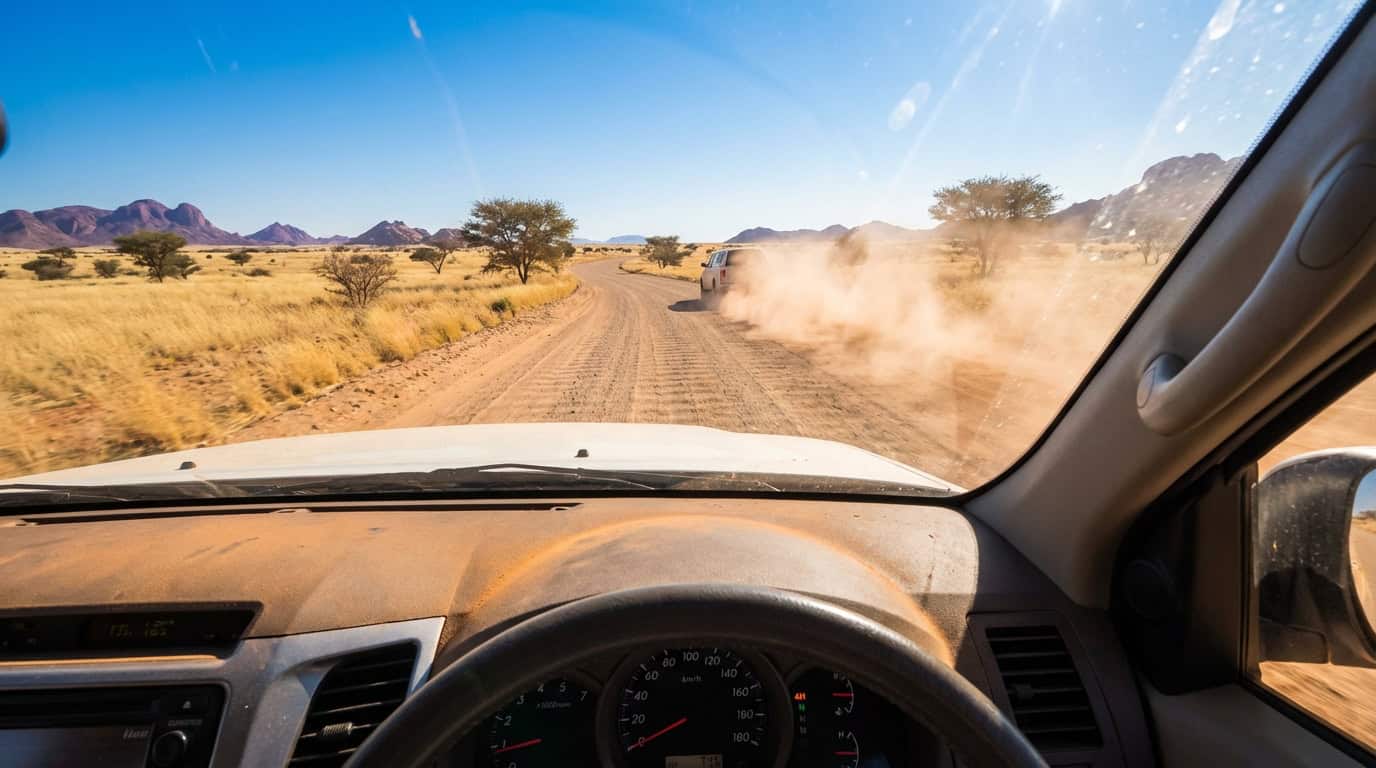
One of the first things you will notice when you pick up your 4×4 is that the tires look a bit soft, but this is actually your best friend on the Namibian backroads. I found that lowering tire pressure increases the surface area of the rubber, which provides essential traction when you are navigating the deep, orange sands of the Namib Desert. I always recommend carrying a reliable pressure gauge and checking your levels every time you transition from smooth tar to the rugged gravel C-roads. This small adjustment not only makes the ride significantly more comfortable by absorbing the bumps, but it also prevents the dangerous fishtailing that can happen on loose surfaces. Just remember to reinflate your tires once you return to the paved highways to ensure your vehicle handles safely at higher speeds.
The golden rule of any Namibian road trip is to never, under any circumstances, drive after the sun dips below the horizon. Once darkness falls, the vast desert comes alive with nocturnal wildlife, including large kudu and warthogs that are nearly impossible to spot until they are right in front of your bumper. The lack of streetlights and the reflective glare of the sand can make navigating the winding tracks incredibly disorienting. I always plan my segments to arrive at my next campsite by late afternoon, which gives me plenty of time to set up my rooftop tent and enjoy a cold drink. Watching the sunset over the dunes is a far better experience than stressing over a midnight drive through the bush.
Navigating the immense distances between destinations requires a strategic approach to fuel management that most travelers are not used to back home. In the remote stretches of Damaraland or the Skeleton Coast, you might drive for several hours without seeing another soul or a single service station. My personal strategy is to stop and top off my tank at every single fuel pump I pass, even if I still have half a tank remaining. It is also wise to carry a bit of extra cash, as remote stations occasionally experience power outages or credit card machine failures. By staying proactive with your supplies, you can focus on the breathtaking scenery and the sheer thrill of having the open road all to yourself.
Mapping Your Route From Sossusvlei To Etosha National Park
The drive from the towering orange dunes of Sossusvlei to the shimmering salt pans of Etosha is a journey through some of the most dramatic scenery on the planet. I recommend starting your morning before the sun even touches the horizon so you can witness the first light hitting Dune 45, where the sand transforms from deep purple to a fiery, glowing red. After your climb, head deeper into the park toward Deadvlei to see the iconic blackened camel thorn trees standing against the white clay pan and blue sky. This area requires a high clearance 4×4 vehicle to navigate the soft sand, but the reward is a surreal, photographic paradise that feels like stepping onto another planet.
Once you leave the desert behind, the route north takes you through the rugged beauty of Damaraland before reaching the gates of Etosha National Park. This transition offers a fascinating change in scenery as the red dunes give way to rocky outcrops and eventually the vast, open plains of the northern bushveld. I found that the best way to experience this leg is to take it slow and keep your eyes peeled for desert adapted elephants that roam the dry riverbeds along the way. Make sure to top up your fuel tank at every opportunity, as the distances between service stations are vast and the gravel roads can be demanding on your vehicle.
Entering Etosha feels like arriving at nature’s grand theater, especially when you position yourself at the park’s legendary waterholes. For the ultimate wildlife viewing, I suggest spending your afternoons parked quietly at Okaukuejo or Halali, where herds of elephants and prides of lions often gather to drink. The self drive experience here is incredibly rewarding because you can set your own pace and follow the dust clouds to the next big sighting. As the sun sets over the massive Etosha Pan, the silence of the wilderness and the sight of a rhino approaching the water under the moonlight will make every mile of the journey feel worth it.
Essential Provisions And Desert Survival Logistics
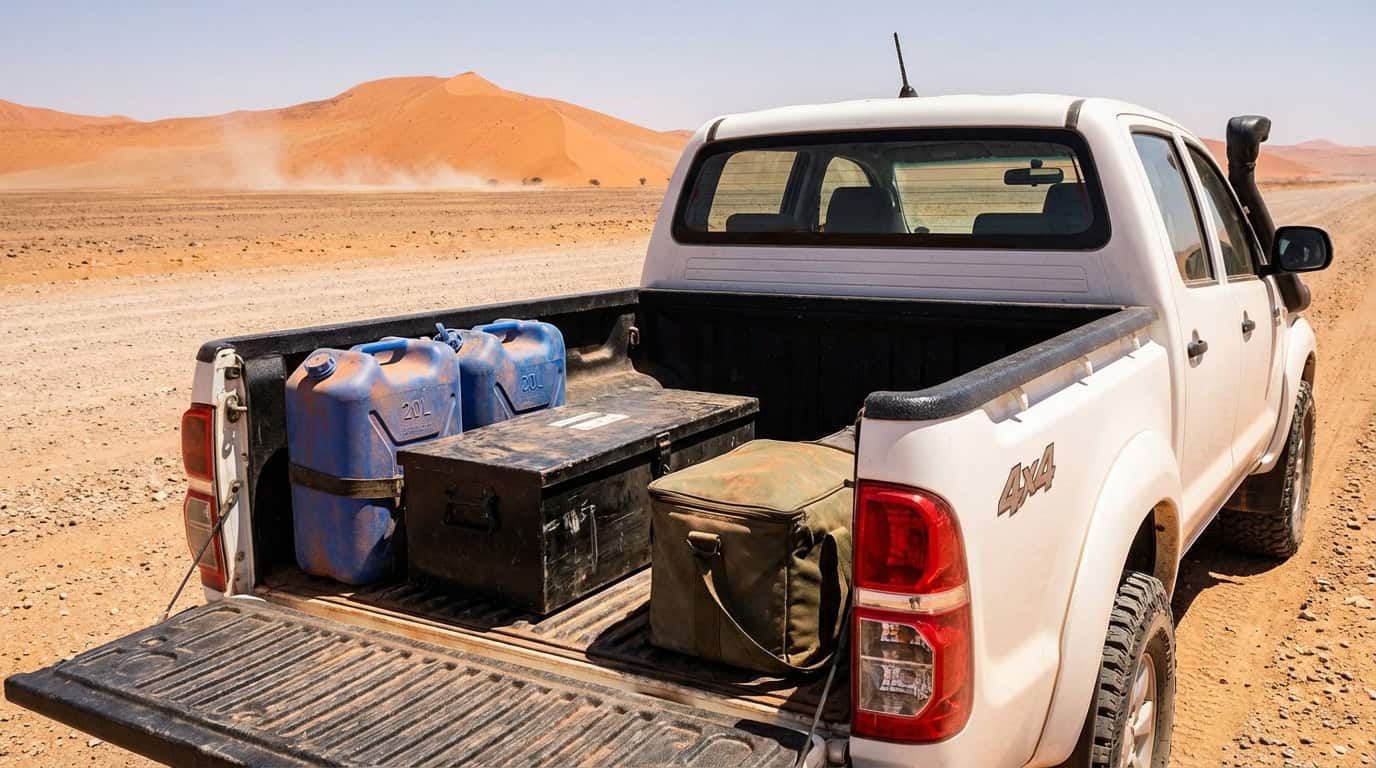
When you are traversing the ancient regions of the Namib Desert, your vehicle becomes your lifeline, and preparation is the ultimate key to freedom. I always recommend carrying at least five liters of water per person per day, plus an extra twenty liter emergency jerry can tucked away in your 4×4. The dry heat is deceptive, and in a land where you might not see another soul for hours, being self-sufficient is non-negotiable. Beyond hydration, your digital preparation is just as vital because cellular signals vanish the moment you leave the main hubs. I make it a ritual to download detailed offline maps and satellite layers before leaving Windhoek, ensuring I can navigate the winding gravel tracks of Damaraland even when the bars on my phone disappear.
Driving through these vast, open spaces creates a unique bond between travelers that is best expressed through the Wave of the Wild. This local etiquette involves a friendly hand gesture or a flash of the lights whenever you pass another driver in the middle of nowhere. It is more than just a greeting, as it serves as a silent check-in to ensure everyone is safe and their vehicle is holding up against the rugged terrain. If you see someone pulled over, it is customary to slow down and offer a thumbs up to confirm they do not need assistance. These small moments of human connection make the solitude of the desert feel welcoming rather than intimidating.
Navigating the shifting sands of Sossusvlei or the rocky passes of the north requires a sturdy high-clearance vehicle and a mindful approach to the road. Much like the ultimate Atacama Desert itinerary, you should check your tire pressure frequently, as adjusting for sand or sharp gravel can be the difference between a smooth sunset drive and a stressful afternoon changing a flat. I find that keeping a steady, moderate pace allows me to soak in the sight of towering red dunes while staying alert for wandering wildlife. Every kilometer in Namibia offers a new perspective, and with the right provisions and a respectful attitude toward the environment, you can focus entirely on the magic of the journey. The sense of accomplishment you feel when reaching a remote campsite under a canopy of stars is worth every bit of logistical planning.
Embrace the Magic of the Open Namib Road
Ultimately, there is a profound sense of magic that settles over you when the pavement ends and the vast, ochre regions of the Namib take over. Navigating a 4×4 through the shifting sands and ancient canyons offers a rare brand of autonomy that is hard to find in our modern, connected world. You will find yourself pausing at the crest of a dune just to listen to the absolute silence of the desert, a moment of peace that feels entirely earned. This journey is about more than just checking off landmarks, as it is a chance to reconnect with your own sense of adventure. Much like the ultimate Oman desert road trip, the solitude becomes a companion rather than a challenge.
The freedom to set your own pace means you can linger at a remote watering hole in Etosha or wait for the perfect light to hit the Deadvlei trees. I remember the thrill of waking up in a rooftop tent to the sound of the wind, knowing that the only schedule I had to follow was the rising sun. Namibia rewards the bold traveler with views that look like paintings and memories that feel like myths. As you steer your way through this rugged terrain, you are not just a tourist, but a pioneer of your own namibia self-drive tips and incredible story. Pack your sense of wonder along with your spare tires, because the road is calling and the horizon is limitless.
Frequently Asked Questions
1. Do I really need a 4×4 for a Namibia self-drive adventure?
A high-clearance 4×4 is essential for safely navigating the rugged gravel roads and soft sands that define the Namibian interior. While paved roads exist near the capital, a sturdy 4WD gives you the freedom to explore remote gems like Damaraland and the towering dunes of Sossusvlei without stress.
2. What is the most important tip for driving on Namibia’s gravel roads?
Lowering your tire pressure is a significant advantage for maintaining traction and comfort on the constant vibrations of gravel and sand. Always drive at a conservative speed and keep a firm grip on the wheel, as the loose surface can be much more unpredictable than standard asphalt.
3. Is it safe to drive through the desert alone?
Self-driving in Namibia is incredibly liberating and safe as long as you are meticulously prepared with a reliable vehicle and plenty of supplies. I always recommend carrying extra water, a satellite phone or local SIM card, and two spare tires to ensure you remain self-sufficient in the vast, silent stretches of the desert.
4. Can I see wildlife directly from my rental vehicle?
The elevated vantage point of a 4×4 is perfect for spotting desert-adapted elephants and oryx against the shimmering horizon. Driving yourself allows you to pull over and linger in silence, letting you experience intimate wildlife encounters at your own pace without the rush of a tour group.
5. What should I look for when choosing camping gear?
Opt for a vehicle equipped with a rooftop tent to stay elevated above the desert floor and enjoy a front-row seat to the starlit sky. Ensure your kit includes high-quality bedding and a reliable fridge, as nothing beats a cold drink after a long day of navigating sun-drenched mountain ridges.
6. How do I prepare for the vast distances between fuel stops?
Distances in Namibia are immense, so you should adopt the golden rule of never passing a fuel station without topping up your tank. Planning your route around these vital hubs ensures your focus remains on the cinematic beauty of the surroundings rather than the needle on your fuel gauge.