
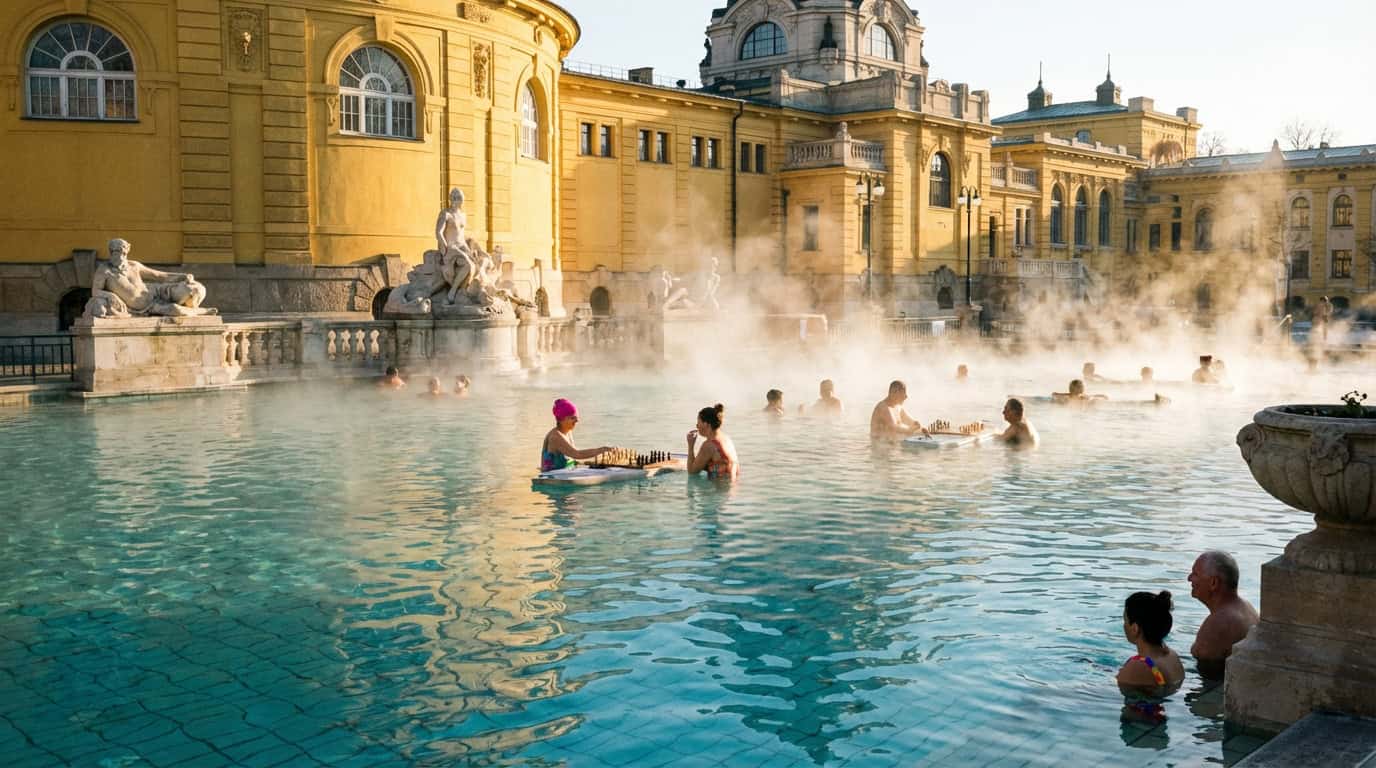
There is a certain magic in the way the steam rises against the backdrop of Neo-Baroque arches, carrying with it the scent of minerals and centuries of history. Budapest thermal baths are more than just a tourist stop; they are the beating heart of the city, fueled by over 120 geothermal springs that pump millions of liters of healing water into grand, tiled sanctuaries every single day. I still remember the first time I lowered myself into those warm, cobalt waters while snow fell softly on my shoulders, feeling every ounce of travel fatigue simply melt away.
While the city’s spa scene is currently shifting with major landmarks undergoing multi-year restorations, the Spa Capital remains as vibrant as ever for those who know where to soak. You can still play chess in the chest-deep waters of the Széchenyi or discover hidden Ottoman-era gems that feel like stepping back into the 16th century. Navigating these changes requires a bit of insider planning, but the reward is a timeless ritual that offers a deep, soul-soothing connection to Hungarian culture.
Key Takeaways
- Major renovations across Budapest’s historic spa circuit through 2026 make advanced booking essential to secure entry to remaining operational landmarks like the Széchenyi and Rudas Baths.
- The Széchenyi complex remains the city’s premier destination for medicinal waters, offering a vast Neo-Baroque environment where visitors can engage in the traditional ritual of water chess.
- Rudas Baths provide a unique historical contrast by pairing 16th-century Ottoman-era Turkish domes with a modern 360-degree rooftop hot tub overlooking the Danube.
- Proper spa etiquette requires bringing flip-flops and a swim cap for lap pools, while opting for a private cabin provides a secure and comfortable changing experience.
Navigating The 2026 Selection Of Iconic Budapest Baths
The availability of Budapest’s thermal waters has shifted significantly as we head into 2026, making it essential to check the status of your favorite spots before packing your swimsuit. While the breathtaking Art Nouveau halls of certain historic baths are currently closed for a multi-year restoration, the spirit of the city’s spa scene remains as vibrant as ever. Even some historic Ottoman-era sites continue their long-term slumber, waiting for a much-needed revival to restore their charm. These closures mean that the remaining operational landmarks are more popular than ever, so I highly recommend booking your tickets in advance to secure a spot in the healing waters. You can still find that classic imperial atmosphere if you know where to look, but navigating the current renovations requires a bit of strategic planning.
Despite these changes, the Széchenyi Baths remain the undisputed crown jewel of the city and a must-visit for any traveler. Walking into the massive Neo-Baroque complex feels like stepping back in time, especially when you see locals huddled over floating chessboards in the steaming outdoor pools. As the largest medicinal bath in Europe, it offers a sprawling labyrinth of indoor saunas and plunge pools that cater to every temperature preference. I love spending a crisp morning here watching the steam rise against the yellow palace walls before the afternoon crowds arrive. It is the perfect place to practice proper spa etiquette, such as wearing a swim cap in the lap pools and showering thoroughly before entering the communal thermal sections.
For those seeking a more intimate or historic alternative while the major landmarks are under construction, the city still hides plenty of geothermal gems. Rudas Baths offers a stunning contrast between its 16th-century Turkish dome and its ultra-modern rooftop pool that overlooks the Danube. If you prefer a local neighborhood vibe, Lukács Baths provides a wonderful glimpse into the daily wellness routines of Budapest residents without the heavy tourist traffic. Each location has its own unique personality, from the sulfurous mineral profiles to the architectural styles that reflect centuries of history. No matter which pool you choose, the ritual of soaking in these mineral-rich springs remains the ultimate way to connect with the soul of the city.
Ottoman History Meets Rooftop Views At Rudas Baths
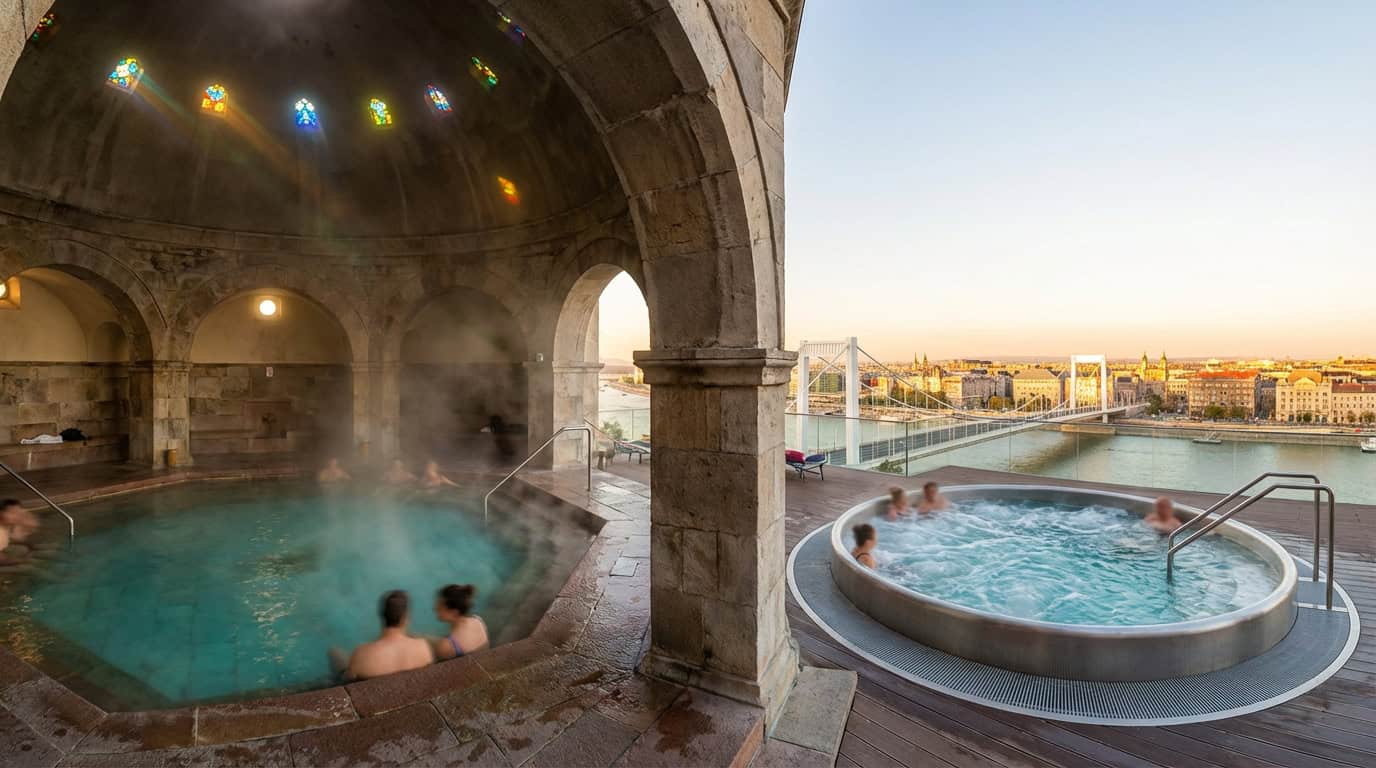
Stepping into the heart of the Rudas Baths feels like a direct journey back to the 16th century when the Ottoman Empire left its architectural mark on Budapest. The center of the facility features a stunning octagonal pool sheltered by a massive stone dome, which is supported by eight sturdy pillars that have stood the test of time. As I soaked in the dim, atmospheric light filtering through the tiny colored glass openings in the roof, I felt a profound sense of history that other baths simply cannot replicate. It is essential to remember that Rudas maintains a traditional schedule with specific days reserved for men or women only, though weekends are typically open to everyone for a co-ed experience. This cultural nuance adds a layer of authenticity to the visit, making it feel less like a tourist attraction and more like a living piece of Hungarian heritage.
The true highlight of my visit arrived when I climbed the stairs to the modern wellness section to find the famous panoramic rooftop hot tub. Floating in the mineral-rich, steaming water while looking out over the Danube River and the twinkling lights of the city is a memory I will never forget. From this vantage point, you can watch the colorful trams glide across the bridges and see the historic skyline stretch out toward the horizon. I recommend timing your visit for the late afternoon so you can experience the transition from golden hour to the vibrant city lights at dusk. It is the perfect blend of ancient Turkish tradition and contemporary luxury, offering a peaceful escape from the busy streets below while keeping you connected to the pulse of the city.
Essential Etiquette For Your First Hungarian Spa Visit
Navigating your first Budapest spa visit is a breeze once you understand the unique cabin versus locker system. When you purchase your entry, you will receive a plastic wristband that serves as your digital key for storage. If you value privacy, I highly recommend paying the small extra fee for a cabin, which provides a private changing cubicle where you can also leave your belongings. For those on a budget, a locker is perfectly secure, but you will need to use the communal changing areas nearby. Simply touch your wristband to the electronic readers to find your assigned number and lock your door securely before heading to the pools.
Packing the right gear is essential to avoid extra rental fees and ensure you can access every area of the facility. While swimsuits are standard, you must remember that a swim cap is strictly mandatory if you plan to do laps in the designated swimming pools. I always pack a pair of rubber flip-flops to navigate the wet stone floors safely, as they can become quite slippery throughout the day. Do not forget to bring two towels, using one for drying off after your final shower and the other to sit on while enjoying the heat of the steam rooms. Most baths also provide drinking fountains, but having a plastic water bottle on hand will help you stay hydrated between soakings.
To get the most out of the mineral-rich waters, I suggest following the traditional thermal circuit used by locals for centuries. Start by rinsing off in the showers before entering a warm pool to relax your muscles and open your pores. From there, move into the hotter thermal baths for about fifteen to twenty minutes, followed by a quick, invigorating dip in a cold plunge pool to boost your circulation. Many visitors love to alternate these soakings with sessions in the dry saunas or aromatic steam chambers to fully detoxify. Finally, give yourself ample time to rest on a lounge chair, allowing your body temperature to stabilize while you soak in the stunning historic architecture.
Planning Your Perfect Budapest Thermal Bath Itinerary
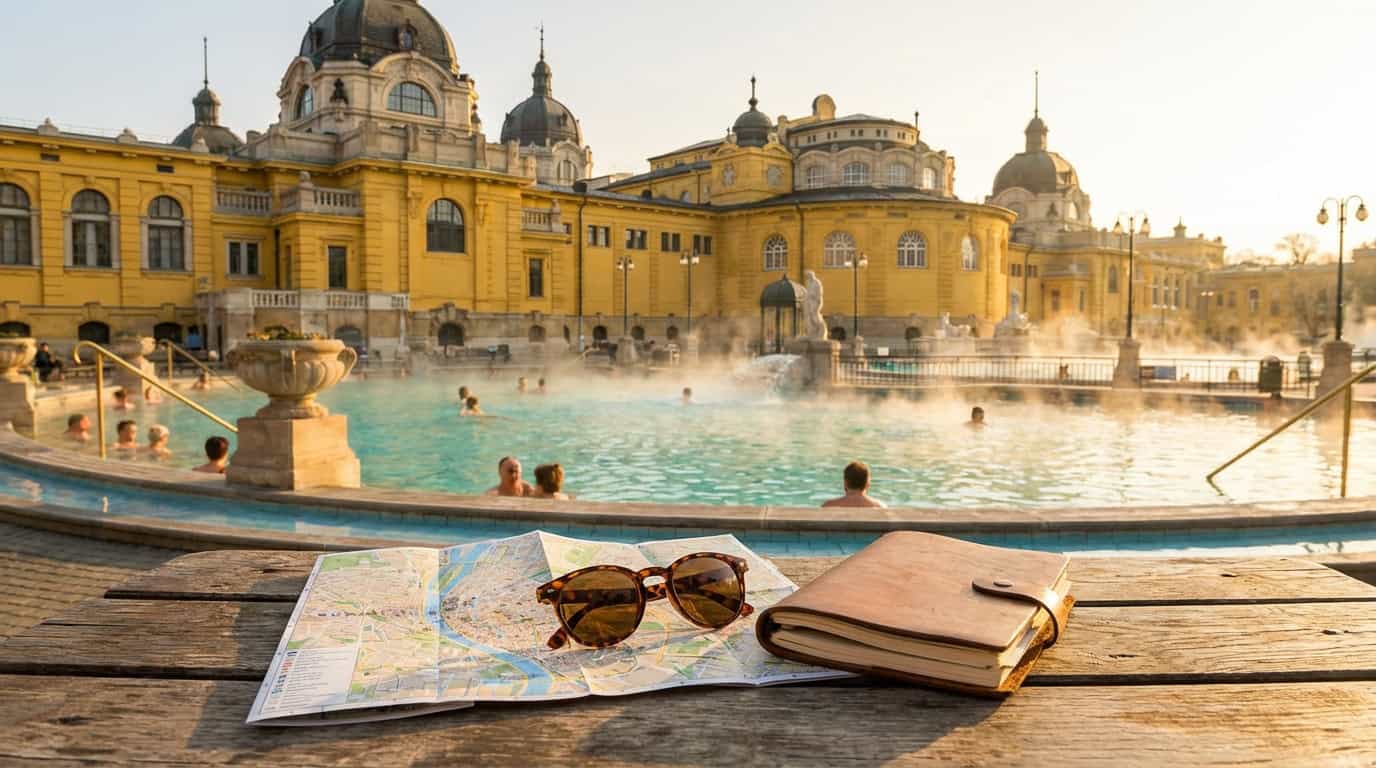
To experience the true soul of the Spa Capital, your first day should focus on the grand traditions of the Széchenyi Baths during the quiet morning hours. I recommend arriving right as the gates open to witness the steam rising against the yellow Neo-Baroque facades before the crowds descend. You can spend your morning soaking in the medicinal outdoor pools, perhaps even challenging a local to a game of water chess. Since some historic landmarks are currently closed for a multi-year renovation, Széchenyi serves as the primary gateway to the city’s golden age of bathing. After a few hours of relaxation, head to a nearby cafe for a hearty bowl of goulash to refuel for an evening stroll along the dAnube.
On your second day, I suggest leaning into the city’s Ottoman history by visiting the atmospheric Rudas Baths, which date back to the 16th century. The centerpiece is an octagonal pool beneath a traditional Turkish dome, where tiny shafts of light pierce through colored glass to create a magical atmosphere. Be sure to check the schedule beforehand, as certain days are reserved exclusively for men or women, though weekends are typically open to everyone. For a modern twist, make your way to the rooftop 360-degree hot tub to watch the sunset over the city skyline. This contrast between ancient stone and contemporary views perfectly captures how Budapest honors its past while embracing the present.
The final day of your itinerary is all about high energy and the unique social culture that defines the local water scene. Spend your afternoon at the Lukács Baths, a favorite among locals that is often credited with having the most potent mineral waters in the city. As night falls, prepare yourself for a legendary evening event at the Széchenyi complex, where the historic pools transform into a vibrant dance floor with laser lights and electronic music. It is an unforgettable way to see the thermal waters used as a social hub rather than just a place for quiet reflection. Wrapping up your trip this way ensures you have experienced every facet of the city’s aquatic heritage, from silent sunrise soaks to high-octane midnight celebrations.
Embrace the Healing Heart of Budapest
The healing power of Budapest’s geothermal springs is more than just a claim; it is a tangible energy you feel the moment you sink into the mineral-rich waters. Even as the city’s spa scene evolves with major renovations, the heart of this tradition remains stronger than ever. Immersing yourself in these historic pools is the most authentic way to connect with the local culture and the geological pulse of Hungary. Whether you are playing chess in the steaming outdoor pools of Széchenyi or finding a quiet corner in a lesser known Ottoman era bath, you are participating in a ritual that has defined this city for centuries.
Navigating the etiquette of these grand institutions might feel a bit intimidating at first, but following the local lead is part of the adventure. Remember to always pack your own flip-flops and a swim cap, as these are often mandatory requirements for the lap pools and help you blend in with the regulars. Taking the time to understand the flow of the thermal circuits, from the hot soaks to the bracing cold plunges, ensures you get the full therapeutic benefit of the experience. These practical steps allow you to move past the role of a typical tourist and truly inhabit the space as a temporary local.
Reflecting on my own time spent drifting through the sulfur scented steam, I realized that these baths are the ultimate sanctuary for the weary traveler. They offer a rare chance to slow down and appreciate the architectural beauty of the Neo-Baroque and Turkish influences while soothing your muscles after a long day of sightseeing. As you plan your visit during this period of transition, embrace the opportunity to explore the open landmarks and discover hidden gems that keep the spa capital’s spirit alive. A soak in these ancient springs is not just a checkbox on a list, but a magical Central European escape that stays with you long after you have dried off.
Frequently Asked Questions
1. Are all major historic baths currently open for visitors?
Some major baths are currently closed for a massive, multi-year restoration to preserve their stunning architecture. While you cannot soak in those specific halls right now, you can still find that same imperial grandeur at the Széchenyi Baths just across town.
2. Do I need to book my thermal bath tickets in advance?
I highly recommend booking your tickets online before you arrive, especially since several popular spots are currently closed for renovations. These closures mean the remaining baths fill up quickly, and a pre-booked ticket ensures you won’t be turned away at the door.
3. Where can I find an authentic Ottoman-era spa experience?
While some sites are undergoing their own long-term revival, you can still step back into the 16th century at other historic sites throughout the city. Look for the smaller, hidden gems that feature traditional octagonal pools and ancient stone domes to experience the true soul of Hungarian spa culture.
4. What should I bring with me to the Budapest baths?
Always pack your own swimsuit, a pair of flip-flops, and a large towel to stay comfortable between pools. If you plan on swimming laps in the fitness pools, remember that most locations require you to wear a swim cap to enter the water.
5. Is it possible to play chess in the water like in the photos?
You can absolutely find locals and tourists alike gathered around floating chessboards in the chest-deep waters of the Széchenyi Baths. It is a timeless ritual that offers a wonderful way to connect with the local culture while the steam rises around you.
6. How many thermal springs actually fuel the city?
Budapest is powered by over 120 geothermal springs that pump millions of liters of mineral-rich water into the city’s sanctuaries every day. This incredible natural resource is what earned Budapest its title as the ultimate European escape and provides the healing heat for every soak.