
There is a rare kind of magic that settles over you the moment you step onto the peninsula where the Mekong and Nam Khan rivers meet. I remember my first morning in town, watching the sun rise over the gilded roofs of thirty ancient temples while the scent of fresh baguettes drifted from French colonial villas. This Luang Prabang guide helps you experience that same enchanting fusion of 1,200 years of history and laid-back tropical charm.
Whether you are here to witness the silent grace of the morning alms giving or to trek through the lush mountainous valleys, this UNESCO World Heritage site offers a pace of life that is increasingly hard to find. The vibrant blend of Khmu, Hmong, and Lao cultures creates a rich tapestry that feels both deeply traditional and warmly welcoming. You will find that between the hidden waterfalls and the bustling night markets, the city’s spirit stays with you long after you leave the riverbanks behind.
Key Takeaways
- Embrace the ‘Sabai Sabai’ lifestyle by slowing down your travel pace to match the town’s spiritual rhythm and mindful cultural atmosphere.
- Participate in the sacred morning alms giving (Tak Bat) with strict respect by dressing conservatively, maintaining silence, and keeping a distance from the monastic procession.
- Balance natural exploration with ethical tourism by visiting the Kuang Si Falls early in the morning and supporting the onsite Asiatic Black Bear rescue center.
- Support the local economy and preserve heritage by purchasing handmade textiles directly from artisans at the Hmong Night Market and choosing fresh offerings from local markets for temple rituals.
Golden Temples And Sacred Alms Giving Traditions
Walking through the quiet streets of Luang Prabang at dawn, the air feels thick with a sense of timelessness and devotion. The most iconic architectural jewel here is undoubtedly Wat Xieng Thong, a 16th century masterpiece that represents the pinnacle of traditional Lao design. Its sweeping roofs reach toward the ground, while the intricate Tree of Life mosaic on the rear wall glimmers under the soft sunlight. I spent hours admiring the delicate gold stencil work and the peaceful atmosphere that permeates the temple grounds. It is the perfect place to slow down and appreciate the craftsmanship that has survived centuries of history at the confluence of the Mekong and Nam Khan rivers.
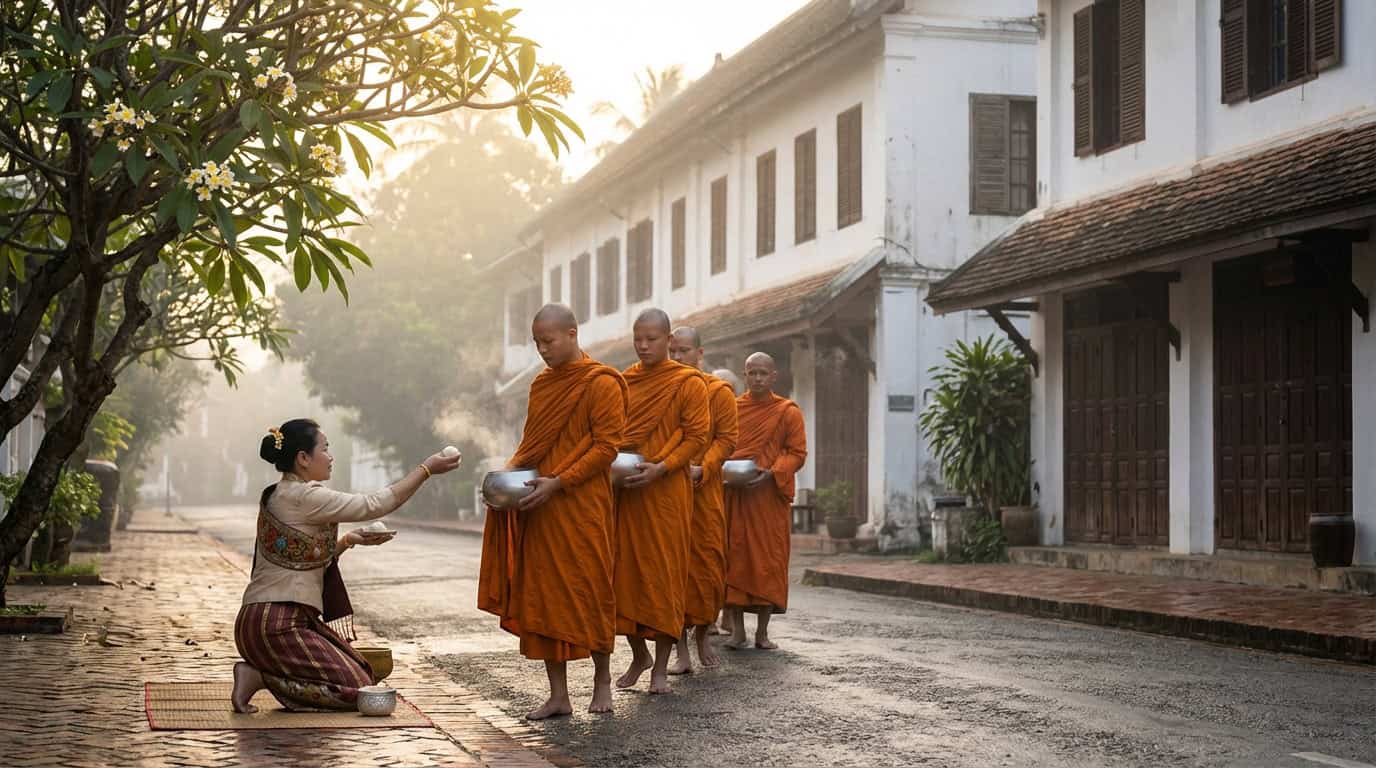
The spiritual heartbeat of the city pulses during the daily Tak Bat, or morning alms giving ceremony. As the sun begins to rise, a silent procession of saffron robed monks emerges from the mist to receive offerings from local devotees. To participate with strict respect, I recommend finding a spot away from the main tourist crowds and dressing conservatively with your shoulders and knees covered. Keep a respectful distance, avoid using a camera flash, and remain quiet to preserve the sanctity of this living tradition. Observing this ritual in silence offered me a profound connection to the local culture that goes far beyond typical sightseeing.
Planning your visit around these sacred sites requires a mindful approach and a bit of early rising. Most temples open their doors by 8:00 AM, but the alms giving starts just before sunrise, so be sure to check the local times depending on the season. If you choose to offer food, purchase fresh sticky rice from a local market beforehand rather than from street vendors along the ritual path. This ensures you are contributing high quality offerings to the monastic community while supporting the local economy. Taking these small, thoughtful steps transformed my journey from a simple vacation into a deeply meaningful cultural immersion.
Chasing Turquoise Waterfalls At Kuang Si
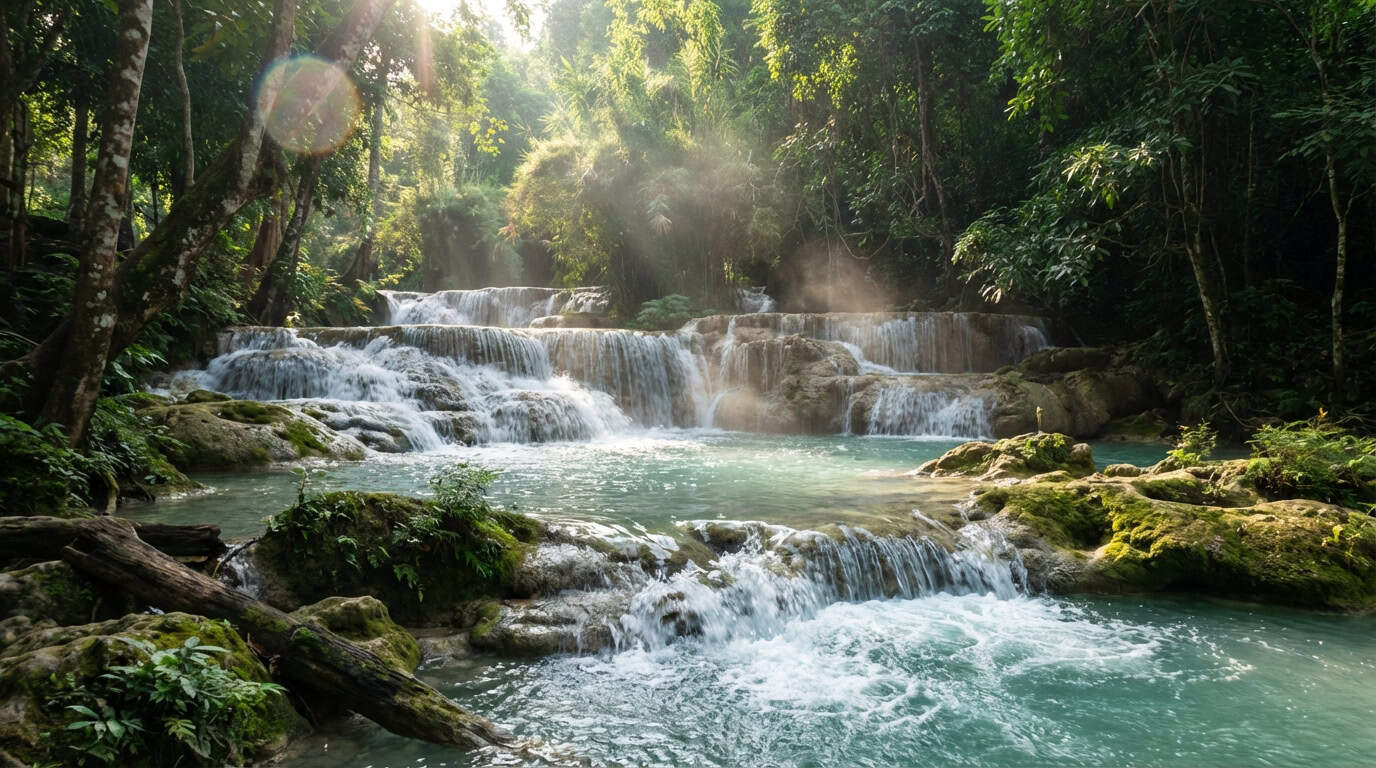
A short, scenic drive from the heart of Luang Prabang leads you to Kuang Si Falls, a breathtaking three tiered cascade that feels like stepping into a living postcard. The water is a brilliant, milky turquoise due to the high calcium carbonate content, creating a stunning contrast against the lush green jungle canopy. I recommend arriving early in the morning, around 8:00 AM, to experience the serenity of the pools before the midday crowds arrive. Walking along the wooden footbridges, you can hear the rhythmic roar of the water and feel the cool mist on your skin. It is the perfect place to slow down and appreciate the raw, untouched beauty of the Lao countryside.
Before you reach the main falls, the trail leads you through the Tat Kuang Si Bear Rescue Centre, a sanctuary dedicated to protecting Asiatic Black Bears saved from the illegal wildlife trade. It is incredibly moving to watch these Moon Bears lounging in hammocks or playing in their spacious enclosures. The center provides vital education on conservation efforts in Laos, making your visit feel both meaningful and impactful. You can support their mission by purchasing a souvenir or simply taking a moment to learn about the individual stories of the rescued bears. Combining this visit with your waterfall hike creates a well rounded day trip that balances natural wonder with ethical travel.
To make the most of your journey, hire a local tuk tuk driver for the forty five minute trip or rent a motorbike if you are feeling adventurous. Be sure to pack a swimsuit, a towel, and sturdy walking shoes, as some of the limestone paths can be quite slippery when wet. There are designated areas where swimming is permitted, offering a refreshing reward after your hike to the upper viewpoints. After a few hours of exploring, you can grab a simple lunch of grilled chicken and sticky rice from the stalls near the entrance. This excursion captures the slow, spiritual pace of Luang Prabang while showcasing the incredible biodiversity of the region.
Slowing Down On The Mekong And Night Markets
To truly embrace the serene spirit of Luang Prabang, you must surrender to the gentle rhythm of the Mekong River. One of my favorite ways to decompress is by boarding a traditional longtail boat for a sunset cruise, where the water turns into liquid gold as the sun dips behind the emerald mountains. There is no rush here, only the soft hum of the engine and the sight of local fishermen casting their nets in the fading light. This slow travel approach allows you to appreciate the town’s spiritual surroundings from a distance, watching the silhouettes of ancient temples rise above the riverbanks. For a more intimate experience, look for smaller wooden boats that offer private tours with local snacks and tea.
As dusk settles over the town, the main thoroughfare transforms into the vibrant Hmong Night Market, a treasure trove of handmade artistry. Walking through the rows of blue and red tents, you will find intricate needlework, hand woven indigo textiles, and unique jewelry crafted from recycled materials. I always recommend taking the time to chat with the artisans, as many of these pieces represent generations of cultural heritage from the surrounding hill tribe villages. It is the perfect place to find a meaningful souvenir that supports the local community while soaking in the quiet, respectful atmosphere of the market. Unlike the chaotic markets in larger cities, the pace here remains wonderfully calm and inviting.
The day ends perfectly by indulging in the town’s famous Lao French fusion cuisine, a delicious legacy of its colonial history. You can find charming bistros tucked into restored villas where traditional lemongrass scents mingle with the aroma of freshly baked baguettes. I highly suggest trying the local Luang Prabang salad or a rich coconut curry paired with a crisp glass of wine on a candlelit terrace. These meals are meant to be savored slowly, reflecting the town’s overall philosophy of mindful living and cultural appreciation. This blend of flavors and settings captures the unique essence of a place where time seems to stand still.
A Perfect Three Day Luang Prabang Itinerary
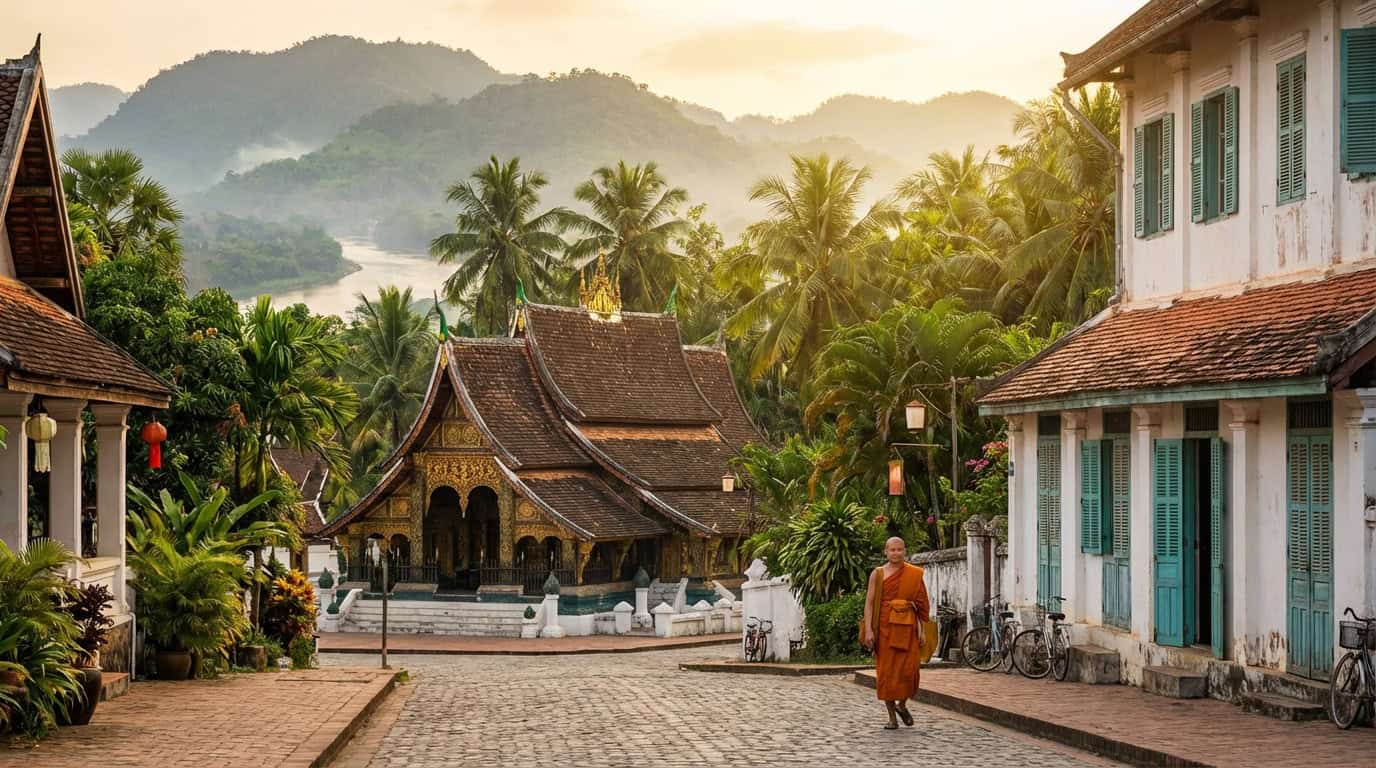
Start your first day by embracing the gentle rhythm of the town with a sunrise visit to witness the Tak Bat alms giving ceremony before exploring the ornate Wat Xieng Thong. This 16th century masterpiece perfectly captures the fusion of traditional Lao art and French colonial influence that makes this UNESCO site so special. After a morning of temple hopping, I recommend retreating to a quiet riverside cafe for a glass of Lao coffee while watching the Mekong flow by. Spend your afternoon at the Traditional Arts and Ethnology Centre to gain a deep appreciation for the diverse ethnic groups that call these northern mountains home. End the day by climbing the steps of Mount Phousi to watch the sunset paint the golden stupas in shades of orange and pink.
On your second day, escape the town center to experience the turquoise cascades of Kuang Si Falls, where the cool mountain water offers a refreshing break from the tropical heat. I suggest arriving early to enjoy the pools in peace before visiting the nearby bear rescue center to see the incredible conservation work being done. Once you return to town, spend your afternoon wandering through the quiet residential backstreets where bougainvillea spills over wooden fences. The evening is best spent at the vibrant Night Market, where you can find handmade textiles and sample local delicacies like spicy papaya salad or grilled river fish. This slow pace allows you to truly connect with the spiritual atmosphere that defines this historic capital.
Your final day should focus on the hidden gems and local crafts that make Luang Prabang a hub for cultural immersion. Take a short boat ride across the Mekong to the sleepy village of Ban Chan to observe traditional pottery techniques that have been passed down through generations. Back in town, indulge in a long lunch of khao piak sen at a local stall before visiting the Royal Palace Museum to see the revered Phra Bang Buddha statue. If you have time, join a traditional weaving workshop or simply spend your final hours browsing the local bookstores for tales of the Lane Xang kingdom. This balanced itinerary ensures you see the major landmarks while leaving plenty of space for the spontaneous moments of serenity that make Laos so unforgettable.
Embracing the Timeless Rhythm of Luang Prabang
Luang Prabang is more than just a stop on an itinerary; it is a sanctuary where the frantic pace of modern life finally slows to a rhythmic crawl. Between the saffron robed monks collecting morning alms and the gentle mist rising off the Mekong, this town invites a level of spiritual depth that is increasingly rare to find. I have found that the true beauty of this UNESCO World Heritage site lies in its quietest moments, such as watching the sunset from Mount Phousi or sharing a hushed conversation at a riverside cafe. It serves as the ultimate destination for anyone seeking a journey that nourishes the soul as much as it fills a photo album. By embracing the serene atmosphere, you allow yourself to connect deeply with the local Khmu and Hmong cultures that make this valley so vibrant.
My final piece of advice for your journey is to fully lean into the local Sabai Sabai lifestyle, which translates to a philosophy of taking things easy and living with a relaxed heart. Do not feel the need to rush through every temple or check every waterfall off your list in a single afternoon. Instead, give yourself permission to linger over a second cup of Lao coffee or spend an extra hour wandering the quiet backstreets where French colonial villas meet traditional wooden homes. When you stop worrying about the clock, you begin to notice the intricate details of the ornate carvings and the genuine warmth of the people around you. This intentional slowness is the greatest gift Luang Prabang offers, turning a simple vacation into a truly meaningful transformation.