
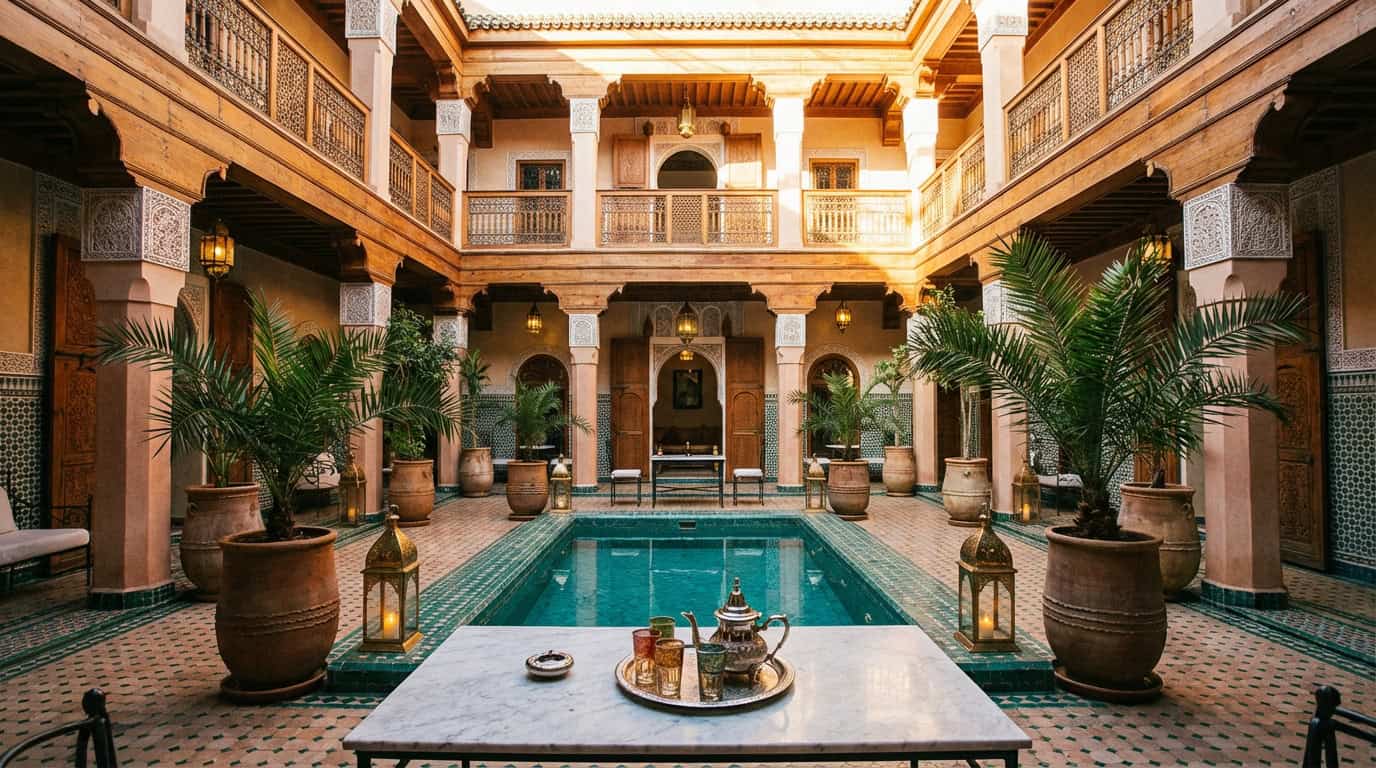
Step through a nondescript wooden door in the heart of the Medina, and the roar of the motorbikes instantly dissolves into the scent of orange blossoms and the trickling of a marble fountain. This is the magic of the traditional Moroccan home, and my Marrakech riad guide is designed to help you find your own slice of paradise amidst the chaos. These inward-facing sanctuaries are built around lush central courtyards, offering a private, cool retreat where intricate zellige tilework and hand-carved cedar wood tell stories of ancient artisanship.
Choosing a riad over a standard hotel means trading impersonal corridors for an intimate, boutique experience that usually features only a handful of rooms. I still remember my first morning sipping mint tea on a rooftop terrace, watching the Atlas Mountains glow pink while the call to prayer echoed over the labyrinthine streets below. Whether you are seeking a minimalist architectural marvel or a palace draped in polished tadelakt plaster, staying in a riad is the essential pulse of any Moroccan journey.
Key Takeaways
- Traditional riads prioritize privacy and tranquility through an inward-facing architectural design that uses thick, windowless exterior walls to silence the noise of the Medina.
- The intimate scale of four to twelve rooms fosters a personalized hospitality experience where guests are treated like friends in a private home rather than customers in a commercial hotel.
- Riad interiors serve as living museums of Moroccan artisanship, featuring hand-carved cedar wood, intricate zellige tilework, and polished tadelakt plaster.
- Booking at least six to nine months in advance is essential for securing high-quality riad accommodations during peak travel seasons like spring and autumn.
Architecture Of The Traditional Marrakech Riad
Stepping through the heavy wooden door of a traditional riad always feels like discovering a well-kept secret. The architecture is intentionally inward-facing, which means the plain exterior walls hide a world of incredible beauty designed for privacy and cooling shade. During my last stay, I was struck by how the lack of outward windows on the lower floors creates an immediate sense of peace, effectively silencing the energy of the Medina. This clever design focuses entirely on the central courtyard, turning the home into a private sanctuary where the sky is your only ceiling. Every room opens onto this heart of the house, allowing the gentle sounds of splashing fountains to drift into your sleeping quarters.
The central garden is the soul of the riad, often filled with fragrant citrus trees and intricate zellige tilework that reflects centuries of Moroccan artisanship. I spent many mornings mesmerized by the geometric patterns of the hand-cut mosaic tiles and the smooth, buttery texture of the tadelakt plaster walls. Because most riads only feature four to twelve rooms, the scale feels incredibly intimate and personal rather than commercial. This small size allows the local hosts to provide a level of hospitality that feels more like being a guest in a friend’s palatial home. You can truly feel the history in the carved cedar wood ceilings and the careful placement of every lantern, making it a dream destination for anyone seeking interior design inspiration.
Choosing Your Perfect Medina Sanctuary
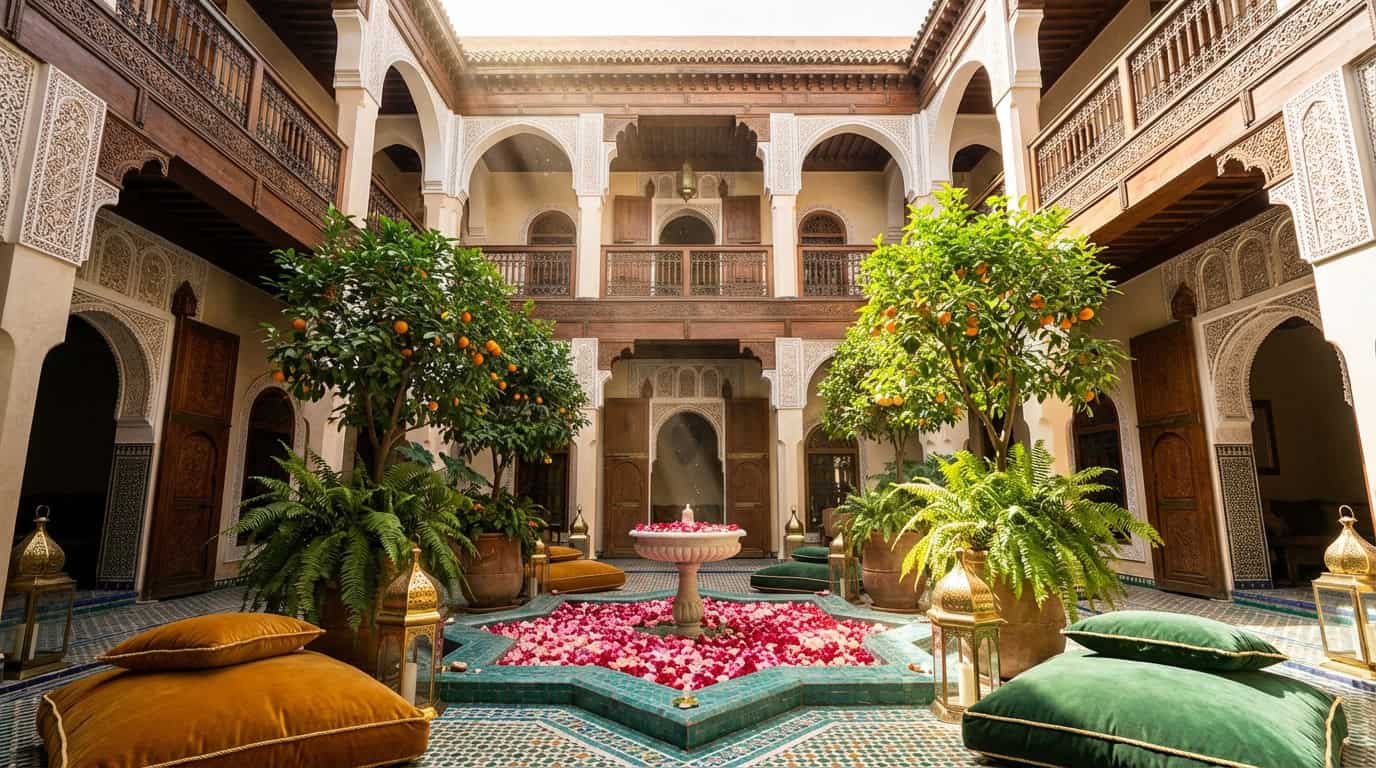
Selecting the perfect riad is less about finding a room and more about choosing the soul of your Marrakech experience. Pricing has stabilized into three distinct tiers, with budget-friendly gems starting around $80, mid-range boutique stays averaging $180, and ultra-luxurious private palaces reaching well over $500 per night. During my last stay, I fell in love with the intimate scale of these homes, which typically feature only a handful of rooms centered around a lush courtyard. This inward-facing architecture creates a silent sanctuary where the only sound is the trickle of a marble fountain, a welcome contrast to the sensory explosion of the streets just outside. You will often find yourself surrounded by incredible hand-carved cedar wood and intricate zellige tilework that feels more like a living museum than a hotel.
Location is the most critical factor when deciding where to drop your bags, as each district offers a completely different rhythm of life. If you want to be in the heart of the action, look for properties in Mouassine or Lakssour, which are just steps away from the main square and high-end shopping. For a more authentic and slightly quieter vibe, I highly recommend the Kennaria district or the residential winding alleys of Bab Doukkala. During one of my favorite trips, I stayed in the northern part of the Medina, which provided a much more local feel with its bustling vegetable markets and neighborhood communal ovens. No matter which neighborhood you choose, remember that the magic of a riad lies in its personalized hospitality, as the small staff often becomes like family during your journey.
Essential Tips For Booking And Etiquette
When planning your escape to the Red City, timing is everything because the most enchanting riads often book up six to nine months in advance for peak seasons like spring and autumn. Since these traditional homes typically offer only four to twelve rooms, the intimacy that makes them so special also means they have very limited availability. I always recommend securing your stay early to ensure you get a room with those hand-carved cedar ceilings or a private balcony overlooking the courtyard. If you are traveling during the winter holidays or Easter, do not wait until the last minute or you might miss out on the most authentic architectural gems.
Stepping into a riad is more like being a guest in someone’s private home than staying in a standard hotel, so embracing the local pace of life is essential. You will likely be greeted with a traditional mint tea ceremony, which is the perfect moment to slow down and chat with the staff about their favorite hidden spots in the Medina. The service here is deeply personal and intuitive, often involving the same few people who will remember how you take your coffee or suggest the best time for a rooftop sunset. It is polite to keep your voice down in the common areas, as the inward-facing design of the courtyard means sound travels easily to other guest rooms.
Navigating the etiquette of these sanctuary-like spaces also means respecting the privacy and artistry that defines Moroccan hospitality. While it is tempting to photograph every inch of the stunning zellige tilework and polished lime plaster, always ask for permission before snapping photos of the staff or other guests. You will find that the hosts are incredibly proud of their heritage and are often happy to share stories about the artisans who restored the property. Remember that a little bit of Darija, the local Moroccan Arabic dialect, goes a long way in showing appreciation for the incredible service you receive. Small gestures of kindness and patience will truly transform your stay from a simple vacation into a timeless journey of meaningful cultural connection.
Embrace the Magic of Riad Living
Choosing a riad is more than just a booking decision because it represents the most transformative way to immerse yourself in the soul of Marrakech. These inward-facing sanctuaries offer a profound contrast to the high energy of the Medina, providing a peaceful garden retreat where the sounds of the city fade into the background. During my own stays, I have found that the intimate scale of just a few rooms fosters a level of hospitality you simply cannot find in a large hotel. Whether you are admiring the intricate zellige tilework or sipping mint tea in a sun-drenched courtyard, you are participating in a living tradition of Moroccan architecture and grace.
The true magic of the riad experience lies in the small, personal moments that define your journey. I still remember the inspiration I felt while watching the morning light hit the polished tadelakt walls while the scent of orange blossoms filled the air. These homes are masterpieces of local artisanship, showcasing carved cedar wood and hand-painted details that make every corner feel like a private gallery. As you plan your adventure, I encourage you to step through one of those unassuming wooden doors in the alleyway to discover the hidden paradise waiting on the other side.
Let the spirit of Moroccan design and the warmth of local hosts guide your stay in this vibrant Red City. Beyond the practical benefits of personalized service and central locations, a riad offers a soulful connection to the culture that stays with you long after you return home. It is the ultimate way to turn a standard vacation into a deeply personal exploration of beauty and tranquility. Pack your bags with an open heart and prepare to be enchanted by the quiet luxury of your own courtyard oasis.
Frequently Asked Questions
1. What exactly is a riad and how does it differ from a hotel?
A riad is a traditional Moroccan home built around a central courtyard garden, offering an intimate and boutique experience compared to a standard hotel. Instead of long corridors and outward windows, you will find a handful of rooms facing inward toward a peaceful sanctuary of fountains and greenery.
2. Is it quiet enough to sleep in a riad located in the busy Medina?
The inward-facing architecture is specifically designed to block out the energy of the surrounding streets. You will find that once you step through the heavy wooden doors, the thick walls and lack of street-side windows create a remarkably silent and cool retreat.
3. What kind of architectural details should I look for during my stay?
Keep an eye out for intricate zellige tilework, hand-carved cedar wood, and walls finished in smooth, polished tadelakt plaster. These elements are not just beautiful decorations, but ancient forms of artisanship that tell the story of Moroccan history and culture.
4. Are riads suitable for travelers who want a view of the city?
Most riads feature stunning rooftop terraces where you can enjoy your morning mint tea while taking in panoramic views. On clear days, you can watch the Atlas Mountains glow pink in the distance while the call to prayer echoes across the labyrinthine streets below.
5. What is the atmosphere like inside a typical Marrakech riad?
The atmosphere is one of pure tranquility, often characterized by the scent of orange blossoms and the gentle sound of splashing marble fountains. It feels like staying in a private palace where the sky is your ceiling and every detail is designed for relaxation.
6. Why should I choose a riad for my first trip to Morocco?
Staying in a riad is the essential pulse of any Moroccan journey because it offers a deep connection to the local lifestyle. It transforms your accommodation from a simple place to sleep into a magical, immersive experience that captures the true spirit of Marrakech. For those who love exploring arid landscapes, this trip pairs perfectly with the ultimate Oman desert road trip for a complete Middle Eastern and North African adventure.