
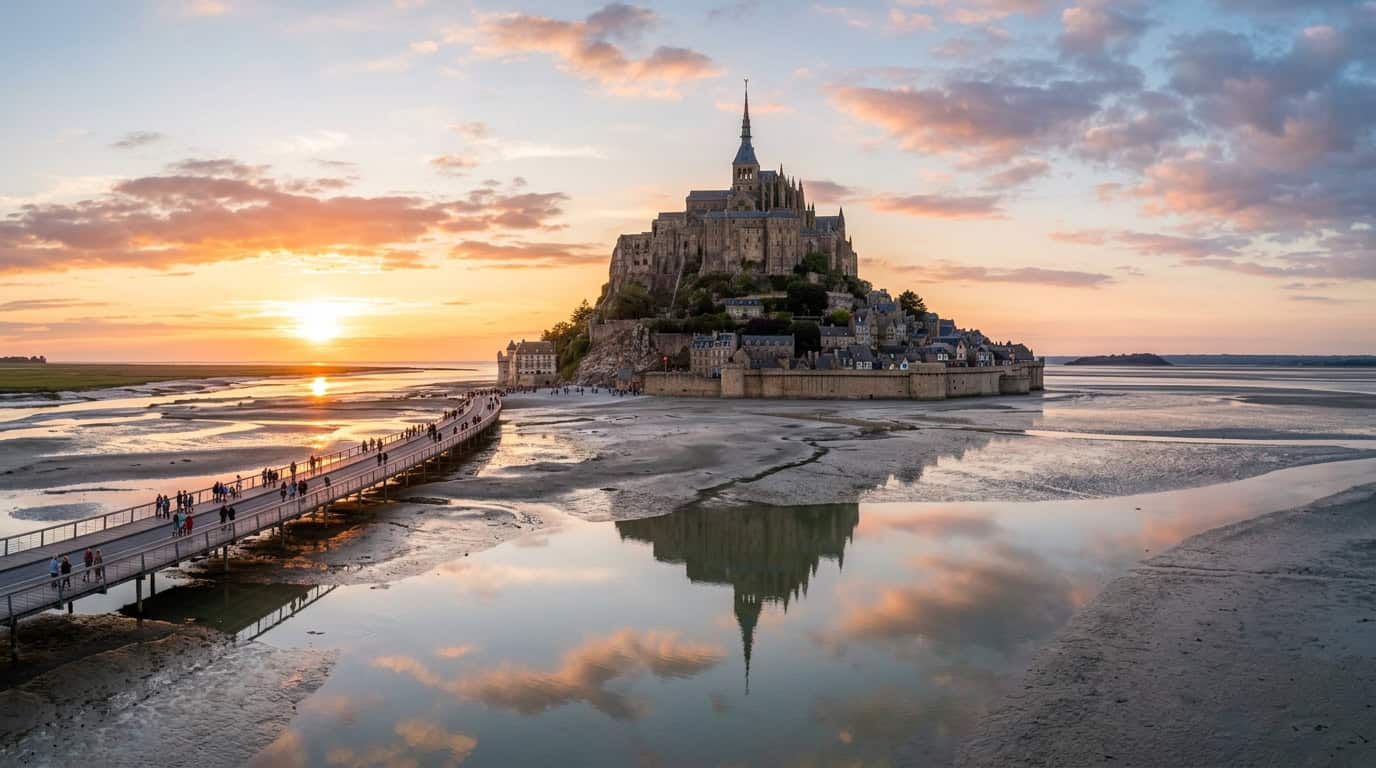
Rising like a shimmering mirage from the mist-shrouded flats of the Normandy coast, this tidal island is a place where history feels tangible and the Atlantic tides dictate the rhythm of the day. I remember the first time I caught sight of the spire piercing the horizon; it felt less like a tourist destination and more like stepping into the pages of a medieval legend. Whether you are navigating the narrow, winding cobblestones of the village or climbing toward the celestial heights of the Abbey, this mont saint michel guide will help you master the logistics of visiting France’s most iconic wonder.
Beyond the postcard-perfect views, the true magic lies in the details, from the echoes in the cloister to the way the golden hour light hits the ancient stone walls. While wandering the ramparts is free, the real heart of the island is the Abbey at the summit, where a €13 ticket unlocks centuries of monastic secrets and panoramic views of the bay. Time your visit to arrive as the gates open at 9:30 AM to beat the crowds, ensuring you have the space to soak in the atmosphere before the daily surge of explorers arrives.
Key Takeaways
- Arrive by 9:30 AM to explore the Abbey and village before heavy midday crowds arrive and to secure a peaceful experience in the narrow streets.
- Purchase Abbey tickets for €13 online in advance to bypass long queues and gain access to the island’s essential historical heart and panoramic views.
- Consult official tide schedules to safely witness the dramatic spectacle of the bay transforming into a true island, ensuring you are on the ramparts or bridge two hours before high tide.
- Wear sturdy walking shoes to navigate the steep, uneven medieval cobblestones and take the 30-minute walk across the bridge for the best photographic perspectives of the island’s silhouette.
Navigating The Medieval Streets And Abbey Heights
Stepping through the stone threshold of the King’s Gate, you are immediately swept into the vibrant energy of the Grand Rue. This narrow, winding main street is the artery of the island, lined with timber-framed houses that look like they were plucked straight from a fairytale tale. As I navigated the cobblestones, I found that the best way to beat the crowds is to arrive right at the 9:30 AM opening or explore the hidden side alleys that branch off toward the ramparts. These elevated walkways offer a peaceful escape from the souvenir shops and provide stunning views of the surrounding bay and its shifting sands. Be sure to wear sturdy walking shoes, as the climb toward the summit is steep and full of historical character.
Once you reach the top of the village, the Benedictine Abbey rises like a crown above the rocky peak. For 2026, adult entry Abbey tickets are priced between 13 and 14 Euros, though EU residents under 26 and all visitors under 18 can enter for free. I highly recommend booking your time slot online in advance to bypass the long queues that form by midday. Inside, the transition from the bustling streets to the soaring Gothic cloisters and the silent, sun-drenched scriptorium is truly transformative. The architectural layers tell a story of a thousand years of faith and fortification, culminating in the breathtaking views from the West Terrace where the sky and sea seem to merge.
To make the most of your visit, keep a close eye on the tide schedule before you begin your ascent. The experience of watching the water rush in to surround the mount while you stand safely within the Abbey heights is a highlight of any journey through this region. Remember that the Abbey typically closes by 6:00 PM in the summer and 5:00 PM in the winter, so plan to finish your interior tour before sunset. After you exit the Abbey, take a slow walk back down the ramparts to see the village from a different perspective as the evening light begins to glow against the stone. This deliberate pace allows you to fully absorb the spiritual and historical weight of this UNESCO World Heritage site.
Witnessing The Dramatic Normandy Tidal Experience
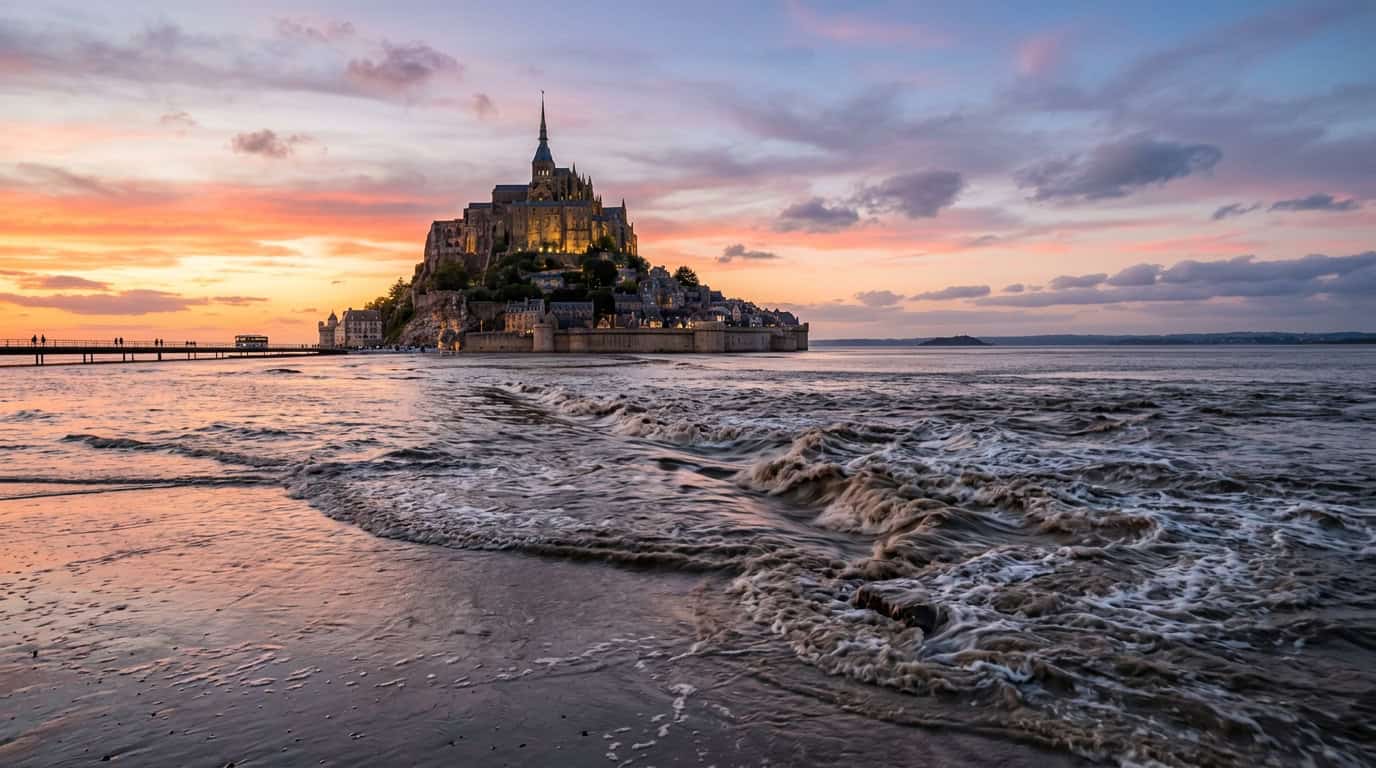
Standing on the ancient ramparts of Mont Saint Michel during a spring tide is a sensory experience unlike any other. The bay is famous for having the highest tides in continental Europe, where the water can recede as far as fifteen kilometers before rushing back toward the island. I remember the first time I heard the low roar of the bore tide, a literal wall of water that signals the sea’s return. It is a powerful reminder of nature’s rhythm, turning the mount from a peninsula into a true island right before your eyes. To witness this spectacle safely, you must check the official tide schedules and ensure you are on the bridge or the ramparts at least two hours before high tide.
For the best photography, I recommend positioning yourself on the North Tower or along the western terrace of the Abbey for a sweeping view of the bay. From these heights, you can capture the dramatic contrast between the golden sands and the incoming turquoise water. If you prefer a shot that includes the silhouette of the mount itself, the new light footbridge provides a perfect perspective as the tide surrounds the medieval walls. Make sure to arrive early to claim a spot, as these vantage points fill up quickly when the water begins its rapid approach. The way the light reflects off the rising salt marshes creates a magical, shimmering effect that is a dream for any photographer.
While the sight is mesmerizing, it is vital to remember that the bay is as dangerous as it is beautiful. The tide moves with incredible speed, often compared to the pace of a galloping horse, and the surrounding sands are prone to treacherous quicksand patches. I always advise travelers to stay on the designated paths or the bridge unless they are part of a guided walking tour led by a professional. These experts know the terrain and can lead you safely across the seabed, sharing stories of pilgrims who once braved these same waters. Watching the final rush of water meet the base of the rock from the safety of the village walls is the perfect way to conclude your tidal adventure.
Logistics For A Seamless Island Arrival
Reaching this medieval marvel is part of the magic, but a little planning goes a long way in ensuring your arrival is stress-free. Most visitors begin by parking in the designated mainland lots, which are well-organized and clearly marked. From there, you have a few wonderful options to reach the island’s gates across the modern causeway. I highly recommend arriving early in the morning to beat the crowds, as this allows you to appreciate the bay’s shifting light in peace. Once parked, you can easily follow the signs toward the central departure hub for the shuttle or the pedestrian path.
The most popular way to cross is the shuttle, a free and frequent service that whisks you across the water in about twelve minutes. These shuttles are designed with large windows, offering your first breathtaking glimpses of the Abbey rising from the sea. If you have the time and energy, I truly suggest walking at least one way across the bridge. The stroll takes about thirty minutes and provides an incredible perspective of the island’s silhouette growing larger with every step. It is a fantastic opportunity for photos and a great way to feel the refreshing salt air of the Normandy coast.
Navigating the transition from the mainland to the island is simple once you understand the layout of the visitor center area. Keep in mind that the shuttle drops you off a short distance from the main entrance to protect the island’s delicate environment. You will want to wear comfortable walking shoes, as the path from the shuttle stop and the village streets themselves are made of historic cobblestones. If you time your walk during a rising tide, you might even witness the water slowly surrounding the mount, turning it into a true island. This seamless approach sets the perfect tone for a day spent exploring the winding alleys and soaring heights of the Abbey.
Planning Your Perfect Mont Saint Michel Itinerary
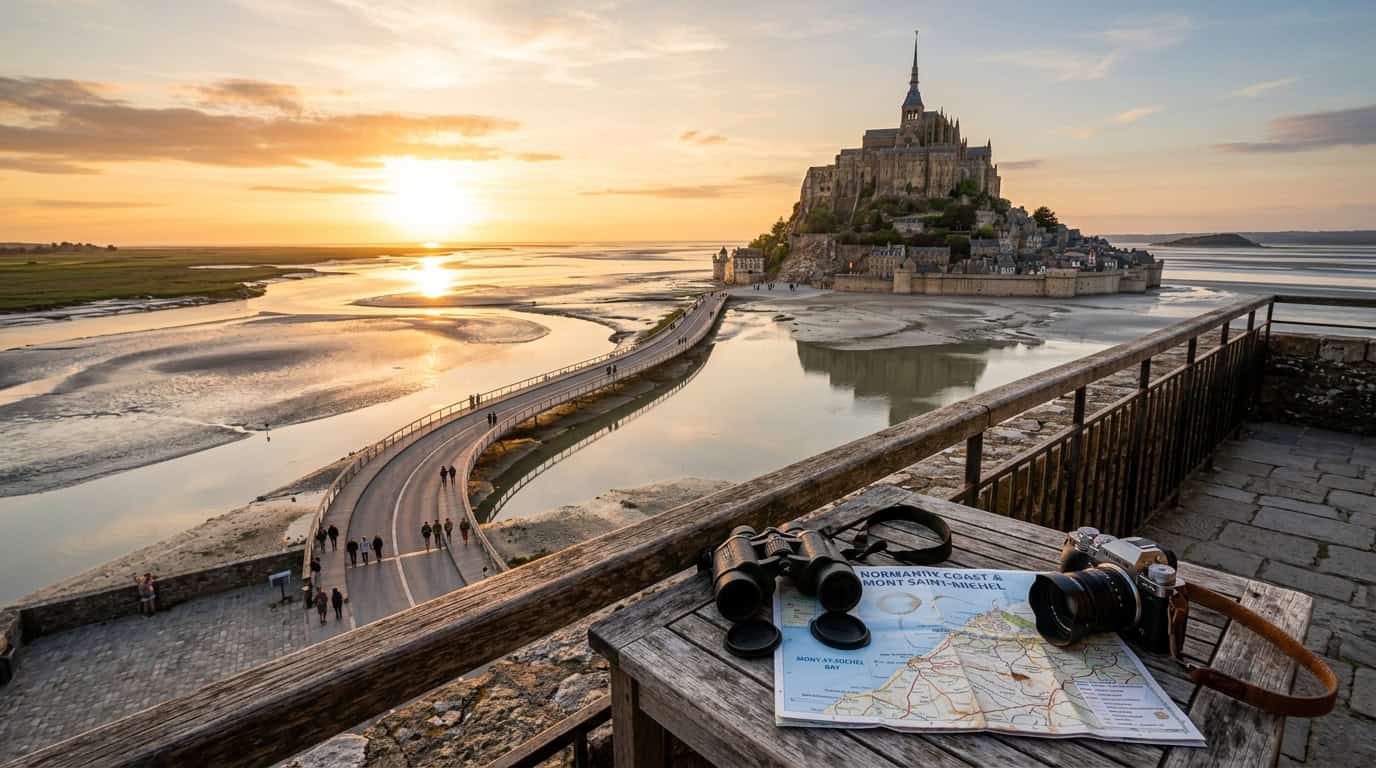
To make the most of your visit, I recommend arriving just before the Abbey opens at 9:30 AM to beat the primary tour groups that arrive by midday. Start your morning by climbing the narrow, winding Grande Rue toward the summit, where the Benedictine Abbey offers breathtaking views of the surrounding bay. This early start allows you to appreciate the Romanesque and Gothic architecture in a quieter atmosphere before the medieval streets become crowded. After exploring the cloisters and the Refectory, head back down to the village for a mid-morning treat. You cannot leave without stopping at a local bakery to witness the rhythmic beating of eggs for the famous wood-fired omelets found on the island.
By early afternoon, the tide often begins its dramatic shift, transforming the landscape from vast sandflats into a shimmering island surrounded by water. I suggest spending these hours walking along the ramparts, which provide a perfect vantage point for photographing the incoming waves. For a truly immersive experience, you might even consider a guided walk across the bay floor, though you must always check the tide schedules for safety. Take this time to browse the local shops or find a quiet corner in the parish church of Saint-Pierre. The shifting light against the granite walls creates a magical backdrop that feels like stepping back into the Middle Ages.
As the sun begins to set, the day-trippers depart and a serene stillness settles over the rocky mount. This is my favorite time to wander the cobblestone alleys, as the evening lights cast long, flickering shadows against the ancient stone. The village takes on a completely different character at night, offering a peaceful atmosphere that makes the history of the site feel incredibly tangible. End your day with a slow dinner at a local bistro, savoring the salty air and the sound of the tide. This balanced schedule ensures you experience both the grand scale of the historic monuments and the intimate, quiet moments that make this UNESCO site so unforgettable.
The Spiritual Magic of Normandy’s Island Wonder
Standing at the foot of the Abbey as the tide rushes in is a transformative experience that stays with you long after you leave Normandy. There is a profound spiritual weight to this rocky islet, where centuries of pilgrims have navigated the same narrow, winding streets in search of something greater than themselves. As you climb the steep stone steps toward the summit, the transition from the bustling medieval village to the silent, soaring heights of the Abbey feels like a journey through time. The sheer architectural feat of building such a masterpiece on a tidal outcrop is enough to inspire anyone, but it is the quiet atmosphere within the cloisters that truly captures the heart.
Planning your own journey to this UNESCO World Heritage site requires a bit of strategy to fully appreciate its magic. I highly recommend timing your visit to witness the dramatic shift of the tides, which serves as a powerful reminder of nature’s dominance over human history. Remember to book your Abbey tickets in advance to avoid the longest queues, and try to arrive early in the morning to experience the village before the midday crowds arrive. Whether you are wandering through the historical museums or simply staring out at the bay from the ramparts, Mont Saint Michel offers a rare blend of adventure and reflection.
As you prepare for your travels, I hope this guide helps you navigate the logistical hurdles so you can focus on the beauty of the destination. This island is more than just a photo opportunity, as it represents a unique intersection of human resilience and natural wonder. Leaving the causeway behind and looking back at the silhouette of the spire against the horizon is a moment you will likely never forget. Take these tips, pack your most comfortable walking shoes, and get ready to discover one of the most enchanting corners of France for yourself, perhaps even extending your trip with a Bretagne coastal itinerary or the ultimate Edinburgh city break to see more of the rugged shoreline.
Frequently Asked Questions
1. What is the best time of day to arrive at Mont Saint-Michel to avoid the crowds?
I highly recommend arriving just as the gates open at 9:30 AM to experience the island’s magic before the midday rush. This early start gives you the rare opportunity to wander the Grand Rue and the Abbey in a peaceful, contemplative atmosphere.
2. How much does it cost to enter the Abbey and is it worth it?
A ticket to the Abbey costs €13 and is absolutely essential for unlocking the heart of the island. It grants you access to centuries of monastic history and the most breathtaking panoramic views of the surrounding bay from the summit.
3. What kind of footwear should I pack for my visit?
You will definitely want to wear sturdy, comfortable walking shoes for your journey. The climb to the summit is quite steep and involves navigating narrow, winding cobblestone streets that can be uneven and challenging in thin soles.
4. Are there any free areas to explore on the island?
Yes, wandering the historic village streets and the ancient stone ramparts is completely free of charge. These elevated walkways are my favorite place to escape the souvenir shops and soak in the views of the shifting Atlantic sands.
5. How can I find a more peaceful experience away from the main tourist path?
The best way to find solitude is to turn off the busy Grand Rue and explore the hidden side alleys. These quiet paths often lead to the ramparts where you can enjoy the golden hour light hitting the stone walls in relative peace.
6. What makes the Grand Rue so special for visitors?
The Grand Rue is the vibrant artery of the island, filled with timber-framed houses that look like they were plucked from a medieval legend. Stepping through the King’s Gate into this street feels like stepping back in time, surrounded by centuries of architectural beauty.