
Stepping onto the cobblestone streets of Oaxaca feels like walking into a living painting, where the scent of rich mole simmers in the air and vibrant street art covers every corner. From the ancient Zapotec ruins of Monte Albán to the bustling markets filled with artisanal crafts, this city offers a sensory overload that every traveler needs to experience. To help you explore these culinary and cultural treasures, I’ve put together this essential Oaxaca travel guide based on my own unforgettable adventures through the heart of Mexico.
There is a magic nestled here in the Sierra Madre mountains that goes far beyond the UNESCO World Heritage architecture. You’ll spend your days getting lost in the colorful historic center, sipping world-class mezcal, and feasting on crispy tlayudas until you can’t eat another bite. Whether you are chasing history or hunting for the best street food, these tips will ensure you see the very best of what this incredible region has to offer.
Key Takeaways
- Immerse yourself in the region’s culinary heritage by tasting complex moles at family-run fondas and eating crispy tlayudas in bustling local markets like Mercado 20 de Noviembre.
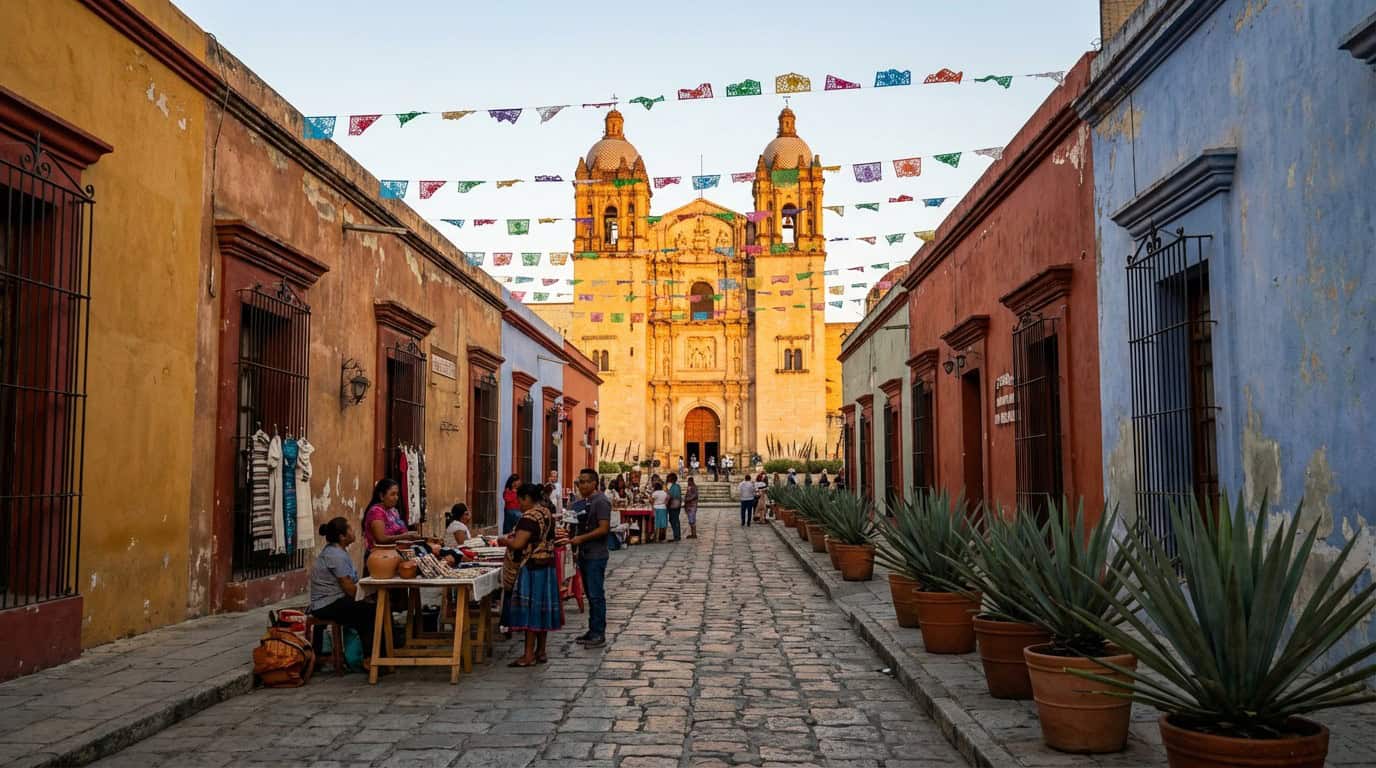
- Explore the vibrant Centro Histórico on foot to discover the ornate Templo de Santo Domingo de Guzmán and the colorful, street-art-filled neighborhood of Jalatlaco.
- Venture beyond the city center to climb the ancient Zapotec ruins of Monte Albán and tour traditional palenques in Santiago Matatlán, the World Capital of Mezcal.
- Plan your visit to this UNESCO World Heritage site by booking accommodation near the Zócalo and arriving via a short flight or scenic bus ride from Mexico City.
Tasting the Seven Moles and Authentic Street Food
You simply cannot visit this culinary capital without tasting the legendary seven moles. While Mexico City introduced me to incredible tacos, Oaxaca completely redefined my palate with its complex sauces that blend indigenous Zapotec traditions with Spanish ingredients. My absolute favorite experience was sitting down at a family-run fonda to try the mole negro, a rich and savory masterpiece made with bitter chocolate and chilies. The depth of flavor is unlike anything else, and I highly recommend asking locals for their favorite spot since every grandmother has a secret recipe worth trying. Eating your way through these dishes is truly the best way to understand the heart of the region.
Beyond the sophisticated sauces, the vibrant energy of the local markets offers an authentic look into daily life here. I spent hours wandering through the smoky aisles of the Mercado 20 de Noviembre where the aroma of grilled meats is practically irresistible. For the ultimate street food feast, you have to find a classic tlayuda, which is a giant crispy tortilla loaded with beans, unpasteurized quesillo, and fresh avocado. I found the best ones are often served late at night from street carts near the historic center, making them the perfect end to an evening of exploring. Grab a seat on a plastic stool to enjoy this crunchy delight while soaking up the lively atmosphere.
Wandering the Cobblestone Streets of Centro Histórico
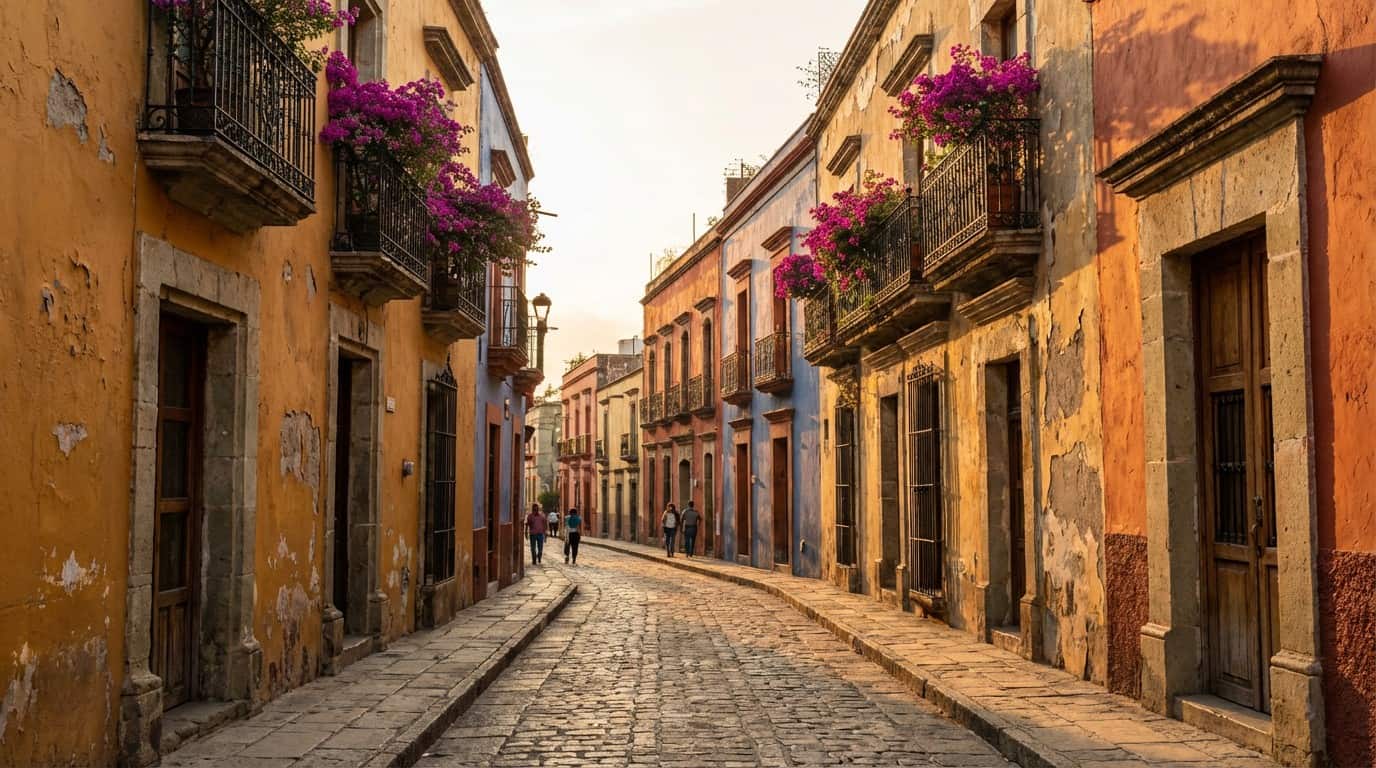
Walking through Oaxaca City is a visual feast, where every building is splashed with vibrant hues of marigold, teal, and terracotta. I spent hours just getting lost in the grid of the Centro Histórico, letting the rhythm of daily life guide me toward the Zócalo. This bustling main square serves as the city’s living room, constantly filled with the sounds of brass bands and the scent of roasted corn. It is the perfect spot to grab a bench and watch the world go by before exploring the colonial maze further. You will quickly realize that this city demands to be explored on foot to truly appreciate its preserved heritage.
Your walk will inevitably lead you to the Templo de Santo Domingo de Guzmán, an architectural marvel that stands as a testament to the region’s rich history. I was absolutely floored by the interior, where every inch seems to be covered in intricate gold leaf and ornate baroque details. The plaza right in front of the church is equally captivating, often lined with agave plants and local artisans selling colorful textiles. Make sure to visit the adjoining cultural museum and the ethnobotanical garden to see how nature and history intertwine here. It is easily one of the most photogenic spots in the entire country.
Just a short stroll from the busy center lies Jalatlaco, one of the oldest and most charming neighborhoods in Oaxaca. I fell in love with its quieter atmosphere, where the cobblestone streets are framed by walls covered in stunning street art and murals depicting local traditions. This area feels like a secret village hidden within the city, offering plenty of cute cafes where you can sip local coffee. It is the ideal place to wander without a map, especially during the golden hour when the light hits the colorful facades perfectly. Don’t forget your camera because every corner here offers a new visual surprise.
Exploring Ancient Ruins and Traditional Mezcal Palenques
No trip to Oaxaca is complete without ascending to the flattened mountaintop of Monte Albán just outside the city center. I remember standing in the middle of the Great Plaza, completely awestruck by the sheer scale of the Zapotec pyramids rising against the blue sky. You should plan to arrive right when the gates open at 8 AM to beat the mid-day heat and the tour bus crowds. Walking among the ancient ball courts and observatories offers a connection to a civilization that thrived here over a thousand years ago. The panoramic views of the Oaxaca Valley below are worth the climb alone, providing a perfect backdrop for reflection and photography.
After soaking up ancient history, head about an hour east to Santiago Matatlán, widely known as the World Capital of Mezcal. Driving into town, you can actually smell the roasting agave hearts baking in underground earthen pits before you even see the smoke. I recommend hiring a local driver so you can safely hop between family-run palenques to learn how they distill this smoky spirit using traditional copper or clay pots. Tasting mezcal straight from the source is an entirely different experience than ordering a cocktail back home, as the maestros mezcaleros explain the nuances of wild agave varieties like Tepeztate or Tobalá. It is the ultimate way to understand the culture of this region.
Embracing the Undeniable Magic of Oaxaca
Oaxaca isn’t just a destination you visit; it is a place you feel deep in your soul. From the smoky aroma of mezcal wafting through the streets to the vibrant textiles hanging in the markets, every corner offers something incredible. I still dream about the complex layers of a rich mole negro and the quiet majesty of the mountains framing the city. Whether you are wandering the cobblestone alleys of the historic Centro or climbing the ancient steps at Monte Albán, the energy here is special. It captures that authentic spirit of Mexico that so many of us are constantly chasing.
Getting to this culinary paradise is easier than you might think, especially if you are already exploring Mexico City. You can hop on a quick one-hour domestic flight directly into Xoxocotlán International Airport or take a scenic ADO bus ride through the countryside. I recommend booking your accommodation in advance, as the best boutique hotels near the Zócalo fill up quickly during festivals. Pack your walking shoes and a hearty appetite because this city demands to be explored on foot. Don’t wait for the perfect moment to experience this UNESCO World Heritage site, as the best time to go is right now.