
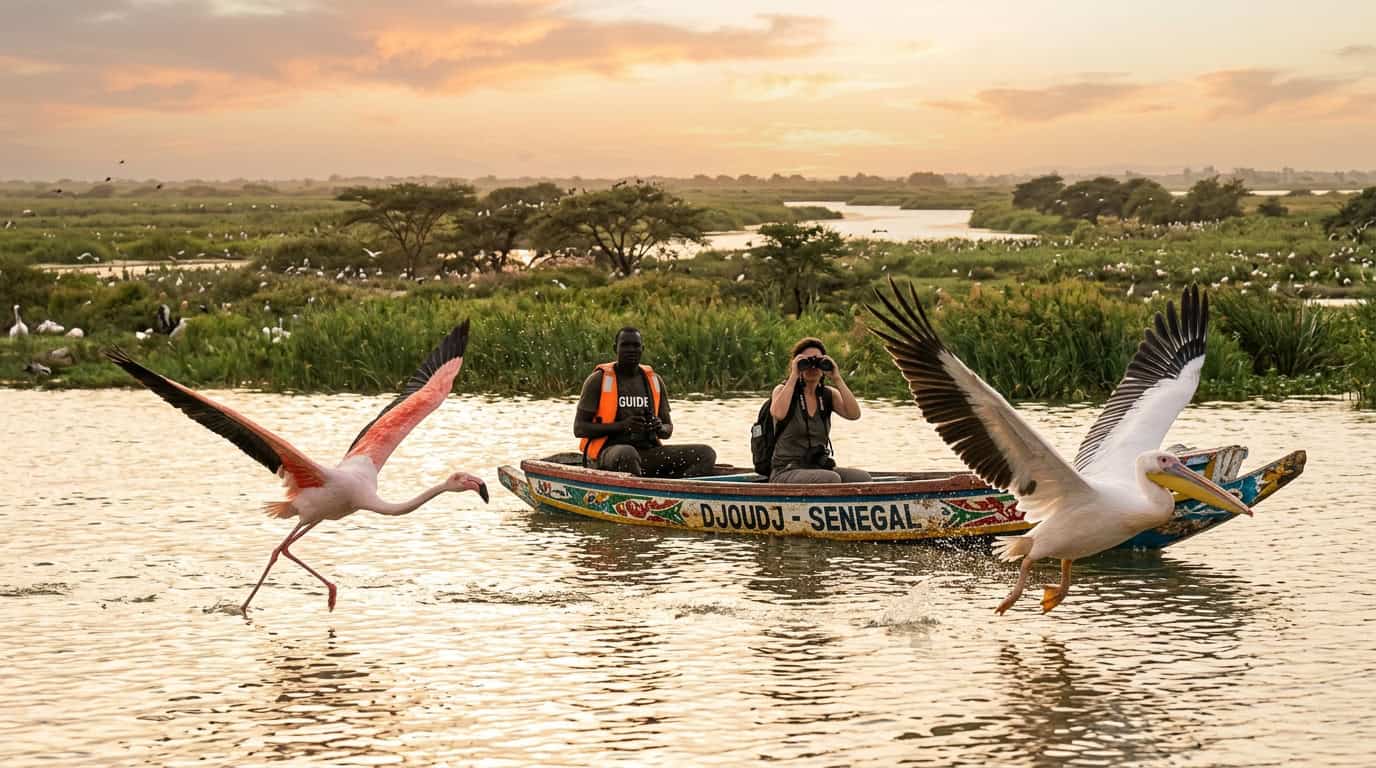
Imagine standing on the edge of the Sahel, where the golden sands of the Sahara meet the lush green of the savanna, as a swirl of thousands of wings fills the horizon. My first Senegal birdwatching safari felt like stepping into a living kaleidoscope, with nearly 700 species tucked away in this stable, sun-drenched corner of West Africa. Whether I was tracking the elusive Egyptian Plover or watching Ospreys dive into the Atlantic, the sheer density of life here took my breath away.
The crown jewel of my trip was the Djoudj National Bird Sanctuary, a UNESCO World Heritage site where the air hums with the calls of over 320 different species. I still remember the first time I saw the massive colonies of Great White Pelicans nesting in the wetlands. The scale of the migration is a humbling reminder of nature’s grandeur. With its excellent infrastructure and unique position as a critical wintering ground for migrants, Senegal offers a seamless blend of wild adventure and accessible, world-class birding.
Key Takeaways
- Senegal is a premier birding destination featuring nearly 700 species across diverse ecosystems, ranging from the arid Sahelian belt to lush mangrove deltas.
- The Djoudj National Bird Sanctuary and the Saloum Delta are critical UNESCO World Heritage sites that host massive colonies of Great White Pelicans and rare species like the White-crested Tiger Heron.
- Visit between November and April to witness peak migration, as the region serves as the first major permanent water source for birds crossing the Sahara Desert.
- Niokolo Koba National Park provides a rugged interior safari experience where travelers can track specialized species like the Egyptian Plover and the Abyssinian Ground Hornbill.
Exploring The Majestic Djoudj National Bird Sanctuary
Gliding through the narrow channels of the Djoudj National Bird Sanctuary by motorized pirogue is an experience that feels worlds away from a typical safari. As the third largest bird sanctuary on the planet, this UNESCO World Heritage site serves as a vital oasis within the rugged Sahelian belt. I remember the awe of rounding a bend in the river to find thousands of Great White Pelicans nesting in a massive, noisy colony that stretched as far as I could see. The air was thick with the sound of beating wings and the prehistoric calls of birds that have gathered here for generations. It is a rare opportunity to witness nature at such a staggering scale, tucked away in a corner of West Africa that remains largely untouched by mass tourism.
The sanctuary is a true crossroads for global avian travelers, acting as the first major permanent water source for migrants after their grueling flight across the Sahara Desert. During my boat journey, I spotted elegant Ospreys and tiny European warblers sharing the reeds with resident African species like the African Fish Eagle. The diversity is incredible, with over 320 recorded species making this an essential stop for any wildlife photographer or nature enthusiast. I found that the best light for photography occurs in the early morning when the mist still clings to the water and the birds are most active. This transition zone between the desert and the savanna creates a unique backdrop that is hard to find anywhere else in the world.
To make the most of your visit to this remote wetland, I recommend planning your trip between November and April when the migratory populations are at their peak. You will want to bring a high quality pair of binoculars and a long lens, as the volume of birds can be overwhelming to capture with a standard camera. Most boat tours depart from the park headquarters and last about two hours, providing a front row seat to the intricate social lives of the pelican colonies. After the boat ride, take some time to explore the lookout towers scattered throughout the park for a different perspective of the vast flooded plains. It is a profound reminder of why Senegal is considered a premier birding destination, offering a peaceful yet exhilarating escape into the wild.
Rare Finds In The Saloum Delta Mangroves
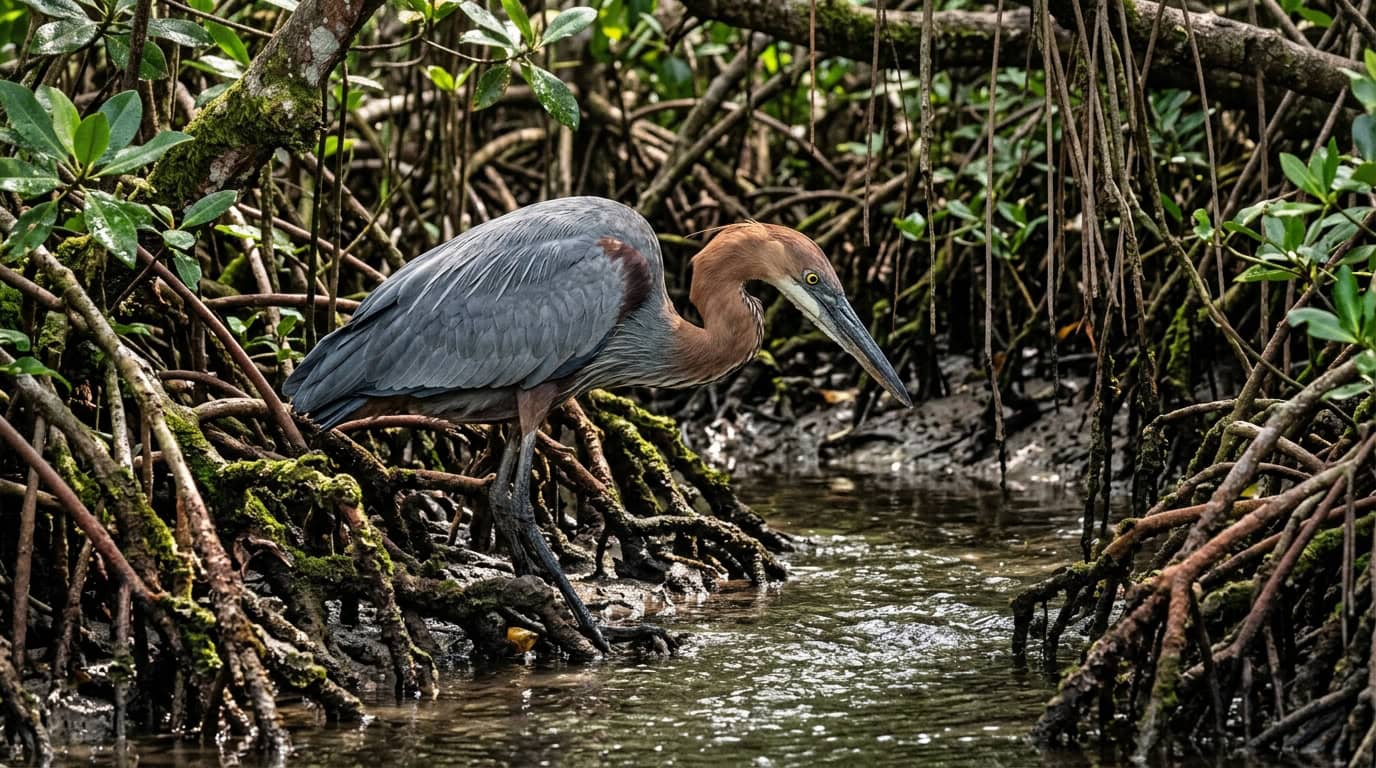
Navigating the 76,000 hectare expanse of the Saloum Delta feels like entering a prehistoric world where the land and sea are inextricably linked. As my traditional pirogue glided through the narrow, emerald green mangrove channels, the silence was only broken by the rhythmic dip of the paddle and the distant call of an African Fish Eagle. This UNESCO World Heritage site is a labyrinth of salt flats and tangled roots, offering a secluded sanctuary for photographers looking to capture West Africa at its most raw. The scale of the delta can be overwhelming, but focusing on the intricate network of tidal creeks reveals a hidden ecosystem teeming with life. I found that the best way to experience this wilderness is to surrender to the slow pace of the water and keep your binoculars ready at every turn.
One of the most rewarding challenges of birdwatching in this region is the quest for the elusive White-crested Tiger Heron. This master of camouflage stalks the shadows of the mangrove roots, its barred plumage blending perfectly with the dappled light of the swamp. Spotting one requires patience, sharp eyes, and a bit of luck, making it a true trophy for any nature enthusiast. Unlike the common herons found in more open areas, this specialist inhabitant of the Saloum Delta represents the unique biodiversity found only in these coastal transition zones. Seeing one emerge from the thicket is a heart-stopping moment that makes every hour spent in the humid heat feel entirely worth the effort.
As the sun begins to dip toward the Atlantic horizon, the delta prepares for one of the most spectacular aerial displays in the natural world. Thousands of Scissor-tailed Kites congregate from the surrounding Sahelian belt to settle into their evening roosts among the trees. The sky fills with their distinct, deeply forked silhouettes as they perform a synchronized dance against the backdrop of a burning orange sunset. It is a breathtaking finale to a day of exploration, reminding me why Senegal is a top destination for those seeking wildlife encounters away from the typical crowds. To witness this massive gathering in such a remote setting is a powerful experience that stays with you long after you leave the water.
Tracking Egyptian Plovers In Niokolo Koba Park
Venturing into the heart of Niokolo Koba National Park feels like stepping back into a primal version of West Africa that few travelers ever get to witness. As I left the coastal breeze behind, the scenery shifted into dense wooded savannas and gallery forests that harbor some of the most sought after species on the continent. I remember the thrill of scanning the sandy banks of the Gambia River, waiting for a flash of orange and blue to reveal the Egyptian Plover. This bird is often called the Crocodile Bird due to its legendary relationship with the river giants, and seeing one darting along the water’s edge is a true highlight for any photographer. The park offers a raw, off the beaten path experience where the sounds of the bush replace the hum of the city.
The scale of the wildlife here extends far beyond the riverbanks and into the shadows of the ancient baobab trees. While tracking the plover, keep your eyes tilted toward the canopy and the forest floor to spot the prehistoric looking Abyssinian Ground Hornbill. These massive birds, with their striking blue and red facial patches, strut through the tall grass like relics from another era. It is not uncommon to see them foraging near herds of Roan antelope or the rare Western Giant Eland, the largest antelope in the world. This intersection of big game and specialized birdlife makes the park a unique sanctuary for those who want a comprehensive nature experience.
To make the most of this interior safari, I recommend planning your visit during the dry season when birds and mammals congregate around permanent water sources. You should pack a high quality telephoto lens and plenty of memory cards, as the lighting in the savanna creates stunning golden hour opportunities. I found that staying in one of the eco lodges within the park boundaries allowed me to start my birding walks at dawn, which is the peak time for activity. Be sure to hire a local guide who understands the specific alarm calls of the bush, as they can lead you directly to nesting sites that most tourists would simply drive past. This journey into the rugged interior is a rewarding challenge that showcases the incredible biodiversity of the region.
A Two Week Senegal Birding Itinerary
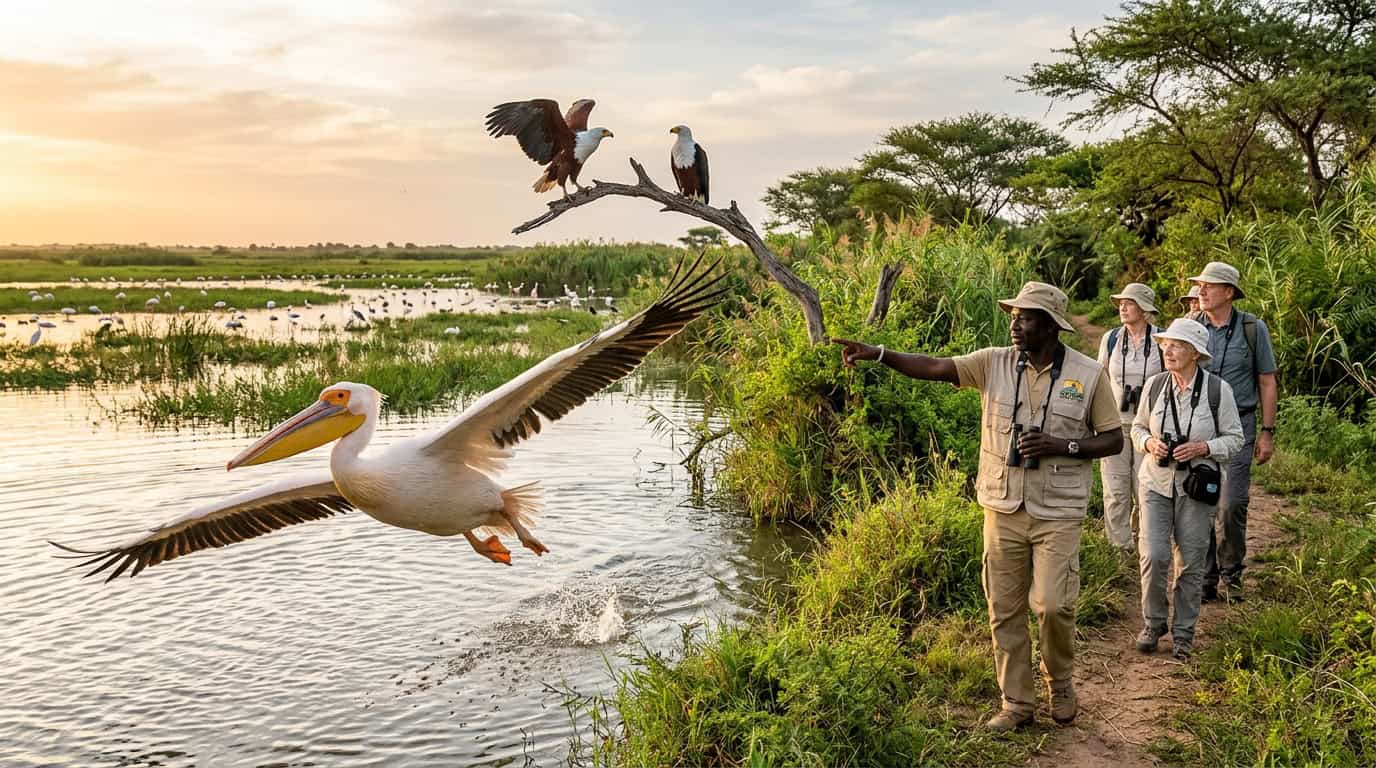
My two week journey begins in the bustling coastal capital of Dakar before quickly transitioning into the serene landscapes of the northern Sahelian belt. After arriving and settling in, I head north toward the Technopole wetlands where the early morning light provides the perfect backdrop for spotting Greater Flamingos and various migrants. I then make my way toward the historic city of Saint Louis, using a local boutique hotel as a base for exploring the surrounding acacia scrub. The first few days are intentionally paced to allow for slow, methodical photography as I seek out the African Pygmy Kingfisher and the stunning Golden Nightjar during the golden hour.
The heart of this itinerary focuses on the legendary Djoudj National Bird Sanctuary, a UNESCO World Heritage site that feels like a hidden oasis for nature lovers. I dedicate three full days to this region, staying at a nearby lodge to ensure I am at the park gates the moment they open for the best sightings. You can expect to witness the breathtaking spectacle of thousands of Great White Pelicans nesting, alongside rare sightings of the Arabian Bustard and the Black Crowned Crane. I recommend taking a traditional pirogue boat trip in the late afternoon when the soft sun highlights the vibrant plumage of the Malachite Kingfisher and various heron species.
As I wrap up the second week, I venture into the dry savanna and coastal lagoons of the Langue de Barbarie to capture the diversity of Senegal’s avian life. This area is a haven for terns and gulls, offering a distinct contrast to the freshwater ecosystems of the interior. I spend my final nights at a quiet eco lodge near the Senegal River, where the evening chorus of birds provides a peaceful soundtrack to my trip reflections. This route offers a comprehensive look at the unique biodiversity of the region, ensuring that every photographer leaves with a full memory card and a deep appreciation for West Africa’s natural beauty. Much like capturing the Arctic light in the far north, the illumination across the Senegalese plains offers a masterclass in environmental photography.
Your Next Great West African Avian Adventure
Senegal offers a refreshing departure from the standard safari circuit, proving that West Africa is a world-class frontier for nature enthusiasts. By venturing into the unique Sahelian belt, you get to experience a fascinating transition zone where the golden sands of the Sahara meet the lush Sudanian Savanna. This geographic sweet spot creates a haven for nearly 700 bird species, making every morning a vibrant symphony of color and sound. Whether you are capturing the perfect shot of a rare migrant or watching thousands of pelicans take flight at Djoudj, the scale of life here is humbling. It is a destination that rewards the curious traveler with intimate wildlife encounters that you simply cannot find in more crowded corners of the continent.
Planning your first West African safari might feel like a bold step, but the stability and welcoming culture of Senegal make it an accessible dream for any birder or photographer. I encourage you to pack your best pair of binoculars and prepare for a journey that balances rugged field exploration with genuine local hospitality. Beyond the impressive species counts and UNESCO sites, it is the quiet moments in the mangroves and the vast horizons of the salt flats that stay with you. There is a profound sense of discovery in these landscapes that reminds us why we travel in the first place. Do not wait for this hidden gem to become a mainstream hotspot before you decide to witness its natural wonders for yourself by embarking on a Senegal coastal road trip.
Frequently Asked Questions
1. When is the best time to visit Senegal for birdwatching?
The peak season for birding is between November and April when the migrants arrive from Europe. This window offers the most comfortable temperatures and the highest species density in sanctuaries like Djoudj.
2. What makes the Djoudj National Bird Sanctuary so special?
As the third largest bird sanctuary on earth, it is a critical oasis for over 320 species in the heart of the Sahel. You can witness massive colonies of Great White Pelicans and rare wintering migrants in a stunning UNESCO World Heritage setting.
3. What kind of transport should I expect during the safari?
You will often travel by motorized pirogue to navigate the narrow channels and wetlands where birds congregate. This traditional boat allows you to get incredibly close to the nesting colonies without disturbing the natural habitat.
4. Is Senegal a good destination for beginner birdwatchers?
Senegal is perfect for beginners because it offers excellent infrastructure and a high density of birds that are easy to spot. You can see nearly 700 species in a stable environment, making it one of the most accessible birding hotspots in West Africa.
5. What are some of the must-see species in the region?
Keep your binoculars ready for the elusive Egyptian Plover and the majestic Ospreys diving into the Atlantic. The massive nesting colonies of Great White Pelicans are also an absolute highlight that you cannot miss.
6. How should I prepare for the environment of the Sahel?
Pack lightweight clothing for the sun-drenched savanna and a good pair of binoculars for distant sightings. Since you will be exploring both golden sands and lush wetlands, versatile gear is essential for a bucket list adventure comfortable adventure. To ensure you arrive refreshed and ready to explore, consider using seamless travel strategies to adjust to the new time zone quickly.