
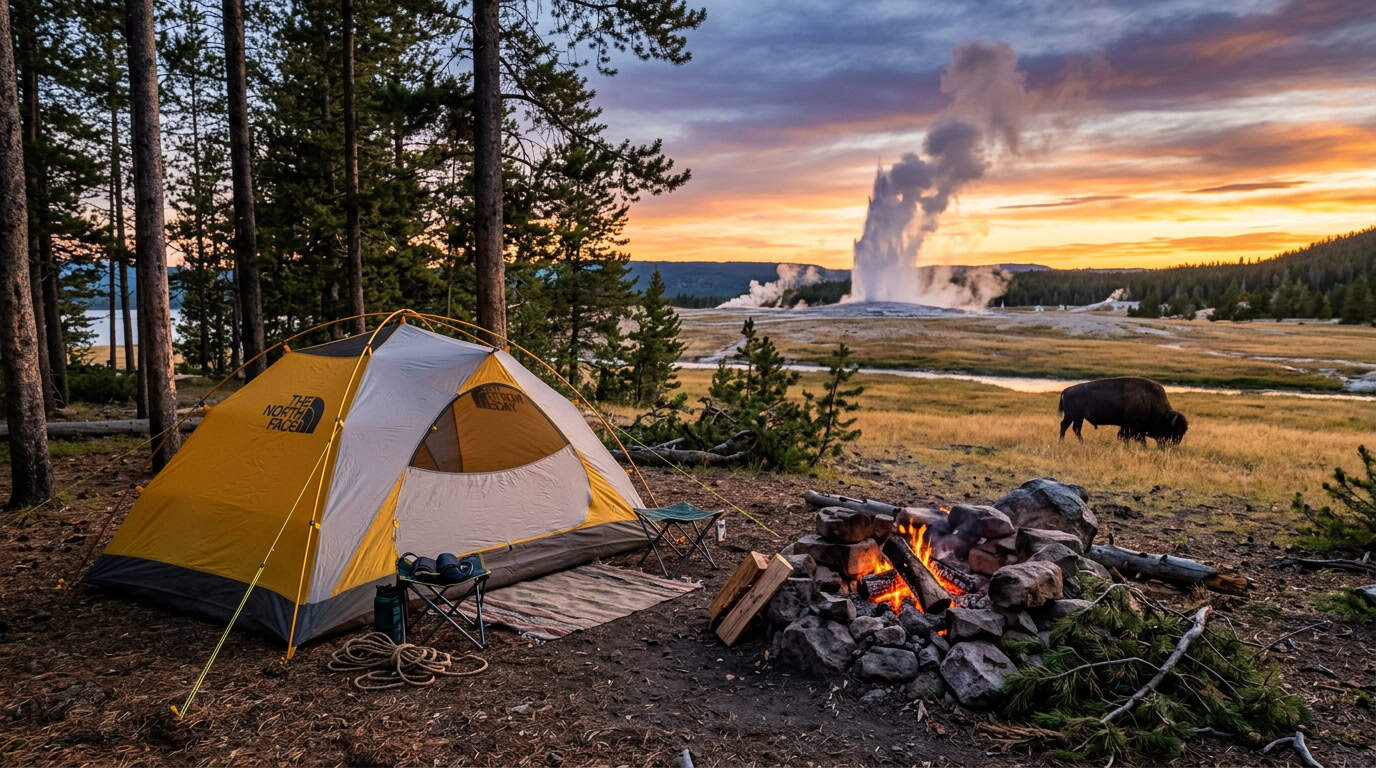
There is nothing quite like the smell of lodgepole pines and the distant hiss of a geyser to remind us why we protect these wild spaces. Waking up in a tent as the morning mist rolls over the Madison River is a bucket-list experience, but managing the logistics of the world’s first national park can feel like a trek of its own. This yellowstone camping guide is designed to simplify the reservation systems, ensuring you spend less time refreshing booking pages and more time watching bison roam through the golden light of Hayden Valley.
For the 2026 season, camping in the park has shifted significantly, with nearly every one of the 2,000+ sites now requiring an advanced reservation. Whether you are seeking the full hookups and comfort of the Fishing Bridge RV Park or the fly-fishing paradise of the Madison campgrounds, timing is everything under the new 13-month rolling window. With infrastructure projects and flood recovery efforts still shaping site availability, having a clear strategy for where and when to book is the secret to securing your spot under the vast Montana stars.
Key Takeaways
- Reservations are mandatory for nearly all 2,000+ campsites in 2026, requiring travelers to navigate a 13-month rolling window for concessionaire sites and a six-month window for NPS-managed grounds.
- Strategic basecamp selection is essential for minimizing travel time, with Canyon Campground offering central access, Bridge Bay providing lakeside serenity, and Madison serving as a prime hub for wildlife and fishing.
- Strict adherence to ‘bear aware’ protocols is non-negotiable in grizzly country, including the use of bear-resistant containers and the requirement for hard-sided campers only at Fishing Bridge RV Park.
- Successful Yellowstone camping requires preparing for extreme temperature swings with a versatile layering system and starting daily sightseeing at dawn to secure parking and avoid peak crowds.
Navigating The 2026 Yellowstone Reservation System
Securing a spot under the vast Wyoming stars requires strategic planning, but the payoff of waking up to the sound of the Madison River is worth every effort. You need to navigate two distinct booking systems depending on where you want to pitch your tent or park your rig. The sites managed by professional park concessionaires, such as the massive Bridge Bay or the RV friendly Fishing Bridge, operate on a 13-month rolling window. This means if you are eyeing a mid summer getaway in 2026, you can actually start booking as early as the same month in 2025. I always recommend marking your calendar a year in advance to snag those coveted spots near the geothermal basins.
If you prefer the more rugged charm of campgrounds like Slough Creek or Norris, you will be working with the National Park Service through their official government booking platform. These sites typically follow a six month rolling window, which creates a second high stakes opportunity to land a reservation if you missed the thirteen month mark. It is a fast paced process, so I suggest having your account logged in and your finger ready on the refresh button the moment the window opens. I still remember the adrenaline rush of booking my first site at Mammoth, knowing that a successful click meant I would be spending my mornings watching elk wander through the sagebrush.
The key to a stress free 2026 trip is understanding that availability can change due to ongoing infrastructure improvements or recovery projects. While it might feel like a lot of logistics, having a firm reservation allows you to focus on the magic of the park rather than worrying about where you will sleep. I love the peace of mind that comes with knowing my basecamp is set, leaving me free to spend my days photographing grizzly bears in the Lamar Valley or watching Old Faithful erupt. By mastering these two booking timelines, you are not just reserving a campsite, you are ensuring your front row seat to one of the greatest natural shows on earth.
Choosing Your Perfect Yellowstone Basecamp Location
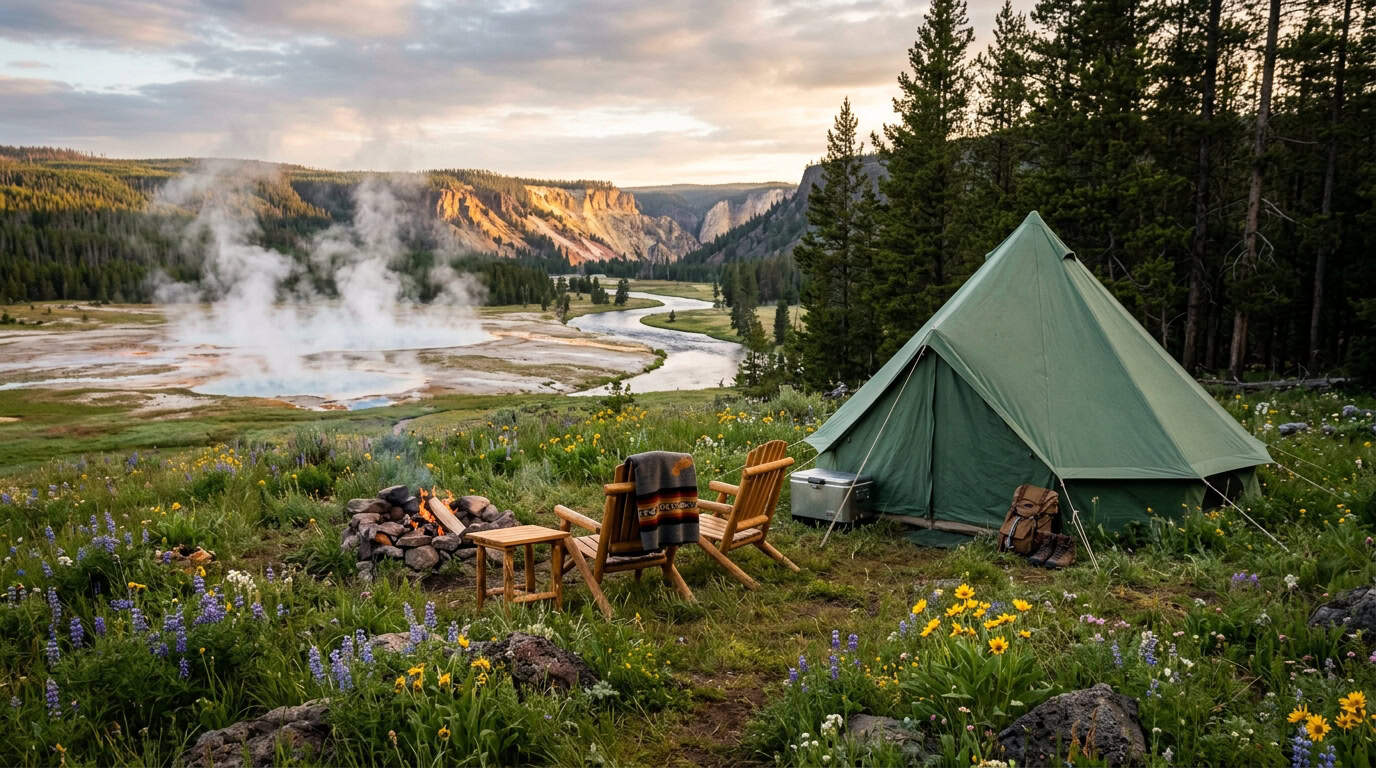
Choosing the right basecamp in Yellowstone is the most important decision you will make when planning your adventure through this geothermal wonderland. If you want to be right in the heart of the action, Canyon Campground is my top recommendation because its central location minimizes driving time to both the northern and southern loops. I love waking up here and taking a short drive to watch the morning mist rise off the Grand Canyon of the Yellowstone, where the roar of the falls serves as nature’s alarm clock. It is the perfect spot for photographers who want to capture that iconic golden light hitting the canyon walls before the midday crowds arrive.
For those who dream of waking up next to sparkling blue waters, Bridge Bay offers an unbeatable lakeside experience near the vast expanse of Yellowstone Lake. I often suggest this spot for travelers who enjoy boating or simply want to watch the sunset reflect off the water after a long day of exploring. The atmosphere here is incredibly serene, and the nearby trails offer plenty of opportunities to spot elk wandering through the trees. Just remember that if you are traveling in an RV and need full hookups, you will want to head just down the road to the hard sided units only area at Fishing Bridge.
If wildlife spotting is your main priority, Madison Campground serves as a spectacular gateway to the park’s most famous meadows and riverbanks. Situated near the junction of the Madison and Firehole rivers, this area is a favorite for fly fishing enthusiasts and those hoping to see bison or elk grazing right outside their tent. I find that the proximity to the West Entrance makes it incredibly convenient for quick trips to the Old Faithful geyser basin while still feeling tucked away in the wilderness. There is something truly magical about hearing an elk bugle through the trees as you sit by your campfire under a canopy of bright stars.
Essential Gear For Grizzly Country Safety
When you are camping in the heart of grizzly country, your daily routine revolves around being bear aware to keep both your family and the local wildlife safe. I always tell my friends that a clean camp is a happy camp, which means every scented item from your toothpaste to your dinner scraps must be locked away in a bear resistant container or a hard sided vehicle. Yellowstone takes these rules seriously because even a small oversight can habituate a bear to human food, leading to dangerous encounters for everyone involved. At the Fishing Bridge RV Park, this safety protocol is so vital that only hard-sided campers are permitted, meaning no tents or pop up trailers are allowed at all. This specific requirement ensures that guests staying near the prime grizzly habitat of Yellowstone Lake have a solid barrier between them and the inquisitive bears that frequently roam the area.
Beyond the wildlife, packing for Yellowstone requires you to prepare for three seasons in a single day due to the high altitude environment. I have woken up to a dusting of frost on my sleeping bag in July, only to be hiking in a t shirt by noon under a brilliant mountain sun. You should focus on a layering system that includes a moisture wicking base, a warm fleece or down mid layer, and a waterproof shell to block those sudden afternoon thunderstorms. Proper footwear is equally essential, as the rugged terrain around the Grand Canyon of the Yellowstone demands sturdy boots with excellent traction. By packing versatile gear and staying diligent with your food storage, you can focus on the awe inspiring beauty of the park rather than the unpredictable elements.
Planning Your Daily Yellowstone Sightseeing Itinerary
To make the most of your Yellowstone adventure, I recommend starting your day at dawn when the mist still hangs low over the Madison River and the elk are most active. After a quick breakfast at your campsite, head straight to the Upper Geyser Basin to witness the iconic eruption of Old Faithful before the mid-morning crowds arrive. I love wandering the nearby boardwalks toward Morning Glory Pool, where the deep teals and brilliant oranges of the thermal waters feel like a scene from another planet. This early start ensures you beat the heat and secure a parking spot at one of the park’s most popular landmarks.
From the geyser basins, make your way east toward the Grand Canyon of the Yellowstone for a dramatic change in scenery. The view from Artist Point is absolutely breathtaking, offering a perfect vantage point of the Lower Falls as they thunder into the yellow stone canyon below. I suggest hiking the South Rim Trail for a bit of solitude and unique perspectives of the rushing water that many visitors miss from the main overlooks. This stretch of the park provides some of the best photography opportunities, especially when the sunlight hits the canyon walls and highlights the vivid mineral stains.
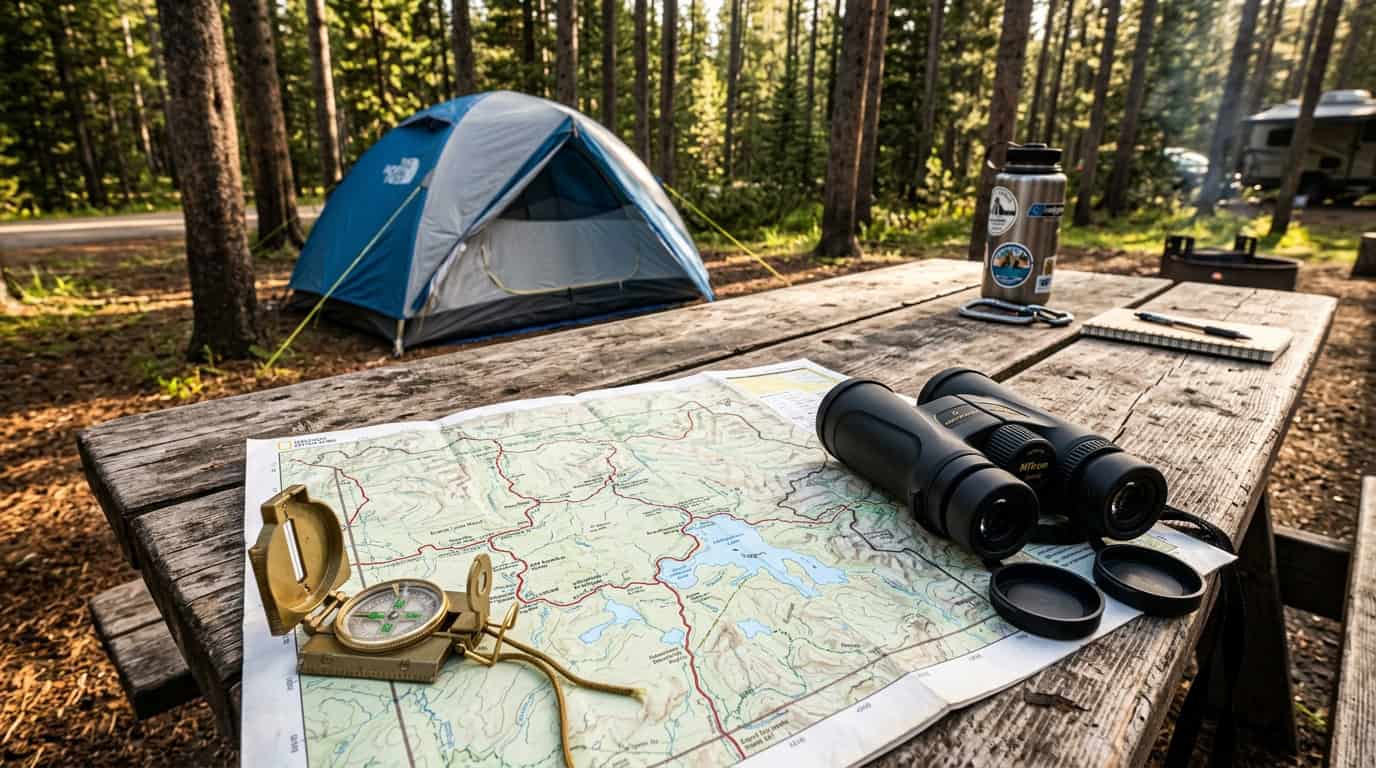
As the afternoon winds down, drive through the lush Hayden Valley on your way back toward the lake or your campground. This is prime time for wildlife spotting, so keep your binoculars ready for grizzly bears, soaring bald eagles, and the massive bison herds that often cause famous Yellowstone traffic jams. To ensure you don’t miss any major landmarks, you can follow a routing guide to see geysers, wildlife, and epic waterfalls efficiently. There is nothing quite like the feeling of watching a sunset over Yellowstone Lake after a full day of exploration. You will return to your campfire with tired feet and a camera full of memories, ready to plan which corner of this vast wilderness to tackle tomorrow.
Your Front Row Seat to Yellowstone’s Magic
Waking up to the crisp mountain air and the distant sound of a bison grunting in the meadow is a feeling that no hotel room can ever replicate. There is a profound magic in being the first person to witness the steam rising from a thermal basin as the sun crests the horizon. While the logistics of securing a reservation thirteen months in advance might seem daunting, the reward is a front row seat to one of the most spectacular displays of nature on the planet. You are not just visiting a park, you are immersing yourself in a living, breathing ecosystem where the wild still reigns supreme.
Spending your nights under the vast Wyoming sky offers a rare chance to disconnect from the digital world and reconnect with the rhythms of the earth. Much like escaping into nature during a quick trip to California, these moments become the stories you tell for a lifetime. Whether you are sharing stories around a campfire at Madison or watching the stars twinkle over the glassy surface of Yellowstone Lake, these moments become the stories you tell for a lifetime. Every bugle of an elk and every splash of a trout in the river serves as a reminder of why this land was protected as the world’s first national park. Pack your gear with confidence and prepare for an adventure that will leave you forever changed by the beauty of the American West.
Frequently Asked Questions
1. When can I start booking my 2026 Yellowstone camping trip?
You can begin securing your spot as early as 13 months in advance for sites managed by the park concessionaire, like Bridge Bay or Fishing Bridge. For campgrounds like Slough Creek or Norris, you will need to monitor the specific rolling windows on the official government reservation site to ensure you don’t miss out. I always recommend marking your calendar exactly one year out to snag the most popular spots near the geyser basins.
2. Do I need a reservation for all campgrounds in the park?
Yes, for the 2026 season, nearly every one of the 2,000 plus sites in the park now requires an advanced reservation. The days of showing up early for a first-come, first-served spot are largely over, so planning ahead is essential. This system helps you avoid the stress of driving around at dusk looking for a place to sleep.
3. Which campground is best for RV travelers?
Fishing Bridge RV Park is your best bet because it offers full hookups and the specific amenities modern rigs require. It is centrally located near Yellowstone Lake, making it a perfect basecamp for exploring the park’s eastern side. Just remember that this popular spot fills up incredibly fast within that 13 month booking window.
4. Where should I stay if I want to go fly-fishing?
The Madison campgrounds are an absolute paradise for anglers, placing you right at the doorstep of some of the best fishing in the world. Waking up to the mist rolling over the Madison River provides a tranquil atmosphere that is hard to beat. It is the perfect spot to spend your mornings casting lines before the bison herds start to move through the valley.
5. Are there any site closures I should be aware of for 2026?
Infrastructure projects and ongoing flood recovery efforts continue to shape site availability across the park. I suggest checking the current park status frequently, as these projects can lead to temporary closures or reduced capacity at certain campgrounds. Staying flexible with your location choices will help you navigate these unexpected changes.
6. How do I manage the two different booking systems?
You will need to use the concessionaire website for major hubs like Canyon or Grant Village and the official government portal for the more rugged NPS managed sites. My secret strategy is to keep tabs open for both systems and create accounts ahead of time to speed up the checkout process. Having your dates and preferred locations ready to go the moment the window opens is the best way to secure your dream site.