

Travel vaccinations vary by country. Ghana requires yellow-fever vaccination for arriving travelers aged 9 months or older, while other destinations may distinguish entry rules from health recommendations. CDC’s Ghana guidance shows why it’s worth checking the rules for each destination.
A country list is a starting point, not a personal prescription. Your age, health, itinerary, activities, and vaccination history can all affect the advice. The CDC recommends planning vaccine advice 4–6 weeks before departure, giving you time to review routine shots, destination recommendations, and any required documentation.
Key Takeaways
- Travelers should distinguish routine vaccines, destination-recommended vaccines, and vaccines required for entry because each serves a different purpose, as explained in CDC Travelers’ Health guidance.
- Travelers should check every country and region on their itinerary because entry requirements and health recommendations can differ.
- Travelers should seek vaccine advice 4–6 weeks before departure and ask promptly about remaining options if the trip is sooner.
- A clinician should tailor vaccine advice to each traveler’s age, health, vaccination history, route, trip length, and planned activities, factors highlighted in CDC vaccine guidance.
- Travelers should verify entry rules through CDC Travelers’ Health, the CDC Yellow Book, WHO guidance, and relevant authorities, and confirm any required yellow-fever certificate for each border crossing. WHO guidance on the International Health Regulations (2005) explains that countries may require proof from incoming or outgoing travelers.
Which Vaccines Do You Need For Each Country?
No single vaccine list applies to every traveler visiting a country. Destination guidance is a useful starting point, not a universal prescription.
The CDC Travelers’ Health guidance groups vaccines into three categories, each with a different purpose. Routine vaccines are based on factors such as age and health, and may be due whether or not you travel. Recommended travel vaccines help protect against health risks at your destination, even when they aren’t required for entry. Required vaccines are part of a destination’s entry rules, so they serve a different purpose from health recommendations.
Recommendations depend on more than your destination. Your age, health, vaccination history, itinerary, and activities can all matter, as CDC vaccine guidance notes. A country page can help you spot relevant guidance, but it may not account for every detail of your trip or personal health. If you’re traveling through several countries, check the guidance for each destination instead of relying on one country’s advice for the entire journey. Routes, activities, and entry rules can vary from one stop to the next.
How Do Ghana, Brazil, And Ecuador Differ?
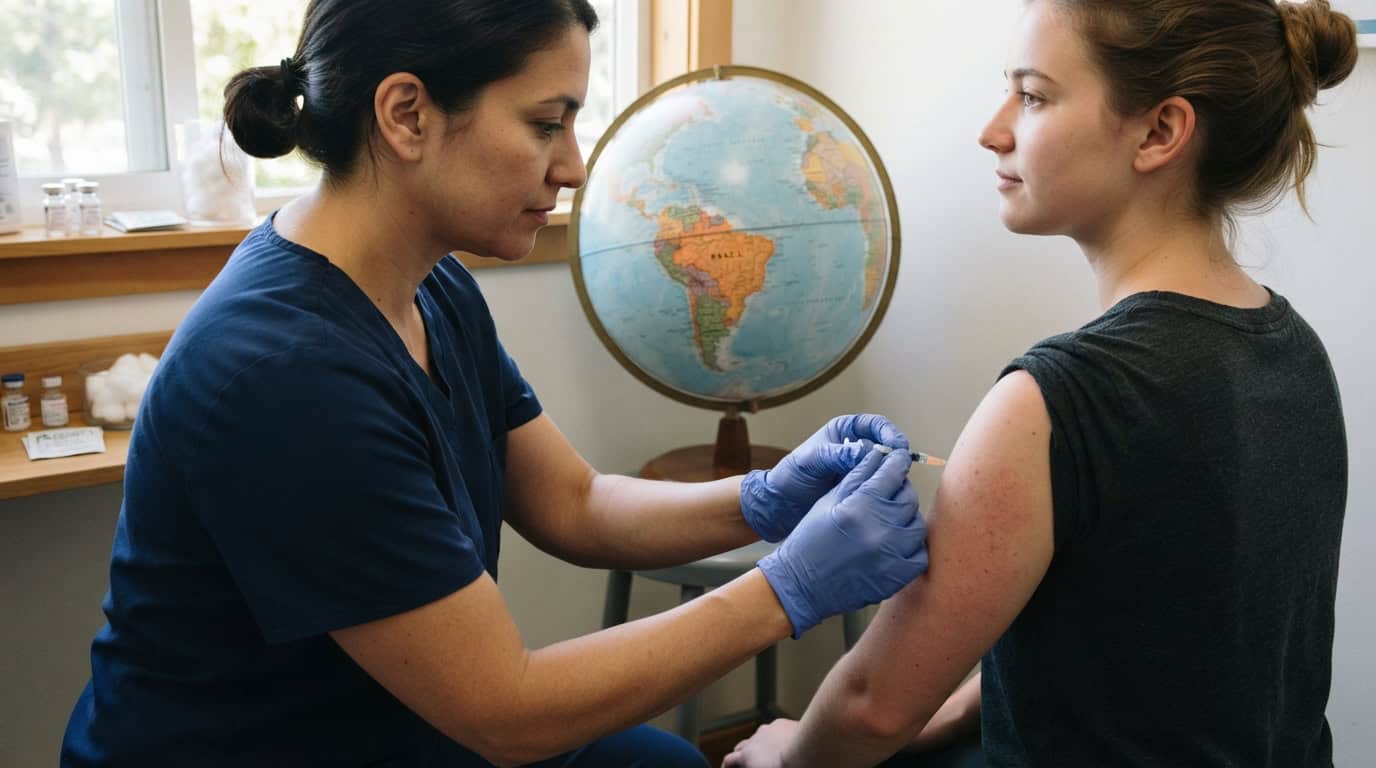
The examples below show why it helps to check both entry requirements and health recommendations for each destination.
For Ghana, arriving travelers aged 9 months or older must be vaccinated, and the CDC also recommends vaccination for everyone in that age group. CDC’s Ghana guidance explains both the entry rule and the health recommendation.
In Brazil, the CDC recommends vaccination for travelers aged 9 months or older visiting listed states, including Amazonas, Rio de Janeiro, and São Paulo. The vaccine isn’t required for entry, so the locations on your itinerary matter. CDC’s Brazil guidance lists the regions covered.
Ecuador requires proof for travelers aged 1–60 who have resided for more than 10 days in Colombia, Peru, Brazil, or Bolivia, as well as travelers arriving from the Democratic Republic of the Congo or Uganda. The vaccine must be given at least 10 days before entry. CDC’s Ecuador guidance outlines the conditions.
These examples show how rules can differ. They aren’t a complete or permanent country list.
How Far Ahead Should You Plan Travel Vaccines?
Plan travel vaccinations 4–6 weeks before departure to allow time to build immunity and get the best protection, as CDC guidance advises.
Vaccine schedules and international paperwork can both affect your timing. Use this sequence to keep them in view:
- If your departure is coming up soon, contact a travel-health professional promptly. A short timeline is a reason to ask what options remain, not to assume a vaccine or certificate is unnecessary.
- Confirm how many doses a vaccine requires and when to take them. For people aged 6 or older, the CDC’s oral typhoid schedule involves four pills taken every other day, with the course completed at least two weeks before travel.
- If yellow-fever vaccination applies, check that your International Certificate of Vaccination or Prophylaxis (ICVP) is properly completed. CDC says it becomes valid 10 days after primary vaccination and remains valid for the vaccinee’s lifetime under the International Health Regulations (2005).
How Do Your Itinerary And Health Change Advice?

Two travelers visiting the same country may receive different recommendations. Age, health, vaccination history, route, trip length and style, and planned activities all shape the medical assessment. A clinician can consider whether you’re planning a brief city stay or a longer journey along a different route, as well as your medical conditions and previous doses. The CDC’s typhoid prevention guidance lists the oral typhoid vaccine for people aged 6 or older: four pills taken every other day, with the course completed at least two weeks before travel and a booster every five years. The injectable option is for people aged 2 or older: one dose at least two weeks before travel, with a booster every two years. Ask a clinician which option suits your age, health, and schedule.
Where Can You Verify Country Entry Rules?
We recommend checking country entry rules through CDC Travelers’ Health, the CDC Yellow Book, the World Health Organization, and relevant authorities. This routine can help you distinguish health recommendations from border requirements and catch changes before departure.
- Check the CDC Travelers’ Health destination page for country-specific traveler guidance and entry information.
- Consult the CDC Yellow Book’s country chapter for yellow-fever recommendations and entry requirements.
- Review the WHO’s International Health Regulations (2005) guidance: countries may require yellow-fever proof from incoming or outgoing travelers, and a WHO-approved dose documented on an International Certificate of Vaccination or Prophylaxis (ICVP) is accepted as valid for life.
- Recheck official guidance close to departure, then confirm entry details with an appropriate health professional or the relevant authorities.
Make A Vaccine Plan Before Departure
Before booking a travel-health appointment, put your complete route on one page. Include countries and regions, dates, stopovers, land crossings, recent stays elsewhere, and planned activities. Add your age, health conditions, medicines, and vaccine dates from your records. Use the CDC Travelers’ Health guidance to flag questions for each country instead of treating a multi-country trip as a single destination.
At your appointment, ask the clinician to sort each vaccine into one of three categories: routine, recommended for your route, or required for entry, as described in CDC Travelers’ Health guidance. Ask which details in your itinerary or health history affect the advice, whether a dose is suitable for you, and whether your records show that you’re up to date.
If yellow-fever proof applies, confirm where vaccination and the ICVP can be completed. The International Health Regulations allow countries to require proof from arriving or departing travelers. Check the rule for each border crossing and keep the certificate with your travel documents.