
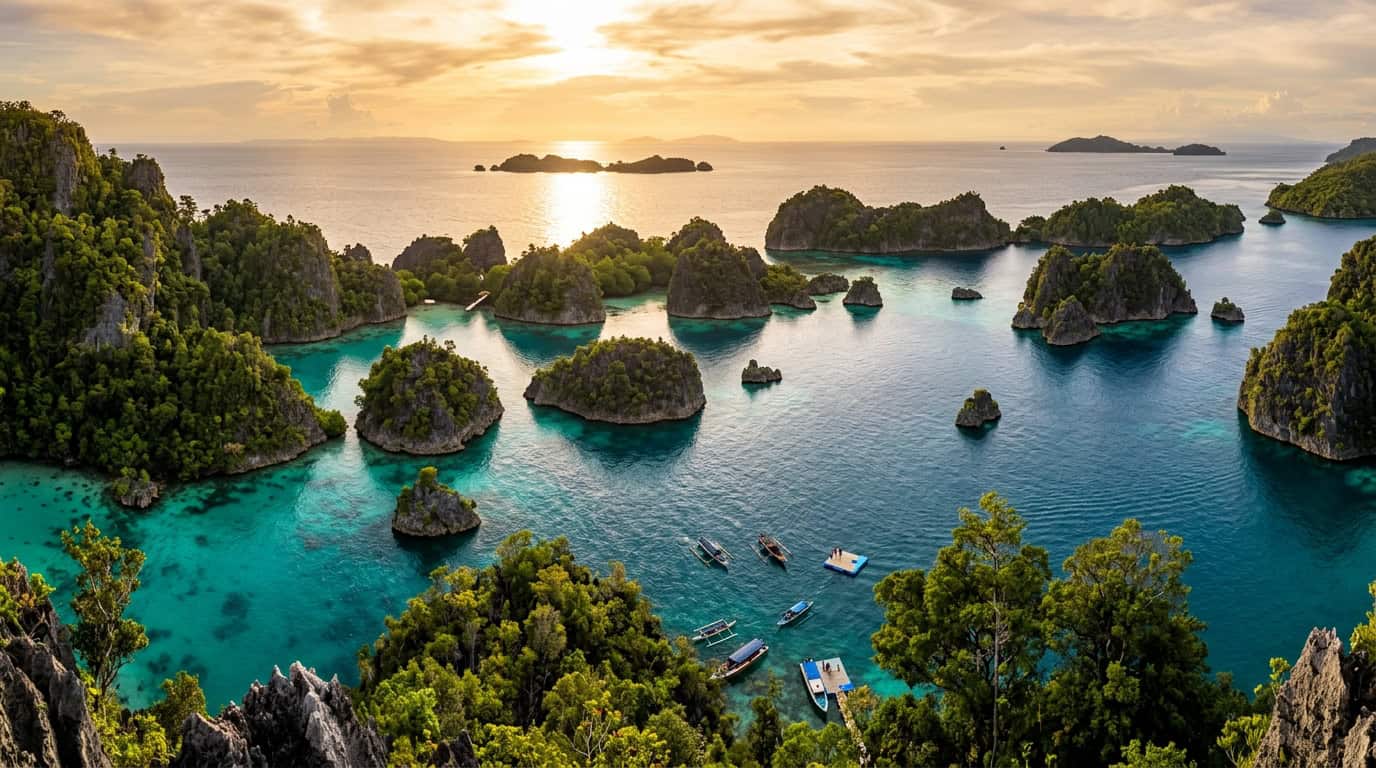
When my boat first glided through the emerald maze of limestone karst islands in Southwest Papua, I instantly knew I had stumbled onto the edge of the earth. Known as the “Four Kings,” this Indonesian archipelago sits at the heart of the Coral Triangle, harboring a mind-boggling 75% of all known coral species on the planet. Whether you dream of swimming alongside giant mantas or descending into record-breaking dive spots like Cape Kri, having a practical travel guide makes all the difference when visiting such a remote paradise.
Sorting out logistics between main hubs like Waigeo and Misool while keeping up with tourist fees can feel daunting from afar. Having spent weeks exploring these pristine turquoise lagoons and staying in local homestays, I gathered the best insider tips to help you plan an unforgettable trip. From marine conservation updates to hidden snorkeling spots, here is everything you need to map out your ultimate island adventure.
Key Takeaways
- Navigating Raja Ampat requires flying into Sorong, securing mandatory marine conservation permits with cash in Indonesian Rupiah, and booking island boat transfers well in advance.
- Travelers can customize their expedition by choosing local Papuan homestays for authentic cultural immersion, luxury liveaboards for reaching remote dive sites, or combining both experiences.
- Preserving the archipelago’s unmatched marine biodiversity requires eco-conscious practices, including using reef-safe mineral sunscreen, packing out all non-biodegradable waste, and respecting Papuan village customs.
Navigating Permits, Regional Boats, and Island Transfers
My journey into the world’s most biodiverse waters began the moment my flight touched down at Domine Eduard Osok Airport in Sorong. As the primary gateway to Raja Ampat, Sorong is where you handle the essential first steps of your expedition. Before setting sail, every traveler must purchase the mandatory Environmental Maintenance Fee tag along with the local regional tourism permit. I found it easiest to clear these payments at the official harbor office or tourism desk right after landing, making sure to have cash in Indonesian Rupiah ready. Securing these permits directly supports the region’s remarkable marine conservation efforts, protecting the vibrant coral reefs you are about to explore.
- Step 1: Fly into Sorong (SOQ) and clear the mandatory Marine Park Entry Permit and local tourism fee.
- Step 2: Take a short taxi ride to the Sorong harbor to catch the express ferry to Waisai on Waigeo Island.
- Step 3: Coordinate with your eco-resort or homestay host for a private speedboat transfer to your final island destination.
Once your permits are tucked safely in your daypack, the real adventure begins at the bustling harbor where you catch the public express ferry to Waisai. The two-hour ride across the deep turquoise sea offers a relaxing transition into island time as local music plays softly over the ocean breeze. Arriving at Waisai harbor on Waigeo Island, you will immediately notice the shift toward remote living, where traditional wooden piers replace paved roads. From here, island transfers rely entirely on scheduled resort speedboats or arrangements made directly with your homestay host. Riding across the glassy waves toward islands like Kri or Misool, watching limestone karst towers rise from the water, makes every bit of travel planning completely worth it.
Getting around the islands requires a bit of patience and flexibility, as boat schedules often shift with the changing tides and weather patterns. I always recommend carrying plenty of physical Rupiah, since local boat captains and rural homestays do not have card terminals out in the archipelago. Booking your speedboat pickups well in advance ensures smooth connections between the main ferry hub and your quiet beachfront hut. Taking these logistical steps opens the door to an underwater world filled with hundreds of coral species and sea life found nowhere else on Earth. The extra effort spent arranging regional transfers vanishes the second you step off the boat into clear, warm equatorial waters.
Choosing Between Liveaboards, Homestays, and Pristine Dive Sites
When I first started planning my journey through Raja Ampat, deciding how to explore this aquatic paradise was my biggest hurdle. Choosing between a local Papuan homestay and a luxury liveaboard ultimately comes down to the kind of experience you want. Settling into a stilted wooden bungalow on a quiet shore allows you to wake up to the sounds of gentle waves, connect directly with indigenous hosts, and support eco-friendly community tourism. On the other hand, sailing on a traditional wooden liveaboard offers comfort and direct access to distant reef systems far beyond the reach of daily boat trips. Both options deliver pure magic, so knowing your budget, travel pace, and diving goals will help clarify your best path forward.
- Papuan Homestays: Ideal for eco-conscious travelers seeking rich cultural immersion, authentic local meals, and budget-friendly island living.
- Luxury Liveaboards: Best for dedicated divers who want maximum time underwater, effortless boat transit, and access to remote offshore reefs.
Regardless of where you rest your head at night, the incredible sights of this archipelago will leave you completely spellbound. During my own dives around Cape Kri, I was surrounded by dizzying schools of fish, quickly understanding how marine biologists set world records here by counting hundreds of species in a single dive. Climbing the wooden stairs to the iconic Pianemo lookout revealed a postcard-perfect view of turquoise lagoons cradled by sharp limestone islets. Pushing even further north to Wayag’s dramatic karst islands felt like reaching the edge of the world, where pristine white beaches meet labyrinthine waterways teeming with baby reef sharks.
To get the absolute best of both worlds, I often recommend blending a few days at a homestay with a dedicated liveaboard itinerary. Regional boat transit between main island clusters like Waigeo and Misool requires careful scheduling, so booking your local water taxis or ferry legs in advance is essential for a smooth trip. Starting at a village homestay gives you time to acclimate, soak in genuine Papuan hospitality, and explore shallow house reefs before stepping aboard a vessel for deeper ocean excursions. By thoughtfully balancing your itinerary, you will not only witness the world’s most biodiverse marine ecosystems, but you will also form lasting connections with the remarkable communities who protect them.
Protecting Marine Life and Eco-Conscious Travel Tips
When I first dipped my mask into the crystal-clear waters near Cape Kri, the vibrant wall of living coral and fluttering reef fish took my breath away. Preserving this miraculous ecosystem requires us to be mindful divers and swimmers whenever we enter the ocean. To witness gentle giants like reef and oceanic manta rays gliding gracefully around underwater cleaning stations, plan your journey during the peak season between October and April when plankton blooms attract them in massive numbers. Before diving in, always ensure your sunscreen is strictly mineral-based and reef-safe, as common chemical alternatives can cause severe coral bleaching. I also practice fine-tuned neutral buoyancy on every dive to prevent accidental fin strikes against delicate coral, keeping the surrounding habitats intact.
- Choose family-run homestays or local eco-vessels that directly empower Papuan island communities.
- Pack out all non-biodegradable trash, including spent batteries and plastic packaging, back to mainland hubs.
- Request permission before photographing community elders, children, or private residential areas in villages.
- Dress modestly when walking through local settlements, keeping shoulders and knees covered out of cultural respect.
Staying at family-run island homestays offered me a profound connection to the Papuan host families who have acted as guardians of these seas for generations. Supporting these grassroots accommodations ensures your travel funds directly benefit the locals maintaining Marine Protected Areas rather than external operators. While exploring island villages on Waigeo or Misool, remember to dress respectfully by covering your shoulders and knees whenever you step off the beach. I always ask for permission before taking photographs of residents, taking time to learn a few basic phrases in Bahasa Indonesia to share genuine smiles with host families. Leaving a positive footprint means honoring both the magnificent wildlife beneath the surface and the living culture above it.
Traveling between remote islands in this sprawling archipelago requires thoughtful preparation to minimize environmental waste in fragile ecosystems. I recommend packing reusable water bottles with integrated purification filters, solid toiletry bars, and heavy-duty dry bags to secure your supplies during regional boat transits. Because remote marine parks lack modern recycling facilities, bringing all personal waste back to major transit cities like Sorong is vital for proper disposal. By traveling intentionally and choosing low-impact transit options, we help safeguard global biodiversity so future generations can marvel at its untamed beauty.
Ready to Experience the Magic of Raja Ampat?
Standing on the wooden deck of a local ferry as the limestone karsts of Raja Ampat come into view is a moment I will never forget. From diving the legendary currents of Cape Kri to watching manta rays glide effortlessly past vibrant coral reefs, this crown jewel of the Coral Triangle lives up to every dream. Whether you choose the luxury of a liveaboard cruising between Misool and Waigeo or opt for an authentic eco-stay at a community homestay, planning your transit and permits in advance ensures a seamless journey. With 75 percent of the world’s coral species thriving in these protected waters, every dive and snorkel session feels like stepping into an untouched underwater sanctuary. Beyond the unbelievable marine life, taking the time to understand local boat schedules and regional conservation fees allows you to explore responsibly and effortlessly.
A journey to the Four Kings requires a bit of extra effort, but the rewards far exceed the long flights and boat rides. I still catch myself dreaming about those sunrise kayak trips through hidden lagoons and evenings spent sharing fresh seafood with local hosts under a star-filled Papuan sky. If you have been waiting for a sign to book that dream dive trip or eco-expedition, consider this your official invitation. Pack your reef-safe sunscreen, prepare your gear, and get ready to experience the most biodiverse marine habitat on planet Earth. The pristine beauty of Raja Ampat will stay in your heart long after you leave its emerald waters.