
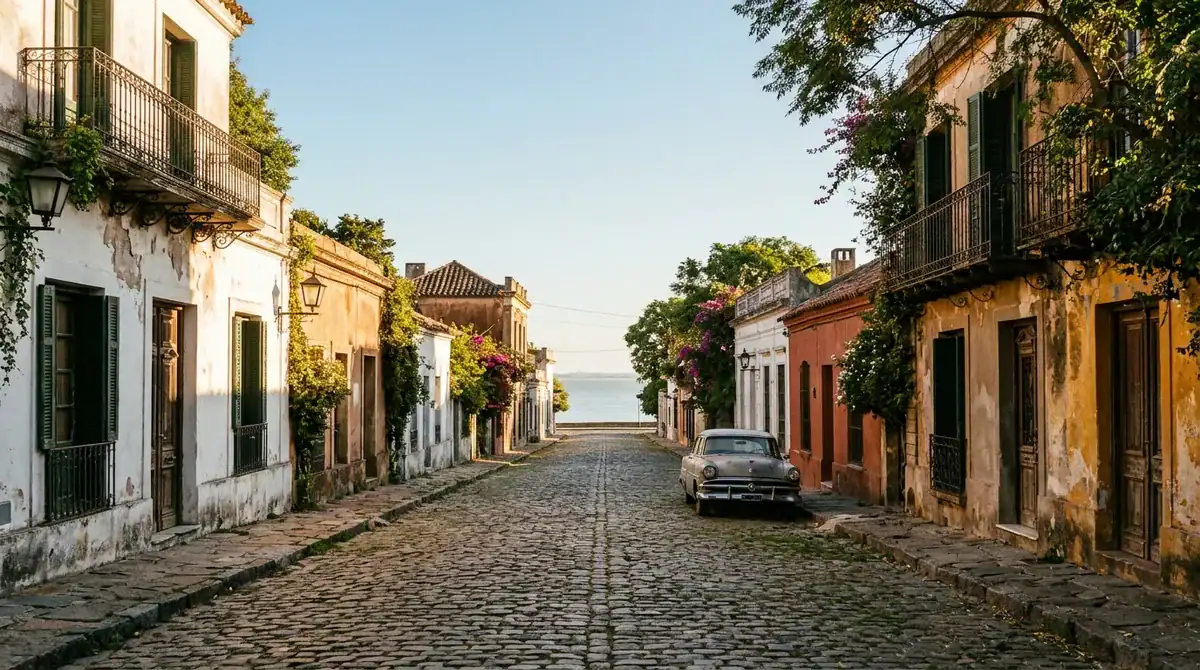
A Uruguay travel itinerary works best as a loop that starts in Montevideo, follows the Río de la Plata west to Colonia del Sacramento, and then runs east along the Atlantic coast. The route fits comfortably into a week or two. The first leg is the easiest: a 06:00 departure from Montevideo reaches Colonia by 08:45, and one-way fares on the route run about 579 Uruguayan pesos. Once you arrive, wander the cobbled lanes of the UNESCO-listed Historic Quarter, where colonial-era buildings still line streets that feel almost unchanged after centuries.
The coastal stretch takes longer than the map suggests. A 06:00 bus from Montevideo reaches La Paloma around 09:30 and La Pedrera around 09:45, so plan on nearly four hours of travel and build your days around those departure times. Fares rise the farther east you go, with La Pedrera costing about 819 pesos one way. Entry is simple for many visitors. The U.S. State Department says American citizens need no visa for stays of up to 90 days, though rules differ by nationality, so check yours before you go.
Key Takeaways
- A first trip to Uruguay works best as a loop that starts in Montevideo, runs west to Colonia del Sacramento and then heads east along the Atlantic coast, and a seven to ten day plan covers it well.
- Travelers riding Uruguay’s intercity buses should plan for nearly four hours on the coastal leg, since a 06:00 departure from Montevideo reaches La Paloma around 09:30 and La Pedrera around 09:45.
- Cabo Polonio needs its own planning because cars are not allowed inside the national park, and the round-trip transfer from Turismo Rocha costs about 470 pesos per person, with children under five traveling free.
- Summer visitors to Uruguay should book buses and beds early, since more than 1.3 million tourists came during the December 2025 to February 2026 season and seats on morning buses sell out first.
- U.S. citizens do not need a visa for stays of up to 90 days in Uruguay, though entry rules differ by nationality, so travelers should confirm their own requirements before booking flights.
How Many Days Do You Need for a Uruguay Trip?
A first visit to Uruguay works well in seven to ten days, and two weeks gives you room to add the inland north. The country is compact, so you spend far more time seeing places than riding between them, though the coastal legs still need a full morning.
Official figures show that visitors during the December to February summer season stay about eight nights on average, which lines up neatly with a seven to ten day plan. Here is how the nights can be divided by region:
- Seven days: two nights in Montevideo, two in Colonia del Sacramento and three on the coast, at Piriápolis or Punta del Este.
- Ten days: two nights in Montevideo, two in Colonia, three in Punta del Este and three on the Rocha coast, with time to linger on the beaches around La Paloma and La Pedrera.
- Fourteen days: the ten-day route plus four nights in the inland Litoral and Tacuarembó region, where Salto and Tacuarembó offer a very different pace.
Montevideo deserves at least two nights, since the city rewards slow evenings on the waterfront and a morning at its markets. Colonia can be done in one night, but two give you the Historic Quarter at dusk, when the old streets are quiet. On the Rocha coast, three nights leave room for a day trip to Cabo Polonio, where cars are not allowed inside the national park, so you will need a transfer.
If your time is short, cut the inland Litoral and Tacuarembó region first. It sits well away from the coastal loop and adds the most travel hours. If you still need more room, reduce Colonia to a single night rather than skipping it, because the town is an easy and rewarding stop on the way out of the capital.
When Is the Best Time to Visit Uruguay?
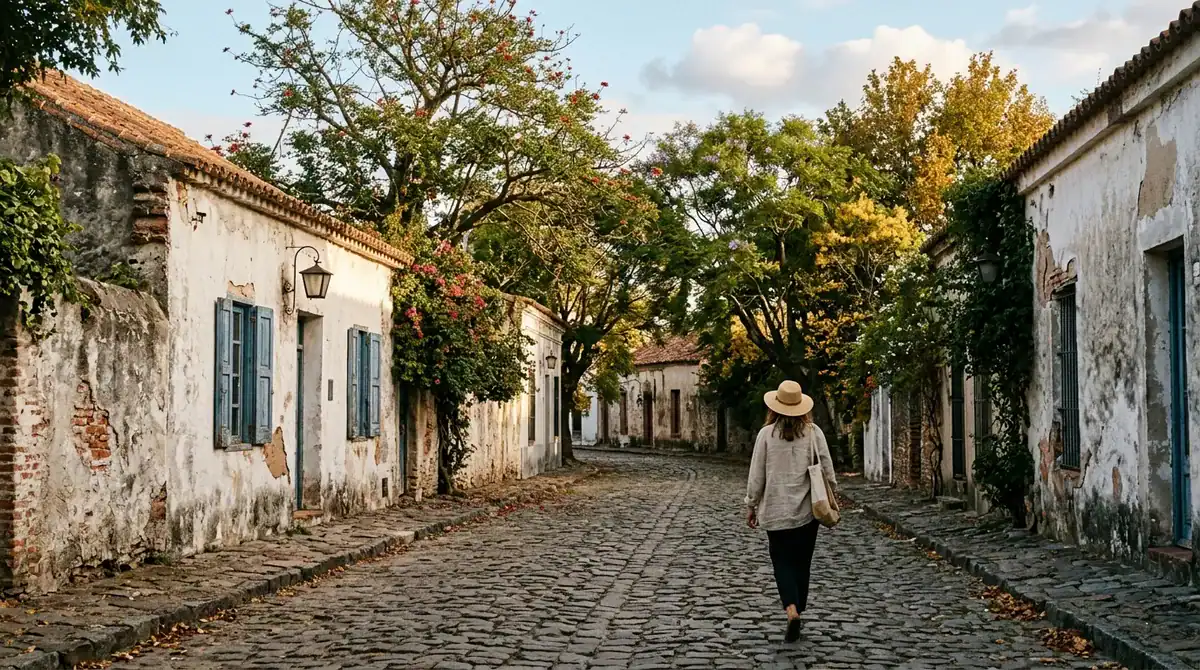
The best time to visit Uruguay is during the shoulder months, when the weather is mild and the crowds thin out. Summer, from December to February, is the peak, and it is when the coastal beaches are busiest. Official figures show more than 1.3 million tourists visited during the December 2025 to February 2026 summer season, so book buses and beds early, especially for Punta del Este and the Rocha coast.
Summer days on the coast have a lively rhythm. Beaches fill up by late morning, promenades buzz into the evening, and seats on the morning buses sell out first. Demand also pushes prices up, so the same room can cost noticeably more than it does in quieter weeks.
Cooler months change the picture. Punta del Este and La Paloma become much quieter, the wind picks up off the Atlantic, and you may have a long stretch of sand to yourself for an afternoon walk. Some seasonal cafés and rental shops keep shorter hours, so check before you plan a lunch stop around them.
Colonia and Montevideo are pleasant year-round for walking. The cobbled lanes of Colonia and the long waterfront of Montevideo suit a light jacket as well as summer sunshine.
Inland areas follow their own climate. Salto and Tacuarembó can be hot in summer and noticeably cooler in winter, so pack for the season you choose rather than for the breezy coast.
How Do You Get Around Uruguay Without a Car?
Most travelers get around Uruguay by intercity bus, and the Montevideo, Colonia and coast loop works without a rental car. Frequent services link Montevideo with Colonia and the coastal towns, so the bus network forms the backbone of this route. Fares from Montevideo typically run about 466 pesos one way to Punta del Este and about 786 pesos to La Paloma.
Buses keep fixed timetables, so the schedule sets the shape of your day. Each eastbound leg adds time, and the trip to La Pedrera is the longest. Build a rest stop into your plans rather than trying to squeeze in a second town before dark.
Renting a car gives you flexibility for inland stops and for quieter beaches that buses don’t reach easily. The catch is that driving takes longer than the map suggests on rural roads, where towns sit far apart and speeds stay low. Parking near the busiest beaches in Punta del Este can also be hard to find in summer. A car is worth it if you plan several inland stops or want to set your own pace. For a straightforward coastal loop, buses are less stressful.
Cabo Polonio needs its own plan. Cars are not allowed inside the national park, and the round-trip transfer from Turismo Rocha costs 470 pesos per person, with children under five traveling free.
Before you lock in your dates, work through these steps:
- Check the bus timetable for your exact departure and arrival times on each leg.
- Add a generous buffer between the bus arrival and your hotel check-in.
- Confirm your hotel’s check-in time and late arrival policy before you book the room.
- Reserve your Cabo Polonio transfer for a day when the morning bus timing fits your plan.
Days 1–3: Montevideo and a Day Trip to Colonia del Sacramento
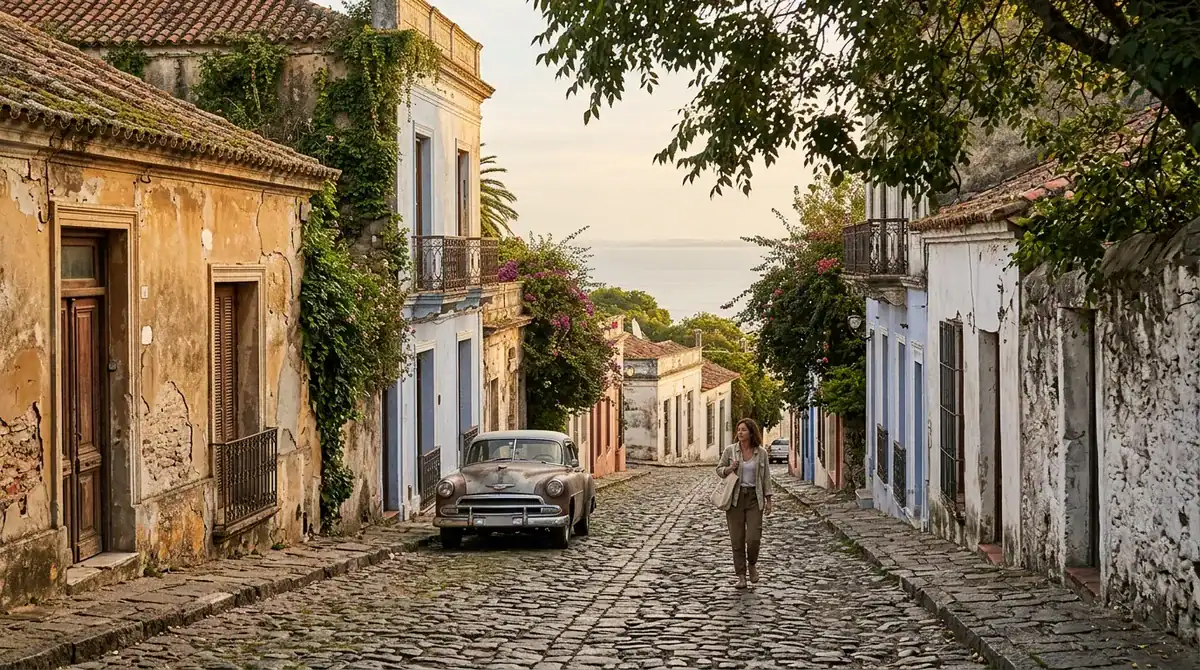
Spend your first two nights in Montevideo, where the city’s oldest streets are a short walk from the water. Start in Ciudad Vieja, the old quarter on a small peninsula, and wander past faded facades, carved doorways and secondhand bookshops. Climb toward the old harbor for views back over the port, then settle into a café for a long, unhurried lunch.
The Rambla is the city’s great waterfront promenade, and it is where Montevideo slows down. Locals jog, cycle and stroll along it with thermoses of mate tucked under their arms. Pick a spot on the sea wall in the late afternoon, when the light turns the Río de la Plata a soft gold and the evening crowd begins to gather.
Save an evening for the Mercado del Puerto, a riverside market built around an iron structure that has housed food stalls for generations. Smoke drifts from the parrillas, where cooks grill beef, sausages and blood sausage over wood embers. Order a plate of mixed grilled meat, then finish with a cup of mate in one of the nearby cafés, where the bitter herbal drink is poured and passed among friends.
On the third day, take the early bus to Colonia del Sacramento and give yourself a full day to explore. The Historic Quarter was inscribed on the UNESCO World Heritage List in 1995 under criterion (iv), and it is easy to see why as soon as you step onto its cobbled streets. Walk slowly, because the stones are uneven and the lanes curve in unexpected directions. Pass the old city gate, browse the colonial-era houses with their low walls and wooden shutters, and look for flowers spilling over courtyard gates.
Make time for the lighthouse, where the views stretch across the water and the old port. Then find a riverside terrace for a late lunch of grilled meat and a pot of mate. As the afternoon fades, return to the riverside to watch the sun sink, turning the water and the old walls a rosy shade of orange. Catch the evening bus back to Montevideo, tired and happy, with the lanes of Colonia still fresh in your mind.
Days 4–7: The Coast From Punta del Este to Rocha
The coast begins in Piriápolis, a seaside town that climbed up a hillside and still has the air of a grand resort. Spend a slow afternoon on its wide sand beach, then take the hill road for views over the bay as the light softens.
Punta del Este is the glamour stretch of the trip. Yachts fill the marina, and the peninsula’s boutiques and sunlit terraces draw a stylish crowd. Walk out to Playa Brava, where the Atlantic rolls in with real force, and stop at the famous hand sculpture rising out of the sand. Book dinner ahead in summer, then linger by the water as the marina lights reflect across the bay.
East of Punta del Este, the mood turns quieter. The Rocha coast is a run of long beaches, pine-shaded lanes and small fishing harbors, and the towns feel more like hideaways than resorts. La Paloma is the bigger of the two, with a broad sweep of sand, fishing boats drawn up on the shore and cafés that serve grilled fish with a view. Give yourself a full morning there before moving on, since the bus schedule rewards early starts.
La Pedrera is smaller still. Its rocky shoreline and low houses make it a good place to slow down, read on a sea wall and watch the fishermen head out at dawn. Evenings here are almost silent apart from the waves, and the sky over the Atlantic turns deep orange before the stars come out.
Cabo Polonio is the highlight of this leg. The national park is a landscape of wind-blown dunes, weathered rock and a small community of wooden houses, and sea lions often sprawl on the rocks just offshore. Cars are not allowed inside the park, so you reach it by transfer from the Rocha coast. The round-trip transfer costs about 470 pesos per person, and children under five ride free. Go for a day to walk the dunes and watch the sea lions, or stay overnight in simple accommodation so you can hear the surf once the day-trippers have left.
Where Do Salto and Tacuarembó Fit Into the Trip?

The inland add-on suits travelers who have two weeks and want a slower side of Uruguay. Four extra nights, two in the Litoral near Salto and two around Tacuarembó, turn a coastal loop into a trip with a very different rhythm.
The Litoral is the warm, green northwest of the country, where wide rivers wind past orange groves and the pace drops soon after leaving the coast. Salto makes a relaxing stop on the way north. Spend one afternoon in the thermal complexes around the city, where warm mineral water is the perfect remedy for days of bus travel. Keep the next morning for a slow walk along the river before you continue.
Tacuarembó is the heart of gaucho country, and the estancias that surround it are where rural traditions feel most alive. Two nights at a working ranch give you time to ride across the fields with a local guide, watch the cattle work and sit down to a long lunch of slow-roasted beef, bread and red wine at a wooden table. Evenings are quiet, with wide skies and the sound of horses in the paddock.
Getting there takes more planning than the coastal legs. Distances are longer, towns sit far apart and many estancias lie off the main roads. A rental car gives you the most freedom, letting you move between Salto, Tacuarembó and the ranches on your own schedule. Without a car, build the route around a planned bus connection, check the timetable for each leg and ask your estancia whether it can arrange pickup from the nearest bus stop. Allow a full day for the journey rather than trying to fit it between two other stops.
This add-on is best for travelers with more time and a taste for quiet rural life. If your trip is seven or ten days, skip it and enjoy the coast at a leisurely pace instead. For those who have the time, though, the Litoral and Tacuarembó offer a side of Uruguay that few visitors see.
What Should a Uruguay Trip Budget Look Like?
Most of a Uruguay trip budget goes to beds, buses, meals, activities and, if you visit it, the Cabo Polonio transfer. Visitors in the December 2025 to February 2026 summer season spent an average of US$713 each, and tourism spending for the season reached about US$928 million. Those figures give you a realistic starting point, but your own costs will shift with the season and your travel style.
- Beds: Rooms in Punta del Este and along the Rocha coast cost noticeably more in summer, so book early or choose a guesthouse a short walk from the bus stop.
- Buses: Intercity fares are modest, and buses are the cheapest way to cover the whole loop.
- Meals: Restaurants in Montevideo and Punta del Este cost more than bakeries and fish stalls in smaller coastal towns, so mix sit-down lunches with simple meals.
- Activities: Walking the Historic Quarter and the Rambla is free, while guided rides on an estancia near Tacuarembó add to the bill.
- Cabo Polonio transfer: Budget for the round trip, which is a fixed cost per person, and remember that children under five ride free.
A car or private transfer costs more than the bus, but on the coast it saves time. You can skip fixed departure times and reach quieter beaches that buses serve less often.
Entry is straightforward for many visitors. U.S. citizens do not need a visa for stays of 90 days or less, but requirements differ by nationality, so confirm yours before you book flights.
Uruguay has also proposed a total IVA exemption for non-residents during the 2027 summer season, covering gastronomy, car rentals without a driver and event services. Check the final rules before you travel, since a proposal can change.
For safety, use official bus terminals for departures and luggage storage. Keep valuables close in busy spots such as the Mercado del Puerto and the Rambla, and check local advice before you set out.
Planning Your First Trip to Uruguay

Start by choosing your length. Seven days gives you a quick taste of Montevideo, Colonia and the coast, while ten days lets you settle into the beaches around La Paloma and La Pedrera. Fourteen days adds the inland Litoral and Tacuarembó, so pick the option that matches your interests and the time you can spare.
Next, check the bus timetables before anything else, then book summer buses and beds early, especially from December to February. Seats on the morning services to Punta del Este and the Rocha coast go first. Keep the route simple: start in Montevideo, take a day trip to Colonia del Sacramento, then move east along the coast one town at a time.
Decide on Cabo Polonio before you leave home. Cars cannot enter the park, so you will need a transfer, and its times must fit around your bus connections. Reserve your seat early, and your day on the dunes will feel relaxed rather than rushed.
Putting Your Route Together
Your next step is to sketch the route on paper. Start in Montevideo, follow the coast to Colonia del Sacramento, then run east toward La Paloma and La Pedrera. Choose seven, ten or fourteen days, and write the dates beside each town so you can see where the time goes.
Then open the COT timetable and compare the 06:00 departures from Montevideo with your flight times and hotel check-in. If an early bus clashes with your arrival, move that night’s stay to the town where you will wake up, rather than trying to make a tight connection.
In 2024, Uruguay XXI recorded 3,341,829 tourists entering the country, so summer beds on the coast can fill quickly. Reserve your first night in Montevideo and your coastal rooms early, then lock in the Cabo Polonio transfer once your bus times are settled.
Keep one spare day in the middle of the trip. Atlantic winds can turn an afternoon walk into a chilly one, and a flexible morning lets you wait out the weather or linger over grilled fish in La Paloma. Those unplanned hours often become the stories you remember longest.