
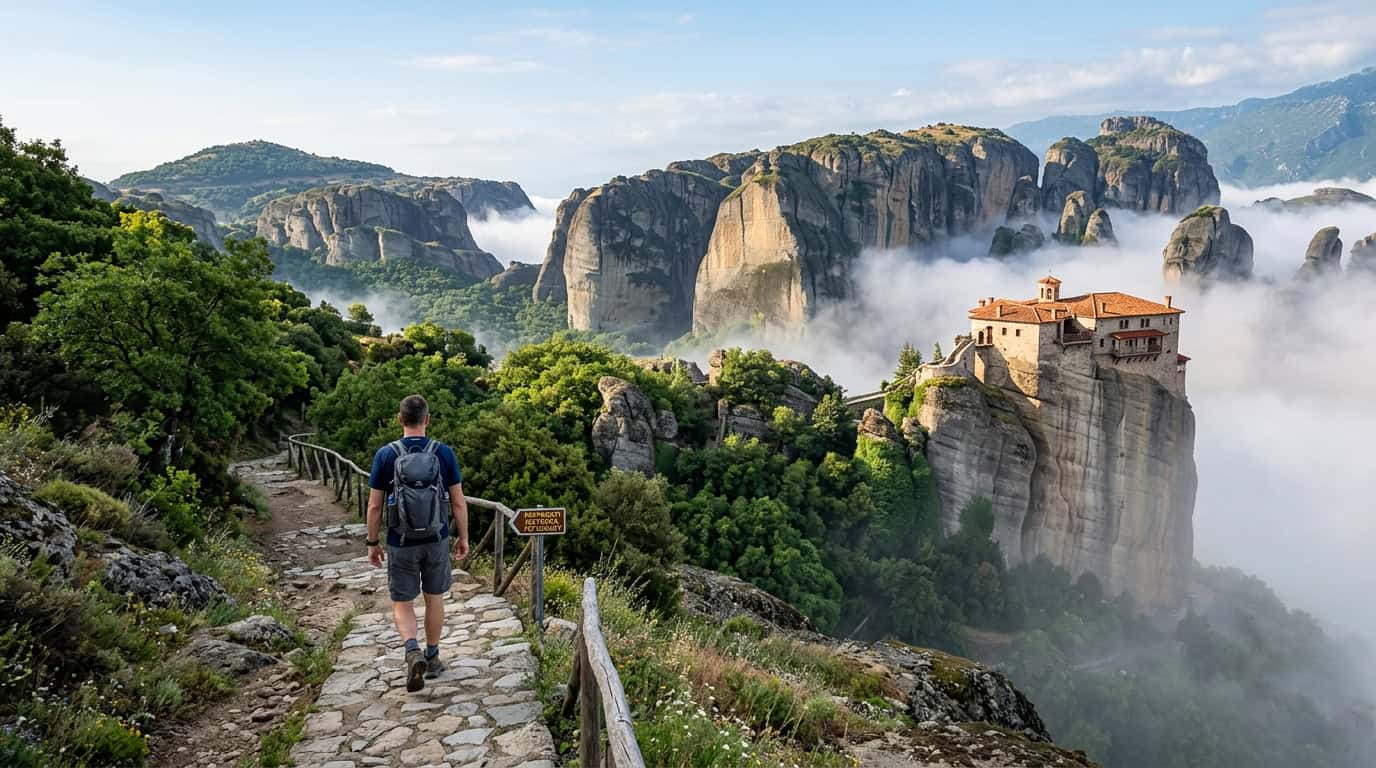
Standing at the base of the massive sandstone pillars in Kalambaka, I remember feeling a sense of awe that no photograph could ever truly capture. These towering rock formations seem to touch the clouds, but the best way to understand their scale is to lace up your boots and explore the meteora monastery hiking trails. This ancient network of paths, spanning between 35 and 100 kilometers, offers a journey through history that connects the vibrant towns of Kastraki and Kalambaka to the sky-high sanctuaries above.
Winding through lush forests and ascending steep stone staircases, you will find that these easy-to-moderate routes turn a standard sightseeing trip into a deeply personal pilgrimage. Most loops involve a manageable elevation gain of 200m to 500m, allowing you to reach the six active monasteries in about four to five hours of steady trekking. Be sure to carry small change for the entrance fees, usually €3 to €5 per site, as you step out of the modern world and into a place where nature and spirituality have coexisted for centuries.
Key Takeaways
- Hiking the 35 to 100 kilometers of ancient Byzantine footpaths offers a deeper, more spiritual connection to Meteora than traditional bus tours.
- Expect a moderate physical challenge with elevation gains between 200m and 500m, requiring four to five hours to complete a loop of the six active monasteries.
- Visitors must carry small cash denominations for entrance fees—typically €3 to €5 per site—as the monasteries generally do not accept credit cards.
- Adhere to a strict dress code by covering shoulders and wearing long trousers or skirts; carry a lightweight sarong to easily transition from the trail to the sacred sites.
Navigating The Ancient Byzantine Footpaths
Walking in the footsteps of monks who first ascended these towering sandstone pillars in the 14th century is a humbling experience that connects you directly to the soul of Greece. These ancient Byzantine footpaths were once the only lifelines between the secluded hermitages and the world below, used for transporting supplies and providing a silent space for meditation. As I trekked through the dense oak forests, the rhythmic sound of my boots on the weathered stone felt like a bridge across time. The historical significance of these trails adds a layer of spiritual depth to the physical challenge, making every steep climb feel like a purposeful journey toward the sky.
The modern trail network offers an impressive 35 kilometers of primary paths that weave through the dramatic landscape, connecting the six remaining active monasteries. While some local estimates suggest the total ancient network of paths reaches nearly 100 kilometers when including secondary routes, the main loops are remarkably accessible and well marked for active travelers. You can expect a moderate physical challenge with elevation gains typically ranging between 200 and 500 meters, which provides a satisfying workout without being overwhelming. Most hikers find that a standard loop takes about four to five hours, allowing plenty of time to stop for photos of the gravity defying architecture.
To make the most of your journey, I recommend starting your hike early in the morning from either Kalambaka or Kastraki to beat the Mediterranean heat. Remember to carry small bills in cash, as the entrance fees for the monasteries are five euros for the Great Meteoron and three euros for the others. The terrain is generally rated as easy to moderate, but you will encounter several steep stone staircases as you approach the monastery gates. Reaching the summit of a trail and looking out over the stone forest is a moment of pure inspiration that truly justifies every bit of effort spent on the ascent.
Trekking From Kalambaka To The Holy Trinity
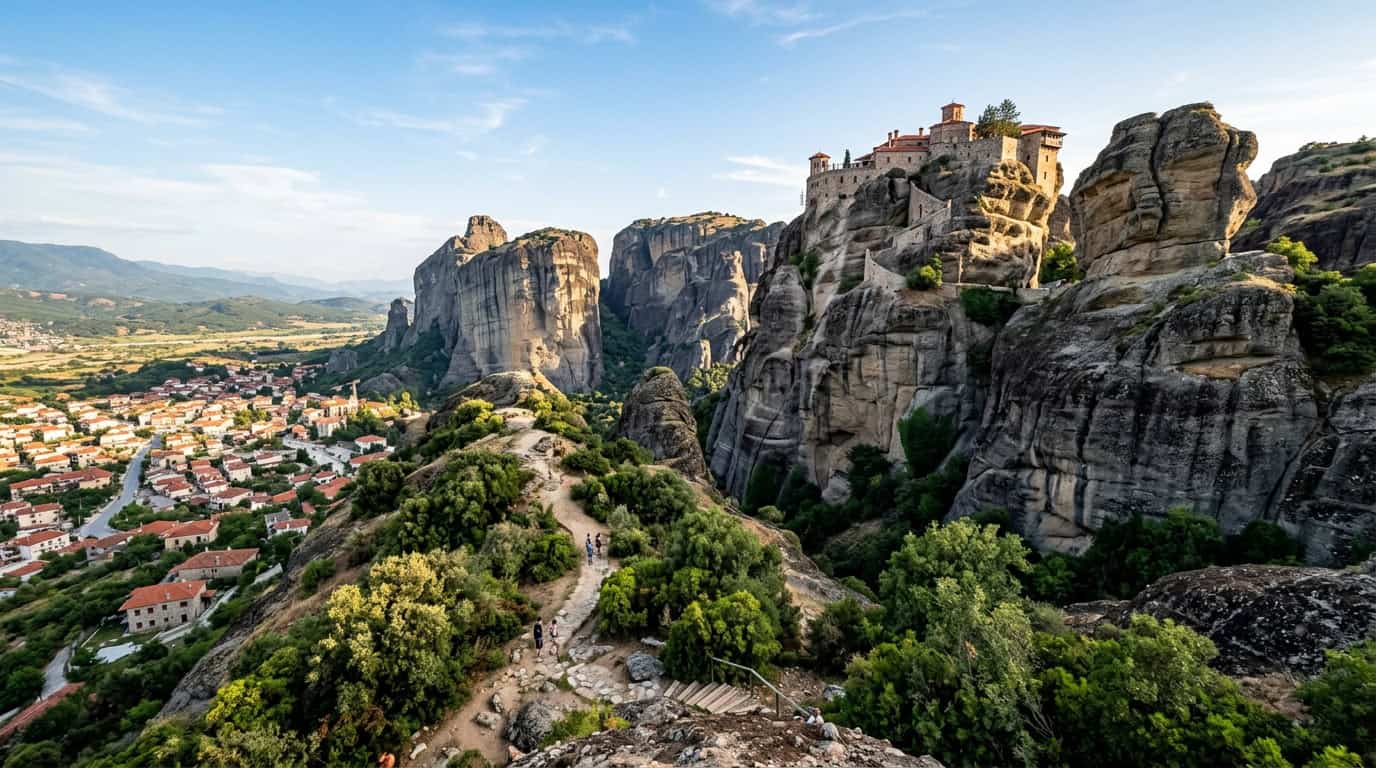
The trek from the bustling town square of Kalambaka toward the Monastery of the Holy Trinity is a journey that feels like stepping back into a more spiritual era. As you leave the paved streets behind, the trail quickly transforms into a rugged path framed by the massive, prehistoric rock pillars that define the skyline. The ascent is admittedly steep, requiring a steady pace and a bit of stamina, but the physical challenge only adds to the sense of accomplishment. I remember stopping several times just to catch my breath and marvel at how the town below seemed to shrink with every step. The air grows cooler and the silence deeper as you climb higher into this ancient, stone forest.
Once you reach the base of the monastery, you are faced with the final hurdle of roughly 140 stone stairs carved directly into the rock face. These steps can be narrow and uneven, so I highly recommend wearing shoes with excellent grip and taking your time to find a rhythm. My best tip for handling this section is to focus on the view behind you whenever you need a break, as the panoramic vista of the Peneios River valley is truly breathtaking. It is helpful to carry small bills for the entrance fee, as the monks typically only accept cash for the three euro ticket. Reaching the summit feels like a reward for both the body and the soul, offering a rare perspective on how history and nature can exist in perfect harmony.
Exploring The Secret Caves Of The Rock Forest
Stepping onto the winding trails of the Rock Forest feels like entering a living museum where the whispers of ancient hermits still linger in the air. This eight kilometer loop is my favorite way to escape the crowds, leading you through a lush canopy of oak and plane trees that frame the towering sandstone pillars. Along the path, you will encounter the weathered hollows of hermit dwellings carved directly into the stone, serving as a silent testament to the ascetic life of centuries past. It is a moderate hike with an elevation gain of about 300 meters, making it accessible for anyone with a decent pair of boots and a sense of adventure. I found that the true magic lies in the silence of the forest, which is a stark and beautiful contrast to the busy monastery courtyards above.
The crowning jewel of this particular route is the hidden Ypapanti monastery, a stunning structure that appears to be glued precariously to the side of a massive cliff. Unlike the six primary monasteries, this site is a secluded treasure that many travelers overlook, offering a profound sense of discovery as it emerges from the greenery. As you trek toward this vertical marvel, the trail offers sweeping views of the northern rock clusters that most tourists only see from a distance. Make sure to bring plenty of water and a few small bills, as most active sites require a modest entrance fee of three to five euros in cash. Reaching these heights on foot provides a physical connection to the environment that no bus tour can ever replicate.
Essential Gear For The Meteora Vertical Climbs
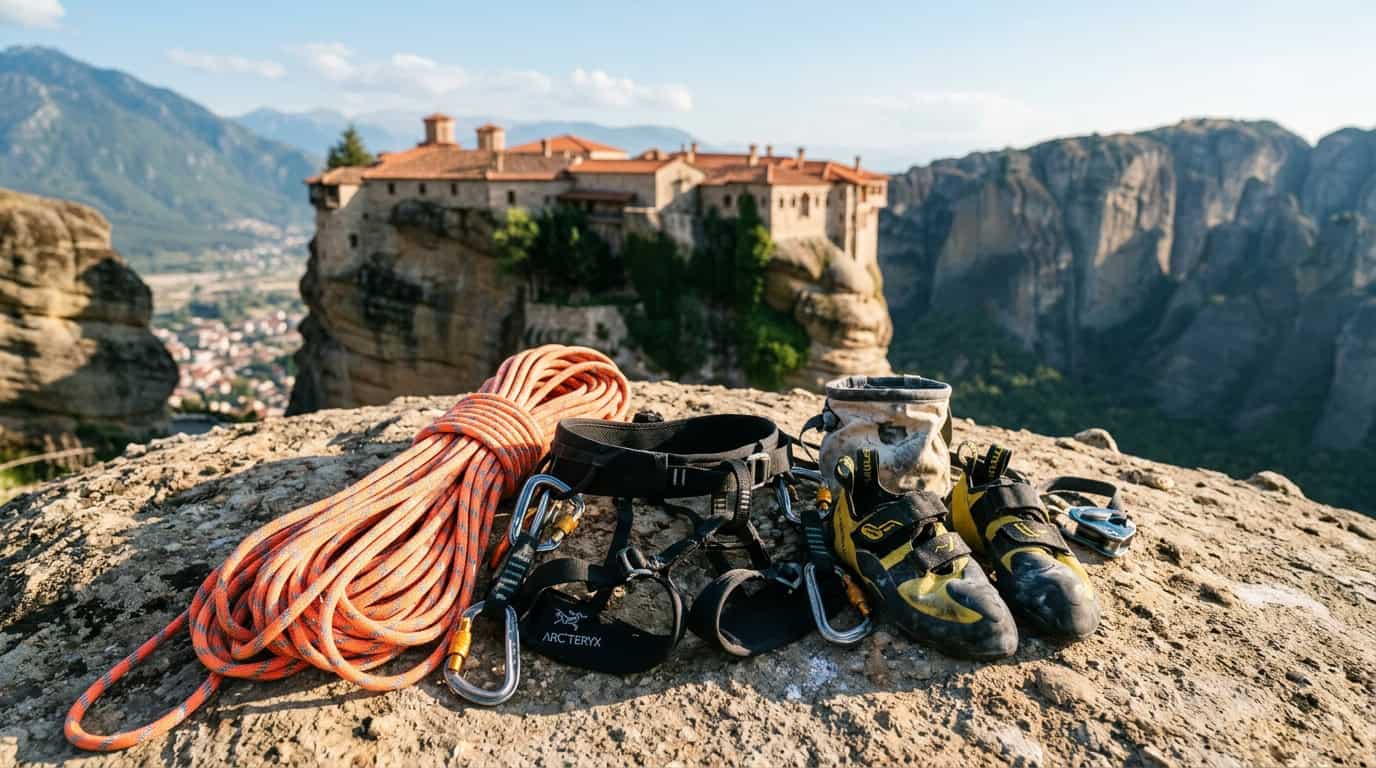
Conquering the ancient stone stairways and forest paths requires footwear that can handle both slick marble and dusty trails. I recommend wearing sturdy hiking boots or trail runners with excellent grip, as the vertical ascent to the monasteries often involves navigating uneven terrain. While the paths are generally well maintained, the sheer sandstone cliffs can be unforgiving if you are wearing flip-flops or smooth-soled sneakers. You will also want to pack a lightweight, breathable daypack to carry plenty of water, especially during the warmer months when the Greek sun reflects intensely off the rock faces.
Respecting the spiritual heritage of these active monasteries is just as important as your physical preparation. Every visitor must follow a strict dress code, which means shoulders must be covered and men should wear long trousers. Women are traditionally required to wear long skirts, though many monasteries provide wrap-around fabrics at the entrance if you arrive in hiking leggings. I found it easiest to carry a lightweight sarong in my pack that I could quickly tie over my gear before entering the sacred gates. This simple addition ensures you can transition seamlessly from a rugged mountain trek to a quiet moment of reflection inside a Byzantine chapel.
Before you set off from Kalambaka or Kastraki, make sure your wallet is stocked with small denominations of Euro notes. Each monastery charges a small entrance fee, typically between three and five Euros, and they almost exclusively operate on a cash-only basis. These funds go directly toward the preservation of these UNESCO World Heritage treasures, making it a small price to pay for such a profound historical experience. I also suggest bringing a portable power bank for your phone or camera, as the panoramic views from the Great Meteoron are so breathtaking that you will likely drain your battery capturing the scenery. Having these essentials ready allows you to focus entirely on the spiritual and physical challenge of the climb.
Walking the Ancient Monk Paths of Meteora
Walking through the ancient stone paths of Meteora is a spiritual experience that simply cannot be replicated from the window of a tour bus. As I climbed the winding trails between the towering sandstone pillars, the sheer scale of the environment felt both humbling and deeply energizing. There is a profound sense of history in every step, especially when you realize these same routes were carved by monks centuries ago. Stepping away from the crowded viewpoints allows you to hear the wind whistling through the cliffs and the distant chime of monastery bells. It is in these quiet, physical moments that the true magic of this UNESCO World Heritage Site finally reveals itself to you.
I encourage you to lace up your boots and embrace the challenge of the ascent, as the reward at the summit is worth every ounce of effort. While the 200 to 500 meters of elevation gain will certainly get your heart racing, the panoramic views of the six active monasteries perched on the clouds are life changing. Remember to carry small bills for the entrance fees and plenty of water for the four or five hours you will spend exploring. By choosing the trails over the pavement, you transition from being a mere spectator to an active participant in the story of the mainland. This region is meant to be felt underfoot, so take the time to wander, breathe, and discover the hidden corners of Greece that most travelers never see.
Frequently Asked Questions
1. How difficult are the hiking trails around the Meteora monasteries?
You will find that most of these routes are easy to moderate, making them accessible if you have a basic level of fitness. The elevation gains typically range between 200 and 500 meters, which provides a rewarding challenge without being overwhelming.
2. How much time should I set aside to hike between the monasteries?
I recommend planning for about four to five hours of steady trekking to complete a loop of the six active monasteries. This timeframe allows you to soak in the stunning forest scenery and explore the ancient Byzantine footpaths at a comfortable pace.
3. Do I need to bring cash for the monastery entrance fees?
Yes, you should definitely carry small change or low denomination bills for the entrance fees. Each monastery typically charges between 3 and 5 Euros per person, and these small sites often do not accept credit cards at the gate.
4. What is the total distance of the trail network in Meteora?
The primary trail network covers an impressive 35 kilometers of well-maintained paths that connect the towns of Kastraki and Kalambaka to the summits. Depending on how many side loops you choose to explore, the entire network of trails in the region can span up to 100 kilometers.
5. Where do the main hiking trails begin?
You can begin your journey from the base of the sandstone pillars in either the charming village of Kastraki or the larger town of Kalambaka. Both locations offer direct access to the ancient footpaths that wind upward through lush oak forests toward the sky-high sanctuaries.
6. Is it worth hiking these trails instead of taking a bus or car?
Absolutely, because walking among the clouds allows you to experience the same spiritual journey that monks have taken since the 14th century. Hiking offers a personal connection to the landscape and hidden forest views that you simply cannot see from the main road. If you enjoy this type of cultural trekking, you might also love the ultimate Rila Monastery itinerary for your next Balkan adventure.